


1,99 €
Mehr erfahren.
- Herausgeber: Booksell-Verlag
- Kategorie: Gesellschafts- und Liebesromane
- Sprache: Englisch
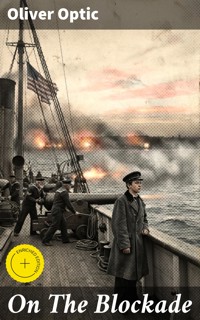
In 'On The Blockade,' Oliver Optic artfully weaves a vibrant tapestry of adventure set against the backdrop of the American Civil War. Through meticulous storytelling and vividly drawn characters, Optic explores themes of loyalty, bravery, and the harsh realities of maritime conflict. His literary style is characterized by a seamless blend of action and reflection, appealing to both young readers and adults alike. Notably, the novel serves as a historical commentary, encapsulating the spirit of a nation grappling with its identity amidst the turmoil of war, while also addressing the complexities of human relationships within this fraught context. Oliver Optic, the pen name of William Taylor Adams, was a prominent 19th-century author revered for his engaging tales aimed at younger audiences. A naval enthusiast and a firm believer in the values of courage and perseverance, Optic'Äôs experiences shaped his narratives, giving readers insights into the maritime life and American society of his time. His commitment to instilling moral values in his readers led him to create compelling stories that resonate with ideals of heroism and ethical duty. 'On The Blockade' is a captivating read for anyone interested in American history, maritime adventure, or the trials of youth during perilous times. Optic'Äôs adept storytelling invites readers to contemplate the moral implications of war while enjoying an exhilarating journey through a pivotal era in American history. In this enriched edition, we have carefully created added value for your reading experience: - A succinct Introduction situates the work's timeless appeal and themes. - The Synopsis outlines the central plot, highlighting key developments without spoiling critical twists. - A detailed Historical Context immerses you in the era's events and influences that shaped the writing. - A thorough Analysis dissects symbols, motifs, and character arcs to unearth underlying meanings. - Reflection questions prompt you to engage personally with the work's messages, connecting them to modern life. - Hand‐picked Memorable Quotes shine a spotlight on moments of literary brilliance. - Interactive footnotes clarify unusual references, historical allusions, and archaic phrases for an effortless, more informed read.
Das E-Book können Sie in Legimi-Apps oder einer beliebigen App lesen, die das folgende Format unterstützen:
Veröffentlichungsjahr: 2023
Ähnliche











On The Blockade
Table of Contents
Introduction
War tests not only armies and governments but also the private loyalties, fears, and ambitions of the young who find themselves drawn into its orbit.
On the Blockade, by Oliver Optic, is a work of historical adventure fiction written for young readers, associated with the author’s well-known nineteenth-century output of morally attentive, action-driven narratives. The story is set amid the American Civil War, taking its focus to the waters and ports shaped by the Union blockade, where commerce, danger, and uncertainty converge. Optic’s fiction typically blends brisk incident with an instructive purpose, and this novel belongs to that tradition, placing youthful characters in situations that demand judgment under pressure while keeping the emphasis on forward movement and clear stakes.
Without revealing developments beyond the opening situation, the novel centers on a young protagonist whose circumstances bring him into close contact with the maritime realities of wartime: ships and crossings, contested shorelines, and the perilous boundary between ordinary life and military necessity. The premise turns on movement through controlled spaces, where what can be carried, said, and done is constrained by authority and by risk. As a reading experience, it offers the pace of a sea-and-coast adventure, with scenes that favor immediate consequences and practical problem-solving, inviting readers to track how character is revealed through decisions rather than reflection alone.
Optic’s narrative voice is typically direct and accessible, designed to keep attention on action while making ethical questions legible for a broad audience. The style leans toward clear cause-and-effect storytelling: choices lead to complications, and complications demand resourcefulness. The tone, while serious about the dangers of war, generally retains the briskness of popular adventure, balancing suspense with an underlying confidence that conduct matters. Readers can expect a steady progression of encounters and reversals rather than a leisurely panorama, with dialogue and incident working together to clarify motives and to keep the plot moving through shifting wartime circumstances.
Several themes emerge from the blockade setting itself: the tension between law and necessity, the fragility of safety, and the moral weight carried by seemingly practical acts such as travel, trade, and cooperation. The blockade is not only a military fact but also a lens on constraint, emphasizing how large political decisions narrow personal options. The novel also engages questions of loyalty and identity, especially for those who must navigate competing pressures without full power over events. In foregrounding youthful experience, it examines how maturity can be forced by crisis, and how ideals are tested when survival and duty collide.
For contemporary readers, the book matters less as a source of military detail than as a demonstration of how fiction translates civic conflict into human-scale dilemmas. The blockade theme resonates with modern concerns about borders, enforcement, and the ethical ambiguities that arise where regulation meets desperation. It also offers a view into a nineteenth-century mode of juvenile storytelling that treats narrative excitement and moral instruction as compatible aims, allowing readers to consider how earlier generations framed courage, responsibility, and citizenship. Approached critically, it can prompt discussion about the relationship between entertainment, education, and the values a society seeks to pass on.
On the Blockade therefore invites readers to follow an adventure shaped by constraint, where the sea becomes both pathway and barrier and where personal choices carry public consequences. Its appeal lies in momentum and clarity: the plot presses onward, the hazards feel immediate, and the questions are posed in concrete situations rather than abstractions. At the same time, the novel encourages reflection on how war reorganizes everyday life and on what it means to act honorably when the rules are contested and the cost of error is high. In that blend of action and ethical attention, the story remains readable and relevant.
Synopsis
On the Blockade by Oliver Optic is a Civil War–era sea narrative centered on the Union blockade and the contested waterways that made it both necessary and perilous. The story establishes a maritime setting where fast ships, shifting intelligence, and uncertain loyalties shape daily decisions. From the outset, the blockade is presented less as an abstract strategy than as an environment that tests character under pressure, with dangers coming from weather, navigation, armed confrontation, and deception. Optic frames the conflict through active seafaring scenes that connect personal duty to national aims without turning the plot into a mere lesson.
paragraphs[1]
The early movement of the narrative follows the routines and risks of blockade service, introducing principal figures through their work and the immediate challenges of patrolling, pursuit, and securing waters where commerce and combat intersect. Encounters at sea emphasize how small errors can carry grave consequences, and how the blockade’s effectiveness depends on vigilance as much as firepower. The novel’s pacing relies on successive situations that reveal capability and temperament: who acts decisively, who hesitates, and who tries to exploit confusion. Against this backdrop, Optic positions the central tension between lawful enforcement and the ingenuity of those determined to evade it.
paragraphs[2]
As the plot advances, the action tightens around attempts to run the blockade and the counter-efforts to prevent it, making ship handling, timing, and local knowledge decisive factors. The narrative draws attention to the mechanics of maritime pursuit—signals, lookout discipline, and the difficulties of identifying intentions at a distance—while keeping focus on the human stakes involved. Relationships among officers and crew develop through shared stress, and the story shows how discipline can either steady a unit or become a source of friction. The conflict expands beyond single engagements into a broader contest of persistence and adaptation.
paragraphs[3]
Midway through, the book widens its view of the war’s coastal theater, linking individual episodes to the larger aims of cutting supply lines and controlling access. Without reducing events to simple heroics, Optic emphasizes the moral complexity of wartime choices, including the responsibilities of command and the consequences for those caught between sides. Suspicion and uncertainty play a continuing role, as the sea’s isolation makes verification difficult and leaves room for misdirection. The novel maintains momentum by alternating tense maritime sequences with moments that clarify motives and raise questions about trust and judgment under duress.
Historical Context
Oliver Optic was the pen name of William Taylor Adams (1822–1897), a New England educator and prolific writer of juvenile fiction. On the Blockade appeared as part of his Civil War sea narratives for young readers during the later nineteenth century, when the war remained a dominant public memory and veterans’ organizations shaped commemorations. The story is set against the American Civil War (1861–1865), a conflict fought between the United States and the Confederate States over secession and, centrally, slavery. Optic wrote for a mass readership formed by expanding literacy, inexpensive periodicals, and school libraries.
paragraphs
The naval setting reflects the Union Navy’s rapid wartime expansion. In 1861 the United States maintained a relatively small fleet, but it grew quickly through new construction, purchases, and conversions to enforce a broad maritime strategy. Federal institutions central to the narrative include the Navy Department, the commissioned officer corps trained through earlier traditions, and the wartime mobilization of sailors and Marines. The story’s premise depends on how naval service offered a structured environment of rank, discipline, and technical skill—features that American reformers and educators often praised as character-building for youth in the nineteenth century.
paragraphs
A key historical backdrop is the Union blockade, proclaimed by President Abraham Lincoln in April 1861 after the attack on Fort Sumter. The blockade aimed to restrict Confederate trade by sealing major ports from Virginia to Texas, and it became a cornerstone of the broader “Anaconda Plan.” International law and diplomacy mattered: the blockade had to be maintained effectively to be recognized by foreign powers, and it operated under prize law governing the capture of blockade runners. By war’s end, the blockade had significantly reduced Confederate access to arms and manufactured goods, shaping wartime scarcity and strategy.
paragraphs
Blockade running provides the immediate operational context. Fast, shallow-draft steamers attempted to slip through patrol lines at night or in bad weather, often connecting with neutral ports such as Nassau in the Bahamas or Havana in Cuba. Cotton exports and importation of military supplies made blockade running financially attractive, though risky. Union blockaders used signal systems, picket boats, and increasingly effective coordination to intercept runners. The maritime geography of inlets, barrier islands, and river mouths along the Atlantic and Gulf coasts created recurring tactical problems that naval fiction could depict accurately without relying on battlefield campaigns.
paragraphs: [




