


Erhalten Sie Zugang zu diesem und mehr als 300000 Büchern ab EUR 5,99 monatlich.
- Herausgeber: Nahdet Misr
- Kategorie: Für Kinder und Jugendliche
- Sprache: Englisch
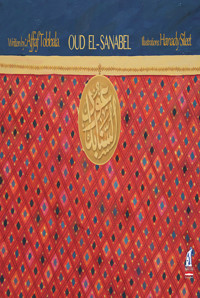
تحكى قصة زينة، الإبنة الصغرى للملك زين الدين، وتمردها على الطريقة التعسفية التى يحددها الملك لإختيار أزواج بناته الثلاثة. عقاب الأب على هذا التمرد يدخل زينة فى معركة غير متوقعة مع الساحرة الشريرة مراشار، التى حاولت توظيف زينة فى إحكام خطتها لتزويج إبنتها من عود السنابل. فى هذه المواجهة تعتمد زينة على إصرارها وذكائها، كما تعتمد على المساعدة الخفية التى يقدمها لها شاب مسحور أحبها -كما تمنت دوماً- لخصالها. Zina's story, the youngest daughter of King Zainuddin, and her rebellion in the arbitrary way that the king determines to choose the pairs of his three daughters. The father's punishment for this rebellion enters Zina in an unexpected battle with the evil witch, Marshar, who tried to employ Zina in tightening her plan to marry her daughter from the stick of Al -Sanabel. In this confrontation, Zeina depends on her insistence and intelligence, as she depends on the hidden assistance provided by a young man who loves her - as she always wished for her characteristics.
Sie lesen das E-Book in den Legimi-Apps auf:
Seitenzahl: 94
Veröffentlichungsjahr: 2015
Das E-Book (TTS) können Sie hören im Abo „Legimi Premium” in Legimi-Apps auf:
Ähnliche

















![Tintenherz [Tintenwelt-Reihe, Band 1 (Ungekürzt)] - Cornelia Funke - Hörbuch](https://legimifiles.blob.core.windows.net/images/2830629ec0fd3fd8c1f122134ba4a884/w200_u90.jpg)


OUD EL-SANABEL
Written by: Affaf Tobbala
Translation by: Nahdet Misr Publishing House
Illustrations: Hanady Sileet
General Supervision: Dalia Mohamed Ibrahim
All rights reserved © Nahdet Misr Publishing House
No part of this book, whether text or images, may be reproduced, photocopied, or stored, in any form or by any means electronic or mechanical, including recording, or by any information storage and retrieval system, without the prior written permission of the publisher.
ISBN: 978-977-14-5261-4
Legal Deposit No.: 3442/2015
1st ed.: Feb. 2015
21 Ahmed Orabi St. Mohandseen, Giza
Tel.: 02 33472864 - 33466434
Fax: 02 33462576
Customer Service: 16766
Website: www.nahdetmisr.com
E-mail: [email protected]
OUD EL-SANABEL
copyright
Dedication
The Kingdom
The Anticipated Day
The Punishment
The Fountain
Regret
The Broom
The Pitcher
The Matchbox
The Cauldron
The Chariot
One More Time
Landmarks
Cover
Dedication
In loyalty to my childhood, I revive this story, even though I don’t really remember who used to narrate it to me when I was a kid.
Only fragments of memory are what remain of this story and a mysterious portray of a personality named “Oud El-Sanabel”.
I gathered those scattered fragments, filled the gaps in between, and wove them all together into a novel adrift from the original story, wherein I cannot really define the relation between the original story inspired by the memory and the story of “Oud El-Sanabel” that I narrate today!
The Kingdom
KingZain El-Din had three daughters, unequaled in their beauty and civility.
The eldest daughter, Zomoroda, was slender, with a long braid of blond hair that reached her waist. She was a quiet girl who excelled in needle work, and would, every now and then, give her father a little handmade gift; sometimes an embroidered cloak, a bonnet or socks to protect his feet from the cold. The king was always delighted with her gifts.
As for the middle daughter, Zahra, she was rather short. She used to let her long silky fine black hair loose at her back, blowing gently in the breeze as she stepped on the porch or strolled in the palace garden. Zahra was merry and talkative. She fancied cooking and excelled in inventing new dishes, in which she surpassed all the palace cooks. Her father used to identify her savory delicious dishes amidst all that was served on the table.
As for Zeina, the youngest of the three, she wore her chestnut hair a different way every day. Zeina had a mind of her own and always stuck to her point of view to an extent that she was sometimes regarded as headstrong. She spent most of her time reading, losing herself in the pages of the books she read; or singing, filling the palace gardens with the echo of her melodious voice. Sometimes her father used to summon her to read for him in her delightful style, which he so favored and enjoyed. At other times, he would ask her to sing to him in her beautiful voice so that he could forget all the troubles of the kingdom and enjoy a deep quiet sleep to her tender voice.
Words spread at home and in neighboring kingdoms of the girls’ beauty and grace. All youths aspired to win the hand of one of them. However, and before the king could allow suitors to present themselves, he had to settle a critical issue he knew he would face. He knew that if he approves the marriage of one of his daughters to the son of the minister, the chief trader will be enraged; and if he chooses the son of the senior judge, the chief commander of the army will be outraged; and if he accepts the marriage of one of his daughters to the prince of the eastern kingdom, then the king of the western kingdom will consider it an insult and might even consider this a pretext to attack his kingdom.
The king could find no way to get his daughters married while offending no one. He sought the advice of one of the state elders, known for his wisdom. The old man recommended that the best way to avoid trouble is for the king to abstain from intervening in choosing his daughters’ spouses and to leave the matter to luck and destiny. He proposed to him a plan to implement that advice. The king would assemble all suitors of his daughters at a specified date in front of the palace, and each of his daughters would throw her scarf in the direction of their gathering. Whoever catches the scarf would then be given an audience with the king to introduce himself and his lineage, and propose to marry the princess who threw the scarf he had caught.
The king was convinced that this plan would save him from lots of trouble, so he ordered its implementation. At once, heralds announced to the public that Monday would be the day suitors were to gather in the palace yard, below the balcony of the princesses’ wing, and that the following Thursday would be the day of the big celebration of the three princesses’ weddings to those who were lucky enough to seize their scarves.
The announcement awoke the dream of all those who wished to get married in the kingdom, and raised the hopes of every one of them, young or old, rich or poor, to be the lucky one to catch the scarf.
However, the queen didn’t seem comfortable with the method accepted by the king to choose her daughters’ husbands. She feared depending on mere chance and the risk of its consequences. She went to the king and asked him: “What if the one who seizes one of the scarves was an old or a poor man? Would you accept to marry him to one of your daughters?” This possibility had not crossed the king’s mind before, so he answered arrogantly: “Would they dare?” The queen was quick to respond: “Why not, when you had set no conditions to those allowed to stand below the balcony?!”
The king felt greatly embarrassed, for it was already too late to revert on a decision already announced to his people. He had to find a way out of this predicament.
The commander of guards had the solution that comforted the king and the queen. He assured them that they can avoid the hazards of the arbitrary happenstance with a very simple procedure that he will take care of himself. He promised them to carry it out without ordinary people noticing it and to keep the matter as a secret that nobody else would learn about.
The Anticipated Day
On the anticipated day, people headed towards the Royal Palace. Most of them went to witness the ceremonies of selecting husbands for the three princesses, and some went aspiring to be the lucky ones who would catch a scarf.
From the early morning, the royal guardsmen spread all over the court to carry out the orders of their commander. Claiming to put the line up in order, they facilitated spots closer to the balcony for young men wearing gold ornamented costumes; thereby, increasing the chances of the wealthy young suitors to catch the scarves of the princesses and eliminating the chances of impoverished and elderly ones.
The guardsmen carried out the orders given to them with strict precision, to the extent that one of them, known for his naïveté, whispered into the ears of his colleague who was trying to push away a dog that was sneaking into the suitors’ lines: “Leave him; he meets all the set conditions: He is young, as seen from his pure black hair, and rich, as shown from the golden chain ornamenting his neck.”
Since the early hours of the morning, the queen personally oversaw preparing her daughters to look their best. She went first to the room of Zomoroda to find that her governess had adorned her braid with colorful flowers that added to the beauty of her golden hair. She had garbed her in a dress in the color of the clear blue sky and chose for her a white silk scarf. The queen felt satisfied with the appearance of her eldest daughter and thus ordered the horn blower to announce the exit of princess Zomoroda to the balcony to throw her scarf.
When the horns were blown announcing the arrival of the first princess, the crowd cheered and the suitors got ready. Zomoroda proceeded to the balcony appearing with her dress, scarf and calm steps like an angel descending from heaven. She gazed at those standing in the court looking for a young man who would match her tall stature, but the huge crowd made it difficult for her to identify anyone. However, she remained optimistic, for her governess had whispered in her ears as she was braiding her hair, “Rest assured, God will subdue the air to make your dream come true and give you a husband with a matching height”. Zomoroda threw her scarf and the air carried it beyond the palace walls and above the heads of the gathered crowd. Hands were raised up high to catch the scarf, and the tallest man in the front rows could seize it. People cheered as they identified the lucky young man Adel, the son of the chief judge.
Now, it was the turn of the second daughter. The queen went into Zahra’s room to find her garbed in a pink dress and holding a red scarf that were in full harmony with her black hair cascading over her back and inlaid with white pearls. The queen was assured of the look of her daughter and ordered the horn blower to usher Princess Zahra into the balcony.
Zahra came out in hesitant steps and worried heart beats, because she feared the repetition of what happened with Zomorda, wherein the scarf was picked by the tallest man in the front crowd. Unlike Zomoroda, Zahra desired a husband of medium height, not to draw attention to her own shortness. Zahra closed her eyes and kept praying that her wish would come true. She put her trust in God and threw her scarf.
The sound of the cheering and laughing of the crowd rose. Zahra opened her eyes to find her scarf hanging in the air! She looked closer to find it dangling on the tip of a sword of a knight who raised it high to make up for his shortness. The valiant knight picked the scarf with a shrewd trick that earned him the admiration of the crowd that recognized him as Basil, the son of the commander of the army.
Only the youngest princess remained. The queen entered Zeina’s room. She was shocked to find her sitting on her bed, dressed in her nightgown. Zeina wasn’t in the least ready to come out to the balcony. Her governess was trying hard to persuade her to put on the pistachio colored dress that she had chosen for her to go with her light brown hair, which she had not yet combed.




