


Erhalten Sie Zugang zu diesem und mehr als 300000 Büchern ab EUR 5,99 monatlich.
- Herausgeber: The O'Brien Press
- Kategorie: Für Kinder und Jugendliche
- Sprache: Englisch
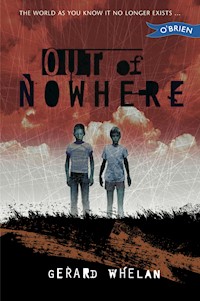
A boy wakes up in bed in a room built of stone. He knows his name is Stephen, but he can remember nothing else about himself. He discovers that he's in a remote monastery being looked after by a group of monks. Beyond the monastery walls, all traces of human life have simply disappeared. Villages deserted, doors left open, with taps left running, but no people. And with all means of communication down, he has no way of knowing if the rest of the world has disappeared too. Then the visitors arrive, strange men with unnatural powers, and when he discovers who they really are it turns his whole world inside out and changes everything he ever believed. Out of Nowhere was shortlisted for the Reading Association of Ireland Award 2001.
Sie lesen das E-Book in den Legimi-Apps auf:
Seitenzahl: 268
Veröffentlichungsjahr: 2012
Das E-Book (TTS) können Sie hören im Abo „Legimi Premium” in Legimi-Apps auf:
Ähnliche













![Tintenherz [Tintenwelt-Reihe, Band 1 (Ungekürzt)] - Cornelia Funke - Hörbuch](https://legimifiles.blob.core.windows.net/images/2830629ec0fd3fd8c1f122134ba4a884/w200_u90.jpg)





Reviews
OUT OF NOWHERE
Nominated for the Bisto Book of the Year Award 2000
‘An excellent book … I found myself intrigued by and drawn into the fascinating world that Whelan weaves around his characters. The frenetic pace keeps us constantly turning the pages.’
Sunday Business Post
‘The sort of story to make your hair stand on end. It keeps its biggest surprise to the end – as all good thrillers do!’
Southside People
‘This is an absorbing action-adventure story, but it’s also a study of what it is to be human and how difficult it is to disentangle oneself from violence. It’s far more imaginative and better written than most and its essential seriousness is undercut with humour. A damned good read, no matter what age you are.’
Siobhán Parkinson, IT magazine
‘It makes the X-Files look cosy.’
RTE Guide
‘In this taut thriller, Whelan has created an imaginatively eerie new world.’
Irish Times
‘Not for the faint hearted! This thriller, with its twists and turns is certainly one that kids will love to fear!’
Parent & Teacher magazine
‘Prepare to accept the fact that the world as you know it no longer exists …’
Irish Independent
Dedicated with respect, admiration & above all affection To one of England’s more durable exports, The one and only Ms Carolyn Swift
ACKNOWLEDGEMENTS
Ta very much to the original readers: Eoin Colfer, Liz Morris, Frank Murphy, Larry O’Loughlin and Claire Ranson. Final work on this book was done in New York. It wouldn’t have been possible without David Smith of Manhattan, who gave me access to his computer, e-mail and phone.
Contents
Title Page
Dedication
Acknowledgements
PART ONE: The Weird World
1. The Stone Room
2. The Blond Girl
3. The Bearded Monk
4. Breakfast
5. Fresh Air
6. The Shoplifting List
7. Agents in the Flesh
8. The Empty Land
9. The Victim in the Field
10. Agents on the Road
11. The Stiff Upper Lip
12. The Market Town
13. The Assault in the Library
14. Agents in Pursuit
15. The Phantom in the Supermarket
16. The Special Case
17. The Desperate Girl
PART TWO: The Big Bubble
18. Monday
19. Reputation One
20. The Appliance of Science
21. Developments
22. The Little Fat Woman
PART THREE: The Fix-It Men
23. The Dead Coach
24. The Friendly stranger
25. Agent on the Mend
26. The Old Monk
27. The Body in the Refectory
28. Agents in Debate
29. The Hunters Outside
30. The Bread and the Cheese
31. The Corpse in the Chapel
32. Agents of Mercy
33. Devils
34. The Driver’s Tale
35. Agent on the Job
36. The Third Alternative
37. Into Nowhere
38. An Agent Reflects
39. The Matter in Hand
40. The Real Adventure
PART FOUR: These Our Actors
41. Family Reunions
42. Ministerial functions
43. Revels End
About the Author
Copyright
PART ONE: The Weird World
1. The Stone Room
First there was nothing at all. Then a blurred glimpse of robed figures standing over him and a cold feeling of fear. And then again nothing, neither threat nor rest nor dream.
When Stephen came to he was lying on a hard bed. He opened his eyes and found himself looking up at a low ceiling made of plain dark wood. It wasn’t a ceiling he recognised, he was certain of that.
He raised his head and looked around. The room he was in looked like a film-set. The walls were of bare stone. Dark curtains were pulled across the window. Such light as leaked through was dim and, beyond the fact that it was daylight, he couldn’t guess the time.
Apart from the bed that he lay on, there wasn’t much furniture in the room: a large square table, two wooden chairs, a huge cupboard and a small bedside locker. On the table was a large three-branched candlestick with three fat unlit candles standing in it. A large rectangular mirror hung on the wall by the window. The heavy wooden door, the only exit he could see, was closed.
Stephen raised himself on one elbow and looked around slowly. He was sure he’d never seen this place before. It was then, as he tried to remember where he might have expected to wake up, that he became afraid. Because he couldn’t remember. He couldn’t recall going to bed, and he couldn’t recall who he was. Apart from the fact that his name was Stephen, he couldn’t remember anything about himself at all.
He lay still, thinking hard. He tried to remember a single other fact about himself, and failed. He was a mystery to himself. Had he been in some kind of accident? But this didn’t look like a hospital room. It hardly looked like a room from this century at all.
He was distracted by the sound of a man’s voice shouting. The voice shouted again and again. It sounded both pained and angry, but the words were in a language Stephen didn’t recognise. There were other voices too now – lower, calmer, soothing. The man stopped shouting, then the other voices stopped too.
Stephen got out of bed, curious, and moved towards the window – the shouting had come from right outside. He saw that he was dressed only in underwear, and looked around for something else to cover himself with. There was a dark robe draped across the foot of the bed. He put it on. As he tied the cord around his waist, the door opened a little. A head peered in. The boy couldn’t see the face in the dim light, just a silhouette.
‘Ah,’ said a thin, accented voice. ‘You are awake, young man.’
‘Yes,’ Stephen said, not knowing what else to say.
The head nodded. ‘Good. I’ll tell the abbot.’
The head withdrew, and the door closed. The boy stood staring at it. The abbot? Was this place an abbey? Then, remembering what he’d meant to do, he crossed to the window and pulled back the curtain. Bright light burst in, almost frightening him. He was looking down from an upstairs window. Opposite the window he saw cloisters, a stone wall pierced by arched windows, and an open doorway with shadow beyond. Below him lay a courtyard filled with light. In the middle of the area he could see stood an old-fashioned covered well. There were no people in sight.
From the corner of his eye Stephen caught a glimpse of movement within the room. He turned quickly and faced himself in the mirror. He stared at a stranger. Dark hair, pale face, a slight form. Worried eyes. Thirteen years old? Fourteen? He had no idea.
He was afraid.
There was a knock at the door and two men came in. Both wore long dark robes. One was talking as they came in, and Stephen recognised the voice of his recent visitor. He was a thin, slight, balding old man with a shrewd face that looked lived-in. But it was his companion who held Stephen’s attention.
This man seemed to glide into the room. He was very tall and very thin. His hair, partly covered by a skullcap, was salt-and-pepper grey and cropped tight. His head was large, his face long and angular. His lips were thin. He had deep-set, watchful brown eyes; at the moment they were watching Stephen, frankly, carefully.
The man glided to the table and stood there without speaking. The other man stopped walking too, but kept talking.
‘… we’re doing our best,’ he was saying, ‘but there simply aren’t enough of us. We can’t watch all of them all of the time. Philip only turned his back for a moment. He’s very annoyed with himself.’
The tall man raised one hand. The shorter man stopped speaking abruptly, as if he’d been switched off. The tall man – monk, rather, for they were obviously monks – didn’t take his eyes off Stephen as he spoke to his companion. His English was perfect, but to Stephen his accent sounded foreign.
‘Philip is always annoyed with himself,’ he said quietly. ‘Tell him to calm down. He won’t listen, but tell him anyway.’
The small monk nodded and left. The other stood looking at Stephen. Stephen remembered what the first monk had said when he found him awake. This, then, must be the abbot. Stephen had a hundred questions he wanted to ask, but he didn’t know where to begin. The abbot’s brown eyes seemed to bore into his, to look right past them and inside his head.
At last the abbot spoke.
‘You’re sane,’ he said. It wasn’t a question. He sounded relieved.
The boy stared at him.
‘Am I?’ he asked.
The abbot looked concerned.
‘Are you in pain?’
‘No. But I’m scared. What happened to me?’
The monk made a fluid gesture with his long hand, indicating a chair.
‘Please,’ he said, ‘sit down.’
Stephen realised that his knees were trembling. He felt weak. He sat. The abbot sat opposite him.
‘I’ll tell you what I can,’ the monk said. ‘But first I must ask you one question: can you remember anything at all about what happened to you?’
‘No. I was hoping you could tell me. My name is Stephen, I know that. But I don’t know a single other thing about myself. I don’t know who I am.’
He heard a ghost of panic in his final sentence. But the abbot breathed what sounded like a sigh of relief.
‘Thank heaven,’ he said.
Stephen couldn’t believe his ears. His fear and frustration turned to anger.
‘I’ve lost my memory,’ he said, ‘and all you can say is “Thank heaven”?’
‘I beg your pardon,’ the monk said. ‘I forget my manners. It’s just that I’m so used to talking about this now. We speak of little else. And so few of our guests are as lucky as you.’
His words made no sense to Stephen. ‘What happened to me?’ he demanded.
‘I don’t know,’ the abbot replied.
‘But you still call me lucky?’
The monk rested his chin in one hand. He pursed his lips and cast his brown eyes downwards. Without their penetrating gaze, his face looked different. It was still strong, but you could see a strained tiredness there too.
‘I’m trying to put myself in your position,’ he said slowly. ‘So as to know how best to explain it to you. We know so little ourselves, really.’
Stephen wanted to scream at him to stop dawdling. But then the brown eyes flicked upwards again and held his in a steady gaze. They weren’t the kind of eyes you screamed at.
‘You’re not the only person we’re caring for,’ the monk said. ‘There are five others – so far. The first strayed in on Sunday night. A poor lone unfortunate, we thought, a dazed accident victim, perhaps – though there’s very little traffic hereabouts, even in the tourist season. He arrived in the middle of the night. We were all long asleep, but he made so much noise he woke us. It was too late that night to do anything about it, so we sedated him and put him to bed, meaning to contact the police on Monday morning to explain the situation. Well, he was certainly a poor unfortunate: but he wasn’t alone. We found you wandering near the abbey on Tuesday, also dazed and disoriented. You were the third person we found. Today is Thursday, and we have six.’
Stephen was stunned.
‘In four days?’ he asked. ‘You’ve found six people with amnesia in four days?’
‘I wish we had. Including yourself, we’ve found only two amnesiacs.’
‘And the others?’
‘Ah,’ said the abbot. ‘The others.’ He was silent.
‘You still haven’t contacted the police?’ Stephen burst out. ‘Or a hospital?’
‘That’s the problem, do you see,’ the abbot said. ‘There don’t seem to be any police or hospitals.’
‘What?’ Stephen gasped.
‘Something …’ the monk began, hesitantly, ‘… something has happened.’
‘What do you mean?’
The monk sighed again. ‘I don’t know,’ he said. ‘That’s the simple truth. But I suspect it must be something very terrible. Apart from those of you who’ve wandered in, we can’t contact anyone. We can’t even find anyone. Any houses we’ve searched are empty. So is the closest village. We can’t contact anyone on the telephone. All the animals are still there – but not a single human being.’
Stephen couldn’t take this in. It sounded foolish. ‘Radio?’ he said. ‘Television?’
The abbot shook his head. ‘We have both,’ he said. ‘On Sunday night everything was as usual, but since Monday morning there’s been nothing on any channel, local, national or foreign. And even to try them we have to use our own small generator because there’s no electricity either.’
Stephen was stunned. An awful thought came to him. He had a terrible vision of mushroom clouds.
‘A war?’ he croaked.
But the abbot shook his head. ‘We’d have seen something,’ he said. ‘And so far as I know, there are no weapons which can destroy humans and leave animals alive. Not yet, anyway, though I’m sure someone’s working on it. No. All we know is that on Sunday everything was normal, but by Monday morning everything had changed. Something – whatever it was – happened during the night.’
A sudden thought struck the boy. ‘What about the other four people who don’t have amnesia? Don’t they remember anything?’
The monk sighed again. It was a lonely sound. ‘Oh, yes,’ he said, with immense sadness. ‘They remember things all right. Two of them remember the end of the world. One even remembers creating it. They remember monsters and spaceships and vampires. One recalls living in fairyland. Another one says nothing at all – except sometimes he howls.’
He shook his head sadly. ‘The reason I was pleased that you’d lost your memory,’ he said, ‘can be explained by the very first words I said to you when I came in. Do you remember what they were?’
Stephen didn’t have to think. ‘Yes. You said: “You’re sane”.’
‘Indeed. You’re sane. So is our other amnesia victim. But those of our guests who seem to have memories, they, alas, are not sane. None of them. They are all hopelessly mad.’
2. The Blond Girl
Whether from the abbot’s news or from his own weakness, Stephen suddenly felt faint. He almost collapsed, and the monk had to help him back to his bed.
‘The best thing you can do now,’ the monk said, ‘is to get some rest.’
‘You don’t really think I’ll sleep after what you’ve told me, do you?’
‘Then the next best thing would be some proper food. You must be hungry.’
At the mention of food the boy’s stomach rumbled. The abbot smiled.
‘No need to say more,’ he said. ‘I’m busy now, but I’ll come back to see you later. I’m afraid we’re all kept very busy just coping with our other patients. Our numbers are very low at the moment – only three Brothers and a novice.’
‘This is really an abbey? You’re real monks? I don’t mean to be rude, it just seems … strange.’
‘Ours is a lay order,’ the abbot said. ‘So I suppose, in a way, we’re not “real” monks. In a way you could even say that it’s not a “real” abbey. We train novices here, so we’re really no more than a glorified school. Now, I’ll stop talking and send you up some food. You must be starving – I’ll ask Fräulein Herzenweg to bring something to you.’
‘You have women working here?’
‘Oh no, not normally. It’s hardly the done thing in a monastery. She’s our other amnesia case – Fräulein Kirsten Herzenweg, your fellow patient.’
‘But you know her whole name.’
‘She had letters addressed to a person of that name. It may not be her name at all – she doesn’t recognise it – but it’s nice to have even a tentative identification. I’m sure you understand.’
‘Oh yes,’ said Stephen wistfully. ‘Yes, I do.’
‘Stephen’ was only a word. He felt sure that it was his name, but how could he be certain? It was only half a name, anyway. He envied Fräulein Herzenweg that tiny luxury of an extra word.
‘I suppose I had no papers?’ he asked.
‘No. No papers of any kind. I’m sorry.’
‘You’ve no need to apologise,’ Stephen said. ‘It sounds as though you saved my life, and I haven’t even thanked you.’
The abbot smiled.
‘No disrespect,’ he said, ‘but we’d have done as much for anyone. You rest now, and eat, and get some strength back. Then you can help us to deal with whatever this is. That will be all the thanks we need.’
He left the room with his long, gliding step, closing the wooden door behind him. Stephen lay on his bed, trying not to think about himself, whoever he might be. Instead he thought about Fräulein Herzenweg, his ‘fellow patient’. Maybe her lot wasn’t so enviable after all. She must wonder if Fräulein Herzenweg was a stranger whose coat or bag she’d picked up in passing. Maybe the real Fräulein Herzenweg was dead, or maybe she was one of the other patients – one of the mad ones. And what was a name worth on its own, anyway? It was only a couple of words – it didn’t make up a whole person.
He was so busy thinking about Fräulein Herzenweg’s name that he gave no thought to the person attached to it. If he had any image at all, he pictured a German woman in her thirties or forties. A timid tap on the door interrupted his thoughts and a small, long-faced young girl with short, very blond hair came into the room carrying a tray. She looked about his own age, which seemed almost stupid to think since he didn’t know what that was.
‘Hello,’ she said, grinning at him.
‘Fräulein Herzenweg?’
‘Yes,’ she said. ‘Kirsten Herzenweg,’ and there was a touch of pride in the declaration.
‘You’re German?’
‘Actually, I seem to be Danish. Three of the monks here are from the continent and have quite a number of languages between them, so we checked. I speak okay French, good German and fluent English, but my native language seems to be Danish. Just think, I can remember all those languages but I can’t remember anything about my own life? Isn’t it crazy?’
She was carrying a cloth-covered tray. Now she sort of brandished it at him.
‘Look,’ she said. ‘Food!’
Stephen’s stomach rumbled again. It seemed to be fretting that its owner might not speak up for it. Kirsten Herzenweg laughed at the sound – a curiously carefree laugh for someone in her situation.
‘Now,’ she said, ‘I’ve eaten already, but I’ll have tea with you if I may.’
‘Please,’ Stephen said, trying to show some manners. His mind, like his eyes, fixed on the tray as the girl put it on the big table and whisked the cloth away. Then he went and sat, and for the next ten minutes he ate ravenously. Kirsten said he’d eaten nothing since his arrival, except some broth that the monks had managed to pour down his throat. That explained the abbot’s reference to ‘proper’ food.
Kirsten poured strong tea into plain, brown mugs.
‘There’s coffee here too,’ she said, ‘but very little. It’s a real treat. We’ve just about run out of a lot of things. The monks weren’t prepared for anything like this. We plan a foraging expedition to one of the towns tomorrow.’
He heard pride in her voice when she used the word ‘we’.
‘Is there really no clue as to what happened?’ he asked.
‘No. There’s no news of any kind. Not a soul to be found so far except those poor people – we poor people, I should say.’ She gave a little shudder. ‘It’s terrible to think what might have become of us if the monks hadn’t found us, isn’t it?’
‘I suppose so,’ Stephen said. Personally, he found what had happened to them pretty terrible anyway, whatever it had been. ‘But there must be something out there. Have the monks searched?’
‘Only as far as the nearest village, and that’s just a cluster of houses at a crossroads. They’ve been up to their eyes looking after all of us. But tomorrow, Philip and I are going to the local market town. It’s the main town in the area. Maybe we’ll find people there.’
‘Maybe you’ll even find people who are, you know, all right. The inhabitants.’
Kirsten made a face.
‘I doubt it,’ she said. ‘It’s only about twenty kilometres away. If there were any people there, surely they’d have come looking for us by now. No. The trip tomorrow will be a major expedition, but I don’t think anyone expects to find people in the town, much as we’d love to.’
‘But they have to find people soon, I mean, everybody can’t have just disappeared into thin air! It’s not possible!’
‘There’s nothing on radio or television,’ she reminded him. ‘No electricity …’
‘There must be a simple explanation. Maybe it’s just a local thing. How could such a big disaster happen so suddenly? Even if everyone was dead, there’d be bodies. It’s just impossible!’
‘But it’s happened,’ she said gently. ‘Local or not, it’s happened.’
They talked about the situation for a while. It saved them from talking about themselves, which is a hard thing to do when you don’t know who you are. After he’d called the girl Fräulein Herzenweg a few times, she stopped him.
‘Please,’ she said. ‘You sound like the monks! Call me Kirsten.’
‘You think that’s really your name?’
She’d obviously thought about this.
‘It’s strange,’ she admitted. ‘I mean, Kirsten is a good, solid Danish name, but Herzenweg is German. Maybe my family came from Germany originally. The letters in my pocket were both addressed to Fräulein Kirsten Herzenweg – that’s a German form of address. Oh well, in a way I rather like being a mystery. It makes me feel important.’
‘And the letters themselves?’ Stephen asked. ‘Did they have any useful information?’
‘No,’ she said wistfully. ‘There were three envelopes. One was a bank statement showing a money transfer, and the other two were empty.’
‘What about postmarks? Where were they all sent from?’
‘The empty envelopes were posted from Belgium. The bank statement was from Dublin.’
‘Dublin?’
She gave him a puzzled look.
‘My God!’ she said. ‘You don’t even know what country we’re in, do you?’
Stephen thought for a moment.
‘Ireland,’ he said finally, not knowing how he knew, but still certain that he was right.
Kirsten nodded and smiled.
‘Yes,’ she said. ‘Your home country, to judge by your accent. Maybe I’m a tourist.’
‘Did the other … ‘patients’ have anything to identify them?’
‘No. None of them. Only me.’
Again her voice was proud, as though she’d been somehow responsible for this.
Stephen soon felt tired. He hadn’t recovered from his weakness, and the food was making him sleepy. Kirsten noticed.
‘Rest,’ she said. ‘You’ll feel much better in the morning. At least, that’s how it was with me.’
She left, taking the tray with her. Stephen got into bed and lay awake for a few minutes afterwards, thinking about her. He didn’t know what to make of Kirsten Herzenweg. She didn’t seem very disturbed by her amnesia. She was, she’d said, concentrating on the present. Maybe he could learn from her example.
‘The past is gone anyway,’ she’d said. ‘Maybe I’d hate it if I knew about it. Maybe I was someone awful, or worse, maybe I was someone boring! Perhaps I’ll never find out who I was. But in the meantime the present is here, and I’m here, and I’m needed. The monks need all the help they can get right now.’
It seemed sensible enough. In the middle of thinking so, Stephen fell asleep.
3. The Bearded Monk
Stephen was woken at some dead hour of the night by a dreadful sound – a long, singing howl that made his flesh creep and the hairs on the back of his neck stand erect. He was terrified for a moment, not knowing where he was. Just as he started to think that he’d dreamed it, he heard it again. It was the sound a lonely, wounded night would make, if lonely, wounded nights could make sounds. It also sounded like it came from just below his window.
Stephen was shivering in a cold sweat. He wanted to crawl under the quilt and pull it over his head. Instead, he made himself get out of bed, go to the window and look out. The window was ajar, and the sweet air of the summer night brought in a scent of distant greenery. The dark blue sky was spangled with shimmering stars. The moon was fat and silver, and it lit the courtyard clearly with a cold, white light.
In the middle of the courtyard, a very tall man was moving in crazy circles around the well. He was being chased by a young monk who seemed in no great hurry to catch him. He trailed half-heartedly in the tall man’s ragged course, not even trying to catch up with him. The fugitive himself didn’t seem to notice the monk.
‘Where are you?’ he roared out suddenly to someone or something. ‘Unshade me! It hurts!’
‘Unshade me?’ thought Stephen, puzzled. But he was sure that was what he had said. The man was old – a big old stick of a man with a gaunt face and raggy white hair that shone silver in the moonlight. His head was thrown back as he staggered around, howling at the moon. Stephen shuddered at the weird sight.
The grotesque pair rounded the well a few times. Then another monk entered the courtyard from a doorway somewhere beneath Stephen’s window, a big, bearded man who stood for a moment, watching the chase. Then he snapped at the young monk in a stern voice with an Irish accent – the first Stephen had heard.
‘Catch up, you little eejit! You’re like a pup after an ould buck rabbit, half afraid to catch what it’s hunting.’
Spurred on by this, or perhaps more afraid of the newcomer than of the old man, the pursuer put on a spurt of speed. He caught up with the staggering figure easily, and threw his arms around his waist. The fugitive lashed out with one thin arm and sent him sprawling. But the monk was suddenly game – he threw himself bodily at the man, grabbing hold of him again. This time the old man just kept going, dragging the monk behind him. It would have looked funny if it hadn’t been so sinister.
‘He’s too strong!’ the monk shouted in a panicky voice.
The bearded monk gave a loud sigh. He went over and stood in the old man’s path. Stephen noticed that he was almost as tall as the old man, and heavily built.
‘Such gods as there be, please forgive me,’ the big monk said. Then he punched the old man, once, in the jaw. The fugitive grunted and went down like a pole-axed cow, pulling the young monk down with him. With a little squawk, the monk scrambled to his feet. He stood looking from one big man to the other.
‘You hit him!’ he said, sounding outraged and impressed all at once.
The big monk sighed.
‘I did,’ he said. ‘I hit him.’ He put a hand on the young monk’s shoulder. ‘It’s never nice, son,’ he said. ‘But sometimes it does just simplify things. He’ll be grand when he wakes up.’
‘But won’t it hurt him afterwards?’
The big monk bent down and heaved the long form of the old man over his shoulder. He straightened up again.
‘There’s something so big hurting this one,’ he said, ‘that a puck in the jaw won’t make much difference.’
He set off across the courtyard lightly carrying the old man across his shoulder, draped like a rolled-up rug. The young monk followed.
After they’d gone, Stephen stayed for a long time looking out at the empty night. His skin crawled, and he pitied himself. What had happened in the world? Who were these unfortunate people? And who, for that matter, was he?
4. Breakfast
The next morning Kirsten woke him early, bringing breakfast on a tray. She seemed almost giddy at the prospect of the morning’s expedition, which she insisted on calling ‘The Raid’. Stephen laughed at her.
‘It’s only natural that I’m excited,’ she said, not minding his amusement. ‘I am Danish after all, my ancestors were Vikings. Raiding must be in my blood!’
It was impossible not to smile at her enthusiasm, but Stephen wondered how she managed it in the circumstances.
Kirsten sat by the table as he ate his breakfast, but she was so excited she couldn’t sit still. Stephen hadn’t known that it was possible to hop from foot to foot while sitting down, but she proved that it was. She talked non-stop, fantasising about what they might find on the expedition. She really didn’t seem upset by the whole situation. If anything, the mystery seemed to excite her all the more.
‘You’re coming with us, aren’t you?’ she asked. ‘If you feel up to it, I mean.’
Stephen wasn’t sure how he felt, but he knew that he couldn’t pass up the chance to see this brave new world. He was unnerved by the situation, but he was very curious too.
‘You’re definitely going?’ he asked.
‘Of course! I wouldn’t miss it for anything. This is like living in a movie!’
But what kind of movie? he wondered. He remembered last night’s howling. It had made him feel like he was in a horror film, and horror films tended to have monsters in them.
‘It’s not a movie,’ he reminded her. ‘It’s real. We’re not on some adventure holiday.’
‘Our expedition today is important,’ Kirsten replied. ‘There’s very little food left in the abbey. The monks get most of their food from their farm, but they don’t have enough supplies stored to deal with six extra mouths. And there are replacement parts and fuel needed for the generator, and clothes for me – I can hardly ask Philip to pick underwear for me, can I? I do know how serious the situation is – or may be. But, at the same time, there’s no way I’m going to miss this raiding party, I mean, it even sounds funny, doesn’t it: the monastery raiding party?’
He had to admit that, yes, it did sound funny.
‘The abbot insists on calling it a “reconnaissance”,’ Kirsten continued. ‘But Philip just laughs when he hears that and says, “Paul, I always knew you were a Jesuit at heart”. Which Paul doesn’t like, because he’s not even a Christian. And then again he’s Swiss – very serious!’
‘What do you mean, he’s not a Christian? He’s a monk!’
‘Yes, but this isn’t a Christian order. I’ll tell you about it later!’
‘But–’
But Kirsten had sat still as long as her excitement would allow, and was already at the door.
‘I have to help Philip finalise the list of supplies,’ she said over Stephen’s protests. ‘We call it “the shoplifting list”. Philip won’t admit it, but he’s just as excited as I am. He’s dying to see what’s out there. I think he’s secretly enjoying all of this. Come and join us in the kitchen when you’re dressed.’
‘Maybe Philip’s ancestors were Vikings, too,’ Stephen said.
Her laughter hung in the air after the door closed behind her.




