


0,49 €
Niedrigster Preis in 30 Tagen: 1,99 €
Niedrigster Preis in 30 Tagen: 1,99 €
Mehr erfahren.
- Herausgeber: Booksell-Verlag
- Kategorie: Gesellschafts- und Liebesromane
- Sprache: Englisch
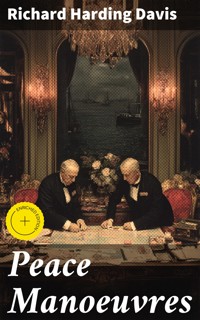
In "Peace Manoeuvres," Richard Harding Davis weaves a compelling narrative that examines the intricate web of diplomacy and international relations at the turn of the 20th century. Employing a vivid literary style characterized by sharp dialogue and incisive commentary, Davis explores the tensions arising from national interests juxtaposed with the yearning for peace. The novel is set against the backdrop of looming global conflicts, a context that enhances its relevance as it mirrors contemporary issues in geopolitics and human interactions. Richard Harding Davis, a prominent journalist and novelist of his era, was deeply influenced by his experiences in war zones and international settings. His firsthand accounts of conflict and the complexities of human motives provided him with a unique lens through which to approach the themes of peace and diplomacy in this work. Davis's background as a war correspondent informed his narrative style, imbuing "Peace Manoeuvres" with authenticity and urgency that reflects the societal anxieties of his time. This thought-provoking novel is highly recommended for readers interested in discussions of war and peace, as well as those keen on exploring the nuances of human relationships within a political framework. Davis's engagement with the moral dilemmas surrounding peace-making invites readers to reflect on the implications of diplomacy in both historical and modern contexts. In this enriched edition, we have carefully created added value for your reading experience: - A succinct Introduction situates the work's timeless appeal and themes. - The Synopsis outlines the central plot, highlighting key developments without spoiling critical twists. - A detailed Historical Context immerses you in the era's events and influences that shaped the writing. - A thorough Analysis dissects symbols, motifs, and character arcs to unearth underlying meanings. - Reflection questions prompt you to engage personally with the work's messages, connecting them to modern life. - Hand‐picked Memorable Quotes shine a spotlight on moments of literary brilliance. - Interactive footnotes clarify unusual references, historical allusions, and archaic phrases for an effortless, more informed read.
Das E-Book können Sie in Legimi-Apps oder einer beliebigen App lesen, die das folgende Format unterstützen:
Veröffentlichungsjahr: 2020
Ähnliche









Peace Manoeuvres
Table of Contents
Introduction
In Richard Harding Davis’s Peace Manoeuvres, the spectacle of sham battles collides with the private skirmishes of pride, affection, and ambition, revealing how a nation’s rehearsal for conflict exposes the fragile boundary between appearance and reality, between the disciplined march of institutions and the improvised choices of individuals when watched by a curious public.
A work of short fiction by the American journalist and storyteller Richard Harding Davis (1864–1916), Peace Manoeuvres belongs to turn‑of‑the‑twentieth‑century popular literature that blends military tale, social observation, and light satire. Set amid organized peacetime army exercises—bivouacs, headquarters tents, and the bustling lanes that connect them—it surveys the rhythms of drills and the bustle of spectatorship. First published around the turn of the century, it reflects contemporary fascination with preparedness, technological display, and the orderly pageantry of modern armies, while keeping its attention on the human scale of those who move within and around the maneuvers.
The premise is deceptively simple: a planned set of field exercises gathers soldiers and civilians into an artificial campaign that quickly generates real stakes of reputation, loyalty, and feeling. Davis arranges marches, scouting reports, and mock engagements as occasions for crossed signals, tactful evasions, and swift decisions under the clock of an official schedule. The effect is brisk and cinematic—episodes unfold with a correspondent’s eye for telling detail and an entertainer’s sense of timing—offering readers a lively, spoiler‑safe experience that balances movement and wit without tipping into the horrors of actual war.
Beneath its nimble surface, the story probes enduring themes: the performance of heroism when danger is simulated, the tension between duty and self‑definition, and the ways institutions manage uncertainty by turning it into spectacle. It considers how honor is measured in a culture that prizes ceremony, how rumor and reputation can outpace fact, and how the grammar of command shapes everyday choices. In place of battlefield tragedy, Davis gives us the quieter frictions of misreadings and protocol, inviting readers to notice how peacetime rituals both prepare for and distract from the realities they claim to master.
Peace Manoeuvres also speaks to contemporary readers who navigate a world of drills, simulations, and staged displays of readiness in civic life. It asks what kind of truth emerges when practice is public, when uniforms and banners communicate as much as orders, and when audiences—near and distant—become part of the event. The themes resonate with questions about media spectacle, institutional trust, and the ethics of preparedness: How do societies rehearse for crisis without turning life into theater, and how do individuals keep their integrity when roles threaten to eclipse the person who wears them?




