


1,99 €
Mehr erfahren.
- Herausgeber: Quickie Classics
- Kategorie: Für Kinder und Jugendliche
- Sprache: Englisch
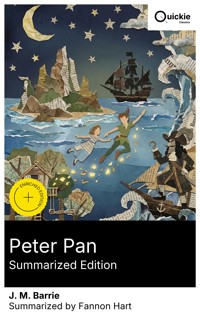
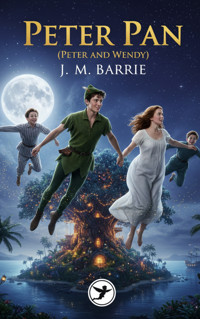
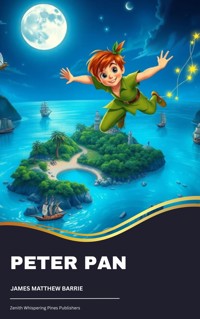
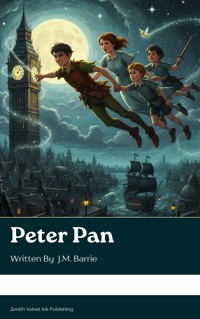
Peter Pan, first staged in 1904 and novelized in 1911 as Peter and Wendy, follows the Darling children into Neverland, where Peter, Tinker Bell, and Captain Hook enact adventures shot through with peril and sweetness. Barrie's prose weds whimsy to quiet dread; an ironic, intrusive narrator measures the price of refusing to grow up. The episodic, theatrical design betrays its stage origins, while its Edwardian context converses with Carroll and Stevenson, setting fantasy against the encroaching shadows of time and loss. Scottish playwright and novelist J. M. Barrie drew on personal history: his brother's childhood death fostered a fixation on stasis and grief, and his friendship with the Llewelyn Davies boys seeded Neverland's textures. London theatre sharpened his dramaturg's instinct for spectacle and direct address, shaping a narrative that slips between nursery and deck, sentiment and irony. Essential for readers of children's literature, theatre history, and Edwardian studies, Peter Pan rewards both scholarly scrutiny and bedtime recital. It delights in flights and swordplay while posing lasting questions about memory, motherhood, and the ethics of perpetual youth. Return for enchantment tempered by insight—and for a myth still shaping childhood. Quickie Classics summarizes timeless works with precision, preserving the author's voice and keeping the prose clear, fast, and readable—distilled, never diluted. Enriched Edition extras: Introduction · Synopsis · Historical Context · Author Biography · Brief Analysis · 4 Reflection Q&As · Editorial Footnotes.
Das E-Book können Sie in Legimi-Apps oder einer beliebigen App lesen, die das folgende Format unterstützen:
Veröffentlichungsjahr: 2026
Ähnliche




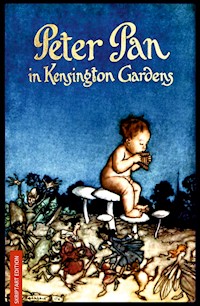

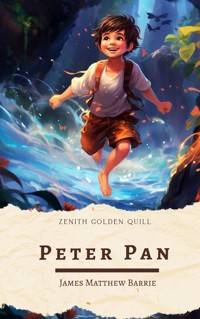
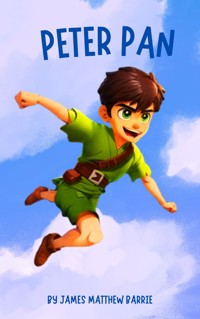

Peter Pan (Summarized Edition)
Table of Contents
Introduction
Peter Pan endures because it stages the irresistible dream of staying young forever against the sobering knowledge that enchantment always shadows a cost, asking whether freedom without memory, care, or time can truly satisfy a human heart, as flights across starlit skies promise boundless play while the pull of home, the ache of forgetting, and the demands of responsibility whisper from below, setting wonder and danger, self-invention and belonging, laughter and loneliness in intricate balance and inviting readers to consider how growing up may be less an ending than a choice about what to keep, cherish, and let go.
First encountered by audiences as a stage play in 1904 and later expanded into the novel commonly known as Peter Pan, published in 1911 under the title Peter and Wendy, J. M. Barrie’s work belongs to the tradition of children’s fantasy and adventure. Its world opens in Edwardian London, in a family nursery alive with nightly stories, then swings toward the imagined island of Neverland, where fairies, pirates, and Lost Boys crowd the horizons. Written in the early twentieth century, the book blends domestic realism with whimsical marvels, creating a portal narrative that reflects its era’s manners while indulging timeless wishes.
At its outset, the story follows the Darling children—Wendy, John, and Michael—whose ordinary evenings change when a boy who refuses to grow up arrives with a quick-tempered fairy and an invitation to fly. The ensuing journey to Neverland ushers readers into caves, lagoons, hideouts, and deck-planked duels, narrated in a voice that is playful, confiding, and slyly ironic. Barrie’s sentences lilt and dart, mixing gentle mockery with tenderness, so that danger feels exciting but not overwhelming, and longing drifts just beneath the jokes. The pace is brisk, the scenes theatrical, and the mood alternates between frolic, menace, and wistful calm.
Central themes emerge from the friction between perpetual play and the responsibilities that shape a self. The lure of make-believe grants power to invent identities and escape constraints, yet it also tests loyalty, memory, and the meaning of home. The book explores how stories nurture children and reassure adults, how bravery can look like mischief or like care, and how time clarifies what games conceal. Barrie examines friendship, jealousy, and the hope for a place at someone’s side, presenting childhood not only as innocence but as intensity, a realm of sharp emotions whose joys and hurts can never be entirely stored away.
Much of the book’s spell arises from its narrator, who teases and sympathizes in equal measure, addressing readers directly while casting a gently ironic light on adults and children alike. The prose savors small domestic objects and extravagant fantasies, moving from a night-light’s glow to swordplay in a breath. Images become emblems: stars as thresholds, flight as exhilaration and escape, ticking as a reminder that delight is measured. The geography of Neverland mirrors inner weather, shifting with desire, fear, and forgetfulness. These choices make the story feel intimate and theatrical at once, as if a bedtime tale has outgrown its room.
For contemporary readers, the book’s urgency lies in its contemplation of freedom and care: how to keep a spirit of play without denying the claims of others. It also prompts reflection on storytelling’s role in shaping identity and community. At the same time, elements of the text reflect the attitudes of its period, including dated and harmful stereotypes, particularly in depictions of Indigenous peoples and some views of gender. Acknowledging these issues deepens, rather than diminishes, engagement, inviting conversation about how classics travel through time. The tale’s imaginative resilience has influenced culture widely, but the novel itself rewards fresh, attentive reading.
Approached today, Peter Pan offers delight and disquiet in companionable measure, a book to savor slowly or read aloud for its humor, invention, and surprise. New readers can simply follow the wind toward adventure, while returning readers will notice how the story weighs boldness against belonging and how it links courage to kindness. Its scenes glimmer with theatrical energy, yet its afterglow is reflective, asking what parts of ourselves we hope to preserve. Without revealing its turns, this introduction invites you into a classic whose flight is exhilarating because it never entirely forgets what it means to come home.
Synopsis
Peter Pan, often encountered in book form as Peter and Wendy, is J. M. Barrie’s classic children’s novel, developed from his 1904 stage play and published in 1911. It opens in Edwardian London with the Darling family, whose nursery becomes a threshold between ordinary life and enchantment. Wendy, John, and Michael meet Peter Pan, the boy who refuses to grow up, and his companion, the fairy Tinker Bell. When Peter’s shadow brings him back to the Darlings’ window, he entices the children with tales of Neverland, a place of pirates, mermaids, and perpetual play, and teaches them to fly toward adventure.
Guided by Peter and Tinker Bell, the children’s flight transforms London’s rooftops into a prelude to the boundless skies leading to Neverland. Once arrived, Wendy assumes a storytelling, nurturing role that the motherless Lost Boys instinctively welcome. The island is rendered as a map of childhood’s imagination, where make-believe can alter the landscape and danger feels theatrical yet real. Peter acts as leader and protector, setting the tone for games that mimic adult life without its obligations. The Darling children discover the exhilaration and fragility of a world built from wishes, rivalry, and the constant promise of adventure.
Opposing Peter’s carefree dominion is Captain Hook, the dread pirate whose elegance masks a vengeful obsession. His enmity with Peter is marked by a past skirmish that cost him his hand, and a crocodile that stalks him with a telltale ticking swallowed along with a clock. Hook’s crew brings menace and comic bluster, enforcing the island’s rules of chase and reversal. He seeks to undermine Peter’s confidence and capture the children, turning Neverland’s stage-play peril into something sharper. The balance between make-believe and mortal risk tilts as Hook schemes, and the pirates shadow the children’s games with escalating stakes.
Peter leads the Lost Boys and the Darling children to an underground home, a hidden refuge that literalizes the desire to pause time. There, Wendy tells stories, assigns chores, and imagines a domestic order within the wildness, testing the comforts and limits of pretend family life. Peter, intent on timeless boyhood, resists the implications of responsibility and attachment. His mercurial moods and talent for forgetting keep the island’s pleasures fresh but unstable. Scenes of feasts, adventures, and bedtime tales reveal the novel’s central tension: the sweetness of perpetual childhood versus the pull of memory, duty, and growing awareness.
Tinker Bell, loyal to Peter and jealous of Wendy, embodies the volatile intensity of fairy emotion, small in size but large in consequence. Her mischief and misunderstandings create dangers for Wendy and the boys, illustrating how affection, rivalry, and pride can distort judgment in a realm where imagination quickly becomes reality. Barrie uses these episodes to probe the costs of devotion to an ideal of freedom: spontaneity can shade into recklessness, and play can imperil those who trust it. Yet the group’s bonds are strengthened by brushes with danger, setting the stage for choices that test courage and loyalty.
Neverland’s other inhabitants deepen the book’s adventure and complicate its ethics. Mermaids fascinate and threaten by turns, while a local tribe led by Tiger Lily is portrayed in ways now recognized as dated and stereotyped. These encounters underscore the story’s theatrical heritage and its era’s assumptions. A perilous episode at the lagoon, where danger from the pirates converges with shifting alliances, sparks a daring rescue that furthers Hook’s vendetta against Peter. The island’s set pieces—cliffs, coves, and the shore—become arenas where bravado is tested, and where identities are performed, challenged, and reinforced under the bright light of make-believe.
Amid continued escapades, Wendy begins to feel the tug of home, bedtime routines, and her parents’ worry, questioning how long stories can substitute for experience. Hook, sensing this restlessness, devises a cunning plot to divide the group and secure an advantage. Through trickery and timing, the pirates seize an opportunity, and the children are placed in genuine peril. Peter’s isolation in the aftermath forces him to confront the costs of his independence and the responsibilities he prefers to ignore. The stakes no longer resemble a game; the next moves will determine whether imagination can still protect its believers.
The narrative gathers into a climactic confrontation aboard the pirates’ ship, an elaborate stage that concentrates the novel’s themes of courage, leadership, and the blurred boundary between play and reality. Barrie choreographs reversals, bravura speeches, and moments of quick-witted daring, while maintaining the story’s buoyant tone. Peter’s ingenuity and the children’s solidarity are measured against Hook’s ruthless pride and fear of time’s pursuit. Each character’s defining traits—forgetfulness, loyalty, bravado, envy—become tools and hazards in the fray. The outcome turns on choices about identity and responsibility, hinting at the gains and losses that accompany any refusal to grow up.




