


0,49 €
Niedrigster Preis in 30 Tagen: 2,49 €
Niedrigster Preis in 30 Tagen: 2,49 €
Mehr erfahren.
- Herausgeber: Booksell-Verlag
- Kategorie: Lebensstil
- Sprache: Englisch
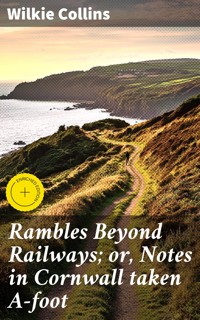
In "Rambles Beyond Railways; or, Notes in Cornwall taken A-foot," Wilkie Collins embarks on an evocative journey through the picturesque landscapes of Cornwall, offering readers an intricate tapestry of travel writing intertwined with vivid personal reflections. Written in a time when railway expansion began to dominate travel, Collins's literary style combines thoughtful observation with a conversational tone, as he articulates the stark contrasts between the industrial advancements and the untouched beauty of nature. His rich descriptions and detailed accounts not only capture the geography of the region but also resonate with emerging themes in Victorian literature regarding modernity and the reverence for nature. Wilkie Collins, a contemporary of Charles Dickens, was deeply influenced by the natural environment and the social changes of his time. Having faced challenges, including health issues and societal expectations, Collins sought refuge in the wild landscapes of Cornwall, where he found inspiration. His experiences as a popular novelist and playwright inform his narrative, blending a desire for escapism with keen observations on the human condition. This book is highly recommended for readers interested in travel literature, Victorian history, and the early critiques of industrialization. Collins's unique perspective invites readers to savor the beauty of Cornwall while pondering deeper existential themes, making it a delightful yet thought-provoking read. In this enriched edition, we have carefully created added value for your reading experience: - A succinct Introduction situates the work's timeless appeal and themes. - The Synopsis outlines the central plot, highlighting key developments without spoiling critical twists. - A detailed Historical Context immerses you in the era's events and influences that shaped the writing. - An Author Biography reveals milestones in the author's life, illuminating the personal insights behind the text. - A thorough Analysis dissects symbols, motifs, and character arcs to unearth underlying meanings. - Reflection questions prompt you to engage personally with the work's messages, connecting them to modern life. - Hand‐picked Memorable Quotes shine a spotlight on moments of literary brilliance. - Interactive footnotes clarify unusual references, historical allusions, and archaic phrases for an effortless, more informed read.
Das E-Book können Sie in Legimi-Apps oder einer beliebigen App lesen, die das folgende Format unterstützen:
Veröffentlichungsjahr: 2019
Ähnliche













Rambles Beyond Railways; or, Notes in Cornwall taken A-foot
Table of Contents
Introduction
At the point where the railway abandons the map, a solitary walker meets a county that resists haste. In Rambles Beyond Railways; or, Notes in Cornwall taken A-foot, Wilkie Collins commits himself to the pace of feet and the discipline of attention, finding meaning in landscapes and livelihoods overlooked by speed. The book’s premise is simple and radical at once: travel not to conquer distance but to dwell in it. Cornwall becomes both setting and subject, a proving ground for the writer’s curiosity. The result is a record of encounters that test assumptions about modernity, tradition, and the uses of looking closely.
This work persists as a classic because it exemplifies Victorian travel writing at its most humane and inquisitive. Rather than mounting a grand tour abroad, Collins turns his gaze inward, exploring the far west of England with the same narrative energy he would later bring to fiction. Its durability lies in the clarity of its observation and the generosity of its spirit: the book treats landscapes, trades, and people as integral, interdependent parts of a living place. It also helped secure domestic travel as a worthy literary subject, showing how a writer’s mind can transform local experience into enduring literature.
Wilkie Collins, best known for The Woman in White and The Moonstone, wrote this travel narrative in the early Victorian period, and it was first published in 1851. The volume recounts a pedestrian tour through Cornwall, shaped by coastal vistas, mining districts, and small-town life. It offers essays, scenes, and sketches rather than a continuous itinerary, inviting readers to accompany the author as he looks, asks, and reflects. Collins’s purpose, stated through practice rather than manifesto, is to capture a county at the threshold of change while honoring what makes it distinct. He writes to preserve impressions, not to prescribe conclusions.
The craft on display here illuminates why Collins became a master of narrative form. Even in non-fiction, he builds scenes with dramatic economy, knits description to incident, and lets character emerge through gesture and voice. His eye for structure—setting up a question, testing it through observation, and arriving at a measured insight—anticipates the investigative rhythms of his later novels. Yet the tone is sociable rather than sensational. Humor eases the passage from place to place; restraint keeps sentiment in check. The prose feels guided by a companionable intelligence that invites trust without demanding agreement.
The book’s historical value is inseparable from its moment. Mid-nineteenth-century Britain was being remade by industry and rail, yet Cornwall remained a region whose distances were measured by footpaths, tides, and shafts of mine. Collins travels precisely because the rails do not, accepting inconvenience as a means to fuller vision. He records how technology and tradition coexist, not as allegory but as simple fact: engines pound while hand tools still matter; travelers appear as both outsiders and participants. The result is a time capsule of work, worship, and weather, grounded in the textures of a place encountering modern change.
Walking is more than a method; it is the book’s governing metaphor. On foot, the author discovers the scale at which stories begin: the turn of a lane, the angle of a cliff, the door left open in a fishing village. This pace enforces patience and rewards curiosity, allowing chance meetings and small details to bear narrative weight. Collins shows how movement through a landscape creates a natural order for perception, shaping what the traveler sees and how he understands it. The essays read like a series of tactile frames, each anchored in the pressure and promise of the next step.
Collins’s treatment of people balances a journalist’s keenness with a novelist’s tact. He listens before he interprets, allowing local knowledge to correct his assumptions. While he writes from a Victorian perspective, he typically resists the flattening tendencies of stereotype by attending to work, speech, and circumstance. Miners, fishermen, and innkeepers are presented as agents within their environments, not merely as picturesque types. The ethical burden of looking—what it means to write about lives not one’s own—remains present but never pious. The book’s respect for particularity helps it avoid the condescensions that often diminish travel literature.
Its place in literary history is secure as an exemplary domestic travelogue by a major Victorian author. Read alongside earlier English journeys and contemporaneous essays, the book expands the canon’s sense of where literary value resides—at cliff edges, in engine houses, along lanes that maps neglect. It has remained in circulation for readers of Cornwall, admirers of Collins, and students of nineteenth-century prose, functioning as both a regional portrait and an apprenticeship in attentive writing. Without claiming direct lines of influence, one can say that it stands as a touchstone for later observers who take the local as a route to the universal.
Within Collins’s career, Rambles Beyond Railways shows the roots of his later innovations. The procedures he refines here—assembling testimony, weighing evidence, letting places generate narrative questions—would animate his sensation fiction. His prose demonstrates that inquiry need not be solemn to be serious; curiosity can be ethical when it listens as well as looks. If the book lacks the plot machinery that made him famous, it compensates with a framework of inquiry that gives each scene purpose. Readers encounter the early formation of a narrative temperament that would transform the Victorian novel while remaining grounded in observed life.
The reading experience is brisk, vivid, and companionable. Collins writes with an eye for the emblematic detail—a tool’s polish, a cliff’s geometry, a hall’s acoustics—and uses it to open into larger reflections. Anecdotes are not digressions but hinges, turning description into understanding. Humor appears where pretension might have intruded; restraint steadies emotion where melodrama might have tempted. The prose is precise without pedantry, capable of lyric lift but anchored in fact. As a result, the book delivers both sensory pleasure and intellectual clarity, inviting the reader to see how careful looking becomes a form of knowledge.
For contemporary audiences, its relevance is striking. In an age of acceleration, the premise of walking beyond the terminus feels newly urgent, modeling a mindful way of engaging with place. Its attention to labor and landscape resonates with concerns about sustainability, heritage, and regional identity. The book offers a counterexample to extractive tourism: travel as conversation rather than consumption. It also reminds us that technology’s reach, however impressive, leaves spaces where human pace still makes sense. Collins’s method—curious, courteous, and concrete—remains a usable ethic for readers who wish to encounter the world without reducing it.
What endures here are themes of movement and measure, of modern change and local continuity, of seeing and being seen. Collins makes Cornwall legible without diminishing its strangeness, balancing engagement with humility. The qualities that emerge—clarity, humor, empathy, narrative poise—explain the book’s lasting appeal and its place among Victorian classics. It speaks across time by offering more than scenery: it offers a way of reading the world that dignifies detail and foregrounds human work. To open these pages is to accept an invitation—to walk, to notice, and to consider what lies just beyond the timetable’s last line.
Synopsis
Wilkie Collins presents a pedestrian tour of Cornwall at a time when trains had not yet penetrated the county’s extremities. Traveling a-foot, he aims to see what guidebooks overlook: everyday scenes, work, and talk. The book records landscapes, industries, and customs as encountered, chapter by chapter, with an emphasis on clear observation rather than theory. Collins sets expectations upfront: he will offer sketches rather than a comprehensive survey, keeping to the limits of what a traveler can closely witness. The guiding idea is simple—distance from railways preserves distinctive ways of life, and walking is the surest means to register them faithfully.
Entering Cornwall by road and water, the narrator marks a boundary in more than geography. Hedged lanes, sweeping moors, granite outcrops, and sudden sea vistas replace the bustle of the inland counties. Village inns and cottage doorways provide points of contact, and local phrases and place-names begin to frame his route. He adopts a plain routine—long stages on foot, pauses for notes, and talks with fishermen, miners, and shopkeepers—to maintain an unbroken thread of first-hand impressions. Early pages stress quietness and remoteness: the county’s distances, sparse conveyances, and weather all shape the pace and texture of the journey.
Collins first settles on the coast to depict a fishing village in its ordinary season and at its busiest. He traces how boats prepare, crews muster, and families support the enterprise on shore. The pilchard fishery receives particular attention: the casting of seines, the drawing of nets, the salting in cellars, and the packing for export. Women and children figure prominently in this labor, bearing and sorting, while chapel schedules and communal rules order daily life. The narrative balances activity with restraint, noting profits and precarities without exaggeration. The sea’s changeable temperament remains the quiet force governing work, hope, and loss.
Continuing around Mount’s Bay, he visits St Michael’s Mount and the towns clustered along the shore. The Mount’s tidal causeway, its layered past, and its lived-in present are set side by side. Markets, quays, and lodging-houses introduce a rhythm different from the hamlets, with traders, sailors, and visitors mixing under shifting weather. Collins draws out the contrast between spectacle and service: fine views from promenades, and the practical routines that sustain them. Local history appears through records and conversation rather than romance, keeping the emphasis on verifiable detail—who owned, who worked, who crossed, and how the tide governs all movement.
Turning inland and along the cliffs, the book enters the mining district. Collins descends a working tin-and-copper mine to report the darkness, heat, and sounds underground, and the complicated web of contracts, tools, and measurements above. He explains the tributer system, the role of bal maidens at the dressing floors, and the power of beam engines that keep water at bay. A striking scene concerns a cliff mine whose levels stretch beneath the sea, where miners labor with only rock between them and the surf. Without sensationalism, he records risks, paydays, and skill, and the steadiness that experience, training, and faith produce.
The coast’s geography supplies further chapters: serpentined headlands, sudden coves, sea-stacks, and famous rocks balanced or rolled by winds and hands. Collins treats these as parts of traveled ground rather than isolated wonders, following footpaths with local guides and noting maritime signs—beacons, daymarks, and lighthouses—set against the Atlantic. He observes how quarries, cartways, and carving-shops adapt local stone to trade and ornament. Inland, scattered farmsteads and walled fields press close to cliff-brinks, showing how cultivation meets exposure. Throughout, he maintains a plain register of distances, hazards, and helps available to travelers, keeping the narrative tethered to practicable routes.
Stories of smuggling and wrecking occupy a central inquiry. Collins listens to inherited tales, checks them against parish records and official returns, and distinguishes between organized crime, opportunistic salvage, and the harsher myths of deliberate luring. He outlines the legal framework for wreck and rescue, credits the work of coastguards and lifeboat crews, and gives instances of humane aid offered to strangers. The sea remains impartial, and the shore’s people appear chiefly as responders to its accidents. By steady accumulation of cases, the narrative corrects exaggerations without denying hardship, setting reputation and reality in closer order along the storm-beaten margins.
He then examines inland towns and amusements as measures of connection. A performance at a provincial theater illustrates what traveling companies bring and what local audiences receive. Markets and coach-offices show how news, parcels, and fashions circulate without the speed of rail. Harbors, especially a major packet port, display vessels and officials engaged in work that ties the county to distant routes, even as those services alter or decline. Collins notices reading rooms, chapels, and temperance meetings, marking institutions that shape leisure and conduct. The result is a composite view of a society balancing old conveyances with new expectations at the edge of national change.
The tour closes by gathering its principal impressions: Cornwall’s character arises from the conjunction of sea, stone, labor, and belief. Collins reiterates the limits he set—observations taken a-foot, in fair and foul weather, with no claim to cover all corners—and the utility of that method in avoiding second-hand romance. He leaves the reader with connected sketches of fisheries, mines, towns, antiquities, coast-services, and everyday speech. The central message is continuity under pressure: distinct habits endure while transport and trade advance. Ending where he began, beyond railways, he offers a plain record of what walking reveals before wider links finally arrive.
Historical Context
Wilkie Collins composed his Cornish travelogue against the backdrop of early Victorian Britain, roughly 1849–1851, when the industrial heartlands surged yet the far west remained peripheral. The book is set chiefly in Penwith and the Lizard, the granite promontories at England’s extreme southwest. Published in 1851, the first edition freezes a moment just before transformative transport and administrative reforms fully reached Cornwall. He walks through fishing towns such as Penzance and St Ives, and mining districts like St Just and St Agnes, portraying communities still shaped by the sea, the mines, and Methodist chapels. An expanded 1861 edition reflects subsequent change.
Cornwall’s distinctive geography and history structure the narrative. Collins traverses cliff paths to landmarks like Land’s End, St Michael’s Mount, and the Lizard, and inland to moors dotted with megaliths such as Lanyon Quoit and Men-an-Tol. The economy he witnesses pivots on tin and copper mining, pilchard fisheries, and small-scale agriculture, with capital and machinery concentrated in towns like Hayle and Redruth. Social life bears the imprint of Wesleyan Methodism and older folklore. The setting is thus a liminal zone: culturally separate from metropolitan London, technologically lagging the rail-linked east, yet exposed to global markets for metals and fish that determine local fortunes.
The Railway Mania of the 1840s stitched much of England together but stopped short of Cornwall. The West Cornwall Railway reached Penzance to Redruth only in 1852, extended to Truro in 1855, and full through-connection came via Brunel’s Royal Albert Bridge at Saltash on 2 May 1859. Before these dates, stagecoaches and coasting vessels dominated movement west of Plymouth. Collins’s very title, Rambles Beyond Railways, signals this transitional moment. His decision to walk and coach through the county records pre-rail landscapes, travel rhythms, and local economies on the eve of accelerated integration with national markets and tourism that the late-1850s rail links would bring.
Cornish tin and copper mining expanded dramatically from the late eighteenth century through the 1840s, with deep lodes worked at Gwennap, Dolcoath, Botallack, and Levant. Beam engines by Harvey and Co. of Hayle and Perran Foundry pumped water and raised ore, while high-pressure steam pioneered by Richard Trevithick (1800s) underpinned productivity. International price swings already buffeted miners as Chilean and Cuban copper challenged Cornish output. Collins descends into, or closely visits, cliff-edge works like Botallack, the celebrated mine under the sea, to portray subterranean labor, the roar of engines, and the precarious galleries driven beneath Atlantic swells, providing a vivid social document of the industry at its height.
Labor conditions in metalliferous mines were arduous and largely unregulated in 1850. The Coal Mines Act of 1842 did not apply to metal mines; effective state oversight arrived later with the Metalliferous Mines Acts (from 1860, strengthened 1872). Men climbed thousands of ladder rungs per shift before man engines spread from early installations like Tresavean (1842). Women and girls worked as bal maidens at the surface, breaking and dressing ore; boys labored underground at tender ages. Accidents, rockfalls, and foul air were common. Collins’s sympathetic sketches of miners and bal maidens, their wages, cottages, and chapel-centered communities, implicitly indict the hazards and scant protections of the era.
Methodism profoundly shaped Cornish society after John Wesley’s repeated visits between 1743 and 1789. By mid-century, Wesleyan and Bible Christian chapels dotted villages, promoting mutual aid, temperance, and lay preaching that empowered working people. This religious culture intersected with mining districts, where class solidarity often flowed through chapel networks. Collins attends services and converses with preachers and congregants, registering the seriousness of Sabbath observance and the ethical disciplines of the pews. His observations link moral self-organization and social safety nets to the resilience he sees among fishermen and miners, contrasting chapel frugality with the speculative excess elsewhere in Victorian Britain.
The pilchard fishery was a cornerstone of the Cornish economy, especially at St Ives, Newlyn, and Mousehole. Seining crews, guided by the huer on cliff lookouts, encircled shoals each late summer; catches were pressed, salted, and exported in tens of thousands of barrels to Naples, Genoa, and Spain. Boom-and-bust years depended on shoal migrations and weather, exposing communities to sudden hardship. Collins details the cry Hevva of the huer, the curing houses, and the cooperative labor of crews and women gutters. By following fishermen along the quays and beaches, he records the social organization, maritime risks, and Mediterranean trade linkages of the pilchard industry.
Smuggling had been endemic along the Cornish coast through the late eighteenth and early nineteenth centuries, moving brandy, tea, and tobacco under cover of night. The creation of the Coastguard in 1822 and tariff reforms under Sir Robert Peel (notably in 1842 and the 1846 repeal of many duties alongside the Corn Laws) reduced profitability and eroded the practice. Myths of wrecking persisted, though legal penalties and coastguard patrols deterred plunder. Collins visits coves and talks with locals about contraband legends, contrasting romantic tales with the reality of declining smuggling and the visible presence of preventive stations on headlands and harbor mouths.
Coastal safety infrastructure evolved as shipping intensified. Trinity House maintained lighthouses at Longships off Land’s End (1795) and the twin towers on the Lizard (1752), while the Royal National Lifeboat Institution, founded in 1824, established stations around hazardous points during the mid-century. Despite these measures, fog, reefs, and Atlantic storms caused frequent wrecks. Collins’s rambles take him to lighthouse cliffs and lifeboat houses; he reports conversations with keepers and boatmen about rescues and tragedies. These encounters embed his narrative in a wider national effort to professionalize maritime safety while revealing the local heroism sustaining it.
Before the late-1850s rail connection, Cornwall relied on turnpike roads, mail coaches, and coastal shipping. Improved roads from the 1820s–30s shortened London–Penzance journeys but still made westward travel demanding. Meanwhile, a growing middle-class appetite for domestic tourism sent artists and antiquarians to rugged coasts. Collins’s choice to go a-foot and by coach registers these structures of mobility, and his descriptions of inns, milestones, and coaching timetables preserve a transport economy soon to be reshaped by rails. His travelogue also documents the earliest stirrings of organized tourism to Land’s End and the Lizard, just prior to mass excursion traffic.
Antiquarian and scientific interests focused national attention on Cornwall’s prehistoric remains and geology. William Borlase’s Antiquities of Cornwall (1754) catalogued stone circles and barrows; Henry De la Beche’s 1839 geological report mapped mineral districts, guiding investment and mining techniques. Sites like Chysauster, Men-an-Tol, and Lanyon Quoit became touchstones for visitors. Collins integrates such stops into his route, juxtaposing scholarly accounts with local lore about giants and saints. By situating walks among megaliths and mine dumps alike, he mirrors the contemporary interweaving of scientific mapping, industrial exploitation, and heritage curiosity that marked Britain’s encounter with its deep past.
The Poor Law Amendment Act of 1834 reorganized relief into unions and workhouses, with the Penzance Union formed in 1838. Rural and coastal communities oscillated between seasonal employment and destitution, especially after fishery failures or mine closures. Public Health Act initiatives after 1848 were unevenly applied in small ports. Collins observes cottages, alehouses, and workhouse rumors, noting household economies and the strain on widows and injured miners. His portraits of thrift and hardship illuminate how statutory relief intersected with chapel-based charity and kin networks, showing the limits of official provision in the face of cyclical local downturns.
Chartism (1838–1848) agitated for universal male suffrage and parliamentary reform. While Cornwall saw less mass mobilization than industrial cities, miners and artisans signed petitions and discussed the People’s Charter in chapels and reading rooms. Anti-New Poor Law sentiment and wage disputes occasionally sparked meetings in Redruth and Camborne. Collins’s encounters with literate workmen, their newspapers and debating habits, echo this politicization: he records informed, independent voices, not rural quiescence. By acknowledging their civic seriousness, the book reflects how national reform currents had penetrated remote districts, even as Cornwall’s dispersed settlements tempered collective action.
Cornish engineering undergirded global industrialization. Foundries at Hayle (Harvey and Co., established late eighteenth century) and at Perran Wharf fabricated giant beam engines exported to Cuba, Mexico, and Australia. Richard Trevithick of Cornwall pioneered high-pressure steam and built a road locomotive in 1801 and the Penydarren locomotive in 1804. These innovations enabled deeper dewatering and richer ore exploitation. Collins repeatedly foregrounds engine houses, the thud of beams, and the prestige of local engineers, linking rural cliffs to world markets. His attention to machinery situates Cornish communities within an international chain of technology, capital, and skilled labor.
Tin mining had long been governed by distinctive stannary institutions under the Duchy of Cornwall. The abolition of the tin coinage duties in 1838 ended a medieval levy and altered revenue flows and oversight, while stannary courts waned in influence. Coinage halls at towns like Truro and Lostwithiel symbolized a bygone regulatory order. Collins’s discussions of tin heritage and visits to ruins of older workings evoke this legal and fiscal transition. By contrasting ancient rights and customs with modern capitalist mining, he illustrates how nineteenth-century reform and market integration recast identities and practices in the tinners’ country he traverses.
As social critique, the book exposes how modernization arrived unevenly. In portraying long walks between chapel hamlets, dangerous mines, and fish-curing cellars, Collins registers the human costs of laissez-faire growth: unregulated metalliferous workplaces, erratic fishery incomes, and fragile public health. He implicitly challenges metropolitan complacency by honoring practical knowledge and communal solidarities that keep lives afloat at the empire’s edge. The absence of railways in the 1851 landscape becomes a metaphor for policy distance: a state quick to cheer industry, slower to secure safety, inspection, and infrastructure for peripheral laboring communities.
The narrative also interrogates class divides and the moral economy of the coast. Collins shows how capital, from smelting companies to curers and mine adventurers, structured risks borne by crews and miners, while gentry estates and tourist gazes transformed landscapes into spectacles. By sifting wrecking myths, he critiques sensationalist depictions that stigmatized poor coastal folk. His attention to Methodist associational life and lifeboat volunteerism foregrounds local civic virtue over speculative profit. In this way, the travelogue becomes an understated political document, arguing that dignity, safety, and fair dealing should accompany Britain’s mid-century technological triumphs.
Author Biography
Wilkie Collins (1824–1889) was a major Victorian novelist and innovator of sensation fiction, whose blend of legal intrigue, domestic anxiety, and suspense helped shape modern popular narrative. Closely connected with the world of magazines and the stage, he combined tightly engineered plots with experiments in point of view that influenced detective and mystery writing. Best known for The Woman in White and The Moonstone, he explored how institutions—especially marriage and the law—affect individual lives. Widely read in his lifetime and debated by critics, Collins occupies a pivotal position between the Gothic tradition and the emergence of the procedural, case-centered novel.
Collins grew up in an artistic milieu and spent parts of his youth abroad, experiences that fed his eye for setting and scene. He received a conventional middle-class schooling and, after a period in commerce, turned to legal training in London, eventually being called to the bar in the early 1850s. Though he never practiced seriously, the habits of legal reasoning, attention to evidence, and interest in statute and precedent left a deep mark on his fiction. His tastes ranged across the Gothic and melodrama, and he admired contemporary French and English realists, absorbing techniques that he adapted to serial storytelling.
His early publications show a writer testing forms. Antonina, a historical novel set in late antiquity, announced his ambition, while Basil and The Dead Secret shifted toward domestic settings charged with moral and psychological tension. He wrote travel sketches and essays, then short fiction collected in After Dark, honing the multi-voiced, document-based structures he later perfected. In the early 1850s he began contributing to Charles Dickens’s magazines and formed a lasting professional friendship with Dickens. The two collaborated on stage projects, notably The Frozen Deep, and Collins gained invaluable experience in pacing, dialogue, and scene construction suited to serial and theatrical audiences.
The Woman in White, serialized at the end of the 1850s, made him a literary celebrity. Its mosaic of narrators, reliance on letters and depositions, and tight orchestration of shocks exemplified sensation fiction, a mode that brought crime and scandal into respectable drawing rooms. The novel’s exploration of women’s legal vulnerability, identity, and property resonated with wide audiences and fueled controversy in the press. Collins followed with No Name and Armadale, each expanding his repertoire of multiple perspectives and moral ambiguity. Reviewers alternated between moral alarm and admiration for his control of suspense, while readers eagerly awaited each installment.
The Moonstone, published in the late 1860s, is often cited as a foundational English-language detective novel, notable for its rotating testimonies, careful clueing, and sober procedural logic. It influenced later practitioners by showing how conflicting voices could both reveal and obscure truth. Collins sustained his popularity with further novels that joined topical issues to gripping plots: Man and Wife probed marriage law; Poor Miss Finch engaged questions of disability and perception; The New Magdalen confronted social stigma; and The Law and the Lady placed a woman’s investigative intelligence at the center of the narrative. He continued to write novellas and stage pieces alongside his novels.
Collins worked intensely for periodicals, mastering the art of the serial cliffhanger and revising for volume publication. Chronic pain and recurrent illness led to reliance on laudanum, a fact he acknowledged, and which affected both his working rhythms and, in some critics’ view, the texture of later prose. Even so, he remained committed to using fiction as a forum for legal and social critique, dramatizing inequities in inheritance, divorce, and guardianship while expressing sympathy for outsiders and the economically vulnerable. His narratives often test the limits of respectability, questioning the adequacy of conventional morality without sacrificing narrative momentum.
In his later decades, Collins maintained a substantial readership though critical fashion shifted, and some reviewers preferred the emerging realist novel stripped of sensational devices. He nonetheless produced works that continued to find audiences, such as The Haunted Hotel, Jezebel’s Daughter, Heart and Science, and The Evil Genius. He died in London in 1889. Subsequent criticism has reassessed his artistry, highlighting his innovations in narration, his engagement with the law, and his probing of gendered power. Today his novels are regularly taught, reprinted, and adapted, and he is recognized as a progenitor of both domestic suspense and modern detective fiction.




