


Erhalten Sie Zugang zu diesem und mehr als 300000 Büchern ab EUR 5,99 monatlich.
- Herausgeber: The O'Brien Press
- Kategorie: Für Kinder und Jugendliche
- Sprache: Englisch
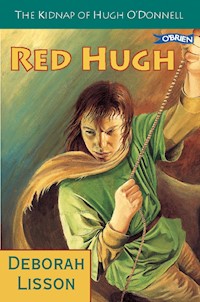
The extraordinary true story of Red Hugh O'Donnell -- kidnap, gaol, dungeons, escape Ireland in 1587 was a tough place. The old Irish clans struggled desperately to hold on to their lands. With the Spanish Armada threatening her in the background, the English queen, Elizabeth I, set out to subdue them. A few weeks before his fifteenth birthday, Red Hugh was captured and taken to Dublin Castle. He was held as hostage to ensure the good behaviour of his father, chief of the powerful O'Donnell clan of Donegal. After several years, one freezing winter's night the chance of escape seemed to come at last. But there were great risks …
Sie lesen das E-Book in den Legimi-Apps auf:
Seitenzahl: 262
Veröffentlichungsjahr: 2013
Das E-Book (TTS) können Sie hören im Abo „Legimi Premium” in Legimi-Apps auf:
Ähnliche








![Tintenherz [Tintenwelt-Reihe, Band 1 (Ungekürzt)] - Cornelia Funke - Hörbuch](https://legimifiles.blob.core.windows.net/images/2830629ec0fd3fd8c1f122134ba4a884/w200_u90.jpg)




Reviews
Red Hugh
The extraordinary story of Hugh O’Donnell, son of The O’Donnell, chieftain of Donegal, who was captured and held prisoner in Dublin Castle
a real-life adventure
‘well written, with pace and excitement. It is no surprise that this book won an award.’The Irish Times
‘A true story and a ripping yarn.’RTE Guide
‘Warring chieftains, castle dungeons, camaraderie and stoic endurance are all elements in this story of adventure and derring-do.’Best Books
For Vincent, Annette and Rory, and most of all for Colm who kissed a lady and made her feel very special
Contents
Reviews
Title Page
Dedication
IRELAND IN THE XVI CENTURY: BACKGROUNDPAGE
ONE
TWO
THREE
FOUR
FIVE
SIX
SEVEN
EIGHT
NINE
TEN
ELEVEN
TWELVE
THIRTEEN
FOURTEEN
FIFTEEN
SIXTEEN
POSTSCRIPT
MAIN CHARACTERS
THE O’NEILL FAMILY TREE
THE O’DONNELL FAMILY TREE
PRONUNCIATION GUIDE TO IRISH WORDS
Copyright
Other Books
Ireland in the xvi Century
background
THIS BOOK OPENS in the year 1587, during the latter part of the reign of Queen Elizabeth I. It was a time when England was tightening her control over Ireland and making a concerted effort to break, once and for all, the power of the Gaelic chieftains. To a great extent this had already been accomplished in the three southern provinces of Munster, Leinster and Connaught. However, Ulster, the northern province, was proving more troublesome.
Remote and inaccessible, it was still largely ‘untamed’. Real power rested in the hands of two families – O’Donnell in Tír Chonaill (modern-day Donegal) and O’Neill in Tír Eoin (Tyrone). They were traditional enemies and this had always worked to the advantage of the English administration. But by 1587 this situation appeared to be changing.
Hugh mac Manus, the incumbent O’Donnell, was failing mentally and physically, and his people – the Cenél Chonaill – were split in their support of a successor. Under Irish law, succession did not automatically pass to the eldest son as it did in England. Instead it went to an already elected heir (the tánaiste) the ‘oldest and ablest’ man within a defined kinship of the late chieftain. That was in theory, of course; in practice it more often went to the man who could raise the biggest army on the day and in 1587 that man looked increasingly likely to be O’Donnell’s fifteen-year-old son, Hugh Roe – the Red Hugh of this story.
In Tyrone, the incumbent O’Neill, Turlough Luineach, was a drunkard, in poor health and not expected to live much longer. Rivalry was intense between his potential successors too. In a bid for support, the ablest of them, Hugh mac Ferdoragh O’Neill, Second Earl of Tyrone, had married O’Donnell’s daughter Siobhán and was planning to betroth a daughter by his first marriage to the young Hugh Roe.
Faced with the prospect of a united and possibly unfriendly Ulster, Sir John Perrot, the English Lord Deputy in Dublin, decided that measures needed to be taken to ensure O’Donnell’s continued loyalty to the crown. His first move was to demand hostages of O’Donnell as a pledge of his good faith.
Hostage-taking did not then carry the same sinister overtones it does today. It was an accepted and widely practised custom among the Irish themselves – newly inaugurated chieftains took ‘pledges’ from their sub-chieftains or unsuccessful rivals, and hostages would also be exchanged between rival chieftains before important meetings.
In theory, at least, these pledges were given freely and were often volunteers. Irish law also spelt out strict conditions for their treatment. They lived as honoured guests in the households of their hosts and – provided those for whom they stood pledge behaved themselves – were not regarded as prisoners.
The English, though, played by different rules. They demanded pledges but never gave any in return, and were not too fussy about how they treated their hostages. The account by Sir William Fitzwilliam (Perrot’s successor as Lord Deputy) concerning the conditions under which even young children were held in Dublin Castle makes chilling reading. Hugh mac Ferdoragh O’Neill protested to the Council on one occasion that it would be impossible for him to find suitable volunteers if they were all to be locked up and treated as prisoners.
In 1586 Perrot extracted a promise from O’Donnell that he would send Hugh Roe’s younger brother, Rory, to Dublin as a pledge. However, in the words I have put into the mouth of his wife, the Iníon Dubh: ‘There is a wealth of difference between promise and intent.’ When no hostage was forthcoming by the autumn of the following year, Perrot decided to take matters into his own hands. A ship, the Matthew, well stocked with wine and purporting to be on a voyage from Spain, was dispatched to Tír Chonaill on a secret mission. The consequences of that mission form the basis of this book.
One important aspect of sixteenth-century Anglo-Irish conflict is the religious question. Elizabeth was ruthless in attempting to stamp out Catholicism in Ireland and establish the Church of England in its place. Her reasons were political rather than theological. In part it was a cultural device – a means of anglicising and thereby ‘civilising’ a people she considered barbaric, but there was also a more pressing reason. England was at that time under real threat of invasion from Spain. Spain was a Catholic country and a natural ally of Ireland. Not only did they share the same faith, but the Irish believed themselves to be descended from Spanish ancestors – the Milesians of mythological history. Elizabeth feared that if her rebellious Irish subjects appealed for aid to Philip of Spain, he might use their country as a stepping stone for an invasion of England. Catholicism, therefore, was seen as synonymous with treason.
This, of course, is a very simplified outline of conditions. Sixteenth-century Irish history is a minefield of intrigue and confusion – volumes could be written on the conniving and double-dealing that occurred on both sides. It will, however give you some idea of the turbulent background against which the young Hugh Roe O’Donnell set out for Rathmullen on that fateful day in October 1587.
NOTE
At the end of the book you will find a Postscript about Red Hugh’s life after the events of this story (page 212); a list of the main characters (page 214); the O’Neill and O’Donnell family trees (page 216-7); and a pronunciation guide to the Irish words (page 218).
One
HE IS DROWNING in Lough Swilly. The dark bubbling waters close above his head and thick weeds tangle his feet and draw him downward. He sinks unresisting – how peaceful it is to die. But he is cheating –-it is not supposed to end like this. He has obligations. What are they? –-he tries to remember them, but they float somewhere in the back of his mind and he cannot hold on to them.
Figures move round him in the water – pale, naked figures. Voices whisper to him.
‘We died for you, Red Hugh, son of O’Donnell. Will you leave us unavenged?’
‘When Hugh succeeds Hugh … the last Hugh shall be Árd Rí of all Ireland and drive all the foreigners out.’
‘You were not born to die in an English prison.’
What do they want of him? They cling like cobwebs and he tries to shake them off. Ghostlike, they fade. But then there comes another voice – one he has never heard before. ‘Where are the champions of Ulster?’ it demands, echoing a question he once asked himself. ‘Where are the champions of Ulster? Has the hero-light died in the heart of Ireland?’
‘An English merchantman,’ announced Donal Gorm MacSweeney, ‘come into Lough Swilly out of Spain with a cargo of the best wine you ever tasted.’ He glanced around the banqueting hall of Donegal Castle as though testing the effect of his words. ‘And they practically giving it away to all-comers,’ he finished dramatically.
His audience gazed at him in astonishment. ‘In Lough Swilly?’ repeated Hugh Dubh O’Donnell, ‘and she an English vessel? What in the name of God brought her there?’ He sounded a mite put out – jealous, perhaps, that the English merchant had chosen to honour The MacSweeney rather than himself.
‘She is bound for Greenwich,’ said Donal Gorm, ‘but her skipper says isn’t every ship coming into England these days carrying wines? He is looking for a more profitable cargo – and he after hearing that The O’Donnell is the best lord of fish in Ireland and willing to trade the same for good Spanish sack.’
‘If he wanted to trade with me, why did he not come to Donegal or Killybegs?’
The young man’s blue eyes twinkled. ‘Sure didn’t he think Rathmullen one of your castles, O’Donnell? But my father offers you the welcome of his hall and you coming to visit him. He promises you grand entertainment and all the wine you can carry away with you.’
‘A generous offer,’ said The O’Donnell. ‘My sorrow that I must disappoint him. But I leave tomorrow for a meeting with the English Lord Deputy.’
‘Oh.’ Donal looked disappointed.
Two boys seated further down the table, who had been listening intently to the conversation, began to whisper to one another. The younger one dug his companion in the ribs. ‘Go on, Eoghan, I dare you.’
The older boy stood up. ‘Why don’t I go in your place, O’Donnell?’ he suggested boldly. ‘Sure and won’t O’Neill be sending his own men for the wine and we not buying it first? And small joy it would be, I’m thinking, to see it going down that throat like slops into a cesspit.’
Everyone laughed – they knew the drinking habits of Turlough Luineach O’Neill. Even The O’Donnell had to smile. He looked enquiringly at the tall, silver-haired man sitting at his right hand. ‘Well, O’Gallagher, is this young cub of yours to be trusted with such a mission?’
Eoghan mac Toole O’Gallagher looked sternly at his son, then at his chieftain. He chuckled. ‘Ah let him go, O’Donnell. He has a good head on his shoulders, for all his wildness – and forbye, won’t it keep him out of mischief for a week or two.’
There was more laughter. Eoghan glanced at his companion. ‘And Hugh Roe to go with me?’ he asked hopefully.
The O’Donnell shook his head. ‘Not Hugh,’ he said. ‘His place is here and I out of the country.’
‘But, Father …’ the younger boy turned beseeching eyes on the chieftain.
His father looked at him sternly. ‘Your place is here, son. One day, God willing, you will succeed me. You must show the clans you are worthy to fill my place.’
The boy bit his lip. I have no wish for your place, he wanted to protest, and I with no right to it, anyway. I may be your son, but I am not your elected successor – your tánaiste. Your uncle, Hugh mac Hugh Dubh holds that office. But he kept his mouth shut. O’Donnell was his chieftain as well as his father, and a chieftain’s decisions were not to be challenged. He turned his head, trying to hide his disappointment. Then, to his surprise, help came – from a most unexpected quarter.
‘Let the lad go, Hugh,’ coaxed the Lady Finnoula O’Donnell, laying a hand on her husband’s arm. ‘He is not after putting his foot on the inauguration stone yet. What harm to allow him a little freedom?’
Her husband looked at her in bewilderment. ‘And you after insisting I bring him early out of fosterage – that I show the clans he carries my name in my absence.’
‘Then let them see it. Let him ride in your name to Rathmullen and conduct your trade with this English merchant.’
The O’Donnell still looked doubtful, but Hugh knew the argument had been won. He flashed his mother a grateful grin and she smiled at him fondly. What an extraordinary woman she is, he thought. So fierce, so proud, so ruthless in her ambition, you would swear she had not a gentle bone in her body. Yet she loved him, and felt no shame to show it.
She loved her husband too, and that was even stranger, for Hugh mac Manus O’Donnell must surely try her patience at times. The chieftain was no longer the vigorous man she had married. He was aging, growing forgetful and indecisive – and people knew it. They whispered. Wasn’t it really the Lady Finnoula – the Iníon Dubh, as they called her – who held the reins these days? And many of them resented that. Despite his reluctance to have himself intruded into a dynastic struggle, Hugh could understand the urgency to have it resolved.
He waited patiently for his father’s pronouncement and, at last, The O’Donnell made up his mind. ‘Very well,’ he conceded, ‘you may go with Eoghan and Donal. But no unseemly carousing, mind. You are to conduct yourself in a manner befitting a chieftain’s son.’
‘Oh, I will, Father.’ Hugh grinned exultantly and punched Eoghan on the arm. His heart sang like a bird. A journey to Rathmullen – and with his two best friends for company. This adventure was going to be grand – almost as good as the day they had let him ride on his first cattle raid.
They rode into Rathmullen Castle late the following afternoon. Donal MacSweeney Fanad came out to his gates with his wife to receive them. ‘It’s welcome you are at my hearth,’ he greeted them, as his horseboys stepped forward to take the travellers’ mounts. ‘And look at yourself, Hugh Roe – out of fosterage, and dreaming, no doubt, of all the sins you’re going to commit, now you are after escaping the clutches of The MacSweeney Doe.’
Hugh smiled. He had no quarrel with the Irish custom of fosterage. He had enjoyed his years in the household of Eoghan MacSweeney Doe and the bonds he had forged with his foster family would stand him in good stead in the years to come. Nevertheless, the end of fosterage meant the end of childhood at last, and he had looked forward to the day when he would finally be reckoned a man. Answerable to no one and able to make his own decisions – that was what he had always assumed. But now it seemed … He pulled a face. ‘Chance would be a fine thing,’ he said, only half joking. ‘Sure, isn’t everyone still telling me what to do?’
His host laughed. ‘A sad truth, lad. It’s the circle of life. We eat ducks, ducks eat frogs, frogs eat worms and worms eat us – eventually. There is no man, however grand, does not have something nipping at his heels.’
‘And what of Himself, then,’ asked Eoghan cheekily. ‘Who nips at the O’Donnell’s heels?’
They looked at one another and laughed simultaneously. ‘Herself it is,’ chuckled MacSweeney. ‘And, sure, isn’t that the truth for every man and he married?’
‘And you loving it,’ chided his wife, elbowing him in the ribs. ‘Boast and swagger all you will, would you not be missing me sorely now, and I not here to keep your affairs in order?’
‘My sorrow, but I would,’ confessed MacSweeney with feigned meekness. He winked at the boys. ‘Never argue with a woman, lads. They have the tongues on them would shrivel a fire-breathing dragon in full blast.’
‘Ha, and I meek as a harvest mouse.’ The Lady MacSweeney laughed heartily. ‘But come away in, lads. It’s tired you must be after your long ride. Shame on you, Donal, and you keeping them standing so long at your gates. Supper is preparing in the hall, and Donal Gorm shall show you to your quarters. They are sharing your chamber, Donal. I thought that would be best.’
Donal Gorm led them upstairs to his bedchamber. It was a large room at the top of the keep, overlooking Inch Island and the waters of Lough Swilly. Inside all had been made ready for them. Torches blazed in sconces on the wall, fresh rushes were spread on the floor and against one wall stood a huge feather bed piled with rugs and furs. The Lady MacSweeney knew how to look after her guests.
Eoghan kicked off his shoes and flung himself down on the bed. ‘Ah, now, this is comfort,’ he said. ‘We’ll sleep like kings tonight.’ He grinned. ‘And Hugh Roe, here, to sleep in the middle – he being the youngest – and we to poke him in the ribs and him snoring.’
‘Ha!’ Hugh snatched up a pillow and buffeted his friend across the face. ‘Won’t I remember that, O’Gallagher, should I ever come to the chieftaincy? A grand little dungeon I’ll have, in my castle on Lough Eske, for those who insult The O’Donnell.’
He fell on Eoghan and dragged him to the floor and they wrestled till they were both too weak from laughter to continue. As they scrambled to their feet, Eoghan held up his hands in mock surrender. ‘Ah, you have me beaten,’ he pleaded and collapsed on the bed again. ‘I’m killed entirely, just leave me here to rest in peace – but don’t forget to call me at supper time.’ And he folded his arms across his chest, shut his eyes and began to snore loudly.
Hugh and Donal laughed. Hugh crossed to the window and looked out at the lough, where the English ship rode at anchor, black and bulky against a darkening sky. There was something almost sepulchral in her beauty and her masts and rigging looked like the skeletons of winter trees. He shivered, without knowing why.
‘She’s called the Matthew,’ said Donal Gorm, coming to stand beside him. ‘And she after coming all the way from Spain. Would it not be grand to sail on her – to follow the winds around the world to harbour in Cadiz?’
Hugh nodded. He put his elbows on the windowsill and with his chin cupped in his hands leaned forward to have a better look. The Matthew rocked gently in the current, straining against her anchor as though eager to break free and follow the tide back to the open sea. He could see men moving about on her decks.
He tried to imagine Spain: a land of legend and mystery; of blue skies and eternal sunshine, where grape vines grew in orchards, like apple trees. The land of his ancestors. Thousands of years ago, Milesius and his followers had crossed the sea from Spain to settle in Ireland. He wondered what they had looked like, those ancient adventurers. The Spanish merchants he had met in his father’s hall had all been dark – slim, elegant men, black-haired and dark-eyed. His father was dark too – maybe Milesius had looked like him. But Hugh had never seen a Spaniard with red hair. Perhaps I get that from my mother’s side, he thought.
‘Were I High King of Ireland,’ he said dreamily, ‘wouldn’t I build myself a ship like yon and sail to Spain in her? She’d have masts of gold and sails white as the wings of swans and I’d marry the King of Spain’s daughter and carry her over the seas to Tír na nÓg.’
‘Then, by God, you’d do it on your lone,’ said Eoghan’s voice from behind them. He sat up as they turned to look at him and swung his long legs over the side of the bed. ‘If you’ve a mind to sail off to the otherworld with the King of Spain’s daughter then leave me out of your plans. Sure, all I want out of Spain is a flagon of their good wine, and it sitting on the table before me in an honest Irish hall. I have a hunger and thirst on me like the Dagda at the Fomorian feast. Do they never remember you have a mouth in this place?’
‘Ah, they do then,’ said Donal, spluttering with laughter, ‘though it’s little enough you deserve, O’Gallagher, and you with no more poetry in you than a bull’s backside.’ And still chuckling he led them downstairs to the hall.
Supper was a lavish and leisurely meal, ample enough to satisfy even Eoghan’s hunger. The MacSweeney Fanad was justly famed for his hospitality. He sat Hugh on his right hand and questioned him with interest about affairs in Donegal.
‘So, your father is away to his meeting with Lord Deputy Perrot,’ he said. ‘And The O’Neill will be there also, I hear.’
‘And Hugh mac Ferdoragh of Dungannon,’ added Hugh. ‘Let you not forget him.’
‘Could anyone overlook Hugh mac Ferdoragh? And what will they talk about, do you suppose?’
Hugh grinned. ‘What do they ever talk about? The O’Neill will lay complaints against Hugh mac Ferdoragh. Hugh mac Ferdoragh will lay complaints against O’Neill. The Lord Deputy will take them both to task, and then demand again the rents and hostages he says he was promised out of Tír Chonaill. My father will beat his breast and promise to deliver them. Then they’ll all go home and, sure, nobody will believe a word anyone is after saying.’
MacSweeney laughed. ‘You have the truth of it, I’m thinking; and would you not like to be there yourself – to hear it all with your own ears?’
‘And Perrot demanding hostages? I’d be the fool.’
‘Ah, you would, you would.’ His host nodded and swallowed a draught of wine. ‘But it’s more than petty squabbles, I’m thinking, is after drawing Sir John Perrot so far from the comforts of Dublin Castle.’ He chuckled. ‘Perhaps he and his English queen are after hearing all the rumours.’
‘Rumours?’
‘The old prophesy. Isn’t it on everyone’s lips again, and you out of your fosterage. When Hugh succeeds Hugh, lawfully, lineally, and immediately, being formallyandceremoniously created according to the country’s custom, the last Hugh shall be High King of all Ireland and drive all the foreigners out.’
‘High king, is it!’ Hugh spluttered into his goblet. ‘And wouldn’t The O’Neill be having words to say on that score – and Hugh mac Ferdoragh. And what of the southern chieftains? Is Fiach mac Hugh the man to be laying his sword before a northern high king?’
‘Or before any, if you go to that of it,’ chuckled The MacSweeney, ‘Fiach mac Hugh O’Byrne never had a mind to be ruled by anyone. But I am uneasy over this meeting. I don’t trust the Lord Deputy. It is in my mind that the Saxons have their swords out for us.’
‘But why? What are we after doing to anger them?’
‘Apart from not paying our rents, you mean?’
‘Well, that, to be sure, but, faith, they wouldn’t go to war with us over a few cattle. They have been our friends – our allies against The O’Neill.’
‘Ah, and there you come to the heart of the matter.’ Donal was suddenly very serious. ‘For I suspect it is not our allies they wish to be, but our masters. They have it in their minds to govern us, Hugh – to destroy our clan system, to abolish our Irish – Brehon – law and impose their own English customs in its place.’
‘But that would be impossible!’ Hugh stared at him. ‘You can’t destroy Brehon law. You might as well try to change the seasons or order a river to run uphill. It’s what makes us who we are.’
‘True,’ said his host. ‘But try telling that to Sir John Perrot. The English don’t have laws – only decrees and edicts. And they think what is right for them must be right for everyone.’
‘But they never bothered us before.’
‘They never feared us before.’ He frowned. ‘It is our friendship with Hugh mac Ferdoragh they distrust – and he married to your sister and like to be the next O’Neill when old Turlough Luineach finally drinks himself to death.’ He shook his head. ‘Think of it, Hugh. O’Donnell and O’Neill, the two greatest families in the land, united for the first time in living memory. No wonder Perrot is shouting for hostages.’
Hugh scowled. ‘And he has a mind to betroth me to one of his daughters from his first marriage,’ he said morosely, remembering a recent conversation he had not been meant to overhear.
‘Who does? Perrot?’
‘No, you great amadán, Hugh mac Ferdoragh.’
‘Ah, does he now? Which daughter?’
‘Does it make a difference?’
The MacSweeney chuckled. ‘Speak for yourself, Hugh Roe, but were it myself they were marrying off, wouldn’t I want to know who was to be sharing my bed?’
‘But I don’t want to be married off. Not till I’m at least –’ Hugh projected his mind as far as he could imagine into the future ‘– till I’m at least thirty,’ he finished decisively.
Donal MacSweeney roared with laughter. ‘And how old are you now? Fourteen?’
‘Fifteen – next month. And when – if – I ever marry, sure, it will be to a lass of my own choosing.’
‘Then you had best keep yourself out of Hugh mac Ferdoragh’s clutches.’ The MacSweeney chuckled, clapping his young guest on the shoulder. ‘Now, will I call my bards to entertain us, or do you have it in your mind to sit lecturing me all night?’
MacSweeney’s bard took his place by the fire. Hugh sat with his chin in his hands staring into the dancing flames as he listened. The songs were old ones. They told of the Tuatha dé Danann – the ancient gods of Ireland: of the Dagda, keeper of the cauldron of plenty, whose prodigious appetite had once bought precious time for his people in their war against the Fomors. Of Lugh the sun god, of the hideous, red-haired Morrigu, the hag goddess of battles. They told of the great Manannán mac Lir, son of the sea and guardian of Ireland, who rode the waters in his chariot, ‘the wave sweeper’. And lastly they sang of human affairs: tales of war, love – fulfilled or unrequited – battles and bravery and the high deeds of legendary heroes.
The notes fell from the harp like raindrops onto water – sometimes gentle, like the patter of a spring shower, sometimes loud and fierce as a winter storm. There was wind, too, in the music. It wept with the children of Lir, turned into swans by a cruel stepmother. It keened for Deirdre and the sons of Usnach. It howled round the ears of the legendary hero Finn mac Cumhaill and his warrior Fianna as they rode in pursuit of Finn’s runaway wife, Gráinne, and her lover, Diarmuid.
Hugh closed his eyes and tried to imagine the Ireland of those songs. Where had it gone to? Where were the heroes of Ulster now, when she so needed them? His father was old and ruled by a woman. The O’Neill was a drunkard. Even the great Hugh mac Ferdoragh – he whom the English called Earl of Tyrone – wore English clothes, it was said, whenever he went to Dublin, and came to heel like an obedient hound when the Lord Deputy snapped his fingers.
Would the heroes of old have done such a shameful thing – King Conor mac Nessa of Ulster, or his champion the mighty Cúchulainn? And Conor’s adversary – the fierce, bloodthirsty Queen Maeve of Connaught – would she have yielded her country to the old, red, English queen? Was I born too late, he wondered, as he made his way upstairs to bed. Has the hero-light died in the heart of Ireland?
He stood by the window and looked down for a moment at the sleeping lough. The waters were calm, peaceful in the moonlight – but they were dark, you couldn’t see into them. And the little waves were restless. They sucked and slapped around the gunwales of the English ship and the noise of them was like the bubbling of the Dagda’s cauldron – as if, somewhere beneath the surface of the lough, something alive was struggling to emerge.
Two
THE FOLLOWING MORNING, The MacSweeney Fanad dispatched a messenger to the Matthew, requesting wine for his guests. The man returned, bringing the skipper, Nicholas Barnes. Barnes had unwelcome news. ‘The wine merchant, Master Bermingham, is most sorry to disoblige your honours,’ he reported, ‘but I am to tell you he has sold all his wine and is preparing to sail.’
‘What?’ bellowed MacSweeney. ‘And he after telling me he had plenty for all comers?’
Barnes shook his head sympathetically. ‘It is indeed unfortunate,’ he agreed. ‘Master Bermingham had not expected to sell his cargo so quickly. But what little we have left is needed for the voyage home. The merchant has asked me to convey his deepest apologies.’
‘Apologies! What use, in the devil’s name, are apologies and I with a houseful of guests? Isn’t The O’Donnell’s son after riding all the way from Donegal to buy wine for his father?’
‘So I have learnt from your messenger. And Master Bermingham would indeed be grieved to offend The O’Donnell or his son. He cannot sell wine to the young man, but he bids me say that if Hugh Roe and his companions would do him the honour of visiting our ship, he would be delighted to entertain them.’
MacSweeney refused to be mollified. ‘The O’Donnell’s son will consider your invitation,’ he told Barnes coldly. ‘But it is no joke to him to be coming all this way for nothing.’
Barnes made another eloquent gesture of apology and took his leave. The MacSweeney turned glumly to his guests. ‘My sorrow,’ he said. ‘I am after offering what I could not supply.’ He looked shattered and Hugh felt for him. To fail in hospitality was the greatest shame a chieftain could suffer.
‘Don’t be slighting yourself, Donal,’ he urged. ‘What journey could be for nothing and yourself at the end of it?’
The MacSweeney only shook his head. ‘You are generous, Hugh Roe, but I promised you wine and I have none to give you. I am ashamed.’
‘Ah, come on, man. How could you know the English merchant was a braggart and a liar?’
His words had little effect. Hugh hated to see his host so mortified. He looked at his companions – maybe they could help. Donal Gorm looked as glum as his father, but Eoghan O’Gallagher’s face lit up wickedly. ‘Cheer up,’ he said, ‘and I’ll tell you what we’ll do. We’ll accept your man’s invitation – all three of us. We’ll visit his stinking ship and drink up every drop of wine he has left. We’ll show that misbegotten son of a sow what it is to offend The MacSweeney Fanad.’
They all laughed. Even MacSweeney had to smile. ‘And what if he does not offer you all he has?’ he asked.
‘How would he be refusing us – and we sitting in his own cabin and our tongues hanging out with the thirst?’ Eoghan looked at his companions. ‘Well, are you for coming with me?’
‘I am, surely,’ said Donal Gorm at once.
‘And I,’ agreed Hugh.




