


8,99 €
Mehr erfahren.
- Herausgeber: epubli
- Kategorie: Geisteswissenschaft
- Sprache: Englisch
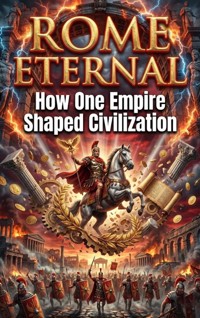
Spanning more than a thousand years, the Roman Empire forged laws, cities, and ideas that continue to define the modern world. Rome Eternal traces this lasting influence, from imperial administration and engineering to language, art, and governance. Combining archaeological research with vivid historical narrative, the book reveals how Rome's institutions survived its fall, living on in European law, architecture, and political thought. It also examines the paradox of an empire that both civilized and conquered, leaving behind a legacy of innovation and control. Through mosaics, ruins, and ancient texts, this volume chronicles how the idea of Rome became more powerful than the empire itself—an enduring model for civilization across centuries.
Das E-Book können Sie in Legimi-Apps oder einer beliebigen App lesen, die das folgende Format unterstützen:
Veröffentlichungsjahr: 2026
Ähnliche


















Table of Contents
Chapter 1: The Rise of Rome: Beginnings of an Empire
The Legendary Foundation of Rome
The Roman Kingdom: A Formative Era
The Birth of the Roman Republic
Expansion and Conflict: The Early Republic
Chapter 2: Republican Ideals: Governance and Society
The Foundations of Roman Citizenship
Civic Duty and the Common Good
Governance Structures: The Senate and Assemblies
Education and Rhetoric in Roman Society
Chapter 3: Military Conquests: Expansion and Control
The Origins of Roman Military Power
Key Military Campaigns and Their Outcomes
The Role of Military Leadership
The Impact of Roman Warfare on Conquered Peoples
The Legacy of Roman Military Practices
Chapter 4: Engineering Marvels: The Infrastructure of Empire
The Roman Road Network
Aqueducts: Bringing Water to Cities
The Colosseum and Public Spaces
Innovations in Building Materials
Chapter 5: Legal Foundations: The Roman Law System
Overview of Roman Law
The Role of Institutions
Procedural Innovations
Legacy of Roman Law
Chapter 6: Cultural Fusion: Art and Architecture
The Roots of Roman Art
Architectural Innovations
Mosaics: A Unique Expression
The Influence of Roman Art on Later Cultures
Art as a Tool for Political Propaganda
The Paradox of Cultural Domination
Chapter 7: Language and Literature: The Lingua Franca
The Origins of Latin
Latin Literature: A Reflection of Roman Ideals
The Spread of Latin Across the Empire
The Legacy of Latin in Modern Languages
Manuscripts and the Preservation of Knowledge
The Cultural Impact of Roman Literature
Chapter 8: Religion and Spirituality: The Evolution of Beliefs
The Roots of Roman Religion
The Transition to Monotheism
The Role of Religious Institutions
The Lasting Impact of Roman Religion
Chapter 9: The Decline of Empire: Internal and External Pressures
Economic Troubles: The Crumbling Foundation
Political Instability: A House Divided
Social Unrest: The People's Discontent
Barbarian Invasions: The External Threat
The Eastern Empire: A Tale of Two Cities
The Legacy of Decline: Lessons for Future Empires
Chapter 10: The Legacy of Rome: Surviving Institutions
The Rise of the Catholic Church
Roman Law and Its Enduring Legacy
Urban Planning and Civic Life
The Roman Language: Latin’s Legacy
The Dual Legacy: Innovation and Control
Chapter 11: The Idea of Rome: Myth and Reality
The Origins of the Roman Myth
Rome's Cultural Influence
The Enduring Legacy of Roman Law
Representation of Power Through Art
Chapter 12: Resilience of Rome: From Fall to Renaissance
The Fall of Rome and Its Legacy
The Middle Ages: A Time of Transition
The Renaissance: A Rebirth of Ideas
Continuing the Legacy: The Impact of Rome
Chapter 13: Rome in the Modern World: Influencing Today
The Legacy of Roman Law
Architectural Inspirations
Governance and Political Thought
Everyday Life and Culture
Religion and Philosophy
Chapter 14: Interactions Across Cultures: Rome and Its Neighbors
The Cultural Tapestry of Rome's Borders
Conflict: Conquest and Resistance
Economic Interactions and Trade Routes
Intellectual Exchange: Philosophy and Science
Chapter 15: Behind the Mosaics: Daily Life in Ancient Rome
The Structure of Daily Life in Ancient Rome
Work and Occupations in Rome
Leisure Activities and Entertainment
Food and Dining Customs
Living Conditions and Housing
Chapter 16: The Eternal City: Rome Today
A City of Contrasts
Preserving the Legacy
The Vibrant Modern Culture
Rome as a Political Hub
The Eternal Spirit of Rome
Reflections on Rome: The Eternal Influence
Chapter 1: The Rise of Rome: Beginnings of an Empire
This chapter explores the early history of Rome, starting from its legendary foundation to its growth into a significant power in the Mediterranean. We will examine the key events and cultural influences that laid the groundwork for Rome's later dominance.
The Legendary Foundation of Rome
This section delves into the mythological origins of Rome, focusing on the legendary tale of Romulus and Remus. Understanding these legends helps us grasp Rome's cultural identity and the values that influenced its citizens.
Romulus and Remus: The Founding Myth
The legendary tale of Romulus and Remus is central to understanding the cultural identity of ancient Rome. According to myth, the twins were sons of the god Mars and were abandoned at birth, only to be found and suckled by a she-wolf. This supernatural origin story not only emphasizes the divine favor bestowed upon the Romans but also underlines themes of resilience and survival. Eventually, Romulus would become the first king of Rome, symbolizing the city’s strength and martial prowess.
This mythological narrative served as a pivotal foundation for Roman values, including honor, duty, and the importance of the familial bond. Furthermore, the story’s conclusion, in which Romulus kills Remus out of jealousy, introduces the idea of conflict as an intrinsic aspect of Rome’s identity and expansion. This duality of ambition and rivalry would influence Roman politics and society throughout its history.
The significance of mythology in Roman culture
Mythology held profound significance in Roman culture, acting as both a means of entertainment and a vehicle for conveying moral values. Roman myths often illustrated ideals such as bravery, loyalty, and the importance of community. They provided a shared narrative that reinforced the identity of the Roman people, connecting citizens to their history and cultural heritage.
Early settlement on the Palatine Hill
The Palatine Hill, one of the Seven Hills of Rome, holds a significant place in the early narrative of the city's development. Archaeological evidence suggests that it was among the first areas settled by the Latins around the 9th century BCE. Its strategic location offered natural defenses and a commanding view of the surrounding regions, making it an ideal site for establishing a community.
The role of the Etruscans in shaping early Roman society
The Etruscans, a powerful civilization in ancient Italy, significantly influenced the development of early Rome. By the late 7th century BCE, they had established a rich culture characterized by advanced metallurgy, trade, and urban planning. As neighboring communities, the Etruscans interacted closely with the Romans, impacting various aspects of Roman life.
The Roman Kingdom: A Formative Era
This section examines the transition from mythology to history, spotlighting the period of the Roman Kingdom. The governance structure and key figures set the stage for future developments.
The establishment of the monarchy and its significance
The establishment of the monarchy in ancient Rome marked a pivotal moment in its early history. Traditionally dated to 753 BCE, this period began with the legendary figure of Romulus, who is credited with founding the city and instituting the first governmental structures. The Roman monarchy introduced centralized authority, essential for managing resources and ensuring security amid the threats from surrounding tribes. Kings held both political and military power, creating a system that would influence future governance.
This monarchical system was significant as it allowed Rome to transition from a collection of disparate settlements into a cohesive entity capable of expansion. It provided a framework for leadership, represented by the king who embodied both divine and civic responsibilities. Moreover, the monarchy's centralization of power enabled economic prosperity and laid the groundwork for territorial conquest, eventually leading to greater political sophistication in the republic and beyond.
Key rulers: Romulus, Numa Pompilius, and others
Among the early kings of Rome, Romulus stands out as the most crucial figure. As the first king, he not only founded the city but also established key institutions, such as the Senate, which would play an important role in Roman governance. His military campaigns expanded Roman territory, solidifying its influence over neighboring regions.
Numa Pompilius, the second king, is often remembered for his contributions to Roman religion and law. He is credited with instituting various religious rituals and the priesthood, which helped to consolidate social order. Other notable rulers, such as Ancus Marcius and Tarquin the Proud, also played significant roles, with each shaping aspects of governance and culture. Collectively, these monarchs helped define a political framework that would evolve into the Republic, influencing subsequent leaders and policies.
The influence of religion and the priesthood
Religion played a vital role in the governance and societal structure of ancient Rome. The monarchy not only exercised political authority but also acted as a religious figurehead. Kings were often seen as chosen by the gods, which added a divine legitimacy to their rule. This intertwining of politics and religion established a societal expectation that rulers would maintain favor with deities through proper worship and rituals.
The establishment of the priesthood, particularly under Numa Pompilius, highlighted the importance of religion in daily Roman life. These priests, tasked with performing sacrifices and rituals, ensured that the will of the gods was respected. The religious obligations of leaders further reinforced their authority; failure to uphold these could lead to social unrest or a loss of legitimacy, showcasing how deeply religion influenced Roman politics and culture during this formative era.
Social structure: Patricians vs. Plebeians
The social structure of early Rome was markedly stratified, primarily divided into two classes: the Patricians and the Plebeians. Patricians were the aristocratic lineage, often wealthy landowners who wielded significant political power, especially within the Senate. They were seen as the guardians of Roman traditions and had exclusive rights to certain political and religious offices, reinforcing their dominance in society.
Conversely, the Plebeians comprised the common people, including farmers, laborers, and merchants. Lacking the same privileges as the Patricians, they often found themselves at a disadvantage, particularly in political participation. This delineation between the classes would eventually lead to social conflicts, particularly during the Conflict of the Orders, where Plebeians sought greater access to political power and rights. This tension highlighted the evolving dynamics of Roman society and foreshadowed the later developments of the Republic, ultimately shaping governance in profound ways.
The Birth of the Roman Republic
This section describes the pivotal moment when Rome transitioned from a monarchy to a republic. The changes in governance would have long-lasting effects on Roman civilization and its legacy.
The overthrow of the monarchy: Causes and outcomes
The transition from monarchy to republic in Rome was a pivotal moment shaped by various social and political factors. The last king, Tarquin the Proud, was notorious for his tyrannical rule, which fostered resentment among the nobility and common citizens alike. His oppressive governance and the violation of sacred laws incited significant unrest, culminating in a revolt led by Lucius Junius Brutus and other nobles.
This revolution resulted in the establishment of a republic in 509 BCE, marking a dramatic shift in governance. The monarchy's fall not only liberated Romans from autocratic rule but also initiated a system based on elected officials and shared power. The resulting political structure allowed for more participation from various social classes, fundamentally altering the course of Roman history. The monarchy's abrupt demise also set a precedent that would resonate throughout future political transformations, illustrating the enduring struggle against tyranny.
Establishment of the Senate and popular assemblies
In the aftermath of the monarchy's overthrow, the Senate emerged as a fundamental institution of the Roman Republic. Initially composed of Patrician elites, the Senate represented the aristocratic ruling class and played a crucial role in governance, making policies and advising magistrates. Over time, it became central to legislative and foreign affairs, shaping Rome’s political landscape.
Simultaneously, popular assemblies were established, allowing for greater citizen participation in governance. These assemblies enabled Plebeians—the common people—to vote on laws and elect officials, including the Tribunes who protected their interests. This dual structure of governance, contrasting the elite Senate with the broader assemblies, laid the groundwork for a complex political system that would ultimately define Roman identity and power dynamics for centuries.
The concept of 'res publica' and its significance
The term 'res publica' translates to 'public matter' and epitomized the ethos of the Roman Republic. It represented a new political philosophy that prioritized the common good over individual rule, emphasizing civic duty and collective governance. This concept was revolutionary, as it shifted the focus from a king’s whims to a system accountable to the people.
The adoption of 'res publica' signified the Romans' deep commitment to principles of law and participation. It fostered a sense of shared responsibility among citizens, encouraging them to engage actively in political life. This idea laid the foundations for modern democratic principles, as it advocated for a government that serves the welfare of its constituents, thereby influencing future political thought across Europe and beyond.
Major conflicts between Patricians and Plebeians
One of the defining features of the Roman Republic was the ongoing conflict between the Patricians, the wealthy aristocrats, and the Plebeians, the common populace. This struggle stemmed from socio-economic disparities and political disenfranchisement of the Plebeians, who sought greater representation and rights within the government. The early republic was marked by significant tensions, often leading to violent confrontations and strikes.
The most notable of these were the “Secession of the Plebs” episodes, where Plebeians would withdraw from the city in protest, effectively crippling Rome without their labor. These conflicts ultimately led to significant reforms, such as the establishment of the Twelve Tables, which codified laws applicable to all citizens. Over time, the Plebeians gained access to political positions and the power to challenge Patrician dominance, shifting the balance of power in Rome and forging a more inclusive society.
Expansion and Conflict: The Early Republic
This section focuses on the early military campaigns and territorial expansions of the Roman Republic. These early conflicts contributed significantly to Rome's identity and power.
The Latin Wars and subjugation of neighboring tribes
The Latin Wars, fought between 340 BC and 338 BC, represented a crucial phase in the early expansion of the Roman Republic. These conflicts arose from Rome’s desire to consolidate power among the Latin tribes that inhabited the region surrounding the city. Initially, the Latin League posed a formidable challenge, uniting various tribes against Rome. However, through a series of strategic battles, Rome not only emerged victorious but also forged alliances with defeated tribes, integrated them into its growing territory, and expanded its influence.
This period marked a pivotal transformation in Rome's military and political structure. It adopted a more aggressive policy towards its neighbors, demonstrating a shift from a defensive posture to active expansionism. The subjugation of neighboring tribes not only increased Rome's territory but also contributed to its cultural assimilation, leading to a more diverse identity within the Republic. Thus, the Latin Wars laid the foundational dynamics for Roman expansion and created a template for future military endeavors.
The Punic Wars: Introduction to Carthage as an adversary
The Punic Wars (264-146 BC) were a series of three significant conflicts fought between Rome and Carthage, a powerful city-state located in North Africa. These wars marked a turning point in the ancient world, establishing Rome as the dominant power in the Mediterranean. The first war began over control of Sicily, a strategically valuable island. Rome's eventual victory showcased its growing naval capabilities and introduced new military strategies.
The subsequent Punic Wars escalated this rivalry, particularly the infamous Second Punic War, led by the Carthaginian general Hannibal. His audacious crossing of the Alps to invade Italy displayed remarkable military prowess and strategic vision, leading to several Roman defeats. However, Rome's resilience ultimately prevailed, resulting in the transformation of Carthage into a second-rate power and the expansion of Roman influence across the western Mediterranean.
Military tactics and innovations during this era
The early Republic was characterized by significant military innovations and tactical developments that contributed to Rome's burgeoning power. The Roman legion, which replaced the earlier phalanx formation, allowed for greater flexibility and adaptability in battle. Each legion was composed of highly trained and disciplined soldiers, organized into maniples, facilitating dynamic maneuvers on the battlefield.
Moreover, these military reforms were accompanied by technological innovations such as the pilum (a type of javelin) and the use of siege engines. Such advancements provided the Roman army with enhanced capabilities to breach city walls and engage in prolonged sieges. The combination of tactical ingenuity and disciplined training enabled Rome to not only win significant battles but also to sustain its military endeavors across diverse terrains and against varying foes, solidifying its identity as a formidable military power.
How conflicts shaped Roman society and politics
The early military conflicts during the Republic had profound implications for Roman society and its political landscape. As Rome expanded its territory, conquered peoples were often integrated into the Republican framework, leading to an increase in the population of Roman citizens. This incorporation fueled Rome's economic growth and allowed for the accumulation of wealth and resources, which were pivotal for funding military campaigns and public projects.
Moreover, these conflicts spurred changes in the political structure of Rome. Military leaders, often celebrated as heroes, began to accumulate political power, sometimes challenging the authority of traditional government institutions. This gradual shift blurred lines between military and political life, sowing the seeds for future conflicts and changes within the Republic. As civic identity began to intertwine with military success, Rome evolved into a society that revered its military accomplishments, shaping the culture and governance that would define its legacy.
Chapter 2: Republican Ideals: Governance and Society
As we look at the Roman Republic, this chapter discusses its unique system of government, focusing on the concepts of citizenship and civic duty. Discover how these ideas defined Roman society and influenced modern democratic practices.
The Foundations of Roman Citizenship
At the heart of the Roman Republic was the idea of citizenship, which dictated not only the rights and privileges of individuals but also their responsibilities. Understanding these foundations provides insights into how Romans viewed their identity and duties within society.
Citizenship Criteria
In ancient Rome, citizenship was a prized status that conferred specific rights and privileges, but it was not universally granted. Primarily, citizenship was reserved for free-born males, creating a societal structure that placed them at the apex of Roman identity. Women and slaves held different statuses within this hierarchy, with women possessing limited rights in public life and slaves having virtually no civic standing. This selective approach underscored the Roman emphasis on military service and political participation as criteria for citizenship. Only those who could contribute to the Republic's defense and governance were afforded the honor of citizenship, reflecting a culture that prioritized public service and allegiance to the state. The strict definitions of citizenship laid the groundwork for later democratic ideals, as it fostered a sense of belonging and responsibility among a chosen elite, further influencing the evolution of citizenry in future societies.
The Role of the Citizen
The Roman citizen was not merely a passive recipient of rights; active participation in civic life was paramount. One of the primary responsibilities was voting in assemblies, where citizens had the power to decide on laws and elect officials. This direct participation fostered a sense of accountability and ownership in governance, encouraging citizens to engage in political discourse and societal development. Additionally, military service was considered a civic duty, where men were called to defend the Republic against external threats. This expectation of involvement reinforced the symbiotic relationship between rights and responsibilities, establishing a framework that influenced modern democratic practices. The emphasis on civic engagement helped cement the idea that citizenship is not only about individual privileges but also about collective responsibility toward one’s community and government.
Importance of Legal Rights
Roman citizenship came with significant legal rights that protected individuals and their property. Citizens were entitled to a fair trial, a landmark principle that remains a cornerstone of modern legal systems. This right not only ensured justice in legal disputes but also safeguarded against arbitrary punishment, enhancing the rule of law within the Republic. Furthermore, certain legal protections allowed citizens to appeal decisions and seek redress. The gradual development of these rights highlighted Rome's commitment to establishing a legal framework that would inspire future civilizations. This focus on legal rights emphasized the importance of equity, justice, and the protection of individual freedoms, ultimately shaping the judicial principles that underpin contemporary law today.
Expansion of Citizenship
As Rome expanded its territories, the concept of citizenship evolved to include inhabitants of conquered regions, marking a significant shift in its civic policy. This gradual expansion was driven by the need for integration and stability within the diverse populations of the Empire. By granting citizenship to these individuals, Rome not only secured loyalty but also assimilated various cultures, enhancing its own identity. Over time, this inclusivity helped foster a sense of Roman unity and pride, as more people aspired to the values associated with citizenship. This process also illustrated the complexities of power and governance in a multi-ethnic empire, serving as a lesson in balancing control and integration that resonates in modern discussions about citizenship and national identity.
Civic Duty and the Common Good
Civic duty was a cornerstone of Roman life, emphasizing the role of the individual in contributing to the health of the Republic. This section explores how these ideals shaped societal expectations and political engagement among Romans.
Concept of Res Publica
The term res publica, meaning "public matter," encapsulates the Roman commitment to the collective well-being of their society. It signifies that the state was not the property of the rulers alone, but belonged to its citizens, who were expected to play an active role in governance. This concept formed the foundation of Roman citizenship, highlighting that individual interests were tied to the public good.
Romans believed that their participation in civic life was essential for sustaining the Republic. The notion of res publica fostered a sense of community and shared responsibility, prompting citizens to engage in political and social activities that benefited all. Historical records demonstrate how this ideal was institutionalized, allowing for the development of laws and systems that encouraged public involvement, thereby creating a resilient political structure that could adapt to changing circumstances.
Military Engagement
Military service was not merely a duty but a profound expression of civic responsibility in ancient Rome. Every male citizen was expected to serve in the military, contributing to the defense of the Republic and the expansion of its territories. This engagement fostered a strong sense of loyalty and pride among soldiers, who viewed their service as a vital means of safeguarding the Roman way of life.
Moreover, this commitment extended beyond the battlefield, as military service established bonds among citizens from diverse backgrounds, cultivating unity in the pursuit of a common cause. The victories achieved through military campaigns were celebrated throughout the Republic, reinforcing the idea that civic duty was inextricably linked to the fortunes of the state. Thus, the military not only protected the Republic but also cemented the concept of duty to the common good in the hearts of the Roman people.
Political Participation
Active engagement in politics was a hallmark of Roman citizenship, manifesting itself through participation in assemblies and public debates. This engagement allowed citizens to voice their opinions on laws and policies, directly influencing the functioning of the Republic. The assemblies served as platforms for dialogue, where issues could be discussed, and votes cast, emphasizing the importance of civic responsibility in governance.
Citizens were encouraged to take an interest in public affairs, which included everything from local governance to broader issues affecting the entire Republic. This interaction not only informed citizens of their rights but also empowered them to hold their leaders accountable. Through their active involvement, Romans reinforced the idea that governance was not a distant concept but a communal enterprise vital to the health of the Republic.
Philosophical Influences
The philosophical landscape of ancient Rome, particularly the influence of Stoicism and other schools, played a significant role in shaping the ideals of civic duty. Stoics emphasized virtues such as justice, wisdom, and self-control, promoting the belief that personal honor and public service were intrinsically linked. This philosophy urged individuals to act for the common good, cultivating a sense of ethical responsibility in their civic engagements.
Philosophers like Cicero articulated how virtue could be expressed through active participation in public life, arguing that the pursuit of public welfare aligned with one’s personal integrity. This synergy between personal duty and public service not only encouraged Romans to engage in civic affairs but also established a moral framework that underscored the importance of contributing to the Republic’s longevity and prosperity. Thus, the philosophical discourse of the time profoundly enriched the concept of civic duty in Roman society.
Governance Structures: The Senate and Assemblies
The governance structure of the Roman Republic was complex and multifaceted, distinguishing it from other contemporary states. This section examines the roles of the Senate and popular assemblies in shaping public policy and administration.
The Senate's Authority
The Senate of the Roman Republic held significant authority and was primarily composed of Rome's elite, including former magistrates and noble families. This esteemed body was responsible for guiding legislative decisions, managing foreign affairs, and overseeing financial allocations. Their influence extended to advising magistrates and shaping public policy, making them a central pillar in the Republic’s governance.
Importantly, while the Senate possessed substantial power, it did not legislate directly. Instead, it recommended actions and policies to the popular assemblies, reflecting the ruling elite's interests. The Senate operated under the belief that they represented the best interests of Rome's stability and expansion. Such authority made their ability to unify or divide public opinion crucial to the Republic’s operations and longevity.
Popular Assemblies
The Roman Republic’s governance was characterized by the presence of popular assemblies, which played a critical role in allowing Roman citizens to express their power. These assemblies enabled male citizens to vote on proposed laws and elect various magistrates, ensuring that the broader populace had a voice in governance. This form of direct democracy, albeit limited, was designed to elevate civic participation in decision-making processes.
While this system granted significant power to the citizens, it notably excluded women, slaves, and non-citizens, restricting the scope of representation. Nonetheless, the assemblies were pivotal in legitimizing governmental authority and provided a counterbalance to the Senate's elite influence, thereby fostering a dynamic political atmosphere within the Republic.
Checks and Balances
One of the defining characteristics of the Roman Republic's governance structures was the implementation of checks and balances. This system ensured that power was not concentrated in a single entity, allowing various political offices and bodies to limit each other’s authority. For example, consuls had the power to veto one another, while the Senate could advise on matters that the assemblies were voting on.
This division of authority was foundational in preventing abuses of power and maintaining a stable government. The concept of checks and balances established by the Romans later influenced modern democracies, showcasing the Republic's enduring impact on governance. By ensuring that no one branch could dominate, the Romans pioneered a model that continues to shape political systems around the world.
Conflict between Patricians and Plebeians




