


Erhalten Sie Zugang zu diesem und mehr als 300000 Büchern ab EUR 5,99 monatlich.
- Herausgeber: Nosy Crow
- Kategorie: Für Kinder und Jugendliche
- Sprache: Englisch
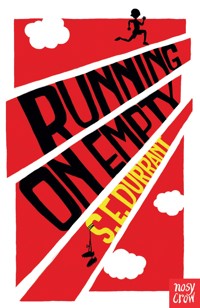
AJ's grandfather has always been the one to keep his unusual family together, so when he dies things start to unravel at the edges. AJ is worried about his parents but they don't really seem to notice. In order to deal with his grief and to keep his anxiety at bay, AJ does what he and his grandfather did best: running. Round and round the Olympic Park, aiming for the cross country trials. Running to escape, AJ only seems to be heading ever closer to disaster. Running On Empty is a beautiful book about false starts and emotional journeys, with hope as the ultimate finishing line. From the author of Little Bits of Sky and Talking to the Moon Cover illustration by Rob Biddulph. Winner of the Student Vote, UKLA Book Award 2019 Highly Commended, UKLA Teachers Book Award 2019 Nominated for the 2019 CILIP Carnegie Medal Shortlisted for the 2018 North Somerset Teachers' Book AwardsShortlisted for the Little Rebels Award 2019 Shortlisted for the Warwickshire Book Award 2019 Shortlisted for the Tower Hamlets Book Award 2019 Lyrical, moving and realistic, SE Durrant's Running on Empty is about the struggle of an 11-year-old carer who is starting secondary school and wants to run like Usain Bolt. With a rich and diverse cast, it sings." - Sunday Times "Running on Empty is one of the best children's novels of the year." - Express "Beautiful writing about family, loss, dreams and small pleasures that packs a real emotional punch." - The Bookseller "I absolutely love this book!...it's a light-hearted, tender book, as warm and funny as AJ himself." - Official Jacqueline Wilson Magazine "Running on Empty is a deeply moving story of one young carer's struggle to keep his family together... It is beautifully written and thought provoking. A really special book." - North Somerset Teachers' Book Award "AJ's situation is described with powerful realism, and yet with the very lightest of touches. He is essentially a young carer, whose parents have learning difficulties, but there is never a sniff of a stereotype or call for pity. Durrant makes important points about avoiding assumptions with huge subtlety, sensitivity and humour. Convincing, uplifting and immensely readable." - BookTrust
Sie lesen das E-Book in den Legimi-Apps auf:
Seitenzahl: 218
Veröffentlichungsjahr: 2018
Das E-Book (TTS) können Sie hören im Abo „Legimi Premium” in Legimi-Apps auf:
Ähnliche












![Tintenherz [Tintenwelt-Reihe, Band 1 (Ungekürzt)] - Cornelia Funke - Hörbuch](https://legimifiles.blob.core.windows.net/images/2830629ec0fd3fd8c1f122134ba4a884/w200_u90.jpg)



“It’s no use going back to yesterday, because I was a different person then.”
Alice’s Adventures in Wonderland by Lewis Carroll
CENTRE OF THE UNIVERSE
The most amazing thing I ever saw was Usain Bolt winning the 100 metres at the London Olympics. I was there with my mum, dad and grandad and we were high up in the stadium and I was seven years old and I felt like I was at the centre of the universe. And when he broke the Olympic record I thought the noise would lift the stadium up off the ground and catapult it right out into space. Because nothing about that moment felt ordinary.
And one of the most unforgettable things about it – and not the best – was when people ran to the front and pushed forward for autographs, there was Amit from my class. He just popped up on the big screen. He was enormous. His head was the height of the high jump. He was trying to squeeze through to the barrier and he was just desperate to touch Usain Bolt or get his autograph on his ticket. And he did. He pushed right to the front.
I felt sort of annoyed. I hadn’t even known he was there. I tried not to let it bother me but it did. And it’s sort of bugged me ever since. I just had to not look too hard when Amit got right up close to Usain Bolt, and when he got his autograph I thought I’d be sick. I’m not kidding. I nearly threw up. I was thinking maybe I should run down to the front too and try to catch him when he did his lap of honour. He had the Jamaican flag round his shoulders and he didn’t look in any hurry to get out of the stadium. But then I thought no, I might be too late. And it would be so embarrassing if I got caught on TV as the boy who tried to run down and couldn’t get through. So I just sat there and Amit looked right into the camera and he was beaming from ear to ear like he’d just won the golden ticket in Charlie and the Chocolate Factory.
I would have done anything for that autograph and I still would, to tell you the truth, even though I’m eleven years old now. I tried to concentrate on what I already had, which I guess was something more spiritual. I felt like I had a connection with Usain Bolt and having Amit there sort of spoilt it. I think Usain Bolt probably felt more spiritual too. He was probably quite annoyed with all these people trying to get close to him, though he seemed to be quite enjoying it. He’s good with the crowd.
Anyway, Amit got the autograph and I didn’t and he took it to school at the start of Year 3 and did a talk about how Usain Bolt gave him a special look when he signed his ticket. It was sickening. But that’s Amit for you. He’s better looking and cleverer than everyone else and he always gets what he wants. I expect every school’s got a kid like that.
And on the whole I’ve managed to turn that moment around in my head and make myself feel badly about Amit getting the autograph. I think, Why couldn’t he just stay in his seat and enjoy the moment? What was the matter with him? It’s funny how you can change the way you feel if you put your mind to it.
And the thing about that race is it really was special for me because the Olympic Stadium is just a few streets from our house. We saw them build it. Honestly. We’re that close. And another reason it was special is Usain Bolt won in 9.63 seconds and Grandad lived at number 9 and we live down the road at number 63. I sometimes think if Grandad lived at number 8 Usain Bolt might have run 100 metres in 8.63 seconds and if Grandad had lived at number 7 and Usain Bolt had won the race in 7.63 seconds, the world would have physically exploded because it would have been a miracle. I know that might sound stupid but it’s just a feeling I’ve got.
But usually when I think of Usain Bolt winning the 100 metres I think of Mum shouting at the top of her voice and Dad with his eyes shut and his hands over his ears and Grandad squeezing my hand and saying, “Can you believe it, AJ?” and me just knowing I would remember that moment for the rest of my life.
Buzzing
I’m going to tell you what makes me different straight away. If I don’t, it sort of buzzes around at the back of my brain like a fly stuck in a room. And it bugs me. You know that thing where they bang against the window and you just have to let them out because they’re stopping you thinking about anything else? Well, that’s how it feels. So what I do is either I open the window and let the fly buzz out into the world or I decide to never, ever let the fly out and eventually it stops buzzing. It depends who I’m talking to.
The thing that makes me different from other eleven-year-old boys, apart from my fantastic running ability, is my parents have learning difficulties. It’s no big deal for me. Really it isn’t. I don’t look after them. We look after each other.
My mum makes the best cakes ever. She’s the kindest person in the world too. Honestly, you’d know if you met her. She might not be clever in the way of making sense of lots of things very quickly but she’s clever in the way of understanding bigger things better than most people. She doesn’t waste years of her life sending messages or texting. She doesn’t do any of that. She won’t even answer the phone. She talks to people if they’re with her but apart from that she’s not bothered. And she doesn’t spend loads of time worrying either. She worries about something and then she stops worrying and then she’s happy.
And when I worry I’m awake all night and in the morning my head hurts and my stomach aches and I can’t concentrate at school. And I’m supposed to be clever. Not brilliant but sort of OK. But when Mum gets up she’s smiling. Even though there’s lots to worry about, she’s smiling. So who’s cleverer?
My dad’s more like me in the way of worrying. He can’t just stop. If he’s worried, he walks up and down the garden, even if it’s the middle of the night. He just walks up and down, up and down, between the vegetables.
My dad practically lives in the garden. If you came to our house you might not see him unless you look out of the kitchen window, and then you might just see the top of his hat poking out from behind the beans. He grows potatoes, onions, beans, pumpkins, spinach and garlic. And if that makes you think we’ve got a big garden, we haven’t. It’s seven steps from our kitchen door to our back fence. I’m not kidding. One more step and you’d knock yourself out. Dad just grows everything really close together. Grandad taught him that.
My mum has four rules for life. My dad has one.
My mum’s are:
Be kind to people
Do your best
Check everything’s switched off
Remember to look at the sky
My dad’s rule is:
Love Alice (that’s my mum)
As for any other rules he follows hers. She’s the most important person in the world to him. They are like two halves of a whole. They fit perfectly. They’re just not so good at the complicated stuff, like sorting out forms or if the washing machine needs fixing. My grandad did all that. That’s my mum’s dad.
My grandad lived down the road but he died two months ago. Just before school broke up for summer. And I know it really wasn’t my fault, but sometimes I think maybe he died because of me. And that makes me feel so bad. Because I was the last one to see him alive.
100 metres is 100 metres
My grandad was always running. Even when he was old he never really stopped. When I was eight I said can I come too and he said yes. He was pretty pleased I think. And those times running with him were some of the happiest times of my life. I’m not kidding.
We’ve got this little park round the corner and we went round it one day and measured the path like a running track. Grandad had a little pot of red paint and a tiny paintbrush and he just knelt down and made a dot every hundred metres in exactly the right place. He didn’t even pretend not to do it. He just painted a dot and nobody seemed to notice.
We worked out it’s 100 metres from the flower bed to the dog-poo bin, 100 metres from the dog-poo bin to halfway down the bench, 100 metres from halfway down the bench to the broken tree, and 100 metres from the broken tree to the shelter with the graffiti. We went round the path twice and marked out 1,000 metres, all in exactly the right place. I’d tell you more about it but it’s probably best if you come yourself, if you want to see. Because it sounds quite boring and it really isn’t boring at all.
And the best thing about our track is Grandad said it’s exactly the same as the Olympic track because 100 metres is 100 metres wherever it is.
Anyway, last time I saw Grandad he just ran from the dog-poo bin to the bench and then he said, “I’m going to have to go home, AJ. I’m not feeling too good.”
I said, “Please, Grandad, just a bit more. You can sit on the bench.”
But he shook his head.
“No, AJ. Got to go.”
And then he smiled. “See if you can beat your record,” he said.
And as he walked away he didn’t even look back. He just walked down the shortcut through the bushes and he was gone. I was quite disappointed to be honest but I jogged round the park a few times and then I ran 400 metres in about 60 seconds. It was my fastest time ever. I couldn’t wait to tell him, I knew he’d be really impressed.
But when I got to his house he wouldn’t answer the door. My aunt Josephine and my cousin Aisha were round, so Mum and Josephine went to Grandad’s with the spare keys and I stayed at home and looked after Aisha (the best kid in the world by the way). And they found Grandad dead. He’d just sat down on his chair and he was dead. And although the doctor said he had a weak heart and he was lucky to live so long it doesn’t feel lucky at all.
One funny thing though. Mum and Josephine said he was smiling when they found him. They even said it at the funeral. I don’t know what they meant exactly. I didn’t see him myself. But I think about it sometimes. I think about all sorts of things in fact. Sometimes I think, What if he’d sat on the bench and waited for me? He might have died there and that would have been worse. I’d have come running round the bend and he could have been dead on the bench. And he would not have liked that. It might have been on the news. It would have been terrible in lots of ways. Social services might have come round.
Josephine said the way Grandad died was the best way. She said if only everyone could go like that, like dying in your chair is a dream come true. It’s the sort of depressing thing grown-ups say. It made me feel awful because Grandad wasn’t depressed at all. I don’t think he wanted to die in his chair. Not then anyway. He was only seventy-two. Maybe if he was a hundred he wouldn’t have minded.
Anyway, in case you don’t know what it’s like to lose someone you love I’ll tell you. You can’t even understand how your heart keeps beating or why people are acting like it’s an ordinary day when actually it feels like the end of the world. And you can’t imagine how you’re going to be able to keep putting one foot in front of the other for the rest of your whole long life. You can’t even imagine it.
Mum was so sad she didn’t speak for days. Dad doesn’t talk much anyway, so that didn’t change, but his face looked like all the bones had fallen out and his head was collapsing on to his shoulders. And when I saw them like that I realised Grandad was right at the centre of our family and now there’s a huge space where he used to be. And that’s when I decided I’m going to fill that space and sort everything out just like he did.
And I’m going to keep putting one foot in front of the other too, even though it’s hard, and I’m going to do it fast. Because I’m a runner like my grandad and one day I’m going to run on a track in a stadium. Maybe even the Olympic Stadium. That would be amazing.
THE BEST TRAINERS IN THE WORLD
I’m running so fast my feet don’t touch the ground. I don’t notice at first. I think I must be wearing the best trainers in the world and then I realise I’m sort of flying. And someone shouts, “Look at that boy!” and the crowd roars and I can’t even see where I’m running because I’m going so fast everything’s a blur. All I know is at this moment I’m the happiest, fastest, most brilliant eleven-year-old boy in the world. And somewhere Grandad’s watching.
And then I’m back in the real world because I wasn’t really running so fast I was flying, I was sitting on my bed gazing into space. And now Mum’s put the kettle on and the switch is broken so if you don’t turn it off at the plug the steam comes all the way up the stairs. That’s how small our house is. And I can’t stand it. I’m not kidding. I can’t stand the kettle bubbling away on its own like it’s going to explode.
I run down to the kitchen and flick the switch. The back door’s open. Mum’s standing in the garden with Dad looking at the sunflowers. She sees me and smiles.
“AJ,” she says. “Thank you.”
She looks at Dad.
“That’s kind, isn’t it, Eddie?”
Dad nods.
“Yup,” he says.
“Very kind,” says Mum.
We got the tallest sunflowers ever this year. They’re drooping now and a squirrel keeps stealing the seeds but they still look amazing.
It’s sort of disappointing to wake up from a daydream. Because I’m not on a track with a crowd of people cheering me on, I’m in a little house with creaky stairs and a leaking roof and I’m pouring boiling water into Mum’s chipped teapot. I couldn’t even spin round in my room if I wanted to. I’d knock myself out. Maybe that’s why I’ve got such a big imagination.
When Mum and Dad come in we sit round the table. Mum looks worried. She’s got this thing where a cloud passes right above her face and she’s suddenly in shadow. And it’s going across her face now. My cousin Aisha’s got the same thing. You can see all her emotions all the time.
Mum holds out a letter.
“Can you read this, AJ?” she says.
For a horrible moment I think I’m in trouble at school, even though I’ve only been there three weeks. But when I open the envelope there’s a letter with a picture of a tap at the top with drops of water falling out like balloons. At the bottom of the page it says total due £122.46.
Grandad used to sort out our bills because Mum and Dad aren’t good at reading, so now it’s my job. I don’t mind though. I’m going to be the only kid in Year 7 who knows how much it costs to boil a kettle or leave a light on. (When I’ve worked it out, that is.)
“Do we have to pay for water?” I say.
“I suppose so,” Mum says. “Someone has to put it in the taps.”
“For the garden,” says Dad.
“And for all the baths we have,” Mum says. “Except you don’t have any, AJ.”
(She’s exaggerating.)
“But is it OK?” she says.
For a moment I feel a little shiver of worry because I’m not sure if it’s OK but then I remember something Grandad told me about bills. He said red bills mean trouble. I don’t know what kind of trouble exactly. Someone probably takes your water away or even your house. Anyway, this bill’s not red. It’s black writing on white paper.
I hold it up so Mum and Dad can see.
“It’s fine,” I say. “It’s only a problem if it’s red and there’s not a single bit of red on this one.”
Mum laughs. The cloud disappears and the sun comes out.
“That’s all right, isn’t it, Eddie?” she says. “It’s not a red one.”
Dad nods. He’s looking at the garden. The squirrel’s back. It’s climbed the tallest sunflower and it’s pulling out seeds and stuffing them into its cheeks. We don’t stop it. We never do. We don’t want it to be hungry.
Grandad’s ashes
It’s the end of summer and the wind blows litter down the kerb. Dad’s buttoned his coat up to his chin and pulled his hat down over his ears. Mum’s made a chocolate cake.
We’re going to the river to scatter Grandad’s ashes. We’ve been putting it off because no one really wanted to do it, so they’ve been sitting next to the radiator in a big ugly grey plastic jar.
But then Mum said, “Can we put these somewhere else? They don’t feel like Grandad.”
I said, “Don’t worry, they might not even be Grandad; they could be anyone.” But that made her feel even worse.
Dad’s carrying the ashes. Mum puts her arm through his and I trail behind like a weird long shadow. (I’m taller than them already.) Dad’s nervous because he only used to go out if Grandad came and it doesn’t really count with him being in a jar.
Our street’s full of little terraced houses with bins and bikes squeezed in front and right at the end is Grandad’s house. There’s scaffold across the front now and a skip full of his old kitchen cupboards, where he used to keep his biscuits and his teabags and where Mum and Josephine used to hide when they were little. We all shudder as we walk past.
We turn the corner and walk down to the row of shops. When we get to the newsagent I stare at the pavement as if there’s the most fascinating bit of chewing gum stuck between the cracks. Because there’s this girl who works in there and she’s so beautiful I can’t even look at her. And I know she probably doesn’t notice me, but in case she does I don’t want her to see me trailing behind my parents like a giraffe. Because I might even marry her one day. Not yet, obviously, but it’s just a feeling I’ve got.
The Olympic Park is amazing. It’s got gigantic mobiles and lines of flags and everything’s clean and new. The stadium’s there and the Olympic pool and the velodrome and the BMX track and a huge red twisting metal tower with a slide so you can go from the top to the bottom at about a million miles an hour. I haven’t been on the slide yet but we’re going to get tickets one day. And there are new tower blocks in bright colours and in the distance there are cranes building more and more. I don’t know what they’re like inside but on the outside they look like an advert for the future.
My heart starts racing when I see the stadium. I’m not exaggerating. I have to take a deep breath to calm myself down. It looks like a spaceship and it’s the real, actual place where Usain Bolt broke the Olympic record. It’s sort of unbelievable. I stand for a few moments just looking at it and then I follow Mum and Dad along the river, past some geese trying to get out of the way of a barge.
Aisha, Josephine and Tyler are sitting on a bench waiting for us. Tyler, by the way, is married to Josephine, which means he’s my uncle. He’s probably the most boring person in the world to tell you the truth. It’s hard to believe he’s Aisha’s dad because he’s no fun at all. It’s quite strange really because he’s a security guard at the Olympic Stadium, which you’d think would be really exciting. Anyway, he’s never excited about anything as far as I can tell.
When they see us Aisha jumps up and runs over. She’s wearing a hoody with ducks on.
“Why are you wearing that?” I say.
“Because Grandad liked it.”
“Did he? Why?”
(Sometimes I can’t help being horrible. She’s only eight.)
“It was his favourite,” she says. “And anyway there’s ducks on the river.”
Normally she’d stick her tongue out but she doesn’t.
Tyler takes the jar from Dad and unscrews the lid. The stuff inside looks like cat litter.
“Is that really Grandad?” Aisha says.
“No,” I say, “it’s probably the milkman or the bus driver.”
“Can you have a little respect, AJ?” says Tyler.
Josephine’s really pregnant. She’s enormous. She looks like she might have the baby there and then. I’m so much hoping she doesn’t. She puts her arm round Mum and they stand together. They look so sad.
Grandad said there used to be loads of factories round here and chimneys pumping out smoke. He said it smelt terrible. I imagine him walking along the river in one of those horrible jackets with the huge lapels people wore in the 60s and trying not to breathe in the smell. He thought it was amazing when the river got cleaned up.
We stand in a circle and take a handful of ashes each.
Josephine says, “Does anyone want to say a few words?”
Mum says, “I do.”
Then she says, “I miss you, Dad.”
And tears roll down her cheeks and because it’s windy they sort of zigzag down her face.
We walk to the edge of the river and throw the ashes into the reeds and just at that moment a gust of wind blows them back at us. Aisha screams and runs along the footpath, Mum’s picking bits out of her hair, and we’re all sort of laughing but not in a normal way because it feels so weird. Because the ashes really are nothing like Grandad. Honestly they could be anyone at all.
Worms
Dad goes straight into the garden as soon as we’re home. Me and Aisha follow.
“Can I see the worms?” Aisha says.
Dad nods. He’s got this huge bin full of worms called a wormery. He puts waste food in, the worms eat it and it comes out as compost. They’re not the most exciting pets in the world, more working pets I suppose. Like sheepdogs, only not as much fun.
He takes off the lid and thousands of worms wriggle like mad. Aisha’s sort of peering in and jumping back at the same time.
“Hello, wormies,” she says.
“You know they can’t hear you?” I say.
“You talk to them, don’t you, Eddie?” Aisha says.
Dad nods.
“I do,” he says.
“But they don’t talk back,” I say. “You can’t even see their faces.”
“That makes them perfect,” says Aisha.
(Actually I don’t even know if they have faces.)
We leave Dad in the garden and squeeze round the kitchen table with Mum, Josephine and Tyler. Mum’s scrubbed the teapot so it’s gleaming. It’s got little blue flowers round it and even though the lid’s chipped it makes her happy. Except today she doesn’t look happy. No one does. We’re all looking at each other blankly while she cuts the cake. I can’t stand it. A funny thing about me is I don’t like silence. I’ve just got to fill it. It’s all right if I’m on my own but when I’m with other people I just can’t stand it.
“So,” I say. “Tyler, how’s the stadium?”
“Same as ever, AJ.”
“Do you ever want to just run round it?” I say.
He shakes his head.
“I bet you do. I can just imagine all the security guards racing round in their yellow jackets.”
Tyler picks up a plate of cake and takes it out to Dad. He’s got no sense of humour. He’s always grumpy and tired. He loves watching the West Indies play cricket because he can sit down for hours and he loves fishing because he can have a good sleep there too. He just sits down next to the river, switches off his phone and doesn’t have to talk to anyone. I don’t even know why Josephine married him to be honest. They got married two years ago, even though they’ve been together forever, because they wanted a special occasion. I thought it was a shame because Josephine could have maybe found someone more fun.
But what I hate most about Tyler is he won’t let me go on the Olympic track, even though he works there. Even though it was the thing I most wanted to do with Grandad in the whole world and now it can’t ever happen. I have to stop myself thinking about it. I don’t want to make a fuss and spoil the day.
“Mum,” I say, “if you had to kill one person to save the world, would you do it?”
“What?” she says.
“Just kill one person to save the whole world. Everyone would die – even me – if you didn’t kill that one person.”
“What person?”
“It doesn’t matter. You’re missing the point.”
“It matters if I’ve got to kill them,” she shrieks.




