


1,99 €
Niedrigster Preis in 30 Tagen: 1,99 €
Niedrigster Preis in 30 Tagen: 1,99 €
Mehr erfahren.
- Herausgeber: DigiCat
- Kategorie: Gesellschafts- und Liebesromane
- Sprache: Englisch
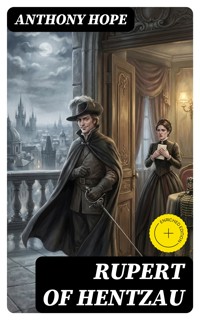
In "Rupert of Hentzau," Anthony Hope deftly continues the tantalizing saga begun in his earlier work, "The Prisoner of Zenda." This novel combines romance, political intrigue, and adventure in a style characteristic of late 19th-century Victorian literature, showcasing Hope's mastery of vivid characterization and witty dialogue. Set against the backdrop of the fictional European kingdom of Ruritania, the narrative intricately weaves themes of loyalty and betrayal as the enigmatic Rupert, a roguish figure, exerts his influence over the throne, threatening the delicate balance of power and love. Anthony Hope, an English novelist and playwright, is notable for his contributions to adventure fiction. His experiences in a rapidly changing society, coupled with an interest in the European political landscape, inspired his works heavily influenced by Romanticism and sensationalism. "Rupert of Hentzau" reflects his fascination with the duality of character, as Rupert epitomizes the charming rogue, embodying both villainy and charisma. Hope's background in law and theatre further equipped him with the narrative skills to create engaging plots that reflect the complexities of human motivations. This compelling sequel is a must-read for anyone captivated by tales of swashbuckling heroism and moral ambiguity. Fans of classic adventure literature will appreciate Hope's intricate plotting and the nuanced exploration of loyalty amidst treachery. For those who revel in romantic escapades and the allure of royal intrigues, "Rupert of Hentzau" stands as an enduring testament to Anthony Hope's narrative prowess. In this enriched edition, we have carefully created added value for your reading experience: - A succinct Introduction situates the work's timeless appeal and themes. - The Synopsis outlines the central plot, highlighting key developments without spoiling critical twists. - A detailed Historical Context immerses you in the era's events and influences that shaped the writing. - A thorough Analysis dissects symbols, motifs, and character arcs to unearth underlying meanings. - Reflection questions prompt you to engage personally with the work's messages, connecting them to modern life. - Hand‐picked Memorable Quotes shine a spotlight on moments of literary brilliance. - Interactive footnotes clarify unusual references, historical allusions, and archaic phrases for an effortless, more informed read.
Das E-Book können Sie in Legimi-Apps oder einer beliebigen App lesen, die das folgende Format unterstützen:
Veröffentlichungsjahr: 2022
Ähnliche









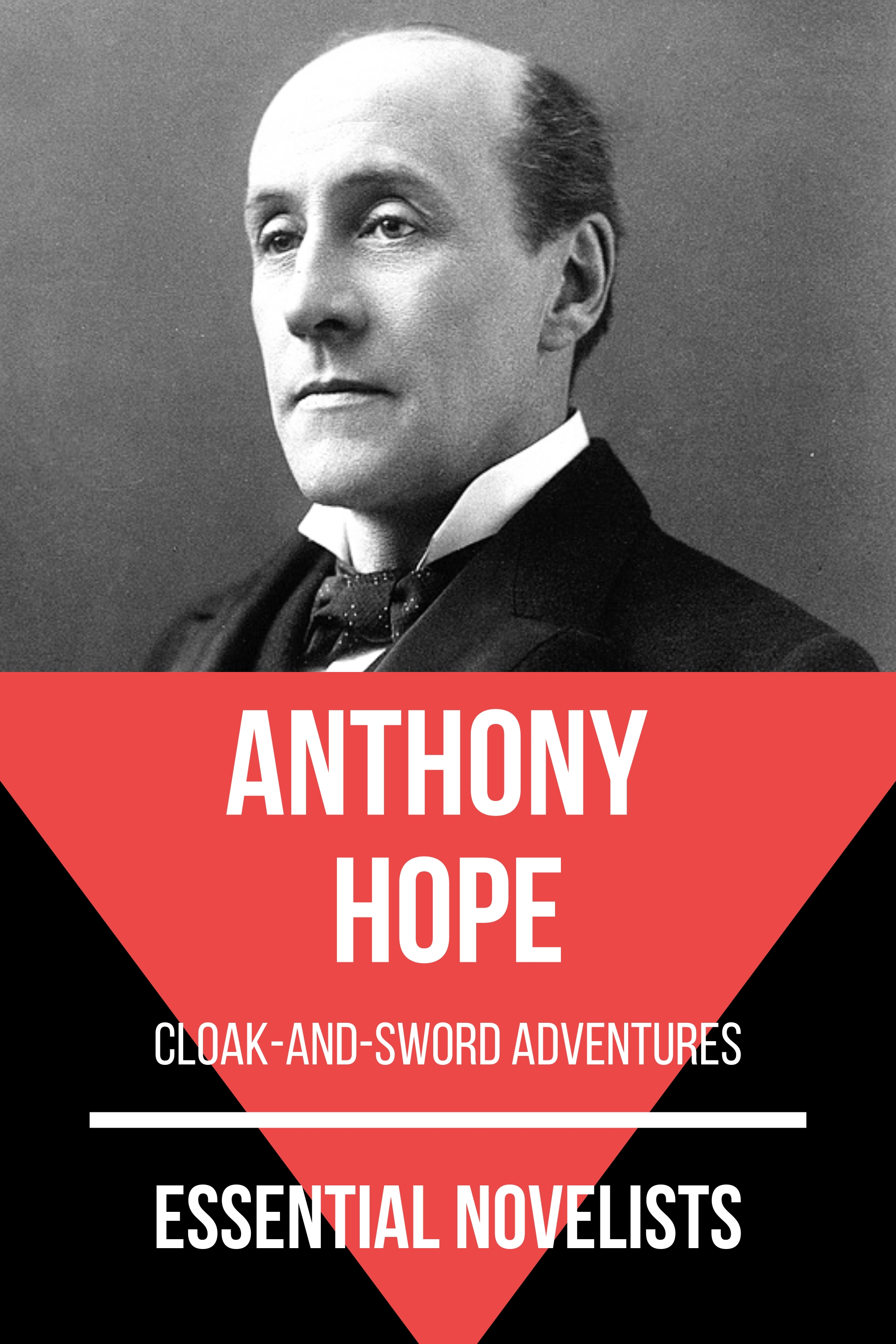







Rupert of Hentzau
Table of Contents
Introduction
In a world of mirrored ballrooms and shadowed corridors, where a crown’s glitter conceals the knife-edge of politics, the story turns on the perilous friction between desire and responsibility, on the theatrical masks people wear to protect what they love, and on the devastating leverage of a single private act made public; here, loyalties are tested not merely by battles of blade and bullet but by the subtler duels of reputation, pride, and strategic silence, as courage must continually decide whether to serve the heart’s longing or the unforgiving demands of honor and power that govern a restless kingdom.
Rupert of Hentzau, Anthony Hope’s sequel to The Prisoner of Zenda, belongs to the Ruritanian romance tradition: an adventure narrative set in the fictional Central European kingdom of Ruritania, published in the late Victorian era, in 1898. It revisits the elegant yet treacherous milieu of palaces, garrisons, and border towns where etiquette and espionage coexist. The novel extends the earlier book’s blend of courtly intrigue and swashbuckling action, now oriented around the magnetic menace of Rupert, a brilliant antagonist whose audacity unsettles an uneasy throne. Within this framework, Hope crafts a story that remains brisk, urbane, and keenly attuned to political theater.
The premise unfolds from an urgent problem rather than a battlefield: a private communication, with the power to rupture both lives and state, falls into dangerous circulation, compelling an English gentleman long connected to Ruritania to risk a return. His reentry into continental affairs collides with the schemes of Rupert, whose charm conceals a ruthless appetite for advantage. Alliances form under pressure, and decisions must be made quickly, often in the dim space between legality and necessity. The setup launches a sequence of pursuits, infiltrations, and delicate negotiations, yet it keeps motivations intelligible and human, anchored in recognizable choices and costs.
Readers encounter a nimble, polished style that balances suspense with wit, moving effortlessly from glittering salons to perilous roads, from whispered confidences to sudden, athletic action. Hope’s prose favors clarity and economy, yet it allows for flourishes that heighten atmosphere without slowing momentum. The tone is courtly but not solemn, ironic without cynicism, romantic without sentimentality. Dialogue carries strategic weight, as people fence with words before they cross blades, and the narrative orchestrates reversals with careful timing. The effect is a reading experience that feels both intimate and cinematic, with tension sustained through shifting vantage points and precise staging.
Beneath the adventure lies an inquiry into identity and duty: what it means to choose a role and then bear its consequences when private happiness conflicts with public obligation. The novel considers legitimacy—not only of rulers, but of stories—and how reputations are manufactured, defended, or destroyed. It scrutinizes the allure of the charismatic villain, whose audacity exposes the vulnerabilities of systems dependent on ritual and discretion. Honor, friendship, and loyalty are examined under duress, while the ethics of deception are tested in circumstances where candor can be lethal and concealment, paradoxically, may be the only honorable course.
These concerns resonate strongly today, when personal lives intersect with institutional pressures and when information—letters then, messages now—travels fast enough to end careers or unsettle regimes. Readers will recognize the dynamics of image management, the strategic calculus of scandal, and the uneasy mix of admiration and fear provoked by transgressive confidence. The book invites reflection on how nations and individuals negotiate competing truths, asking whether courage is best expressed by defiance, restraint, or sacrifice. Its depiction of charisma as both inspiration and threat anticipates enduring debates about leadership, accountability, and the costs of loyalty.
As a continuation of a celebrated narrative, Rupert of Hentzau refines the pleasures of its predecessor while standing securely on its own as a tale of glamorous danger, moral testing, and political finesse. It offers swift entertainment grounded in discernment about human motives, avoiding caricature even as it revels in bold gesture. For contemporary readers, it serves as a touchstone of the Ruritanian mode and a study in how private affections reverberate through public life. To enter its world is to accept the challenge of navigating appearances, and to discover why, in matters of love and state, precision is as essential as daring.
Synopsis
Anthony Hope’s Rupert of Hentzau, first published in 1898, returns to the kingdom of Ruritania in a direct sequel to The Prisoner of Zenda. The English gentleman Rudolf Rassendyll, whose likeness to the Ruritanian king once preserved a fragile crown, again finds himself entangled in courtly danger. The novel’s title names Rupert of Hentzau, a brilliant and unscrupulous noble whose charisma masks predatory ambition. Where the earlier adventure revolved around a usurper’s plot, this story pivots on reputation, duty, and the perilous aftershocks of a concealed attachment, drawing familiar figures—Queen Flavia, Colonel Sapt, and Fritz von Tarlenheim—back into a web of loyalty and risk.
The plot ignites with a private letter from the queen to Rassendyll, a document whose exposure could damage a beloved sovereign’s honor and destabilize a sensitive political balance. When the existence of the letter is imperiled, a sequence of interceptions, duels of wits, and sudden violence follows. Rupert learns of this vulnerability and aims to leverage it for advantage, turning sentiment into a weapon. Sapt and Fritz—guardians of the throne’s dignity—recognize the crisis and quietly summon Rassendyll. The stakes are not only personal; they involve the image of kingship, public confidence, and the fragile peace that holds Ruritania together.
Rassendyll returns incognito, measured and wary, to contain the danger without inflaming scandal. The plan is simple in aim and complex in execution: recover or destroy the letter while shielding the queen and sparing the kingdom a spectacle. Working with Sapt, Fritz, and a handful of trusted officers, he threads through Strelsau’s streets and the countryside that once framed his earlier exploits. The narrative emphasizes stealth over grand display, insisting that honor sometimes demands invisibility. Rassendyll’s inner conflict remains central: he must balance feeling against duty, act decisively yet avoid the very notoriety that would betray the cause he serves.
Rupert’s counterplot unfolds with elegance and ferocity. A master of improvisation, he recruits opportunity more than allies, turning chance meetings and divided loyalties to his benefit. Ambushes, feints, and duels stake out a contest where nerve counts as much as steel. The contested letter becomes a token of leverage—usable in court, in private chambers, and on shadowed roads alike. Settings shift from townhouses and guardrooms to familiar strongholds, and the movement is swift, punctuated by reversals that test nerve and patience. Rupert’s motives blend pride, revenge, and appetite for power, making him both captivating and profoundly dangerous.
As pressure mounts, clandestine rendezvous and coded messages multiply, and intermediaries—honorable and otherwise—assume outsized importance. Fidelity to the crown collides with private conscience, exposing the limits of obedience when hearts are involved. Rassendyll must act boldly without usurping authority; Sapt’s iron discipline meets Rupert’s audacity at every turn. Queen Flavia remains a figure of integrity, her choices constrained by role and conscience alike. The novel balances breathless action with procedural caution, underlining how a single indiscretion can endanger institutions. The moral field narrows, and each maneuver to protect the letter risks either inflaming rumor or inviting irreversible harm.
The converging intrigues drive toward a decisive encounter in which courage, secrecy, and sacrifice contend for primacy. Temporary accommodations give way to sharpened lines: the damaging evidence must be secured, neutralized, or transformed into safety. As plots meet, the principals confront choices that define character as much as outcome. The king’s image, the queen’s honor, and the stability of Ruritania all depend on what is done—and what is concealed. The narration tightens, hinting at consequence without declaring it, as friendships are proven, ambitions unmasked, and the cost of chivalry measured against the stubborn realities of politics.
Without disclosing final turns, Rupert of Hentzau endures for its fusion of romance, high stakes, and ethical tension. Hope deepens the world he created by turning spectacle into a study of responsibility: love set against office, daring checked by prudence, and charisma tested by constancy. The novel refines the Ruritanian romance into a meditation on reputation and rule, showing how a kingdom’s fate can hinge on private conduct. Its brisk pace, memorable adversary, and melancholy sense of consequence give the sequel lasting resonance, ensuring that the questions it poses about honor and sacrifice outlive the immediate dangers that animate its plot.
Historical Context
Anthony Hope’s Rupert of Hentzau, first published in 1898, is the sequel to The Prisoner of Zenda (1894) and returns to the imaginary Central European kingdom of Ruritania. The setting relies on institutions recognizable across the region in the late nineteenth century: a hereditary monarchy, a titled aristocracy, a professional officer corps, and a ceremonious court with entrenched etiquette. Hope, a British barrister turned novelist, wrote for a late-Victorian audience accustomed to brisk romances and foreign intrigue. The narrative’s locales—palaces, provincial towns, railways, and frontier posts—echo contemporary Central Europe, while the political stakes concern dynastic reputation, legitimacy, and the stability of a small throne.
Ruritania’s courtly intrigues reflect the power geometry of Europe after German unification in 1871 and the Austro‑Hungarian Compromise of 1867. By the 1890s, crowned governments balanced parliaments with strong executive authority, and foreign policy rested on alliance blocs such as the Triple Alliance (Germany, Austria‑Hungary, Italy) and the Franco‑Russian Alliance (1894). Monarchs and their entourages were expected to embody legitimacy and restraint, yet personal indiscretions could have diplomatic consequences. Within that milieu, small monarchies were imagined as vulnerable to coups, blackmail, and border crises. Hope uses that recognizable climate of dynastic diplomacy to frame conflicts over honor, public image, and succession.
The novel’s imaginary setting enables commentary on real Central European norms without naming actual states. After the revolutions of 1848, many thrones survived by conceding constitutions while preserving aristocratic privilege, and court ceremonial became a language of authority. German and Habsburg realms codified issues such as morganatic marriage, which separated personal unions from dynastic rights and reputations. Such legal distinctions made private correspondence, court gossip, and the management of scandal politically consequential. Ruritania mirrors such environments, where family law, heraldic precedence, and church‑state relations intersected with governance, and where a monarch’s perceived moral conduct could strengthen or weaken claims to loyalty.
Late nineteenth‑century Central Europe cultivated a pronounced honor culture. Officer corps in Prussia and Austria‑Hungary retained social prestige, and codes of conduct, including dueling traditions among officers and student fraternities, persisted despite legal restrictions. Concepts of gentlemanly behavior, reputation, and the binding force of one’s word shaped elite politics and personal relations. These norms support the book’s focus on duels of wit and nerve as well as literal confrontations, without requiring the reader to accept anachronism. The aristocratic habitus—exclusive clubs, salons, regimental messes, and court levees—provides a credible matrix for conspiracies, alliances, and betrayals that hinge on honor.
Rapid communications and travel underpin the plausibility of transnational intrigue. By the 1890s Europe was knit together by dense railway networks and telegraph cables, while the Universal Postal Union (founded 1874) standardized international mail. National passport practices varied, but cross‑border movement for tourists and businessmen was common, and timetable coordination had created dependable long‑distance routes. These infrastructures enable quick journeys, clandestine meetings, and the circulation of letters whose custody can sway reputations or governments. The book’s reliance on scheduled trains, hotel registers, and timed exchanges aligns with the bureaucratic efficiency of fin‑de‑siècle Europe, where paperwork and punctuality carried political weight.
Hope wrote from a British vantage point during the era often described as Britain’s policy of splendid isolation, when London avoided binding continental alliances while maintaining global commitments. Middle‑class tourism to the Continent had expanded since the 1860s, and guidebook culture and conducted tours made Central Europe familiar to English readers. The trope of the English gentleman abroad, trained by public schools in athleticism, stoicism, and fair play, furnished a reassuring mediator between domestic values and foreign courts. Rupert of Hentzau deploys that perspective to examine autocratic rituals and volatile politics at a safe remove, inviting readers to compare British constitutional norms with continental practices.
The book belongs to the Ruritanian romance, a subgenre the author helped popularize with The Prisoner of Zenda. It drew on Walter Scott’s historical romances and Alexandre Dumas’s swashbucklers, but modernized them with late‑Victorian pacing and settings. In the 1890s, mass‑market publishing, railway bookstalls, and circulating libraries broadened readerships, encouraging tightly plotted stories of adventure, disguise, and political peril. The tone also reflects fin‑de‑siècle tastes for irony and dramatic reversals. Rupert of Hentzau intensifies the moral and political ambiguities of court intrigue while retaining decorum acceptable to family libraries, a balance demanded by commercial venues and circulating‑library norms.
Published at the fin de siècle, the work reflects anxieties about the endurance of chivalric ideals in an age of realpolitik, bureaucracy, and sensational journalism. It dramatizes the friction between constitutional language and personal rule, between public duty and private desire, and between ceremonial legitimacy and ruthless opportunism. Its charming villain and embattled loyalists expose the appeal and hollowness of aristocratic glamour, while its reliance on documents, timetables, and surveillance acknowledges modern constraints on romance and honor. By situating these tensions in a fictional state, Hope could critique European court politics and celebrate individual virtue without indicting any specific government.
Rupert of Hentzau
Chapter I. The Queen’s Good-By
A man who has lived in the world, marking how every act, although in itself perhaps light and insignificant, may become the source of consequences that spread far and wide, and flow for years or centuries, could scarcely feel secure in reckoning that with the death of the Duke of Strelsau and the restoration of King Rudolf to liberty and his throne, there would end, for good and all, the troubles born of Black Michael[1]’s daring conspiracy. The stakes had been high, the struggle keen; the edge of passion had been sharpened, and the seeds of enmity sown. Yet Michael, having struck for the crown, had paid for the blow with his life: should there not then be an end? Michael was dead, the Princess her cousin’s wife, the story in safe keeping, and Mr. Rassendyll’s face seen no more in Ruritania[2]. Should there not then be an end? So said I to my friend the Constable of Zenda, as we talked by the bedside of Marshal Strakencz. The old man, already nearing the death that soon after robbed us of his aid and counsel, bowed his head in assent: in the aged and ailing the love of peace breeds hope of it. But Colonel Sapt tugged at his gray moustache, and twisted his black cigar in his mouth, saying, “You’re very sanguine, friend Fritz. But is Rupert of Hentzau dead? I had not heard it.”
Well said, and like old Sapt! Yet the man is little without the opportunity, and Rupert by himself could hardly have troubled our repose. Hampered by his own guilt, he dared not set his foot in the kingdom from which by rare good luck he had escaped, but wandered to and fro over Europe, making a living by his wits, and, as some said, adding to his resources by gallantries for which he did not refuse substantial recompense. But he kept himself constantly before our eyes, and never ceased to contrive how he might gain permission to return and enjoy the estates to which his uncle’s death had entitled him. The chief agent through whom he had the effrontery to approach the king was his relative, the Count of Luzau–Rischenheim, a young man of high rank and great wealth who was devoted to Rupert. The count fulfilled his mission well: acknowledging Rupert’s heavy offences, he put forward in his behalf the pleas of youth and of the predominant influence which Duke Michael had exercised over his adherent, and promised, in words so significant as to betray Rupert’s own dictation, a future fidelity no less discreet than hearty. “Give me my price and I’ll hold my tongue,” seemed to come in Rupert’s off-hand accents through his cousin’s deferential lips. As may be supposed, however, the king and those who advised him in the matter, knowing too well the manner of man the Count of Hentzau was, were not inclined to give ear to his ambassador’s prayer. We kept firm hold on Master Rupert’s revenues, and as good watch as we could on his movements; for we were most firmly determined that he should never return to Ruritania. Perhaps we might have obtained his extradition and hanged him on the score of his crimes; but in these days every rogue who deserves no better than to be strung up to the nearest tree must have what they call a fair trial; and we feared that, if Rupert were handed over to our police and arraigned before the courts at Strelsau, the secret which we guarded so sedulously would become the gossip of all the city, ay, and of all Europe. So Rupert went unpunished except by banishment and the impounding of his rents.
Yet Sapt was in the right about him. Helpless as he seemed, he did not for an instant abandon the contest. He lived in the faith that his chance would come, and from day to day was ready for its coming. He schemed against us as we schemed to protect ourselves from him; if we watched him, he kept his eye on us. His ascendency over Luzau–Rischenheim grew markedly greater after a visit which his cousin paid to him in Paris. From this time the young count began to supply him with resources. Thus armed, he gathered instruments round him and organized a system of espionage that carried to his ears all our actions and the whole position of affairs at court. He knew, far more accurately than anyone else outside the royal circle, the measures taken for the government of the kingdom and the considerations that dictated the royal policy. More than this, he possessed himself of every detail concerning the king’s health, although the utmost reticence was observed on this subject. Had his discoveries stopped there, they would have been vexatious and disquieting, but perhaps of little serious harm. They went further. Set on the track by his acquaintance with what had passed during Mr. Rassendyll’s tenure of the throne, he penetrated the secret which had been kept successfully from the king himself. In the knowledge of it he found the opportunity for which he had waited; in its bold use he discerned his chance. I cannot say whether he were influenced more strongly by his desire to reestablish his position in the kingdom or by the grudge he bore against Mr. Rassendyll. He loved power and money; dearly he loved revenge also. No doubt both motives worked together, and he was rejoiced to find that the weapon put into his hand had a double edge; with one he hoped to cut his own path clear; with the other, to wound the man he hated through the woman whom that man loved. In fine, the Count of Hentzau, shrewdly discerning the feeling that existed between the queen and Rudolf Rassendyll, set his spies to work, and was rewarded by discovering the object of my yearly meetings with Mr. Rassendyll. At least he conjectured the nature of my errand; this was enough for him. Head and hand were soon busy in turning the knowledge to account; scruples of the heart never stood in Rupert’s way.
The marriage which had set all Ruritania on fire with joy and formed in the people’s eyes the visible triumph over Black Michael and his fellow-conspirators was now three years old. For three years the Princess Flavia had been queen. I am come by now to the age when a man should look out on life with an eye undimmed by the mists of passion. My love-making days are over; yet there is nothing for which I am more thankful to Almighty God than the gift of my wife’s love. In storm it has been my anchor, and in clear skies my star. But we common folk are free to follow our hearts; am I an old fool for saying that he is a fool who follows anything else? Our liberty is not for princes. We need wait for no future world to balance the luck of men; even here there is an equipoise[1q]. From the highly placed a price is exacted for their state, their wealth, and their honors, as heavy as these are great; to the poor, what is to us mean and of no sweetness may appear decked in the robes of pleasure and delight. Well, if it were not so, who could sleep at nights? The burden laid on Queen Flavia I knew, and know, so well as a man can know it. I think it needs a woman to know it fully; for even now my wife’s eyes fill with tears when we speak of it. Yet she bore it, and if she failed in anything, I wonder that it was in so little. For it was not only that she had never loved the king and had loved another with all her heart. The king’s health, shattered by the horror and rigors of his imprisonment in the castle of Zenda, soon broke utterly. He lived, indeed; nay, he shot and hunted, and kept in his hand some measure, at least, of government. But always from the day of his release he was a fretful invalid, different utterly from the gay and jovial prince whom Michael’s villains had caught in the shooting lodge. There was worse than this. As time went on, the first impulse of gratitude and admiration that he had felt towards Mr. Rassendyll died away. He came to brood more and more on what had passed while he was a prisoner; he was possessed not only by a haunting dread of Rupert of Hentzau, at whose hands he had suffered so greatly, but also by a morbid, half mad jealousy of Mr. Rassendyll. Rudolf had played the hero while he lay helpless. Rudolf’s were the exploits for which his own people cheered him in his own capital. Rudolf’s were the laurels that crowned his impatient brow. He had enough nobility to resent his borrowed credit, without the fortitude to endure it manfully. And the hateful comparison struck him nearer home. Sapt would tell him bluntly that Rudolf did this or that, set this precedent or that, laid down this or the other policy, and that the king could do no better than follow in Rudolf’s steps. Mr. Rassendyll’s name seldom passed his wife’s lips, but when she spoke of him it was as one speaks of a great man who is dead, belittling all the living by the shadow of his name. I do not believe that the king discerned that truth which his wife spent her days in hiding from him; yet he was uneasy if Rudolf’s name were mentioned by Sapt or myself, and from the queen’s mouth he could not bear it. I have seen him fall into fits of passion on the mere sound of it; for he lost control of himself on what seemed slight provocation.
Moved by this disquieting jealousy, he sought continually to exact from the queen proofs of love and care beyond what most husbands can boast of, or, in my humble judgment, make good their right to, always asking of her what in his heart he feared was not hers to give. Much she did in pity and in duty; but in some moments, being but human and herself a woman of high temper, she failed; then the slight rebuff or involuntary coldness was magnified by a sick man’s fancy into great offence or studied insult, and nothing that she could do would atone for it. Thus they, who had never in truth come together, drifted yet further apart; he was alone in his sickness and suspicion, she in her sorrows and her memories. There was no child to bridge the gulf between them, and although she was his queen and his wife, she grew almost a stranger to him. So he seemed to will that it should be.
Thus, worse than widowed, she lived for three years; and once only in each year she sent three words to the man she loved, and received from him three words in answer. Then her strength failed her. A pitiful scene had occurred in which the king peevishly upbraided her in regard to some trivial matter — the occasion escapes my memory — speaking to her before others words that even alone she could not have listened to with dignity. I was there, and Sapt; the colonel’s small eyes had gleamed in anger. “I should like to shut his mouth for him,” I heard him mutter, for the king’s waywardness had well-nigh worn out even his devotion. The thing, of which I will say no more, happened a day or two before I was to set out to meet Mr. Rassendyll. I was to seek him this time at Wintenberg, for I had been recognized the year before at Dresden; and Wintenberg, being a smaller place and less in the way of chance visitors, was deemed safer. I remember well how she was when she called me into her own room, a few hours after she had left the king. She stood by the table; the box was on it, and I knew well that the red rose and the message were within. But there was more today. Without preface she broke into the subject of my errand.
“I must write to him,” she said. “I can’t bear it, I must write. My dear friend Fritz, you will carry it safely for me, won’t you? And he must write to me. And you’ll bring that safely, won’t you? Ah, Fritz, I know I’m wrong, but I’m starved, starved, starved! And it’s for the last time. For I know now that if I send anything, I must send more. So after this time I won’t send at all. But I must say good-by to him; I must have his good-by to carry me through my life. This once, then, Fritz, do it for me.”
The tears rolled down her cheeks, which today were flushed out of their paleness to a stormy red; her eyes defied me even while they pleaded. I bent my head and kissed her hand.
“With God’s help I’ll carry it safely and bring his safely, my queen,” said I.
“And tell me how he looks. Look at him closely, Fritz. See if he is well and seems strong. Oh, and make him merry and happy! Bring that smile to his lips, Fritz, and the merry twinkle to his eyes. When you speak of me, see if he — if he looks as if he still loved me.” But then she broke off, crying, “But don’t tell him I said that. He’d be grieved if I doubted his love. I don’t doubt it; I don’t, indeed; but still tell me how he looks when you speak of me, won’t you, Fritz? See, here’s the letter.”
Taking it from her bosom, she kissed it before she gave it to me. Then she added a thousand cautions, how I was to carry her letter, how I was to go and how return, and how I was to run no danger, because my wife Helga loved me as well as she would have loved her husband had Heaven been kinder. “At least, almost as I should, Fritz,” she said, now between smiles and tears. She would not believe that any woman could love as she loved.
I left the queen and went to prepare for my journey. I used to take only one servant with me, and I had chosen a different man each year. None of them had known that I met Mr. Rassendyll, but supposed that I was engaged on the private business which I made my pretext for obtaining leave of absence from the king. This time I had determined to take with me a Swiss youth who had entered my service only a few weeks before. His name was Bauer; he seemed a stolid, somewhat stupid fellow, but as honest as the day and very obliging.
He had come to me well recommended, and I had not hesitated to engage him. I chose him for my companion now, chiefly because he was a foreigner and therefore less likely to gossip with the other servants when we returned. I do not pretend to much cleverness, but I confess that it vexes me to remember how that stout, guileless-looking youth made a fool of me. For Rupert knew that I had met Mr. Rassendyll the year before at Dresden; Rupert was keeping a watchful eye on all that passed in Strelsau; Rupert had procured the fellow his fine testimonials and sent him to me, in the hope that he would chance on something of advantage to his employer. My resolve to take him to Wintenberg may have been hoped for, but could scarcely have been counted on; it was the added luck that waits so often on the plans of a clever schemer.
Going to take leave of the king, I found him huddled over the fire. The day was not cold, but the damp chill of his dungeon seemed to have penetrated to the very core of his bones. He was annoyed at my going, and questioned me peevishly about the business that occasioned my journey. I parried his curiosity as I best could, but did not succeed in appeasing his ill-humor. Half ashamed of his recent outburst, half-anxious to justify it to himself, he cried fretfully:
“Business! Yes, any business is a good enough excuse for leaving me! By Heaven, I wonder if a king was ever served so badly as I am! Why did you trouble to get me out of Zenda? Nobody wants me, nobody cares whether I live or die.”
To reason with such a mood was impossible. I could only assure him that I would hasten my return by all possible means.
“Yes, pray do,” said he. “I want somebody to look after me. Who knows what that villain Rupert may attempt against me? And I can’t defend myself can I? I’m not Rudolf Rassendyll, am I?”
Thus, with a mixture of plaintiveness and malice, he scolded me. At last I stood silent, waiting till he should be pleased to dismiss me. At any rate I was thankful that he entertained no suspicion as to my errand. Had I spoken a word of Mr. Rassendyll he would not have let me go. He had fallen foul of me before on learning that I was in communication with Rudolf; so completely had jealousy destroyed gratitude in his breast. If he had known what I carried, I do not think that he could have hated his preserver more. Very likely some such feeling was natural enough; it was none the less painful to perceive.
On leaving the king’s presence, I sought out the Constable of Zenda. He knew my errand; and, sitting down beside him, I told him of the letter I carried, and arranged how to apprise him of my fortune surely and quickly. He was not in a good humor that day: the king had ruffled him also, and Colonel Sapt had no great reserve of patience.
“If we haven’t cut one another’s throats before then, we shall all be at Zenda by the time you arrive at Wintenberg,” he said. “The court moves there tomorrow, and I shall be there as long as the king is.”
He paused, and then added: “Destroy the letter if there’s any danger.”
I nodded my head.
“And destroy yourself with it, if there’s the only way,” he went on with a surly smile. “Heaven knows why she must send such a silly message at all; but since she must, she’d better have sent me with it.”
I knew that Sapt was in the way of jeering at all sentiment, and I took no notice of the terms that he applied to the queen’s farewell. I contented myself with answering the last part of what he said.
“No, it’s better you should be here,” I urged. “For if I should lose the letter — though there’s little chance of it — you could prevent it from coming to the king.”
“I could try,” he grinned. “But on my life, to run the chance for a letter’s sake! A letter’s a poor thing to risk the peace of a kingdom for.”
“Unhappily,” said I, “it’s the only thing that a messenger can well carry.”
“Off with you, then,” grumbled the colonel. “Tell Rassendyll from me that he did well. But tell him to do something more. Let ’em say good-by and have done with it. Good God, is he going to waste all his life thinking of a woman he never sees?” Sapt’s air was full of indignation.
“What more is he to do?” I asked. “Isn’t his work here done?”
“Ay, it’s done. Perhaps it’s done,” he answered. “At least he has given us back our good king.”
To lay on the king the full blame for what he was would have been rank injustice. Sapt was not guilty of it, but his disappointment was bitter that all our efforts had secured no better ruler for Ruritania. Sapt could serve, but he liked his master to be a man.
“Ay, I’m afraid the lad’s work here is done,” he said, as I shook him by the hand. Then a sudden light came in his eyes. “Perhaps not,” he muttered. “Who knows?”
A man need not, I hope, be deemed uxorious for liking a quiet dinner alone with his wife before he starts on a long journey. Such, at least, was my fancy; and I was annoyed to find that Helga’s cousin, Anton von Strofzin, had invited himself to share our meal and our farewell. He conversed with his usual airy emptiness on all the topics that were supplying Strelsau with gossip. There were rumors that the king was ill; that the queen was angry at being carried off to Zenda; that the archbishop meant to preach against low dresses; that the chancellor was to be dismissed; that his daughter was to be married; and so forth. I heard without listening. But the last bit of his budget caught my wandering attention.
“They were betting at the club,” said Anton, “that Rupert of Hentzau would be recalled. Have you heard anything about it, Fritz?”
If I had known anything, it is needless to say that I should not have confided it to Anton. But the suggested step was so utterly at variance with the king’s intentions that I made no difficulty about contradicting the report with an authoritative air. Anton heard me with a judicial wrinkle on his smooth brow.
“That’s all very well,” said he, “and I dare say you’re bound to say so. All I know is that Rischenheim dropped a hint to Colonel Markel a day or two ago.”
“Rischenheim believes what he hopes,” said I.
“And where’s he gone?” cried Anton, exultantly. “Why has he suddenly left Strelsau? I tell you he’s gone to meet Rupert, and I’ll bet you what you like he carries some proposal. Ah, you don’t know everything, Fritz, my boy?”
It was indeed true that I did not know everything. I made haste to admit as much. “I didn’t even know that the count was gone, much less why he’s gone,” said I.
“You see?” exclaimed Anton. And he added, patronizingly, “You should keep your ears open, my boy; then you might be worth what the king pays you.”
“No less, I trust,” said I, “for he pays me nothing.” Indeed, at this time I held no office save the honorary position of chamberlain to Her Majesty. Any advice the king needed from me was asked and given unofficially.
Anton went off, persuaded that he had scored a point against me. I could not see where. It was possible that the Count of Luzau–Rischenheim had gone to meet his cousin, equally possible that no such business claimed his care. At any rate, the matter was not for me. I had a more pressing affair in hand. Dismissing the whole thing from my mind, I bade the butler tell Bauer to go forward with my luggage and to let my carriage be at the door in good time. Helga had busied herself, since our guest’s departure, in preparing small comforts for my journey; now she came to me to say good-by. Although she tried to hide all signs of it, I detected an uneasiness in her manner. She did not like these errands of mine, imagining dangers and risks of which I saw no likelihood. I would not give in to her mood, and, as I kissed her, I bade her expect me back in a few days’ time. Not even to her did I speak of the new and more dangerous burden that I carried, although I was aware that she enjoyed a full measure of the queen’s confidence.
“My love to King Rudolf, the real King Rudolf,” said she. “Though you carry what will make him think little of my love.”
“I have no desire he should think too much of it, sweet,” said I. She caught me by the hands, and looked up in my face.
“What a friend you are, aren’t you, Fritz?” said she. “You worship Mr. Rassendyll. I know you think I should worship him too, if he asked me. Well, I shouldn’t. I am foolish enough to have my own idol.” All my modesty did not let me doubt who her idol might be. Suddenly she drew near to me and whispered in my ear. I think that our own happiness brought to her a sudden keen sympathy with her mistress.
“Make him send her a loving message, Fritz,” she whispered. “Something that will comfort her. Her idol can’t be with her as mine is with me.”
“Yes, he’ll send something to comfort her,” I answered. “And God keep you, my dear.”
For he would surely send an answer to the letter that I carried, and that answer I was sworn to bring safely to her. So I set out in good heart, bearing in the pocket of my coat the little box and the queen’s good-by. And, as Colonel Sapt said to me, both I would destroy, if need were — ay, and myself with them. A man did not serve Queen Flavia with divided mind.
Chapter II. A Station Without a Cab
The arrangements for my meeting with Mr. Rassendyll had been carefully made by correspondence before he left England. He was to be at the Golden Lion Hotel at eleven o’clock on the night of the 15th of October. I reckoned to arrive in the town between eight and nine on the same evening, to proceed to another hotel, and, on pretence of taking a stroll, slip out and call on him at the appointed hour. I should then fulfil my commission, take his answer, and enjoy the rare pleasure of a long talk with him. Early the next morning he would have left Wintenberg, and I should be on my way back to Strelsau. I knew that he would not fail to keep his appointment, and I was perfectly confident of being able to carry out the programme punctually; I had, however, taken the precaution of obtaining a week’s leave of absence, in case any unforeseen accident should delay my return. Conscious of having done all I could to guard against misunderstanding or mishap, I got into the train in a tolerably peaceful frame of mind. The box was in my inner pocket, the letter in a portemonnaie[3]. I could feel them both with my hand. I was not in uniform, but I took my revolver. Although I had no reason to anticipate any difficulties, I did not forget that what I carried must be protected at all hazards and all costs.
The weary night journey wore itself away[2q]. Bauer came to me in the morning, performed his small services, repacked my hand-bag, procured me some coffee, and left me. It was then about eight o’clock; we had arrived at a station of some importance and were not to stop again till mid-day. I saw Bauer enter the second-class compartment in which he was traveling, and settled down in my own coupe. I think it was at this moment that the thought of Rischenheim came again into my head, and I found myself wondering why he clung to the hopeless idea of compassing Rupert’s return and what business had taken him from Strelsau. But I made little of the matter, and, drowsy from a broken night’s rest, soon fell into a doze. I was alone in the carriage and could sleep without fear or danger. I was awakened by our noontide halt. Here I saw Bauer again. After taking a basin of soup, I went to the telegraph bureau to send a message to my wife; the receipt of it would not merely set her mind at case, but would also ensure word of my safe progress reaching the queen. As I entered the bureau I met Bauer coming out of it. He seemed rather startled at our encounter, but told me readily enough that he had been telegraphing for rooms at Wintenberg, a very needless precaution, since there was no danger of the hotel being full. In fact I was annoyed, as I especially wished to avoid calling attention to my arrival. However, the mischief was done, and to rebuke my servant might have aggravated it by setting his wits at work to find out my motive for secrecy. So I said nothing, but passed by him with a nod. When the whole circumstances came to light, I had reason to suppose that besides his message to the inn-keeper, Bauer sent one of a character and to a quarter unsuspected by me.
We stopped once again before reaching Wintenberg. I put my head out of the window to look about me, and saw Bauer standing near the luggage van. He ran to me eagerly, asking whether I required anything. I told him “nothing”; but instead of going away, he began to talk to me. Growing weary of him, I returned to my seat and waited impatiently for the train to go on. There was a further delay of five minutes, and then we started.
“Thank goodness!” I exclaimed, leaning back comfortably in my seat and taking a cigar from my case.
But in a moment the cigar rolled unheeded on to the floor, as I sprang eagerly to my feet and darted to the window. For just as we were clearing the station, I saw being carried past the carriage, on the shoulders of a porter, a bag which looked very much like mine. Bauer had been in charge of my bag, and it had been put in the van under his directions. It seemed unlikely that it should be taken out now by any mistake. Yet the bag I saw was very like the bag I owned. But I was not sure, and could have done nothing had I been sure. We were not to stop again before Wintenberg, and, with my luggage or without it, I myself must be in the town that evening.
We arrived punctual to our appointed time. I sat in the carriage a moment or two, expecting Bauer to open the door and relieve me of my small baggage. He did not come, so I got out. It seemed that I had few fellow-passengers, and these were quickly disappearing on foot or in carriages and carts that waited outside the station. I stood looking for my servant and my luggage. The evening was mild; I was encumbered with my hand-bag and a heavy fur coat. There were no signs either of Bauer or of baggage. I stayed where I was for five or six minutes. The guard of the train had disappeared, but presently I observed the station-master; he seemed to be taking a last glance round the premises. Going up to him I asked whether he had seen my servant; he could give me no news of him. I had no luggage ticket, for mine had been in Bauer’s hands; but I prevailed on him to allow me to look at the baggage which had arrived; my property was not among it. The station-master was inclined, I think, to be a little skeptical as to the existence both of bag and of servant. His only suggestion was that the man must have been left behind accidentally. I pointed out that in this case he would not have had the bag with him, but that it would have come on in the train. The station-master admitted the force of my argument; he shrugged his shoulders and spread his hands out; he was evidently at the end of his resources.
Now, for the first time and with sudden force, a doubt of Bauer’s fidelity thrust itself into my mind. I remembered how little I knew of the fellow and how great my charge was. Three rapid movements of my hand assured me that letter, box, and revolver were in their respective places. If Bauer had gone hunting in the bag, he had drawn a blank. The station-master noticed nothing; he was stating at the dim gas lamp that hung from the roof. I turned to him.
“Well, tell him when he comes —” I began.
“He won’t come to-night, now,” interrupted the stationmaster, none too politely. “No other train arrives to-night.”




