


1,49 €
Mehr erfahren.
- Herausgeber: Corvus
- Kategorie: Abenteuer, Thriller, Horror
- Sprache: Englisch
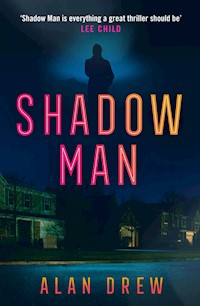
An explosive serial killer thriller perfect for readers of Lee Child, Karin Slaughter and Michael Connolly. Southern California, 1986. Detective Ben Wade has returned to his hometown in search of a quieter life and to try to save his marriage. Suddenly the community, with its peaceful streets and neighbourly concerns, finds itself at the mercy of a serial killer who slips through windows and screen doors at night, shattering illusions of safety. As Ben and forensic specialist Natasha Betencourt struggle to stay one step ahead of the killer - and deal with painful episodes in the past - Ben's own world is rocked again by violence. He must decide how far he is willing to go, and Natasha how much she is willing to risk, to rescue the town from a psychotic murderer and a long-buried secret. With eerie, chilling prose, Alan Drew brings us into the treacherous underbelly of a suburban California town in this brilliant novel of suspense; the story of a man, and a community, confronted with the heart of human darkness. Wonderfully imagined and wonderfully written, patient but propulsive, serious but suspenseful, grown-up but gripping, Shadow Man is everything a great thriller should be. - Lee Child
Das E-Book können Sie in Legimi-Apps oder einer beliebigen App lesen, die das folgende Format unterstützen:
Veröffentlichungsjahr: 2017
Ähnliche

















Shadow Man
BY ALAN DREW
Gardens of WaterShadow Man
First published in the United States in 2017 by Random House, an imprint and division of Penguin Random House LLC, New York.
First published in e-book in 2017 and in print in 2018 in Great Britain by Corvus, an imprint of Atlantic Books Ltd.
Copyright © Alan Drew, 2017
The moral right of Alan Drew to be identified as the author of this work has been asserted by him in accordance with the Copyright, Designs and Patents Act of 1988.
All rights reserved. No part of this publication may be reproduced, stored in a retrieval system, or transmitted in any form or by any means, electronic, mechanical, photocopying, recording, or otherwise, without the prior permission of both the copyright owner and the above publisher of this book.
This novel is entirely a work of fiction. The names, characters and incidents portrayed in it are the work of the author’s imagination. Any resemblance to actual persons, living or dead, events or localities, is entirely coincidental.
10 9 8 7 6 5 4 3 2 1
A CIP catalogue record for this book is available from the British Library.
Hardback ISBN: 978 1 78 649330 9Trade paperback ISBN: 978 1 78649 331 6E-book ISBN: 978 1 78649 332 3
Printed in Great Britain.
CorvusAn imprint of Atlantic Books LtdOrmond House26–27 Boswell StreetLondonWC1N 3JZ
www.corvus-books.co.uk
For Miriam, Nathaniel, and Adeline
Free yourself, like a gazelle from the hand of the hunter, like a bird from the snare of the fowler.
—PROVERBS 6:5
Find a little strip, find a little strangerYeah you’re gonna feel my hand
I got a livin’ angel, want a little dangerHoney you’re gonna feel my hand
—IGGY AND THE STOOGES
THE THINGS THAT KEEP YOU SAFE
Electrical currents pulsed in the tip of each of his fingers. When he had keyed open the trunk of the car fifteen minutes earlier to find the gloves and the X-Acto knife, a spark had leapt off the keyhole. Now the wind was up, just as the man on the radio had said, ripping leaves from the eucalyptus trees and scattering them into the playground. There, beneath the bruised late-evening sky, a couple swayed on a swing, the teenage girl draped across her boyfriend’s lap.
He leaned against a tree trunk for a moment and watched them— their tangled bodies swaying in a half circle, her small hand pressed against the boy’s cheek, her kisses wide-mouthed and devouring. He peeled strips of bark from the tree until the green skin was exposed to the desert air. The two kids were aware of nothing except each other’s body—not the wind, not the deepening darkness, not the screech of the swinging S-hook, not the man standing fifteen yards away in the night shadow of the bowing eucalyptus trees.
The streetlamps flickered to life, and suddenly the dark path of the greenbelt was illuminated, a cement walkway snaking the grass behind fenced backyards. The girl glanced up at the light, but her mind was focused on the boy, on the inner storm heating her body. She might have felt him there, he wasn’t sure. People felt things; he’d learned that in the last few months—the heat of his eyes on the backs of their necks, his electric body radiating beneath the windowsill, the hint of his footsteps on their patio steps. It excited him, his presence pricking their awareness. He stood still in the darkness, just as he did now, watching their momentary pause as though hearing some primal echo of people once hunted. Yes, you were prey once.
The girl blinked blindly and then slid down her boyfriend’s thighs, her hand moving toward his belt. He could see what her hand was doing, and a memory gripped him—a door thrown open to bursting light, fingers like giant spider legs prickling his skin, his childhood name whispered among the earwigs and beetle bugs and white curlicue worms of the basement. And his childhood voice spoke something, not in his head, not in the memory, but out loud into the present world.
“Who’s there?” the girl said, and he was jolted back to himself. Dusk. Santa Ana winds. Greenbelt running through the center of a housing tract.
“Who the hell’s there?” the boy spoke now, his voice pitched low to hide his sudden fear.
He liked the boy, liked his fear.
Awake to himself, he spun around the tree trunk and walked behind the grove of eucalyptus.
“Creeper,” he heard the girl say.
“Rent a goddamned movie,” the boy yelled after him.
His head throbbed now. The electricity buzzed in his teeth and the row of trees bowed over him, their limbs shaking in the wind. He could feel his left eye fluttering and closing, his mind spinning into vertigo until his adult self chastised his childhood self and everything found its place again in the world. The lights illuminating the path were like bright white moons stabbed into the ground. He was drawn into the warm pools of light and then into the cool darkness and back into light until he found himself in the half darkness of a flickering bulb. He stood for a moment beneath the staccato filament until finally it sparked and popped.
Another light caught his attention then. Beyond the pathway was a window. It glowed orange in the night and cast its mirror image on the mowed lawn beneath it. In that window stood a woman, her head enveloped in steam, her features smudged as though an eraser had been rubbed across her face. He watched the woman now, from the greenbelt, music from her stereo floating into the hot evening. Some sort of jazz, his fingers tingling with the beat, a cigarette-scorched singing voice turned loud to keep her company. She was alone, he could feel it. There was an opening in her fence—no locked gate, just a garden of stunted cactus twisting out of white rock.
He didn’t always know what he was looking for. Sometimes he just went for walks in the neighborhoods—watching the boys in the street popping ollies on their skateboards, sniffing the dampness of pesticide sprayed on the grass, peering into windows where women slipped blouses over their heads. These neighborhoods with their privacy fences and dwarf palms, their greenbelt walks and rows of eucalyptus, their leaves spicing the air with oily mint. Here, in these neighborhoods, people left garage doors open, left backyard sliding glass doors unhinged. They slept with their windows cracked, the ocean breeze on their necks in the early morning. He might go three or four nights without the feeling. A week, maybe. Sometimes he got lucky and felt what he was looking for two nights in a row. Tonight, standing in the pool of darkness beneath a shorted-out bulb, he felt it, and he stepped over the cactus spines into her backyard.
He came up along the side of the house. There she was, bent over a cutting board, slicing tomatoes. She was cooking pasta, the starchy thickness of the noodles steaming out the screened side window, knotting his stomach. It had been a while since he’d eaten. The window beaded with steam, turning the glass into a mirror, and for a moment he could see half of his face. He’d caught only glimpses of it in the last few months—a shard of it in the rearview mirror, a cheek and an eye in the side-view, a nose and a forehead while bent over a sink, scouring his hands. His face was soft and boyish, and he was forced to look at it now, that baby face, until the woman slicked her hand across the pane and glanced through the window. He froze and stared back at her, feeling the charged current pass between them. If she saw him, he would run, but if she didn’t . . . It was dark outside her window and he knew it was a mirror for her, too. When she tried to look through the glass, all she saw were her own eyes staring back, as though what had frightened her was imagined. No, he said to himself. What you’re afraid of is real.
Then she turned to the sink and washed a bowl, her back to him, her shoulders sloped, her flowery housedress tangled around her waist. The music blared into the kitchen—trumpets, bass, drums rat-a-tattatting a beat, notes plinking through the screened window like pieces of candied metal. When she was finished she sat on a stool, facing the boiling pasta, and sipped a glass of wine. There was no ring on her finger, no one coming home to her tonight. He liked her, liked her loneliness; her aloneness would make things easier; people who had someone else, he had discovered, fought harder.
He found the sliding door. The glass was pulled back, the house opened to the hot wind. Just a screen separated him from the carpeted living room. He tugged on the handle. Locked. He felt his blood rush then, a brief fluttering of his left eye. The door to the basement had had a lock on it, an iron hinge clamped shut from the outside. When the door closed, when he was his childhood self, he had been like a bird with a hood pulled over his eyes, blinking in the darkness of his own brain until the voice in his head strung made-up syllables together and a space opened up in his mind where the voice lived and the voice kept him from being afraid.
Locked. The screen was locked. He watched the woman in the kitchen, her back bowed with heavy shoulders, the steam swirling above her head, the music a chaos of metal clinks. It’s just aluminum and mesh, he wanted to say to her. Mesh and aluminum. The stupid things that make you feel safe. Doors and walls, screens and lights. He put on the gloves first, like slipping into new skin, and slit a line along the aluminum frame with the X-Acto knife—the plinking of each thread drowned by the squeal of trumpets. When it was cut, he peeled back the screen, and the mesh yawned open to let him inside.
1
EMMA WAS ALREADY UP IN THE SADDLE. SHE SIDESTEPPED GUS across the gravel driveway, the horse’s hooves kicking up dust that blew across the yard.
“C’mon, Dad,” Emma said. “It’s getting late.”
Detective Benjamin Wade was hammering the latch back onto the barn door. When they came up the driveway in his cruiser fifteen minutes earlier, the door was slung wide open, the latch ripped out of the wood by the gusting Santa Ana winds. The winds had burst into the coastal basin midmorning, dry gusts billowing off the desert in the east that electrified the air. The morning had been heavy with gritty smog, the taste of leaded gas on the tongue. By early afternoon, though, the basin was cleared out, the smog pushed out over the Pacific. A brown haze camouflaged Catalina Island, but here the sky was topaz, the needle grass in the hills undulating green from earlyfall storms.
“I’ll meet you up there,” Emma said, spinning Gus around and cantering him up the trail.
“Hold on,” Ben said. But she was already gone. He dropped the hammer, the latch swinging loose on a single nail. He pulled himself up onto Tin Man, raced the horse after her, and finally caught up to her on Bommer Ridge.
“You’re getting slow, old man,” Emma said, turning to smile at him.
“You’re getting impatient.”
“You want to be here as much as I do,” she said.
That was true. This was exactly where he wanted to be—in the hills, riding a horse, with his daughter. They rode side by side now, Emma rocking back and forth on Gus’s swayback. Tin Man snorted a protest, shaking his head to rattle the reins; the horse was getting too old for that kind of running, his cattle-rustling days well behind him. Gus and Tin Man were the last of the cutters. Four years ago, in 1982, when the cattle ranch officially shuttered the Hereford operations, they were set to be shipped off as dog-food canners. Ben wasn’t having any of that, so he bought them for the price of their meat and taught his daughter to ride.
The horses guided themselves along the fading cow path past the old cowboy camp, hooves flushing jackrabbits out of sagebrush clumps. He smiled and watched Emma, her thin back and wiry legs in perfect control of Gus. He wished his father could have met her; she was a natural on a horse, a cowboy in a place that didn’t need them anymore. They rode through a tangle of manzanita, the branches scratching their calves, and sidled through the shade of gasoline trees until they were in the open again, trailing the backbone of Quail Hill. A slope of poppies spread beneath them, blossoming orange into El Moro Canyon and down to the blue crescent of Crystal Cove.
One of the advantages of being a detective was the flexible hours, and when things were slow, as they mostly were in Rancho Santa Elena, Ben could pick up his daughter from school. He had done this for four years now, a reliable pleasure that continued even after the divorce was finalized a year and six days ago and he and his wife— his “ex-wife”—negotiated joint custody. Picking up was not a part of the settlement, but Rachel had stacks of papers to grade and when he proposed it to her she was thankful for the extra time. The added benefit of the gesture, too, was that sometimes Rachel gave him an extra night with Emma or let him take their daughter for horseback rides on weekday afternoons that weren’t supposed to be his. He savored every moment with Emma; he figured he had another year or two of these afternoons together, and then it would be all boys and cruising South Coast Plaza mall with her girlfriends.
“How was the algebra test?” he said, taking advantage of the moment.
“Irrational.”
He smiled.
“Shoot anyone today?” she said.
“Was in a gunfight over at Alta Plaza shopping center,” he said. “You didn’t hear about it?”
“I missed the breaking news.”
It was her daily joke; in the four years since Ben had left the LAPD and moved south to join the Rancho Santa Elena police force, he hadn’t discharged his weapon, except into the hearts of paper bad guys on the firing range out by the Marine base.
“How are you and Mrs. Ross getting along?” he said, hoping Emma hadn’t gotten in another argument with her ninth-grade English teacher.
“Equitably,” she said, another witty evasion. “Arrest anyone today?”
“Nope,” he said. “But there’s always tomorrow.” He’d driven down to the Wedge in Newport Beach at sunrise, bodysurfed a few windblown waves, and rolled back into town by 8:00 A.M. for his shift. He’d awoken a man sleeping in his car on a new construction site in El Cazador, checked his tags, given the man his fresh coffee, and sent him on his way. He’d run IDs on a psychologist he suspected of selling psychotropics on the side. He’d been called to a skateboard shop off Via Rancho Parkway to hunt down two eleven-year-old boys who’d absconded with new Santa Cruz boards. “Just borrowing them, dude,” one of the kids said, when he found them kick-flipping the boards at the local skate park. In master-planned Rancho Santa Elena, he was mostly a glorified security guard, paid to make residents feel safer in a place already numbingly safe—and both he and Emma knew it.
“How’s your mother?” he asked, hoping for a tidbit. “Domineering.”
And there she went, standing in the stirrups, cantering Gus down the hill ahead of him. Rachel said it was normal, this pulling away from them—she was fourteen, after all—and he guessed it was, but it didn’t make him feel any better about it.
“Take it easy,” Ben called out to her. “It’s steep here.”
“Geez, Mr. Overprotective,” she said, reining the horse in and plopping back in the saddle.
He could feel her rolling her eyes at him, a condition that had worsened in the last year.
Emma kept her distance now, trotting Gus along the ridgeline, the two of them disappearing behind an escarpment of rock before coming back into view. Down into Laguna Canyon, Ben could see the stitching of pink surveying flags waving in the wind—the “cut here” line for the new toll road, if the environmentalists couldn’t fend it off. The flags followed an old cattle trail that led to the beach. On full moons, Ben and his father would ride the trail together in the shadows of the canyon, the hillsides rising milky white above them. This was the 1960s, before the developers had started bulldozing the hills, and the land was silently alive with owl and raccoon, with the illuminated eyes of bobcat. It was so wild back then that when a grizzly bear escaped a local wild-animal park, it took game wardens two weeks to hunt the animal down and shoot it in the darkness of a limestone cave. For thirteen days it was the last wild grizzly in California, making an honest symbol out of the state’s flag.
After two hours of riding one moonlit night, Ben and his father had reached Route 1, recently renamed the Pacific Coast Highway, a four-lane expressway zipping cars up and down the coast. They had to sit perched on their horses for five minutes, waiting for the blur of headlights to pass. “In ten years,” his father had said, bitterness in his voice, “everything will be goddamned concrete.” His father had lived out here since the Dust Bowl days, he and his family escaping a bonedry Kansas in ’34, stepping off a coast-to-coast Greyhound into irrigated fields of orange groves. When he was ten, this was ranchland all the way down to the frothing surf, and he had spent his life watching it be slowly devoured. When there was finally a break in traffic, Ben and his father had nudged the horses across the cement until sand silenced the clipping hooves. They tied the horses to a gnarl of cactus and sat watching the bioluminescent waves crash the beach. It was the red tide, his father said—blooms of algae that sucked the oxygen from the water and flopped dead fish onto the beach. During the day the ocean was stained rust with it, but at night the foam of crashing waves glowed phosphorescent blue, swelling and ebbing bursts of light arcing down the coastline.
Ben and Emma reached the top of the hill now, the fledgling city of Rancho Santa Elena spreading beneath them in a patchwork of unfinished grids. Even when Ben was a kid, the basin had been mostly empty—a dusty street with a single Esso gas station, the crisscrossing runways of the Marine air base, a brand-new housing tract out by the new university, a few outlying buildings for ranchers and strawberry pickers. Now Rancho Santa Elena spread in an irregular geometry from the ocean to the base of the eastern hills of the Santa Ana Mountains, where newly paved roads cut swaths through orange groves. The center of town, the part of the master plan that was finished, looked vaguely Spanish—peaks of red-tiled rooftops organized in neat rows, man-made lakes with imported ducks, greenbelts cutting pathways for joggers and bicyclists. It was like watching a virus consume the soft tissue of land, spreading to join Los Angeles to the north.
A sudden screech, and an F-4 fighter jet roared above Emma’s head. Tin Man leapt backward, and Gus startled and bucked, losing his purchase on the rocky trail.
“Heels in,” he called out to Emma, as one of her hands lost grip on the reins.
Ben dug his boot heels into Tin Man’s flanks and the horse steadied, but Gus stumbled down the hill and Emma flipped backward, thumping solidly on her back in the dirt. Ben was off Tin Man, rushing to her, and by the time he was there she was already sitting up, cursing the plane and its pilot.
“Asshole,” she said, slapping dust from her jeans.
“You all right?” Ben said, his hand on her back.
“No.” She slapped the ground, her brown eyes lit with fury. “I want to kill that guy.”
“Anything broken?”
“No,” she said, standing now. “Where’s Gus?”
“Don’t worry about the horse.” She had fallen before, of course, but his panic never changed about it. “Just sit. Make sure your ribs are in the right place.”
He touched the side of her back, pressed a little. She elbowed his hands away.
“I’m fine, Dad.”
She went to Gus, who was shaking in a clump of cactus, a few thorns stabbing his flank. She hugged the horse’s chest as Ben yanked the thorns out, points of blood bubbling out of the skin. The jet swerved around the eastern hills, dropped its landing gear, and glided to the tarmac.
“Asshole,” Ben said.
“Yeah,” Emma said, smiling. “Took the words right out of my mouth.”
IT WAS NEARLY DARK WHEN they got back to the house, the western sky a propane blue. Emma walked the horses past his unmarked police cruiser and into the barn, and Ben retrieved a Ziploc bag of ice from the house and tried to hold it to Emma’s back.
“Thanks, Dad,” she said, hoisting the saddle off Gus, “but I’m fine.”
He let her be and they worked their tacks alone, the rushing sound of the 405 Freeway in the distance.
Ben’s house was in the flats on the edge of the city, down a dirt road that ended at a cattle fence that closed off Laguna Canyon and the coastal hills, a patch of wilderness, and the last of the old ranch. The place was a low-slung adobe, set in a carved-out square of orange grove—his father’s house, a cowboy’s joint, the house Ben had lived in until he was eleven. Emma had dubbed it “Casa de la Wade” three years before and the name stuck; they’d even fashioned a sign out of acetylene-torched wood and nailed it above the front door. When he and Rachel had moved back here from L.A. four years ago, they spent the first year in a rented apartment near the new university. He would drive out every once in a while to look in on the old place—the windows boarded up, the barn roof sagging. He had asked around at the corporate offices of the new “Rancho,” out by John Wayne Airport. Some of the suits remembered his dad from back when it was a working ranch, not a corporation with valuable real estate to sell, and out of respect to his father’s memory they let him have it for a moderately inflated price. The house and its acre of land hadn’t then been part of the town’s master plan; it was in the flight path of the military jets, and the Marines had wanted at least a quarter-mile perimeter of open land surrounding the runways in case an F-4 bit it on approach. The feds, though, had recently decided to close the base, and suddenly the Rancho Santa Elena Corporation zeroed in on the surrounding land. Letters from the Rancho’s lawyers had already offered him 10 percent over market value for the place. He had written back and simply said, Not interested, though he knew they wouldn’t give up so easily. The Rancho had already declared eminent domain to bulldoze artist cottages in Laguna Canyon. It had its sights set on the old cowboy camp at Bommer Canyon, too, just up the hill from Ben’s place.
It took a year of evenings and weekends, one hammered broken finger, and a nail through the arch of his right foot to get the place in shape, though mostly it remained a cowboy flophouse, stinking of leather and coffee grounds, and he liked it that way.
Ben forked hay into the barn stalls now, while Emma cottonballed Betadine onto the cactus cuts on Gus’s flanks.
“You ready for softball?” he asked.
“I’m not going to play this year.”
“You love softball.” She had an arm; she could whip it around in a blur and pop the ball into the catcher’s mitt.
“You love softball,” she said. “Why not?”
“You look at those girls in high school and they’re all, I don’t know, manly.”
“Manly?” he said. His tomboy little girl had a sudden need to be “pretty.” She’d started spending hours in the bathroom, rimming her eyes with eyeliner, thickening her lips with lipstick. “There’s nothing wrong with those girls.”
“I just don’t wanna play anymore, all right?”
“I gotta talk with your mother about that,” he said, glancing at her. Her face was tanned, her dark hair sun streaked. “And, by the way, you’re perfect, if you ask me.”
“Yeah, well, you’re my dad, so it counts like forty-five percent.”
Emma finished with the Betadine and closed Gus up in his stall. They had a big dinner planned—carne asada tacos, fresh avocado from the farmers’ market, corn tortillas he’d picked up that morning from the tortilleria in Costa Mesa. Back to the Future had just come out on VHS, and he’d already slipped the cassette into the VCR.
The Motorola rang in the cruiser. He stepped over to the car and leaned through the open window to grab the receiver. “Yeah, it’s Wade.”
“Been trying to get you on the horn.” It was Stephanie Martin, the evening dispatch.
“It’s my night off.”
“Hope you enjoyed it,” she said. “Got a call from a Jonas Rafferty down in Mission Viejo. They got a DB down there that’s still warm. He’s asking for you.”
A dead body. It had been a long time since he’d been on a murder scene.
“Gotta get you to your mother,” Ben said to Emma.
“What about Fiesta Night?”
“Friday,” he said, latching up the barn door. “We’ll do it Friday. I’m sorry.”
“You need a nine-to-five, Dad,” Emma said.
Seven minutes later, he parked the cruiser in front of his ex-wife’s new condominium in the center of town. Rachel opened the door a crack to let Emma in, but Ben still saw the man sitting on the couch, legs crossed at the knees, a glass of white wine resting in his palm as though cupping a breast.
“A professor?” Ben said, looking over Rachel’s shoulder as Emma waved a hello to the man and walked to the kitchen. “Drives a Datsun four-banger?”
She smiled, the dimple in her left cheek killing him a little.
“C’mon, Ben,” she said quietly. “You think I’m going to give you that?” She had used the shampoo he liked, cherry blossom or something like that, and for a moment in his mind her wet hair lay across her pillow next to him in the bed they used to share. “You’ve got a crime to solve, remember?”
“It’s a DB,” Ben said. “Barring a miracle, it’s not going anywhere.”
“Here?” she said. “In Santa Elena?”
“No,” he said. “Mission Viejo.”
“Thank God,” she said. “Is Emma’s homework done?”
He shook his head and Rachel sighed. “Out riding again?”
“She fell,” Ben said.
“Jesus, Ben.”
“One of those F-4s snuck up on us,” he said. “Spooked Gus.”
“She all right?”
“She says so,” he said. “But check on her anyway.”
“If she’ll let me.”
Apple in hand, Emma snuck behind Rachel and started up the steps to the second floor of the condo.
“Forgetting something?” Ben called through the cracked door. “Where’s my kiss?”
“Geez, Dad,” Emma said, pushing her way between her mother and the door. She leaned forward and deigned to present him her cheek, and Ben took advantage of the wide-open door to once-over the professor sitting on the couch. “Hey,” Ben said, nodding once.
“How are you this evening?” the man said, not even bothering to uncross his legs.
Pompous ass. “Got any outstanding parking tickets?” Ben said in a serious voice.
The man shifted his weight on the couch.
“Ben,” Rachel said, pushing him back from the door.
“A joke,” Ben said, holding up his hands. “Just a little police humor.”
“Go do your job, Ben,” Rachel said, and then she closed the door.
A body was growing cold seven miles away, but he walked to the carport anyway, trying his hunch on the vehicles, looking for a University of California faculty parking tag, a MEAT IS MURDER bumper sticker, anything that would give the man away as an elitist wimp. And on the fifteen-minute drive down to Mission Viejo, riding the shoulder past a red sea of taillights, all he could think about was that man’s soft hands on his ex-wife’s skin in the bedroom next to where their daughter slept.
THE HOUSE WAS ON MAR Vista, off Alicia Parkway, .46 miles from the 5 Freeway, according to his odometer. The street was already a carnival, with neighbors straining the yellow tape and half of the Mission Viejo police force parked on the road, cruiser lights spinning blue and red circles. When Ben pulled up, Rafferty was standing on the porch, giving directions to a uniform. It was 7:47; Ben wrote it down on a yellow legal pad sitting on the passenger seat. Rafferty saw Ben’s cruiser and waved him in.
Rafferty had been a vice detective in L.A., and he took the job in Mission Viejo for the same reasons Ben had taken the job in Santa Elena—safe neighborhoods, great schools for his two kids, little smog, good benefits and retirement plan, and an easier caseload, which allowed him to put his feet up at night with a beer and watch his sons swim in the backyard pool. Mission Viejo was another in a chain of master-planned communities in southern Orange County that set out to create an idyll that never existed—lakes where there had been rock, grass where there had been dust, shade where there had been sunlight. It survived on being the opposite of L.A.—clean, organized, boring. In L.A., people were used to crime scenes, used to the fact that there were bad people and they did bad things. Here, the neighbors crowding the crime-scene tape already carried the look of communal shock.
“Got a DB on the kitchen floor,” Rafferty said, his voice pitched high with adrenaline. He placed his hand on Ben’s shoulder; his palm was hot. “I’m glad you’re here.”
Since moving south, he and Rafferty had worked a couple of cases together—an illegal-immigrant smuggling operation with tentacles in both Mission Viejo and Santa Elena, a medical-insurance fraud case.
“Homicide’s not vice, is it?” Ben said.
“At least no drugged-out chick is screaming at me,” Rafferty said without any humor.
Ben could feel his blood pressure rise when they walked into the house. It was brutally hot, the heat of the day still trapped by the walls of the house. The foyer was lined with pictures of children or grandchildren, their smiling faces pinned behind glass. The living room was tidy—the carpet recently vacuumed, magazines stacked on a coffee table. Glass figurines—panda bears, cows, miniature unicorns, a seagull with wings outstretched—sparkled in a lighted cabinet against the far wall. A cheap oil painting of a wave catching the light of sunset, probably purchased at a convention-center art sale, hung askew. It wasn’t until he saw what was in the kitchen that he understood what had knocked it off-kilter.
Scuff marks blackened the yellow wall, the sole of one of her shoes ripped apart at the toe. She had kicked and kicked the common wall that separated the living room from the kitchen and nearly knocked the picture off the hook. The woman’s legs were pale in the kitchen light, her dress pushed above her knees. Her torso and face were hidden behind the kitchen island. On top of that island was a cutting board, a tomato sliced into thirds, and a knife slicked with pulp and seed. A fan motor rattled above the oven. A pot of pasta sat on the stove top, the smell of starch thickening the heat in the room. The screen to the sliding back door had been peeled open.
“Anyone touch that door?” Ben said to Rafferty.
“No,” he said. “First on scene said it was like that when he got here.”
She had been at the cutting board, he guessed, her back to the door. Between the fan and the boiling water, and the carpet on the floor to soften the intruder’s footsteps, she wouldn’t have heard anyone sneaking up behind her.
“Get someone to print that,” Ben said, pointing to the stove.
There was another smell, too. When he came around the corner of the island, he saw the puddle glistening beneath her dress, the orange flowers deepening red where it was soaked with her urine. He could tell she had been strangled before he saw the bruises on her neck and the fingernail crescents cutting blood out of her skin, before he saw the scratches crisscrossing her chin, before he discovered the petechiae around her eyes like little pinhole blisters.
“Medical examiner on the way?” Ben asked.
“Don’t have one.” Rafferty shook his head. “It’s me.”
The perks of living in paradise, huh?”
“I can do it,” he said. “I just don’t want to fuck it up. That’s why I called you. I mean, this is the guy, right?”
“Let’s not get ahead of ourselves,” Ben said.
In recent months, there had been a series of killings in L.A. and northern Orange County, mostly manual strangulations. No one yet had said there was a serial on the loose, but cops had started to whisper exactly that to one another. The last body, six days ago, had turned up in Seal Beach, thirty-five miles away.
Ben knelt down next to the body. One eye was open, the sclera red with broken blood vessels.
“She fought,” Ben said. “Hard.”
The woman was in her late forties, at least. Barefoot, a reddening burn on her left thigh—from splashed pasta water, he guessed. Jesus. Ben could understand the shootings in L.A. It was business, a twisted ethic among the gangs, a harsh world with harsh laws, and the kids bought into it. But not even a Crip or Blood, not even a Loco, would strangle the life out of someone. It was too much work, too personal, too brutal. You had to be out of your head angry to do such a thing, psychotic angry, or else you had to enjoy it, had to find pleasure in the power of your hands.
“Who found her?” “Anonymous tip,” Rafferty said. “The killer?”
“That’s my guess,” Rafferty said. “Doesn’t seem to have much faith in us.”
“Look what I’ve done,” Ben muttered, looking at the bruises on the woman’s neck.
“What?” Rafferty said.
“This guy wants an audience.”
“Sick dick.”
“Get a call in to the Orange County ME,” Ben said. “We need some science down here.”
2
NATASHA BETENCOURT WAS IN THE MIDDLE OF TEACHING A class on weighing organs. Liver, 1,560 grams. Lungs, 621 grams. And the heart: 315. That always surprised the UC students, the lightness of the heart. When the call came in, she was placing a kidney (276 grams) on the scale. Some of the students had tissue paper stuffed up their nostrils—a bad idea, she told them, since you tasted the stink then; tamp down one sense and another compensates. Vicks was the way to go, but everyone dealt with the smell the way they dealt with it. She’d already lost two students to the toilets. The first one with the Y cut and the second when she unraveled the lungs. Those were the sentimental ones. She had a soft spot for those students; they still attached a person to a body, still sympathized with the cadaver. An admirable sentiment, but misplaced and ultimately ineffective in this line of work. “The soul flew away a long time ago,” she liked to say in the examination room. “Just tissue and bone here.”
“Detective Wade on the line,” Mendenhall said, his head poking through the half-open examination room door. “Needs you down in Mission Viejo.”
“You wanna take over?”
Mendenhall, the lieutenant medical examiner, never taught classes. He felt it was beneath him to walk the UC students around, much less show them how to use a Stryker saw, so it was left to Natasha, his deputy. Charging her to teach the classes was Mendenhall’s way of reminding her that a woman didn’t belong in the medical examiner’s office, though he was more than happy to let her do most of the work. Worse than his disdain for teaching, though, was Mendenhall’s distaste for fieldwork. Too messy. He was all clinical, liked to keep his shoes clean.
“School’s out early,” he announced to her students.
Natasha was in Mission Viejo in thirty-five minutes, smoking cigarettes on the way to kill the stench of the examination room. The smell: It didn’t bother her in the lab, but out in the world it did, when she felt it was tangled in her hair, trapped in the fibers of her clothes. That was the problem with being an ME: balancing the examination room and the outside world. Everything was clear in the medical examiner’s office but not out here, not at all.
She ducked under the yellow tape in front of the house, stepped through the foyer into the kitchen, and came around the corner of the island to take in the scene.
“I thought this kind of thing didn’t happen down here,” she said to Ben, who was down on his haunches, taking notes on a yellow legal pad.
“It didn’t,” Ben said. “Until it did.”
She set her kit down on the floor and knelt across from Ben. One of the deceased woman’s blue eyes stared at her. She understood why Mendenhall didn’t like the field. The examination room was impersonal, but kneeling next to a body on the floor of her own kitchen was a different thing. The woman had been alive just minutes before; the color was still in her cheeks. Alive was alive, dead was dead. Where the two met was the difficult part. In your mercy, she thought, turn the darkness of death into the dawn of new life. She hadn’t been to Mass in years, but being on scene always brought out the Catholic schoolgirl in her.
“Strangled,” Ben said.
“I see that.” She opened the kit and slipped on gloves. Petechiae. A necklace of bruises around the throat. “You been out riding?”
“How’d you know?”
“You smell like horse.”
Fractured hyoid bone. The larynx caved in.
“You need anything, sweetheart?”
Natasha turned to find a detective standing over her, his badge dangling from his leather belt, his face full of condescension. “Yeah, honey,” she said. Crime scenes were generally a boys’ club, full of testosterone-driven machismo. “I need you and all these other idiots out of my crime scene.”
Ben looked at the floor and smiled. The detective, without another word, cleared the kitchen. Cops. These entitled little boys.
“How’s Emma?” Natasha asked. She had shared an In-N-Out burger with Ben and Emma a week ago—his invitation—but he hadn’t called her since. A little over par for the course for him.
“She’s a teenager.” He shrugged.
“Ah, you’re not her knight in shining armor anymore.”
Ben flashed her an ironic look and then got back to business. “Seems like it’s manual,” Ben said, pointing to the woman’s neck. “No ligature.”
“Is that so?” Natasha said. “Go do your job, Ben, and let me do mine.”
“Right,” he said, slapping his thighs before standing up.
“One more thing,” Natasha said. “What’s her name?”
“Hold on. I got it written down.”
Ben flipped pages on the legal pad while Natasha got down on her elbows, Dictaphone in hand, and examined the woman’s neck. She would have passed out quickly, but the killer would have had to stare into her face for two to three minutes—a quiet face, a nice one—crushing the trachea, snuffing her out with his hands before the brain shut down.
“Emily,” Ben said finally. “Emily Thomas.”
“All right, Emily,” Natasha said quietly, so only Emily could hear. Cardinal sin, she’d tell her students. Don’t personalize the body. But on scene was different; on scene there was disturbed energy in the air. “Show me what he did to you.”
IN THE THIRTY-FIVE MINUTES THEY had waited for Natasha, Ben had studied the sliced-open door screen: a clean cut, with a scalpel-like instrument, probably an X-Acto knife. The chrome appliances shone in the kitchen track lighting, none of them smudged—at least to the naked eye—by an intruder’s fingertips. Ben had stuck his nose down near the dead woman’s neck, to see if he could smell it. There it was, the petroleum-and-baby-powder scent: The killer had worn latex gloves. Ben had sent a uniform out to interview the neighbors, too, asking them if they saw anything unusual—a car parked on the street, a man climbing a fence or slipping behind the shrubbery. Nothing.
Natasha was on her knees photographing the body, a bright flash and then everything back into focus. A junior detective finally fingerprinted the stove, and Ben turned off the fan so he could hear himself think.
“Broken hyoid bone,” Natasha said into her Dictaphone. Then whispering, not into the Dictaphone but almost as if she were sharing secrets with the woman. He’d seen her do it before—when a boy drowned in a backyard pool, when a woman was hit by an Amtrak train. He almost asked her about it one night when they were out having drinks but decided against it. Another camera flash, everything overexposed, then all the colors and shapes in the right place again. “Dead sixty to ninety minutes.”
“What’s with her?” Rafferty said.
“Natasha?” Ben said, smiling. “She’s not the ‘sweetheart’ type.”
“What a bitch.”
Ben bristled a bit. “Jonas, how about calling her ‘Dr. Betencourt’?”
Rafferty had gridded the house. Officers were searching each section for evidence. It was still horrifically hot inside, humid with pasta steam, stinking of death and onions. In the time since he’d last been on a murder scene, whatever immunity Ben had built up to it had been lost. Homicide was not like riding a bike. He watched Natasha, stretched across the kitchen floor, side by side with the DB—flash— then stepped outside for some fresh air.
The street was a circus. Reporters pushing against the yellow tape, kids on BMX bikes gawking at the scene, a neighbor crying. He saw, between two houses, a couple walking a golden retriever on a path beyond the backyard, beneath a burned-out streetlight.
“Jesus Christ,” he mumbled. “Suburban cops.” He climbed the front lawn and walked back into the house and found Rafferty bent over an investigator dusting the screen door for prints.
“Raff,” Ben said. “We need a perimeter back here.”
Rafferty called out to a couple of uniforms and Ben squeezed through the torn opening of the screen door, following a line of matted grass with a flashlight to a cactus garden at the edge of the backyard. There he saw the prints—Vans skateboard shoes; he could tell by the hexagonal pattern outlined in the pale soil. Eights or nines, he guessed. A uniform was rolling out tape that cut off the backyard from the greenbelt.
“Go inside,” Ben told the cop, “and tell Rafferty to get someone out here to take pictures of these.”
Then Ben was up on the greenbelt sidewalk, standing beneath the blown-out bulb and the eucalyptus bowing in the wind. Every hundred feet down the path stood a brightly lit streetlamp, except here, except right here. The house to the left had a six-foot privacy fence and a locked gate. The house on the right had a line of juniper trees, maybe ten feet tall, cutting the backyard off from this one. It wasn’t difficult to see why the killer chose this house. There were no clear lines of sight from the neighbors’; the only place where you could see inside was right here. He stood in the dark and watched a house full of men combing the first floor. He could see Natasha on her knees now, snapping more photos of the body, the warm light framed by the windows like an invitation.
NATASHA ACCOMPANIED THE BODY UP to the county ME’s office in Orange nearing midnight. Ben left the scene to Rafferty and was back at the station in Santa Elena by 12:52 A.M. The night-shift cops were hauling in the drunks, lawyers, and businessmen, one VP for Security Pacific Bank threatening to sue. He typed up his report and left it on Lieutenant Hernandez’s desk. It was Rafferty’s case, Mission Viejo being out of his jurisdiction, but Ben made it official anyway. He liked to dot his i’s and cross his t’s. Every deadbeat he’d known, every crooked cop, had cut corners, used loopholes, exploited vulnerability. Follow the rules, he liked to tell Emma; it’ll make you a good person.
He left the station at 1:42 and drove the mile over to Rachel’s condominium, idling the cruiser in the complex parking lot. The rush of the freeway echoed hollow, as though the sound carried all the way from Los Angeles and beyond. If the killer had driven the Santa Ana down to Mission Viejo earlier tonight, he’d passed the offramp that led straight to this condo. Ben could tell the kitchen window was wide open. He knew, too, that Rachel liked to leave the sliding glass door to the backyard open, the ocean breeze cooling the rooms. That’s why they’d moved back here. It was safe; you could leave your doors unlocked. Hell, you could leave them flung wide open.
A blue light flashed from Rachel’s window, and he knew she had fallen asleep with the television on. A wave of satisfaction washed over him; the professor hadn’t stayed over. If things hadn’t fallen apart between them, he would sneak into the room right now to find her clasping two pillows to her chest. He’d click off the screen and slip into bed with her in the beautiful silence of the early morning, everything he gave a damn about breathing the same air he did.
The move here was supposed to save their marriage. The last straw, the thing that finally made them pack up their Marina del Rey apartment and drive the thirty-eight miles south in a rented U-Haul, was the shooting. Emma had been nine then, and Ben had been popped in the left arm six months before in East Hollywood by a twelve-year-old gangbanger who had been forced into a blood-in initiation ritual by his older brother, a heavy in the La Mirada Locos. Shoot the 5-0 and you’re in; don’t shoot the cop and you’re out and we won’t protect you. That was the kind of choice kids in the worst L.A. neighborhoods had to make. Ben didn’t even see the kid; heard the shot and then felt the burn in his arm, just like that, the bullet streaking through his unmarked Ford’s open window. There was a shitload of blood, slicked over the armrest and splattered across the steering wheel. He called it in but didn’t wait around to bleed to death; he gunned the car to St. Vincent and walked himself in, his head like helium by the time the nurses got the gurney.
Later, at the court hearing, the kid had apologized, dressed in a suit too big for his underfed body, a sewing-needle tattoo etching the side of his neck. Not even shaving yet, his voice still singing soprano, and already owned by the street. He was sent to juvie and then released to the custody of his grandparents, and two weeks later the kid ended up facedown in a vacant lot, shot in the back of the head by his cousin, a smog-stunted palm tree waving above him. And that was it for Ben; what the hell were you supposed to do with that? He investigated the murders, sure—the drive-bys, the drug deals gone bad—but he tried to work with the kids, too, tried to show them a way out. He had naïvely thought he could bring some order to their lives. But once it went Cain and Abel over gang allegiance, what could you do? That was something permanent, something rotten in the culture.
At the time, he didn’t tell Rachel it was a kid who shot him. What was he going to say? A prepubescent child nearly sent him toes up? Jesus, it rattled him enough, not to mention how it would scramble her. The hole in his arm was all she needed to know. They had to get themselves out of L.A. Rachel was too unhappy, too confused. She couldn’t take it anymore—the constant worry, her exhausting teaching position at the underfunded high school in North Hollywood. At first the job felt like an admirable mission to a third-world country, but it quickly grew into an exhausting exercise in futility. L.A. had worn them out—Rachel trying to save the kids with education and Ben trying to save them with the law, and their marriage going down the toilet. Not to mention Emma’s own educational future. L.A. public? No way. They had a child to raise and Rachel wasn’t going to do it alone, and he was damn well not going to make her. Rachel wanted to go home, back to Santa Elena, where they both grew up, back to where things didn’t seem to be spinning out of control.
The Santa Elena assistant police lieutenant, Ramon Hernandez, had been fishing partners with Ben’s late father, and the police department was expanding. Ben got an interview, and the job offer came two weeks later. Rachel found a good job at the high school in El Toro, the next town over, and all the dimly lit stars aligned. Now here they were, nearly five years gone, in the gorgeous other side of L.A., and everything had finally gone to hell.
Sometimes he thought if he had stayed on the force in L.A., they would still be together. During the day, he and Rachel would be bound by their fear, and in the evening they’d share the relief that someone hadn’t popped a hollow-tipped bullet into his chest. It was too good in Santa Elena, too easy to get bored, to be sucked into the vortex of complacency. You started to believe you deserved more than you had, deserved what your neighbor had—and they always had more—and once you started thinking like that there was an anxiousness that set in on you, a rotting dissatisfaction. Maybe that’s what happened to them after they moved here. When you had it bad, you were glad for the good, any good. When you had it good, you wanted it better.
Emma’s window was dark, glowing only with a string of white Christmas lights she kept hung from the ceiling year-round. He got out of the car and walked the sprinkler-dampened grass to the back of the condo. As he suspected, the sliding glass door was pulled open, just the screen separating outside from in. He tugged on the plastic handle, but the lock was engaged. He found the penknife in his coat pocket, jimmied the lock free, and slid the door open. Click locks were nothing; door locks could be picked with a paper clip. Only deadbolts were worth a damn. He stood there for a moment in the dark, waiting to hear Rachel moving upstairs. Silence. It was too easy to get in; thirty seconds and the killer could be standing in the family room. He closed the screen and the sliding glass door, engaging both locks. He walked the edge of the room, jumping around the creaky spots on the floor—he’d visited enough to know such things—and slid closed and locked the window in the kitchen. A pad of paper was sitting near the phone and he wrote Rachel a note.
You’re going to be pissed off, he wrote, but ask me about it later.
He checked the coffeemaker. The timer wasn’t set, no coffee in the filter. Ben had always taken care of the coffee, a full pot at 5:30 A.M. every day. He found the tin in the cupboard and scooped a few spoonfuls into the filter. He set the timer, pressed start, and left the note propped up against a clean coffee mug.
He snuck through the hallway into the foyer and stood gazing up at the weak light emanating from Emma’s cracked bedroom door. He wanted to go up there, wanted to kiss his daughter, wanted to crawl into bed with Rachel. He wanted to rewind the last five years of their lives together, pinpoint the places he’d screwed up, and fix them all. But of all the useless thoughts in the world, this was the most useless. All you could do was say you were sorry and hope they believed it.
He opened the front door by millimeters, turned the door-handle lock—man, they needed a deadbolt—and stepped out into the night, pulling the door closed behind him and checking it twice to make sure the lock was engaged.
AFTER THE AMBULANCE DELIVERED THE body to the medical examiner’s office, Natasha was alone in the examination room. The body lay on a stainless-steel gurney, covered to the toes by a blue sheet. She found a tag, wrote down the woman’s name—Emily—and tied it to the big toe on her right foot. The toenails were painted with chipping teal enamel.
She liked it like this, the silence, particularly after being on scene. On scene, the body seemed demeaned to her, all those people milling around, standing over it, the chaos of an investigation. Here, the bleached-white tile of the examination room felt appropriately serious to the disrespectful task of opening up a body. Here, her job was clear: Determine the cause of death. Not: Who caused the death? Not: Why did they kill? Just: What? Straightforward, objective. It was like a puzzle with clear rules, like the ones her father, an immunologist, used to play with her as a child. “If this cell kills this bacteria,” he would say, “why does it not kill this one?”
An autopsy couldn’t be performed until next of kin were notified, a job that got left to the detectives. But she would wash the body tonight, dignify it by making it clean. She wheeled the gurney over to the floor drain near the sink, soaked a cloth, pulled back the sheet, and pressed the cloth between Emily’s toes. She swabbed the arch of her right foot and then her left. She then moved up the woman’s calves, washing away the indignity of having lost her bowels, the blood starting to pool purple in the fat of her thighs.
Natasha couldn’t help it; it always disturbed her, the bodies of women killed violently. Men who had been shot or stabbed, men who had OD’d, men’s bodies in general, didn’t bother her; for the most part they were killed by some stupid business they’d gotten themselves into. But not the women. Women, most often, were killed by the men who got themselves into stupid business. She tried to remind herself that death was death, equal in its permanence, but the moments before death were not equal in their terror, and Natasha couldn’t convince herself not to be bothered by this.
She moved up Emily’s torso, washing away the sweat of the day, then wiped clean the more-intimate places, tossing one cloth out and starting again with a fresh one.
She remembered the night on Signal Hill; it sometimes came to her when she was here alone with a female body. “Let’s go watch the submarine races,” the boy had said, leaning into her in the doorway. She had been at a frat party. A stupid nineteen-year-old girl. She wasn’t a little sister, but her roommate at the time, Kris, had been. It was a cheap night out—a backyard keg, jugs of wine, boys, most of them clean-cut and drunk. She had known this boy, the one with the plastic cup of beer dangling from his fingers, the one with the blue eyes and the easy smile. He had been in her psych class and she had watched him from afar, flirted with him over coffee in the university courtyard. Submarine races? The joke was so obscure she couldn’t register its meaning. She was a little drunk herself and enjoying the loose feeling of her muscles, her sudden lack of anxiety, the boy’s blue eyes on her. “Sure,” she’d said, laughing.




