


Erhalten Sie Zugang zu diesem und mehr als 300000 Büchern ab EUR 5,99 monatlich.
- Herausgeber: Corvus
- Kategorie: Abenteuer, Thriller, Horror
- Sprache: Englisch
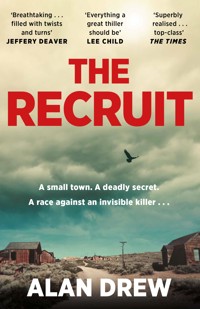
'Superbly realised. You'll go a long way before you find a better-written thriller this year' THE TIMES Breathtaking . . . filled with twists and turns'JEFFERY DEAVER *Featured on The Times' Best Summer Reading of 2022* *Featured on Crimereads' Most Anticipated Crime Books of 2022!* ______________ A small town. A deadly secret. A race against an invisible killer . . . Southern California, 1987. Rancho Santa Elena might look like paradise, but a series of violent hate crimes are disturbing the peace. When Detective Benjamin Wade starts investigating, it becomes clear that the locals are hiding a secret - one they'll die to protect. With forensic expert Natasha Betencourt at his side, Ben uncovers a mysterious gang of youths involved in the town's growing white power movement. What he doesn't know is that they are part of something much bigger - a silent organisation of terror who are luring young men in using new technology. Ben zeroes in on the gang's freshest young recruit, hoping he will lead him to the mastermind of the operation. But as he digs deeper, he is forced to confront uncomfortable truths about himself and his community. And as Ben comes closer to discovering the truth, the killer is drawing closer to Ben. . . * * * Praise for Alan Drew 'Everything a great thriller should be' LEE CHILD 'A vivid portrait of a seedy world' GRAHAM MOORE 'Revises the old detective story and turns it in several fascinating directions' COLUM MCCANN 'A clarity and wisdom reminiscent of Michael Connelly's Harry Bosch' DAILY MAIL 'Smart, chilling, and impossible to put down' WILLIAM LANDAY 'The sort of magically absorbing novel that keeps you turning the pages and checking the locks on the door' LAUREN GRODSTEIN
Sie lesen das E-Book in den Legimi-Apps auf:
Seitenzahl: 618
Veröffentlichungsjahr: 2022
Das E-Book (TTS) können Sie hören im Abo „Legimi Premium” in Legimi-Apps auf:
Ähnliche


















Alan Drew is the author of Shadow Man, a literary thriller. His critically acclaimed debut novel, Gardens of Water, has been translated into ten languages and published in nearly two-dozen countries. He is a graduate of the Iowa Writers’ Workshop, where he was awarded a Teaching/Writing Fellowship. An Associate Professor of English at Villanova University where he directs the creative writing program, he lives near Philadelphia with his wife and two children. Learn more about his books at www.alan-drew.com.
BY ALAN DREW
The Recruit
Shadow Man
Gardens of Water
THE
RECRUIT
First published in paperback in Great Britain in 2022 by Corvus, an imprint of Atlantic Books Ltd.
Copyright © Alan Drew, 2022
The moral right of Alan Drew to be identified as the author of this work has been asserted by him in accordance with the Copyright, Designs and Patents Act of 1988.
All rights reserved. No part of this publication may be reproduced, stored in a retrieval system, or transmitted in any form or by any means, electronic, mechanical, photocopying, recording, or otherwise, without the prior permission of both the copyright owner and the above publisher of this book.
This novel is entirely a work of fiction. The names, characters and incidents portrayed in it are the work of the author’s imagination. Any resemblance to actual persons, living or dead, events or localities, is entirely coincidental.
10 9 8 7 6 5 4 3 2 1
A CIP catalogue record for this book is available from the British Library.
Trade Paperback ISBN: 978 1 78649 372 9
E-book ISBN: 978 1 78649 373 6
Printed in Great Britain.
Corvus
An imprint of Atlantic Books Ltd
Ormond House
26–27 Boswell Street
London
WC1N 3JZ
www.corvus-books.co.uk
THE
RECRUIT
1985
The Ten Lost Tribes
The shades on the windows of the Citation II jet had been sealed shut. He knew enough not to try to open them. Until they held dominion over the state and federal governments, until they were on the edge of The Tribulation, the culmination of their work, secrecy was essential. He ran his finger along the caulking that glued the edge of the shade to the interior panel of the plane, the summer sun illuminating the opaque plastic. He knew, of course, as they all did, the location of many of the churches around the country, but a few of them, the last strongholds for when the war broke out, were kept off the map. Everyone knew these strongholds existed, but they were like mythical places, like the Nine Worlds of Norse mythology, and you never saw them until you were ordained.
Still, guessing the cruising speed of the plane, around 374 knots, he could calculate that they were about four hundred miles into the flight. Since the sun was on his right, he figured they were flying northeast, probably crossing over the Great Basin. He had flown his own four-seater prop plane out to the high Mojave Desert this morning—nothing like this plane, nothing like the small fleet of private jets The Reverend owned—and landed at an airstrip grated out of a dried-up lake bed. The name of the airstrip didn’t matter—it was best the name remain unsaid. What mattered was its location—more than one hundred miles east of Los Angeles and far enough away from Edwards Air Force Base to go unwatched. The strip had no control tower and it lay beneath controlled airspace, so no one would know he had landed there. More important, no one would know that one of The Reverend’s Citation IIs had touched down, either. He’d left his Comanche tied to the desert floor and waited in the morning heat until the wheels of the private jet touched the lake bed, the engines kicking up a stream of rock dust as they screamed the plane to a stop.
He was the only one on this flight. There was no stewardess, just a pilot and a copilot locked away in the cockpit, and this month’s America’s Divine Promise Ministries magazine sitting on the fold-down table in front of him. The Reverend’s face filled the cover. Dressed in a deep-blue suit, shelves of books behind him, he smiled out of the frame as though you were the only person who existed in the world. That was The Reverend’s power—his smile, the cobalt eyes that seemed to look straight through your chest and into your beating heart. He had this power on printed paper, wielded it from the television screen, and today, Richard Potter Wales would discover if the man had that power in person.
Wales had captured The Reverend’s interest with a proposal concerning a system of bulletin boards that could be accessed anywhere in the world through the new personal computers. That was one of the reasons Wales would be ordained today, given the distinction of “reverend.” But there was really only one: The Reverend. He was the man Wales wanted to impress and, when the time was right, one day be; The Reverend was the man they all wanted to be. He was the model for them all, the lowercase r in their titles both aspirational and a reminder of their place. They had been—all these groups all over the country—frustrated and lost in the wilderness of a dying culture, sitting alone in desert compounds, hiding in remote mountain valleys, watching as post-civil-rights liberalism destroyed America. But The Reverend would lead them out of the wilderness to reclaim what had been stolen from them, to destroy what had poisoned the culture.
An hour and ten minutes later, the engines of the jet wound down and the plane banked into a descent. Doing the calculation in his head, Wales knew approximately where they were, but he tried to keep it quiet to himself. Some things really weren’t supposed to be known until it was time.
On the ground, the copilot opened the fuselage door and Wales stepped out into the light. Northern Utah, he guessed, or southern Idaho. They were on a sagebrush plain, the horizon darkened with humps of mountains. Nothing but empty land surrounded the airstrip, but, maybe a mile away, he could see rows of suburban-style homes, construction cranes, and a congregation of light poles that suggested athletic fields. The airstrip was adjacent to the church, a white single-story rectangle surrounded by neatly cut shrubs. The church was the center of an asphalt parking lot, and at the entrance to the lot, running along the edge of a newly paved service road, a large cross punctured the desert sky. A sign next to the cross read CHURCH OF JESUS CHRIST CHRISTIAN. Everything looked brand new, much of the money to build this church coming from The Reverend’s Divine Promise Ministries. Promise had many connotations—theological, financial, and fraternal; once The Reverend sent you money, you were empowered but also bound.
On Sundays this lot would be full, the sanctuary filled with parishioners’ voices flatly singing hymns. The power of the place was its normalcy, Wales knew, the way it felt like any other rural church filled with God-fearing white Americans—outside of the airstrip, of course.
Wales’s own church, in the California foothills of the Sierras, was filled with average people—truck drivers, schoolteachers, small-business owners, clerks at the local grocery store—who weren’t in the Identity Movement but were open to a more subtle version of the ideology. No Two-Seed Theory, no discussion of “mud people,” but they were more than receptive to fury over the welfare state, rage about inner-city waste and violent minorities. Subtlety, that was the key, quiet indulgence of parishioners’ fears. Identity wasn’t the Klan with their silly hoods and their burning torches. Identity was The Reverend in his suburban Fort Worth mega-church, with its gospel choir and arena-sized audiences. The Identity Movement was America’s Divine Promise’s syndicated television broadcast, with its smiling gospel choir, and The Reverend’s assurance that God wanted his chosen people to be wealthy. Send your donations now and God will reward you tenfold! What was it like, Wales thought, to have that kind of power, to compel people from all over the country to send you money, to convince people you were a conduit to God? How could he learn to be this kind of man?
As he descended the boarding stairs, Wales saw a man in a dark three-piece suit striding across the tarmac toward the plane.
“Brother Wales,” reverend Klein said as Wales stepped onto the tarmac.
They embraced. Wales had never met Elias Girnt Klein, but he’d read some of his sermons in his Liberty Front magazine, a monthly pamphlet Klein distributed to a list of subscribers. It was Klein’s sermons, Wales knew, that got The Reverend’s attention. But Wales had proposed something much bigger than typed-up sermons on cheap paper; what he’d proposed to The Reverend was visionary, something that would make those pamphlets look like minor dispatches from the Dark Ages.
“He hasn’t arrived yet,” Klein said. “Please, let’s greet the others.”
Inside the church, women were setting up a potluck in the back of the sanctuary. Crock-Pots of meat and bean stews, hot-plates of hot dogs, potato salad. Huckleberry pie. The men were gathered near the pulpit. It looked like a business meeting, the other reverends dressed in dark suits, too, their hair combed and sprayed, a wafting of cologne. Behind them, on the pulpit, was a baptismal tub, and above the tub hung a flag with the blue shield and the cross and crown. It looked like any other denomination’s crest—the Methodist cross and fire, the Holy See’s crown and keys—except for the wolfsangel, the ancient German runic symbol, slicing the center of the cross.
“Brother Wales,” one of the men said, and then they were surrounding him, shaking his hand: reverend Jordan of Mason, Ohio; reverend Perry of Levittown, Pennsylvania; reverend Gaetz of Alpine, Utah; reverend Barr of Paradise Valley, Arizona; and a half dozen more. Each of them wore a heavy ring on his right ring finger, the metal slapping Wales’s knuckles as they shook. He’d never met the men, but he knew of them through their loose network of rural churches—even before The Reverend pulled them into his ministry. All of them felt they were on the edge of some important moment with the end of the twentieth century, the millennium, just fifteen years away.
“He just landed,” a woman said from the back of the sanctuary.
All the men turned toward the wide windows facing the airstrip and watched The Reverend’s jet streak across the tarmac.
Three minutes later, a young man in a charcoal fitted suit strode into the sanctuary. “The Reverend is on a tight schedule,” he said. He wore a skinny black tie with a white straightedge handkerchief, his green eyes flashing behind clear-rimmed glasses. There was something vaguely European about the look, something that whispered aristocrat. The young man strode up to the pulpit and started wiping the podium down with a cloth. Three men in black suits came through the back door of the sanctuary and frisked each of the reverends. Through the window, Wales watched as The Reverend walked down the steps of the plane and strode across the tarmac, all alone, Ray-Ban sunglasses obscuring his eyes, his jaw tight like he was grinding his teeth. Wales noted the look, a look of power and control he wished to emulate.
But when The Reverend walked through the back door, his glasses were folded into his coat pocket, and he threw the room that smile that electrified television screens.
“Mr. Wales,” he said, striding between the pews toward him, both his hands outstretched. He took Wales’s hands in his and held them like they were precious things. “My brother in Christ, it’s so good to meet you in person.” The Reverend’s blue eyes radiated warmth and love, but more than that, his whole demeanor expressed control. Wales realized then that everything about his entrance was choreographed—the young man in the slick suit, the pseudo–Secret Service toughs, his lonely stride across the tarmac as though he were an iconic American hero in a Hollywood film: All of it was a part of The Reverend’s show.
“This way,” the young man in the charcoal suit said, his arm outstretched toward a back room.
“Please,” The Reverend said, his hand on Wales’s shoulder now. “Let’s have a moment of fellowship.”
They retreated to reverend Klein’s office, where the young man in the charcoal suit had pulled together two green armchairs. The Reverend motioned for Wales to sit. He did but The Reverend walked around the small room and lifted something off a shelf behind reverend Klein’s desk, weighed it in his hand, and then joined Wales on the chair across from him.
He opened his hand to Wales, a ceramic broken sun cross sitting in his palm.
“You know what this is, yes?”
Did The Reverend think he was an idiot? Of course he knew. “The symbol of the Thule Society. Adopted later by the Nationalist Socialist German Workers’ Party.”
“This is not what we are,” The Reverend said, a slash of anger in his voice. “We have an image to uphold. Do you understand?” The Reverend looked at Wales hard.
“I understand.” Of course, the swastika was too obvious, even a subtle one like the broken sun cross. Klein was stupid for keeping it around.
The Reverend held his eyes a moment longer and then smiled. “Good.” He pocketed the trinket, sat back in his chair, and crossed his legs. He was all calm and pleasantness again. “You’ve done well with the radio broadcasts.”
Wales’s radio sermons, broadcast out of tiny rural stations, were what had initially caught The Reverend’s attention. Small donations to fund Wales’s outreach occasionally arrived at his church’s PO box from Promise14Ministries, LLC—the company through which The Reverend quietly financed projects that he felt served the movement. Just a check slipped into a tri-folded piece of blank white paper.
“Not as well as you,” Wales said.
The Reverend smiled, as though almost susceptible to flattery. “You’ve inspired people.”
Wales nodded. Inspired. Yes. You didn’t have to kill; you could inspire others to kill on your behalf. He knew The Reverend was speaking about recent events in Nebraska and Colorado. Events so distant to Wales, his hands were clean of them—except for the killers’ manifestos, except that they had used excerpts from Wales’s sermons. An unfortunate fact that left Wales vulnerable, and The Reverend did not like vulnerability.
“You know you’ll need to go into hiding?”
“Of course.” They both knew the FBI was working those cases, sniffing around for a larger conspiracy.
“We’ll help facilitate that.”
Wales nodded a thank-you.
“And”—The Reverend hesitated a moment—“you know what you’ll need to do if you get caught?”
Wales’s stomach lurched, even though he expected the question and knew how he’d answer.
“I do.”
The Reverend stared at him, searching for any weakness in his eyes. Then he leaned back in his chair, wiped his hand across his lap once as though brushing away crumbs. “Now your idea. You say it runs through computers and telephone lines? Lines law enforcement can’t tap?”
“Yes,” Wales said, sitting forward to explain. “It uses what they call a modem, a secure line that can only be accessed with pass codes.”
In the spring, Wales had won an audience with one of The Reverend’s representatives at the Aryan Nation World Congress in Idaho. He’d typed out a comprehensive plan, a list of materials to be acquired, potential for growth, initial investment needed. He had handed it to the man in the small chapel on the Aryan Nation’s compound. A month later the representative contacted Wales with detailed plans for today’s meeting.
“The FBI, other law enforcement might be able to find the bulletin board,” Wales explained, “but they wouldn’t be able to access it without those pass codes. Even if they did, no one would use their own names. They’d use handles like truck drivers do on CB radio. Everything would be anonymous—no names, no addresses, no way to trace.”
“There’ll be no mention of me, my ministries,” The Reverend said. “No ties to me.”
“No.”
“You say we can reach thousands.”
“Maybe tens of thousands,” Wales said. Truth be told, he didn’t know the potential for this internet technology, but it seemed plausible—eventually. “Most important, it’s interactive, connective. Not one-way communication, not like television.”
The Reverend narrowed his eyes, as though the truth about the limitations of television was a personal offense.
“Anyone who has a computer in their home could access it,” Wales went on. “A young man in Pennsylvania could communicate with other young men in Oregon and Missouri. It would be like all of us, every one of us around the country, the world, meeting in the same room—without the police knowing it even existed.”
Wales knew he didn’t need to oversell it; everything he needed to say had been clearly laid out in his written proposal. He could guess the equations The Reverend was making by the look on his face—the sharing of information, the dissemination of documents, the recruitment possibilities, the organizing opportunities, the potential, too, for a quickly mobilized army. Both decentralized and centralized at the same time.
“Good,” The Reverend finally said, touching his shoulder, a reminder, it seemed, that it was his hand that could both save and destroy him. “Very good.”
Back in the sanctuary the men formed a circle around Wales while The Reverend preached about Jacob fighting the angel at Peniel, about the Ten Lost Tribes, about how they came out of Israel and escaped over the Caucasus Mountains through the Black Sea to Arzareth and established Europe. He reminded everyone that they, white people, were the true Israelites. He recited Genesis 1:28 and sounded near to tears when he spoke about Christian stewardship of the land, about the divine duty of Adamic peoples to hasten The Tribulation, the war to rid the unclean from the nation.
“Do you swear to secure the future of this nation for our Adamic children?” he asked.
A few hands fell on Wales’s shoulder now. His head was bowed and his eyes closed, but he knew he was the center of a spoke of arms that formed a wheel of defenders of the faith.
“I do,” Wales said.
“Do you recognize the government of this great country to be in the hands of the satanic offspring of Eve and the Serpent?”
“I do.”
“Do you swear to work to create an Edenic Adamic Israelite Colony in this nation?”
“I do.”
“Do you commit yourself to hastening The Tribulation, to set the table for the return of our Christ?”
“I do.”
Then it was over. The Reverend, taking Wales’s hand in his, slipped a ring on his right ring finger: the red background, the blue shield and white cross. While the reverends congratulated him, Wales watched as The Reverend guided Klein back to the office. When Klein returned to the group, his face was bleached white. That stupid sun cross, Wales thought, making note of reverend Klein’s foolishness. Still, Klein invited everyone to the potluck, tried to play the gracious host. Five minutes later, Wales took measure of The Reverend as he strode across the tarmac toward the jet—the man’s broad shoulders, the perfectly fitted suit, that movie-star jaw. Yes, a show, but an effective one. As the others filled their plates, Wales stayed by the window and watched the choreography—The Reverend ducking into the fuselage of the plane, followed by his assistant and the three bodyguards, all of them glancing around as though expecting an assassination attempt—until the jet banked into the desert sky, a spark of light fading into the distance.
Soon, Wales was ushered onto the jet that had flown him here, after a hasty sampling of pulled pork and huckleberry pie. On the seat next to his sat a small briefcase. He didn’t have to open it; he knew what was inside.
1987
PART ONE
Chapter One
Detective Benjamin Wade was parked in the emergency lane of the Lucky’s parking lot at Alta Plaza, admiring the sight of the snow-covered Santa Ana Mountains shouldering out of storm clouds. It had snowed overnight down here, too, on the flats of Rancho Santa Elena, and shoppers, pushing their carts toward the entrance to the store, gawked at the rare spectacle of it. He was stealing a fifteen-minute lunch in his idling unmarked cruiser to put away an “animal style” In-N-Out burger, keeping an eye on the Salvation Army Santa who was pocketing change when no one was looking. He was just about to walk over there to introduce himself to St. Nick when the Code 3 hot response squawked in over the scanner. Child in distress, Marsha Lynn, the daytime dispatcher called over the radio, 19734 Jupiter Street, California Homes. Mother on-site.
Ten minutes earlier, Ben had called to check in with his ex-wife, Rachel, on the cruiser’s Motorola cellphone during her planning period at the high school where she taught English literature. Yes, he was getting Emma from school today. No, the pediatrician’s appointment wasn’t until next Tuesday. Yes, she’d pick up Emma out at his place at 4:30. He’d put in a call to Natasha—his girlfriend, he guessed, though that made it sound trivial—up at the county coroner, but according to Mendenhall, the chief medical examiner, Natasha was still out on the scene. Her pager had buzzed at 5:43 this morning, and he’d watched from his bed as she dressed in the dark, off to face the dead. He knew what they’d be talking about tonight.
Ben listened to the scanner now, waiting to see who would pick up the call. The Portrero Station EMTs were already working a three-car fatal on the Santa Ana Freeway, and the Trabuco Station was five miles away. The address was just a few blocks from where Ben sat in the strip mall, so he crumpled up the rest of the burger, jerked the cruiser into gear, and jetted out of the parking lot. The thieving Santa Claus would have to wait.
He was there in two minutes, parking the nose of the cruiser on the sidewalk in front of a single-story ranch home. The mother stood outside on the snow-splattered grass, a child, maybe three years old, twisted in her arms. “Oh, God,” she was saying—he could hear her even before he threw open the door. “Oh, God. What’s wrong? What’s wrong, baby?” The terror streaked across her face jacked Ben up, his adrenaline suddenly pumping.
“Please,” she said as Ben ran to her. “Please, he’s not breathing.”
Foam bubbled from the boy’s lips, and blood, streaming from his nose, streaked his cheek.
“I don’t know what’s wrong,” she said. “I don’t know what happened.”
Ben pressed his fingers to the boy’s neck, trying to find a pulse in the carotid artery. Nothing. Shit.
“How long’s he been like this?”
“I don’t know. He was watching TV. I was in the kitchen.”
He pushed up the boy’s Sesame Street shirt, Cookie Monster munching chocolate chip, and laid his hand on the boy’s belly.
“Please, let me have him,” Ben said, pulling the boy from his mother’s grasp, which sent her into a new round of wails.
He laid the boy down in the snow-wet grass, cradling the back of the boy’s neck with his left palm and pressing his right hand on the child’s thin sternum. With the heel of his hand, Ben pumped the sternum, foam frothing in the boy’s open mouth, and pressed again. Come on, kid. Come on. He pumped again and again, the bone flexing beneath his hand, the boy’s body limp in the grass.
A black-and-white swerved on scene, the bar lights throwing red and blue against the boy’s white cheek. Using three fingers, Ben scooped the foam from the boy’s mouth and flicked it onto the grass. He pinched the boy’s nose shut and placed his mouth over the kid’s lips, breathing his air into the child’s body. The foam tasted syrupy-sweet metallic-bitter, Ben’s tongue burning numb with it. Come on, come on. He broke the suction around the boy’s mouth and took a surfer’s breath, pulled in all the cold air like he was about to dive beneath a fifteen-foot crusher, and thrust his air into the boy. The child’s chest heaved and he spit foamy breath across Ben’s cheek.
“Oh, God. Thank you. Thank you.”
Then the kid was coughing, his chest convulsing with oxygen.
“Where’re the EMTs?” Ben yelled at the uniforms standing dumbly on the edge of the scene.
One of the cops ran to his cruiser, called in an ETA. “Junipero and Serrano.”
“Shit.” Ben lifted the coughing kid into his arms. “Get in the car,” he said to the mother. Hoag Hospital was three-quarters of a mile away; he could be there in a minute. It’d be ten, maybe fifteen before the EMTs arrived, assessed the situation, and got the boy into emergency. The mother jumped into the passenger seat and Ben laid the boy on her lap—his blue eyes wide with fear now, the blood still running from his nose. Ben peeled the cruiser out of the driveway, and then gunned it out of the housing tract down El Rancho Road.
Hitting sixty, he called in to Hoag emergency. “Driving in a code pink,” he said to the nurse on the line. “ETA one minute.”
At the hospital, two nurses were waiting, a stretcher between them. Ben laid it out for one of the nurses as they ran the boy inside—unresponsive upon arrival, foaming mouth, bloody nose, CPR.
“How long in asystolic arrest?” one of the nurses said, two fingers on the boy’s wrist as they ran through the sliding front doors of the hospital. “With no heartbeat? How long?”
“Not sure,” he said. “At least a few seconds.”
And then they were through the hallway and banging open the doors to the resuscitation room, the boy, wailing now, lifted out of the stretcher and laid out on the bed, an oxygen mask slipped over his mouth. A half dozen nurses and doctors crowded Ben out, a rush of scrubs, and the boy’s mother crying Is he going to be okay? Will he be all right?
Ben stumbled out of the trauma room then, back into the waiting area. His tongue felt like a scrap of alloy, his mouth, too, like tinfoil lined the skin. He found a bathroom and locked himself inside, twisted on the faucet, and bent to slurp the water from the spigot, desperate to get the bitter taste out of his mouth.
______
It had been snowing when Natasha Betencourt arrived on the Huntington Beach scene. Not thick flakes like the ones falling in the San Gabriel Mountains, but hard pebbles that needled her cheeks. She was on her knees at the edge of a swimming pool, a warm fog of condensation rising from the heated water. The body was floating on its back, the man’s eyes stunned wide open, staring blind at the white sky swirling above him.
“They usually bob facedown,” the detective said, standing next to her.
“The skimmer’s got him,” Natasha said. The dead man’s right hand was caught in the weir, holding the body in place; jammed up with his fingers, the bucket was making a sucking noise.
“Right,” the detective said. “But if he drowned in the pool, he’d still be doing a dead man’s float.” He held his right hand out to his side, mimicking the dead body, and spun his shoulders a bit, as though trying to imagine a scenario in which the body would somersault onto its back.
“Guess you’ve ruled out a midnight swimming accident then,” Natasha said.
“I haven’t ruled anything out.”
She’d worked with Detective Joseph Vanek briefly on a case a few years back, ’81 or ’82, when she was learning the ropes as a brand-new medical examiner. During autopsy, she had found blood in the mouth of the female victim that wasn’t her own and suggested to the detective that the woman had bitten her killer, perhaps in some kind of struggle. That led to a FedEx delivery man, whose route included the woman’s suburban home, with bites on his right hand and wrist. Blood samples matched, and the killer confessed. A few days later, Vanek had sent her a thank-you note—a simple card with his name embossed on the front and his elegant handwriting on the back. Beyond that, she didn’t know much about Vanek, but rumor back then had it that he’d been a homicide detective in South Central LA, working the crack cocaine wars before leaving the LAPD for the Huntington Beach job.
When she had arrived just after dawn, she had found the detective right here, in a fog of steam next to the pool, leaning on a black umbrella and talking scenarios out loud to himself. Now he tapped the aluminum tip of the umbrella against the cement pool edge, as though putting a quiet exclamation mark on an important thought.
“Real fancy, this one,” Vanek said, “silk pajamas, slippers.”
The dead man’s wet pajamas clung to his body—little embroidered palm trees dotting the material, gold buttons down the shirt front, a rich, satiny look to the material. A button was missing, just below the sternum, the man’s white belly showing through. One slipper was dangling from his left foot, the other spinning circles at the south end of the pool.
“His sandals are cheap,” she said. “Like something you buy in those tourist traps in the Garment District.”
Vanek got down on his haunches to gaze at the rogue slipper. “You’ve got an eye for cheap.”
“Living on the county’s dime.”
He chuckled.
“Strange,” he said, “to couple silk pajamas with those plastic slippers.”
She’d need to get her kit out of the van, start taking pics. She stood now and glanced across the yard. A couple of cops stood sentinel at the backyard gate. Through the haze of steam, she could see the strand of raked beach beyond the fence and two empty lifeguard stands facing a storm-churned Pacific.
It had been a pretty ride from Ben’s place over to the Orange County coroner to get her official Ford. Stoplights blinked through the white haze of snow; the rising sun split a break in the storm and lit up the hillsides, freshly glowing white. She preferred a cold Southern California, and a dusting of snow—well, not quite snow, but cold-clumped powdered sugar—was such a rarity that it felt like a second Christmas. It made the city quiet, as though the whole basin took a deep breath and held it. She liked pause, the stillness in held breath. Now the snow was turning into the lesser joy of rain. When people woke, they’d never know the basin had briefly gone Wisconsin. She sometimes thought about all the wonders people missed while sleeping—and all the ugliness.
Detective Vanek popped open the umbrella and held it over her head.
“Knew it would turn to rain once the sun came up,” he said. “Beautiful, though, that snow, wasn’t it?”
“I’d say he’s been dead at least three hours,” she said, sticking to business. “Got rigor mortis in the arms and hands.”
“Half-gone glass of red wine on the kitchen island,” Vanek said. “Unless this guy’s a real late-night drinker, I’m thinking longer than three.”
“It’s a damn big house.” A beachfront three-story modern, glass from patio to rooftop. Definitely not working for the county.
“Got it all to himself,” Vanek said. “At least until a few hours ago.”
“Maid called it in?” Natasha could see her through the sliding glass door, sitting on a couch, shaking her head and talking it out with another detective.
“Said she was bringing him his morning espresso.”
“Breakfast in bed,” she said. “Lives of the rich and famous.”
“When you’re in real estate,” Vanek said, “you get a maid to bring you whatever you want. Walter Brennan’s his name. He’s a player in the redevelopment of the waterfront.”
“Maybe someone likes the waterfront the way it is.”
“Maybe.”
The rain was falling hard now, drops pelting the deceased’s forehead and cheeks, pinging on the pool water. A wisp of smoke, she noticed now, rose from a firepit about fifty yards down the beach.
“Is there a lock on the backyard gate?”
“Nope,” he said. “Would like to talk to whoever was bonfiring it out there last night.”
“Good luck with that,” she said. “Live in a house like this, giving a middle finger to the public beach, you invite antagonism.”
Vanek nodded. “No sign of break-in. But look at this.”
She followed him around the pool. He awkwardly held the umbrella behind him to keep her dry, the shoulders of his suit darkening from the rain. She couldn’t tell if he was being kind or condescending or both. In a way she preferred open antagonism to subtle disdain. It was 1987, more than twenty years since NOW was founded, and most cops’ fragile little egos couldn’t handle a woman with brains on the scene. Would be happy to let her type up their reports, she was certain of that. Ben, though, was different from most cops; he respected her frontal lobe.
At the skimmer, Vanek bent down and pulled off the cap. Looked like a severed hand down there in the bucket.
“The pinkie finger’s broken,” she said. It cut a strange angle from the palm.
“Exactly.”
Gashes slashed his knuckles. “You got a few punches in, huh?” she said to the body.
Closer to his face, she could see a contusion bruising the hairline.
“Blow to the temple,” she said. “Punched, maybe fell, could have struck it against the side of the pool.”
“I hear Mendenhall is running for chief again,” Vanek said.
Chief medical examiner—her boss.
“That’s what he tells me.”
Something floated up from the bottom of the bucket then, spun a little red circle, swirled down beneath the hand, and then squiggled back up again. A thread, ox-blood red, the filter spinning it in circles.
“That’s a shame,” Vanek said. “Might be time for some new blood.”
“Detective, this is a lovely conversation, but if you want to be useful get my kit out of the van and grab a vial.”
“Here,” he said, handing her the umbrella. And then she watched him stride out across the patio, already soaking wet from the rain and getting wetter.
______
Ben was parked outside the boy’s house, the wet grass still matted where he’d laid the kid in the snow just an hour before. His gums still tingled, but the taste was mostly gone now, just a slight tinge of metal.
He’d left the hospital five minutes before, kicked out of emergency by the charge nurse. After the boy had stabilized, he’d been trying to interview the mother bedside. He’d felt like an A-grade asshole doing it—she was still frazzled, gutted by fear, and the boy lay there asleep, attached to the beeping EKG—but sympathy was no excuse not to do his job.
The mother said that she and Stephen had taken a walk in the snow that morning, looking for Duke, their dog, who sometimes jumped the fence and roamed the neighborhood. They didn’t find the dog, but he usually came back in a few hours, so she wasn’t too worried about it. Back at the house, she let the boy play in the backyard. They threw a couple of snowballs at each other. Then she gave him a morning bath and fed him Eggo waffles with maple syrup. They’d watched Sesame Street together.
Then the charge nurse had shut the interview down, an imposing six-foot-tall blonde who boxed him out and ordered him into the waiting room. “This is an emergency room, Detective,” she said. “Not an interrogation room.” He gave the nurse his card then, asked her to call him once the toxicology reports came in, and drove back over to California Homes to the kid’s house to look around.
The front door was still cracked open, the television in the living room echoing the theme song for Reading Rainbow. An island separated the kitchen from the living room; an open jar of Jif with a knife stabbed in it, along with two toasted wheat bread slices, sat on the white Formica top. At his height, Ben could see most of the carpeted floor in front of the television. He crouched, trying to get down to the mother’s level—he figured she was about five foot four. Sure, the boy could have been sitting on the carpet in front of the television, quietly going into seizure, and she wouldn’t have been able to see him. He checked the cabinets—didn’t matter how many public service announcements the county dashed across the television screen, kids still got into the Drano, sucked down diluted bleach. A blue plastic childproof fastener clasped closed the cabinet beneath the sink. He yanked open the other cabinets—stainless-steel pots and pans, green Tupperware containers, a mixer and measuring cups.
He scoped out the rest of the house—cleaning supplies in both bathrooms locked in cabinets above the toilets, a half bottle of Bacardi, a fifth of Cuervo, and a little bowl filled with cocktail umbrellas on the top shelf of a den built-in. He stuck his nose under the beds, in the closets, took a look at the garage, too—gas cans, two-cycle engine oil, fertilizer spray cans neatly stacked on shelves too high for little hands. Didn’t seem like a social services call, from the look of things. But the look of things sometimes lied.
We threw snowballs at each other, he remembered the mother saying.
There was no dog in the backyard, but a couple of mounds of shit browning the snow attested to Duke’s existence. Tiptoeing around the dog shit, he swept melting snow away with his loafers, looking for mushrooms in the grass, maybe. But no, the taste had been something chemical, something manufactured. Some kind of poison. He kicked a handball against the picket fence, toed a couple of peaches fallen from a small tree, walked the flower boxes along the property line. And then he saw it: a patch of electric green in the snow, right next to two tiny boot marks pressed into the wet grass.
______
Detective Vanek got the big house on the beach and she got the body.
Natasha was following the ambulance now up the elevated interchange to the 22 freeway. It was nearly 1:30 in the afternoon and the storm was clearing out, the sky a scrubbed-clean blue to reveal the basin, from the LA skyline to the sloping hill of Palos Verdes.
Beautiful, though, that snow, wasn’t it? she remembered the detective saying.
Yes, she should have said. She could have taken a moment to acknowledge that fleeting beauty when invited. She thought maybe Vanek had been flirting with her—that black umbrella held above her head—but now she thought he was just being human—humane.
She took it in now, the distant skyline, such a rarity to not be fogged over with leaded smog. She thought about the dead man covered in the bed of the truck up ahead. It was a morning he would not see. It was an obvious thing, but she thought about that a lot—all the things the dead never got to see again. How they were both physically here and lost to the world.
It took another seven minutes to get to County, down into the guts of the basin now—the concrete, the telephone poles, the graffiti and gutter trash. At the delivery bay, she guided the stainless-steel gurney through the automatic doors and into the chilled building. The body was shrouded in a sheet stamped with OC CORONER, as though the county claimed ownership. With the murdered, it sort of did—at least it had a lease on them.
“No,” she could hear Mendenhall saying. “Descendants want the organs placed back inside the body. Read the paperwork.”
The chief medical examiner was barking orders to Jerry Horowitz, the diener, who was sewing up the chest cavity of a cadaver. Jerry, who assisted with most of the autopsies, held a needle and thread in his gloved hands and squinted at the clipboard on the wall.
“No one can read your handwriting,” Natasha said, finding a toe tag.
Dr. Calvin Mendenhall, as Detective Vanek had said, was running again for county coroner, putting a hold on Natasha’s ambitions. This, even though he did less and less work, turning most of the below-the-radar cases over to her—the prostitutes in alleys, the drug overdoses, the suicides—and keeping the newsworthy cases for himself. The last, a murder-suicide of a prominent entertainment lawyer and his wife, made the front pages of both The Orange County Register and the Los Angeles Times, not to mention Variety and Orange Coast Magazine. The case was straightforward, the file practically stamped before they even pulled the sheet back to expose the gunshot wounds, but Mendenhall had stood at the press podium in front of the deceased’s house, the palm trees waving above the gleaming waters of Newport Bay, and acted the conquering scientist. She had stood off to the side, out of camera focus, and suppressed a disdainful laugh as he read off dramatic-sounding medical minutiae that could be summarized, in plain English, as: Blew a hole in her chest and then blew a hole in his head, both died. Mendenhall’s whole thing boiled down to Elect me, elect me, elect me, and everyone standing around him knew it—from the mayor to the detectives on the case to the news cameramen zooming in on Mendenhall’s bloated face.
“What’ve we got?” Mendenhall said now, his back turned to her, washing his hands in the basin.
“Drowned in his pajamas,” she said.
“Ocean, lake, or pool?”
“Pool,” she said. “Beaten, too, by the look of things.”
“Location?”
“Huntington Beach.”
“Surf City USA, dude!” Horowitz said, bent over the body.
“West of Beach Boulevard?” Mendenhall said, drying his hands now. “Or east?”
West meant money, which meant priority, which usually meant Mendenhall’s case.
“West,” she said.
“Beachfront or in the grid?”
“Modernist at the number fifteen lifeguard station.”
“Let me take a look.” He pulled back the sheet and the body stared up at them. “Nice pajamas.”
“I was on the scene,” she said, which should have made it her case.
Mendenhall glanced at her, smiled, and turned around.
“Move that homeless out of four to the back of the line,” he said. “And put Mr. Pajamas in there.”
“I did the grunt work on this.”
“And don’t forget I gave you a chance,” he said, “when no one else would hire a woman.”
Yes, and he never let her forget it. Worse, he used it during elections. Look how progressive I am!
“And your boyfriend called,” Mendenhall said, throwing open his office door. “Again.”
She shook her head and wheeled the body down the hallway to the cold lockers in the morgue. She pulled out the homeless in 4, slipped Pajamas into the newly empty locker, and then wheeled the homeless down to number 27. She could think of two bodies immediately that deserved to be pushed back behind the homeless, the genius who drank a pint of vodka and played Russian Roulette to impress his equally drunken friends, and the heroin OD. But both of those cases made the news—the RR because it was sensationally stupid and the OD because it was a state senator’s kid.
Back at her desk, she filled out the paperwork and started filing the bags of evidence from the scene this morning—the man’s slippers, the red thread, the button from the pajamas. A couple of hours earlier, a uniform had tried to get the button off the bottom of the pool with the skimming net, but it just kept sliding along the cement floor. Finally, Detective Vanek took off his coat and lowered himself into the water. He could have made the uniform do it, but there he was swimming past the body to the deep end to pinch the button off the bottom.
“I was already wet,” he had said when he climbed out of the pool and handed her the button.
She smiled now, recalling his drenched slacks and dress shirt, his tie pasted to his chest. She looked at the button and the thread for a minute, thinking, before she placed them in the file. If Brennan didn’t drown in the pool, he was dead when he hit the water. She’d have to check to see if there was any water in his lungs, but she couldn’t perform the autopsy until next of kin was notified, a job left to Detective Vanek.
It was a quarter to four. It was Tuesday, fiesta night over at Ben’s. She’d been on the clock since 5:13 A.M. She got into her 280Z and drove home, the snowy San Gabriels rising above the Los Angeles Basin like a mini Antarctica. She spent twenty-five minutes in the shower, washing the smell of County off her skin, then slipped into her favorite jeans and a blouse, the one with the scoop neck that Ben said he loved on her. She checked herself in the mirror; she thought she looked pretty damn good.
Chapter Two
“What’s wrong?” Emma said, when Ben found her in the courtyard of the high school, rushing her way to class. “Something happen to Mom?”
“Nothing. No.”
“Grandma?”
“Probably watching Magnum P.I.” They’d recently put his mother in a nursing home, after she’d gone missing and had been found a half mile from her apartment, barefoot and in pajamas, squeezing avocados in the produce section of Lucky’s.
“Hell’s freezing over,” he said. “Let’s get up in the hills.”
And by 3:10, he and his daughter were up on the horses, climbing Quail Hill into Bommer Canyon, the snow-sprinkled wilderness spilling toward a shockingly cerulean Pacific.
An hour earlier, he’d run the evidence bag full of neon-green slush down to Dr. Norris Lofland in the new “crime lab” and asked for a rush on toxicology. Then he typed up the report on one of the new Macintosh computers and sat at his metal desk, thinking about the boy laid out in the grass, his own fingers pumping the tiny chest, the soft bones bending like wet tree branches. That conjured the ghost of Ariel Ramirez again, the thirteen-year-old gang-banger who died in his arms nearly eight years before—one of the crimes that never left him. Ben had been working street gangs in North Hollywood, the kid, a Loco, shot on his bike. There was nothing to do, the kid was pumping a stream of blood down the gutter, his eyes already going glassy; so Ben untangled the boy from the bike and held him in the street, the kid’s eyes searching Ben’s for some kind of answer. That was the start of the end for him in LA, sick of watching teenagers blow holes in other teenagers. Two years later, Ben got the job in Santa Elena and they moved south. He hadn’t realized then that he’d take the feelings about those lost kids with him.
He had picked up Emma at 2:17, the high school usually not letting kids out until 3:30. But who the hell cared? That was a perk of this job, one of the reasons to leave LA and move down to the master-planned paradise of Rancho Santa Elena. To save his marriage. (Fail.) To spend more time with his daughter. (Moderate success.) To be a present father and not the ghost parent he’d been in LA. A kid had nearly died in his arms today, and snow in SoCal was a pretty damn good excuse to miss sixth-period Latin, if you asked him.
“The hills look like the backs of albino porpoises,” Emma said now, her free right hand making diving motions in the air.
“Yeah,” he said, cocking his head to see what she saw. “Their backs breaking the surface of the water.”
He knew that Emma had never seen snow before, except maybe on television or in the movies. She’d seen it from afar, sure, on the winter San Gabriel Mountains, but she’d never stepped foot in it, never tasted it on her tongue. The horses had never seen snow before, either. When he first walked Tin Man out of the barn, the horse had danced a bit, unsure about the cold stuff sticking to his hooves and fetlocks. Gus, Emma’s gelding, plowed his nose down in it, pushed it around with his lips, and then seemed to accept this new strange world. Now they blew clouds of breath into the air, and Tin Man occasion-ally huffed and shook his head. Tin Man, these days, protested most things that didn’t involve his stall and a bucket of oats.
“So you dragged me out of sixth period, just to show me snow?” She eyed him from atop her horse with that X-ray-vision look she’d inherited from her mother.
“Aren’t I a great dad?”
She frowned at him. “You’re a terrible liar, that’s what you are.”
She was right. He was a terrible liar—at least when it came to his daughter. But what was he going to say to her, Sometimes, sweetheart, I get scared and you’re the one that keeps me sane? Yeah, sure, hit her with that.
The first time Ben had seen snow, his father, one of the last cowboys before the ranch became part of the town of Rancho Santa Elena, had taken him for a ride through Modjeska Canyon and then five thousand feet up to the top of Saddleback Mountain. They’d made a fire, squeezed into his father’s old army sleeping bags, and watched the sun set over the basin until the city lights pulsed into the night sky. His father had built a world of wonders for him up in those hills, and he was damned if he was going to miss the opportunity to do the same for his daughter.
Now they were coming up on the old oak sentinel above Crystal Cove. They tied the horses to the trunk and sat in a snowless patch beneath the tree and ate a couple of avocado sandwiches Ben had picked up at the Rancho Deli.
“You know,” Emma said, “you don’t have to be all Mr.-Tough-Guy cop all the time.”
He was gathering melting snow in his hands. It was almost hot now, as though the universe remembered that this was a desert.
“You can talk to me, you know,” she said. “It’s not like I’m ten.”
The snow was baseball-sized in his hands now. The older she got, the more she wanted to know about his job. She knew that his silences—from on-the-job PTSD, if you asked the police psychologist—all the time he had spent at his desk in the barn, working cases late at night when he should have been sitting at the dinner table talking out the banal details of the day, had killed the marriage, at least in part. The other part, his secrecy about the abuse he suffered as a kid at the hands of a swim coach, blew up last year, too, when his investigation into a high school kid’s death led straight to Coach Lewis Wakeland and forced Ben into a public reckoning with his past. It had been a very public scandal—the beloved coach arrested on child sexual abuse charges. So, it seemed, his daughter had decided silence was the enemy.
“Got a call on this boy today,” he said. “He was sick.”
“Did he die?”
Ben shook his head. “Almost.”
She eyed him, trying to decide, it seemed, how much more he wanted to say. “And so you wanted to see your daughter,” she said finally, nodding, flashing him her I’m-sixteen-and-have-the-world-figured-out smile. “Makes sense. It’s sweet, really.”
Ben tossed the snowball at her, bull’s-eyeing her in the stomach. She jumped up, scooped snow into her palm, and pressed together a snowball so quickly he had no time to spin away from her shot.
“All right, all right,” he said, slush running into his shirt. “You win.”
She wiped off her hands and sat back down.
“You know, Mom’s going to be pissed you took me out of school early.”
“Yeah,” he said. Rachel, the high school English teacher, would see it as an affront to the profession and to education in general. “Let’s keep it between us, huh?”
“You know she’ll find out somehow. She always does.”
He smiled. He admired Rachel for it, the way she always knew. Always knowing was a form of love. It hadn’t worked out between them, but the feeling was still there. Well, some of the feeling, anyway. Now there was Natasha, and he felt pretty damn lucky to have her in his life.
“Worth it, though, don’t you think?”
Both of them took in the panorama, snowy wilderness all the way from Laguna to Newport Harbor.
“Totally worth it,” Emma said, smiling, “except for the loss of trust and the sense of mutual parental cooperation.”
______
They rode the horses down to the beach in silence, crossed PCH, and sat in the saddle and watched the surfers, in neoprene wet suits, ride long rights down the coastline. Ben was a body surfer and when he wasn’t riding waves he liked watching them, liked the idea that energy had driven a swell across the Pacific to crash on this shore. By the time they climbed the ridges back home, the snow was gone, and when they reached the house Ben was presented with an even rarer event: Rachel, his ex-wife, and Natasha both standing in front of the house, talking it up like old friends.
“Your lady friend is here,” Emma said to him, disdain in her voice.
“Try to be nice.”
“I try every time,” she said, turning Gus toward the barn.
“You know,” Rachel said when he got close, “the school calls when there’s an unexcused absence.”
He hadn’t figured on that. He had gotten his daughter and left, forgot to check in with admin.
“You didn’t tell attendance, Dad?” Emma said, tugging Gus to a stop. “Now I’m screwed. Miss Brown won’t let me make up work if it’s unexcused.”
“This kid could use a day off,” he said, pointedly, as he climbed off Tin Man.
He stepped past Rachel and walked over to place a kiss on Tash’s cheek. Emma muttered something that sounded like Oh, God, and spun around to take Gus back to the barn. Ben felt cornered, for some reason. Rachel and Natasha had met before, of course, but he’d always been around to play host. As far as he knew, they didn’t get together for coffee.
“Excuse me,” Natasha said, “I’m going to step inside. Nice to see you, Rachel.” And then suddenly he was alone with his ex in front of the house they used to share.
Rachel’s arms were crossed. “It snowed, I know. I get it,” she said. “But let me know, please, when you make these decisions. I want us on the same page about Em.”
“Sure,” he said. He knew she was jealous. He’d suffered through meeting a couple of her boyfriends, so a little turnabout felt pretty good.
“You know,” Rachel said, “I like Natasha.”
Wave that feeling goodbye.
“Yeah, I like her, too.”
“She’s . . .” A little smile on her face, that dimple of hers killing him a little. “No nonsense. Down to earth.”
“Very,” he said, turning to walk Tin Man up to the barn.
______
“You just had to try to make Rachel feel jealous, didn’t you?” Natasha said as soon as Emma and Rachel left. “You think women can’t see right through that?”
She was standing by the back window, arms crossed across her chest, a wry smile on her face that said: I got your number. She was five foot two—she would say five three—but she was no one to mess with; it was one of the things that turned him on about her. Behind Natasha, Rachel’s Buick, with Emma strapped inside, kicked up dust down the driveway.
He shrugged.
“That dramatic stepping in front of her,” she said, laughing a little, “like you were a star in your own soap opera.”
“I was just glad to see you.” He grabbed two Coors out of the fridge. He popped the top on both and handed her one. “Been a long day.”
“Benjamin Wade,” she said, “don’t throw me the been-a-long-day line.”
“All right, maybe I was trying to make Rachel jealous.” She knew that his feelings about his ex were complicated. Didn’t change how he felt about Natasha. Of course, that might be easier for him to accept than for her. His marriage was over and here he was with Natasha—and he was pretty damn happy about it. Might even say he loved it. “But I didn’t think about it that way. I just sort of wanted to show off.”
“Don’t try to charm me, either,” she said. “It’s not your métier.”
He laughed. “My what?”
“Means you’re not good at it, at charm.”
“I’m good at tamales, though,” he said. “And, man, I love that shirt on you.”
She smiled, the light in her green eyes sparkling. “You think I’m that easy, do you?”
“I think you’re the toughest damn thing I ever met.”
She looked at him sideways, an eyebrow raised. “Get me a real drink. It’s been a long day for me, too.”
She turned around to face the hills, and he found the Dewar’s in the cabinet above the sink. He poured her two fingers over ice and a couple for himself, too, and then wrapped his right arm around her shoulders as he handed her the highball. She smelled of disinfectant and Chanel No. 5, the scent of her washing County off her skin.
“Your case first,” he said, hands hooking the ridges of her hips now.
“Rich man, some real estate guy, floating on his back in his pool,” she said. “In his pajamas.”
Evening debriefings with Rachel in LA had always been unequal—her pain-in-the-ass schoolkids versus his murdered boys. No matter how stressful her job was—and it was stressful, he knew—his stories always won, even after they moved to Santa Elena. It was like playing with a loaded deck, and Rachel, after a few years, began to resent the cards he always threw at her. With Natasha it was like an I’ll-show-you-mine-if-you-show-me-yours kind of deal.
“Floating on his back?”
“Yeah, a real mystery,” she said. “Doesn’t matter, Mendenhall’s taking it.”
“Mendenhall needs to retire to Oregon.”
She lifted her glass in a mock toast.
“What about yours?”
“CPR’d a toddler.”
“Oh, no.” Her hand was on his now. “Did the kid make it?”
“Yeah,” he said. “Got into some poison, I think.”
“God.” She knew what it meant when it came to kids. Whenever she had to autopsy a child—an occurrence frequent enough to make you hate the world, if you let yourself—he poured her drinks in silence, fed her in silence, let her take a bath in silence, until she was ready to form words again. Some things really couldn’t be talked out.
“A few moments there, though,” he said, shaking his head, “I thought . . .” He cleared his throat and let it go.
“You win,” she said. Then she poured the remainder of her whiskey glass into his. “And to the winner goes the spoils.” She came around the counter, got on her tiptoes to open the liquor cupboard, poured herself a fresh one without ice, and winked. “You know I like it neat,” she said, raising the glass. “So, Wolf-gang Puck.” She put her left hand on his belt now, a rush of blood firing his body. “What’re you cooking up?”
“Pork with jalapeño, red rice, a little corn salad.”




