


0,49 €
Niedrigster Preis in 30 Tagen: 1,99 €
Niedrigster Preis in 30 Tagen: 1,99 €
Mehr erfahren.
- Herausgeber: Booksell-Verlag
- Kategorie: Abenteuer, Thriller, Horror
- Sprache: Englisch
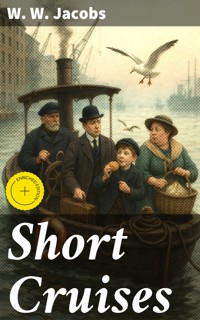
In "Short Cruises," W. W. Jacobs masterfully intertwines humor and human folly through a series of delightful maritime tales. The book captivates readers with its richly descriptive prose and keen observations of character, illustrating the nuances of life aboard a small boat. Set against the backdrop of the early 20th century, Jacobs' stories reflect the socio-cultural milieu of the time, poking fun at the idiosyncrasies of both crew and passengers while exposing the foibles of humanity in unusual nautical settings. The author's deft storytelling weaves humor and pathos, inviting readers to navigate the unpredictable waters of relationships and adventure. W. W. Jacobs, a prominent figure in British literature, gained notoriety for his short stories, particularly those with comedic undertones. Raised in the bustling port city of London, Jacobs' experiences and interactions with seafaring life undoubtedly influenced his writings. His ability to depict everyday life with sharp wit stems from his own observations, fostering a unique lens through which he explores themes of class, social interaction, and the absurdities of life. "Short Cruises" is a charming addition to any literary collection, appealing to fans of maritime literature, humor, and keen social observation. Jacobs invites readers to set sail with him on whimsical adventures, ensuring both laughter and reflection. This anthology is a compelling exploration of the human spirit, making it a must-read for those who appreciate nuanced storytelling imbued with levity. In this enriched edition, we have carefully created added value for your reading experience: - A succinct Introduction situates the work's timeless appeal and themes. - The Synopsis outlines the central plot, highlighting key developments without spoiling critical twists. - A detailed Historical Context immerses you in the era's events and influences that shaped the writing. - A thorough Analysis dissects symbols, motifs, and character arcs to unearth underlying meanings. - Reflection questions prompt you to engage personally with the work's messages, connecting them to modern life. - Hand‐picked Memorable Quotes shine a spotlight on moments of literary brilliance. - Interactive footnotes clarify unusual references, historical allusions, and archaic phrases for an effortless, more informed read.
Das E-Book können Sie in Legimi-Apps oder einer beliebigen App lesen, die das folgende Format unterstützen:
Veröffentlichungsjahr: 2019
Ähnliche


















Short Cruises
Table of Contents
Introduction
Between calm seas and sudden squalls, Short Cruises traces how ordinary people test their luck, wits, and loyalties in compact adventures. Written by British author W. W. Jacobs, the collection gathers short stories rooted in the maritime and dockside world that he knew well. Published in the early 1910s, it reflects a late Victorian to Edwardian sensibility, where workaday routine meets unpredictable turns of fate. Though the title suggests travel, the journeys are often moral as much as nautical, taking place on rivers, coasters, and in waterfront rooms. The result is a brisk, approachable set of tales that balance wit with quietly accumulating tension.
As a work of short fiction, the book favors anecdotal setups and clean, economical narration. Jacobs's tone is genial and sly; humor arises from character quirks, narrow margins, and the friction of small risks. Moments of suspense appear without severing the buoyant mood. Readers encounter colloquial speech patterns and observational detail that anchor scenes in the wharves, alleys, and cabins of working waterways. Scenes move quickly, often framed as recollections or yarns swapped among seafaring acquaintances. The prose prizes clarity, timing, and a light narrative hand that lets incidents play out with minimal authorial intrusion. Taken together, these pieces offer the pleasures of comic realism punctuated by hints of risk, misinterpretation, and comeuppance.
Each story embarks from a small everyday friction - a modest debt, a misunderstanding, a tempting opportunity - and then charts a course through escalating complications. A misplaced coin, a chance meeting, or a boast at a bar becomes the catalyst for decisions that reveal character. The cast includes skippers, mates, deckhands, bargemen, clerks, and family members who live by tides, timetables, and reputation. Conflicts rarely leave the human scale; danger, when it comes, feels close to the pocketbook or the heart rather than the headline. What unites the pieces is Jacobs's steady gaze on motive and consequence, and his feel for the choreography of work and leisure near the water. Readers can expect compact setups, measured escalation, and conclusions that restore balance with a wry, satisfying turn.
Themes surface gently yet persistently. The tug-of-war between prudence and temptation animates bargains, bluffs, and half-truths, while loyalty to shipmates, kin, or employers must contend with pride and scarcity. Jacobs tracks how money functions as trust made visible, and how rumor can steer outcomes as strongly as seamanship. Questions of authority and craft - who knows the river, who reads the weather, who understands people - create spaces where cunning can upend hierarchy. Domestic life appears not as escape from labor but as a parallel field of negotiation, affection, and stubbornness. Without moralizing, the collection invites reflection on fairness, responsibility, and the costs and comforts of being thought clever.
Jacobs builds character through gesture, understatement, and the rhythm of speech, letting a pause, a sidelong glance, or a carefully chosen word carry weight. Descriptions of tides, fog, cramped cabins, countinghouses, and public houses supply texture without slowing momentum, so place is felt as pressure rather than backdrop. He often employs framed storytelling - one figure recounting another's misadventure - or a third-person vantage that stays close to a focal character. Irony remains gentle rather than caustic, and even the sharpest reversals land with the calm inevitability of a change in weather. The result is storytelling tuned for oral pleasure and quiet rereadability: clear premises, clean lines, and endings that click shut with soft precision.
Appearing in the early twentieth century, the collection sits at the confluence of late Victorian habits and Edwardian modernity. British coastal trade, river traffic, and port labor still structured daily rhythms for many towns, while leisure reading reached broad audiences. Steam and sail coexisted on short-haul routes, and small craft stitched together communities, carrying goods alongside gossip and opportunity. Jacobs wrote for a wide public, and many of his stories first circulated in magazines before being gathered between hard covers. The settings mirror that ecosystem: wharves, towpaths, warehouses, parlor tables, and counting desks where wages, pride, and repute were tallied with equal care. Understanding this milieu clarifies why small choices can ripple widely across crews, households, and neighborhoods.
Today, Short Cruises reads as both entertainment and social document, a window onto resilient communities and the comic dignity of everyday risk. Its animating questions - how far to press an advantage, when to forgive a blunder, why luck often favors the observant - remain current across workplaces and families. Readers who enjoy concise storytelling, character-driven comedy, and modest suspense will find a steady, companionable voice that rewards attention to detail. The collection also enriches conversations about labor, urban waterways, and the narrative tradition of sailors' yarns and pub talk. Approachable yet artful, it invites both casual sampling and sustained reading. In these brief voyages, the distance traveled is measured in insight as much as in miles.
Synopsis (Selection)
Short Cruises is a collection of seafaring short stories by W. W. Jacobs, set largely along the Thames and in small English ports. Each piece stands alone while contributing to a broader portrait of sailors, skippers, mates, lightermen, and their families. The plots arise from everyday complications: small bargains, improvised plans, and the friction of close-quarters work. Dialogue and colloquial turns provide immediacy, emphasizing routine labor, shore leave, and the fine line between rule and custom. Stakes are modest but real, typically involving wages, pride, or reputation. Together, the stories trace a working world steered by luck, tact, and practical judgment.
The opening stories establish shipboard hierarchies and the delicate balance between authority and camaraderie. A skipper’s insistence on order meets the crew’s practical sense of fairness, producing adjustments rather than open defiance. Rivalries between mates and hands hinge on timing and chance, with minor boasts turning into tests of competence. Workaday details—watches, cargoes, and tides—frame the action, while talk functions as both tool and shield. Early turning points grow from rash promises and hasty assumptions, forcing characters to negotiate outcomes that protect dignity as well as pay. These initial episodes set the tone: measured conflicts, incremental risks, and solutions shaped by shared experience.
Subsequent tales move ashore to pubs, boarding houses, and market streets, where domestic obligations intersect with maritime schedules. Courtship, engagements, and family expectations complicate voyages, creating pressures that characters address through quiet bargaining. Misunderstandings—misdelivered messages, ambiguous remarks, misplaced tokens—drive the plots without tipping into melodrama. The consequences remain close to everyday life: a berth might be lost, a debt called in, a relationship strained. Minor objects carry weight because they alter who knows what, and when. These stories broaden the setting while retaining the central concern: how working people keep plans intact when time, tide, and social ties pull in different directions.
Money and its movement—wages, windfalls, and wagers—are recurring concerns. Informal loans are pledged, small insurance notions floated, and side bets made to pass idle hours. What begins as entertainment can expose loyalties and priorities as characters decide when to help, when to collect, and when to wait. Turning points arise when expectation meets arithmetic: the cost of a mistake, the value of a favor, the price of keeping silent. The narratives do not moralize; they track risk as it is actually carried—privately, in small sums, and under time pressure. Ingenuity and timing, rather than force, typically determine acceptable, face-saving outcomes.
Midway through the collection, several pieces shade into suspense and superstition without leaving the realm of the plausible. Rumors about unlucky cargoes, ominous coincidences, or haunted stretches of water test stated skepticism against actual nerves. Night watches, unfamiliar moorings, and sudden weather give shape to uncertainty, where sounds and shadows can unsettle routine. Pivotal moments depend on choices: whether to confront a fear, to reinterpret it, or to dismiss it without provoking trouble. Explanations, when they arrive, tend to be practical rather than fantastical, keeping the focus on character under pressure and the crew’s ability to restore calm through steady conduct.
Other stories foreground character contrasts across age, rank, and shore-side roles. Older hands weigh caution against the ambitions of younger men eager to prove themselves. Spouses, landlords, and shopkeepers bring different disciplines to bear on nautical bravado, emphasizing thrift, reputation, and continuity. Speech—promises offered too freely, secrets kept too tightly, boasts heard by the wrong listener—triggers many conflicts. Resolutions rely as much on listening and gauging the room as on decisive action. These character studies show authority as a negotiated practice, sustained by mutual recognition rather than formal rule, and chart how missteps are corrected with minimal public loss of face.
Several episodes hinge on appearance, impersonation, and carefully staged half-truths. A character assumes a role to secure a short-term advantage, only to learn that maintaining the pose imposes unexpected costs. Plans work just well enough to require revision, and improvisation becomes a skill in its own right. The critical instants involve being recognized or believed at precisely the right moment. Without detailing endings, the emphasis stays on reversible choices, so that retreat remains possible if circumstances shift. The humor remains situational, arising from the gap between intention and outcome, while shared norms limit damage and keep disputes within manageable bounds.
As the sequence moves toward its later stories, consequences become more concrete and prior motifs recur in altered form. Minor authorities—clerks, constables, owners—appear at the edges to mark the frame within which informal settlements must fit. Reconciliations take longer and are set out more explicitly, often across tables where accounts—monetary and personal—are balanced. The sea remains the constant backdrop and employer, but many closings happen indoors, suggesting stability earned rather than luck found. These endings underline continuity: crews change, conditions vary, yet familiar calculations of trust, caution, and reciprocity guide the next arrangement, the next departure, and the next return.
Taken together, Short Cruises presents a coherent view of working life organized around tides, talk, and tact. Its central message is practical: uncertainty is managed through conversation, small bargains, and adaptable plans. The collection’s flow leads from shipboard problem-solving to diversified tests ashore and at night, before arriving at measured resolutions that preserve community ties. There is no single climax; momentum arises from patterns of setup, complication, and understated reversal. Consequences remain proportionate, reflecting a world where reputation and livelihood are closely linked. The result is a composite chart of everyday navigation—social as well as maritime—drawn from discrete voyages and brief, telling encounters.
Historical Context
W. W. Jacobs’s Short Cruises (1907) is rooted in the late Victorian and early Edwardian world of the Port of London, with scenes along the Thames from Wapping, Rotherhithe, and Limehouse down through Deptford, Woolwich, and the estuary toward Gravesend and Tilbury. The stories borrow their atmosphere from riverside inns, lock gates, lighterage yards, and small coastal wharves, mirroring c. 1880–1907 working rhythms. Jacobs, born in Wapping in 1863 and raised among dockworkers through his wharfman father, writes with the specificity of a local chronicler. The settings expand to Kent and Essex waterside towns and coastal routes, capturing short-haul voyages shaped by tides, fogs, and the crowded river.
The defining maritime transformation of Jacobs’s milieu was the triumph of steam and the re-routing of imperial and coastal traffic after the Suez Canal opened in 1869. Iron and then steel hulls, compound and triple-expansion engines, and cheap coal enabled punctual coasting and regular packet services. Steamers linked London quickly with Southend, Margate, and Ramsgate, and with coal ports to the northeast. On the Thames, tug-and-lighter systems intensified. Short Cruises reflects this world of quick turnarounds and tight timetables: its skippers, mates, and lightermen trade in speed, thrift, and improvisation, their humor and trickery shaped by the mechanical certainties and hazards of the steam age.
The coasting coal trade—moving fuel from the Tyne, Tees, and Wear to the Thames—expanded sharply in the late nineteenth century, feeding the metropolis and its steam fleet. Collier steamers from North and South Shields and Sunderland supplied London’s power stations, factories, and domestic hearths; coastal packets carried fish, timber, and grain. Passenger steamers ran popular excursions to Southend (with its pier extended in 1890) and Margate. Jacobs’s tales repeatedly hinge on these short passages: missed tides at Gravesend, fog-bound pauses off Northfleet, and quick hops to Essex creeks. The stories’ comic scrapes—misdeliveries, opportunistic deals, and tide-race gambits—arise directly from this brisk coastal network.
Steam’s ascendancy coincided with intensifying safety regimes and standardized procedures. The Merchant Shipping Act of 1894 consolidated earlier statutes, while the Plimsoll load line—legislated in the 1870s—visibly governed overloading. Lloyd’s Register classifications, Board of Trade certificates, and new signaling systems (foghorns, lights, flags) regularized operations on the crowded Thames. Engine rooms and winches altered onboard hierarchies and skills. In Short Cruises, the practical jargon of valves, hawser strains, and ballast doubles as social code; plots often pivot on compliance or cunning around rules—bargemen shaving margins, masters balancing orders versus weather—echoing a regulatory landscape that framed everyday risk and reward.
The London Dock Strike of 1889 (August–14 September) marked a turning point in labor relations along the river. Led by Ben Tillett, John Burns, and Tom Mann, roughly 100,000 dockers sought a “docker’s tanner” (sixpence an hour), overtime at eightpence, and an end to punitive casualism. Broad public sympathy, financial aid from Australian unions, and mediation by Cardinal Manning helped secure victory and partial regularization of hiring. Jacobs’s stories, set amid pick-up labor at dock gates and foremen’s favoritism, mirror the insecurity that made such agitation inevitable. The banter and small-scale stratagems of his characters illuminate the fragile economics and dignity at stake in casual dock work.
By the 1880s–1900s, London’s docks were a patchwork of competing companies and wharves—Royal Albert Dock opened in 1880, Tilbury Dock in 1886—each with its dues, rules, and bottlenecks. Chronic silting and congestion on the tidal river impeded traffic and raised costs. The Port of London Act of 1908 created the Port of London Authority (operational from 1909) to unify management, dredge channels, and standardize charges from Teddington to the estuary. Short Cruises captures the pre-PLA mosaic: lighterage bargains struck pier by pier, disputes over berthing priorities, and the frictions of overlapping jurisdictions, which furnish both obstacles and comic opportunity for Jacobs’s rivermen and small masters.
On 3 September 1878 the Thames paddle steamer Princess Alice collided with the collier Bywell Castle at Gallions Reach near Woolwich. Between 650 and 700 people drowned, many from East End families on an evening excursion; sewage outfalls at Crossness worsened survivability. The Board of Trade inquiry (1878–79) pressed for stricter navigation rules, improved lighting, lifesaving gear, and better traffic management on the river. In Jacobs’s riverscape, fog, tide rips, and crowded reaches are more than scenery; his plots’ near-misses, anxious whistles, and wary pilotage register a post-disaster culture of caution and regulation that shaped both professional seamanship and popular leisure afloat.
Short Cruises functions as a quiet social critique of Edwardian maritime London by exposing the precariousness underpinning its prosperity. The stories stage class divides at dock gates, the caprice of hiring, and the pettiness of local authority, revealing how rules and dues often burden small actors most. Jacobs’s humor disarms while highlighting wage insecurity, dangerous work, and the moral economies of pubs, pawnshops, and wharves. He shows regulation that protects life yet sometimes compounds bureaucracy, and commerce that feeds empire but strains households. Through petty thefts, bargains, and bluffs, the book anatomizes everyday strategies of survival in a river economy structured by unequal power.




