


6,99 €
Mehr erfahren.
- Herausgeber: No Exit Press
- Kategorie: Krimi
- Sprache: Englisch
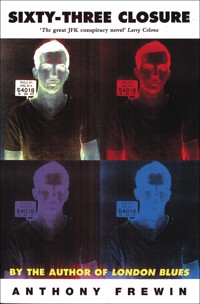
After a close friend's apparent suicide, Christopher Cornwell receives several photos the friend mailed prior to his death. Cornwell subsequently discovers by chance the presence in one of the photos of Lee Harvey Oswald, the alleged assassin of President Kennedy. But how could Oswald be photographed in a small Hertfordshire market town when he was supposed to be living in Russia as a defector at the same time? As Cornwell investigates the story behind the photos he unknowingly becomes the target of an investigation himself, by a shadowy agency as determined to maintain its secrets now as in 1963.
Das E-Book können Sie in Legimi-Apps oder einer beliebigen App lesen, die das folgende Format unterstützen:
Veröffentlichungsjahr: 2011
Ähnliche
















After a close friend’s apparent suicide, Christopher Cornwell receives several photos the friend mailed prior to his death. Cornwell subsequently discovers by chance the presence in one of the photos of Lee Harvey Oswald, the alleged assassin of President Kennedy. But how could Oswald be photographed in a small Hertfordshire market town when he was supposed to be living in Russia as a defector at the same time?
As Cornwell investigates the story behind the photos he unknowingly becomes the target of an investigation himself, by a shadowy agency as determined to maintain its secrets now as in 1963.
About the Author
Anthony Frewin was born in London and lives in Hertfordshire. He was assistant film director to Stanley Kubrick for over 20 years. He has written three novels published by No Exit Press, London Blues, Scorpian Rising and this one Sixty-Three Closure.
The great JFK conspiracy novel… the assassination in Dealey Plaza will never seem the same again. Darkly imaginative and believable… a totally original “secret history” of our time’- Larry Celona, Chief Crime Correspondent, New York Post
‘Everything matters to Frewin’- Peter Mann,Crime Time
Anthony Frewin
SIXTY-THREE CLOSURE
President Kennedy’s assassination was the work of magicians. It was a stage trick, complete with accessories and false mirrors, and when the curtain fell the actors, and even the scenery, disappeared.
– James Hepburn FarewellAmerica (1968)
www.noexit.co.uk
FOR RUBY JEAN FREWIN
However imperfect and unfinished it may be, it is my contribution to that final record of fully ascertained fact which, as Bacon observed, is a work to be done ‘by many and not by one, and in the succession of ages, though not in the hour-glass of one man’s life’.
– Reginald L. Hine TheHistoryof Hitchin (1929)
SIXTY-THREE CLOSURE
Contents
About the Author
Title Page
Dedication
Epigraph
PROLOGUE: ARE YOU BEING REAL?
CHAPTER ONE: LIKE A WHISPER, A SUSURRUS
CHAPTER TWO: SEE HOW YOU GOT ME SPINNING!
CHAPTER THREE: SOME BIZARRE, OCCULT SIGNIFICANCE?
CHAPTER FOUR: AM I PARANOID ENOUGH?
CHAPTER FIVE: WHO SPEAKS FOR DRAX?
CHAPTER SIX: I DIDN’T SHOOT NOBODY. NO, SIR
CHAPTER SEVEN: CONSPIRACY OF HEARTS
CHAPTER EIGHT: FINDING AND SORTING PEPPER
CHAPTER NINE: IN AN UNDERGROUND DARKLY
CHAPTER TEN: STAY IN YOUR OWN MOVIE
L’ENVOI: A MYSTERY TO US
APPENDIX: THE CAMBRIDGE CALL
A NOTE ON THE TYPEFACE
Copyright
PROLOGUE
ARE YOU BEING REAL?
YOU PICKED UP THE NEWSPAPERS yesterday and read about me, didn’t you?
Disregard that stuff. It was all lies. All of it. The ‘quotes’ attributed to me in the tabloids were invented and the speculations in the ‘quality’ papers that I’d salted away a fortune in Holland and Switzerland were fantasy.
So, if we know where it ends or, rather, where it has got to now, then the next inevitable questions are – why and how did it begin?
I’ll say it began with three photographs …
The three photographs.
The three photographs.
That’s when it really began.
But before that there was the telephone call, and before that there was the green paint. That’s the true beginning for me, the real genesis, as those were the last moments of my un-knowing.
The green paint.
I could hear it peeling off the walls.
The whole room was covered in this light green paint, including a bulwark of a radiator, probably dating from the early 1930s, situated under the window. The sole window.
All green. Bilious green.
It must have been the Party’s Paint of the Month some time way back when there was a Party. Even the floor was green – some ersatz linoleum: chill and reflective and unforgiving.
The hotel room was like a cell in a mental institution … and, indeed, it was a mental asylum before it became the Hotel Pauli, or so the girl in the cigarette kiosk downstairs said in her fractured English. And she should know, being the daughter of some highly placed but now disgraced Party flunkey.
The window overlooks a tram wrecking yard that is encircled by drab commercial office buildings put up in the 1960s. Beyond these I can just make out the twin spires of the cathedral of SS Peter and Paul.
The Hotel Pauli. Brno’s worst hotel, I’d guess. The production company back in London had said they’d booked me into a ‘pretty good place’. In fact, a shit heap of a place. The Czech Republic’s second largest city couldn’t do much worse.
January here … very cold … but plenty of cheap vodka. A bottle a day is dead easy. At weekends I can double that, almost.
I don’t piss around any more. No glasses or paper cups. I take it straight from the bottle, whenever I’m alone that is, or if nobody is looking.
I’ve spent the last two months out here scouting locations for an American-financed feature film with the title BlueLou. We’ll do the interiors back at Pinewood Studios and the exteriors here. All I need is the OK on the last lot of photos I sent back and I’m out of here … but until then, I’ll drink myself insensible. There isn’t a lot else to do. And it’s so fucking cold. And there’s another reason too – I’m holding a one-man wake for Dizzy Gillespie who died last week.
I take another hit from the bottle.
There’s a knock on the door. A hard crack, like a Sid Catlett snare drum rimshot. Insistent.
‘Yeah?’
The door creaks open. It’s Ernie, the floor porter. Ernie isn’t his name, I just call him that. He’s Jiri or something. He’s in his mid-sixties and looks on a good day like someone who has spent the last week sleeping rough. On a bad day he looks like one of the mummified monks in the Capuchin tombs downtown.
Ernie stares at me from the doorway, then glances down at the vodka bottle. He knows I drink and I know he drinks.
He takes two steps forward, removes a cigarette from his lips with his thumb and forefinger, coughs and says Tele-fon,tele-fon! And continues to stand there transfixed, like a shop front mannikin.
Díky, I say to Ernie. Then I take a swig of vodka and follow him out and down the corridor. An interminable corridor with grubby carpet running the whole length and framed photographic portraits of long-forgotten Czech notables on the wall. And, like the rest of the hotel, it always smells of cabbage.
We arrive at Ernie’s under-the-stairs sort of office.
The heavy black handset of the phone is on the desk. Ernie points to it and says again, Tele-fon. I get the message.
This is the call that puts me back on the plane to London, thank God. Out of here and gone.
‘Harry?’ I say.
‘Christopher?’
‘Uh-huh. Harry?’
‘No, Christopher. It’s Dick.’
‘Dick?’
‘It’s me, yes.’
Dick? My mate in Hitchin? My mate I grew up with? ‘What are you doing calling me out here?’
‘I needed to talk to you … something has happened.’
‘What? Barbara OK? You OK?’
‘No, everything’s fine that way. I need your help … on something.’
‘And what’s that, dear boy?’
‘When are you back here?’
‘Soon, I hope. I’m waiting for a call. Next few days. Why?’
‘I’m being followed.’
‘What?’
Is Dick having a mid-life breakdown or what? I call Ernie who is sitting the other side of the desk making roll-up cigarettes for his little tin case and point to his bottle of vodka on the filing cabinet He obligingly hands it to me. I need a drink.
‘Followed, huh?’
I take a big swig that gives a burning feeling to my lips and throat. Strong spirit this.
‘That’s right, I’m being followed.’
‘You been giving it to somebody else’s wife, huh?’
‘No. This is serious.’
What? My old friend Dick North who still lives in the town we grew up in, who is a headteacher and an active member of the local antiquarian society, who married the boring Barbara Bradley back in the early 1970s and who hasn’t fucked another woman since (save perhaps Rachel Green, Laura’s friend, a couple of years ago at a party in Letchworth), who is just about to complete volume one of AnIchonographyof Hitchin.
He is being followed?
‘Tell me something, Dick – who is following you?’
I wave the bottle at Ernie who raises his tumbler full of vodka. Cheers to both of us!
‘They’ve got something to do with … they’re serious.’
Who is following him? Dwarfs, or little green men from Mars, or the Illuminati, or the Freemasons, or Nazis from South America, or the CIA or KGB (whatever remains of them), or even agents of the Knights Templar?
‘Dick, is this some kind of put-on or what?’
‘No, it isn’t.’
‘You need, Dick, a damn good drink. Know that?’
‘Listen, I’ve found something out. Things aren’t what they appear to be. There’s something strange going on.’
‘Are you being real?’ I said.
There was a lengthy silence the other end of the phone and then I heard a Yes, a long sigh, and the line went dead.
I took another mouthful of Ernie’s vodka. This time I noticed it was flavoured. Similar to but not cherry.
‘Good stuff, Ernie, good stuff,’ I say, pointing at the bottle.
Ernie gave me one of his rare toothless smiles and nodded his head and said, ‘Eh, gooood stoufff.’
‘Very good stuff, yeah.’
‘Gooood stoufff.’
Ernie waved me to sit down and then produced a small glass from his desk. I handed him the bottle and he filled this glass and his to the brim. I gave him a Marlboro and took one myself.
‘Cheers!’
‘Chhh-earrrs!’
I downed the glass in one and then saw something on the wall behind the desk that I hadn’t noticed before. An old photograph, cut out of a magazine and taped to the wall, of Premier Khrushchev and President Kennedy shaking hands, way back in the good old Manichaean days of the Cold War.
‘Chhh-earrrs!’ said Ernie.
[2]
I got the call from Harry. The photographs were fine and I was free to return to London. I flew back but I can remember nothing of the flight. I can’t even remember leaving the hotel. I was in an alcoholic daze the whole time. Totally out of it.
I started to come to in a taxi cab on the Westway somewhere, but even then the rain and the greyness conspired to make me think I was still somewhere in the Czech Republic, rather than in London. I looked down at my lap expecting to find a Nikon cradled in my hands and instead I found an empty bottle of vodka. Nothing else. Sictransit.
As soon as I got back to the flat in Tufnell Park I headed for the bathroom and began throwing up – gallons of vodka and bile and God knows what else. I was retching my guts up. I then passed out and remained unconscious until the next day when I awoke to find myself floating in a sea of vomit. It stank. I stank. The whole place stank.
I put the percolator on and began tidying the place up. Then I have a strong coffee and stumble back to the bedroom and fall on the bed and pretty soon I’m asleep.
[3]
The telephone.
It continues ringing and while I know I’ve got to answer it I cannot move my arms just yet. Give me time.
Somehow I manage to pick it up. ‘Hello?’
‘Christopher?’
‘Yes.’
‘It’s Laura. You’re back. I thought you would have called me.’
‘I was going to.’
‘When did you arrive?’
‘Soon.’ What do I mean, soon? I can’t even talk straight.
‘Soon? What does that mean?’
‘I don’t mean that … I mean I just got back … you know?’
‘Don’t you ever listen to your answering machine?’
‘I was going to … I –’
‘You didn’t get my message then?’
‘I guess not … yet.’
‘Uh-huh.’
‘How are you then, Laura?’
‘It’s about Dick.’
‘What about him?’
‘He’s dead.’
‘Dead? Dick? He can’t be.’
‘He is. He was found on the tracks near the station. A train had hit him. Last Friday. It’s in the papers. Looks like suicide.’
‘What happened? How come? I mean … I can’t believe this.’
‘He’s dead.’
‘But why?’
‘You tell me. He’s dead … and the funeral is on Monday.’
‘I’ll come up … on Saturday. If that’s OK with you.’
‘Please do.’
‘Can I call you back later? I’ve got to take this on board.’
‘Sure.’
I sat there sobbing. Dick North – dead. A friend I’d grown up with and known for forty years. Gone. Just like that.
There’s an irritating little itch in the back of my consciousness. Something about Dick and something recent at that. But what? Something in Brno.
My head’s caving in with this news. I need a drink. A big drink, but there’s fuck all here. I’ll call the cab company down the road and ask them to pick up a bottle of Smirnoff for me. They’re helpful that way, yeah.
[4]
There was still a pile of mail on the floor in the hall. I gathered it up and glanced through the envelopes. There was nothing that looked interesting. I dumped it all on the kitchen table. It’ll have to wait. Screw it.
Then it came to me.
An epiphany over the sink as I filled the kettle. Dick had phoned me while I was in Brno. That was it, wasn’t it? He called me and said … he needed my advice or something. Yeah, he called me while I was waiting to come home, in that poxy little hotel. And he said he was being … followed. I’m sure he did. Yeah. Being followed. I don’t remember it clearly, but I remember that. He was being followed by people who had something to do with, what? He didn’t say.
Followed though?
I need to speak to Laura.
No, I’ll wait. I’ll talk to her tomorrow when I see her. Approach it obliquely like. It’ll wait. Better to talk to her when we’re together. Yeah.
I feel like someone’s just stomped on my brain.
CHAPTER ONE
LIKE A WHISPER, A SUSURRUS
145.689MHz is a radio transmission channel reserved for the British security and intelligence services. The channel is continually ‘open’, broadcasting white ‘carrier’ noise in which messages are embedded. Other agencies, as remote from the security services as they are from the public, ‘hitch’ the wavelength for their own use. These hitchers have never been identified.
On Friday, 22 January 1993, at 1640 Zulu the following encrypted transmission was hitched:
‘Identify.’
‘Bellerophon … 666B.’
‘Location?’
‘NorthHertfordshire.’
‘Proceed.’
‘Still active on LANCER grail. Second WAYSIDE passed without incident. Further avenues now open.’
I ARRIVED AT KING’S CROSS station ten minutes before the train was scheduled to leave. I would have driven up but Dennis the Greek down in Camden Town still hadn’t put a new clutch in the old Merc even though he’d had it for over two months. Dennis’ll do it cheap, but you’ve got to be patient.
It was a cold Saturday. A penetrating wind. Intermittent rain. A sky full of vast grey and black clouds dramatically changing shape and heaving towards a storm. It reminded me of Prague.
I walked the length of the platform down to the first carriage. It was empty and I got a forward-facing seat on the left side. I took a half bottle of Smirnoff out of my shoulder bag, had a quick glance about to see that I was alone, and had a big hit. The first one of today … aside from a couple of quick nips at breakfast.
Laura thinks I’ve got a drink problem, but then she thinks anyone who has more than two glasses of white wine a week has a drink problem. I might have a problem and if I do … if I were to have one … as it were, she is not to know that. The thing is I’ve only got a drink problem if I think I have and if I mention it to someone else.
I picked up a copy of TheIndependent back in Tufnell Park. I’ll have a quick rifle through it and see if I’m missing anything.
Right, what’s in this section? A few book reviews of books you’d never read by reviewers you’ve never heard of, acres of ‘life-style’ features and columns, and not much else.
The train pulls out as the storm breaks. Thunderous rain crashes athwart the roof and cascades down the windows.
Squinting out I see through the downpour a high retaining wall built of dark blue engineering bricks. There are whitewashed letters some three metres high arcing down to the right:
MARK THATCHER – WE’LL GET YOU!
I light a cigarette.
There’s a piece in the paper here about Bosnia. Skip that. Bill Clinton has only been in the White House three days and they’re already evaluating his performance (!). John Major is wittering on about some trade deal. This drug dealer says he is totally innocent and was fitted up by the security services because he knew about some corrupt overseas aid deal involving Thatcher’s government that he was going to expose (probably true, but who’d believe a drug dealer?), and now there’s a big piece about the health service. Should read that. I read and re-read the opening paragraph and though I recognise the words, the separate individual words, I cannot take in the meaning. There are things dancing about the periphery of my mind now, preoccupying me, making me distracted. Well, not things, but a thing, and not a thing – a person. Dick.
A further couple of hits of vodka disperse some of the unfocused anxiety that seems to be dogging me, but Dick remains.
He phones me up and he obviously needs help. I’m pissed out of my mind and just ass about. I don’t take him seriously. The next thing I know he is dead. I should have done something … but what? Could I have done anything? Could I have brought him back from the brink? I’m never going to know, am I? This is one of those big questions that will dangle there for ever. Unanswerable. Absolutely fucking unanswerable.
There’s the stark surprise of it all too. I could tell you fifty people I’d think more likely to commit suicide than Dick. Fifty. Perhaps more. But Dick?
The rain is abating. Through the windows, the drenched fag-ends of London’s northerly suburbs. Soon it’ll be New Barnet station and then after that the interrupted greenery of Hertfordshire. Only twenty minutes or so and I’ll be in Hitchin.
Hitchin.
I remembered now.
Reginald Hine. The historian who had lived in and written a monumental history of the town. Reginald Hine – he committed suicide at Hitchin station too. Back in the late 1940s. He threw himself under a train and that was that. About the year I was born, 1947, the same year Dick was born. Or was it a year or two later? Hine had been a lawyer in the town all his life. He’d written half a dozen or so books including the monumental HistoryofHitchin in two volumes. Then, hey presto, he went and did himself in at the station. They had a big funeral for him in the town and even opened a little park in his memory.
But nobody ever talks about the suicide in the town. That’s all been blanked out. You never find any reference to it. A no-go area. I could never find out why he did it.
I wonder if there’s some connection between Hine and Dick? Dick had all his books and knew them inside out. Dick was working on his Ichonography of the town, treading in the footsteps of Hine, coming into contact with him daily as it were. When Dick was at the end of his tether, did he then decide to emulate Hine’s last exit?
As Thomas Nashe might have written, have you to Hitchin station and end it all?
We’ll be there in a few minutes. I have a final taster of vodka and pack my stuff back into the bag. Outside there’s an enveloping wintry gloom.
I’m coming back to Hitchin at the end of January and I’m here because my best friend committed suicide.
[2]
I’m the only person to get off at Hitchin. I stand there motionless as the train pulls out. The station is deserted apart from a couple of young kids huddled together sharing a cigarette on a seat over on the down platform. The sound of the train dies away.
Behind that fence there, more than thirty years ago, you would have found Dick and me trainspotting. We’d be at it all day Saturday and Sunday, evenings whenever we could make it, and certainly throughout the day during the school holidays.
Those were the days of steam trains, about 1959/60. They’ve gone now … but memories … even the aristocratic A4 class 4-6-2 ‘Pacifics’ designed by Sir Nigel Gresley with the sloping fronts and streamlined sides that would hurtle up to Scotland with a rake of fourteen or more passenger carriages … gone, like Dick himself now.
Those days, I thought, would last for ever, I really did. Adult life was a million light-years away. We’d be having fun for ever. There was an eternity of trainspotting in front of us. There’d always be steam trains, there’d always be that old guy whose name I can’t even remember in his dark blue railway uniform and his black shiny peaked cap to show us around the sidings, there’d always be your mum and dad back home. There’d always be those perpetual Sundays with the smell of Sunday dinner and Ted Heath on the radio endlessly playing that jazz standard, OpusOne. But now it’s all history.
This passage of time makes my heart skip a beat and gives me that existential shiver I used to get when I closed my eyes and tried to imagine the immensity of the universe.
Three decades! God almighty – I never thought it would go so quickly. Never.
The station forecourt is deserted apart from a couple of taxi cabs parked up over by the station master’s house. No sign of Laura. She did say it was doubtful that she would get back in time from Cambridge. Just as well, I could do with the walk anyway. It’ll only take ten minutes or so. I’ll soon warm up.
On the wall up from the booking hall I can just make out the faintest tracery of the HANDS OFF CUBA! slogan Dick and I daubed here in whitewash back in 1962. The letters are about a metre high and slope down to the right. You might not notice it if you didn’t know what you were looking for, but I can see it clearly at an angle.
Dick and I painted it in the early hours of a Sunday morning. About 2 a.m. As soon as we’d completed it a police car arrived and we were carted off to the police station. We were charged with defacing railway property and found ourselves in the magistrates’ court a week or two later where we were both fined £3, a hefty sum in those days.
One of the arresting officers said in court that Dick had in his pocket WarUpontheWorld, an ‘inflammatory anarchist tract’ that ‘advocated the violent overthrow of society’. This was a bit of irrelevant information tossed into court to make sure the magistrate got the message about us two highly subversive individuals, and he did, as the fine demonstrated.
Dick and I laughed about the alleged anarchist tract afterwards because there was no such thing. What Dick did have in his pocket was a copy of the orange-coloured Penguin paperback edition of H. G. Wells’ TheWaroftheWorlds. Hardly the same thing.
About a week after that Dick pulled me aside at a Campaign for Nuclear Disarmament meeting that was being held in a church hall on the Walsworth Road. He had that smirky bright-eyed look that overcame him whenever he knew something you didn’t.
‘Christopher, don’t you think there was something odd about that copper saying I had an anarchist tract?’
He always said your name at the beginning of a loaded question or statement. Hearing your name let you know that what followed was of some import.
‘Well, beyond telling a lie, no.’ I really hadn’t given it much thought since it happened. The copper had lied and that was that.
‘Nothing odd?’
‘Odd?’
What was he playing at? What could be odd about it? Everyone knows coppers tell lies. But odd? Dick wasn’t silly enough to think there was something odd about a policeman telling a fib, was he?
‘Think what the copper said in court,’ Dick continued. ‘He said it was an … inflammatory … anarchist … tract. Look at those three words.’
‘Yeah?’ I said, puzzled.
‘Where do you suppose one of our local country-bumpkin coppers gets those three words?’
‘I’m still not with you, Dick.’
‘Look – did that cop strike you as any sort of intellectual? Do you think he reads the NewStatesman or is even a member of the local library?’
‘No … just local … average.’
‘Right. Yet he uses those three words. Now you might allow him to use the word anarchist. He thinks an anarchist is just someone who wants to blow everything up, nothing more. He wouldn’t know about utopian anarchism or Kropotkin or different kinds, would he?’
‘No.’
‘But inflammatory? He wouldn’t use that word. Inflammatory to him is something like a blanket that goes up in flames. And tract? No. It wouldn’t be a tract to him. It would be something else to him. Not a tract. He’d call it a booklet or something. Perhaps a leaflet.’
‘So what are you saying, Dick? I don’t follow.’
‘He got those words from somewhere. Somebody put them into his mouth. That’s what I’m saying.’
What’s he talking about? Did the copper have a drama coach or what? Who put them into his mouth?
I must have continued to look puzzled because Dick started smiling at me and saying nothing, just waiting for the penny to drop. Which it didn’t. He realised he’d have to come to the rescue.
‘Think about our political connections,’ said Dick as he lit up a Consulate menthol cigarette.
‘Just this – the Campaign for Nuclear Disarmament. If you can call that a political connection.’
‘They would call it a political connection.’
‘They?’ Who are they, I wondered?
‘What did we do that Saturday a couple of weeks before we got arrested?’
‘What, when we went to London?’
‘Yes.’
I thought back. We caught a train early up to town, went to Dobell’s jazz shop on Charing Cross Road, looked in a couple of bookshops, went down to the King’s Road and wandered up and down, had a drink and something to eat, and walked down to the anarchist bookshop in Fulham, in Maxwell Road. That was it. The anarchist connection: ‘The anarchist bookshop? The little place we went to down in Fulham?’
‘Yes,’ said Dick, ‘we went there, and we’d phoned them up earlier in the week to find out when they were open, didn’t we?’
‘Yes. But how many people know that?’
‘Look, the place is under surveillance and their phone is probably tapped and we were identified going there. Somebody, somewhere is keeping a file on all of this. They made the connection when we got arrested for polit-slogging and they briefed the copper who went into the witness box. They are the people who think of political tracts being inflammatory. They know about anarchists. But they aren’t clever enough to realise when their own toes are showing.’
‘Couldn’t it have been a coincidence?’ I wondered.
‘There aren’t any coincidences in this neck of the woods,’ Dick stated flatly.
I thought then as I do now that this was pretty unassailable reasoning. It was just too fantastic for the copper to use the term anarchism, particularly a Hitchin copper in the early 1960s, and bookended by inflammatory and tract.
Back in those days we were aware of mail interceptions and telephone tapping and other things that Special Branch or the intelligence services secretly got up to, but we weren’t aware of the extent or the enormity of their activities. These were the innocent days of our youth before the murky Profumo Affair, before the assassination of President Kennedy and the strange death of Lee Harvey Oswald, before Bobby Kennedy’s assassination and Martin Luther King’s too, before Watergate, before the ‘Spycatcher’ Peter what’s-his-name told us that he and MI5 were careening through London trying to destabilise Harold Wilson’s democratically elected government. Back in 1962 not even the most paranoid of us could ever have imagined the half of it.
HANDS OFF CUBA! The white tracings still there on the brickwork. A palimpsest of the past. I reach forward and my fingertips touch the C of CUBA. I can feel the brickwork as my fingertips move from side to side over the pitted surface. It’s like I’m touching the past. Reaching out to thirty years ago merely with a flex of an arm.
I can see myself standing there in the dark with a brush and pot daubing the letters in eager strokes. I’m dressed in a pair of cheap blue baggy jeans (these were pre-designer days), a dark roll-neck sweater, and a black shiny rubberised mac. Dick is similarly dressed but with a donkey-jacket. We’re fifteen or sixteen and we’re what the local police see as the last word in political subversion, an undoubted threat to civilisation (and maidenheads too, I suppose). Big deal. We didn’t even have the price of a cup of coffee between us. And neither of us had yet taken a maidenhead.
‘Pretty exciting, eh, Christopher?’
‘Yeah. We’ll cover the whole town in slogans!’
‘The whole fucking town! Our slogans everywhere!’
We never quite got around to painting the whole town, but we did succeed in getting a good number of BAN THE BOMBs up hither and thither, including one on the post office and one on a wall right by the police station. We also daubed a few of a slogan that Dick thought up in a puckish moment: HANDS OFF ARMS! The local Labour Party and CND too thought we were taking the piss out of them. We were. Anyway, we’d soon realised that you’d never get anywhere listening to them. Their idea of action was writing a letter to your local Member of Parliament, no less. (Enough letters would eventually usher in utopia. A firm article of faith this.)
In those couple of years after Cuba Dick and I were a two-man anarchist cell. We’d put up stickers and slogans all over the place:
VOTE NOW, PAY LATER!
PROPERTY IS THEFT!
And some were even original, such as the following:
KROPOTKIN LIVES!
THE RED AND THE BLACK FOR EVER!
SURRENDER TO MAD LOVE!
This last showing the influence of surrealism, the other big -ism we were then into.
Of course, for all the effect these had on the citizens of Hitchin they might just as well have been written in Mayan script. How many people in the town had ever heard of Prince Peter Kropotkin and his idea of mutual aid? About as many as knew that red and black were the anarchist colours. What did we care anyway? The act of doing it was the important thing.
We even travelled up to London and went to a couple of London Federation of Anarchist meetings at the Lamb and Flag pub in Covent Garden. All the anarchists there seemed to be about sixty-five years old, though I dare say they were probably younger than I am now. It wasn’t for us. And they were so dull. They knitted their own sweaters (we assumed) and only ever seemed to drink fruit juice. We were the only anarchists we knew who were also boppers, real cool individuals, that is.
Anarchism shone brightly in Hitchin through Dick and me for a couple of years and then it was extinguished as quickly as it had ignited when I started work down at the old MGM film studios in Boreham Wood and Dick began preparing for university. Our street fighting (!) days were over, even if the libertarian mind-set never entirely left either of us.
‘What’s it like being a headmaster now, Dick?’
‘Intellectual pimping for the middle classes!’
My fingers were still tracing the letter C when a movement in my peripheral vision compelled me to stop. A woman in her thirties, slim and well-dressed, was staring at me from over towards the booking hall, trying to puzzle out what I was doing. I looked at her and she turned her head sharply and disappeared into the station.
I walked down past the station buildings and into the car park that parallels the track. This wasn’t always a car park, it used to be sidings right up until the what, the late 1960s?
Here you can appreciate the siting of the station. Some distance from the tracks on either side are the chalk walls of the grand cutting through which the railway sweeps. And here is an old chalk pit with sheer walls of white rising up some twenty metres or more upon which trees and bushes balance precariously at the top. We used to find deadly nightshade growing in abundance here and even the deep red wild sainfoin, a great rarity in these parts. You’d probably be lucky to find either of them now.
On the floor of the pit nestles a miniature industrial estate of frame buildings and sheds. A builders’ merchants, a car firm, even a snooker club, and something called MUSCLEMANIA which may or may not be a health club/gym.
A rumour widespread in Hitchin when we were kids was of a secret cave somewhere in the chalk pit, its entrance hidden behind the greenery or disguised with a fake front. Dick and I spent hours searching and never found anything. Our continued failure to find it made its existence stronger. It was there somewhere and we merely had to look harder. Great rewards, we sensed, wouldn’t come easily.
I turn and look up towards the station. Somewhere there on the track Dick decided to terminate his life, as Hine did before him. Did Dick simply lie down on the track and wait for a passing train or did he lurk in the shadows and then rush out and throw himself in the path of an oncoming express? Morbid thoughts, but the mechanics of this act of self-immolation fascinate me more than they should. It’s as though knowing this will give me an insight into what Dick was thinking and feeling when he did it. But that’s an illusion, isn’t it? How am I ever going to know what was in his mind?
It is getting darker now and colder. There are little pockets of mist and fog appearing. There’s an eerie feel to this isolation.
[3]
Here on the corner of the entrance to the station and the Walsworth Road I notice two differences right away. The old Talisman pub has been demolished and a lacklustre piece of modern office building shite has gone up in its place called, funnily enough, Talisman House.
The Talisman was the first pub Dick and I ever went into and ordered a drink, only it wasn’t called the Talisman then but, I think, the Railway (or the Railway Inn or Hotel. I can’t remember), the newer name wasn’t bestowed on it until a few years later.
I was about fifteen then. A group of us had just returned from a CND march in London. Dick and I were the youngest and when all the rest went in we followed them nonchalantly and ordered rum-and-cokes. That was about the time of the Cuban Crisis. I stood there cradling the glass in my hand feeling about ten feet tall. What a milestone in our lives! We’d soon be able to get in the cinema and see X-rated sex films. Wow!
Over there in the elbow between the Walsworth Road and Nightingale Road was an old malthouse or mill. It was one or the other. Built of blue brick, I think. Bowman’s Mill. That’s gone too and what do we have now to replace it? Nothing less than a B&Q do-it-yourself megastore for the shell-suited working classes in Ford Sierras and their middle-class equivalents in personalised number-plated Range Rovers (‘So useful for going over the traffic humps in the Waitrose car park, dear’).
Who now remembers the Bowmans, whoever they were?
‘The cunts of consumerism,’ whispered Dick in between puffs on his black Sobranie cigarette, ‘who say to themselves, I spend, therefore I am.’
God knows why the mill was pulled down. The brick was designed to last a thousand years and longer. Couldn’t the council have found some other use for the building? Why pull it down? But it’s gone now. Just like the Talisman and all those other things that now exist only as history. The Hitchin we’ve lost. The Lost Town of Hitchin. But we know it existed because we lived in it, because we were part of it.
There’s another item from Lost Hitchin that existed over there where Dacre Road starts. A little family-run café that did simple fried breakfasts and sandwiches and teas and where the radio always seemed to be playing Nat King Cole records. There was a pinball machine too, about the only one in the town, where Dick and I would spend hours playing each other for small bets. It was a Gottlieb all right, but not Shipmates. It may have been Criss Cross.
It’s dark now and there’s a wet wind blowing. I can hear a ghostly rustle in the trees about the Dells.
The Dells.
This is where Dick and I used to play when we were small. The two of us and Dick’s dog, Laddie. He was a medium-sized long-haired mongrel who went everywhere with us. Whatever we did he would do too.
The Dells is the scooped-out half of Windmill Hill which looms above the town. If whoever was excavating it a hundred-odd years ago or more hadn’t been stopped the whole hill would have disappeared. What’s left has building encroachments on the east and south but there’s still a clear run of sward to the summit (and the old water tower). The grass is cut regularly and the area is generally neat and tidy.
But not the main dell. Here there is the wilderness screened off from the ordered parkland. The dell has almost sheer sides with trees and bushes growing out at odd angles. The undergrowth is thick and impenetrable. It’s untamed – and only spitting distance from the town centre. This was all we needed for adventure-packed summer holidays … in those summers that would last for ever.
‘Let’s explore the top of the cliff.’
‘We’ve never been up there before. Not all the way.’
‘It’s ever so high.’
‘And don’t the savages live up there who eat people?’
‘And dogs. They eat dogs too!’
Savages indeed! That was the all-purpose term in those days for … tribesmen and natives. Guys who had spears and hadn’t yet invented the TV chat show. Hunters. Jungle dwellers. But you don’t hear the term ‘savage’ too much these days.
The whole point of savages was, of course, that they were savage. They were bloodthirsty jungle psychos with but two purposes in life – savagery and mayhem. God rest their souls. And their habitat has disappeared too. There isn’t any jungle any more, just rain forests.
There’s the theatre named after the Queen Mum through the trees and there’s the Woodside Hall which I’m sure still has that sign on it saying HITCHIN THESPIANS (despite a thousand music-hall jokes about this Greek word for the acting profession).
It was just across the road from the Dells that the three of us grew up – Dick, Laura and me. In Whinbush Road.
Shall I walk down it for old times’ sake? I always ask myself this when I’m in the town and I always reply with a firm No. The Whinbush Road I know, I knew, exists now only as a memory.
I cross the road up by Portmill Lane and walk through St Mary’s Square as this glorified car park is somewhat grandly called. This used to be where all the town’s slums were but they were swept away in the 1920s and the view to St Mary’s Church was opened up with the River Hiz dammed and widened to the fore for effect. This was only a part of some grand civic scheme that soon ran out of money. The shops and flats that were supposed to front the square were never built and now, sixty years later, the square still looks unfinished and incomplete. Just as well perhaps.
St Mary’s is as fine a parish church as can be found anywhere in Hertfordshire, indeed, anywhere in England. It’s big, almost like a small cathedral. Dick says it was largely financed by the rich wool merchants of the town who wanted to display their wealth and announce their importance in an edifice that would stand down the ages to the Day of Judgement. It’s now been here for six hundred years or more so I figure they’ve partly achieved what they wanted.
I descend the steps towards the river and then turn around to see if the lettering is still there on the brick risers. It is:
THESE WORKS WERE EXECUTED BY THE
HITCHIN URBAN DISTRICT COUNCIL AD 1930.
ON THE ADJACENT AREA FORMERLY STOOD
74 COTTAGES WHICH WERE DEMOLISHED
UNDER SLUM CLEARANCE SCHEMES AND
THE OCCUPANTS 137 IN NUMBER HOUSED
ELSEWHERE AD 1925–1929.
I continue along, past the pigeons and ducks, over the bridge and up Churchyard Walk. When I’m by Halsey’s shop I stop and look towards the church – the lights are on inside and I see a couple of people coming out through the south porch.
‘A beautiful church, don’t you think?’
Who said that? The voice is near and the question is aimed at me.
‘What mean ye by these stones?’
The same voice.
I turn and standing close to me and looking at me is this vast Orson Welles-ish figure, a visitation.
He’s about six feet tall and overweight. He has long flowing dark hair and a neatly trimmed Vandyke beard. He’s elderly but ageless. After his size it’s his dress that strikes me the most. A black corduroy suit, three-piece, with a matching cape lined with what looks to be red silk and a billowy black felt hat. There’s something rakishly aristocratic about him. Totally out of place for hereabouts.
‘Very beautiful,’ he says as he waves a silver-tipped cane in the direction of St Mary’s.
He has very small eyes that dart about as though they have a life of their own. Tiny, piercing eyes that look like they belong to someone else.
He introduces himself as Georges something-or-other. I don’t catch the second name and I’m ill-inclined to ask him to repeat it. The voice is a resonant baritone with, possibly, the faintest background trace of an east coast American accent (Boston, perhaps?).
What does Georges want with me? What indeed is a figure like this doing in Hitchin on a Saturday night?
He’s staring at me now, probably waiting for me to introduce myself. I don’t.
He breaks the silence: ‘You are?’
‘I’m Christopher.’
‘Just Christopher?’
‘No. Christopher Cornwell.’
‘Good.’
Georges waves his cane in the direction of the church again. ‘He who looks upon an image of St Christopher will suffer no harm that day. That’s why murals of him were so popular in churches.’
‘I didn’t know that.’ Which was true, but I didn’t add that I didn’t care I didn’t know that. I continued, ‘It didn’t do him much good himself though, did it?’
‘No, it didn’t. A martyr for his beliefs.’
That seems as good a way as any of describing a saint being put to death (but was he a saint when he died? Or did beatitude come later?).
‘Not many people are prepared to die for their beliefs these days, are they?’ says Georges.
He then wraps the cloak around his chest with a theatrical gesture and motions thither with the cane.
‘Are we going in the same direction?’
Why’s he asking me this?
‘I don’t know. Where are you going?’ I reply.
‘I’m going in the direction of the station,’ he replied, straightening his hat.
I was curious about this guy. ‘What are you doing in Hitchin? Do you live here?’
He looked me up and down before replying in a conspiratorial whisper. ‘I’ve been coming and going … recently.’
I nodded.
Then he added, ‘It was a great pleasure meeting you … I’m sure we will run into each other again.’
‘You think so?’
‘I’m sure we will. Goodnight, Mr Cornwell.’ And he touched his hat.
‘Goodnight.’
He strode off down towards the river in agile strides that belied his weight.
What was all that about?
I head off down Churchyard Walk and into Market Square which, aside from a stretch of development on the east side put up a few years ago, is unchanged since I was a kid.
The adjoining and nearby streets – Sun Street, Bucklersbury, Tilehouse Street (where Laura lives), and Bridge Street have also changed little and would be instantly recognisable to some mid-Victorian time traveller. Hitchin has been lucky. It has preserved what Reginald Hine called its ‘antique grace’.
There’s an off-licence open in the corner of the square and as I’ve travelled up empty-handed I should really pick up something for Laura.
I get her a couple of bottles of Cordon Negro and some fresh orange juice, myself a bottle of Blue Label Smirnoff, and for the girls some cans of Coke.
As I walk down the narrow and gently winding Bucklersbury I remember that this was where Dick and I always did our serious drinking. There isn’t a pub here that didn’t ban us at some time or another. We’ve been totally and irredeemably pissed in all of them. It was in Bucklersbury that we smoked our first joint.
There was a guy called Stephen Maliphant. He was a couple of years older than us and he lived down on Bancroft somewhere. His parents were pretty rich. Stephen was our hero for a time in the early 1960s because he was doing what we only dreamt about doing.
First off, he had long hair. It was right down to his shoulders, and at that time you just never saw anyone in England with long hair. You saw photographs of beatniks in the States with long hair but nobody in England had it past their ears.
Stephen was the first ‘beat’ we ever knew (beats came after beatniks). He only read beat writers and beat-approved writers. He used to lend us stuff by Ginsberg, Kerouac, Ferlinghetti, John Clellon Holmes and all those other poets and writers associated with the movement, including Sartre and assorted existentialists and Zen Masters and not forgetting the divine Marquis de Sade. His big favourite was, however, Henry Miller and he turned us on to him. Miller’s books were banned in England at the time so getting your hands on those Olympia Press editions in the green covers smuggled in from Paris was quite something.
One sunny Sunday afternoon Dick and I went down to the churchyard after visiting Stephen. We sat down on the bench and both started reading books Stephen had lent us. I began TropicofCancer and Dick began TheNakedLunch. And there we were for the rest of the day, reading and smoking our French cigarettes. We were super-hip and cool. And très existential.
If you could get high by reading books about the drug experience then Dick and I were well-established dope fiends. There wasn’t a drug that we hadn’t experienced – vicariously. Pot, grass, cocaine, heroin, LSD, peyote, and even ether and amyl nitrate and Benzedrine (which, it was rumoured, could be obtained from breaking open one of those plastic sniffer things you stuck up your nose to clear your sinuses). You name it – we’d been there reading about it.
On a cold December night shortly before Christmas of, I think, 1964, Dick, Laura and me were in the Red Hart on Bucklersbury when Stephen swanned in dressed like a Californian biker. He’d just got back from a satori in Paris. He arrived at our table with a large gin and tonic and a fat herbal cigarette he had rolled himself.
‘I thought you smoked Gauloises?’ said Laura.
‘Why roll-ups?’ asked Dick.
Stephen smiled seraphically as was his wont (to steal a phrase from Jonathan Miller in BeyondtheFringe) and inhaled deeply on his herbal cigarette. He held the smoke down for several seconds and then exhaled a billowing cloud of blue. The smell was acrid yet sweet.
The roll-up cigarette was actually more a cigar than a cigarette, and a big cigar at that. It looked as though Stephen had used about four or five papers to make it.
But why was supercool and hip Stephen smoking a herbal cigarette?
He was emitting more billowy clouds of smoke and waving the cigarette about. He started to say something but whatever it was became strangled in his throat by giggles that went on and on and on.
Dick said to no one in particular, ‘Is he all right?’
Laura and I looked at each other and shrugged our shoulders. We didn’t know what was going on.
Somewhere in the background I heard the booming voice of the landlord say, ‘Put that bloody herbal cigarette out or leave the premises. No herbal cigarettes in here!’
As Stephen showed no inclination to stub out the roll-up we said to him we’d better leave. He didn’t hear us. He was smiling and giggling to himself and right out of it still. Dick and I supported him under his arms and gently marched him out to the street where the cold air seemed to sober him up.
‘This,’ said Stephen, waving the cigarette in the air, ‘is another first for Hitchin!’
Had he completely flipped or what?
‘This night,’ he continued, ‘will go down in history as the night I, Stephen Maliphant, brought the first joint to Hitchin!’
A joint? A reefer? A dope cigarette? No, this couldn’t possibly be true. Who’d ever heard of a joint in Hitchin?
Dick said, ‘You’re having us on … aren’t you?’
‘No, he isn’t,’ cried Laura.
‘I’m not having you on … and to prove it here’s another joint I rolled not half an hour ago.’
That was the first time Dick, Laura and me turned on (to use a phrase from the then current drug argot).
I remember very little of the rest of that night. Laura said we all went back to Stephen’s (his parents were away) and smoked more dope and listened to Mose Allison and ate ravenously and continuously. It’s all a blur to me, though I do remember asking Stephen why his LPs had such enormous gaps between the tracks (temporal gaps, that is, not spatial). One track would end and it would be years before the next one started.
It’s often said that the first few times you smoke the stuff it has no effect, but it certainly worked for me and Dick. In fact it had to, we’d read and thought about the stuff so much it couldn’t but work. We’d culturally conditioned ourselves to such an extent that even if it had been a Heath & Heather herbal cigarette we’d still have got high. Laura, however, said it made her feel a bit sick initially.
Dick and I became regular smokers whenever Stephen had some stuff. It later became more widely available but the quality wasn’t always that good. We never got into LSD or anything like that. We figured these substances were mindfuckers and we didn’t want anything to do with them, but reading about them was OK, so we tripped at one remove as it were.
And what became of Stephen? Choose any one of the following fates:
1] He is incarcerated in a mental asylum for the criminally insane on the outskirts of Paris.
2] He is a monk in a Tibetan monastery.
3] He died of a drug overdose in Katmandu.
4] He went to New York and:
A. Teaches a writing course at NYU
B. Was mugged to death in Battery Park
C. Works in a black poverty program
D. Is a junk-bond dealer on Wall Street
5] He is an antique dealer in Suffolk.
6] He disappeared in the Bermuda Triangle.
I’ve heard all of these over the years and each time it was told to me as absolute, incontrovertible truth. If I had to choose one I think I’d go for 5], though Dick always favoured 3].




