


3,49 €
Mehr erfahren.
- Herausgeber: Shadowpaw Press
- Kategorie: Für Kinder und Jugendliche
- Sprache: Englisch
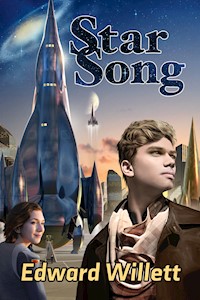
From an Aurora Award-winning author comes a thrilling young-adult outer-space adventure.
When the old woman who raised him in a remote village is murdered, Kriss Lemarc finds himself alone on a planet where he’ll always be an outsider.
His only link to his long-dead, unknown parents is the touchlyre they bequeathed him, a strange instrument that not only plays music but pours his innermost feelings into the minds of his listeners.
When Tevera, a girl of the space-going, nomadic Family, hears Kriss perform, she is drawn to him against her better judgment and the rules of her people. With her help, though mistrusted and even hated by some of her comrades, Kriss seeks to discover the origin of the touchlyre, the fate of his parents, and a place where he truly belongs.
But the touchlyre proves to be more than just a musical oddity. Powerful, ruthless people will stop at nothing to get it—and Kriss and Tevera are all that stand in their way.
Das E-Book können Sie in Legimi-Apps oder einer beliebigen App lesen, die das folgende Format unterstützen:
Seitenzahl: 454
Veröffentlichungsjahr: 2021
Ähnliche













![Tintenherz [Tintenwelt-Reihe, Band 1 (Ungekürzt)] - Cornelia Funke - Hörbuch](https://legimifiles.blob.core.windows.net/images/2830629ec0fd3fd8c1f122134ba4a884/w200_u90.jpg)



Also Available from Shadowpaw Press
SHADOWPAWPRESS.COM
Paths to the Stars
Twenty-Two Fantastical Tales of Imagination
One Lucky Devil
The First World War Memoirs of Sampson J. Goodfellow
Spirit Singer
Award-winning YA fantasy
The Shards of Excalibur Series
Five-book award-nominated YA fantasy series
From the Street to the Stars
Andy Nebula: Interstellar Rock Star, Book 1
Shapers of Worlds
Science fiction & fantasy by authors featured on the Aurora Award-winning podcast The Worldshapers
Right to Know
Falcon’s Egg
Far-future science fiction adventure
STAR SONG
Published by
Shadowpaw Press
Regina, Saskatchewan, Canada
www.shadowpawpress.com
Copyright © 2021 by Edward Willett
All rights reserved
All characters and events in this book are fictitious.
Any resemblance to persons living or dead is coincidental.
The scanning, uploading, and distribution of this book via the Internet or any other means without the permission of the publisher is illegal and punishable by law. Please purchase only authorized electronic editions of this book, and do not participate in or encourage electronic piracy of copyrighted material.
First Printing July 2021
Print ISBN: 978-1-989398-03-6
Ebook ISBN: 978-1-989398-04-3
Cover art by Dan O’Driscoll
Interior design by Shadowpaw Press
Created with Vellum
Contents
Chapter 1
Chapter 2
Chapter 3
Chapter 4
Chapter 5
Chapter 6
Chapter 7
Chapter 8
Chapter 9
Chapter 10
Chapter 11
Chapter 12
Chapter 13
Chapter 14
Chapter 15
Chapter 16
Chapter 17
Chapter 18
Chapter 19
Chapter 20
Chapter 21
Chapter 22
Chapter 23
Chapter 24
Chapter 25
Chapter 26
Chapter 27
Chapter 28
Chapter 29
Chapter 30
Chapter 31
Chapter 32
Chapter 33
Chapter 34
Chapter 35
About the Author
Also by Edward Willett (Selected)
ChapterOne
Music shivered across the mirror-like surface of the secluded lake, tucked into a pocket canyon in the granite wall of the Featherwood Mountains. The trees that gave the mountains their name trailed pale-blue fronds in the water as though enraptured by the shimmering sound.
Kriss Lemarc lifted his hands from the fingerplates of the touchlyre, and the music faded away. He took a deep breath. Not bad, he thought. Not bad at all. The song was a new one, and it didn’t have words yet. He’d ask Mella to help him with those that evening when he played it for her for the first time.
He put the instrument down beside him on the flat surface of the boulder on which he sat, then leaned back, stretching his legs. His skin, still wet from his latest swim, shone in the late-afternoon sunlight. He was naked, but that didn’t matter out here: in all the years he’d been coming to the lake, since he was old enough for Mella to let him go off on his own for an afternoon, he’d never seen another soul. The Black Rock villagers tended to stay close to their fields and houses.
Just as well, he thought. They didn’t like him, and he didn’t like them. The first time Mella had taken him down to the village with her as a small child, he’d clung to her skirt, frightened by the frown on almost every grown-up’s face. Oh, they took Mella’s money as she bought the things they couldn’t grow or make for themselves, but only one or two of them smiled at her or at him. And later, he’d had to ask Mella what an “offworld bastard” was, words he’d heard muttered behind his back as they passed two men lounging outside a bar.
Mella had smiled sadly and told him not to worry about it. “It’s just because you look different from their own children,” she’d said. “Some people are like that.”
Nothing had improved over the years. He avoided the village as much as he could, but sometimes he had to go down there. The villagers had grown only more hostile over the years. When he was little, his pale complexion and fair hair had made him stick out among the brown-skinned, black-haired Farrsians. Now he was taller than anyone in the village, too: he’d sprouted with puberty and towered over Mella, who had once seemed so tall to him.
Maybe things were better in Cascata, the capital city, site of Farr’s World’s only spaceport, where surely offworlders were more common, but out here in the boondocks, the native Farrsians never let him forget he wasn’t one of them.
He sighed, wishing his thoughts hadn’t gone down that particular well-trodden and unpleasant road. By way of changing the mental subject, he picked up the touchlyre again, not to play, but to admire. He ran his fingers over the three gently curving sides and the smooth, swelling back, remembering when Mella had given it to him.
Mella had been his guardian since his parents had died in an aircar accident when he was a baby. She’d never told him very much about them, and he’d never seen the touchlyre until what she said was his twelfth standard birthday (although he’d only been ten and a half Farrsian years old). In the cozy main room of their cottage, with a fire blazing in the hearth to ward off the chill of the cold air flowing down from the mountains, she’d opened a triangular case of red leather he’d never seen before—he still didn’t know where she’d hidden it—revealing the touchlyre.
He’d stared at it with wide eyes. He’d never seen anything so beautiful. Made of black wood—stormwood, he thought, from one of the local trees—it had a roughly triangular body and a long neck. Six silver strings, glinting orange in the firelight, were strung from copper pegs, three to the side, near the top of the neck—but not at the very top: there, a plate of copper gleamed. Another plate of copper, this one oval, shone on the instrument’s body, just to the right of the strings. There was no opening into the body like Kriss had seen in the guitars and zimrithers he’d admired in a shop window in the village, and no tuning keys.
“Where did it come from?” he’d asked Mella. “Who does it belong to?”
“Your father made it,” she told him. “And it belongs to you.” She touched the soft black wood of the body. “He carved and shaped it with his own hands,” she said softly, “and all the time he worked on it, he talked about how much he looked forward to having a son or daughter to give it to. I’m just glad he left it with me for safekeeping before . . .” Her voice trailed off. She looked back up at Kriss. “Just like he did you.”
Before the aircar crashed that killed him and my mother, Kriss thought. With a lump in his throat, he, too, reached out and touched the wood. “How do you play it?”
“I’ll show you,” Mella said. She took it from its case and helped him position it, resting the broad base on his legs so that the slender neck rose to his left ear.
He touched the strangely keyless pegs. “How do you tune it?”
“It doesn’t need tuning,” Mella said. “It tunes itself.”
“Cool,” Kriss said. He’d flicked his fingers across the strings so that they gave a musical chime. “Do you play it like a guitar?”
“No,” Mella said. “Your father called it a touchlyre. Put your fingers on the copper plates.”
He put his left hand on the plate at the top of the neck, and his right hand on the plate on the body. Instantly, the strings shivered to life. He snatched his hands away, and they silenced.
Mella laughed at his startled face. “See?” she said. “A touchlyre. Try again.”
He touched it again, and this time kept his fingers on the plates. The strings vibrated with a formless but pleasant sound.
“Now close your eyes,” she said, “and play a song in your mind.”
He blinked. “What song?”
“What’s your favourite?”
“Um . . .” He closed his eyes again, trying to think, but his mind had gone blank. The first thing that finally came to mind was a silly Old-Earth children’s song Mella used to sing to him when he was little. Baa, baa, black sheep, have you any wool ran through his mind . . .
. . . and the touchlyre played it. Perfectly and beautifully. His eyes snapped open, and he stared down at the strings. “Wow,” he breathed.
“Wow,” Mella agreed, her round, wrinkled face beaming. But then the smile vanished, and she leaned toward him, putting a hand on his knee. “But remember this, Kriss: this is very, very important. You must never let anyone else see this instrument or hear you play it.”
He’d just been imagining himself giving concerts in front of cheering crowds in Cascata. The daydream vanished. “Why?” He looked down at the touchlyre. “It’s just a musical instrument.”
“It’s not,” Mella said. “It’s more than that.”
“What? How? What is it?”
Mella had just shaken her head. “I can’t tell you. Not yet. I promised your parents. Not until you are older.”
I’m older now, Kriss thought, sitting on the boulder and looking at the touchlyre. But apparently, he wasn’t old enough. He’d just had his sixteenth standard birthday—very close to his fourteenth Farr’s World birthday, though Mella had always celebrated the standard ones. (“You get more that way,” she’d pointed out, so he’d never argued.) He’d asked her again, and she’d refused again. “Your eighteenth birthday,” she said. “That’s what I promised your father. On your eighteenth standard birthday, I’ll tell you what the touchlyre is. Then, you’ll be old enough to decide what to do with it.”
Mella, he thought, I love you, but sometimes I think you still think I’m a baby.
The touchlyre looked as beautiful now as it had in the firelight the night she’d given it to him, orange light giving a warm glow to the dark wood, the silver strings, the copper plates . . .
Wait a second. Orange light? He sat up straight and looked west, out the mouth of the little canyon, where the lake emptied itself into a noisy stream, tumbling down rocks toward the foothills rolling into the hazy distance. The sun was almost to the horizon. He’d have to run to make it home in time for supper.
He scrambled up, pulled on his clothes and boots, shoved the wrappings from his earlier lunch of bread and cheese into his slingpack, stuffed the touchlyre into its red-leather case, slung the pack’s strap over his right shoulder and the touchlyre case’s strap over his left, and then plunged in among the featherwood trees.
There wasn’t exactly a path between the lake and Mella’s cottage—he’d always varied his approaches to the lake to make sure there wasn’t one since he didn’t want anyone else to find his secret spot—but he knew the woods well, and even running in the gathering twilight, he didn’t make a misstep.
He smelled smoke before he saw the cottage through the trees, which had darkened from the light-fronded featherwoods to the darker, spikier stormwoods of the lower slopes, and grinned even as he panted for breath: Mella had promised Earthbeef tonight, and there was nothing Kriss loved more than a rare—
He burst into the farmyard and skidded to halt, unable for a moment to process what he was seeing.
The smoke came not from Mella’s cookfire but from the cottage itself, or what was left of it: nothing but tumbled, blackened bricks and a few charred beams, flames still licking around them. The heart of the cottage, where he had slept the night before, where he had slept and played and sung and laughed and cried his whole life, was a hellish pile of glowing embers.
“Mella!” he screamed, and ran toward the cottage, but the heat drove him back before he even reached what was left of its walls. He’d come at it from the back, and now he stumbled around to the front, to where the door should have been, and the garden, and the path that led down the hill toward Black Rock, ten kilometres distant.
The garden was still there, but it had been trampled, all their precious Earth vegetables and Mella’s beloved flowers crushed into the black dirt, the marks of booted feet everywhere.
Something lay on the path, a bundle of old clothes, his mind told him first, that’s all, but he knew, even as he thought that, that it was nothing of the sort, that it was . . .
. . . Mella.
He dropped to his knees in the dirt beside her. She lay face down, and he rolled her over. Her pale-blue eyes stared sightlessly up at him. He looked for blood, or burns, but there wasn’t a mark on her.
There wasn’t a mark on her, but she was dead.
Heart attack? Stroke? Had the fire broken out, and the fear and stress had . . .
No, he thought then, staring at the bootmarks in the dirt all around Mella’s body, in the trampled garden, going right up to the door of the cottage . . .
Not just bootmarks. There were pieces of clothing, some his, some Mella’s, the broken pieces of a table that had been beside Mella’s bed, shattered crockery, a spilled bag of flour, a wheel of cheese, other scraps of food . . .
Someone had come to the cottage. Someone had ransacked the cottage, and then someone had burned the cottage. Maybe they hadn’t deliberately killed Mella, but they’d killed her just the same.
Someone? Sick fury rose in him. Someone? He knew who it had to be.
The villagers. The Black Rock villagers.
Again, he heard their voices in his mind, the muttered comments he’d heard his whole life, since that first time Mella had taken him with her into town. “Offworld bastard . . .” “What did she bring him here for?” “Not one of us . . .”
Once, he’d overheard two men wondering in whispers—but whispers that had carried to his young ears—just how much money Mella had tucked away. “Always able to buy whatever she needs,” one of them murmured. “I figure she was left a bundle by the boy’s parents. Hidden up there in that cottage of hers . . .”
He’d told Mella about that. She’d laughed it off. “Would I be living in a three-room cottage without indoor plumbing outside of Black Rock if I were rich? I’d be in Cascata—or on some other planet.” She told him she’d said as much to some of the villagers when she’d overheard similar rumours . . . but just denying something like that wouldn’t have made the rumours go away. In fact, it might have strengthened them.
Had strengthened them, because here was the proof.
Villagers had come to rob Mella. He was sure of it. Maybe the fire had been an accident. Maybe they’d knocked over a lantern or kicked something into the fireplace. Maybe they’d fled when the cottage started to burn. Maybe Mella had still been alive then.
Maybe. But whether they’d meant it or not, they’d killed her, as surely as if they’d come to the cottage to murder her.
And no . . . he was alone.
The enormity of it hit him then, penetrating his anger, overwhelming everything else. He buried his face in his hands and wept, body heaving with shuddering sobs of a type he’d never experienced before, seized with grief that nothing in his life had ever come close to matching.
But he couldn’t cry forever. Eventually, he raised his head. Night had fallen, only the barest hint of light remaining in the western sky. The glowing embers at the heart of the burned-out cottage gave very little light, but it was enough for Kriss to do what he had to do.
The garden shed had been ransacked, too, but he found the shovel not far from its door, and as the stars wheeled above him and the glow of the embers grew dimmer and dimmer, he dug a grave in Mella’s beloved garden and buried her there.
His muscles ached, and he was exhausted, but he knew he wouldn’t sleep. He sat by the grave in the dark for a long time, staring into the forest. He wanted to say some words over the grave, but they wouldn’t come. He’d never been to a funeral. He didn’t know what was customary . . . and even if he had, doing what was customary on Farr’s World would have felt like a betrayal after what the villagers had done to Mella.
But maybe there was something he could do.
He retrieved his touchlyre from where he had set it aside while he was digging the grave. He took it from the case, and, sitting cross-legged on the ground, held it in playing position, thinking that perhaps he could play some of Mella’s favourite songs, that he might find some comfort in that.
He touched the copper plates.
The touchlyre screamed, a discordant wailing that sent sleeping starklings screaming skyward from the stormwood trees, and he snatched his fingers back, shocked: he’d never heard the touchlyre make a sound like that before.
Except . . . somehow, it had been right. Somehow, the touchlyre had perfectly captured his emotional upheaval in that one, horrible screech. And so, with tears once more streaming down his face, he touched the plates again. He did not think of music, of a melody or chords or rhythm, but simply let all his grief and love and loneliness pour up into his soul, and from there into the touchlyre.
The initial discord repeated, but then shifted and softened into shimmering, sorrowful clouds of sound that pulled his pain from his body, letting it fall like rain all around the darkened clearing.
How long he played, he didn’t know. His eyes were closed from the beginning. At some point, even as the music welled out of him, he fell asleep.
He woke cold and stiff on his back in the dirt, the touchlyre cradled in his arms. Groaning, he got up, used the still-standing outhouse, and then began rooting through the scattered contents of the cottage for anything that might be useful.
He found bread, and an unbroken bottle of oil, and a few tomatoes, and made his breakfast from that. The wheel of cheese went into his backpack, as did some sticks of summer sausage and a couple of loaves of crusty bread he had to brush the dirt from. In all, he gathered what he though was perhaps seven or eight days’ worth of food. His canteen had been in his slingpack, and of course he had the blanket he’d been sitting on beside the lake, so there was that, at least. His slingpack also held, in an inside pocket, all the money he owned: a dozen coins of various denominations, totalling not quite a fed.
Scrounging the contents of the cottage scattered around the yard, he found a shirt he could salvage, another pair of pants, two pairs of socks, and one pair of underwear. He wished he had a weapon, but not even a kitchen knife had survived.
By mid-morning, he was set. He had all the supplies he could gather and carry. He had his touchlyre.
And he had a plan.
My parents were offworlders, he thought, looking down at Mella’s grave. You never told me anything more than that. You never told me where this touchlyre came from, only that my father made it, and to never let anyone else see it . . . but I know it uses technology from offworld, too.
He looked up at the blue sky. Last night, that sky had blazed with stars. Somewhere out among those stars, he must have relatives . . . uncles, perhaps. Aunts. Grandparents. Cousins . . .
Somewhere out there, he had family.
Whatever made the touchlyre work had to come from somewhere specific. It was the key to his past, the key to finding out more about his parents, the key to finding whatever family he might still have among the widespread planets of the Commonwealth.
With that key, he would open the door to his future.
He turned his back on the still-smoking ruins of the cottage that was the only home he’d ever known, and on the fresh grave of the woman who had been the closest thing to a parent he had ever know, the woman who had raised him and fed him and sheltered him and loved him, and he walked down the path without looking back, toward his future.
Toward the stars.
ChapterTwo
Eight days later, Kriss toiled up a hill in the hot sun along a narrow path he’d thought was a shortcut when he’d left the main road a few kilometres back, a path offering no shade since it wound through the stumps of a recently logged native forest. There were Earth-tree saplings among the stumps, but it would twenty years before they’d provide any shelter from the sun.
His slingpack was almost empty, other than his change of clothes (not exactly clean anymore, since he’d been alternating the clothes in the pack with the ones he’d been wearing), and the touchlyre wasn’t particularly heavy, but all the same, he was ready to wish them both to the bottom of the ocean.
Actually, the bottom of the ocean was beginning to sound good to him, too: at least it would be cool.
Something stabbed his foot, and he groaned. And now, he had something in his shoe.
He limped over to a stump and sat down on it. He pulled the boot off and turned it upside down. Nothing fell out. He thumped the heel against the stump. No luck. He thumped it again, harder, this time swearing for good measure. Whatever it was still refused to come out.
Frustrated beyond measure, he threw the boot into the grass on the other side of the footpath—and then forgot all about it as the stump and the ground began to shake.
The rumbling vibration quickly swelled to a full-throated, crackling roar. Kriss twisted around to look up the slope. His heart leaped into his throat and pulled him to his feet as a tiny, glittering needle, riding a pillar of white fire, soared into view. He craned his neck to follow its ascent, watching it dwindle to a white-hot speck and vanish. Then, without bothering to put his boot back on, he ran up the hill.
Sweat stinging his eyes, heart pounding, stockinged foot bruised, Kriss crested the ridge and stared down, at long last, at Cascata.
The descending slope was also covered with stumps, so there were no trees to block his view of the capital of Farr’s World, which sprawled across a vast plain, huge, smoky, and more daunting than he had ever imagined.
At its centre, beyond the rough wooden buildings of the city’s verge, the jumbled structures of brick and stone farther in, and a handful of glittering glass towers, four silvery, slender spires shimmered like mirages in the middle of a vast, fenced-in duracrete rectangle—the spaceport. Smoke blowing across the pavement and trailing into the sky bore mute, fading testimony to the thunderous departure of the starship he had seen streaking into the sky moments before.
Kriss took a deep breath, suddenly feeling very young and alone. His food was gone. All he had left was his canteen, his clothes, a paltry sum of money, and the touchlyre. It didn’t seem like much with which to challenge the universe.
Challenging the universe half-shod didn’t seem like a good idea, either, so he went back down the hill, retrieved his boot, and with several more solid thumps against the boulder (and some more swearing) managed, at last, to loosen and dump out the foot-plaguing pebble. Then he turned the boot right-side-up again prior to slipping it back on—and paused, blindsided by the memory of Mella’s wrinkled hands patiently working a heavy needle through the thick leather, while she jokingly complained about the way he seemed to outgrow each pair of boots almost before she could make them.
He ran a finger over the boot’s fine stitching. Then he took a deep breath, roughly shoved the boot back onto his foot, and stamped on the heel. Mella, and his childhood, lay dead and buried eight days behind him, beneath the fresh black mound of earth beside the trampled garden and now-cold embers of the burned-out farmhouse.
He could not change the past, and the future he had mapped out for himself would not happen unless he made it happen. Sitting by the side of the road wasn’t going to do it.
But before anything else, he had to report Mella’s death to the police. The villagers, he thought for the thousandth or ten-thousandth time. The villagers who attacked the cottage have to pay.
He tried to brush some of the dust from his faded blue shirt and black pants—the “clean” change of clothes when he’d set out—with little success. Then he wiped grimy sweat from his forehead, took a deep breath, and climbed up the ridge once more.
Once he was down the slope, the footpath took him between split-rail fences, corn to his left, wheat to his right, and then joined a much wider road that swept in from the north—re-joined it, really, since if he hadn’t taken his “shortcut,” he would have ended up in this exact same place. It had changed, though: when he’d left it, it had been gravel. Here, it was paved.
He looked left and right as he stepped onto the road. He saw a handful of people on foot in both directions, though nobody was very close. A horse-drawn wagon trundled along the road to his right, approaching the outskirts of the city . . .
And then, suddenly, as he looked that direction, something bright-red roared past, so close Kriss jumped back, tripped, and fell hard on to his rear end. He barely noticed, almost bouncing back to his feet so he could stare after the disappearing vehicle. A groundcar! He’d heard of them from Mella, but he’d never seen one. When he’d asked why there weren’t any around Black Rock, she’d explained that complex machinery, electronics, and other high-tech devices were enormously expensive on metal-poor Farr’s World. Those that existed did not make their way to the hinterland.
Making sure to stay well away from the middle of the road, Kriss hurried in the groundcar’s wake. What other wonders might await in Cascata?
He soon found out. As he entered the city, the road became more and more crowded, with more wagons, more groundcars (though moving at more sedate speeds), massive automated transports, and, most of all, more people—more people than he had ever seen. Fortunately, there were now sidewalks, so the risk of getting run over lessened—or, at least, it did after he almost stepped off the curb in front of a transport, jumping back at the last second. After that, he made a point of looking both ways at every intersection.
Between his offworld colouring and height and his rumpled, dusty clothes, he felt painfully conspicuous, but no one spared him a second glance. Within a few blocks, he began to relax and enjoy a sensation new to him: anonymity.
At its outer edges, apart from the vehicles, Cascata seemed just a larger, dirtier, and much more crowded version of Black Rock. But after he had walked long enough to have passed through Black Rock a dozen times, the buildings changed from wood and plaster to brick and stone, the homes and shops and warehouses far grander than anything in Black Rock. And always, in the distance, gleamed the glass towers of the city’s centre—and beyond them, he knew, lay the starships.
The road he had followed into the city eventually dumped him into a flagstone-paved courtyard with a bustling produce market. Aware of the suspicious gazes of the shoppers and sellers, he hurried across it to a new, smooth-surfaced road that arrowed straight downtown between warehouses whose blank walls, punctuated by loading docks, plunged him into shadow, a relief from the unremitting heat of the sun. Also a relief: no one else was on the sidewalks to stare at him. The road seemed devoted to automated transports, blank, silver, box-shaped drive units pulling multi-wheeled flatbed trailers. One of them hummed toward him and past him as he started down the road; he heard clanging noises behind him, and turned to see that it had pulled up in front of one of the loading docks, where men were now stacking bright-yellow metal boxes onto the trailer.
He turned and continued toward the spaceport. The transport soon passed him going the other way, stopping again at another loading dock a little farther on. He crossed to the other side of the street to avoid it. Ahead, the road ended in a T-intersection with a much broader road, along which traffic passed in both directions. Beyond that stood a tall fence, and beyond that, a vast expanse of duracrete, baking in the sun . . .
Sore feet forgotten, he broke into a run, burst out onto the busy road, dodged traffic to cross it, clung to the wire-mesh fence on the far side of it—and drank in his first close-up view of starships.
Curved, mirrored flanks cast back sharp reflections of the city and narrowed to needle-sharp, glittering prows pointing at the sky.
At the stars.
At his future.
Kriss drank in the sight, silently vowing he would be aboard one of those vessels when it launched. He saw someone come around a landing strut of the nearest ship, a slender figure, a young boy or girl—he couldn’t tell at that distance—and his heart ached with the desire to be that youth, to stand there, at the base of a starship, to gaze out at a strange new world he had never visited before . . .
Then something much closer drew his attention: two men, just crossing the field, dressed alike in beige uniforms. Very tall and very pale, they walked with a strange, fluid grace.
Offworlders!
One of them looked up and saw him staring, and elbowed the other, who glanced Kriss’s way and laughed. Kriss flushed and turned away, the assurance he had felt a moment before gone like a pricked puffplant, the young figure standing at the base of the distant starship forgotten. He looked up at the impersonal government towers. He had yet to talk to the police, and the afternoon was half over. It would soon be night, a night he would spend alone and without shelter in a strange city.
One thing at a time. Maybe the police could help.
When at last he found the police tower, halfway around the spaceport, he ran up the imposing flight of steps—and stopped, staring at his dusty, dishevelled reflection in the mirrored surface of the door. He couldn’t blame them if they just locked him up.
Then at least I’ll have a place to spend the night, he thought.
He stepped forward, and the door slid aside, taking his reflection with it.
ChapterThree
Tevera Annacrosta Evangeline di’Thaylia stepped off the dark-blue non-skid surface of the personnel disembarkation ramp, which extended like a rude tongue from between the landing struts of the starship that gave her her surname, and walked out onto the sun-baked expanse of blackened duracrete that passed for a spaceport on the backwater planet known as Farr’s World. Of all Thaylia’s regular stops, it was the least prepossessing. Even the cargo they would take on here was boring: a type of grain prized on a far wealthier world for the making of gourmet pasta.
The snow-capped peaks in the distance looked far more interesting than the “city” of Cascata. Tevera knew, because she’d looked it up, that they were called the Featherwood Mountains, but she had no idea why they had such an intriguing name and knew she would never visit them to find out. She wondered how they compared to the ones on Feldenspar, the only world she’d ever lived on, and wished she could find out . . . but Family members did not stray far from the ports where they landed. Her life lay in the ship behind her, not at the bottom of a gravity well. Planets, the Family taught, were traps for the unwary, full of dangers, and how could she argue with that when her own parents had . . .?
Her mind shied away from the memory, as it usually did. She had only been six, in the standard Earth years the ship used, when they had been killed, and yet every day, though ten years had passed, she felt their absence like a hole in her heart.
You’re being maudlin, she told herself.
And anyway, Cascata wasn’t completely without merit: tonight, she and her brother, Rigel, would pay a visit to Andru’s, where there was good food and drink to be had, and the opportunity to talk with crewmembers of other ships. Bethelda, which had just launched, had been the only other Family ship in port, but the crew of the Union ships with which they still shared the field would have news and gossip to share, even if they would have to be more guarded with them about their own ship’s travel plans and cargo.
Two beige-clad Union crewmen were even then crossing the field in the distance, heading to one of the gates into the city. Beyond them, she glimpsed, outside the fence, another figure, a boy, she thought. She heard distant laughter from the Union men, and the boy suddenly turned and left the fence. She frowned. Spacefarers all made fun of worldhuggers, Family as well as Union, but she’d found their jokes less funny since their forced sojourn on Feldenspar. She’d gotten to know quite a few worldhuggers then, wandering farther afield than would ever have been allowed if they had not been grounded for repairs. Their lives were different, but they were people, all the same. She hoped the boy at the fence hadn’t been too offended by whatever the Union men had said.
“Hello, little sister,” said a voice behind her, and she glanced over her shoulder to see Rigel descending the ramp. Like her, he wore a pale-blue one-piece crewsuit with the scarlet image of a ringed planet embroidered over the left breast, the sigil of Thaylia. Unlike her, he wore two silver pips on his collar, indicative of his rank . . . nothing exalted, but considerably more exalted than her, since she would not formally receive rank until her eighteenth birthday.
He grinned at her, and she smiled back, but his expression soured as he joined her and looked out across the blackened pavement. “Stars, what a depressing place.”
“I was thinking the same thing,” Tevera said.
“Nice of you to keep me company while I arrange for the loading of the cargo,” Rigel said. “It won’t be very exciting.”
“Better than staying cooped up in my cabin.”
Rigel glanced at her, mouth quirking. “A planet, better than Thaylia?”
She flushed. “You know what I mean.” Rigel had some sense of her un-Family-like attraction to planets. She’d talked about her infatuation with Feldenspar a bit too openly right afterward, and he’d expressed some concern that she might have picked up romantic notions of worldhugger life. She’d laughed it off and quit talking to him—or anyone else—about her enjoyment of the planet, but he’d never forgotten, and occasionally, like now, reminded her of it.
There’s nothing wrong with liking planets, Tevera thought. We all came from Earth originally. We still use its days and years. It doesn’t mean I’m planning to leave the Family, or I don’t like the Family, or I don’t love Thaylia. It just means I don’t hate planets.
She gave her brother a friendly punch in the arm. “You like getting away from the ship when we’re in port, too,” she said. “Remember Shepardalia? I caught you staggering back on board in the middle of the night, smelling like a distillery. And cheap perfume.”
Rigel winced. “Don’t remind me.” He looked up at the sun. “The afternoon’s getting on. Let’s get moving.”
He set off across the hot duracrete. Tevera followed him, but not without one more glance at those distant, inviting mountains.
* * *
Kriss stepped into a huge, austere vestibule, with towering white walls and a floor of black stone. A thin, middle-aged woman in a grey uniform sat at a long white counter, behind which were six black doors. She looked up from a datascreen as he approached, and her lips pursed in disapproval. “What do you want?”
“I . . .” He cleared his throat. “I have to report a . . . a murder.”
Her expression soured even further, if that were possible. “Second door, third office on the right. Lieutenant Carlo Elcar.” She looked back down at her screen, dismissing him.
“Thank you,” Kriss said to the top of her head. He walked toward the unmarked door she had indicated. Lieutenant Elcar would be different. He would care.
The door slid silently open as he approached, revealing a long, utterly straight corridor, with the same antiseptically white walls, punctuated by closely spaced black doors. The third on the right bore Lieutenant Elcar’s name in neat white letters. Kriss raised his hand to knock, but the door slid open before he touched it and, feeling foolish, he stepped through.
A short, pudgy man in a grey uniform like that of the woman at the counter, except with silver braid on the collar and cuffs, sat behind a glass-topped black desk. It, the chair where he sat, and a backless stool of silvery metal on Kriss’s side of the desk were the only furnishings in the small office. Not so much as a family photo marred the pristine white walls.
“Lieutenant Elcar?” Kriss said.
“That’s what it says on the door,” Elcar said, his broad, brown Farrsian face impassive. “Have a seat.”
Kriss sat down on the cold, hard stool.
“Name?”
“Kriss Lemarc. My—”
“Age?”
“Sixteen, standard. Look, I’m here because—”
“Local units, please.”
Kriss felt a flash of irritation. “Fourteen. But why does that—”
“Address?”
“Listen to me!” Kriss snapped. “My—”
“I will listen to you in due course,” Elcar said. “But there are procedures that must be followed. Address, please?”
Kriss clenched his fist, down where the policeman couldn’t see it. “Black Rock. It’s a village near—”
“I know the place. Parents’ names?”
“I don’t know.” He felt a pang. Something else Mella had said she’d tell him when he was older, always refusing to answer his questions, no matter how much he pleaded or, sometimes, yelled. Something else he hoped to learn, if he ever escaped Farr’s World. “They died when I was a baby.”
“Legal guardian, then.”
“Mella Thalos.”
“And where is she?”
“Dead. Murdered. That’s why I’m here!”
“I see.” Elcar tapped the glossy black surface of his desk with a fingertip. Lights chased across it. “When and where did she die?”
“Eight days ago. In Black Rock.”
The lieutenant looked up. “Eight days? Why didn’t you report it sooner?”
“I couldn’t walk any faster.”
“Black Rock has a constable. Why didn’t you tell him about this supposed murder?”
Supposed? “Because I think the villagers killed Mella! And he might have been in on it!” Kriss glared at the policeman. “You sound like you think I did it!”
“I’m not accusing anyone. I don’t have enough information.” Elcar tapped his desk again. Something blinked at him. Looking at it instead of Kriss, the lieutenant said, “Why do you think the villagers killed your guardian?”
Kriss took a deep breath, trying to tamp down his anger. Mella had been murdered, and nobody seemed to give a damn, except him. “Maybe I’d better start at the beginning.”
“Maybe you’d better,” Elcar agreed. He tapped the desk again, and it went blank. He looked up at Kriss. “There’s something very strange here.”
“I know. Me.” Kriss ran a hand through his hair. Blond hair, he thought. Like no one else’s in Black Rock. “Look, I don’t know anything about my parents except they died when I was a baby. Mella was a friend of theirs, so she looked after me. She never told me anything more about them. She told me she would when I was older, but . . .” He paused. The lieutenant sat quietly, hands folded. “Aren’t you going to take notes?”
“Everything is being recorded. Go on.”
Kriss glanced at the blank desk. “All right. Eight days ago. I hiked out to a lake not far from the farm and spent the day swimming, fishing, just being lazy.” He didn’t say anything about playing the touchlyre, Mella’s warning about letting anyone else know about it still nestled uncomfortably in the back of his mind, a warning clearly tied to the mysterious identity of his parents. “I . . . lost track of time. Before I knew it, the sun was going down. I’d promised to be home by sunset, so I ran . . .”
He told the rest of the story: running home, carefree, through the forest, smelling smoke, discovering the ruins of the cottage, finding Mella dead in front of it near her trampled garden, the marks of booted feet all around. He described how he had buried her.
By the time he finished, he could barely squeeze out the words through the fresh grief squeezing his throat. His voice choked off. If only I had been there. If only . . . if only . . . He looked down at his hands. They trembled. He clenched them into fists.
After a pause, Elcar cleared his throat. “Would you like a drink of water?”
Kriss let his hands fall limp. He nodded mutely. The lieutenant leaned down behind the right side of his desk. He straightened a moment later and handed a small plastic glass full of icy water to Kriss, who drank from it gratefully.
He hadn’t mentioned the touchlyre, but thinking of that terrible night had made him think anew of the strange music the touchlyre had produced that night—and every night since, because he had played it every night on his journey to the city, and every night, it had been the same. He could still play tunes the old way, focusing on a specific song he already knew or improvising melodies and chords in his mind, but if he simply let his thoughts and feelings flow into the instrument, it gave them back as a complex wash of sound that perfectly matched his mental and emotional state.
Something had changed, in it, or in him, he didn’t know. But he was more certain than ever that the touchlyre did not come from Farr’s World—and that it could lead him to his true home, somewhere out among the stars, and maybe, just maybe, a new family.
He told Elcar none of that, of course. “The next morning, I packed what I could salvage and headed here,” he concluded.
“And you think the people of Black Rock were responsible?”
“Who else? They hated me for being an offworlder. They mistrusted Mella because, even though she was a Farrsian, she came from somewhere else, and she’d brought me with her. And some of them thought she had money my parents had given her. I think that’s what whoever attacked the cottage was looking for.”
“Do you know why so many Farrsians dislike offworlders?” Elcar said.
Kriss shook his head. “No.”
“Because fifty years ago, the Commonwealth . . . offworlders . . . betrayed us,” the lieutenant said, his voice thin and bitter. “We were supposed to be the administrative centre for this sector. That’s why we have such magnificent government buildings, why the spaceport is large enough to accommodate twenty ships.” He slapped his hands palms-down on the desk and leaned forward. “But then someone found another world, not that far away, not as beautiful but just as habitable, and with one thing Farr’s World lacks—an abundant supply of metals, rare earth elements, and other valuable natural resources. And just like that, our beautiful garden world became a backwater. The Commonwealth turned its back on us, and the colonists who had come here with high hopes—many of them still alive, some of them living in Black Rock—found themselves on a primitive world out of the mainstream of galactic society.” Elcar pointed at the ceiling. “That’s why there are fourteen empty floors in this building. That’s why some of the other government towers are nothing but hollow shells. That’s why only four starships stand out there on that vast landing apron, and why it’s nothing but a sheet of duracrete that only the smallest ships can land on, with no cradles for the big freighters or cruise ships and only the most basic repair and servicing facilities. That’s why some Farrsians feel anger every time an offworlder walks by.”
“Ancient history is no excuse for theft and murder!”
“No,” Elcar said. “It’s not. And that’s why I don’t think the villagers did it.”
“But you just said . . .”
“Any rumours of Mella having a hidden pile of cash would have begun the moment she moved to Black Rock. If anyone were going to act on the rumours, it would have happened long ago. And it would be out of character. Almost all the violent crime—even robbery, let alone assault or murder—we investigate is committed by offworlders.” His eyes bore into Kriss’s. “There is some mystery in your past, some mystery involving your parents’ identity, some secret your guardian was guarding even as she guarded you. Perhaps that mystery, that secret, caught up with her.”
Kriss was suddenly acutely aware of the touchlyre in its red-leather case on his back. Mella had always been so adamant he keep it a secret . . . what if it was the treasure someone had come to the cottage looking for?
“And as for murder,” Elcar continued, “you said yourself Mella didn’t have a mark on her, that she might have died of a stroke or heart attack, brought on by the stress of the attack. So, murder? Almost certainly not. Involuntary manslaughter, at most.” Kriss felt hot anger welling up in him, and some of it must have shown on his face, because the lieutenant raised placating hands. “I’m not trying to downplay the crime, just establish what happened.” He tapped his desk. Lights blinked beneath the surface once more. “Eight days won’t have left many clues, but we’ll send out an investigator first thing in the morning. She’ll talk to the local constable, take a look at the ruins of the cottage. Maybe she can turn up something.”
Kriss glared across the glass-topped desk at the lieutenant. He doesn’t really care. He sympathizes more with the villagers than with me.
Suddenly, he couldn’t stand to be there anymore. He stood abruptly. “May I go?”
Surprised, Elcar also rose. “Of course. You’re not my prisoner. Where are you staying?”
“I don’t know. I don’t have any money. I suppose I’ll look for a job.”
“They’re hard to find. You’d be better off going back to the villages—not Black Rock, of course, but another, closer to the city. You look strong and healthy. Some farmer would hire you.”
“No.” The only way I’m leaving this city is straight up. The sooner, the better. “I won’t go back out there.”
“The city can be a rough place for a boy on his own,” Elcar warned.
“You just said Farrsians aren’t violent.”
Elcar’s lips tightened. “Suit yourself. But contact us when you find a place to stay. We may need to get in touch with you.”
Kriss nodded once. “Anything else?”
“No.” The lieutenant sat down again and swiped a hand across the surface of the desk, as though shoving everything they’d just talked about—shoving the death of Mella—to one side. “You can go.”
The door slid open. Kriss spun and strode out, down the hallway, through the vestibule, and out into the early night. Only a little light remained in the western sky, visible over the vast flat expanse of the spaceport, and black clouds were rising to block it out.
Lightning flickered in those clouds and dust danced in tiny whirlwinds around Kriss’s feet as he crossed the road, now almost deserted. He gripped the mesh of the spaceport fence and leaned against it, his last tears for Mella dimming his view of the floodlit spaceships. At that moment, the dream they represented seemed just as blurred and indistinct.
He didn’t know how long he had been standing there, lost in memories and grief, when lightning split the sky, thunder cracked, and tiny drops of ice-cold rain spattered his cheek and the dusty pavement. In seconds the sprinkle became a downpour, and Kriss wrapped his arms around himself and dashed across the road and into an alley, pressing his body against the still-warm stone of a low building next to the police tower. Its bulk gave him some protection from the wind, but the cold drops still found him, as if to remind him he couldn’t sleep in the streets.
He shivered. However bleak Elcar said the prospects for a job were, it was either work for a living or not live. He looked down the alley, away from the spaceport. From somewhere down there, the wind carried shouts, raucous laughter, and a wild strain of music.
An inn, he thought. Only inns are open this time of night. And inns always need dishwashers, right?
At that moment, the thought of plunging his freezing hands into hot dishwater seemed downright seductive. He stepped away from the wall and let the icy wind at his back propel him into the heart of Cascata.
ChapterFour
The rain soaked Kriss to the skin before he had gone twenty steps. The inviting sounds came from around the next corner. Shivering, miserable, he stepped from the alley. A passing groundcar splashed him waist-high. A man’s mocking laughter trailed from it.
I should have spent more time with the lieutenant, he thought, his teeth chattering. All night, maybe. At least the touchlyre’s case was waterproof . . . though he doubted water would harm the instrument anyway.
He spotted the inn a short distance away, on the other side of the road. Laughter and warm yellow light spilled out into the rainy night as someone entered. Kriss broke into a splashing run, and a moment later pushed open the front door.
Thirty or forty people, all Farrsians, filled the cozy stone-walled common room, along with smoke from the huge fireplace in the far wall and a savoury smell of roasting meat, drifting in from the kitchen, somewhere off to the left. Kriss asked a passing waiter where he could find the innkeeper, and gratefully accepted the offer to wait by the fire. He threaded his way across the sawdust-strewn floor and stood as close as he could to the blaze, steaming.
After a while, he turned to give his back a chance to dry, too, and took a better look at the room. Nothing in it gave a hint that ships leaped to the stars from only a kilometre away. The smoke-blackened beams in the ceiling, the furniture of golden farssa wood, even the clientele—especially the clientele—could have belonged to the little inn in Black Rock.
“What d’you want?” said someone to his right. He turned, saw only the top of a bald head, and then lowered his gaze to the wrinkled face of a man a full half-metre shorter than him, squinting up at him suspiciously.
“Are you the innkeeper, sir?”
“I am. What of it?”
“I’ve just arrived in Cascata, and I’m looking for work. I wondered if—”
“Forget it.”
“I’ll do anything,” Kriss said desperately. “Wash dishes, wait on tables, make beds—”
The innkeeper snorted. “Kid, there are a thousand like you rattling around this city. They come from the villages to make their fortunes. The smart ones go home.” He peered up at Kriss’s blond hair, plastered to his skull. “You’re an offworlder. Why do you want to work in a Farrsian inn?”
“I grew up in Black Rock.”
“Then go back there.” The old man turned away. “I’ve got no work for you.”
“Can you at least point me to another inn?” Kriss pleaded.
Sighing, the innkeeper faced him again. “Kid, I can point you to Salazar himself, if you want me to. But even he can’t give you a job when there’s none available.”
Kriss looked at him blankly. “Salazar? Who’s Salazar?”
“Anton Salazar? Controls half the town?” Kriss shrugged, and the innkeeper shook his head. “You really are new, aren’t you? All right, I’ll tell you where to find another inn. But it won’t do you any good.”
“I have to try.”
“Suit yourself.” He gave Kriss brief directions, then had a waiter usher him out.
Kriss set out into the wind and rain again, thoughts bleak, his hope leaching away as quickly as the residual warmth of the inn’s fire. If all the innkeepers felt the same way . . .
Three hours later, he knew they did. He visited eight inns. Some were as rustic as the first. Some were as modern as the police station. It didn’t matter. At two, they threw him out at first sight. At the remaining six, he heard a variation of the first innkeeper’s theme. Cascata was glutted with cheap labour, young people who came to the city to escape the villages. Most of them went home. Some of them starved . . . or worse.
At the eighth inn, one of the old-fashioned ones, the owner, though she didn’t offer him work, at least took pity on him and fed him soup and bread at a table near the fire. As he ate, he asked her, as he had asked all the others, what other inns he might try.
She named a string of them. He’d already been to them all.




