


Erhalten Sie Zugang zu diesem und mehr als 300000 Büchern ab EUR 5,99 monatlich.
- Herausgeber: epubli
- Kategorie: Geisteswissenschaft
- Sprache: Englisch
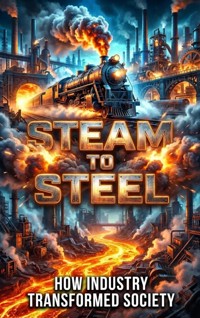
The Industrial Revolution reshaped not only economies but the very fabric of human life. Steam to Steel traces this extraordinary transformation from the first steam engines and textile mills to the rise of steel, railroads, and urban society. Drawing from factory records, workers' diaries, and technological archives, the book reveals how invention and ambition powered progress while altering class, labor, and the environment. It examines the birth of industrial capitalism, the spread of mechanization across continents, and the social movements that followed in its wake. This vivid historical study connects innovation to inequality, showing how machines forged both prosperity and disruption across the nineteenth century and beyond.
Sie lesen das E-Book in den Legimi-Apps auf:
Seitenzahl: 252
Veröffentlichungsjahr: 2026
Das E-Book (TTS) können Sie hören im Abo „Legimi Premium” in Legimi-Apps auf:
Ähnliche


















Table of Contents
Chapter 1: The Dawn of the Industrial Revolution
The Birth of Innovation: The Steam Engine
The Advent of Textile Mills
From Agrarian to Industrial Society
Technological Advancements and Their Impact
Chapter 2: The Rise of Factories
The Shift from Home to Factory
The Factory System and Its Structure
Economic Impact of Factories
Workers' Experiences in Factories
Factory Life's Influence on Society
Chapter 3: Innovations in Transportation
The Birth of the Railroad
Innovations in Steamships
The Impact on Trade
Social Changes Due to Transportation
Environmental Impacts of Transportation Innovations
The Legacy of Transportation Advances
Chapter 4: The Steel Revolution
The Shift from Iron to Steel
Steel in Transportation
Economic Transformation and Industrial Capitalism
Social Changes Driven by Steel
Environmental Impacts of Steel Production
Chapter 5: The Urban Explosion
The Rapid Growth of Cities
Class Stratification and Social Dynamics
The Challenges of Urban Living
Cultural Shifts in Urban Society
Chapter 6: Labor Movements and Social Change
The Origins of Labor Movements
Key Strikes and Their Significance
The Role of Unions in Labor Rights
Legislation and Labor Reform
The Social Impact of Labor Movements
The Future of Work and Labor Movements
Chapter 7: Environmental Impact
Introduction to Environmental Impact
Air Quality and Health Effects
Water Pollution and Contamination
Land Use and Resource Depletion
Industrialization and Climate Change
Chapter 8: Technological Advancements and Inventions
The Birth of Mechanized Production
Innovations in Transportation
Steel Production Advances
Textile Innovations: Beyond Mechanization
Chapter 9: The Global Spread of Industrialization
The Seeds of Industrialization in Europe
The Rise of Industrialization in North America
Industrialization in Asia: A Varied Experience
The Industrial Landscape in Latin America
Africa's Industrial Journey: Challenges and Opportunities
The Interconnected World of Industrial Capitalism
Chapter 10: Industrial Capitalism and Economic Change
The Rise of Industrial Capitalism
Labor Dynamics in a Capitalist Economy
Capitalism and Social Change
Economic Inequality in Industrial Capitalism
Chapter 11: Education and the New Workforce
The Shift in Educational Needs
The Rise of Vocational Education
Impact on Literacy and Education Access
Social Mobility and the Workforce
The Role of Women in Education
Conclusion: The Legacy of Educational Reforms
Chapter 12: Women in the Industrial Era
Women in Early Factories
The Role of Women in Labor Movements
Changing Social Norms
Women's Contributions Beyond the Factory
Challenges and Backlash
Legacy of Women in the Industrial Era
Chapter 13: The Role of Government and Regulation
The Emergence of Industrial Regulation
Labor Laws and Worker Rights
Environmental Regulations
The Impact of Economic Theories on Regulation
The Future of Regulation in an Industrial Society
Chapter 14: Art and Culture During the Industrial Revolution
The Influence of Industrialization on Artistic Expression
Literature and the Changing Landscape
The Role of Public Art and Architecture
Cultural Movements and Social Change
Chapter 15: The Legacy of the Industrial Revolution
Economic Transformation
Technological Advancements
Social Changes
Environmental Impact
Legacy of Class and Inequality
Cultural Shifts
Chapter 16: Looking Ahead: The Future of Industry
The Current Landscape of Industry
Automation and Artificial Intelligence
Green Technologies and Sustainability
The Role of Social Movements
Education and the Future Workforce
Conclusion: The Enduring Legacy of Innovation
Chapter 1: The Dawn of the Industrial Revolution
This chapter explores the early innovations that marked the beginning of the Industrial Revolution. From the invention of the steam engine to the first textile mills, we discuss how these breakthroughs changed the way people worked and lived. The era was characterized by a shift from agrarian economies to industrial production, setting the stage for the profound societal changes to come.
The Birth of Innovation: The Steam Engine
The steam engine, developed in the late 18th century, represented a revolutionary breakthrough in energy production. This innovation laid the groundwork for rapid industrialization and fundamentally altered how goods were manufactured and transported, pushing society toward a new era.
Inventors like James Watt improved steam technology, leading to increased efficiency.
The evolution of the steam engine owes much to the innovations of inventors such as James Watt, who significantly enhanced its efficiency in the late 18th century. Watt's modifications included the introduction of a separate condenser, which reduced energy waste and drastically improved fuel usage. This ingenuity meant that steam engines could operate more effectively, providing greater power while consuming less coal than their predecessors.
As a result of these advancements, steam engines became increasingly viable for industrial applications. Factory owners recognized the potential of powerful steam engines to replace traditional water wheels and manual labor, enabling them to expand production capacities. By providing a reliable and efficient source of energy, Watt's innovations not only stimulated the growth of industries but also fostered a culture of continuous technological improvement. This shift set the stage for the rapid industrialization that characterized the period.
Steam engines powered machinery in factories, drastically speeding up production processes.
The introduction of steam-powered machinery revolutionized manufacturing processes, ushering in an era where production speed and scale reached unprecedented levels. Steam engines provided a consistent and powerful source of energy that could drive various machines, from looms to pumps, facilitating mass production. Factories equipped with steam engines could produce goods at a rate that far surpassed manual labor, leading to increased output and lower costs.
This swift transformation fundamentally changed labor patterns. As steam engines dominated factory spaces, the need for skilled artisan craftsmen diminished, and factory jobs emerged, requiring a different set of skills. Workers, who were once engaged in small-scale, handcrafted production, now adapted to operating machinery, contributing to a new workforce dynamic that defined the Industrial Revolution.
The steam engine facilitated the transportation of goods via steamships and railways.
The impact of the steam engine extended well beyond factory walls; it revolutionized transportation as well. Steam engines powered steamships and railways, drastically reducing travel times for goods and people. The ability to transport products quickly and efficiently not only enhanced domestic markets but also opened international trade routes that were previously limited by geographical challenges.
Railroads, in particular, became the backbone of industrial economies, connecting remote areas to urban centers and facilitating the movement of raw materials and finished products. The speed and reliability of steam-powered transportation encouraged industries to expand their operations and reach wider markets. Consequently, this mobility played a critical role in the economic interconnectivity that defined the Industrial Revolution.
This innovation marked the shift from hand production methods to machine-based manufacturing.
The advent of the steam engine marked a pivotal transition from traditional hand production to machine-based manufacturing. Previously, skilled artisans and craftsmen manually produced goods using rudimentary tools and methods. The introduction of steam-powered machinery allowed a shift toward mechanization, where machines performed labor-intensive tasks with precision and speed.
This transformation not only increased productivity but also altered the social fabric of society. As factories emerged, they became centers of mass production, where large numbers of workers operated machines under the supervision of factory managers. This shift diminished the status of skilled artisans and changed labor dynamics forever, leading to the rise of a new industrial workforce and the complexities of class relations that followed in the wake of mechanization.
The Advent of Textile Mills
Textile mills emerged as one of the first industrial applications of the steam engine, transforming the textile industry. These mills revolutionized the production process, increasing output and changing labor dynamics.
The introduction of machines like the spinning jenny and power loom increased textile production.
The Industrial Revolution heralded the birth of innovative machinery that transformed the textile industry. Machines such as the spinning jenny and the power loom revolutionized production processes by significantly increasing output. The spinning jenny, invented by James Hargreaves in the 1760s, allowed a single worker to spin multiple spools of thread simultaneously, which dramatically reduced the time needed for textile production.
Similarly, the power loom, developed by Edmund Cartwright in the late 18th century, mechanized the weaving process, further enhancing efficiency. These advancements not only increased the quantity of textiles produced but also improved the quality, making fabrics more accessible to the growing population. Consequently, textile mills became pivotal in meeting the rising demand for clothing during the Industrial Revolution, marking a significant shift in both production dynamics and economic structures.
Textile mills became central to urban development, drawing workers from rural areas.
As textile mills proliferated, they played a crucial role in the urbanization process that characterized the Industrial Revolution. These factories, often located in cities, attracted a constant influx of workers from rural areas seeking employment. The promise of steady wages and the allure of city life compelled many agrarian families to abandon their traditional lifestyles.
The growth of textile mills coincided with the expansion of urban centers, resulting in significant demographic shifts. Cities such as Manchester and Lowell became symbols of industrial progress, transforming from small towns into bustling metropolitan hubs. This urban migration not only changed economic landscapes but also initiated social shifts as former agrarians adapted to the demands of factory work in a new industrial society.
Labor conditions in mills were often poor, sparking early discussions about workers’ rights.
While textile mills were instrumental in boosting production and economic growth, they often did so at the expense of workers. Labor conditions in these factories were typically harsh, characterized by long hours, low wages, and unsafe environments. Workers faced grueling schedules, often toiling for upwards of 12 hours a day in poorly ventilated spaces filled with dangerous machinery.
Such dire conditions led to early movements advocating for workers’ rights, highlighting the need for reform in labor practices. It ignited conversations about fair wages, reasonable working hours, and safer work environments, laying the groundwork for future labor legislation. The struggles and sacrifices of mill workers emphasized the necessity of addressing social justice and workers’ welfare within the rapidly industrializing society.
Women and children comprised a large portion of the mill workforce, highlighting social inequalities.
The workforce in textile mills was predominantly composed of women and children, a reflection of the era's social and economic inequalities. Many families relied on the income generated by their young members as factory jobs often paid less than inadequate. The prevalence of child labor raised ethical concerns about exploitation and the rights of young workers.
Women, too, faced significant disparities in wages compared to their male counterparts, often receiving lower pay for the same work. This systemic inequality illustrated the broader societal norms that undervalued the contributions of women and children in the industrial workforce. As a result, their plight spurred early feminist movements and labor reforms, advocating for equal rights and better working conditions, laying the foundation for future societal changes.
From Agrarian to Industrial Society
The transition from an agrarian society to an industrial one marked profound changes in social structures and lifestyles. This shift had significant implications for how people interacted with their environments and each other.
People moved to urban centers in search of factory jobs, leading to rapid urbanization.
The Industrial Revolution catalyzed a massive migration of people from rural areas to rapidly growing urban centers. In search of factory jobs that promised stable wages and regular hours, millions left behind their agrarian lifestyles. This migration was not merely a movement but a transformation, as cities expanded to accommodate the influx of workers. Urbanization became synonymous with progress, reflecting a shift in how society viewed labor and opportunity. The new urban landscape featured factories, tenements, and infrastructure designed to support industrial production.
As people packed into cities, urban areas became centers of innovation and economic growth. Yet, this rapid urbanization also strained existing resources, leading to significant challenges in housing, sanitation, and public health. The promise of factory jobs drew many hopeful workers, but they often found themselves in overcrowded and unsanitary living conditions, highlighting the dual nature of the Industrial Revolution—as a time of promise intertwined with hardship.
This urban migration created both opportunities for economic advancement and challenges, such as overcrowding.
The shift from agrarian lifestyles to urban factory jobs opened new avenues for economic advancement for many individuals and families. Factories provided employment opportunities that were often not available in rural areas, empowering workers to improve their living standards. Additionally, the urban economy buzzed with ancillary services—shops, schools, and leisure activities—that were previously scarce in village life.
However, the surge in population also resulted in severe overcrowding, particularly in industrial cities where housing development lagged behind the influx of workers. This led to a plethora of societal issues, from inadequate housing conditions to increased crime rates. The very fabric of urban life became a topic of concern, as the same dynamism that fueled economic growth also fostered environments that were often chaotic and unsustainable, requiring community adaptation and reform.
Traditional agrarian roles were challenged, leading to new class dynamics and social hierarchies.
The transition to an industrial society fundamentally altered traditional agrarian roles, creating new class dynamics that disrupted existing social hierarchies. Land ownership, which once defined social status, became increasingly irrelevant as industrial capitalors and factory owners rose to prominence. The emergence of a capitalist economy led to a wealth disparity, where industrialists amassed significant fortunes while many workers faced low wages and harsh working conditions.
This transformation sparked tensions and formed the groundwork for new social classes—namely, the burgeoning middle class and the urban working class. As these groups navigated their identities within the industrial landscape, new attitudes about labor and economic rights began to take root, influencing social mobility and economic policies. The challenge to traditional roles ignited debates about class rights, ownership, and the responsibilities of industrialists towards their workers, leading to shifts that would reshape societal norms.
New forms of social interaction emerged, including labor unions and organized movements for workers’ rights.
The upheaval caused by the shift to an industrial society also gave rise to new forms of social interaction, especially as workers began uniting to advocate for their rights. The formation of labor unions marked a significant development in this era, as workers sought to collectively bargain for better wages and safer working conditions. These organizations became essential tools for effecting change, fostering a sense of solidarity among workers who shared common struggles.
Additionally, organized movements for workers' rights emerged in response to the exploitation prevalent in factories. These movements included strikes and protests, which challenged the status quo and aimed to reshape labor laws and workplace conditions. The solidarity created through these interactions signified a new chapter in social dynamics, as workers no longer accepted their fates passively but instead actively sought to improve their lot, laying the foundations for future labor reforms and sociopolitical changes.
Technological Advancements and Their Impact
The early Industrial Revolution was characterized by rapid technological advancements. These innovations not only increased production capabilities but also transformed everyday life for countless individuals.
Innovations in machinery reduced manual labor, but also displaced many traditional jobs.
The advent of new machinery during the early Industrial Revolution fundamentally redefined the landscape of work. Machines such as the spinning jenny and power loom significantly boosted textile production efficiency, allowing for greater output with less human effort. This mechanization dramatically reduced the demand for skilled artisans who once dominated the production landscape.
While these innovations offered increased productivity and spurred economic growth, they also led to widespread displacement of workers. Skilled jobs in areas like weaving and spinning, which had been passed down through generations, saw a sharp decline, creating a sense of instability among the working class. Workers found themselves grappling with a new reality where machine operators could be trained in a fraction of the time required to master traditional crafts.
Thus, the very machinery that promised improved productivity also generated significant social upheaval. This dichotomy between progress and job loss would become a hallmark of the Industrial Revolution, affecting countless families and communities.
New technologies facilitated the creation of the modern financial system, including banks and investments.
The Industrial Revolution not only transformed production but also laid the groundwork for a modern financial system that spurred unprecedented economic growth. The need for capital to fund factories, machinery, and infrastructure led to the establishment of modern banking institutions. These banks provided the crucial funding that entrepreneurs required to innovate and expand their businesses.
Investments became more structured and accessible, as new financial instruments emerged to support industrial expansion. The stock market began to thrive, allowing individuals to invest in companies and share in their profits, further fueling competition and innovation. This shift from agrarian-based economies to financial capitalism meant that wealth was increasingly tied to industrial production rather than land ownership.
Therefore, the financial advancements during this era were not merely technical improvements but were fundamental to fostering an environment conducive to industrial and economic growth. They created a framework that allowed for sustained investment in technology, further perpetuating the cycle of innovation.
Transportation improvements, like railroads, enhanced trade and communication between regions.
Transportation in the early Industrial Revolution underwent revolutionary changes, fundamentally altering trade dynamics and regional interactions. The introduction of the steam locomotive and the expansion of railroads allowed for the rapid movement of goods over long distances, connecting markets previously hindered by geographic barriers.
This enhancement in transportation facilitated not only the distribution of manufactured goods but also the mobility of raw materials, which were essential in fueling industrial factories. As a result, regions that were once isolated found themselves integrated into a larger economic framework, fostering commerce like never before.
The rail networks also expedited communication, linking cities and towns with increasing efficiency. Businesses could now respond to market demands more swiftly, and information flowed more freely, aiding in the development of a national and even international economy. The onset of railroads created a pivotal shift that enabled the synergistic growth of industries and commerce across vast distances.
Access to goods expanded, altering consumption patterns and lifestyles significantly.
The Industrial Revolution brought about a remarkable expansion in the availability of goods, which directly influenced consumption patterns across society. As industries ramped up production and new technologies emerged, items that had once been considered luxuries became accessible to the broader public. For example, textiles produced in factories could be sold at lower prices than handcrafted items, changing how families clothed themselves.
This newfound access extended beyond basic necessities to include a range of manufactured products, from household items to leisure goods. With the emergence of a consumer-oriented market, lifestyles began to shift dramatically; society transformed from self-sustaining agrarian living to a culture driven by consumption.
Moreover, the rise of marketing and advertising further fueled consumer demand, establishing a cycle where production catered to growing desires, while consumers began to identify more with the proliferation of goods in their daily lives. Thus, the Industrial Revolution not only increased access to goods but also laid the foundation for modern consumer culture, shaping social values and everyday living in profound ways.
Chapter 2: The Rise of Factories
In Chapter 2, we investigate the establishment of factories and their economic impact. We look at the challenges and opportunities they created for workers and how they transformed communities. The chapter examines the shift from home-based production to factory work, highlighting the experiences of laborers caught in this transition.
The Shift from Home to Factory
As the Industrial Revolution progressed, the traditional home-based production began to fade. Factories emerged as centers of mass production, dramatically altering the landscape of labor.
Decline of Cottage Industries
The rise of factories in the Industrial Revolution significantly decreased the prevalence of cottage industries. Prior to this shift, many artisans and craftsmen operated small, home-based workshops, producing goods tailored to local markets. However, as mechanization advanced, these small-scale producers struggled to compete with the efficiency and speed of factory production.
Factory systems enabled mass production, often leading to lower prices for consumers. Consequently, many skilled tradespeople found their livelihoods at risk, as their unique craftsmanship was overshadowed by the uniformity and cost-effectiveness of factory-made goods. This transformation not only diminished the ranks of artisans but also altered the very essence of craftsmanship, marking the end of an era where individual skill was paramount.
Centralization of Production
The emergence of factories centralized the production process, shifting from a dispersed model of home-based operations to a concentrated setting. This centralization significantly improved efficiency and output, as factories utilized large machines that operated continuously, producing goods at an unprecedented scale.
By consolidating resources, labor, and machinery in one location, factories could streamline operations. Standardization of parts and processes enabled quicker production times, ultimately transforming entire industries. In a society where time was of the essence, this new model not only met rising consumer demand but also drove economic growth, fostering urbanization as people flocked to industrial centers in search of work.
Employment Opportunities
The factory system created significant employment opportunities, drawing many individuals from rural locations to burgeoning urban centers in search of stable jobs. As agriculture became increasingly mechanized, labor opportunities in farming diminished, prompting a migration to cities where factories were rapidly opening.
This influx of workers contributed to the explosive growth of urban populations. Factories, with their promise of regular wages, attracted diverse groups, including young men and women seeking independence and families hoping to improve their standard of living. However, this migration often led to overcrowded living conditions and emerged challenges, as cities struggled to accommodate the rapid increase in inhabitants.
Changes in Labor Dynamics
The transition from home-based work to factory employment marked a significant shift in labor dynamics. Families that once worked together in artisanal settings now faced the prospect of wage labor, where members were no longer working as a unit but rather as individuals earning separate incomes. This fundamental change impacted family structures and relationships, as work became less cooperative and more transactional.
As wage earners, family members were often subjected to the demands of factory schedules with little flexibility. This shift altered the interplay of roles within the household, redefining how families interacted with work and income. Economic pressures of this new labor structure sometimes strained familial ties, as members spent long hours in factories, often leaving children uncared for and home responsibilities reshaped by their absence.
Impact on Women's Employment
The rise of factories also significantly affected women's employment, as many women entered the workforce in newfound roles within industrial settings. Factories offered various jobs, from textile mills to the assembly lines, which presented women with financial independence that had previously been rare.
While factory work empowered many women, it also exposed them to harsh working conditions, including long hours, low pay, and unsafe environments. The duality of gaining employment and facing exploitation illustrated the complexities of women's roles during this period. As they fought for better conditions, this experience laid the groundwork for subsequent labor rights movements, empowering women to advocate not only for better wages but also for social change.
The Factory System and Its Structure
The factory system introduced new organizational structures that defined manufacturing processes. Understanding these structures helps clarify the impact of factories on labor practices.
Division of Labor
The introduction of the division of labor in factories marked a significant shift in manufacturing practices. This system required workers to focus on specific tasks rather than engaging in the entire production process. By streamlining operations, factories greatly enhanced productivity, as workers became more proficient in their designated roles. However, this specialization came at a cost; workers often faced monotonous routines, performing the same task repeatedly. Such repetitive work led to a decline in job satisfaction and mental fatigue for many laborers. In contrast to the varied tasks of home-based artisanal production, factory work became a means to an end, reducing the sense of craftsmanship. The efficiency gained through this system contributed to the rapid industrial growth but also laid the groundwork for future labor movements as workers sought more fulfilling and equitable working conditions.
Standardization of Products
The factory system's emphasis on the standardization of products revolutionized manufacturing, making it possible to produce uniform goods at a larger scale. Standardization improved quality control, allowing manufacturers to maintain consistency across production lines. Products such as textiles and machinery no longer varied significantly between units, which enhanced consumer trust and led to broader market acceptance. This shift not only facilitated ease of assembly and repair but also fostered competition among manufacturers aimed at improving product quality and reducing costs. However, while consumers benefitted from cheaper and more accessible goods, the emphasis on conformity often resulted in a loss of individuality and creativity in production. This uniformity underpinned the mass market and shaped consumer expectations during this transformative period.
Managerial Hierarchies
The establishment of clear managerial hierarchies within factories marked a fundamental change in workplace organization. These hierarchies defined roles and responsibilities across various levels of labor, creating opportunities for some workers to ascend to managerial positions while others faced strict oversight. This structured approach allowed for greater efficiency and coordination in operations, as management could implement policies and enforce discipline more effectively. However, this stratification often led to a disconnect between laborers and management. Workers found themselves under continuous scrutiny, with their productivity linked directly to profit margins. Such dynamics raised questions about worker autonomy and agency, fueling labor disputes and movements advocating for greater rights and conditions.
Working Conditions
Although factories promised efficiency and economic growth, the working conditions for many laborers were grim. Workers frequently endured long hours, often exceeding twelve hours a day, with minimal breaks and meager wages. The relentless pursuit of productivity prioritised profits over human well-being, leading to hazardous environments characterized by poor ventilation, unsafe machinery, and insufficient safety protocols. These dire conditions prompted many workers to seek reform, leading to the rise of labor movements advocating for shorter hours, better pay, and safer workplaces. The contrast between the potential for economic advancement and the harsh realities of factory life became a prominent theme in the social discourse of the time.
Influx of Immigrant Labor
Factories increasingly relied on immigrant labor to meet the demands of industrial expansion, resulting in a diverse workforce that enriched the manufacturing sector. Immigrants played a crucial role in filling labor shortages, often accepting lower wages than native workers. This influx brought with it a mix of cultures and skills, contributing to the vibrancy of factory life. However, it also created tensions, as competition for jobs sometimes led to conflicts over wages and working conditions. Discrimination and prejudice against immigrant workers were common, exacerbating the challenges they faced in securing fair treatment and equitable pay. Ultimately, the reliance on immigrant labor reshaped not just the workforce but also raised important questions about the rights and recognition of workers from different backgrounds.
Economic Impact of Factories
The establishment of factories not only transformed labor but also had profound effects on local and national economies.
Boosting Production Capacity
Factories revolutionized production by harnessing mechanization, significantly increasing output and operational efficiency. The introduction of steam engines and power looms enabled goods to be manufactured at unprecedented rates, meeting the surging consumer demand of a growing urban populace. This leap in production capacity allowed economies to scale effectively, facilitating mass production of textiles, machinery, and consumer goods.
Moreover, factories centralized processes that were previously decentralized and scattered throughout homes and small workshops. This concentration meant that raw materials could be processed and products completed within one location, reducing time and costs associated with transportation and labor. The efficiency gained through factory production not only led to lower prices for consumers but also stimulated further demand, creating a cycle of economic growth.
Transformation of Local Economies
The rise of factories significantly altered local economies, shifting the landscape of employment and commerce. Factories became the primary source of jobs in urban areas, attracting individuals and families from rural settings in search of work. This migration fueled bustling city life and fostered new social dynamics, as diverse groups converged in industrial centers.
With factories driving economic activity, local businesses flourished, from suppliers of raw materials to services catering to factory workers. The demand for housing increased, leading to rapid urbanization and the development of infrastructure. However, this transformation also created challenges, such as overcrowding and inadequate living conditions, prompting social reforms and labor movements aimed at improving workers' rights and urban life.
Creation of Wealth and Social Classes
The establishment of factories allowed factory owners and industrialists to amass significant wealth, leading to the emergence of a distinct capitalist class. This newly affluent class wielded considerable influence over local and national economies, while the working poor, comprising laborers in factories, remained largely impoverished. The disparity in wealth illustrated the widening gap between the rich and the working class.
This economic divide laid the groundwork for social stratification, as opportunities became more concentrated within the upper echelons of society. The working class, often subjected to harsh working conditions and minimal pay, began organizing for better rights and wages, exemplifying the growing tensions inherent in industrial capitalism. Thus, the rise of factories not only transformed production but also reshaped societal structures across the board.
Investment in Infrastructure
The burgeoning factory system spurred immense investments in infrastructure, as the demand for raw materials and efficient transportation intensified. Railroads became critical arteries for moving goods from factories to markets, reducing transit times and lowering costs for businesses. Ports expanded to accommodate increased shipping, stimulating trade both domestically and internationally.
These developments in transport infrastructure further catalyzed economic growth by connecting rural resource areas with urban manufacturing centers. Roads, bridges, and canals were built to facilitate the movement of not just goods, but also the labor required for factory work. Consequently, infrastructure investments laid the foundation for a more integrated and robust economic landscape, reflecting the interdependence of industry and infrastructure.
Impact on Agricultural Production
The rise of factories marked a dramatic shift in the economic focus of society, impacting agricultural production significantly. As factory-produced goods became prevalent, the necessity for manual agricultural labor diminished, leading to a gradual decline in the role of farming in the economy. Many individuals left rural farming life to work in factories, emphasizing the growing appeal of industrial employment.
This transition fostered a societal shift away from agrarian lifestyles towards urban living and industrial occupations. The reliance on factory-made products, including textiles and food processing, diminished the local self-sufficiency that characterized rural communities. As a result, agriculture became more commercialized and mechanized, profoundly affecting food production and distribution systems, ultimately reflecting the profound interconnectedness between industrial growth and the agricultural sector.
Workers' Experiences in Factories
The day-to-day lives of factory workers were often marked by hardship and resilience. Understanding their experiences reveals the human aspect of industrialization.




