


8,99 €
Mehr erfahren.
- Herausgeber: epubli
- Kategorie: Geisteswissenschaft
- Sprache: Englisch
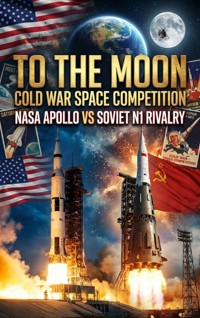
From Sputnik's beep to Armstrong's footprint, the space race turned rocketry into proxy warfare between superpowers racing lunar supremacy. This book traces milestones—Gagarin's Vostok orbit, Shepard's suborbital hop, Glenn's Friendship 7, Valentina Tereshkova's solo flight, Leonov's spacewalk, Apollo 8 lunar orbit, culminating in Apollo 11's Sea of Tranquility landing. Drawing from declassified mission transcripts, Kennedy speeches, and Baikonur/Cape Canaveral records, To the Moon: Cold War Space Competition reveals engineering duels, political pressures, and technical gambles that propelled humanity beyond Earth. It examines how Saturn V reliability outpaced N1 explosions to claim cosmic high ground.
Das E-Book können Sie in Legimi-Apps oder einer beliebigen App lesen, die das folgende Format unterstützen:
Seitenzahl: 240
Veröffentlichungsjahr: 2026
Ähnliche


















Table of Contents
Chapter 1: The Dawn of the Space Age
The Birth of Space Exploration
The Geopolitical Context
Key Milestones that Followed Sputnik
The Role of Funding and Resources
Chapter 2: Yuri Gagarin and the Orbital Triumph
The Vostok 1 Mission
Yuri Gagarin: A Symbol of Soviet Strength
The Impact on the U.S. Space Program
Technological Competition and Advancements
Chapter 3: The American Response: Mercury and the Race Ahead
The Spark of Mercury
Alan Shepard: The First American in Space
John Glenn: Orbiting the Earth
The Mercury-Atlas Launch System
Influencing the Course of the Space Race
Chapter 4: Valentina Tereshkova: A Landmark Flight
The Rise of Valentina Tereshkova
The Vostok 6 Mission
The Space Race Dynamics
Engineering and Safety Considerations
Chapter 5: The Challenge of the N1 Rocket
Overview of the N1 Rocket Program
Engineering Challenges Faced by the N1
The Political Environment Surrounding the N1
Test Flights and Failures
The Final Fate of the N1 Program
Chapter 6: Apollo's Ascent: The Road to the Moon
The Genesis of Apollo
Innovations in Rocketry: The Saturn V
The Apollo 8 Mission: A Game Changer
Overcoming Challenges
Chapter 7: The First Human Spacewalk: Leonov's Mission
The Context of the Spacewalk
Preparation for the Mission
The Historic EVA
Challenges and Innovations in EVA
Aftermath and Significance
Evolving Perspectives on the Space Race
Chapter 8: Kennedy’s Vision and Political Pressure
The Context of the Space Race
Kennedy’s Inspiring Speech
Political Motivations Behind the Apollo Program
Impact on Public Opinion and Funding
Chapter 9: The Saturn V vs. N1: Engineering Superiority
The Saturn V: Design and Innovation
The N1: Design Challenges
Reliability and Safety Records
Engineering Philosophies: NASA vs. USSR
Chapter 10: The Final Countdown: Apollo 11 Preparations
The Countdown Begins
The Astronauts' Preparedness
Technology and Equipment Checks
Launch Day Preparations
Managing Expectations and Risks
The Night Before Launch
Chapter 11: The Eagle Has Landed: Apollo 11's Moon Landing
The Countdown to Launch
The Lunar Module's Descent
First Steps on the Moon
Scientific Contributions of Apollo 11
Cultural Impact and Legacy
Chapter 12: The Aftermath: Reflections on the Space Race
The Legacy of Apollo and N1
Shifts Towards International Collaboration
Impacts on Space Policy and Funding
The Vision for Future Space Endeavors
Chapter 13: The Cold War's Influence on Space Policy
The Origins of Space Policy
The Impact of Presidential Leadership
Technological Advancements and Their Policies
The Role of International Treaties and Cooperation
Chapter 14: Lessons Learned: Technology Transfer and Advances
Innovations in Telecommunications
Advances in Materials Science
Advances in Computer Technology
Improvements in Public Infrastructure
Lessons in Project Management
Societal Impact and Workforce Development
Chapter 15: The Enduring Legacy of the Space Race
The Technological Foundations of Space Exploration
The Cultural Impact of the Space Race
Lessons Learned from the Apollo and N1 Programs
The Path to Mars and Beyond
The Ongoing Relevance of International Cooperation
The Legacy of Human Endeavor in Space
Chapter 16: Looking Forward: The Future of Space Exploration
Lessons from the Apollo and N1 Programs
Current Missions: A New Era of Exploration
The Role of Private Companies
Ethical Considerations in Space Exploration
The Quest for Knowledge
Final Reflections: The Path Ahead
The Legacy of the Space Race
Lessons in Collaboration and Competition
The Role of Public Engagement
The Future of Space Exploration
Chapter 1: The Dawn of the Space Age
The journey to the Moon began with the simple beep of Sputnik on October 4, 1957. This chapter explores the origins of the space race, highlighting early milestones such as the launch of Sputnik, the first artificial satellite. We also discuss the geopolitical landscape of the Cold War, where technological supremacy became a crucial element of national pride and power.
The Birth of Space Exploration
The launch of Sputnik 1 marked not just a technological achievement but the dawn of a new era in space exploration. This section will analyze how the successful launch on October 4, 1957, catalyzed the space race and defined the geopolitical landscape of the Cold War.
Sputnik 1: The First Artificial Satellite
Sputnik 1, launched by the Soviet Union on October 4, 1957, represents a monumental achievement in the history of space exploration. This spherical satellite, measuring just 58 centimeters in diameter, emitted a series of beeps detectable from Earth, demonstrating not only technological prowess but also the potential for surveillance and communications in space. Its successful orbit around Earth captivated international attention and marked a significant turning point in the global landscape.
The launch of Sputnik 1 became a physical manifestation of the Soviet Union's advancements in rocketry, sending shockwaves through the United States. It highlighted the capabilities of Soviet science and engineering, elevating the status of the USSR as a superpower. As the first artificial satellite, Sputnik 1's significance transcended its physical form; it symbolized a new frontier, sparking both competition and collaboration in the scientific community.
Impact on U.S. Perception
The successful launch of Sputnik 1 ignited serious concerns within U.S. government and society. Many in the United States feared that the Soviet Union had taken a lead in technological innovation, which could potentially threaten American security and global standing. This anxiety was compounded by the suggestion that if the Soviets could launch a satellite, they could also launch intercontinental ballistic missiles.
In response, the U.S. increased investments in science and technology. The National Defense Education Act of 1958, aimed at improving education in math and science, exemplified this shift. Educational institutions began to emphasize STEM (science, technology, engineering, and mathematics) programs exponentially, ultimately laying the groundwork for future advancements in space exploration and technology during the Cold War.
Cultural and Political Reactions
The launch of Sputnik had profound cultural ramifications within the United States and beyond. It captured the public's imagination, inspiring a flurry of popular culture that included films, songs, and literature focused on space and technology. Notably, the sense of urgency to catch up in the space race influenced various art forms, reflecting societal anxieties and aspirations associated with scientific progress.
Politically, Sputnik presented an opportunity for both nations to leverage their technological prowess as a means of exerting influence on the global stage. The imagery of rockets and satellites became entwined with national pride, and public investment in space exploration was framed as a direct response to Soviet advancements, solidifying the view of the space race as a vital component of Cold War strategy.
The Space Race Begins
The launch of Sputnik 1 effectively initiated the space race, a defining element of Cold War tensions between the United States and the Soviet Union. As each superpower sought to demonstrate its technological superiority, the competition became a symbolic battle for ideological supremacy. The early successes of the Soviet space program challenged the U.S. to escalate its efforts, culminating in a series of landmark missions that followed.
The space race was not merely an exploration of outer space but also a reflection of political ideologies. As nations engaged in this contest, every launch and satellite became a matter of national pride, propagating the idea that advances in space exploration were indicative of a nation's superiority. Over the ensuing years, numerous milestones were set that built on the momentum ignited by Sputnik's launch, with Earth's orbit becoming a battleground for technological achievement and scientific discovery.
The Geopolitical Context
The Cold War created a backdrop that was as much about ideology as it was about innovation. This section explores how the competition for dominance in space served as a proxy for the broader conflict between the United States and the Soviet Union.
Cold War Tensions
The ideological divide between communism and capitalism was a defining characteristic of the Cold War, resulting in intense rivalries that extended into various domains, including space exploration. The Soviet Union and the United States were not merely competing for technological accolades; they were engaged in a struggle to showcase the superiority of their respective systems.
In this context, nationalistic ambitions drove both nations to invest heavily in scientific advancements. Each successful mission was not only a technological triumph but also a propaganda victory that reinforced domestic and international perceptions of power. The launch of Sputnik 1 in 1957 symbolized not just a breakthrough in aerospace engineering but also a stark reminder to the United States regarding the capabilities of its adversary.
This tense atmosphere fueled further investments and aggressive strategies in both countries as they raced toward asserting their dominance in space, underscoring the broader conflict that characterized the entire Cold War era.
Technological Supremacy
Space exploration transcended mere scientific curiosity; it became an essential instrument for demonstrating technological prowess during the Cold War. Each mission was a symbolic display of advancement that carried profound implications for national pride and international prestige. Successful launches often served to bolster public confidence in governance and the superiority of one ideology over another.
For the United States, missions like Mercury, Gemini, and Apollo highlighted innovative capabilities that extended beyond mere rocketry. They were meticulously crafted narratives promoting American ingenuity. Conversely, the Soviet Union utilized its successes, including the launch of the first human into space, Yuri Gagarin, to rally support for communism and assert its global leadership.
As a result, space missions became essential tools of public diplomacy, effectively intertwining scientific achievement with national identity. The rivalry played a significant role in shaping public perception and garnering support for extensive funding and initiatives in science and technology.
Military Implications
The advancements in rocket technology during the space race had significant military implications for both superpowers. The development of intercontinental ballistic missiles (ICBMs) was closely linked to space exploration efforts. The United States and the Soviet Union were acutely aware that space capabilities translated into military strength, allowing for the potential delivery of nuclear weapons across vast distances.
As a result, the race to dominate space amplified concerns over national security and defense strategies. Innovations developed for space programs were often dual-purposed, serving both civilian and military objectives. This intertwining of technology meant that each achievement in space exploration not only represented a step forward for science but also heightened the arms race.
Consequently, the competition did not merely focus on lunar missions; it encompassed a broader strategic aim of establishing superiority in military capabilities, fundamentally altering the dynamics of international relations during the Cold War.
Public Interest and Support
The Cold War rivalry spurred a remarkable surge of public interest in science and technology. Both the United States and the Soviet Union recognized that public perception played a critical role in supporting their respective space ambitions. The spectacle of space missions captivated audiences worldwide, creating a sense of wonder and excitement surrounding scientific exploration.
Governments initiated extensive educational programs aimed at fostering technical skills and inspiring future generations. In the U.S., the National Defense Education Act of 1958 was implemented to enhance education in science and technology, reflecting a commitment to compete on an intellectual field as well as a physical one.
This widespread enthusiasm formed a cultural backdrop that reinforced the importance of technological prowess and innovation. The space race transformed not only the perception of science as a national priority but also instilled a sense of shared ambition that transcended national borders, as countries observed and engaged with the historic achievements of their rivals.
Key Milestones that Followed Sputnik
Following Sputnik's launch, a series of significant milestones shaped the trajectory of the space race. This section outlines these events, emphasizing their implications on the rivalry between the U.S. and the Soviet Union.
Vostok 1 and Yuri Gagarin
On April 12, 1961, Yuri Gagarin made history as the first human to orbit Earth aboard Vostok 1, marking a monumental moment in the space race. This achievement not only showcased the Soviet Union's advanced space technology but also significantly enhanced its geopolitical standing during the Cold War. Gagarin's hour-long flight demonstrated the feasibility of human spaceflight and highlighted the USSR's technological prowess before an awe-struck global audience.
Gagarin’s journey was meticulously planned, featuring one complete orbit around the planet, which underscored the success of Soviet engineering and ambition. The implications of this flight were profound, as it injected a sense of urgency into the American space program, compelling the United States to accelerate its own efforts in manned space exploration. Gagarin's flight was celebrated internationally, serving as a symbol of Soviet strength in the fledgling space race.
Mercury-Redstone 3 and Alan Shepard
Just weeks after Gagarin’s historic flight, the United States launched its own manned mission, Mercury-Redstone 3, on May 5, 1961. Alan Shepard became the first American in space, completing a suborbital flight that lasted approximately 15 minutes. Despite not achieving orbital altitude, Shepard's flight demonstrated U.S. capabilities and resilience in the ongoing competition.
This mission reinvigorated the American public and government’s commitment to beat the Soviets in space. Shepard’s mission provided vital data on human tolerance to spaceflight conditions, which would be crucial for future, more ambitious missions. The successful launch of Mercury-Redstone 3 laid the groundwork for subsequent missions under NASA's Project Mercury and set the stage for future triumphs in the race for lunar supremacy.
Friendship 7 and John Glenn
On February 20, 1962, astronaut John Glenn made history by becoming the first American to orbit Earth aboard the Friendship 7 spacecraft. This mission was a significant milestone in Project Mercury and was pivotal in restoring American pride following the early Soviet successes in the space race. Glenn completed three orbits around the Earth, lasting nearly five hours, and his successful mission showcased improved American technology and capabilities.
Glenn's flight was not just a triumph for NASA; it also marked a turning point in the Cold War narrative, as it demonstrated that the United States could compete effectively on a global scale. The mission garnered an extensive media presence, engaging the American public and igniting patriotic fervor. Glenn’s successful return rejuvenated national confidence and emphasized the competitive nature of the space race, further motivating investments in NASA's future projects.
Tereshkova's Historic Flight
On June 16, 1963, Valentina Tereshkova became the first woman to fly in space, orbiting the Earth aboard Vostok 6. This groundbreaking mission was a victory for the Soviet space program, emphasizing not only technological advancement but also a commitment to inclusivity and gender representation in the field of space exploration. Tereshkova’s flight lasted nearly three days and consisted of 48 orbits around the Earth, providing valuable data on women's physiological responses to space travel.
The significance of Tereshkova's achievement extended beyond mere advancements in space exploration; it highlighted the Soviet Union's progressive stance on gender equality at a time when such issues were less prominent in many parts of the world. This victory served as a powerful symbol of Soviet superiority in the space race and prompted a renewed interest in human spaceflight, propelling both nations to further explore the boundaries of human capability in the cosmos.
The Role of Funding and Resources
Funding strategies played a pivotal role in the competition between the U.S. and the Soviet Union. This section examines how financial resources were allocated and the impact of government priorities on space programs.
U.S. Government Investment
The United States recognized the urgency of the space race and began making substantial investments in NASA shortly after the launch of Sputnik. This financial commitment was aimed at enhancing technological capabilities, building critical infrastructure, and conducting advanced research. The National Aeronautics and Space Administration was not just a response mechanism to Soviet achievements; it became the spearhead of American innovation in aerospace technology.
The government allocated significant budgets to various projects, allowing for the rapid development of rockets like the Saturn I and, later, the Saturn V. These investments also facilitated partnerships with private industries, leading to a collaborative approach that accelerated progress. The focus on human spaceflight, showcased in missions like Apollo, symbolized national pride and proved to be a key motivator in garnering widespread public and political support.
Soviet Funding Challenges
Despite early successes, the Soviet space program faced considerable funding challenges as the Cold War progressed. Initial investments allowed for groundbreaking missions, such as Yuri Gagarin's historic flight. However, as the political and economic landscape evolved, bureaucratic inefficiencies and a lack of streamlined focus began to stifle further advancements. The funding allocated to various military and civilian projects often competed for scarce resources.
As technological complexities increased, the Soviet Union struggled to maintain the momentum achieved in the early 1960s. This decline hindered the ambitious plans for the N1 rocket, aimed at lunar landing capabilities. Ultimately, these funding limitations posed a significant barrier, allowing the U.S. to forge ahead in the race to the Moon.
Public Support for Space Programs
Both superpowers strategically used their space achievements to build public support for ongoing funding and development. In the United States, NASA's successful missions were portrayed as demonstrations of democratic ingenuity and technological prowess. Events such as John F. Kennedy's speeches emphasized the importance of the Moon mission, fostering a strong sense of national pride.
Similarly, the Soviet government highlighted its space milestones, including the first human in space, to reinforce its narrative of superiority in science and technology. The public perception of these programs was critical; both governments understood that popular support could translate into increased financial resources and political backing, thereby sustaining their respective space agendas amidst fierce competition.
Impact of New Technologies
Investment in new technologies catalyzed significant advancements in space exploration for both the U.S. and the Soviet Union. The competition drove innovations not only in rocketry but also in fields such as materials science, telecommunications, and life support systems. For instance, the development of the Saturn V required cutting-edge engineering that extended beyond existing aerospace technologies.
Moreover, both nations recognized the value of collaboration in research. The establishment of partnerships between government entities and private industries facilitated the sharing of ideas and resources. This synergy led to breakthroughs that pushed the boundaries of what was previously thought possible in space exploration and laid the groundwork for future international collaborations in space, exemplifying the lasting influence of Cold War competition.
Chapter 2: Yuri Gagarin and the Orbital Triumph
On April 12, 1961, Yuri Gagarin made history as the first human to orbit Earth. This chapter examines the Vostok 1 mission, the technological innovations involved, and the profound impact Gagarin's flight had on Soviet morale. It also sets the stage for the escalating rivalry as the United States sought to catch up in this new frontier.
The Vostok 1 Mission
The Vostok 1 mission was a groundbreaking achievement in human spaceflight. Launched on April 12, 1961, it marked the first time a human orbited the Earth. This mission was not just a technological feat but also a significant step in the Cold War narrative, showcasing the capabilities of the Soviet space program.
Background of Vostok 1
The Vostok 1 mission represents a pivotal moment in the history of human spaceflight. Designed as a single-pilot spacecraft, it was a remarkable example of Soviet engineering prowess. The Vostok program stemmed from the need for a reliable vehicle that could safely carry a cosmonaut into orbit and return them to Earth. Instead of incorporating complex machinery, the engineers opted for a simplified, robust design that prioritized reliability and ease of operation.
This engineering decision not only ensured mission success but also reflected the Soviet ethos in space exploration—maximizing function while minimizing risk. This approach was instrumental in the broader context of the Space Race, as it showcased the Soviet Union's ability to deliver results despite the constraints of their resources. With Vostok 1, they sent a clear message to the world: they were formidable contenders in the realm of space exploration.
Launch details
On April 12, 1961, Vostok 1 launched from the Baikonur Cosmodrome, a site that would become synonymous with early Soviet space endeavors. The launch vehicle, a modified R-7 Semyorka, emphasized the Soviet Union's significant advancements in ballistic missile technology, which had been repurposed for space exploration. This rocket was capable of delivering considerable payloads into orbit while maintaining a high level of reliability.
This technological superiority allowed the Soviet space program to lead the narrative in the Space Race, as the U.S. was still struggling with its own launch vehicles. The Vostok 1 mission not only marked a triumph for the Soviet Union but also highlighted the strategic importance of such achievements in the broader context of Cold War dynamics, where technological prowess equated to national strength.
Flight profile
Yuri Gagarin's flight aboard Vostok 1 lasted approximately 108 minutes, during which he completed one full orbit around the Earth. This carefully choreographed mission was a testament to the meticulous planning undertaken by the Soviet team. Each aspect of the mission had been rehearsed and optimized to ensure the safety of Gagarin and the success of the mission.
During the flight, Gagarin experienced weightlessness and witnessed the Earth's curvature, moments that would go down in history as significant achievements in human exploration. His successful orbit signified more than just a technological milestone; it galvanized the Soviet people and showcased their nation's capabilities on an international stage, further intensifying competition with the United States.
Technological innovations
The Vostok 1 mission was a showcase of technological innovations that laid the groundwork for future manned spaceflights. One of the key areas of advancement was the life support systems integrated into the spacecraft, which kept Gagarin safe during his journey into space. These systems were crucial for sustaining an astronaut's environment, ensuring they could survive in the harsh conditions of orbit.
Additionally, the mission's re-entry technology was groundbreaking. Engineers developed methods to safely return Vostok from orbit and protect the crew during the fiery descent back into the atmosphere. The advancements made during Vostok 1 served as a foundation for subsequent missions, ultimately influencing space exploration strategies and shaping the future of human spaceflight.
Yuri Gagarin: A Symbol of Soviet Strength
Yuri Gagarin became a global icon following his historic flight. His achievement not only boosted Soviet morale but also positioned him as a symbol of national pride during a time of intense rivalry with the United States.
Public Response
The mission of Yuri Gagarin resonated deeply within the Soviet Union, igniting an unprecedented wave of national pride and enthusiasm. Following his successful orbit on April 12, 1961, the Soviet populace enthusiastically celebrated Gagarin's achievement through grand parades, rallies, and extensive media coverage. State newspapers hailed him as the embodiment of socialist success, showcasing how the triumph was a testament to the capabilities of the Soviet system.
This fervor was not merely ceremonial; it was a rallying point that reinforced public faith in the government and its technological prowess. The celebrations underscored a collective patriotism, transforming Gagarin into a national hero and solidifying his role as a source of inspiration. The joyous atmosphere permeating Soviet society depicted an unequivocal message: socialism had not only matched but significantly surpassed its capitalist rival in the race for space exploration.
International Acclaim
Gagarin's historic flight transcended borders, capturing the imagination of people around the globe. The sensational news of the first human to orbit Earth galvanized international attention, inspiring awe and respect for Soviet achievements in science and technology. News broadcasts and publications worldwide covered the event extensively, with many portraying it as a pivotal moment in human history.
This newfound fame helped to solidify the Soviet Union’s status as a dominant force in the nascent realm of space exploration. Gagarin became more than a national symbol; he evolved into a diplomatic tool, fostering a perception of the USSR as a leader in technological advancements. This acclaim provided the Soviet regime with an opportunity to project an image of strength and progress, further intensifying the geopolitical rivalry with the United States.
Cultural Impact
Following his mission, Gagarin embarked on an extensive international tour, visiting numerous countries and sharing the story of his groundbreaking journey. His travels were meticulously orchestrated to showcase Soviet technological capabilities and, in turn, promote the political ideologies of the Soviet regime. These tours provided the USSR with a platform for soft power, where Gagarin embodied the successes of socialism.
Such cultural engagement allowed Gagarin to act as an ambassador for Soviet ideals, fostering goodwill and admiration in various contexts. The widespread media coverage of his travels reinforced the image of the Soviet space program and its innovative spirit, contributing to the broader narrative of Soviet superiority during the Cold War period.
Role in Future Missions
The success of Gagarin's flight was a critical milestone that laid the groundwork for subsequent manned space missions within the Soviet space program. His achievement served as a catalyst for further explorations, encouraging scientists and engineers to continue pushing the boundaries of human capability in space. Gagarin's mission demonstrated the feasibility of sending humans into orbit, which emboldened Soviet planners to envision more ambitious projects.
Additionally, Gagarin's fame and expertise positioned him as a key figure in the continued evolution of space exploration. He became an emblem of what was possible, inspiring the next generation of astronauts and scientists to pursue their own exploratory endeavors. Gagarin's legacy was thus not limited to his singular flight; it shaped the direction and aspirations of the Soviet space program for years to come, reaffirming humanity's determination to explore beyond Earth.
The Impact on the U.S. Space Program
The successful launch of Vostok 1 created a sense of urgency in the United States, prompting significant investments and policy changes in their space program. The U.S. was determined to not fall behind in the space race.
Increased funding
In the wake of Gagarin's groundbreaking Vostok 1 mission, the United States government recognized an immediate need to bolster its space program. The U.S. allocated additional funds to NASA, understanding that the visibility of this mammoth success by the Soviet Union necessitated a proactive approach to reclaiming the narrative of space exploration.
The increased funding was not merely a reactionary measure; it reflected a strategic shift that prioritized aerospace technology as a national imperative. Congressional hearings were held to discuss the implications of this new space race, and significant budget increases were approved, facilitating expanded research and development efforts. This was pivotal in enhancing the technological foundations required for future missions.
Ultimately, these financial commitments set the stage not only for the expansion of NASA’s ambitious projects but also for accelerating the pace at which the U.S. aimed to achieve manned spaceflight and, ultimately, lunar landing capabilities.
Focus on manned missions
Following Gagarin's historic flight, the U.S. made a decisive pivot toward developing manned spaceflight programs. This shift was marked by a renewed emphasis on both the Mercury and Gemini programs, driven by the urgency to achieve comparable milestones in space exploration.
The Mercury program, which periodically engaged with uncrewed test flights and culminated in manned missions, aimed to safely send American astronauts into orbit. This was closely followed by the Gemini missions, which tested vital technologies and techniques necessary for future lunar excursions. These missions, characterized by complex maneuvers and prolonged flights, prepared astronauts for the longer voyages that awaited them in the Apollo program.
This focus not only aimed to catch up with Soviet achievements but also to establish the United States as a formidable player in the realm of human space exploration.
Political ramifications
Gagarin's stellar achievement injected a new level of urgency into the U.S.-Soviet rivalry, transforming the space race from a technical competition into a profound political battleground. The triumph of the Soviet Union in sending the first human into orbit raised necessary questions about American capability and resolve.
In response to this heightened political climate, U.S. leaders, including President John F. Kennedy, publicly committed to ambitious space goals, including a mission to land a man on the Moon. This resolve translated into increased legislative support, leading to robust funding and strategic coordination among various governmental and aerospace entities.
As a result, Gagarin's flight pushed the U.S. to prioritize lunar exploration as a decisive measure of national prestige, underscoring the geopolitical implications of superiority in space achievements.
National media response
The successful launch of Vostok 1 captured the public’s imagination and led to an extensive media response across the United States. Television broadcasts, newspaper headlines, and radio discussions fixated on Gagarin's achievement, framing it as a critical moment in human history that must be met with American resolve and ingenuity.
Mainstream media outlets emphasized the ramifications of the Soviet success, highlighting the need for empowered public support for America’s space program. Coverage increased dramatically, as stories about space exploration captivated audiences and brought the realities of the space race into living rooms across the nation.
This media frenzy not only fueled public interest but also laid the groundwork for widespread support of future missions. It was essential in rallying citizens behind the U.S. efforts as they prepared to send astronauts to the Moon, creating a narrative of a nation determined to reclaim its position in a competitive world.
Technological Competition and Advancements
The Vostok 1 mission catalyzed a technological fervor, with both superpowers striving to outdo each other. This section explores the innovations triggered by the orbital triumph.
Engineering breakthroughs
The Vostok 1 mission marked a significant leap in engineering, with the Soviet Union unveiling technology that would become foundational for future space endeavors. The spacecraft featured a streamlined design that prioritized reliability and safety




