


3,99 €
Mehr erfahren.
- Herausgeber: Publisher s21598
- Kategorie: Ratgeber
- Sprache: Englisch
“Give Yourself a Break. Don’t Stress Too Much!”
It’s no secret that our survival in today’s fast-paced modern world has become increasingly stressful and overwhelming.
All of us have experienced a hectic set of circumstances in our lives at one point or another.
Stress had taken control over every aspect of our lives and leaves us trapped and helpless. It seems that stress is ever-present, attacking us at work, at school, on the road, and at home.
Stress comes in Both Physical and Mental Forms!
Stress is a normal part of life. And it does serve a purpose in the right form. It can motivate you to go for that promotion or complete a marathon run.
Stress can have a more profound impact on your health. It can be sneaky and create health problems when we are even unaware of its presence in our lives. On the other hand, if you don’t take care of your stress and it lingers on long term, it can interfere with your family life, your health and your job.
More than half of Americans say stress is the reason they fight with loved ones and friends.
Do you ever feel as though you’re on the verge of a complete nervous breakdown? As though, if one more thing goes wrong with your day that you don’t know what you’ll do?
If it sounds like exactly what you feel…Then first, let me inform you, you are NOT ALONE!
Look at some statistics to give you an Insight on how big the problem of stress actually is…
- More than half of Americans say they fight with friends and loved ones because of stress, and more than 70% say they experience real physical and emotional symptoms from it.
- 43% of all adults suffer adverse health effects from stress.
- 75% to 90% of all doctor's office visits are for stress-related ailments and complaints.
- 1 out of every 3 people feels like they are living with extreme stress.
- 48% of people report lying awake at night due to stress.
- Workplace stress is responsible for up to $190 billion in annual US health-care costs.
People are spinning in the vicious cycle of stress. And not knowing how to get started with being less stressed is far more common than you’d think.
Many people live with health disorders that are aggravated or brought on by excessive stress.
This illness has debilitated them and made it impossible to deal with even the smallest problem. That is until they figure out how to manage stress and anxiety.
Proper Knowledge is the Key when your Goal is to Overcome Stress!
Your lack of knowledge in this area may not be your fault, but that doesn’t mean that you shouldn’t -- or can’t -- do anything to find out everything you need to know to finally be a success!
The costs of continuing to repeat this pattern are just too steep...
The first step is learning how to cope with stressful situations that could bring on anxiety, or panic attacks. You can visit doctors and other practitioners and spend thousands of dollars, but there's an easier, less expensive way.
So, without further ado, let’s present you the best insight ;-
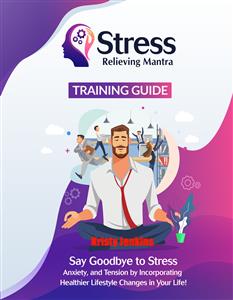
Stress Relieving Mantra Training Guide
Say Goodbye to Stress, Anxiety, and Tension by Incorporating Healthier Lifestyle Changes in Your Life!
A detailed, well-researched info guide that will help you to learn how to reduce your stress levels, quickly and easily... So that you can attain that longed feeling of peace and content in your life
Das E-Book können Sie in Legimi-Apps oder einer beliebigen App lesen, die das folgende Format unterstützen:
Veröffentlichungsjahr: 2019
Ähnliche















Stress Relieving Mantra Training Guide
Disclaimer:
The author has made every attempt to be as accurate and complete as possible in the creation of this publication, however he / she does not warrant or represent at any time that the contents within are accurate due to the rapidly changing nature of the Internet. The author assumes no responsibility for errors, omissions, or contrary interpretation of the subject matter herein. Any perceived slights of specific persons, peoples, or organizations other published materials are unintentional and used solely for educational purposes only.
This information is not intended for use as a source of legal, Medical , business, accounting or financial advice. All readers are advised to seek services of competent professionals in respective field. No representation is made or implied that the reader will do as well from using the suggested techniques, strategies, methods, systems, or ideas; rather it is presented for news value only.
The author does not assume any responsibility or liability whatsoever for what you choose to do with this information. Use your own judgment. Consult appropriate professionals before starting a business or seeking medical treatment . Any perceived remark, comment or use of organizations, people mentioned and any resemblance to characters living, dead or otherwise, real or fictitious does not mean that they support this content in any way.
There are no guarantees of income made, medical relief or recovery , traffic delivered or other promises of any kind. Readers are cautioned to rely on their own judgment about their individual circumstances to act accordingly. By reading any document, the reader agrees that under no circumstances is the author responsible for any losses, direct or indirect, that are incurred as a result of use of the information contained within this document, including - but not limited to errors, omissions, or inaccuracies.
Copyright © 2019 Kristy Jenkins
Table of Content
Introduction
Chapter – 1: Stress – An Overview
What is ‘Stress’?
Stress—a good thing or a bad thing?
How stressed are you?
Facts you need to know about stress
Chapter – 2: Types of Stress
Types of Stress
What are Albrecht’s 4 Types of Stress?
Chapter – 3: What Causes Stress?
Causes of Stress
What are our "Stressors"?
Internal Stressors
Personal Stressors
Chapter – 4: Signs, Symptoms and Reaction of Stress
Emotional Signs and Symptoms of Stress
Physical Signs and Symptoms of stress
Behavioral Signs and Symptoms of Stress
The reaction of Stress – Fight or Flight Response
Chapter – 5: Stress Hormones – An Introduction to Cortisol
Stress Hormones
Why Is Cortisol Called The ‘Stress Hormone’?
What does stress hormone ‘Cortisol’ do to your body?
What happens if you have too little cortisol?
Chapter – 6: The Impact of Stress on Our Body
Central Nervous and Endocrine Systems
Cardiovascular
Male reproductive system
Female Reproductive System
Chapter – 7: Stress Management - Tips to Reduce Everyday Stress
Ways to Reduce and Overcome Everyday Stress
Chapter – 8: How to Eliminate Workplace Stress Effectively?
What causes stress at work?
Ways to Eliminate Stress at Work
Chapter – 9: Managing Stress with Exercise and Meditation
Exercise and Stress Relief
What Types of Exercise Help With Stress?
Stress Management and Meditation
Types of Meditation
How to Begin a Basic Meditation Practice?
Chapter – 10: Natural Herbal Remedies to Reduce Stress
Herbal Remedies for Stress Relief
Chapter – 11: The Importance of Positive Self Talk to Deal with Stress
Understanding self-talk
Positive Self-Talk – What is it?
Some Examples of Positive and Negative Self-talk:
What are the Benefits of Positive Self-talk?
How to Reduce Stress with Positive Self-Talk?
Chapter – 12: Alleviating Stress with Nutrition
How Too Much Stress Affects Your Eating Habits?
Super-foods for Stress Relief
Chapter – 13:
Combating Stress with Essential Oils
The Role of Essential Oils in Dealing with Stress
Essential Oils that are Best for Stress
Chapter – 14: Effective Stress Management Techniques during Pregnancy
What are the Causes of Stress during Pregnancy?
How Can Stress Affect Your Baby and You?
How to Reduce Stress during Pregnancy?
Chapter – 15: Child Stress Management Ideas
What causes Stress for Children?
Signs of Stress in Children
How to Manage Stress in Your Children?
A Final Word - Conclusion
Introduction
In today’s fast-paced modern world, we are experiencing stress in our everyday lives. Stress is a fact of life, wherever you are or whatever you are doing. You cannot avoid stress, but you can learn to manage it so it doesn’t manage you.
Stress is caused by changes. Any change in life including enrolling in college, getting married, changing jobs or illness are frequent causes of stress. Keep in mind that changes that cause stress can also benefit you. Moving away from home to attend college, for example, creates personal-development opportunities—new challenges, friends, and living arrangements. That is why it’s important to know yourself and carefully consider the causes of stress.
Learning to do this takes time, and although you cannot avoid stress, the good news is that you can minimize the harmful effects of stress, such as depression or hypertension. The key is to develop an awareness of how you interpret, and react to, circumstances. This awareness will help you develop coping techniques for managing stress.
Inside this guide, we will provide you some basic information on stress and simple recommended techniques to effectively manage and deal with stress. You’ll learn how to combat stress in your daily life and prevent it from becoming a serious medical problem for your health and well-being.
The book focuses on what stress is, what causes it, and most importantly what you can do to manage your stress. It will provide you a detailed idea about how to identify your sources of stress, understand the stress and its root cause along with the ability to generate alternative solutions, and select the best solutions for your physical, mental and social well-being.
Let’s embark on your stress management journey and get ready to say goodbye to troubled days in your life.
Stress — just the word may be enough to set your nerves on edge. Everyone feels stressed from time to time. Stress is a common part of life but sometimes we don’t recognize its effects on us.
Have you ever found yourself in a situation where your to-do list seems endless, deadlines are fast approaching and you find yourself saying ‘Eek! I feel stressed!’? But what is stress really, and how does it affect us? Well, let’s find out...
What is ‘Stress’?
Stress can be defined as the brain’s response to any demand. Many things can trigger this response, including change. Changes can be positive or negative, as well as real or perceived. They may be recurring, short-term, or long-term and may include things like commuting to and from school or work every day, traveling for a yearly vacation, or moving to another home.
Changes can be mild and relatively harmless, such as winning a race, watching a scary movie, or riding a rollercoaster. Some changes are major, such as marriage or divorce, serious illness, or a car accident. Other changes are extreme, such as exposure to violence, and can lead to traumatic stress reactions.
Stress impacts people in different ways and can have both physical and emotional effects. Everyone feels stressed from time to time. Not all stress is bad. All animals have a stress response, and it can be life-saving. Some people thrive on stress and even need it to get things done. When the term ‘stress’ is used in a clinical sense, it refers to a situation that causes discomfort and distress for a person and can lead to other mental health problems, such as anxiety and depression.
Therefore, stress can be a good thing but too much of a good thing can become unhealthy.
Stress can result from external factors (e.g., events, environment) or from internal factors (e.g., expectations, attitudes, feelings).
Stress often occurs in response to situations that are perceived as being difficult to handle or threatening. Common causes for stress (called stressors) include illness, injury, fear, and anxiety.
Each person reacts to stress differently. A healthy response to stress begins quickly; is appropriate in degree and in length; and can improve function, motivation, and productivity.
Stress—a good thing or a bad thing?
Feeling stressed can feel perfectly normal, especially during exam time. You might notice that sometimes being stressed-out motivates you to focus on your work, yet at other times, you feel incredibly overwhelmed and can’t concentrate on anything. While stress affects everyone in different ways, there are two major types of stress: stress that’s beneficial and motivating — good stress — and stress that causes anxiety and even health problems — bad stress.
In general, good stress is short-term and pushes you to accomplish greater things. In these situations, you tend to have a lot of control over the outcome and the stress can motivate you. Bad stress can be short-term or long-term. Bad stress is often accompanied by feelings of helplessness because you don’t have a lot of control over what’s happening and you may begin to feel compressed or trapped.
So-called "good stress," or what psychologists refer to as "eustress," is the type of stress we feel when we are excited. Our pulse quickens, our hormones change, but there is no threat or fear. We feel this type of stress when we ride a roller coaster, gun for a promotion, or go on a first date. There are many triggers for this good stress, and it keeps us feeling alive and excited about life.
Even in modern society, stress is useful. If college students didn't experience any stress over tests, they probably wouldn't study or show up for class. If workers didn't experience stress about project deadlines, they might end up getting fired.
So, stress keeps us accountable for our actions. It motivates us and inspires us to be better citizens.
Unfortunately, there are equally as many reasons why stress is bad called distress. Whereas mild stressors—such as what to get your spouse for his or her birthday—are motivating, major stressors can be debilitating. For instance, caring for a loved one who has a chronic illness is a serious stressor.
Major stressors are extremely taxing on the brain and the body, possibly leading to depression and other mental health consequences, as well as physical health issues.
On the other hand, there are various health benefits with a little bit of stress. Researchers believe that some stress can help to fortify the immune system. For instance, stress can improve how your heart works and protect your body from infection. In one study, individuals who experienced moderate levels of stress before surgery were able to recover faster than individuals who had low or high levels.
Eustress, or positive stress, has the following characteristics:
Motivates, focuses energy
Is short-term
Is perceived as within our coping abilities
Feels exciting
Improves performance
In contrast, Distress, or negative stress, has the following characteristics:
Causes anxiety or concern
Can be short- or long-term
Is perceived as outside of our coping abilities
Feels unpleasant
Decreases performance
Can lead to mental and physical problems
It may be tough to tell when you’re experiencing good or bad stress, but there are important ways that your body lets you know that you’re struggling with too much stress. Watch out for the following warning signs:
Inability to concentrate or complete tasks
Get sick more often with colds
Body aches
Other illnesses like autoimmune diseases flare up
Headaches
Irritability
Trouble falling sleeping or staying awake
Changes in appetite
More angry or anxious than usual
Stress is an inevitable part of life, but you can improve the way you respond to stress and avoid or change some of the situations that create negative stress.
How stressed are you?
Maybe it’s your demanding boss, morning gridlock, or relationship problems with a friend or family member. Whatever the cause, it’s likely you experience some level of stress on a daily basis.
But while some day-to-day stress is normal (and can even be a good thing if it motivates you), overwhelming stress can have a negative impact on your physical, mental, and emotional wellbeing.
Here are a few questions to ask yourself when evaluating your stress levels:
Is the stress continuous?
Stress that occurs because of a pressing project at work, a tight deadline, or juggling multiple priorities at once often happens. Once the event or work is complete, you should feel a sense of relief and accomplishment. If the stress continues and doesn’t seem to decrease after completing a task, then this might be a sign of chronic stress which will end up making you feel more overwhelmed and overworked.
Are you sleeping?
Stressful events can cause disrupted sleep, but over a period of time, normal sleep patterns should resume. If sleep issues persist, this might be a sign that you are overstressed, which can negatively impact your emotional and physical health.
Do you have constant headaches?
Tension headaches occur from too much stress. These headaches should go away after taking a break or resting. If you suffer from continuous headaches for an extended period of time you are probably overstressed.
Knowing how much stressed you are will help you in determining whether you are experiencing good or bad stress and help you find out the effective solutions before it starts affecting your health.
Facts you need to know about stress
Here are five things you should know about stress:
#1 Stress affects everyone: Everyone feels stressed from time to time. Some people may cope with stress more effectively or recover from stressful events more quickly than others. There are different types of stress—all of which carry physical and mental health risks. A stressor may be a one time or short-term occurrence, or it can be an occurrence that keeps happening over a long period of time.
Examples of stress include:
Routine stress related to the pressures of work, school, family and other daily responsibilities
Stress brought about by a sudden negative change, such as losing a job, divorce, or illness
Traumatic stress experienced in an event like a major accident, war, assault, or a natural disaster where people may be in danger of being seriously hurt or killed. People who experience traumatic stress often experience temporary symptoms of mental illness, but most recover naturally soon after.
Not all stress is bad: Stress can motivate people to prepare or perform, like when they need to take a test or interview for a new job. Stress can even be life-saving in some situations. In response to danger, your body prepares to face a threat or flee to safety. In these situations, your pulse quickens, you breathe faster, your muscles tense, your brain uses more oxygen and increases activity—all functions aimed at survival.
Long-term stress can harm your health: Health problems can occur if the stress response goes on for too long such as when the source of stress is constant, or if the response continues after the danger has subsided. With long-term stress, those same life-saving responses in your body can suppress immune, digestive, sleep, and reproductive systems, which may cause them to stop working normally.
Different people may feel stress in different ways. For example, some people experience mainly digestive symptoms, while others may have headaches, sleeplessness, sadness, anger or irritability.
There are ways to manage stress: The effects of stress tend to build up over time. Taking practical steps to manage your stress can reduce or prevent these effects.
Although stress seems so much overwhelming at first, it can be managed and reduced with time and proper care. Efforts required to reduce the levels of stress but it can save your life.
If you’re overwhelmed by stress, ask for help from a health professional: You should seek help right away if you have suicidal thoughts, are overwhelmed, feel you cannot cope or are using drugs or alcohol to cope. Your doctor may be able to provide a recommendation.
Conclusion
Stress is how the brain and body respond to any demand. Stress can be generally defined as an undue, inappropriate or exaggerated response to a situation. Every type of demand or stressor—such as exercise, work, school, major life changes, or traumatic events—can be stressful.
Stress can affect your health. It is important to pay attention to how you deal with minor and major stress events so that you know when to seek help.
Stress is a feeling that people have when they are struggling to cope with challenges related to finances, work, relationships, environment, and other situations. Moreover, stress is felt when an individual perceives a real or imagined challenge or threat to their well-being. People often use the word stress interchangeably with anxiety, feeling anxious, fearful, nervous, overwhelmed, panic, or stressed-out.
The body is an intelligent operating system, but the body cannot determine the difference between the life-threatening external threat from imagined or perceived non-life threatening stressors. The body reacts the same either way.
Stress management can be complicated because of the different types of stress. Therefore, they require different levels of treatment interventions, management, and psychological treatment modalities due to the nature of the person’s environment, lifestyle, developmental history, coping resources, and personality.
Types of Stress
The types of stress related to how the stress comes on or what symptoms are associated with the stress, but psychologists typically differentiate between the different types based on how long the periods last. Learning more about the different types of stress can help individuals learn how to battle stress.
Acute Stress: Acute stress is the most common form of stress. Acute stress is the type of stress that throws you off-balance momentarily. This is the type of stress that comes on quickly and often unexpectedly and doesn’t last too long, but requires a response and shakes you up a bit, like an argument with someone in your life, or an exam for which you don’t feel adequately prepared.
It comes from demands and pressures of the recent past and anticipated demands and pressures of the near future. Acute stress is thrilling and exciting in small doses, but too much is exhausting. A fast run down a challenging ski slope, for example, is exhilarating early in the day. That same ski runs late in the day is taxing and wearing. Skiing beyond your limits can lead to falls and broken bones. By the same token, overdoing on short-term stress can lead to psychological distress, tension headaches, upset stomach, and other symptoms.




