



1,99 €
Niedrigster Preis in 30 Tagen: 1,99 €
Niedrigster Preis in 30 Tagen: 1,99 €
Mehr erfahren.
- Herausgeber: DigiCat
- Kategorie: Religion und Spiritualität
- Sprache: Englisch
In "The Astral Plane," Charles Webster Leadbeater offers a profound exploration of the unseen dimensions of existence, delving into the intricate realm of psychic experiences and spiritual phenomena. Written in the early 20th century, this seminal work employs a didactic tone characterized by vivid imagery and metaphysical inquiry, reflecting both the Theosophical movement's ideals and the prevailing fascination with esotericism during his time. Leadbeater meticulously describes the characteristics of the astral plane, elucidating its significance in spiritual development and the various entities that inhabit this otherworldly dimension, drawing on his experiences as a clairvoyant to lend authenticity to his insights. Leadbeater, a pivotal figure in the Theosophical Society, was greatly influenced by his own spiritual practices and interactions with various Eastern religious philosophies. His commitment to understanding the unseen aspects of human experience stems from a lifelong exploration of spirituality, psychic abilities, and the synthesis of science and occultism, which fueled his desire to illuminate the spiritual journey for others. His unique blend of inquiry and lived experience shaped the contours of this work, making it a vital contribution to metaphysical literature. This book is highly recommended for readers seeking a comprehensive understanding of spiritual dimensions beyond the physical realm. Whether one is a seeker of truth, an enthusiast of Theosophy, or simply curious about the nature of existence, Leadbeater's rich prose and thoughtful insights invite profound contemplation, encouraging a deeper engagement with the mysteries of life and consciousness. In this enriched edition, we have carefully created added value for your reading experience: - A succinct Introduction situates the work's timeless appeal and themes. - The Synopsis outlines the central plot, highlighting key developments without spoiling critical twists. - A detailed Historical Context immerses you in the era's events and influences that shaped the writing. - A thorough Analysis dissects symbols, motifs, and character arcs to unearth underlying meanings. - Reflection questions prompt you to engage personally with the work's messages, connecting them to modern life. - Hand‐picked Memorable Quotes shine a spotlight on moments of literary brilliance. - Interactive footnotes clarify unusual references, historical allusions, and archaic phrases for an effortless, more informed read.
Das E-Book können Sie in Legimi-Apps oder einer beliebigen App lesen, die das folgende Format unterstützen:
Veröffentlichungsjahr: 2022
Ähnliche










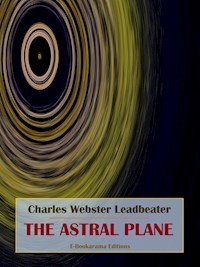







The Astral Plane
Table of Contents
Introduction
Between the seen world and the unseen, The Astral Plane proposes a mapped borderland where thought, desire, and form ceaselessly pattern one another. Charles Webster Leadbeater’s work belongs to the tradition of occult nonfiction associated with the Theosophical Society, composed in the late nineteenth century amid a wave of esoteric inquiry. Neither novel nor allegory, it is presented as a practical treatise describing a nonphysical region and the conditions believed to prevail there. The book positions itself as an introduction for students of Theosophy, outlining what it calls the astral plane’s scenery, inhabitants, and phenomena, and offering a framework for disciplined study.
Leadbeater situates the astral plane as an intermediate field of experience contiguous with physical life yet governed by subtler laws, accessible, he claims, through trained clairvoyant perception. The premise is not argued through laboratory proof but conveyed through systematic description, as though composing a field guide to an invisible ecology. Readers encounter accounts of movement, communication, and causation as they might operate when freed from dense matter. The emphasis remains introductory: to sketch the kinds of appearances a student might expect, the ways attention alters results, and the wider cosmology in which the astral domain participates, without demanding prior allegiance.
As a reading experience, the treatise is concise yet programmatic, favoring classification over narrative and adopting an earnest, instructional voice. Leadbeater writes with the confidence of a lecturer charting a syllabus, moving from broad principles to particular illustrations and back again. He prioritizes clarity of categories, preferring precise terms and steady pacing to dramatic flourish. The tone is sober, even when the subject matter invites wonder, and the intended audience is clearly the beginning student rather than the seasoned adept. That pedagogical stance makes the book readable today: it introduces complex esoteric ideas in gradual steps and emphasizes practical orientation.
Central themes cohere around the continuity of consciousness and the ethical texture of causation. The astral plane, in this presentation, both mirrors and magnifies human motives, making inner states consequential in ways that feel immediate. Thought and emotion exhibit form and momentum; attention becomes an instrument; and the moral law of cause and effect, central to Theosophy, is shown as operating beyond ordinary sight. These ideas serve a formative purpose: by learning the alleged mechanics of subtle environments, the student is invited to cultivate responsibility, composure, and discernment. The result is a handbook on conduct as much as an atlas of realms.
Historically, the book emerges from a fin-de-siècle milieu that mixed comparative religion, psychical research, and a drive to systematize mystical testimony. The Theosophical movement sought a synthesis of insights drawn from multiple traditions, and Leadbeater’s contribution uses quasi-scientific language to give contour to invisible processes. Its vocabulary reflects its time, yet the project is clear: to render esoteric claims communicable, testable by disciplined practice, and intelligible in a shared discourse. As a document of that era, the text helps readers observe how modern occult literature shaped conversations about mind, matter, and meaning at a moment of rapid intellectual change.
For contemporary readers, its value lies in both content and method. As content, it offers a richly imagined model of layered experience that can serve as metaphor, provocation, or roadmap for contemplative exploration. As method, it exemplifies how one might treat subjective observation with rigor, acknowledging limits while attending to consistency and effect. You need not accept its premises to engage it fruitfully; the text invites comparison with psychology, consciousness studies, and reflective arts that treat emotion and attention as world-making forces. It is thus a bridge text, joining historical curiosity to practical inquiry about how inner life shapes conduct.
Approached with a balanced mind, The Astral Plane functions as an initiation into a vocabulary and a sensibility. Expect a clear, steady exposition that prefers patient explanation to rhetorical heat, and let its maps operate as pointers rather than proofs. The book matters because it preserves a coherent attempt to describe nonphysical experience in public language, a task still pertinent wherever people seek meaning beyond material measures. Reading it today can refine attention, expand interpretive imagination, and illuminate a crucial chapter in esoteric intellectual history, while keeping faith with the author’s aim: to make subtle realities available to conscientious study.
Synopsis
Charles Webster Leadbeater's The Astral Plane: Its Scenery, Inhabitants and Phenomena presents a concise theosophical survey of a subtle region said to underlie physical existence. Originally issued as a Theosophical manual, it aims to collate observations from trained clairvoyants and to systematize reports often associated with ghosts, dreams, and psychic experiences. Leadbeater states his intention to describe conditions, classes of beings, and typical occurrences without sensationalism, offering readers a map by which to interpret disparate testimonies. The work's argument proceeds from definitions and methods to descriptions of environment, populations, and the mechanisms behind widely reported psychical effects.
He begins by outlining the rationale and limits of clairvoyant investigation, insisting that perception on this level requires training, discrimination, and corroboration. The astral plane is presented as interpenetrating the physical world yet obeying different conditions, with degrees or subdivisions that vary in density and responsiveness. Thought and emotion are said to act directly on astral matter, shaping forms and currents that can be perceived. This framework allows him to treat familiar anomalies such as visions, distant sight, and dreamlike transitions as natural expressions of a distinct order. With these premises, the text turns to what an observer might expect to encounter as landscape.
Leadbeater describes scenery that corresponds to the physical environment while remaining fluid, luminous, and highly plastic to consciousness. Distance and direction appear modified, and objects may reveal inner qualities rather than surface form. He emphasizes the role of color, movement, and symbolic appearance as indicators of emotion and thought. The seven subdivisions differ in refinement and stability, producing vistas that range from dense and turbulent to rarefied and orderly. Structures created by collective habit and belief can persist as temporary locales. Throughout, he underscores that observation demands caution, since personal expectation can distort perception and overlay actuality with images.
The account of inhabitants begins with human participation. Living people, he says, may function there during sleep or trance, usually with dim awareness but potentially with discipline and clarity through training. The recently deceased are described as passing through related conditions associated with emotion and desire before moving onward, and their remnants or impressions can linger. Leadbeater distinguishes between conscious persons, fragments, and forms shaped by memory. He also notes that strong feeling or focused thought can exteriorize constructs with limited vitality and persistence. These distinctions set the stage for later explanations of apparitions, communications, and misleading impersonations.
A parallel survey treats non-human denizens. Nature-spirits and elemental lives are presented as a broad spectrum, from playful or indifferent to disruptive, seldom aligned with human morality. There are also entities formed unintentionally by collective emotion, and forms deliberately sustained by repeated attention. Because such occupants can mimic personalities or amplify impressions, Leadbeater argues that many striking manifestations are composites rather than direct messages from the departed. The result is a chart of motives and capacities that help to parse seances, hauntings, and folkloric encounters, emphasizing variability, partial understanding, and the need for careful discrimination in every instance.
He next connects observed mechanisms with familiar phenomena. Clairvoyance, distant perception, and premonitory dreams are framed as lawful operations under astral conditions, aided or hindered by the observer's temperament. Places can retain vivid impressions that later sensitives mistake for current events. Mediumistic effects are explained as exchanges across levels shaped by the medium's vehicles and by surrounding thought-currents, through which messages may be colored or distorted. Apparitions, raps, and object movements are treated as secondary consequences of forces acting through subtler matter. Throughout, he cautions that earnest motive and disciplined conduct are safeguards against error and exploitation.
The treatise concludes by situating these claims within a larger theosophical program of self-development and service. Rather than encouraging sensation-seeking, it urges ethical steadiness and technical sobriety, asserting that clear perception grows from character as much as from method. As a compact synthesis, The Astral Plane has remained influential within Theosophy and adjacent esoteric currents, offering a structured vocabulary for interpreting psychical narratives without reliance on dogma or credulity. Its enduring interest lies in the way it renders scattered phenomena intelligible, proposes standards for inquiry, and invites readers to consider consciousness as more extensive than materialist assumptions allow.
Historical Context
Published in 1895 in London as Theosophical Manual No. 5 by the Theosophical Publishing Society, Charles Webster Leadbeater’s The Astral Plane appeared in the late Victorian fin de siècle. The work circulated through the Theosophical Society’s transnational network, whose headquarters had been established at Adyar, Madras (now Chennai), in 1882. Operating across imperial routes linking London, India, and Ceylon, the Society used journals and manuals to codify its teachings for new members. Within this setting, the book proposed a structured account of an “astral” realm, aligning with the era’s appetite for orderly classification while addressing readers in Britain and the wider colonial world.
Founded in New York in 1875 by Helena Petrovna Blavatsky, Henry Steel Olcott, and William Q. Judge, the Theosophical Society relocated its center of gravity to India by the early 1880s. Its stated aims included forming a nucleus of universal brotherhood, encouraging comparative study of religion, philosophy, and science, and investigating unexplained laws of nature and latent human powers. Through periodicals like The Theosophist (launched 1879) and later the London-based Lucifer (1887, edited by Blavatsky and, from 1889, Annie Besant), the movement popularized concepts such as karma, reincarnation, and subtle planes. Leadbeater’s concise manual fits this institutional drive for accessible doctrinal summaries.
The book also arose amid a broader occult and scientific ferment. Spiritualism had spread through Britain and America since the 1850s, while learned bodies such as the Society for Psychical Research (founded in London in 1882) investigated mediumship, telepathy, and apparitional experiences. Simultaneously, physics unveiled invisible forces: Röntgen announced X-rays in 1895, and Becquerel reported radioactivity in 1896. Popular discourse embraced “ethers,” vibrations, and unseen energies. Leadbeater’s taxonomic description of an astral realm echoed this drive to render the invisible intelligible, presenting clairvoyant observations in systematic form that could be discussed, cataloged, and compared, even as claims remained controversial among scientists and skeptics.
Charles W. Leadbeater (1854–1934) was an English clergyman turned Theosophist. Ordained a deacon in the Church of England in 1879, he served as a curate before resigning in the mid-1880s after encountering A. P. Sinnett’s Esoteric Buddhism (1883) and meeting Theosophists in London. In 1886 he traveled with H. S. Olcott to Ceylon (Sri Lanka), where he assisted Buddhist education, and soon worked from the Society’s Adyar headquarters in Madras. By the 1890s he was publishing clairvoyant “investigations” for Theosophical audiences. The Astral Plane distilled those claims into a compact primer, framing them as observations by a trained investigator rather than speculative metaphysics.
Leadbeater’s itinerary reflected the Society’s engagement with South Asian religious reform under British rule. Olcott collaborated with Sinhalese Buddhists, helped organize schools, and supported the Buddhist revival associated with figures like Anagarika Dharmapala. In Colombo, an English-language Buddhist school founded in 1886—later known as Ananda College—counted Leadbeater among its early leaders. This milieu encouraged presenting Asian doctrines as compatible with modernity. The Theosophical synthesis recast Sanskrit and Pali concepts—karma, kama-loka, and devas—into a universal scheme. The Astral Plane draws on that vocabulary, situating its “plane” within a layered cosmos familiar to readers of The Theosophist and related publications.
The 1890s also consolidated a global conversation on comparative religion. At the 1893 World’s Parliament of Religions in Chicago, speakers such as Swami Vivekananda and Anagarika Dharmapala introduced large Western audiences to Vedanta and Buddhism. Meanwhile, Max Müller’s multi-volume Sacred Books of the East (1879–1910) standardized translations of Asian scriptures for scholars and lay readers. This climate favored syncretic presentations that blended textual learning with claims of direct experience. Leadbeater’s manual exemplifies that tendency: it invokes a cross-cultural lineage for subtle worlds while privileging purported firsthand observation, thereby positioning Theosophy as both a comparative enterprise and an experiential esotericism.
Contestation shaped the book’s moment. The Society faced public scrutiny after the 1885 Hodgson Report for the Society for Psychical Research judged some of Blavatsky’s phenomena fraudulent, a verdict later criticized by scholars but influential at the time. Internally, disputes culminated in 1895 when William Q. Judge’s American faction seceded, creating a separate Theosophical body. In this unsettled landscape, concise manuals that explained planes, bodies, and post-mortem states served to stabilize teachings for adherents and seekers. The Astral Plane offered a coherent map that could be taught in lodges and study classes, reinforcing organizational identity despite controversy and schism.
Seen against late Victorian intellectual currents, the manual reflects a characteristic ambition: to reconcile scientific organization with metaphysical breadth. Its orderly catalogues of “scenery, inhabitants, and phenomena” mirror contemporary encyclopedic impulses, while its insistence on superphysical perception challenges prevailing materialism. The book uses the era’s imperial and scholarly conduits to assemble a universalist cosmology, yet reads Asian traditions through a Western esoteric frame typical of Orientalist mediation. By presenting a navigable, law-governed astral environment, it both echoes the period’s trust in system and offers a critique of reductive empiricism, proposing disciplined inner observation as a legitimate mode of knowledge.




