


0,49 €
Niedrigster Preis in 30 Tagen: 1,99 €
Niedrigster Preis in 30 Tagen: 1,99 €
Mehr erfahren.
- Herausgeber: Booksell-Verlag
- Kategorie: Lebensstil
- Sprache: Englisch
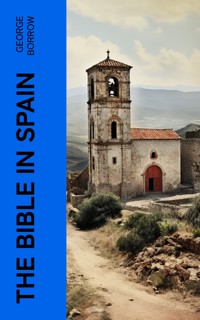
In "The Bible in Spain," George Borrow presents a compelling narrative that intertwines his experiences while evangelizing in Spain with a detailed exploration of the historical and cultural significance of the Bible within the country. The book is characterized by Borrow's vivid prose, deeply imbued with Romanticism, and conveys a sense of adventure as well as personal reflection. Through a blend of travelogue and memoir, Borrow captures the complexities of Spanish society, its religious traditions, and the tension surrounding Protestantism in a predominantly Catholic landscape, engaging the reader in a rich tapestry of anecdotal evidence and colorful characters. George Borrow, a prominent 19th-century British author and linguist, was deeply fascinated by Spain and its culture, which profoundly influenced his writings. His affinity for languages and his personal encounters with Spanish communities, coupled with his evangelical zeal, motivated him to document the plight of the Bible's reception there. Borrow's unique perspective as a foreigner grappling with an alien culture lends authenticity and depth to his narrative, showcasing his struggles and triumphs in a foreign land. For those seeking to understand the interplay between faith, culture, and literature in 19th-century Spain, "The Bible in Spain" is an essential reading. It not only offers an insightful historical account but also invites readers to contemplate fundamental questions of belief and identity, making it a valuable addition to both literary and theological discussions. In this enriched edition, we have carefully created added value for your reading experience: - A succinct Introduction situates the work's timeless appeal and themes. - The Synopsis outlines the central plot, highlighting key developments without spoiling critical twists. - A detailed Historical Context immerses you in the era's events and influences that shaped the writing. - An Author Biography reveals milestones in the author's life, illuminating the personal insights behind the text. - A thorough Analysis dissects symbols, motifs, and character arcs to unearth underlying meanings. - Reflection questions prompt you to engage personally with the work's messages, connecting them to modern life. - Hand‐picked Memorable Quotes shine a spotlight on moments of literary brilliance. - Interactive footnotes clarify unusual references, historical allusions, and archaic phrases for an effortless, more informed read.
Das E-Book können Sie in Legimi-Apps oder einer beliebigen App lesen, die das folgende Format unterstützen:
Veröffentlichungsjahr: 2019
Ähnliche













The Bible in Spain
Table of Contents
Introduction
Amid the upheavals of nineteenth-century Iberia, The Bible in Spain follows a determined emissary who tries to carry the Protestant Scriptures across frontiers of law, language, and suspicion, turning a journey into a contested experiment in freedom of conscience and the circulation of ideas.
George Borrow’s The Bible in Spain is a travel narrative and memoir first published in 1843, drawn from his work in the 1830s for the British and Foreign Bible Society. Set largely in Spain during a period of political volatility and religious oversight, the book records his attempts to distribute vernacular New Testaments and related texts. It belongs to the broader tradition of Victorian travel writing, yet its focus on religious publishing under pressure gives it a distinctive angle. Early readers recognized its immediacy and range, and it remains a notable account of movement, encounter, and constraint in modern European history.
Borrow’s premise is straightforward yet provocative: a traveler moves through cities and remote districts, seeking permission to sell or give away Scripture and gauging how officials, clergy, soldiers, traders, and ordinary households respond. The narrative unfolds in a brisk first person, mixing observational reportage with vivid anecdote. He attends closely to speech, gesture, and setting, making the countryside and its itinerant networks of roads, inns, fairs, and markets feel central to the story. The mood alternates between wry resilience and wary vigilance, as hospitality and curiosity meet censorship and delay, generating a rhythm of progress, negotiation, and setback.
The book’s enduring interest lies in how it stages the encounter between faith and authority, personal conviction and institutional control. Borrow raises questions about what it means to publish responsibly under restrictive regimes, and how ideas travel when printing, selling, and reading are closely monitored. He treats language as both barrier and bridge, emphasizing the ethical stakes of translation and the social reach of cheap print. For contemporary readers, these themes resonate with debates about freedom of expression, minority belief, cultural exchange, and the fragile infrastructures that carry texts to new publics.
Stylistically, Borrow combines the pacing of adventure with the patience of fieldwork. He sketches people in sharp, economical strokes, attentive to dress, dialect, and bearing without losing momentum. His chapters move swiftly from bureaucratic antechambers to roadside conversations, giving the narrative a picaresque cadence anchored by practical tasks: securing permissions, arranging transport, sourcing stock, and navigating official scrutiny. A polyglot by inclination, he dwells on the give-and-take of conversation across linguistic boundaries, making speech itself a protagonist. The result is neither a devotional tract nor a purely secular tour, but a hybrid of mission report, travelogue, and social portrait.
Historically, the book offers a ground-level view of Spain during a time marked by civil conflict and reconfigured sovereignty, when ecclesiastical and civil authorities contested jurisdiction over publishing, education, and public order. Borrow’s itinerary maps the logistical realities of distribution—ports, depots, carriers, and colporteurs—against a landscape of checkpoints, local customs, and uneven enforcement. Detentions, interrogations, and confiscations occur within that framework, illustrating how policy meets practice on the road. Without dwelling on battlefields, he shows how war’s aftershocks reshape routine transactions, and how a portable book can become an object of suspicion, curiosity, or hope.
For today’s reader, The Bible in Spain matters less as a program and more as a record of contact: a study in what happens when a portable text meets a complex society at a sensitive moment. It invites reflection on rights and responsibilities in publishing, on the ethics of persuasion, and on the craft of listening across difference. It also exemplifies a major current of nineteenth-century travel writing, in which observation, argument, and self-scrutiny share the page. Approached as narrative, document, and provocation, Borrow’s account offers an unusually textured passage into Spain’s roads, rooms, and conversations—and into the hazards of moving words.
Synopsis
George Borrow recounts his commission from the British and Foreign Bible Society to circulate the Scriptures across the Iberian Peninsula in the turbulent mid 1830s. Beginning in Lisbon, he observes a society recovering from conflict and political upheaval, then prepares for work in Spain by studying languages, customs, and routes. The book blends practical mission aims with a travel narrative, recording scenes from docks, markets, and roads, and introducing the people who will shape his progress. Its focus remains clear and factual: to describe the attempt to put affordable Bibles into ordinary hands and the circumstances that helped or hindered that aim.
Borrow enters Spain through the frontier near Badajoz, moving along mule tracks and post roads toward Madrid. He notes contrasts between sparsely populated plains and fortified towns, and between courteous hospitality and official suspicion. Early encounters include soldiers, muleteers, innkeepers, and itinerant traders, whose talk reveals the strains of civil war and regional loyalties. Conversations with Roma communities and other marginalized groups inform his understanding of local speech and social networks, which prove useful for travel and distribution. The narrative proceeds step by step, anchoring the mission in specific journeys, permissions, and practical arrangements rather than abstract plans.
Madrid provides the administrative center for the enterprise. Borrow seeks legal authorization to print and sell a Spanish New Testament and negotiates with officials under a relatively liberal moment in government. He establishes a depot for sales and begins modest distribution through booksellers and hired colporteurs. The account emphasizes procedures, costs, and logistics, along with reactions from readers ranging from curiosity to caution. As word spreads, he balances diplomacy with persistence, mindful of ecclesiastical objections and police oversight. The city becomes a base for dispatching stock, gauging demand, and planning excursions into provinces where scarcity of books and distance shape the market.
Distribution expands through journeys into Castile, La Mancha, and Extremadura. Borrow describes hard roads, scant lodging, and the importance of guides able to navigate local conditions. He records sales to shepherds, artisans, students, and soldiers, noting how price, literacy, and religious sensibilities influence acceptance. At village fairs and roadside inns, he tests methods for presentation and discreet selling, while avoiding confrontation. These chapters stress the routine work behind the mission, the steady movement of parcels, and the value of conversation. The narrative highlights both opportunities created by curiosity and obstacles posed by rumor, prejudice, and administrative delay.
In Andalusia, the mission briefly gains momentum. At Seville, Borrow arranges public sales and enlists trusted helpers, including a Roma guide familiar with the citys alleys and markets. Vivid street scenes frame the effort to reach a broad public near churches and busy thoroughfares. Demand rises as passersby browse the inexpensive volumes, but attention from clergy and officials follows. Seizures and warnings curtail activity, prompting shifts to outlying towns such as Utrera and Carmona. The text records each adjustment in strategy and the limits of toleration, keeping the focus on how, where, and to whom the Scriptures can be lawfully offered.
Turning north and west, Borrow travels through Galicia and other provinces, navigating rugged terrain and the unsettled backdrop of the Carlist War. He visits pilgrimage centers, including Santiago, to test reception among travelers and local residents. The narrative alternates between successful sales to individuals who value a portable text and setbacks where authorities question jurisdiction and doctrine. Regional languages and customs complicate communication but also open avenues for respectful exchange. Occasional experiments with local helps and versions are mentioned alongside routine colportage. Throughout, the account maintains a factual register, noting routes taken, stocks carried, and the specific challenges of each district.
Back in Madrid, pressure intensifies. Borrow faces interrogations about licensing and doctrinal approval, culminating in arrest and short imprisonment. He records the process carefully, describing officials, charges, and the conditions of confinement without dramatization. Diplomatic representations from foreign legations and legal clarifications lead to his release. However, the depot is restricted, and many points of sale become untenable. The episode marks a turning point in the mission, shifting the emphasis from expansion to preservation of remaining stock and protection of assistants. Borrow continues to seek lawful avenues, but the tightening climate reduces both freedom of movement and public access.
The concluding stages recount final circuits to settle accounts, retrieve consignments, and place remaining volumes where interest persists. Borrow revisits friendly towns, meets with colporteurs, and adjusts inventories to avoid confiscation. He describes exit routes toward the southern ports and his departure from Spain as formal permissions narrow and surveillance grows. The results are measured candidly: a considerable number of Bibles distributed, many conversations opened, and significant losses through seizure and closure. The narrative closes by summarizing work accomplished under constraint, emphasizing accurate record keeping, adherence to law, and the practical lessons learned about distribution in a divided and watchful country.
Overall, The Bible in Spain presents a clear, sequential account of a Protestant distribution mission embedded in travel across a complex society. Its central message is practical rather than polemical: persistence, lawful method, and cultural attentiveness can advance circulation, yet political volatility and institutional resistance set firm limits. Borrow offers a broad portrait of Spain through roads, markets, languages, and officials, letting episodes demonstrate both receptivity and restraint. The book concludes with a balanced reckoning of gains and impediments, conveying the scope, challenges, and human encounters that defined the attempt to place the Scriptures within everyday reach.
Historical Context
George Borrow’s The Bible in Spain is set chiefly between 1835 and 1839, a period when Spain was convulsed by civil war and rapid political change. The narrative moves through Madrid, Seville, Cádiz, Valencia, La Mancha, Galicia, and the Basque country, contrasting capitals and ports with remote sierras and impoverished villages. The temporal backdrop encompasses the regency of Maria Christina after the death of Ferdinand VII (1833) and the earliest years of Isabella II. Borrow, an agent of the British and Foreign Bible Society, travels amid military checkpoints, partisan skirmishes, and vigilant local authorities, seeking to sell or distribute Scripture in a confessional state where public Protestant proselytism remained forbidden.
The immediate political catalyst was the succession crisis following Ferdinand VII’s Pragmatic Sanction (1830), which set aside Salic law to recognize his daughter Isabella as heir. Upon the king’s death in 1833, supporters of his brother Carlos María Isidro rallied as Carlists, defending absolute monarchy and traditional fueros, against the Isabelline (liberal) camp backing the regent Maria Christina. The First Carlist War (1833–1840) erupted across Navarre, the Basque Provinces, Aragon, Catalonia, and the Maestrazgo. Borrow’s routes repeatedly skirt contested zones and roadblocks, and his encounters with soldiers and militia reflect the quotidian disruptions the conflict imposed on movement, trade, and print distribution.
The war’s military course shaped the conditions Borrow describes. Carlist commander Tomás de Zumalacárregui led rapid campaigns in Navarre until mortally wounded during the siege of Bilbao (June 1835). The Convention of Lord Eliot (April 1835), brokered by a British envoy, attempted to humanize prisoner treatment. Liberal generals—eventually Baldomero Espartero—countered with mixed fortunes; the British Auxiliary Legion fought in the north, suffering a notable setback at Oriamendi (16 March 1837). The Convention of Vergara (31 August 1839) between Espartero and Carlist general Rafael Maroto pacified much of the north. Borrow’s movements, often delayed by escorts and passes, mirror the fragile stabilization that preceded that accord.
Foreign intervention underpinned the Isabelline cause. Britain recognized Isabella II early and furnished diplomatic, naval, and military support: Sir George de Lacy Evans commanded the British Auxiliary Legion (1835–1837), and Lord George Villiers served as British minister in Madrid (1833–1839). The Royal Navy patrolled the Cantabrian coast, protecting supply lines to besieged liberal ports such as San Sebastián and Bilbao. Borrow’s mission leveraged these networks: he entered via Lisbon after Portugal’s Liberal Wars ended in 1834, used British consular protection in Cádiz and Madrid, and relied on safe-conducts and passports issued or validated through the embassy when local authorities challenged his Bible shipments or itineraries.
Concurrently, liberal state-building produced anticlerical reforms that transformed Spain’s religious and economic landscape. The Inquisition, abolished and restored multiple times earlier, was definitively suppressed in 1834. The Estatuto Real (1834) introduced limited constitutionalism, followed by the progressive Constitution of 1837 after the Mutiny of La Granja (August 1836). Juan Álvarez Mendizábal’s desamortización (1836–1837) expropriated and sold vast ecclesiastical properties, closing many convents after anti-clerical riots—including the “matanza de frailes” in Madrid, 17–19 July 1834. Borrow navigates the paradox these measures created: centralized authorities sometimes issued licenses, yet bishops, cathedral chapters, and civil governors blocked sales, seized stock, and in 1838 briefly imprisoned him in Madrid before British diplomatic pressure secured his release.
Despite reforms, Article 11 of the 1837 Constitution maintained Roman Catholicism as the state religion, and public Protestant worship or proselytism remained illegal. Ecclesiastical censure and police controls targeted unauthorized vernacular Scriptures. Borrow employed the historic Reina–Valera translation lineage (Casiodoro de Reina, 1569; Cipriano de Valera, 1602), printing and importing New Testaments and portions through Madrid presses and Andalusian ports. He experimented with reaching marginalized groups—most famously Roma communities—arranging the printing of a Romani (Caló) Gospel of Luke in Madrid during his mission, which drew official scrutiny. Repeated seizures of crates and the closure of his Madrid Bible shop reveal the enduring reach of confessional censorship.
The book also reflects material conditions of 1830s Spain: insecure roads, endemic banditry in the Sierra Morena and Andalusia, and the absence of a national rural gendarmerie (the Guardia Civil would be founded only in 1844). Military levies, the National Militia, and partisan bands complicated travel, as did internal customs posts and wartime requisitions. The 1834 cholera epidemic, which helped spark the Madrid monastery killings, and wartime displacement strained urban supplies and rural markets. Borrow’s reliance on muleteers, itinerant colporteurs, and smuggling routes along the Portuguese frontier underscores how contraband and informal networks substituted for fragile legal infrastructures in distributing books and moving through contested provinces.
As a social and political critique, the book exposes the contradictions of a state that proclaimed constitutional order yet tolerated arbitrary detention, censorship, and clerical vetoes over reading. It documents rural poverty, wartime predation, and the dependence of peasants and artisans on officials and notables, revealing class and regional inequities intensified by desamortización and conflict. By foregrounding Roma, muleteers, soldiers, and beggars, Borrow challenges official narratives of a unified Catholic nation, highlighting plural identities policed by bureaucracy and church authority. The recurring scenes of confiscated Bibles, shuttered shops, and negotiated passports indict both authoritarian habits and the incomplete reach of liberal reform during Isabella II’s turbulent regency.
The Bible in Spain
EDITOR’S NOTE
Blessed with a magnificent physique, and an unswerving belief in God’s beneficence; endowed with “the gift of tongues” and a cheerful disposition, George Borrow[1] was well equipped for life. That he was called to be a Bible Society missionary was surely a curious turn of fortune. The son of a Militia captain, whose duties took him about the country, Borrow early acquired the taste for a roving life, and it must have been a severe hardship to him when, at the age of sixteen, he was articled to a Norwich firm of solicitors. Indeed, it would almost appear that the gypsy spirit was quenched, for on the completion of his five years he was engaged as literary hack to Phillips, the London publisher. But after a year or so the “call of the wild” came, and Borrow eagerly responded. What happened is not really known, though much of his gypsy life is pictured in Lavengro.
In 1832 he commenced his work for the Bible Society, and the next year went as its representative to Russia. He stayed there until 1835, when he was ordered to Spain and Portugal. In spite of their adventurous nature, the five years there spent were described by Borrow as “the most happy years of my life.” The Bible in Spain consists largely of his letters to the Society, and the vigour and directness of his language must ofttimes have startled the officials. The book was published in December, 1842.
George Henry Borrow was born July 5, 1803, and died July 26, 1881.
AUTHOR’S PREFACE
It is very seldom that the preface of a work is read; indeed, of late years, most books have been sent into the world without any. I deem it, however, advisable to write a preface, and to this I humbly call the attention of the courteous reader, as its perusal will not a little tend to the proper understanding and appreciation of these volumes.
The work now offered to the public, and which is styled The Bible in Spain, consists of a narrative of what occurred to me during a residence in that country, to which I was sent by the Bible Society, as its agent for the purpose of printing and circulating the Scriptures. It comprehends, however, certain journeys and adventures in Portugal, and leaves me at last in “the land of the Corahai,” to which region, after having undergone considerable buffeting in Spain, I found it expedient to retire for a season.
It is very probable that had I visited Spain from mere curiosity, or with a view of passing a year or two agreeably, I should never have attempted to give any detailed account of my proceedings, or of what I heard and saw. I am no tourist, no writer of books of travels; but I went there on a somewhat remarkable errand, which necessarily led me into strange situations and positions, involved me in difficulties and perplexities, and brought me into contact with people of all descriptions and grades; so that, upon the whole, I flatter myself that a narrative of such a pilgrimage may not be wholly uninteresting to the public, more especially as the subject is not trite; for though various books have been published about Spain, I believe that the present is the only one in existence which treats of missionary labour in that country.
Many things, it is true, will be found in the following volume which have little connexion with religion or religious enterprise; I offer, however, no apology for introducing them. I was, as I may say, from first to last adrift in Spain, the land of old renown, the land of wonder and mystery, with better opportunities of becoming acquainted with its strange secrets and peculiarities than perhaps ever yet were afforded to any individual, certainly to a foreigner; and if in many instances I have introduced scenes and characters perhaps unprecedented in a work of this description, I have only to observe, that, during my sojourn in Spain, I was so unavoidably mixed up with such, that I could scarcely have given a faithful narrative of what befell me had I not brought them forward in the manner which I have done.
It is worthy of remark that, called suddenly and unexpectedly “to undertake the adventure of Spain,” I was not altogether unprepared for such an enterprise. In the daydreams of my boyhood, Spain always bore a considerable share, and I took a particular interest in her, without any presentiment that I should at a future time be called upon to take a part, however humble, in her strange dramas; which interest, at a very early period, led me to acquire her noble language, and to make myself acquainted with her literature (scarcely worthy of the language), her history and traditions; so that when I entered Spain for the first time I felt more at home than I should otherwise have done.
In Spain I passed five years, which, if not the most eventful, were, I have no hesitation in saying, the most happy years of my existence. Of Spain, at the present time, now that the daydream has vanished, never, alas! to return, I entertain the warmest admiration: she is the most magnificent country in the world, probably the most fertile, and certainly with the finest climate. Whether her children are worthy of their mother, is another question, which I shall not attempt to answer; but content myself with observing, that, amongst much that is lamentable and reprehensible, I have found much that is noble and to be admired; much stern heroic virtue; much savage and horrible crime;[1q] of low vulgar vice very little, at least amongst the great body of the Spanish nation, with which my mission lay; for it will be as well here to observe, that I advance no claim to an intimate acquaintance with the Spanish nobility, from whom I kept as remote as circumstances would permit me; en revanche, however, I have had the honour to live on familiar terms with the peasants, shepherds, and muleteers of Spain, whose bread and bacalao I have eaten; who always treated me with kindness and courtesy, and to whom I have not unfrequently been indebted for shelter and protection.
“The generous bearing of Francisco Gonzales, and the high deeds of Ruy Diaz the Cid, are still sung amongst the fastnesses of the Sierra Morena[2].” [8]
I believe that no stronger argument can be brought forward in proof of the natural vigour and resources of Spain, and the sterling character of her population, than the fact that, at the present day, she is still a powerful and unexhausted country, and her children still, to a certain extent, a high-minded and great people. Yes, notwithstanding the misrule of the brutal and sensual Austrian, the doting Bourbon, and, above all, the spiritual tyranny of the court of Rome, Spain can still maintain her own, fight her own combat, and Spaniards are not yet fanatic slaves and crouching beggars. This is saying much, very much: she has undergone far more than Naples had ever to bear, and yet the fate of Naples has not been hers. There is still valour in Astruria; generosity in Aragon; probity in Old Castile; and the peasant women of La Mancha can still afford to place a silver fork and a snowy napkin beside the plate of their guest. Yes, in spite of Austrian, Bourbon, and Rome, there is still a wide gulf between Spain and Naples.
Strange as it may sound, Spain is not a fanatic country. I know something about her, and declare that she is not, nor has ever been; Spain never changes. It is true that, for nearly two centuries, she was the she-butcher, La Verduga[6], of malignant Rome; the chosen instrument for carrying into effect the atrocious projects of that power; yet fanaticism was not the spring which impelled her to the work of butchery; another feeling, in her the predominant one, was worked upon—her fatal pride. It was by humouring her pride that she was induced to waste her precious blood and treasure in the Low Country wars, to launch the Armada, and to many other equally insane actions. Love of Rome had ever slight influence over her policy; but flattered by the title of Gonfaloniera of the Vicar of Jesus, and eager to prove herself not unworthy of the same, she shut her eyes and rushed upon her own destruction with the cry of “Charge, Spain.”
But the arms of Spain became powerless abroad, and she retired within herself. She ceased to be the tool of the vengeance and cruelty of Rome. She was not cast aside, however. No! though she could no longer wield the sword with success against the Lutherans, she might still be turned to some account. She had still gold and silver, and she was still the land of the vine and olive. Ceasing to be the butcher, she became the banker of Rome; and the poor Spaniards, who always esteem it a privilege to pay another person’s reckoning, were for a long time happy in being permitted to minister to the grasping cupidity of Rome, who during the last century, probably extracted from Spain more treasure than from all the rest of Christendom.
But wars came into the land. Napoleon and his fierce Franks invaded Spain; plunder and devastation ensued, the effects of which will probably be felt for ages. Spain could no longer pay pence to Peter so freely as of yore, and from that period she became contemptible in the eyes of Rome, who has no respect for a nation, save so far as it can minister to her cruelty or avarice. The Spaniard was still willing to pay, as far as his means would allow, but he was soon given to understand that he was a degraded being,—a barbarian; nay, a beggar. Now, you may draw the last cuarto from a Spaniard, provided you will concede to him the title of cavalier, and rich man, for the old leaven still works as powerfully as in the time of the first Philip; but you must never hint that he is poor, or that his blood is inferior to your own. And the old peasant, on being informed in what slight estimation he was held, replied, “If I am a beast, a barbarian, and a beggar withal, I am sorry for it; but as there is no remedy, I shall spend these four bushels of barley, which I had reserved to alleviate the misery of the holy father, in procuring bull spectacles, and other convenient diversions, for the queen my wife, and the young princes my children. Beggar! carajo! The water of my village is better than the wine of Rome.”
I see that in a late pastoral letter directed to the Spaniards, the father of Rome complains bitterly of the treatment which he has received in Spain at the hands of naughty men. “My cathedrals are let down,” he says, “my priests are insulted, and the revenues of my bishops are curtailed.” He consoles himself, however, with the idea that this is the effect of the malice of a few, and that the generality of the nation love him, especially the peasantry, the innocent peasantry, who shed tears when they think of the sufferings of their pope and their religion. Undeceive yourself, Batuschca, undeceive yourself! Spain was ready to fight for you so long as she could increase her own glory by doing so; but she took no pleasure in losing battle after battle on your account. She had no objection to pay money into your coffers in the shape of alms, expecting, however, that the same would be received with the gratitude and humility which becomes those who accept charity. Finding, however, that you were neither humble nor grateful; suspecting, moreover, that you held Austria in higher esteem than herself, even as a banker, she shrugged up her shoulders, and uttered a sentence somewhat similar to that which I have already put into the mouth of one of her children, “These four bushels of barley,” etc.
It is truly surprising what little interest the great body of the Spanish nation took in the late struggle, and yet it has been called, by some who ought to know better, a war of religion and principle. It was generally supposed that Biscay was the stronghold of Carlism, and that the inhabitants were fanatically attached to their religion, which they apprehended was in danger. The truth is, that the Basques cared nothing for Carlos or Rome, and merely took up arms to defend certain rights and privileges of their own. For the dwarfish brother of Ferdinand they always exhibited supreme contempt, which his character, a compound of imbecility, cowardice, and cruelty, well merited. If they made use of his name, it was merely as a cri de guerre[5]. Much the same may be said with respect to his Spanish partisans, at least those who appeared in the field for him. These, however, were of a widely different character from the Basques, who were brave soldiers and honest men. The Spanish armies of Don Carlos were composed entirely of thieves and assassins, chiefly Valencians and Manchegans, who, marshalled under two cut-throats, Cabrera and Palillos, took advantage of the distracted state of the country to plunder and massacre the honest part of the community. With respect to the Queen Regent Christina, of whom the less said the better, the reins of government fell into her hands on the decease of her husband, and with them the command of the soldiery. The respectable part of the Spanish nation, and more especially the honourable and toilworn peasantry, loathed and execrated both factions. Oft when I was sharing at nightfall the frugal fare of the villager of Old or New Castile, on hearing the distant shot of the Christino soldier or Carlist bandit, he would invoke curses on the heads of the two pretenders, not forgetting the holy father and the goddess of Rome, Maria Santissima. Then, with the tiger energy of the Spaniard when roused, he would start up and exclaim: “Vamos, Don Jorge, to the plain, to the plain! I wish to enlist with you, and to learn the law of the English. To the plain, therefore, to the plain to-morrow, to circulate the gospel of Ingalaterra.”
Amongst the peasantry of Spain I found my sturdiest supporters: and yet the holy father supposes that the Spanish labourers are friends and lovers of his. Undeceive yourself, Batuschca!
But to return to the present work: it is devoted to an account of what befell me in Spain whilst engaged in distributing the Scripture. With respect to my poor labours, I wish here to observe, that I accomplished but very little, and that I lay claim to no brilliant successes and triumphs; indeed I was sent into Spain more to explore the country, and to ascertain how far the minds of the people were prepared to receive the truths of Christianity, than for any other object; I obtained, however, through the assistance of kind friends, permission from the Spanish government to print an edition of the sacred volume at Madrid, which I subsequently circulated in that capital and in the provinces.
During my sojourn in Spain, there were others who wrought good service in the Gospel cause, and of whose efforts it were unjust to be silent in a work of this description. Base is the heart which would refuse merit its meed, and, however insignificant may be the value of any eulogium which can flow from a pen like mine, I cannot refrain from mentioning with respect and esteem a few names connected with Gospel enterprise. A zealous Irish gentleman, of the name of Graydon, exerted himself with indefatigable diligence in diffusing the light of Scripture in the province of Catalonia, and along the southern shores of Spain; whilst two missionaries from Gibraltar, Messrs. Rule and Lyon, during one entire year, preached Evangelic truth in a Church at Cadiz. So much success attended the efforts of these two last brave disciples of the immortal Wesley, that there is every reason for supposing that, had they not been silenced and eventually banished from the country by the pseudo-liberal faction of the Moderados, not only Cadiz, but the greater part of Andalusia, would by this time have confessed the pure doctrines of the Gospel, and have discarded for ever the last relics of popish superstition.
More immediately connected with the Bible Society and myself, I am most happy to take this opportunity of speaking of Luis de Usoz y Rio, the scion of an ancient and honourable family of Old Castile, my coadjutor whilst editing the Spanish New Testament at Madrid. Throughout my residence in Spain, I experienced every mark of friendship from this gentleman, who, during the periods of my absence in the provinces, and my numerous and long journeys, cheerfully supplied my place at Madrid, and exerted himself to the utmost in forwarding the views of the Bible Society, influenced by no other motive than a hope that its efforts would eventually contribute to the peace, happiness, and civilisation of his native land.
In conclusion, I beg leave to state that I am fully aware of the various faults and inaccuracies of the present work. It is founded on certain journals which I kept during my stay in Spain, and numerous letters written to my friends in England, which they had subsequently the kindness to restore: the greater part, however, consisting of descriptions of scenery, sketches of character, etc., has been supplied from memory. In various instances I have omitted the names of places, which I have either forgotten, or of whose orthography I am uncertain. The work, as it at present exists, was written in a solitary hamlet in a remote part of England, where I had neither books to consult, nor friends of whose opinion or advice I could occasionally avail myself, and under all the disadvantages which arise from enfeebled health; I have, however, on a recent occasion, experienced too much of the lenity and generosity of the public, both of Britain and America, to shrink from again exposing myself to its gaze, and trust that, if in the present volumes it finds but little to admire, it will give me credit for good spirit, and for setting down nought in malice.
Nov. 26, 1842.
CHAPTER I
Man Overboard—The Tagus—Foreign Languages—Gesticulation—Streets of Lisbon—The Aqueduct—Bible tolerated in Portugal—Cintra—Don Sebastian—John de Castro—Conversation with a Priest—Colhares—Mafra—Its Palace—The Schoolmaster—The Portuguese—Their Ignorance of Scripture—Rural Priesthood—The Alemtejo.
On the morning of the tenth of November, 1835, I found myself off the coast of Galicia, whose lofty mountains, gilded by the rising sun, presented a magnificent appearance. I was bound for Lisbon; we passed Cape Finisterre, and standing farther out to sea, speedily lost sight of land. On the morning of the eleventh the sea was very rough, and a remarkable circumstance occurred. I was on the forecastle, discoursing with two of the sailors: one of them, who had but just left his hammock, said, “I have had a strange dream, which I do not much like, for,” continued he, pointing up to the mast, “I dreamt that I fell into the sea from the cross-trees.” He was heard to say this by several of the crew besides myself. A moment after, the captain of the vessel perceiving that the squall was increasing, ordered the topsails to be taken in, whereupon this man with several others instantly ran aloft; the yard was in the act of being hauled down, when a sudden gust of wind whirled it round with violence, and a man was struck down from the cross-trees into the sea, which was working like yeast below. In a short time he emerged; I saw his head on the crest of a billow, and instantly recognised in the unfortunate man the sailor who a few moments before had related his dream. I shall never forget the look of agony he cast whilst the steamer hurried past him. The alarm was given, and everything was in confusion; it was two minutes at least before the vessel was stopped, by which time the man was a considerable way astern; I still, however, kept my eye upon him, and could see that he was struggling gallantly with the waves. A boat was at length lowered, but the rudder was unfortunately not at hand, and only two oars could be procured, with which the men could make but little progress in so rough a sea. They did their best, however, and had arrived within ten yards of the man, who still struggled for his life, when I lost sight of him, and the men on their return said that they saw him below the water, at glimpses, sinking deeper and deeper, his arms stretched out and his body apparently stiff, but that they found it impossible to save him; presently after, the sea, as if satisfied with the prey which it had acquired, became comparatively calm. The poor fellow who perished in this singular manner was a fine young man of twenty-seven, the only son of a widowed mother; he was the best sailor on board, and was beloved by all who were acquainted with him. This event occurred on the eleventh of November, 1835; the vessel was the London Merchant steamship. Truly wonderful are the ways of Providence!
That same night we entered the Tagus, and dropped anchor before the old tower of Belem; early the next morning we weighed, and, proceeding onward about a league, we again anchored at a short distance from the Caesodré, or principal quay of Lisbon. Here we lay for some hours beside the enormous black hulk of the Rainha Nao, a man-of-war, which in old times so captivated the eye of Nelson, that he would fain have procured it for his native country. She was, long subsequently, the admiral’s ship of the Miguelite squadron, and had been captured by the gallant Napier about three years previous to the time of which I am speaking.
The Rainha Nao is said to have caused him more trouble than all the other vessels of the enemy; and some assert that, had the others defended themselves with half the fury which the old vixen queen displayed, the result of the battle which decided the fate of Portugal would have been widely different.
I found disembarkation at Lisbon to be a matter of considerable vexation; the custom-house officers were exceedingly uncivil, and examined every article of my little baggage with most provocating minuteness.
My first impression on landing in the Peninsula was by no means a favourable one; and I had scarcely pressed the soil one hour before I heartily wished myself back in Russia, a country which I had quitted about one month previous, and where I had left cherished friends and warm affections.
After having submitted to much ill-usage and robbery at the custom-house, I proceeded in quest of a lodging, and at last found one, but dirty and expensive. The next day I hired a servant, a Portuguese, it being my invariable custom on arriving in a country to avail myself of the services of a native; chiefly with the view of perfecting myself in the language; and being already acquainted with most of the principal languages and dialects of the east and the west, I am soon able to make myself quite intelligible to the inhabitants. In about a fortnight I found myself conversing in Portuguese with considerable fluency.
Those who wish to make themselves understood by a foreigner in his own language, should speak with much noise and vociferation, opening their mouths wide. Is it surprising that the English are, in general, the worst linguists in the world, seeing that they pursue a system diametrically opposite? For example, when they attempt to speak Spanish, the most sonorous tongue in existence, they scarcely open their lips, and putting their hands in their pockets, fumble lazily, instead of applying them to the indispensable office of gesticulation. Well may the poor Spaniards exclaim, These English talk so crabbedly, that Satan himself would not be able to understand them.
Lisbon is a huge ruinous city, still exhibiting in almost every direction the vestiges of that terrific visitation of God, the earthquake which shattered it some eighty years ago. It stands on seven hills, the loftiest of which is occupied by the castle of Saint George, which is the boldest and most prominent object to the eye, whilst surveying the city from the Tagus. The most frequented and busy parts of the city are those comprised within the valley to the north of this elevation.
Here you find the Plaza of the Inquisition, the principal square in Lisbon, from which run parallel towards the river three or four streets, amongst which are those of the gold and silver, so designated from being inhabited by smiths cunning in the working of those metals; they are upon the whole very magnificent; the houses are huge and as high as castles; immense pillars defend the causeway at intervals, producing, however, rather a cumbrous effect. These streets are quite level, and are well paved, in which respect they differ from all the others in Lisbon. The most singular street, however, of all is that of the Alemcrin, or Rosemary, which debouches on the Caesodré. It is very precipitous, and is occupied on either side by the palaces of the principal Portuguese nobility, massive and frowning, but grand and picturesque, edifices, with here and there a hanging garden, overlooking the streets at a great height.
With all its ruin and desolation, Lisbon is unquestionably the most remarkable city in the Peninsula, and, perhaps, in the south of Europe. It is not my intention to enter into minute details concerning it; I shall content myself with remarking, that it is quite as much deserving the attention of the artist as even Rome itself. True it is that though it abounds with churches it has no gigantic cathedral, like St. Peter’s, to attract the eye and fill it with wonder, yet I boldly say that there is no monument of man’s labour and skill, pertaining either to ancient or modern Rome, for whatever purpose designed, which can rival the water-works of Lisbon; I mean the stupendous aqueduct whose principal arches cross the valley to the north-east of Lisbon, and which discharges its little runnel of cool and delicious water into the rocky cistern within that beautiful edifice called the Mother of the Waters, from whence all Lisbon is supplied with the crystal lymph, though the source is seven leagues distant. Let travellers devote one entire morning to inspecting the Arcos and the Mai das Agoas, after which they may repair to the English church and cemetery, Pere-la-chaise in miniature, where, if they be of England, they may well be excused if they kiss the cold tomb, as I did, of the author of Amelia, the most singular genius which their island ever produced, whose works it has long been the fashion to abuse in public and to read in secret. In the same cemetery rest the mortal remains of Doddridge, another English author of a different stamp, but justly admired and esteemed. I had not intended, on disembarking, to remain long in Lisbon, nor indeed in Portugal; my destination was Spain, whither I shortly proposed to direct my steps, it being the intention of the Bible Society to attempt to commence operations in that country, the object of which should be the distribution of the Word of God, for Spain had hitherto been a region barred against the admission of the Bible; not so Portugal, where, since the revolution, the Bible had been permitted both to be introduced and circulated. Little, however, had been accomplished; therefore, finding myself in the country, I determined, if possible, to effect something in the way of distribution, but first of all to make myself acquainted as to how far the people were disposed to receive the Bible, and whether the state of education in general would permit them to turn it to much account. I had plenty of Bibles and Testaments at my disposal, but could the people read them, or would they? A friend of the Society to whom I was recommended was absent from Lisbon at the period of my arrival; this I regretted, as he could have afforded me several useful hints. In order, however, that no time might be lost, I determined not to wait for his arrival, but at once proceed to gather the best information I could upon those points to which I have already alluded. I determined to commence my researches at some slight distance from Lisbon, being well aware of the erroneous ideas that I must form of the Portuguese in general, should I judge of their character and opinions from what I saw and heard in a city so much subjected to foreign intercourse.
My first excursion was to Cintra. If there be any place in the world entitled to the appellation of an enchanted region, it is surely Cintra; Tivoli is a beautiful and picturesque place, but it quickly fades from the mind of those who have seen the Portuguese Paradise. When speaking of Cintra, it must not for a moment be supposed that nothing more is meant than the little town or city; by Cintra must be understood the entire region, town, palace, quintas, forests, crags, Moorish ruin, which suddenly burst on the view on rounding the side of a bleak, savage, and sterile-looking mountain. Nothing is more sullen and uninviting than the south-western aspect of the stony wall which, on the side of Lisbon, seems to shield Cintra from the eye of the world, but the other side is a mingled scene of fairy beauty, artificial elegance, savage grandeur, domes, turrets, enormous trees, flowers and waterfalls, such as is met with nowhere else beneath the sun. Oh! there are strange and wonderful objects at Cintra, and strange and wonderful recollections attached to them. The ruin on that lofty peak, and which covers part of the side of that precipitous steep, was once the principal stronghold of the Lusitanian Moors, and thither, long after they had disappeared, at a particular moon of every year, were wont to repair wild santons of Maugrabie, to pray at the tomb of a famous Sidi, who slumbers amongst the rocks. That grey palace witnessed the assemblage of the last cortes held by the boy king Sebastian, ere he departed on his romantic expedition against the Moors, who so well avenged their insulted faith and country at Alcazarquibir[3], and in that low shady quinta, embowered amongst those tall alcornoques, once dwelt John de Castro, the strange old viceroy of Goa, who pawned the hairs of his dead son’s beard to raise money to repair the ruined wall of a fortress threatened by the heathen of Ind; those crumbling stones which stand before the portal, deeply graven, not with “runes,” but things equally dark, Sanscrit rhymes from the Vedas[4], were brought by him from Goa, the most brilliant scene of his glory, before Portugal had become a base kingdom; and down that dingle, on an abrupt rocky promontory, stand the ruined halls of the English Millionaire, who there nursed the wayward fancies of a mind as wild, rich, and variegated as the scenes around. Yes, wonderful are the objects which meet the eye at Cintra, and wonderful are the recollections attached to them.
The town of Cintra contains about eight hundred inhabitants. The morning subsequent to my arrival, as I was about to ascend the mountain for the purpose of examining the Moorish ruins, I observed a person advancing towards me whom I judged by his dress to be an ecclesiastic; he was in fact one of the three priests of the place. I instantly accosted him, and had no reason to regret doing so; I found him affable and communicative.
After praising the beauty of the surrounding scenery, I made some inquiry as to the state of education amongst the people under his care. He answered, that he was sorry to say that they were in a state of great ignorance, very few of the common people being able either to read or write; that with respect to schools, there was but one in the place, where four or five children were taught the alphabet, but that even this was at present closed; he informed me, however, that there was a school at Colhares, about a league distant. Amongst other things, he said that nothing more surprised him than to see Englishmen, the most learned and intelligent people in the world, visiting a place like Cintra, where there was no literature, science, nor anything of utility (coisa que presta). I suspect that there was some covert satire in the last speech of the worthy priest; I was, however, Jesuit enough to appear to receive it as a high compliment, and, taking off my hat, departed with an infinity of bows.
That same day I visited Colhares, a romantic village on the side of the mountain of Cintra, to the north-west. Seeing some peasants collected round a smithy, I inquired about the school, whereupon one of the men instantly conducted me thither. I went upstairs into a small apartment, where I found the master with about a dozen pupils standing in a row; I saw but one stool in the room, and to that, after having embraced me, he conducted me with great civility. After some discourse, he showed me the books which he used for the instruction of the children; they were spelling books, much of the same kind as those used in the village schools in England. Upon my asking him whether it was his practice to place the Scriptures in the hands of the children, he informed me that long before they had acquired sufficient intelligence to understand them they were removed by their parents, in order that they might assist in the labours of the field, and that the parents in general were by no means solicitous that their children should learn anything, as they considered the time occupied in learning as so much squandered away. He said, that though the schools were nominally supported by the government, it was rarely that the schoolmasters could obtain their salaries, on which account many had of late resigned their employments. He told me that he had a copy of the New Testament in his possession, which I desired to see, but on examining it I discovered that it was only the epistles by Pereira, with copious notes. I asked him whether he considered that there was harm in reading the Scriptures without notes: he replied that there was certainly no harm in it, but that simple people, without the help of notes, could derive but little benefit from Scripture, as the greatest part would be unintelligible to them; whereupon I shook hands with him, and on departing said that there was no part of Scripture so difficult to understand as those very notes which were intended to elucidate it, and that it would never have been written if not calculated of itself to illume the minds of all classes of mankind.
In a day or two I made an excursion to Mafra, distant about three leagues from Cintra; the principal part of the way lay over steep hills, somewhat dangerous for horses; however, I reached the place in safety.
Mafra is a large village in the neighbourhood of an immense building, intended to serve as a convent and palace, and which is built somewhat after the fashion of the Escurial. In this edifice exists the finest library in Portugal, containing books on all sciences and in all languages, and well suited to the size and grandeur of the edifice which contains it. There were no monks, however, to take care of it, as in former times; they had been driven forth, some to beg their bread, some to serve under the banners of Don Carlos, in Spain, and many, as I was informed, to prowl about as banditti. I found the place abandoned to two or three menials, and exhibiting an aspect of solitude and desolation truly appalling. Whilst I was viewing the cloisters, a fine intelligent-looking lad came up and asked (I suppose in the hope of obtaining a trifle) whether I would permit him to show me the village church, which he informed me was well worth seeing; I said no, but added, that if he would show me the village school I should feel much obliged to him. He looked at me with astonishment, and assured me that there was nothing to be seen at the school, which did not contain more than half a dozen boys, and that he himself was one of the number. On my telling him, however, that he should show me no other place, he at length unwillingly attended me. On the way I learned from him that the schoolmaster was one of the friars who had lately been expelled from the convent, that he was a very learned man, and spoke French and Greek. We passed a stone cross, and the boy bent his head and crossed himself with much devotion. I mention this circumstance, as it was the first instance of the kind which I had observed amongst the Portuguese since my arrival. When near the house where the schoolmaster resided, he pointed it out to me, and then hid himself behind a wall, where he awaited my return.
On stepping over the threshold I was confronted by a short stout man, between sixty and seventy years of age, dressed in a blue jerkin and grey trousers, without shirt or waistcoat; he looked at me sternly, and enquired in the French language what was my pleasure. I apologised for intruding upon him, and stated that, being informed he occupied the situation of schoolmaster, I had come to pay my respects to him and to beg permission to ask a few questions respecting the seminary. He answered that whoever told me he was a schoolmaster lied, for that he was a friar of the convent and nothing else. “It is not then true,” said I, “that all the convents have been broken up and the monks dismissed?” “Yes, yes,” said he with a sigh, “it is true; it is but too true.” He then was silent for a minute, and his better nature overcoming his angry feelings, he produced a snuff-box and offered it to me. The snuff-box is the olive-branch of the Portuguese, and he who wishes to be on good terms with them must never refuse to dip his finger and thumb into it when offered. I took therefore a huge pinch, though I detest the dust, and we were soon on the best possible terms. He was eager to obtain news, especially from Lisbon and Spain. I told him that the officers of the troops at Lisbon had, the day before I left that place, gone in a body to the queen and insisted upon her either receiving their swords or dismissing her ministers; whereupon he rubbed his hands and said that he was sure matters would not remain tranquil at Lisbon. On my saying, however, that I thought the affairs of Don Carlos were on the decline (this was shortly after the death of Zumalacarregui), he frowned, and cried that it could not possibly be, for that God was too just to suffer it. I felt for the poor man who had been driven out of his home in the noble convent close by, and from a state of affluence and comfort reduced in his old age to indigence and misery, for his present dwelling scarcely seemed to contain an article of furniture. I tried twice or thrice to induce him to converse about the school, but he either avoided the subject or said shortly that he knew nothing about it. On my leaving him, the boy came from his hiding-place and rejoined me; he said that he had hidden himself through fear of his master’s knowing that he had brought me to him, for that he was unwilling that any stranger should know that he was a schoolmaster.
I asked the boy whether he or his parents were acquainted with the Scripture and ever read it; he did not, however, seem to understand me. I must here observe that the boy was fifteen years of age, that he was in many respects very intelligent, and had some knowledge of the Latin language; nevertheless he knew not the Scripture even by name, and I have no doubt, from what I subsequently observed, that at least two-thirds of his countrymen are on that important point no wiser than himself. At the doors of village inns, at the hearths of the rustics, in the fields where they labour, at the stone fountains by the wayside where they water their cattle, I have questioned the lower class of the children of Portugal about the Scripture, the Bible, the Old and New Testament, and in no one instance have they known what I was alluding to, or could return me a rational answer, though on all other matters their replies were sensible enough; indeed, nothing surprised me more than the free and unembarrassed manner in which the Portuguese peasantry sustain a conversation, and the purity of the language in which they express their thoughts, and yet few of them can read or write; whereas the peasantry of England, whose education is in general much superior, are in their conversation coarse and dull almost to brutality, and absurdly ungrammatical in their language, though the English tongue is upon the whole more simple in its structure than the Portuguese.
On my return to Lisbon I found our friend ---, who received me very kindly. The next ten days were exceedingly rainy, which prevented me from making any excursions into the country: during this time I saw our friend frequently, and had long conversations with him concerning the best means of distributing the gospel. He thought we could do no better for the present than put part of our stock into the hands of the booksellers of Lisbon, and at the same time employ colporteurs to hawk the books about the streets, receiving a certain profit off every copy they sold. This plan was agreed upon and forthwith put in practice, and with some success. I had thought of sending colporteurs into the neighbouring villages, but to this our friend objected. He thought the attempt dangerous, as it was very possible that the rural priesthood, who still possessed much influence in their own districts, and who were for the most part decided enemies to the spread of the gospel, might cause the men employed to be assassinated or ill-treated.
I determined, however, ere leaving Portugal, to establish dépots of Bibles in one or two of the provincial towns. I wished to visit the Alemtejo, which I had heard was a very benighted region. The Alemtejo means the province beyond the Tagus. This province is not beautiful and picturesque, like most other parts of Portugal: there are few hills and mountains, the greater part consists of heaths broken by knolls, and gloomy dingles, and forests of stunted pine; these places are infested with banditti. The principal city is Evora, one of the most ancient in Portugal, and formerly the seat of a branch of the Inquisition, yet more cruel and baneful than the terrible one of Lisbon. Evora lies about sixty miles from Lisbon, and to Evora I determined on going with twenty Testaments and two Bibles. How I fared there will presently be seen.
CHAPTER II
Boatmen of the Tagus—Dangers of the Stream—Aldea Gallega—The Hostelry—Robbers—Sabocha—Adventure of a Muleteer—Estalagem de Ladroes—Don Geronimo—Vendas Novas—Royal Residence—Swine of the Alemtejo—Monto Moro—Swayne Vonved—Singular Goatherd—Children of the Fields—Infidels and Sadducees.




