


6,99 €
Mehr erfahren.
- Herausgeber: Atlantic Books
- Kategorie: Für Kinder und Jugendliche
- Sprache: Englisch
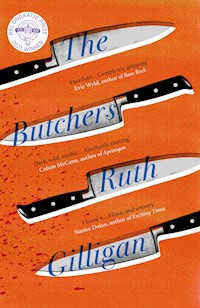
***WINNER of the 2021 RSL Ondaatje Prize*** 'I binged it like a Netflix show... It's stunning' Luke Kennard, author of The Transition ______________________________ A photograph is hung on a gallery wall for the very first time since it was taken two decades before. It shows a slaughter house in rural Ireland, a painting of the Virgin Mary on the wall, a meat hook suspended from the ceiling - and, from its sharp point, the lifeless body of a man hanging by his feet. The story of who he is and how he got there casts back into Irish folklore, of widows cursing the land and of the men who slaughter its cattle by hand. But modern Ireland is distrustful of ancient traditions, and as the BSE crisis in England presents get-rich opportunities in Ireland, few care about The Butchers, the eight men who roam the country, slaughtering the cows of those who still have faith in the old ways. Few care, that is, except for Fionn, the husband of a dying woman who still believes; their son Davey, who has fallen in love with the youngest of the Butchers; Gra, the lonely wife of one of the eight; and her 12-year-old daughter, Una, a girl who will grow up to carry a knife like her father, and who will be the one finally to avenge the man in the photograph.
Das E-Book können Sie in Legimi-Apps oder einer beliebigen App lesen, die das folgende Format unterstützen:
Veröffentlichungsjahr: 2020
Ähnliche









![Tintenherz [Tintenwelt-Reihe, Band 1 (Ungekürzt)] - Cornelia Funke - Hörbuch](https://legimifiles.blob.core.windows.net/images/2830629ec0fd3fd8c1f122134ba4a884/w200_u90.jpg)


Also by Ruth Gilligan
Nine Folds Make a Paper Swan
Published in hardback in Great Britain in 2020 by Atlantic Books, an imprint of Atlantic Books Ltd.
Copyright © Ruth Gilligan, 2020
The moral right of Ruth Gilligan to be identified as the author of this work has been asserted by her in accordance with the Copyright, Designs and Patents Act of 1988.
All rights reserved. No part of this publication may be reproduced, stored in a retrieval system, or transmitted in any form or by any means, electronic, mechanical, photocopying, recording, or otherwise, without the prior permission of both the copyright owner and the above publisher of this book.
This novel is entirely a work of fiction. The names, characters and incidents portrayed in it are the work of the author’s imagination. Any resemblance to actual persons, living or dead, events or localities, is entirely coincidental.
10 9 8 7 6 5 4 3 2 1
A CIP catalogue record for this book is available from the British Library.
Hardback ISBN: 978 1 78649 944 8
Trade paperback ISBN: 978 1 78649 983 7
E-book ISBN: 978 1 78649 945 5
Printed in Great Britain
Atlantic Books
An imprint of Atlantic Books Ltd
Ormond House
26–27 Boswell Street
London
WC1N 3JZ
www.atlantic-books.co.uk
For my father with his warm heart and his great hat.
And since the war had claimed all eight of her men
She decreed, henceforth, no man could slaughter alone;
Instead, seven others had to be by his side
To stop the memory of her grief from dying too.
from ‘The Curse of the Farmer’s Widow’
Prologue
New York, January 2018
Even now, twenty-two years since he took the photograph, he still cannot quite believe the lack of blood.
The cold store isn’t a big room, maybe twenty by twenty at a push, the wall tiles riddled with cracks and greenish buds of mould. Below, the floor is a dismal skim of concrete; above, the bulbs’ glare is a merciless white; in between, the metal brackets traverse the ceiling, the meat hooks laned empty in their rows.
The lack of windows means it is impossible to tell whether it is night or day outside. It also means the walls are bare, save where a portrait of the Virgin Mary has, inexplicably, been nailed. And apart from Our Blessed Mother, there is only one other person in that dilapidated room.
There is a man, hanging from the ceiling, upside down.
The Butcher is still fully clothed, minus his socks and boots. His overalls are fastened. His pale shirt is neatly tucked. Only the wounds confirm the worst – that he isn’t just unconscious; isn’t just sleeping the wrong way up like a bat – only the holes in the bridge of his feet where the rusty hook has been pierced through, taking the weight of his body and holding it aloft.
Leaving aside the wounds, there is something almost languid to the flow of the Butcher’s limbs. The flesh has been drained of any trace of violence, any trace of how he possibly found himself up there. The eyes betray no pain as they stare out from beyond death towards the cold-store doorway, where they meet the blinding flash of the camera.
‘Jesus Christ.’
Ronan steps back from the photograph and trips on a roll of bubble wrap by his feet. Usually his apartment is pristine; today it is a chaos of boxes and gaffer tape. He glances at the clock on the wall. The delivery men will be arriving any minute. He is leaving this one unwrapped until the last possible moment.
Two decades on, there is still no denying the impact The Butcher has on him. He has started to accept that, maybe, he will never produce a finer shot; that maybe, despite the awards and the international shows, his peak was right back at the very beginning when he was only a young eejit wandering the Irish borderlands with a second-hand Canon and a baggie full of pills; a determination to find the perfect image that would get his career off the ground at last.
So he supposes it is ego, more than anything, that has finally persuaded him to put this photo on public display. It is good – very good. It deserves to be seen. In the past he always concluded, reluctantly, that showing it just wasn’t worth the hassle. There had been rumours around the body – suspicious circumstances and all that – which meant the image would have been treated more like a piece of evidence than a piece of art. But by now the dust has long settled – no one even mentions it any more, the ancient group they called ‘The Butchers’ – especially not over here in some small museum on the outskirts of Manhattan where every curator looks about half his age and every photograph is accompanied by a brief wall text that reduces the image to its biographical minimum:
The Butcher
by Ronan Monks(County Monaghan, 1996)
The man in the photograph is thought to have belonged to a group of ritual cattle slaughterers known as ‘The Butchers’. Composed of eight men, the group travelled the length and breadth of Ireland practising their folkloric customs. However, around the time of the photograph, ‘The Butchers’ disbanded after hundreds of years of service. Today, very little record remains of their ancient, unorthodox traditions.
The buzzer sounds and Ronan startles. He presses the button by the intercom then hears the delivery men coming up the stairs, their hardy footsteps and easy drawl. It won’t take them long to move the pictures – the museum is only a twenty-minute drive across the river. Some of them will probably be half-Irish just like him. All of them will probably expect a tip. But for these final moments the only man that matters is the one in the photograph, his shadow pooled black, his toenails curved white in ten tiny crescent moons.
Ronan slides the metal chain and undoes the latch. This could be a mistake, he thinks; could mean giving up a secret buried safe for twenty-two years.
‘Jesus Christ.’
He turns the handle and the light comes blinding in.
Úna
County Cavan, January 1996
Úna had no idea it would be their last farewell dinner. And anyway, she was far too distracted that night by the prospect of a mouse.
Outside, the barren fields lay flattened by the January cold, the kind of chill that got into your bones and under your gums. Frosty vapours rolled in to lend the borderlands a haunted disposition, as if they needed any help in that regard. Beneath the beech trees, a flock of sheep huddled close for warmth, their wool crystallising degree by falling degree, until eventually their fleeces had frozen together to form a single, shivering mass – a terrified creature that might not last the night.
Inside the house it wasn’t much better, the cold working its way in quickly through chinks and gaps, and more slowly through the seep of plasterwork damp. But down in the kitchen, the air had been roused to such a glorious swelter it would stave off the worst of the freeze for another hour or two yet.
The feast was almost ready, the pots thuddering on the boil, the oven fan sucking up delicious vapours of its own. In the middle, Úna was setting the table – not just the usual cutlery and plates, but all the fancy accoutrements given the occasion. There were coasters and placemats, napkins dug up from where they lay buried deep for the rest of the year, their pretty scalloped edges creased and slightly frayed. In the corner of one she spotted a bloom of mould so she tried a rub of spit. It wouldn’t budge. She folded the napkin and put it in her place.
On the sideboard, the radio was wavering somewhere between static and the final bars of a Simply Red croon – apparently Mick Hucknall was pure delighted by the very idea of coming home to you.
Hearing the words, Úna almost laughed at the irony. Then she thought of the bleating frozen mass outside and this time she laughed outright.
Coming home to ewe.
She was about to share the joke with her mam who was over by the sink looking dolled up, gorgeous in her earrings and heels. Even though the whole point of the dinner was to celebrate the fact that, for one last night, none of them would be going anywhere.
Her mam, though, seemed too frazzled for jokes, so Úna tucked her mousy hair behind her ears and concentrated on double-checking her arrangement. Or maybe triple-checking was more appropriate since the three place settings were lined up precisely where they belonged. After tomorrow, dinnertimes would only be set for two, the pair of them chattering and chewing away, swapping jokes and silly stories from the day, while secretly both would be thinking of him, wondering what he had managed to get for his own tea, hoping he and the other Butchers had found a wayhouse where they could spend the night.
Right now her father was upstairs finishing his packing. He would set out tomorrow at the snap of dawn. If the freeze kept up its belligerence it was bound to be a slippery sort of farewell. He always told her that, apart from the knives, of course, the most important thing was a decent pair of boots. Their feet got annihilated on the road, blisters and bunions and pus weeping in between toes. So this afternoon, Úna had offered to take his pair and buff them up to a conker sheen; had said she could even rewind his laces. But after he thanked her very much, he explained such tasks were a Butcher’s prerogative. Úna had felt a swell of pride and jealousy all at once.
‘Right, you can call him – I think we’re ready.’
Úna looked at her mam. ‘Don’t you mean Simply Reddy?’ She thought she caught a glimpse of a smile. She sprinted out to the hall – ‘Dad! Dinner!’ – and her voice carried up through the bones of the house. On the way back to the kitchen, she glanced around her before opening the boiler cupboard quickly, just to check. The knuckle of cheese on the mousetrap had frozen a solid white.
___________
Once in place, they closed their eyes and reached out to clasp hands. Úna felt her father’s calloused skin, thick and hard like leather. By comparison, hers was still baby-soft. First they gave thanks for their meal and the beautiful bit of meat that sat resting before them. Next they acknowledged the lovely month they had enjoyed the three of them together. Then they prayed for her father’s travels tomorrow and the safety of his return; prayed all eight men would make it through another year. They were the usual entreaties, though Úna thought her mam’s voice sounded just a bit thinner on them tonight, a hairline crack when she whispered the final word, Amen.
The meal began. Plates passed. Wine poured. Spuds skewered. ‘Have you finished all your Christmas holiday homework?’ and ‘What about New Year’s resolutions? Mine’s sit-ups every morning – need to stop the old middle-aged spread!’ As ever, her father was the full whack of himself, trying to leave an imprint on the kitchen air, a compensation to ensure his presence would linger – as if, somehow, that would be enough.
Úna forced herself to eat slowly, savouring each salty chew in turn. Because on top of everything else, tonight was the last night before their meat meals were rationed down to once a week. The freezer out in the shed stashed all the properly slaughtered beef which the Butchers carried back each December for Úna and her mam to eke eke eke eleven months. Úna scraped her knife as she pictured it – the flesh famine up ahead; her dad’s absence at the table. She knew that missing a person could leave your stomach as hollow as hunger.
___________
Plates licked and rinsed, she headed off to change into pyjamas. Outside the boiler cupboard she checked again, then produced the morsel of meat she had sneaked into her pocket. As her Christmas gift this year, Úna had asked for a bit of money, then bought the trap down in the village shop on the sly. According to the label, it was one of the new ‘humane’ varieties that worked mainly on balance – no spring loadings or metal decapitations; no poison or jam-thick layers of glue. Instead, the weight of the mouse tipped it over until a plastic door sliced shut behind – no chance of escape, but no blood to it either.
She cupped her hand now and waved it back and forth to help the steak smell waft into the cupboard. She hoped mice liked their beef rare, same as her. She would check the trap again tomorrow, right after her father had raised his leather hand to the morning sky and broken both of their poor hearts.
___________
She was certain she wouldn’t sleep, but she must have dozed a bit because a few hours later she awoke with a start. Was it her prey that had woken her, scuttling out for a midnight snack? She strained her ears. The sound wasn’t squeaks, but hushed protests.
‘Cúch, what if I can’t face another year?’ Through the darkness, the crack in her mother’s voice had turned into a fissure. ‘You have no idea just how lonely—’
‘Ah, Grá, don’t be starting all that.’ Her father’s sigh was heavy, a draught underneath her bedroom door. Though his next words were woollier. ‘Grá, you know the rules. If I don’t go then the others can’t go and then—’
‘What if I don’t care about the rules any more?’ The fissure became a chasm.
Úna shut her eyes as if that would make it stop.
According to the ancient Irish custom, there had to be eight men present at every cattle slaughter; eight different hands touching the animal’s hide as it passed from this life to the next. So now eight Butchers spent eleven months of the year calling on the few families around the country who still believed, and killing their beasts in the traditional, curse-abiding way.
Úna’s father had been a Butcher her entire life. In those twelve and a quarter years she had never known her gorgeous mother to complain.
‘What if I came home?’
She had also never heard this question asked. She opened one eye.
‘What do you mean?’
‘Halfway round. We’re usually over in Monaghan for June.’ Her father paused, letting the implication take. ‘I could pop back for a couple of nights. Spend a bit of time with you both.’
The pause that followed was the longest yet. Úna opened her second eye and pictured her mother’s emerald greens piercing the shadows to see if the offer was really true. But Úna had to figure out the answer for herself because no more words arrived, only giggles that eventually turned into moans. It made her tingle beneath her pyjamas in embarrassment, but it was nice, she told herself, natural. If anything, it was a bit like animals.
___________
The dawn was barely cracked when the time came for departure. Her father would walk to a crossroads about a mile down the road where the others would be waiting with the horses and carts. Sometimes her mother, for a mess, suggested the Butchers should drive; should invest in a minivan. They say Ireland’s getting more ‘modern’ by the day – why not keep up with the times? Úna knew better than to laugh at that joke. Nothing about the old ritual was allowed to change.
Her mother hovered next to her now on the front step, the pair of them sheathed in their dressing-gown furs. The air outside was well below freezing, making white of their goodbye breaths.
‘You’re a gorgeous girl,’ her father croaked as he leaned down for a kiss.
It took all her strength not to beg him to stay. But she had to remember that at least this year it wouldn’t be so bad, because this year there was a secret plan that meant she would see him again in June. Plus, she had been making her own secret plans for while he was away.
When she got inside, she would check the mousetrap again.
The Butcher embraced his wife one last time then ambled slowly out the gate. He looked so giant as he moved – big enough to be a myth himself. The fields around were raw with silence, the hillsides stony pocked and sparse. It was a wonder anything would ever grow again.
And Úna was so distracted she almost forgot.
‘Love, your shoe?’
But as soon as her mother spoke, she took her slipper from her foot and flung it hard; watched it arc through the air then land in the shimmering frost. It was another custom meant to wish him luck on his travels. Her father didn’t turn, only removed his hand from the pocket of his overalls and raised it high in acknowledgement.
Úna stayed out on the doorstep watching, her left foot slowly going numb, until she saw the manshape blacken then shrink then disappear. Eventually her whitebreath faded too as the moon bowed out and the sun arrived instead, hurling itself cold and radiant into the morning sky.
___________
They returned to bed for comfort, Úna tucking herself in next to her mam, but soon enough they were up again and dressed, counting down to ten o’clock when the next stage of the ritual could commence. They always visited Mrs P on the morning of farewell – without any children of her own, the departure of her husband Sol meant she was left all alone.
Even though it wasn’t long since breakfast, Úna knew the old lady would lay on some treats for the occasion, a bit of sugar to try to take the edge off the pain of the day. Sure enough, as soon as they arrived a tray of biscuits was produced, a full Jacob’s selection pack left over from the festive period. Úna opted for a custard cream, her tongue licking ruts through the butter icing, and listened as the women launched into their annual natter, word for word the same if she wasn’t mistaken.
‘Did he get off all right?’
‘Bitter enough, the weather.’
‘They’ll be Leitrim-bound tonight.’
As she watched the pair, she conceded they were a pretty unlikely match. With her grey hair and cardies, Mrs P looked old enough to be her mother’s mother, which Úna supposed made her the granddaughter down the line. She had asked before about the other Butchers and why they didn’t have wives as well, but apparently some of them did – there were two over in Clifden, two not far from Donegal. Apparently they tended to be clustered in pairs for this very reason – so the women could keep one another company while they were left behind for the guts of the year.
‘I don’t know why, but I found this time so much harder.’
Her mother’s confession, though, wasn’t part of the usual script. There was a weariness to the voice Úna barely recognised. And it didn’t even make sense, given the promise that had been made last night.
I could pop back.
Spend a bit of time with you both.
The thought alone was sugar to Úna’s teeth.
‘Grá, I know it’s a difficult,’ Mrs P assured. ‘I’ve been saying goodbye to Sol for almost fifty years …’ Then she tried to help by changing the subject. ‘And what about all this stuff on the news about the BSE? I presume you’ve heard the latest – they’re saying the Mad Cow Disease might be back.’
Úna swallowed her biscuit and chewed over the strange words. Mad Cow Disease. She hadn’t heard the earliest let alone the latest.
Her mother was silent. ‘I read something, all right,’ she eventually replied. ‘But they say it’s only over in England. Irish cows are safe – it’s got nothing to do with us.’
‘But what if it spreads?’ Mrs P persisted. ‘What if Ireland’s farms get contaminated too? What if—’
‘Just because we’re feeling maudlin this morning, let’s not go looking for things to fret about.’
This time it was the sting in her mother’s voice that Úna didn’t recognise. She saw the old woman flinch, biscuit crumbs spilling from her lips to her lap. They soon moved on, discussing a new recipe for soda bread; the various superstitions around this being a leap year, but the goodbyes definitely came a little earlier than usual. On her way out, Úna slipped a pair of Bourbons into her pocket. She realised her mam hadn’t eaten a thing.
___________
That night, Úna waited in her own room before she crept out across the landing. When she showed up at her parents’ bed, she found her mam lying there wide awake. The duvet was lifted without hesitation; Úna slipped in against the thin and anxious frame. Before they dropped off, they each placed eight fingertips on to one another’s skin. It was a secret ritual they had whenever one of them wasn’t feeling right; an ancient tradition to banish all worries and flinches and stings.
___________
The following week, it was time to say goodbye to the Christmas holidays too, which meant that Úna was back to the early starts. The world was still black when she set out, the roads glazed silver with the aftermath of last night’s freeze. She noticed wee prints divoted in the dirt and thought of the fox she sometimes saw in their back garden. Would there be a fresh litter of cubs this year? She considered the question as she buried her hands in her pockets and walked faster, trying to outrun the cold.
The school corridors, by contrast, were baking, the ancient radiators making the strangest noises, though the din from Úna’s classmates was soon so loud it drowned out everything else. Details of festive feasts and present hauls were swapped back and forth all morning until a winner was officially declared – Peadar Noonan with a Super Nintendo! The younger ones boasted about stacks of Pogs and shiny Premier League stickers, while the older gang went in for strawberry lipglosses and Michael Jackson CDs.
Úna wandered from class to class, yanking down the jumper that kept rising up over her midriff. She was going to need a new one soon. Though really, it was a waste of money since the uniform didn’t even serve its purpose – she still stood out a mile. The weirdo. The first-year freak.
The Butcher’s daughter.
Sometimes it was just funny looks she got, whispers wafting up through the class like a bad smell. Other times the girls would scream when she brushed against them, claiming she had cursed them under her breath. Once, the boys had circled around her, pawing at the tarmac with their shoes, their fingers horns on the side of their heads. Mrs Donoghue had shown up just before they charged.
At first Úna had been confused – hadn’t her father always told her how important the Butchers were? How integral a role they played in Ireland’s history? So if anything, when her parents decided to stop her home schooling and send her to secondary school, she had thought her new classmates would all be dying to be her friend – angling for invites to Sunday tea to taste her family’s meat and hear their stories. But when the reality had set in, Úna asked her mam why everyone seemed to hate her, and her mam could only garble some excuse about her being ‘special’. ‘And “special” isn’t always easy to understand, love, so instead people just push it away.’
‘Howdy, cowgirl,’ someone called now from the end of the corridor. ‘What did Santa bring you?’
‘Ugh, she probably still believes in him, too.’
‘Yee haw!’
‘Or maybe her lot would rather slit poor Rudolph’s neck?’
Úna turned from the laughter – she was used to it by now; didn’t let it upset her. Instead, she distracted herself by trying to guess what her mam might have put in her lunchbox today. She hoped it was tomato and mustard sandwiches, her favourite kind. Sometimes it was so spicy it hurt and sometimes that was good.
___________
After another week, though, Christmas was long forgotten and a fresh distraction had taken hold, because down in the village there had been a new arrival. It was a McDonald’s – the very first in the county – and everyone seemed elated by the news; famished, yes, but also proud as punches that their little corner of countryside muck had been deemed worthy of such a place. The school corridors thrummed with chat about juicy ‘Big Macs’ made out of giant American cows; about ice creams drizzled with sticky caramel sauce. For only a couple of quid you could get a box called a ‘Happy Meal’, although Úna doubted cheap American meat could make anyone particularly happy.
The teachers tried to remind the students they weren’t actually allowed to leave the school grounds for lunch, but suddenly every afternoon the yard was strewn with wrappers bearing the gaudy yellow Ms. One Tuesday, Úna was wandering behind the prefabs when she saw Mrs Donoghue and Mr Feary huddled together sharing a Quarter Pounder with cheese and a cigarette.
Of course, Úna wasn’t able to find out for herself what all the fuss was about. If you believed in the Butchers you weren’t allowed to eat from places like that – a shudder to think how their poor cattle had been killed. Instead, she sat in the corner of the playground and took a bite from her sandwich. Today it was cucumber and cheese – not her favourite combination, but it was better than the mashed-up turnip her mother sometimes tried when everything else was out of season.
As she swallowed, Úna thought of her father. The Butchers would be reaching Tobercurry some time this afternoon (she had learned the ancient route off by heart and back again; had pinned a knackered map to her bedroom wall). There they would visit a farmer named Francine Duff who always got them to slaughter half a dozen Shorthorns, then skin and bleed them from half a dozen hooks. Afterwards, Francine Duff would divvy up the cuts of meat between the other families in the area who still believed. Sometimes he let the Butchers sleep in his barn. Sometimes he stood them a pint in the local pub. For whatever reason, in the last couple of years, neither offer had come.
There were about five hundred across the country who still followed the traditional ways; who still chose to heed the ancient Curse of the Farmer’s Widow. As for the rest, apparently it was just easier to let the thing die out – Ireland leaving the past behind and finally catching up with the rest of the world. But the way Úna thought about it, without folklore and traditions, surely Ireland didn’t really exist? Surely it might as well just be England or France or anywhere else (give or take an endless soak of rain)? So just as there were those who preserved the country’s mother tongue and those who saved up all the country’s native stories, there were those like her father who devoted their lives to maintaining the country’s old beliefs.
Úna closed her eyes and let the swell of pride rise up. Then she let the secret promise rise up too. Because she had made a vow that as soon as she finished school and became an adult, she was going to devote her life to those old beliefs too.
She hadn’t told anyone – not even her mam – about her plan to become a Butcher. She knew she was still too young (even if she would be a teenager soon; even if she was sprouting new bits by the day). But most of all, she knew she should wait until she had proven herself and shown she could perform a slaughter in the proper way. Of course, to perform a slaughter you needed an animal – how else could you practise for real? – and still the mousetrap was empty every time she checked.
Eventually the afternoon bell thundered out. They had Civics next, which meant talking about the Troubles across the border. According to Mrs Donoghue the violence was nearly over. There was something called a ‘rally’ next month for peace. Úna swallowed the last bite of her sandwich, wiped her mouth and chucked the fist of tinfoil in the bin. As she passed it, she noticed a cardboard burger box poking out with a rim of brown grease. She checked around. No one was looking in her direction, too busy fussing towards the doors, except for the magpie who was perched black-blue and greedy on the fence. She swallowed again as she weighed up the thought. A single magpie. One for sorrow, wasn’t it? Or were the Butchers allowed to believe in sayings like that?
Úna held her breath and reached her fingers inside the box until they encountered the oily remains of a chip. She shoved it into her pocket and ran for her next class. As she hurried past a giant poster in Irish – Lá Fhéile Bríde – she also wondered, since there were mother tongues, did that mean that there were father tongues too? And if so, which was easier for an almost-teenage daughter to learn?
___________
When she arrived home that afternoon, Úna placed the chip in the trap and said a prayer to the Farmer’s Widow. She raised her fingers to her nose, inhaled the salt and grease – just once – before she went to the bathroom and scrubbed them clean and sore.
She sat on her bed and made a start on her homework. In honour of St Brigid’s Day they had been asked to do a project on the patron saint. Apparently she had set up loads of communes around Ireland where religious women lived together without any men. Úna thought again of the Butchers’ wives scattered all over the place and wondered if they should form a commune of their own? Although, were eight people even enough for a commune or did you technically need more?
At half past five she went downstairs to help wash and prepare the vegetables for the evening’s stew. She asked her mam their usual dinnertime joke – ‘What’s the special on the menu tonight?’ – and waited for the usual reply:
You’re the special, love!
But for whatever reason her mam must not have heard.
Úna watched her all through the meal and saw she barely ate a bite. True, the concoction wasn’t very tasty – her mam had forgotten to add seasoning – but Úna knew that wasn’t the reason. Her mam was never very hungry when she was in one of her sad moods. Úna already knew she would be served her mother’s untouched portion, cold and slightly congealed, for dinner tomorrow.
Úna went to bed worried. She lay there for hours unable to sleep. She tried counting sheep and then she tried magpies, but if one was for sorrow she couldn’t remember what eight were supposed to be for.
___________
In the morning, though, things had changed. Úna checked the cupboard on her way to breakfast and saw that a pink tail was waiting. She flicked open the trap and the mouse squeaked ‘hello’ and instantly she felt very special indeed.
All day at school, she could think of nothing else. They submitted their projects and Car McGrath said Brigid was probably a lesbian and everyone sniggered. Úna stared at the clock on the wall, counting minutes instead of animals or birds.
Finally the day had crawled to an end and she was back in her bedroom with the door firmly locked. She surveyed her scene, seven Lego men arranged in a circle around the beast. It had taken her over an hour to get it right. To someone else it might have looked like she was playing a game of ‘zoo’ – like a group of visitors had come to stare at some endangered animal. But this wasn’t a zoo and it certainly wasn’t a game. No, this was something other.
The animal’s squeaks were high-pitched, nasal, almost as if Úna had put a strip of gaffer tape over its mouth as well as across its body. It was pinned tightly to the wooden floorboard. She only hoped the fur wouldn’t dull the stick. The set-up was nearly there, though there was no denying the proportions were a little off. The Lego figures were the problem, their arms so short they had to be stood right up close to reach. Because they all had to be touching the animal when it died – seven yellow hands and Úna’s the eighth shaking eager by the head. That was the tradition. That was what her father had told her. That was everything.
She took out the knife – it was a paring blade she had filched from the kitchen drawer that afternoon. She held it up to the light and, as the ritual decreed, turned it three times towards her heart. The mouse began to struggle, which made Úna wonder if that meant animals knew about knives, their slashing and their cutting, and if so, what else about humans did they secretly understand? That her father was one of the Butchers? That it was February now, which meant he and the other men would be heading west? That it was crucial Úna got this right if she was ever going to prove she was special enough to join the group too?
Still the claws scrambled for traction on the floorboards. She smoothed down the tape and felt the nano-pump of the mouse’s heart. Next she brought the blade to its neck, the tip parting the fluff to reveal a triangle of pink skin, no different from a human’s, she supposed. Úna felt the pump of her own heart too, but she had to keep calm, to make her movements fluid, just one single slit to let the blood out. She closed her eyes and tried to picture her father doing it with the cows, but when she reached for him all she could feel was the goodbye kiss that was already starting to fade; the ache that wouldn’t pass no matter how many times she traced his route on the map; the sense that—
‘Úna?’
The tape ripped free and her eyes opened just in time to see the tail disappear beneath the bed. Úna lunged for it, falling heavily, crashing her nose flat to the floor. She missed.
‘Úna? Special delivery!’ her mam called through the door.
She lifted her face and checked behind where her fellow Butchers still stood, their expressions gleeful and unchanged.
The door opened. ‘Úna, love, is everything OK?’
When she rolled over, her mother was standing above her, concern in her voice and something hidden behind her back. Úna sat up, making sure the knife was covered. ‘I was just playing.’ Instantly she regretted how childish it sounded.
Her mam’s smile didn’t seem convinced. ‘Well, like I said – special delivery. What I mean is, love, I bought you a present.’
It was Úna’s turn to look unconvinced – it was still nine months until her thirteenth birthday and she couldn’t recall a present ever being plucked out of thin air. Úna knew it was to do with money – their house had come from her father’s dead parents and their savings from her mother’s dead parents, but after that there was barely any going spare. Úna always wondered how families managed when the parents’ parents were still alive.
She wondered if there was such a thing as a grandmother tongue.
‘Ta dah!’
But her wondering was swiped aside now for the big reveal. The uniform looked almost glamourous on its plastic hanger, a tag from the second-hand shop that said it was officially teenager-sized.
Her mam renewed her smile as best she could. ‘I noticed you had already grown a bit big for your other one, so I went into town today. I’m sorry it’s taken me so long, but I’ve just … Recently I’ve been feeling a bit …’
As the sentence stopped, the smile did too. Úna wished it would continue; wished her mother would explain what exactly she had been feeling.
‘And I know we’re not due for a couple of weeks, but I thought we could do haircuts tonight, if you liked? Complete your lovely new look?’
Úna felt the cold blade beneath her thigh. Behind her, the Lego faces seemed jeering now, mocking the awkward scene. ‘I think …’ she stumbled over the lie. ‘I might try growing it out for a change.’ She knew her mam would see right through it – she had never refused a haircut session in her life. It was another ritual they had, sharp teeth combed across wet scalps; strands slowly snipped away until their heads – their whole beings – felt lighter again.
Her mam, though, only sighed. ‘Never mind, love.’ On her way out she hooked the uniform on the back of the door, which made it look a bit like a hanging body. Úna traced the pleats with her eyes, then felt guilty and glanced away, so it was only by accident that she noticed the blood. There wasn’t much – only a tiny pool on the floor she could blot with her sock – but she supposed it was a start at least.
She gathered the Lego men back into their box and shoved it under her bed. She promised she would try again very soon. That way she could make a case to her father when he came back in June.
She promised she would find a way to fix her mother’s gorgeous smile.
She promised she would become a Butcher yet.




