


0,49 €
Niedrigster Preis in 30 Tagen: 3,49 €
Niedrigster Preis in 30 Tagen: 3,49 €
Mehr erfahren.
- Herausgeber: Booksell-Verlag
- Kategorie: Krimi
- Sprache: Englisch
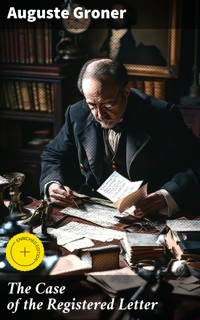
In "The Case of the Registered Letter," Auguste Groner crafts a tantalizing mystery that showcases his mastery of detective fiction, a genre popular in the late 19th century. The narrative unfolds through the lens of the astute investigator, Joseph M√ºller, who unravels a perplexing case involving a missing registered letter that holds crucial evidence in a murder trial. Groner employs a meticulous, clear prose style, deftly weaving intricate details with sharp dialogue, capturing the reader's attention while reflecting the burgeoning interest in forensic science and psychology within the detective genre of the time. Auguste Groner, an influential figure in Austrian literature, was deeply fascinated by crime and justice, themes that profoundly influenced his writing. Born in 1850, Groner's experiences in the fields of law and journalism provided him with a unique perspective on human nature, morality, and the complexities surrounding criminality. His works often explore the darker aspects of society, reflecting a broader cultural engagement with the mysteries of the human psyche and the criminal mind, positioning him as a precursor to later writers in the detective genre. This engrossing tale is highly recommended for fans of classic detective fiction and those who appreciate intricate plots and sharp deductive reasoning. Groner's storytelling not only entertains but invites readers to ponder the ethical questions surrounding justice, making "The Case of the Registered Letter" a timeless exploration of morality, crime, and the pursuit of truth. In this enriched edition, we have carefully created added value for your reading experience: - A succinct Introduction situates the work's timeless appeal and themes. - The Synopsis outlines the central plot, highlighting key developments without spoiling critical twists. - A detailed Historical Context immerses you in the era's events and influences that shaped the writing. - A thorough Analysis dissects symbols, motifs, and character arcs to unearth underlying meanings. - Reflection questions prompt you to engage personally with the work's messages, connecting them to modern life. - Hand‐picked Memorable Quotes shine a spotlight on moments of literary brilliance. - Interactive footnotes clarify unusual references, historical allusions, and archaic phrases for an effortless, more informed read.
Das E-Book können Sie in Legimi-Apps oder einer beliebigen App lesen, die das folgende Format unterstützen:
Veröffentlichungsjahr: 2019
Ähnliche



















The Case of the Registered Letter
Table of Contents
Introduction
At the quiet intersection of bureaucracy and fate, a single registered letter—documented, sealed, and presumed secure—becomes the hinge on which suspicion, duty, and the fragile calculus of truth turn, drawing a patient investigator into the paper-thin boundary between the certainties promised by official stamps and the uncertainties of human intention, where an object meant to guarantee clarity instead multiplies ambiguities, and the reassuring rituals of receipt, signature, and custody, performed in good order, cannot prevent the currents of fear, error, and deceit from slipping through the lines, leaving a trail that is legible yet contested, precise yet disturbingly incomplete.
Auguste Groner’s The Case of the Registered Letter belongs to the early continental tradition of detective fiction, pairing a meticulously observed puzzle with a measured, humane tone. First appearing in German in the late nineteenth or early twentieth century and later available in English translation, it features her recurring investigator, Joseph Müller of the Austrian police. Working within a Central European milieu shaped by orderly institutions and shifting social currents, Groner crafts a compact narrative that favors inference over theatrics. The book stands near the threshold between nineteenth-century sensation and the procedural exactitude that would shape the genre in the decades to come.
The premise is disarmingly simple: an officially recorded piece of mail is linked to a troubling event, and the reliability of its handling—and of those connected to it—must be tested. Joseph Müller’s task is to follow not only the paper trail but the subtle currents of behavior that swirl around it. The narrative begins with a puzzling irregularity that challenges the promise of the post’s safeguards, then expands outward as interviews, documents, and observations accumulate. Without relying on spectacle, the opening movements ask the reader to share the investigator’s steady attention to routine details that, under pressure, become anything but routine.
Readers can expect a concise, carefully structured investigation told in clear, unadorned prose. Groner’s style privileges quiet revelation over dramatic flourish, allowing atmosphere to build from offices, parlors, and streets where the ordinary takes on a fateful weight. The mood is sober rather than gothic, thoughtful rather than sensational, with clues placed where attentive readers may find them. The book’s pacing reflects methodical police work: patient interviews, the checking and rechecking of records, and the incremental tightening of inference. It is a story that trusts reasoning, inviting the audience to notice patterns, question assumptions, and feel the slow satisfaction of connections clicking into place.
At its core, the book considers how systems designed to ensure trust—signatures, receipts, schedules—intersect with frail human motives. The registered letter itself becomes a symbol of modern confidence in documentation, even as the plot exposes gaps that only judgment can bridge. Themes of privacy, identity, and the ethics of observation emerge as Müller weighs what can be proven against what must be interpreted. Groner is interested in the moral texture of investigation: the duty to pursue truth without losing sight of compassion, the danger of overstating what evidence can say, and the startling ways ordinary objects carry extraordinary consequences.
These concerns feel strikingly current. In an era saturated with certified messages, digital receipts, and data trails, The Case of the Registered Letter probes the difference between information and understanding. Readers drawn to classic mysteries will find a lucid puzzle; those interested in the history of detection will see how procedural habits took shape before later codifications. The book’s restraint, attention to everyday settings, and respect for intelligence make it accessible without diminishing complexity. It poses questions that persist: What do records actually guarantee? Where do institutions end and personal responsibility begin? How does one read a life from the smallest of traces?
As an introduction to Groner and her quietly compelling detective, this tale offers a doorway into a body of work that helped consolidate the European police procedural. It is approachable in length, focused in scope, and rich in implication, making it a strong entry point for new readers and a rewarding revisit for admirers of early detective fiction. Without resorting to sensational twists, it demonstrates how a modest premise can sustain intricate inquiry. Follow the letter, follow the lives it touches, and watch how a calm, disciplined mind contends with ambiguity, turning the everyday machinery of communication into the engine of a measured, satisfying mystery.
Synopsis
The Case of the Registered Letter opens in Vienna with a small irregularity that draws the attention of Joseph Müller, the quiet, methodical detective known for finding meaning in overlooked details. A registered letter, tracked through official ledgers and signatures, appears to have played a role in a troubling incident. The postal seal and timing do not quite align with routine practice, and the addressee’s circumstances raise questions rather than answers. Müller’s interest is not sparked by drama but by the measured sequence of events, and he begins by studying the document trail, understanding that a registered letter leaves footprints as distinct as any physical clue.
The narrative introduces a circle of people directly or indirectly touched by the questionable letter: a household adjusting to a recent change in fortune, a close friend with unusual access, and a quiet figure on the margins whose movements seem too convenient. The registered letter serves as the case’s hinge, implying a motive that could involve money, reputation, or a strained promise. Groner presents these relationships plainly, emphasizing schedules, routine habits, and mild contradictions in testimony. The early chapters focus on who knew what, and when, while avoiding sensational revelations, thereby setting a steady pace that allows each possibility to be weighed.
Müller begins with the system itself. He examines the registry books, receipt numbers, and the chain of custody from counter to carrier. Postal clerks and letter carriers recount procedures with practiced clarity, yet a small discrepancy emerges in the recorded hour of dispatch compared with the claimed time of reception. The detective notes the consistency of ink, the pressure of a signature, and the neatness of a stamp impression. Rather than accusing anyone, he reconstructs the journey of the letter, step by step. The work is precise and unemotional, showing how bureaucratic routine can expose a human intention hidden behind everyday forms.
With the document trail mapped, Müller moves to the human side. He visits modest rooms and tidy parlors, observing how people live, what they guard, and what they casually dismiss. He listens to alibis that rest on clocks, mealtimes, and errands. A photograph, a receipt, and a hurried correction in a calendar entry suggest that a planned sequence may have been staged. Handwriting on an accompanying note matches most of a sample but diverges in certain letters, hinting at guidance or imitation. Throughout, Müller remarks little. He allows contradictions to accumulate, confident that one loose thread can unravel an entire arrangement.
The inquiry widens beyond Vienna as Müller follows the letter’s supposed origin to a provincial post office, then to a quiet inn on a route favored by commercial travelers. Timetables, carriage schedules, and a clerk’s habit of sharpening pencils at a certain hour become measuring sticks against which claims are tested. A landlady recalls a guest who avoided attention yet left an impression through meticulous requests. Even as suspects multiply, the detective reduces them by checking who could have known the postal schedule well enough to rely on it. The effect is cumulative: a seemingly isolated letter becomes a map of intersecting intentions.




