


0,49 €
Niedrigster Preis in 30 Tagen: 1,99 €
Niedrigster Preis in 30 Tagen: 1,99 €
Mehr erfahren.
- Herausgeber: DigiCat
- Kategorie: Religion und Spiritualität
- Sprache: Englisch
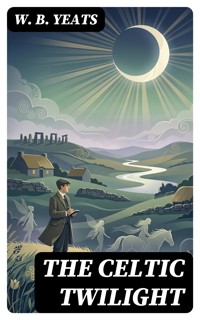
In "The Celtic Twilight," W. B. Yeats explores the rich tapestry of Irish folklore and mythology, merging the mystical with the modern as he seeks to illuminate the spiritual landscape of Ireland at the turn of the 20th century. Employing a lyrical and evocative prose style, Yeats traverses the realms of fairy tales, legends, and the supernatural, interpreting their significance through a symbolic lens that reflects his own relationships with nature and the ethereal. This work serves as both a cultural document and a literary manifesto, signifying Yeats's broader quest for a distinctly Irish identity amidst the encroaching forces of colonialism and modernization. As a pivotal figure in the Irish Literary Revival, Yeats drew upon his own heritage, familial connections to folklore, and engagement with the occult to craft this compelling narrative. His experiences in the theatre, his involvement in nationalist movements, and his growing fascination with mysticism profoundly influenced his artistic vision. "The Celtic Twilight" stands as an expression of Yeats's belief in the transformative power of myth and its ability to connect individuals with their cultural roots. This captivating collection is essential for readers seeking to understand not only Yeats's poetic evolution but also the intricate interweaving of Irish culture and literature. The blend of authenticity and artistry invites the reader to delve into the enchanting and often haunting world that haunts the Irish landscape, making it a significant contribution to both literary and cultural studies. In this enriched edition, we have carefully created added value for your reading experience: - A comprehensive Introduction outlines these selected works' unifying features, themes, or stylistic evolutions. - The Author Biography highlights personal milestones and literary influences that shape the entire body of writing. - A Historical Context section situates the works in their broader era—social currents, cultural trends, and key events that underpin their creation. - A concise Synopsis (Selection) offers an accessible overview of the included texts, helping readers navigate plotlines and main ideas without revealing critical twists. - A unified Analysis examines recurring motifs and stylistic hallmarks across the collection, tying the stories together while spotlighting the different work's strengths. - Reflection questions inspire deeper contemplation of the author's overarching message, inviting readers to draw connections among different texts and relate them to modern contexts. - Lastly, our hand‐picked Memorable Quotes distill pivotal lines and turning points, serving as touchstones for the collection's central themes.
Das E-Book können Sie in Legimi-Apps oder einer beliebigen App lesen, die das folgende Format unterstützen:
Veröffentlichungsjahr: 2022
Ähnliche


The Celtic Twilight
Table of Contents
Introduction
The Celtic Twilight gathers the complete sequence of W. B. Yeats’s early prose on folklore, vision, and memory into a single, continuous design. Conceived as a book rather than a miscellany, it preserves the order and tonal progression Yeats gave to his vignettes, dialogues, and meditations. The purpose of this collection is to present the whole of that design for contemporary readers, so that its motifs echo from piece to piece: from opening avowals of method to concluding gestures of parting. It is a compact monument to Yeats’s work as poet-observer and cultural interlocutor at the threshold between intimate testimony and national imagination.
The genres represented here are varied but coherent. Predominantly prose sketches and essays, the book also includes brief tales shaped from oral accounts, character portraits, travel-notes, and reflective pieces that hover near memoir. Occasional lyric interludes, such as the closing “Into the Twilight,” announce Yeats’s poetic cadence within a prose setting. The result is neither a novel nor a cycle of short stories in the conventional sense, but a mosaic of forms. Each item stands alone while contributing to a cumulative atmosphere, where anecdote, meditation, and evocation interweave without dissolving into fiction or strict ethnography.
Yeats’s method is grounded in listening. He records encounters with storytellers, visionaries, and neighbors, often in the west of Ireland, shaping their words into compact narratives or brief reports. The named places that recur—Drumcliff, the Rosses, hills and shorelines—anchor the unseen within a recognizable geography. He does not claim scholarly exhaustiveness or legal proof; rather, he offers the texture of living speech, the timbre of belief, and the pauses of doubt. In this way, the collection preserves moments when ordinary talk opens onto extraordinary conviction, allowing the social life of story to be heard alongside the solitude of wonder.
Across its sections, the book considers the conditions under which belief persists. Titles such as “Belief and Unbelief,” “Concerning the Nearness Together of Heaven, Earth, and Purgatory,” and “The Friends of the People of Faery” announce its central inquiry: how communities hold and transmit explanations of what lies just beyond reason’s edge. Yeats observes the pressures of modern skepticism without reducing inherited stories to errors. The pieces explore the fragile covenant between witness and listener, proposing that disbelief can coexist with awe, and that testimony has value even when it cannot be verified by experiment or doctrine.
The collection is rich in portraits. Figures such as “A Teller of Tales,” “A Visionary,” and “The Last Gleeman” stand for traditions of memory and performance that long sustained local cultures. Yeats treats them with courtesy and alertness, attentive to tone and cadence as much as to incident. “Happy and Unhappy Theologians” and related pieces sketch the varieties of mind that meet the supernatural: the speculative, the credulous, the exacting. The point is not to grade the tellers, but to show how temperament shapes narrative. Each voice becomes part of a chorus, its differences preserved rather than flattened.
Landscape is an active presence. In “Drumcliff and Rosses,” “Enchanted Woods,” “Our Lady of the Hills,” and “The Old Town,” place is not mere backdrop but a participant in human meaning. Bog and shoreline, field and crossroads, are repeatedly felt as thresholds where boundaries thin. Elements recur—“Earth, Fire and Water”—invoking older ways of naming the world’s structure. The geography of the book is, therefore, physical and metaphysical at once: a map whose coordinates are both parish and symbol, where a stone, a pool, or a grove may hold, for a time, the contour of a story’s truth.
The beings who move through these pages—faeries, saints, sorcerers, and more troubled presences—are treated with respectful uncertainty. Pieces like “The Untiring Ones,” “Miraculous Creatures,” “The Sorcerers,” and “The Devil” register how such figures inhabit local understanding. Yeats neither authenticates nor debunks; he reports, ponders, and lets contradictions stand. The emphasis is on the experience of encounter and the language that frames it. By preserving the idioms in which people speak of visitation, luck, and harm, the collection attends to the ethics of hearing: the responsibility to keep a neighbor’s meaning intact even when one’s doubts persist.
Stylistically, Yeats’s prose is lucid yet incantatory. Sentences move with a measured rhythm learned from ballad and chant, while images—woods, roadsides, gleams, and thresholds—recur to bind the sequence. He prefers suggestive economy to explanation, allowing silence to do part of the work. His narrative stance shifts gently between participant and commentator, creating an intimacy that never claims omniscience. That poise, along with a careful ear for idiom, is a hallmark of the book. It shows the poet’s music adapted to prose, where cadence is argument and description carries the weight of thought.
The Celtic Twilight holds a lasting place in the cultural history often named the Celtic Revival. By gathering oral tradition into literary form without extinguishing its local color, the book helped revalue materials once dismissed as superstition. It encouraged readers to regard folk narrative not as debris from a vanishing world but as a resource for imagination and community. The collection’s influence lies less in any single account than in its method: a hospitable attention that treats minor testimony as major evidence about how people make meaning together, and that measures a nation’s inheritance by the delicacy of its listening.
Readers should approach these pieces as invitations rather than verdicts. They are not proofs, parables, or coded allegories, though they sometimes resemble all three. Their task is to keep a space open where marvel and everyday life can meet without cancelling one another. The initial premise, repeated in many guises, is simple: someone has seen, heard, dreamed, or feared something, and seeks a hearing. Yeats gives that hearing in prose that honors surprise. What follows are records and reflections that ask to be read slowly, with the patience one gives to confidences and to landscapes at dusk.
Within Yeats’s oeuvre, this volume occupies a formative place. It consolidates concerns that would continue to animate his poetry and drama: the traffic between visible and invisible, the dignity of local speech, the shaping power of symbol. The book’s closing turn “Into the Twilight” signals both an ending and an opening, as if the prose had led the ear to the threshold where lyric awaits. Without claiming to forecast later achievements, one can say that the habits of attention practiced here—precision, modesty, and wonder—remain integral to the art that made Yeats enduring.
This edition presents the entire contents of The Celtic Twilight, from opening declaration to final cadence, so that readers may encounter its architecture as Yeats composed it. The arrangement—moving among “Village Ghosts,” “A Voice,” “By the Roadside,” and other pieces—creates a rhythm of approach and withdrawal, confidence and scruple. To read the book entire is to hear that rhythm and to let it guide one’s steps. The enduring significance of the work lies there: in the sustained attempt to hold faith and doubt in one frame, and to find, in twilight, a language hospitable to both.
Author Biography
William Butler Yeats (1865–1939) was an Irish poet, dramatist, and essayist whose work bridged late Romanticism and high modernism while shaping the Irish Literary Revival. Awarded the Nobel Prize in Literature in 1923, he combined lyrical intensity with a lifelong fascination for folklore, myth, and mysticism. The collection represented here—gathering pieces such as “A Teller of Tales,” “Village Ghosts,” and “Into the Twilight”—shows Yeats exploring living traditions of faery lore and visionary testimony. Through these inquiries, he forged an artistic program that sought a national literature rooted in oral memory yet alive to contemporary doubt, a balance he often framed as “Belief and Unbelief.”
Educated in Dublin and moving at times between Ireland and London, Yeats first trained as an artist before turning decisively to literature. Early encounters with storytellers, local historians, and esoteric circles refined his sense that art should mediate between the visible and the imagined. The landscapes of western and northwestern Ireland, later evoked in pieces like “Drumcliff and Rosses,” became emblematic settings. Influences included Romantic and Symbolist aesthetics, medieval lore, and Renaissance occult texts. From the outset he pursued a public role for the poet, imagining literature as a cultural instrument that could recover memory, shape civic feeling, and nourish collective aspiration.
The Celtic Twilight essays and sketches emerged from field conversations, archival gleanings, and personal encounters with tradition-bearers. In “The Last Gleeman,” “A Teller of Tales,” and “By the Roadside,” Yeats records voices of itinerant singers and rural narrators; in “Concerning the Nearness Together of Heaven, Earth, and Purgatory,” he reflects on metaphysical intimacies embedded in local belief. Episodes such as “The Three O’Byrnes and the Evil Faeries,” “Kidnappers,” and “The Eaters of Precious Stones” reveal a mind testing story for symbolic truth rather than mere superstition. Together they map a poetics where folklore becomes both imaginative resource and critique of modern disenchantment.
Parallel to this prose, Yeats advanced a national theatre. He helped establish the Irish National Theatre movement that culminated in the Abbey Theatre, writing plays that fused ritual, myth, and contemporary debate. Dramatic instincts surface even within this collection—titles like “The Queen and the Fool,” “Regina, Regina Pigmeorum, Veni,” and “Happy and Unhappy Theologians” echo stage personae and performed argument. In his theatre work, including pieces such as Cathleen ni Houlihan, Yeats emphasized concentrated language, mask, and chorus, seeking a civic drama capable of renewing communal imagination while resisting the merely documentary. The Abbey became a central institution of Ireland’s cultural self-definition.
Yeats’s esoteric studies were not ornament but method. He engaged with ritual magic, symbolic correspondences, and visionary practice to articulate a comprehensive metaphysic for art. Essays like “A Visionary,” “Earth, Fire and Water,” “The Untiring Ones,” and “Miraculous Creatures” dramatize his search for patterns linking myth, dream, and fate. This lifelong inquiry culminated in the philosophical-poetic system of A Vision, where historical cycles and personal destiny intertwine. Even more anecdotal pieces—“Aristotle of the Books” or “The Swine of the Gods”—show him translating occult speculation into narrative scenes, testing how inherited stories might reveal structures of mind, character, and history.
Public commitments shaped his later decades. Yeats served as a senator in the Irish Free State, wrote occasional and reflective verse on revolution and governance, and balanced national service with rigorous formal innovation. Poems such as “Easter, 1916,” “The Second Coming,” and “Sailing to Byzantium,” and volumes including The Tower and The Winding Stair, refined a hard, resonant style that confronted violence, aging, and spiritual hunger. The tension traced earlier in “Belief and Unbelief” hardened into emblem and aphorism. Yet he continued to revise, stage plays, and mentor younger writers, insisting that art remain both inward vocation and public argument.
In his final years Yeats maintained extraordinary productivity, revisiting themes of love, mortality, and visionary order with undiminished audacity. He died in 1939 and was later interred at Drumcliff, a place long entwined with his imaginative geography. His legacy endures across world literature: a poet-dramatist who renewed English-language verse, helped institute a national theatre, and preserved the living echo of Irish folk belief. The essays gathered here—“Dreams That Have No Moral,” “The Religion of a Sailor,” “By the Roadside,” and “Into the Twilight”—remain a key to his method: to listen, to shape, and to bind memory to form.
Historical Context
W. B. Yeats’s The Celtic Twilight emerged from the late Victorian and early Edwardian decades, a period when Ireland’s cultural self-definition intensified alongside political agitation. First published in 1893 and expanded in 1902, the collection gathers prose sketches, recollections, and lore Yeats heard chiefly in the west, especially County Sligo. It belongs to the Irish Literary Revival, which sought to renew national life through language, folklore, and myth. Yeats, trained in the Symbolist and Romantic traditions, positioned the supernatural and visionary imagination against the rationalism of his age. The book’s twilight is an image for a society caught between residual folk belief and encroaching modern skepticism.
The 1880s–1890s were marked by the Home Rule debates (notably in 1886 and 1893), the aftermath of the Land War, and a surge in cultural nationalism crystallized by the foundation of the Gaelic League in 1893. Many revivalists believed that recovering oral tradition could underpin national renewal. Yeats uses “THIS BOOK” and “A TELLER OF TALES” to announce a program: honoring local narrators and the imaginative authority of the peasantry. Rather than policy, the pieces supply cultural resources—images, phrases, and presences—through which a distinct Irish sensibility could be felt. The collection thus participates in identity-making amid constitutional uncertainty.
Yeats wrote within a broader nineteenth-century revival of folklore collection, associated with figures such as T. Crofton Croker, Lady Wilde, and Douglas Hyde. Scholarly and popular interest in “survivals” of belief encouraged fieldwork in Irish-speaking and rural districts. “A TELLER OF TALES” stages the ethics of listening and transcription, acknowledging an intermediary’s role between oral performance and print. Yeats prefers the cadence of witness over the apparatus of academic anthropology, yet draws on that contemporary movement’s methods. His editorial choices—retaining idiom, naming places—signal both fidelity to source and a conscious literary shaping, typical of the Revival’s blend of preservation and aestheticization.
Religious life in nineteenth-century Ireland supplies an essential frame. The Church of Ireland’s disestablishment in 1869, the Catholic devotional revival of the later nineteenth century, and the daily presence of clergy shaped communal attitudes toward “superstition.” Essays like “BELIEF AND UNBELIEF,” “HAPPY AND UNHAPPY THEOLOGIANS,” and “THE RELIGION OF A SAILOR” chart negotiations between doctrine and vernacular piety. “CONCERNING THE NEARNESS TOGETHER OF HEAVEN, EARTH, AND PURGATORY” evokes a cosmology where sacred and ordinary spaces meet, resonant with pilgrimage sites such as Lough Derg. Yeats neither polemicizes nor catechizes; he documents a religious ecology in which saints, sacraments, and spirits coexist in everyday moral reasoning.
An international vogue for spiritualism and psychical research also informed Yeats’s imaginings. The Society for Psychical Research (founded 1882) and the occult revival popularized séances, apparitions, and telepathy as subjects of inquiry. Yeats joined the Hermetic Order of the Golden Dawn in 1890, pursuing ritual magic and visionary techniques. Pieces such as “A VISIONARY” and “A VOICE” register a sympathy with extraordinary perception, though cast in rural settings rather than drawing-room séances. The essays redirect metropolitan occult curiosity toward indigenous experiences of the invisible, setting local seers and dreamers beside European debates about mind, matter, and the persistence of the soul.
Industrial and infrastructural change—railways, telegraphy, standardized schooling, and mass print—were transforming Irish life by the 1890s, while emigration reshaped the countryside. “VILLAGE GHOSTS” and “BY THE ROADSIDE” capture belief-systems persisting along new roads and railway embankments. “THE OLD TOWN” and “THE LAST GLEEMAN” measure the passing of artisanal and performative cultures, as itinerant singers and storytellers lose ground to newspapers and music-hall fare. Yeats is not purely elegiac; he notes the tenacity of local voices. Yet the book often reads as salvage ethnography, collecting speech and custom before the full consolidation of urban modernity and market entertainment.
Geography and family memory anchor the collection’s settings. Yeats spent much of his childhood and youth visiting maternal relatives around Sligo, and he turned those landscapes into a symbolic topography. “DRUMCLIFF AND ROSSES” names places closely tied to his family and to early Christian remains, while “ENCHANTED WOODS” and “OUR LADY OF THE HILLS” situate story at the threshold of mountain, bog, and sea. The essays show how topography stores tradition: wells, raths, and headlands act as mnemonic sites. This localism was strategic within the Revival—local lore was presented as a microcosm of national identity and a counterweight to metropolitan norms.
Rural social organization—tenancy, seasonal labor, mutual obligation—surfaces in tales about character and reputation. After the Land War (circa 1879–1882) and subsequent Land Acts, communities continued to police conduct through gossip and informal sanction. “A KNIGHT OF THE SHEEP,” “A COWARD,” and “THE MAN AND HIS BOOTS” encode moral economies tied to pastoral labor and neighborly judgment. Without offering reportage on agrarian agitation, the pieces reflect a society where property, honour, and livelihood interweave. The presence of livestock, fairs, and fieldwork is historical texture: the settings of belief are also the settings of work, bargaining, and mutual dependence.
The collection engages gender through folk typologies and allegory. “AND FAIR, FIERCE WOMEN” registers admiration and apprehension toward female agency common in European folktale traditions—sovereignty figures, banshees, and wise women—filtered through Victorian sensibilities. While not a political treatise, the essay resonates with the era’s nationalist feminization of Ireland and anticipates Yeats’s later collaboration on Cathleen ni Houlihan (1902). “AN ENDURING HEART” underscores stoicism and constancy amid hardship, virtues that revivalists associated with rural womanhood. Yeats records such figures as emblems within a national imaginary, while implicitly noting how modernity contests and reframes their authority.
Yeats sometimes tests Irish lore against other Celtic traditions. “A REMONSTRANCE WITH SCOTSMEN FOR HAVING SOURED THE DISPOSITION OF THEIR GHOSTS AND FAERIES” playfully contrasts Irish and Scottish belief, often attributing Scottish skepticism to Presbyterian rigor after the Reformation. Around the same time, Pan-Celtic congresses (notably in Dublin in 1901) and the Gaelic League encouraged cross-channel collaboration and comparison. Yeats’s essay is less ethnography than cultural polemic, but it reflects a genuine late nineteenth-century movement to define affinities and differences among Celtic-speaking peoples, in language revival, antiquarian scholarship, and shared mythic repertoires.
Education and intellectual authority were contested terrains. Since the national school system’s establishment in 1831, standardized textbooks and catechisms spread literacy but sometimes displaced local lore. “ARISTOTLE OF THE BOOKS” stages a dialogue between book learning and experiential knowledge, while “THE GOLDEN AGE” meditates on the imagined wisdom of a pre-literate past. “THE THICK SKULL OF THE FORTUNATE” ironizes both credulity and skepticism, showing how fortune can attend those impervious to fashionable ideas. Yeats is neither anti-intellectual nor nostalgic without reserve; he dramatizes a late nineteenth-century debate about where truth lies—in libraries, in fields, or between them.
European demonology and Irish fairylore converge in several sketches. “THE SORCERERS,” “THE DEVIL,” “KIDNAPPERS,” and “THE UNTIRING ONES” treat witchcraft, bargains, and changeling anxieties that ethnographers continued to document in the period. The infamous 1895 killing of Bridget Cleary in County Tipperary showed how such beliefs could intersect tragically with domestic and communal pressures. Yeats, however, frames these materials as cultural testimony rather than sensational news. “THE FRIENDS OF THE PEOPLE OF FAERY” sketches the social role of healers and charmers, preserving a picture of unofficial expertise at the margins of church and state authority.
An elemental and sacramental sense of nature pervades the book. “EARTH, FIRE AND WATER” and “MIRACULOUS CREATURES” record rituals and sightings that bind people to place and season, while “OUR LADY OF THE HILLS” invokes Marian devotion at rural sites, often associated with holy wells and pre-Christian landmarks. “THE EATERS OF PRECIOUS STONES” touches on curative and protective practices linked to lapidary lore, known across medieval and early modern Europe and surviving in attenuated form. Yeats shows how natural substances—water, flame, stone—bear moral and spiritual valence within local cosmologies, even as scientific education reframes their meanings.
Classical learning and Irish myth intersect throughout. “DUST HATH CLOSED HELEN’S EYE” situates Ireland’s visionary life alongside Greek exempla, while “THE SWINE OF THE GODS” hints at metamorphosis traditions found in both classical and Celtic narratives. Such juxtapositions reflect the education of Anglo-Irish intellectuals and the Revival’s debt to Standish O’Grady’s late nineteenth-century retellings of the Ulster and Fenian cycles. “THE QUEEN AND THE FOOL,” with its archetypal figures, continues this syncretism. Yeats positions Ireland’s lore within a cosmopolitan mythic conversation, arguing that local superstition may share a grammar with the world’s enduring symbolic stories.
Performance culture—fairs, wakes, and roadside storytelling—was a primary medium of transmission. “THE LAST GLEEMAN” memorializes itinerant singers whose repertoire bridged Gaelic, Anglo-Irish balladry, and contemporary broadsides. “THE QUEEN AND THE FOOL” leans on carnival’s logic of inversion. These pieces appear amid the rise of Dublin theatres and commercial entertainment, to which Yeats would soon contribute through the Irish Literary Theatre (1899) and the Abbey Theatre (1904). The collection thus documents the social spaces that nourished the Revival while foreshadowing its institutionalization in urban venues, where rural performance practices were adapted for modern stages.




