


1,99 €
Niedrigster Preis in 30 Tagen: 1,99 €
Niedrigster Preis in 30 Tagen: 1,99 €
Mehr erfahren.
- Herausgeber: DigiCat
- Kategorie: Für Kinder und Jugendliche
- Sprache: Englisch
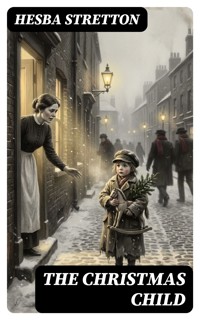
The Christmas Child is a poignant narrative that interweaves themes of redemption, compassion, and the innocence of childhood through the eyes of a young orphan. Set against the backdrop of Victorian England, Stretton's prose is both lyrical and accessible, reflecting the moral imperatives of her time while appealing to a broad audience. The novella encapsulates the spirit of Christmas, portraying the transformative power of love and selflessness, an echo of the prevailing sentimentality that characterized much of the literature of the period. The richness of Stretton's character development and her evocative descriptions invite readers to reflect on the deeper meanings of Christmas beyond mere commercialism. Hesba Stretton, born into a working-class family, was influenced by her own experiences of poverty and social issues prevalent in the 19th century, informing her writing with a deep sense of empathy. Stretton, a prolific author and social reformer, often illuminated the struggles of the underprivileged, and The Christmas Child serves as a testament to her commitment to championing children's rights and welfare. Her genuine passion for social equity resonates throughout the narrative, offering readers an authentic perspective on charity and community. This enchanting tale is a must-read for anyone seeking to reconnect with the essence of Christmas. Its timeless themes make it relevant for contemporary readers, reminding us of the importance of kindness and generosity during the holiday season. Readers of all ages will find inspiration in Stretton's heartfelt storytelling, making The Christmas Child a treasured addition to one's literary collection.
Das E-Book können Sie in Legimi-Apps oder einer beliebigen App lesen, die das folgende Format unterstützen:
Veröffentlichungsjahr: 2022
Ähnliche








The Christmas Child
Table of Contents
Introduction
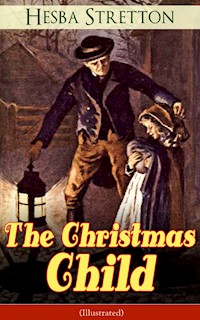
At the hinge of winter, a vulnerable child exposes the distance between professed goodwill and practiced compassion. The Christmas Child (Illustrated) by Hesba Stretton belongs to Victorian children’s and family fiction, a concise seasonal tale set in nineteenth-century Britain during Christmastide. Written in the era that made Christmas stories a staple of gift books and home reading, it pairs moral reflection with accessible narrative momentum. This illustrated edition aligns with the period’s taste for visual storytelling, inviting readers to linger over faces, rooms, and weather that carry ethical weight. Without demanding specialist knowledge, it offers a doorway into Victorian sensibilities and enduring questions of care.
At its core, the narrative centers on a child whose presence at Christmas unsettles routines and exposes the concealed workings of duty, pride, and generosity. Stretton traces the ripple of this disturbance across a compact set of homes and relationships, allowing consequences to accumulate in small, telling scenes rather than theatrical reversals. The reading experience is steady and lucid, guided by a steady third-person voice that keeps close to material details—firelight, food, clothing—while nudging readers toward moral inference. The plot advances with gentle suspense: decisions are weighed, silences speak, and kindness costs something, yet the tone remains hopeful and restrained, suitable for shared, intergenerational reading.
Stretton writes in plain, direct prose that is overtly moral without lapsing into scold; her narrators prefer gentle guidance to harangue. Description serves character through small domestic objects and routine gestures, grounding ethical choices in the textures of everyday life. Such attentiveness invites readers to feel the weight of care without melodrama. The illustrations in this edition complement that method by clarifying setting, expression, and seasonal atmosphere, and by pacing the story visually. Image and text together cultivate reflection rather than spectacle. Composure in the narration allows emotion to emerge from consequences instead of rhetoric.
Among its enduring themes are the dignity of children, the demands of neighborly responsibility, and the tension between social respectability and uncalculating mercy. Stretton explores how giving can uphold hierarchy or quietly repair it, distinguishing alms that soothe the giver from care that risks inconvenience. Christmas, in this tradition, is not an ornament but a proving ground where promises meet need. The narrative asks what it means to be known, to belong, and to be forgiven, while refusing to sentimentalize hardship. Its ethics are concrete: shelter, food, attention, and truthful speech become the grammar through which love finds form.
Situated within nineteenth-century Britain’s expanding print culture, The Christmas Child participates in a wider movement that used fiction to shape domestic faith and public conscience. Hesba Stretton was a prominent voice in moral tales for young readers, and her stories were widely read in Victorian homes. The book reflects a society negotiating industrial change, new patterns of poverty and charity, and the ideal of the family as a workshop of virtue. It shows how small narratives, circulated at the holidays, offered not only comfort but also instruction, inviting readers to test their customs against the claims of the vulnerable.
For contemporary readers, The Christmas Child endures as a compact study in moral attention: it treats care not as mood but as decision, enacted under time pressure, limited means, and public opinion. In an age still marked by economic fragility and social isolation, its insistence on seeing the overlooked remains bracing. The story models how communities can be changed by modest, steady acts rather than grand gestures, challenging sentimental charity with practical responsibility. It also offers families and book clubs a shared vocabulary for discussing duty, gratitude, and belonging, without requiring doctrinal agreement to appreciate its humane commitments.
Approached on its own terms, this illustrated edition is best read attentively and aloud-friendly, letting the images cue pauses and the prose carry you from scene to scene. Notice how material particulars—light, warmth, small gifts—structure the moral stakes, and how characters’ choices are framed without being fully predicted. Rather than offering puzzles or twists, the book builds meaning through accumulation, so readers can savor discovery without fear of spoilers. Entering its wintry rooms, we meet a past whose questions still sound familiar: Who is responsible for whom, and how might a season become a practice for the year?
Synopsis
The Christmas Child (Illustrated), by Hesba Stretton, is a Victorian-era tale that places a vulnerable child at the heart of a moral drama set around Christmastime. Known for compassionate depictions of poverty and conscience, Stretton uses the season’s symbolism to examine how generosity confronts social caution. The narrative begins with the arrival or discovery of a child whose presence unsettles routines and compels adults to decide what care and responsibility require. An illustrated edition reinforces the scenes that frame the story’s concerns, guiding readers through a setting where faith, custom, and daily hardship meet in quietly consequential choices.
As the plot establishes its footing, the child is drawn into the orbit of a household or small community whose members weigh practical limits against humane impulse. A provisional shelter is offered, accompanied by watchfulness about reputation, expense, and propriety. Stretton sketches the weather, work, and rhythms of ordinary life to show how small acts of help can disrupt budgets and habits. The time of year introduces expectations of kindness, yet also exposes reluctance and fear of entanglement. The child’s dependence, mixed with surprising resilience, becomes a mirror for those around, pressing them to articulate what genuine charity should, and should not, entail.
Questions about the child’s past emerge naturally from the circumstances, moving the story beyond immediate relief toward longer-term responsibility. Those involved weigh options, and competing motives surface—duty, self-interest, pride, and compassion. Stretton presents these tensions without caricature, letting practical worries coexist with sincere concern. The child’s trust, tentative at first, slowly changes the tenor of conversations and daily routines. Attention to food, shelter, and small comforts anchors moral reflection in material realities. The season’s expectations of goodwill cast a steady light on everyday behavior, prompting characters to measure declared convictions against the acts they are willing, or unwilling, to perform.
A turning point arrives when the fragile arrangement is tested by new strain that could undo it. Under pressure, priorities clarify, and the child’s precarious status is felt more keenly. Hints about origins, introduced early, begin to align, not as sensational revelation but as part of a steady inquiry into belonging. Stretton advances the plot through disciplined attention to everyday choices—keeping promises, speaking honestly, and sharing what little there is—allowing emotional stakes to rise while maintaining focus on ordinary duties. The Christmas setting remains a quiet arbiter, asking whether kindness can survive when circumstances grow more demanding.
Incremental kindness proves formative. A reluctant protector grows more steadfast; a cautious neighbor risks involvement; and small sacrifices accumulate into durable commitments. The child, learning to trust and to contribute in age-appropriate ways, becomes a quiet agent of reconciliation among adults with frayed relationships. Misunderstandings are addressed with patience rather than drama, and hints of a concealed history are handled with restraint. The Christmas setting, far from mere decoration, frames choices about hospitality, forgiveness, and truth-telling, so that generosity is shown as disciplined and accountable, not merely sentimental. By this stage, a path toward stability is visible, though not assured.
As the narrative draws close to resolution, competing claims—of affection, prudence, and social expectation—must be weighed. Decisions about the child’s future are approached with deliberation, and Stretton emphasizes fairness alongside compassion. Explanations about the past surface enough to make sense of earlier puzzles while preserving the dignity of those involved. The outcome is prepared by character rather than coincidence, with a community’s conscience engaged as much as any single benefactor’s will. The season’s rituals culminate in gestures that promise continuity and care, pointing toward a conclusion oriented to belonging without exhausting the story’s final, quietly unfolding turns.
The Christmas Child endures because it blends narrative warmth with a clear-eyed view of need, proposing that the meaning of Christmas is practiced through steady, responsible care for the vulnerable. In keeping with Stretton’s broader work, the book invites readers to measure faith by action, and sentiment by sacrifice, while avoiding undue harshness toward limited means. An illustrated edition helps fix episodes and settings in memory, supporting the story’s appeals to conscience. Without relying on melodrama, the tale suggests how a single child’s presence can recalibrate a community’s priorities in ways that remain resonant for contemporary readers.
Historical Context
Hesba Stretton (the pen name of Sarah Smith, 1832–1911) was a leading Victorian writer of evangelical fiction for young readers. Her narratives reached large audiences through the Religious Tract Society and allied family periodicals, where short, morally purposeful tales were prized. The Christmas Child belongs to the late nineteenth‑century English tradition of seasonal stories that encouraged charity and piety during Christmas, a revived festival in Victorian culture. Illustrated editions were designed for the gift-book market, typically using wood-engraved images that could be printed with letterpress. This publishing context shaped a compact, readable form, aimed at domestic reading and philanthropic distribution.
The social background is industrial and urban Britain, where rapid growth since the early nineteenth century produced overcrowded neighborhoods and stark class contrasts. The 1834 Poor Law Amendment Act reorganized relief and pushed many destitute people into workhouses, institutions frequently criticized for harsh discipline and family separation. London’s East End and other ‘rookeries’ became emblematic of poverty, casual labor, and child vagrancy. Mission halls, parish charities, and city missions tried to reach street children and struggling families. Such realities supplied the kinds of settings and dilemmas Stretton repeatedly drew upon, framing Christmas as a moment for intervention in lives marked by precarity.
Mid-Victorian educational and philanthropic reforms directly inform the story’s milieu. The Ragged School Union, founded in 1844, organized free schooling for destitute children, while the Elementary Education Act of 1870 created school boards and began the move toward compulsory elementary education. Sunday schools and tract distribution reinforced an ethos of literacy as moral uplift. Cheap print—penny weeklies, tracts, and shilling volumes—expanded reading among artisans and servants. Publishers and societies promoted narratives that joined entertainment with evangelical instruction. Stretton’s fiction reflects this moment: it presumes a juvenile and family readership learning to read, and uses accessible prose to advance compassion, faith, and practical benevolence.
Public health and housing reform provided another key frame for narratives of childhood peril and rescue. After recurrent cholera outbreaks, the sanitary movement spurred legislation, from the 1848 Public Health Act to the consolidating Public Health Act of 1875. Philanthropic housing efforts—such as the Peabody Trust (founded 1862) and Octavia Hill’s management schemes begun in the 1860s—attempted to improve working-class dwellings. The Artisans’ and Labourers’ Dwellings Improvement Act of 1875 enabled some slum clearance. Yet overcrowding and disease persisted. Fiction like Stretton’s often juxtaposed these reforms with persistent neglect, representing the fragile lives of children whose welfare depended on neighbors, missions, and individual conscience.
Victorian philanthropy diversified and professionalized during Stretton’s career. The Salvation Army (founded 1865) organized evangelism and relief among the poor; Dr. Barnardo opened homes for destitute children from 1866; and the Charity Organisation Society (1869) promoted ‘scientific’ casework and scrutiny of applicants. Christmas became a focal season for almsgiving, parish treats, and charitable bazaars. Literary models—from Dickens’s Christmas books onward—connected festive sentiment to social duty. The Christmas Child draws on this climate, emphasizing personal acts of aid while acknowledging debates over effective charity. It situates moral transformation within networks of missions, chapels, and households rather than relying solely on state institutions.
Gendered ideals and the temperance movement also shaped the ethical world of Stretton’s tales. Victorian ‘separate spheres’ ideology elevated female domestic virtue and sanctioned women’s public work in philanthropy. The Band of Hope (1847) and the United Kingdom Alliance (1853) promoted temperance, while the Licensing Act of 1872 tightened regulation of drink. Many evangelical narratives portrayed drunkenness as a source of family destitution and child suffering. Stretton, writing for mothers, teachers, and children, frequently highlighted sympathetic women who offer shelter, instruction, and firm guidance. Such figures mirror real women’s committees, Bible classes, and rescue work that proliferated in towns and industrial districts.
Child protection law developed unevenly across the period, leaving many minors vulnerable. Before formal adoption was legalized in England in 1926, fostering arrangements were largely informal, sometimes exploited by ‘baby farmers.’ The Infant Life Protection Act of 1872 sought limited oversight of such practices, and the Prevention of Cruelty to, and Protection of, Children Act 1889 strengthened safeguards against neglect and abuse. Illegitimacy carried social stigma and restricted legal rights, shaping how guardianship, inheritance, and identity were handled. Stories like The Christmas Child register these realities through plot tensions around belonging, custody, and the tenuous status of poor children.
The illustrated format situates the book within Victorian visual culture. Wood-engraved illustrations, often prepared by specialist firms and printed with the text, guided readers’ sympathy and fixed key scenes for family reading aloud. Christmas gift books, annuals, and tract volumes circulated through churches, mechanics’ institutes, and lending libraries. Within that market, Stretton’s narrative style reflects late‑Victorian social Christianity: it commends personal conscience, prayer, and neighborly responsibility, while quietly criticizing institutional coldness and economic indifference. In presenting a child’s hardship and the possibility of rescue, the work echoes the era’s reformist optimism yet recognizes the structural limits that charitable feeling alone could not overcome.
The Christmas Child (Illustrated)
NATHAN LIGHTED HER STEPS
CHAPTER I THE COMING OF JOAN
Along some parts of the coast in South Wales the mountains rise abruptly from the shore, with only a narrow shingle between them and the sea.
High above the coast, however, there are warm, sunny little valleys and dells among the hills, where sheep can find pasture and a fold; and here there are many small farmsteads, surrounded by wild rocks and bleak uplands, where the farmer and his family live with their servants, if they happen to have any, as they used to do in old times, sitting in the same kitchen, and taking their meals together as one household.
Miss Priscilla Parry was the last of three leaseholders of one of these little farms. Her grandfather had enclosed the meadows and the corn-fields from the open mountain, on condition that he should have a lease for three lives[1] from the owner of the land. His own and his son's had been two of the lives, and Priscilla's was the third.
The farm was poor, for the land was hard to cultivate. In every field there were places where the rocks pierced through the scanty soil, and stood out, grey and sharp, amid the grass and the ripening corn. The salt-laden winds and the fogs from the sea swept over them. Miss Priscilla spent no money in draining or manuring them; for was not the lease to pass away when she died, and she was nearly sixty years of age already?
But the sheep and the cows throve wonderfully on the short, sweet herbage they browsed on the mountains; and her butter and cheese, and the mutton she sold to the butchers, were known through all the country. Nobody could produce finer. Every one knew she was saving money up in her little mountain farmstead, and the money was being carefully laid by for Rhoda Parry, the niece she had adopted in her infancy and brought up as her own child.
Miss Priscilla was a spare, hard-featured woman, with a weather-stained face, and hands as horny as a man's with farm-work[1q]. Twice a week she wore a bonnet and shawl, when she went to market or church. All other times her head was covered by a cotton hood, which could not be damaged by rain, snow, or wind; and in bad weather she often went about her farm with an old sack over her shoulders. Her shoes were as thick and as heavily nailed as old Nathan's, her head servant, and she strode in and out of her sheds and stables and pigsties as if she had been a man. It was said she could get more work done for smaller wages than any farmer in the country.
There was not a prettier girl in all the parish, which was ten miles across, than Rhoda Parry, and she was always prettily and daintily dressed. She had her share of the work to do, but it was the easiest and most pleasant. If the weather was fine and clear, she might go to call the cattle home from their cool and breezy pasturage on the mountain side. The cows she had to milk were the gentle ones, that never kicked.
Aunt Priscilla did the churning of the cream, but Rhoda made the butter up into pretty golden pats, and wrapped them in cool, dark-green leaves. Rhoda tended the little flower patches in the garden, whilst her aunt saw to the vegetables. The light home-work, too, was Rhoda's; but the rough, laborious scrubbing and washing were done by her aunt and the only little maid they kept.
When Rhoda was about eighteen, another niece of Priscilla Parry's died in London, leaving one little girl quite unprovided for. All the other relatives decided that, as Priscilla was a single woman doing well in the world, it was clearly her duty to adopt the child, and without waiting for her consent, or her refusal, which was the more likely, they packed off little Joan to her great-aunt's farm.
The child was under six years of age, puny and pale and sickly, having lived most of her time in a close back room, up three pairs of stairs, in a London house of business, where her mother had been housekeeper. Her only playfellow had been a cat, and the prospect from her window had been the walls of the houses on the opposite side of a narrow court, and a mere streak of sky above them.
Miss Priscilla did not at all like to have another child thrown upon her. Her plans had been laid long ago, and to adopt Joan would quite upset them. She intended to make Rhoda independent, that she might have no temptation to marry for a home when her aunt died. Getting married, to Aunt Priscilla, usually meant the greatest misfortune that could befall a woman; and to guard Rhoda from it was the fixed purpose of her life.
Like Queen Elizabeth, she could not forgive anyone belonging to her, man or woman, who was foolish enough to marry. Her old man-servant, Nathan, had escaped this error, like herself; and both of them had lived free and single and wise, as Miss Priscilla Parry often said, even to their old age. Her cherished day-dream was that Rhoda would follow their example, and dwell with her in tranquillity and peace, until she herself closed her eyes, and fell asleep, in the course of twenty years or more, leaving Rhoda a staid, discreet, and unmarried woman of middle age.
Here was another child come, a girl too; and if she grew fond of Joan she would have the same misfortune to dread for her, and feel the same desire to save her from it. But she was a proud woman, proud of her character and name, and she could not turn the desolate child away. She was in some measure religious too, and if it was God's will, she felt she must take to Joan[2q]. But Aunt Priscilla took to Joan as a cross.
To Rhoda, however, Joan was altogether welcome[3q]. She had never had a playfellow, and Joan was so small and light and delicate that she seemed almost like a plaything, a living doll. The two were never apart. They rambled together about the breezy mountains, catching glimpses of the blue sea here and there; and they ran down the rough, rocky lane to the village on the shore, two miles away; and they kept house on market-days, as if it had been a merry sort of game, when Aunt Priscilla was away. It was a wonderful change to Joan from her close, dark little room in London.
The farm-house had been built at different times, and though it contained no more than four bedrooms, there were three staircases in it, two of them leading up to single rooms. One of these was set apart for Joan and Rhoda, where the window looked out upon the small garden and the green mountain slopes, with the sea and the sky around and above them.
THE TWO WERE NEVER APART
The farm kitchen, where they chiefly lived, opened into the fold, round which were built the stables and the cow-sheds, with the barn filling up one side of it, between them and the house. In the middle lay a heap of rotting straw, where the pigs burrowed and the fowls scratched diligently for hidden food; and all round it ran a causeway of large round stones, on which the hoofs of the horses rang, and even the soft, slow tread of the cows could be heard. There was a small blacksmith's forge at the end of the fold, for old Parry had been something of a smith himself, and Miss Priscilla could quite well overlook the shoeing of her horses and the mending of her cart-wheels.
The house-door was always open, and as there was not a morsel of carpet in the place, not even in the parlour, no one was afraid of dirty footsteps. There seemed to be something of busy and cheerful work going on every day, though the place was so far removed from any town or village.




