


Erhalten Sie Zugang zu diesem und mehr als 300000 Büchern ab EUR 5,99 monatlich.
- Herausgeber: Pushkin Children's Books
- Kategorie: Für Kinder und Jugendliche
- Sprache: Englisch
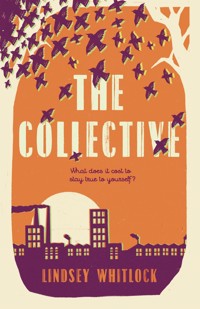
A dramatic coming-of-age novel about a boy's divided loyalty: can Elwyn resist the pull of tradition as well as the allure of the new to forge his own path? Even though Elwyn's ears were full of the roar of wings, even though the birds dropped from the sky, even though the thrill of the hunt was pumping through his body, below all that, Elwyn felt a restlessness. The restlessness had been growing all winter, maybe all his life. As spring comes to Badfish Creek, the natural world bursts with life and excitement. But Elwyn is dreaming of a different change, of a place far away that he hasn't yet seen. Lured by urban life and all it has to offer - education, progress and opportunity - he doesn't think twice when his uncle invites him to stay in Liberty, a dazzling city he longs to call home. Yet soon Elwyn realises that all that glitters is not gold: there is a sinister side to Liberty that he can't ignore, which threatens to erase his old way of life completely. With past and present pitted against one another, the path to Elwyn's future is cast in doubt - for change always comes at a price. Lindsey Whitlock is a Midwestern writer preoccupied by places, people and how to live well. She writes from Madison Wisconsin, where she lives with her husband and three children. The Collective is her debut novel.
Sie lesen das E-Book in den Legimi-Apps auf:
Seitenzahl: 289
Veröffentlichungsjahr: 2019
Das E-Book (TTS) können Sie hören im Abo „Legimi Premium” in Legimi-Apps auf:
Ähnliche













![Tintenherz [Tintenwelt-Reihe, Band 1 (Ungekürzt)] - Cornelia Funke - Hörbuch](https://legimifiles.blob.core.windows.net/images/2830629ec0fd3fd8c1f122134ba4a884/w200_u90.jpg)






Contents
ILLINOIS TERRITORY, COLLECTIVE HOMESTEADS OF AMERICA
CHAPTER 1
Pigeon Spring
THE YEAR ELWYN left home was a Pigeon Spring in Badfish Creek. Every seven years, the birds would come, darkening the sky like a plague of Egypt. But this was the New World, not the Old. The birds didn’t bring fear or destruction. The birds brought excitement, like a coming storm. The hunting equipment wasn’t the best; everyone used what they had. A lucky few carried shotguns. The rest carried slings, arrows, throwing sticks. Nets stretched from tree to tree. They filled with birds like bugs fill a screen, while children carried baskets around their necks and caught the birds as they fell from the sky. The filled baskets were dumped into a wagon, and the wagon was carried to Kegonsa, where the birds were gutted and bled and shipped by train south-west to St Louis and east along the Laurentian cities as far as Philadelphia.
They got three dollars for every bird, and the feeling of wealth poured into town before the money did. That summer, people would build homes, pay off debts, get married. For years, the forest floor would be fertile, fertile enough to grow the pumpkins whose vines were trained to climb the cottonwoods where the shade wasn’t strong. That first year, the pumpkins would grow so large, they would need to be held up with ropes.
It was a Pigeon Spring, and Badfish Creek ignited with excitement as the first shots were fired, and the sky grew darker and darker with fluttering bodies. Elwyn’s arm whirled, his sling hurling stones that felled four passenger pigeons at a time, just like his father had taught him, and his father before him, and his father before that, on and on back seven generations to Samuel Bramble, one of the rebel slaves who fought in the Second American War before settling down in Badfish Creek among French mountain men and misfits. But even though Elwyn’s ears were full of the roar of wings, even though the birds dropped from the sky, even though the thrill of the hunt was pumping through his body, below all that, Elwyn felt a restlessness. The restlessness had been growing all winter, maybe all his life.
When the last birds were shipped, men and women jumped into the still-icy creek to rinse the sweat, blood and feathers from their bodies. Children were washed in basins of warm well-water and oak bark; brothers and sisters with all shades of pale and dark young skin stood gleaming while they waited to be inspected by their mothers. Everyone was vigorously dried, believing wet ears meant illness, and wet feet drew bad spirits. Then as the sun went down and the bonfires were lit, people gathered close, wrapped in blankets and coats, roasting game as they always did, and singing and playing, flirting, minding babies. On that celebratory day, many bottles were opened and passed. Old Finchy opened a cask of the mead she was famous for as the singing grew louder and more joyful, more boisterous. Children played late into the night while young mothers nursed and got a chance to dream, for once, of the things they would buy.
While Badfish Creek celebrated its fortune, Elwyn wasn’t with the others. Instead, he was alone in his room – an unusual thing for a boy who normally revelled in festival atmospheres. Like the other Badfishians, his head was full of dreams, but they were dreams of a different quality. In the light of a candle, his pen flew across the page, but no matter how fast Elwyn wrote, his hand couldn’t keep up with words racing through his mind. He kept making mistakes, having to restart. He wanted the letter to be as great as the ambitions rising in him. He wanted it to be perfect. It was possible that this one letter, addressed to an aunt he had never spoken to, in a town he had never visited, could change the course of his whole life. And perhaps it did.
It was a letter asking his Aunt Piety if he could come and live with her. He sent it first thing the next morning, and for weeks after, Elwyn’s life hinged on visits to the post office, where he checked in once, twice, sometimes three times a day to see if anything had arrived for him; there were no home deliveries in that part of the Collective, and the train that carried mail was unreliable. Elwyn’s mood rose and fell with these visits, with the shake of Postman Wilder’s head. And every day, it seemed more important to Elwyn that the letter arrive, not less. He realised that leaving Badfish Creek – leaving soon, making something of himself – was the pivotal thing, was what his life had been building towards.
But as often happens, the day the letter arrived was the one day Elwyn neglected his morning visit to the post office – his brother Allun had convinced him the morning would be better spent out fishing; the bass were biting. Later, hungry from the fresh air and industry, Elwyn sat at the kitchen table reading a book and eating acorn bread while his mother swept the floor. When Mirth Bramble cleaned, her arms looked like the legs of a draught horse: strong, deliberate. Crumbs fell down around Elwyn as he read, but for once, Mirth didn’t seem to see them. She glanced at the small stack of mail on the counter and then back at her son. After a few minutes, she stopped sweeping and took an envelope from the pile.
‘I stopped in at the post office earlier. This came for you,’ she said, handing it to Elwyn. She went back to sweeping. He saw her glance over at him as he examined the crisp paper and the address written in a practised hand. His fingers shook a little as he unfolded the enclosed letter. As he did, a smile grew on his face. Happiness seemed to spread over his entire body, radiate from him. When he was done reading, he set the letter aside and took another bite of bread, a bite of self-satisfaction.
‘So, what did she say?’ Mirth asked in a too-casual voice, not looking up.
‘It’s not from Aunt Piety. It’s from her husband. He says I can stay with them.’
Mirth poked at the dust behind the stove.
‘Well, you are nearly sixteen,’ she said. ‘You can make your own decisions.’
Elwyn nodded, brushing crumbs of bread from the table back onto his plate and tipping them into his mouth.
‘Of course I can,’ he said with a wink.
‘Elwyn…’ his mother began. ‘I don’t think you know what you’re getting into.’
‘I thought you said I was old enough to make my own decisions,’ he teased.
‘I grew up in Hill Country, Elwyn. I know there are a lot of advantages to the education you can get in a place like Liberty. I know there are opportunities, and that can seem exciting. But you are still a boy. You are used to being known. Liked. Understood. It won’t be like that living with my sister. It won’t be like that with those people. I think you underestimate how difficult the path forward will be for you. It’s very different in Liberty than it is here, Elwyn.’
‘That’s why I want to go.’ He put his plate in the wash basin and kissed his mother on her cheek. Her muscles were tense. ‘Oh, don’t worry so much, Mam. I’ll be all right – I always am. I plan on coming back, you know. And coming back rich. And then I’ll buy you a big house. And dozens of brooms,’ he said, laughing as he patted her on the back. She sighed heavily, but her muscles loosened slightly. Elwyn went to the door and put on his hat.
‘Where are you going?’ said Mirth.
‘Going to tell Whim. She’s got good paper. I’ll write the letter there and take it to the post office on my way back. I’ve got to let the Blackwells know when I’m coming,’ he said before leaving.
The spring air smelt fresh to him for the first time in years. Later, when he returned home, Elwyn would fold that letter from his uncle carefully back into its envelope and put it with the others he had received from Liberty – all from his aunt, mostly Christmas cards. They had started coming when he was four and stopped by the time he was twelve. He kept them in a small wooden box under his bed, where he kept all the things that were his and only his: a coin, an arrowhead, a few maps clipped from newspapers.
CHAPTER 2
Whim
BADFISH CREEK wasn’t a place used to change. Deep in the Illinois Territory, it had been settled shortly after the Second War by a group of what came to be called Foresters: a mix of fur-hunters, anarchists and a handful of rebel slaves that had abandoned the land they had been bound to. That was 1820, when the Foresters committed to building their houses around trunks of trees, never borrowing money, and never tilling the earth.
Elwyn’s leaving caused no small stir in the community. Everyone had an opinion, and in the months before he set off, they seemed to talk of nothing else. It’s what comes of marrying outsiders, was a common whisper (Elwyn’s late father had been a handsome, well-liked person, the sort of man a town hates to see marry anyone but their own daughters). The older women, with their lace and superstitions, said it was Elwyn’s mother’s fault for bundling him in too many blankets and keeping the windows closed during his infant naps. But Elwyn had supporters, too. His older brother Allun, who was engaged and feeling the squeeze of responsibility, thought it was prudent to make a little money while young. Teilo, the youngest brother, hoped Elwyn would send back some livestock he could keep as pets. And the distiller, Aelred, was also a surprising ally. His daughter Whim and Elwyn had been friends for most of their childhood. Aelred thought it was time they went their separate ways.
For his part, Elwyn didn’t pay much attention to other people’s opinions. It was said that he looked like his father’s line, and Elwyn liked to think he also had their free-minded ways. That spring he did what he always did: hunted and read and made mild mischief. If there was any difference, it was only the unquenchable light of possibility he carried inside him. His other brothers and sisters spent what remained of their time together teasing him about going to Hill Country, but this only added to the pleasure of his preparations. He was the fourth of seven children; teasing wasn’t anything he wasn’t used to.
‘But, Elwyn, why can’t you just study at home? Why would you want to go to Liberty?’ his sister Enid said as they sat up in a branch of an oak with their slings, waiting for a cottontail. ‘It sounds so boring! Stiff and prim and proper. And Mam says Aunt Piety was always so strange and serious. You want to live with someone like that?’
Elwyn shrugged. He thought he saw a rabbit behind a nearby tree and stood to get a better look.
‘I mean, we all know you like a challenge. But going to Hill Country, Elwyn? It sounds terrible. And leaving us all. Leaving Whim. How can you leave her? The two of you are practically an old married couple already.’
‘We’re friends, Enid,’ Elwyn said, slightly annoyed. His sister had spoken too loudly, the rabbit had slipped away. Or maybe it was just staying still, hiding. He moved to another branch to get a better view. ‘This is an opportunity.’
‘An opportunity. Ha! I can just see you with those stuffy old Hill people, your collar buttoned high, sipping your tea.’ Enid imitated her image of him, eyes laughing, but Elwyn was standing still, waiting for any movement from under the dogwood bush. Enid scrunched her nose, plucked an old acorn, and shot it at his shoulder.
‘Elwyn, you know I can’t stand people who don’t pay attention to me while I make fun of them!’
Elwyn took another acorn and threw it back at her with a sly grin, jumping down from the tree.
‘Hey! That hurt!’ Enid said, but she was grinning and already running after him, another acorn in her hand. Below the trees, green things were pushing up in all the familiar ways. Inside Elwyn, there was nothing but readiness.
Or so it was until his last night in Badfish Creek. That night, Elwyn had intended to sleep well. The days were lengthening and the air was warm. While the rest of the town was out for a ‘good wrestle with this spring air’, as they used to say, Elwyn was climbing into bed. He shut his eyes, but sleep didn’t find him. Even though he could hear laughter from outside the window – kids playing tip-the-tin and mothers gossiping – the room was still unnaturally quiet without his four brothers breathing and turning in their sleep.
At first Elwyn thought it was their absence that kept him up. But one by one, the boys found their way to their beds like foxes to their den, and the usual hum of their night-time noises returned to the little room. Elwyn still lay awake in bed. He lay, and he lay. The music and chatter faded. The night grew deeper, quieter. He still couldn’t sleep.
And then he understood. Long after stillness had settled over Badfish Creek, Elwyn threw off his sheets and crept into the forest, stepping over the wood violets and through the nettles to the creek, a book under his arm.
Along the bank, a house made of river stones was huddled on the earth. Rabbits nibbled on young lettuce and a few ducks pecked in the yard. Elwyn walked along the path until he arrived at Whim’s house. He knocked on her window.
‘Whim? Whim Moone? Are you awake?’
He waited a moment and knocked again.
‘Whi––’
She was there. She opened the window.
‘Sorry, I didn’t hear you. You are always so quiet,’ he said.
‘It’s the middle of the night.’ Her eyes were bleary with sleep.
‘I forgot to return this to you,’ he said, holding out the book. She looked at it blankly for a moment, then back at him. Elwyn felt her reading his face. She seemed to know how to read everything.
‘Do you want to talk about something?’ she asked.
He didn’t have to reply. Whim wrapped herself in a coat and climbed out the window without a sound that could be heard above the pickerel frogs and grey tree frogs singing in the reeds. She sat beside Elwyn on the bank, and they watched the moon on the water, reflecting off her pale face and his dark one. He pulled a little cloth pouch of shelled walnuts from his pocket, and set it between them to share while they talked – a tradition of theirs that neither of them could remember the beginning of. Whim took some, keeping her eyes on Elwyn all the while.
‘I leave for the Blackwells’ tomorrow,’ he said.
‘I know. You’ve talked about it all spring.’
‘But I was wrong, Whim.’
‘Wrong about what?’
‘I was wrong thinking I could go without you.’
Whim looked at him, reading, again, but Elwyn didn’t want to be distracted.
‘You’re my best friend. We haven’t been apart for more than a couple of days since we were six. What am I going to do without you there?’ he said. Whim looked away and half-smiled, but it was an amused sort of smile that irritated Elwyn. ‘Don’t do that,’ he said.
‘What did you think would happen when you went away, Elwyn? I can’t magically appear at your side whenever you want some company.’
‘Oh, I don’t know. You know how I can be sometimes.’
‘I do.’
‘Whim. I want you to come with me.’
‘To Liberty? Elwyn, you’re going tomorrow.’
‘I’ve thought it through—’
‘Elwyn.’
‘Okay, maybe I haven’t thought it through completely. But just think about it. You don’t need to come now. Take some time. Talk to your father, pack your bags, do whatever needs to be done. Then come. Get on the train. Come find me.’
Whim was quiet, a bit of the amused smile still standing on her lips. But maybe there was a bit of wistfulness, too. Elwyn thought he saw it around the edges of her eyes, and it encouraged him.
‘Come in a week. Or two. Or three. Whenever you can. Just come. There’s a whole world out there for us, Whim. You’re twice as smart as I am. You could do anything. We could do anything, Whim. And then someday we can come back to Badfish Creek, come back together, with some money in our pockets, having actually done something.’
‘Elwyn—’
‘I know. I know what everyone is saying. But, there’s this whole world out there. It might not be perfect, but it’s ours. Don’t you want to even see it? Run around in it? Don’t you want any of it?’
The wistful look grew on her face for a moment, like the moon grows.
‘Of course I want it, Elwyn. Some of it.’
‘You could paint cities. Find new plants. Read all kinds of books, thousands of books. We could do it together. The two of us. Out in the world.’ Elwyn felt young and alive as he smiled at Whim. She called it his ‘impossible smile’ because he made it so impossible not to smile back. But this time she didn’t. She just sighed and looked at the water.
‘Elwyn, you’re my best friend—’ she began with the care and intelligence that was so natural to her.
‘And you’re mine—’
‘But you know that I can’t come with you.’ There was something honest in the way Whim spoke. It was as familiar to Elwyn as the trillium that still grew on the cool side of the creek.
‘Why?’
‘Not with Mother gone.’
‘That was ten years ago, Whim. I know your dad isn’t crazy about me. But he loves you. He’ll come around. He’ll understand. I can’t let you just stay here, trapped in the same life, doing the same things year after year. Stuck someplace where only this tiny sliver of things are possible for you.’
‘I’m all he has, Elwyn. And this place is all any of us have.’
Elwyn looked down. He picked at the dirt with his finger. ‘I wish you weren’t such a good person, sometimes.’
They were quiet. The space between them seemed to grow.
‘Do you remember when we were kids? We said we’d buy Old Finchy’s house together,’ Elwyn said. ‘I’d get the right side, you’d get the left.’
‘And you had plans to build a toboggan run from the roof for winter, and a swinging rope for summer. Just because Finchy would hate it,’ Whim said.
‘We always promised we’d do everything together.’
‘You’re the one who’s leaving, Elwyn,’ Whim said. The wistfulness had left her eyes. Elwyn opened his mouth, but he found he didn’t have anything he could say.
‘We aren’t kids any more,’ Whim went on, looking out at the creek. ‘We each have our place in the world, Elwyn. We need to take the course laid out for us.’
That was something Elwyn didn’t believe, not even a little. But he knew that when Whim got philosophical, the conversation was over. Elwyn picked himself up off the riverbank, unsettled and unhappy. But when he arrived back home, he slept well. And he woke the next day with only a shadow of regret and the full lightness of that unquenchable feeling that his life was just beginning.
CHAPTER 3
Bird and Badger
THAT NIGHT, Whim dreamt that the passenger pigeons returned. Only they weren’t passenger pigeons at all. They were locusts, covering the town, devouring everything. And in the dream, while woods were being eaten by the insects, Elwyn was walking away. Whim could see him, and she called and she called, but no matter how many times she yelled his name, he never heard her. He never turned around.
She woke long after dawn, which she never did. That day of all days. With a sense of urgency, she pulled on her long coat and ran outside, past the budding gardens, a honking herd of Canada geese. The familiar faces of people tending plots or taking their sewing outside turned to ask where she was going. She didn’t stop for any of them. Corker’s bicycle, the only bike in town, was leaning against a tree. She hopped on and started to peddle away, yelling back to Corker that she would pay him later. He charged half a penny a ride.
The bicycle was rickety and the six-mile road from Badfish Creek to the Kegonsa train station was riddled with roots and rocks. Whim’s jaw rattled as she peddled faster and faster, hoping desperately that she could make it there before Elwyn’s train left. She felt deep in her bones that something was about to happen. That Elwyn needed to stay.
The train was already at the station. Whim dropped the bicycle and ran onto the platform, scanning the station for him, then scanning the train’s windows. Her heart was in her throat. The roar of the locusts in her dream was still in her ears. Everything else was a blur, everything but the shape of Elwyn’s face, which she caught sight of through the dirty window of the passenger car.
Elwyn noticed Whim moments after she noticed him. But when Elwyn turned towards her and his eyes brightened, Whim’s heart lurched. She swore it actually leapt out of her, tearing her chest as it reached towards Elwyn. And then her heart returned to its place. The packed-dirt station and the few people around it came into focus. Whim came into focus herself. And she knew, then, that she couldn’t ask him to stay. She had only had a dream. It just seemed urgent because it was about Elwyn. And she wanted him to stay. So much.
Elwyn smiled as he opened his window and leant out. He was on the sunny side of the train, and the sun seemed to shine on him especially. That was the way it was with Elwyn. Being around him felt like standing in the sun.
‘You changed your mind,’ he said, grinning.
Whim shook her head, swallowed hard, and forced a smile. ‘No. I just came to say goodbye.’
Elwyn’s face fell, but only a little. The gleam was still there, the shine. In Badfish Creek, people said Elwyn was born twice-lucky: he was born in May, the luckiest month, and he was born a dark-skinned boy to two pale parents. This, according to the older Foresters, was a mark of good fortune. Elwyn had never put much stock in that; the younger generation wasn’t so attached to old wives’ tales. But as Elwyn leant out the window, Whim thought maybe he had been born lucky. Not because of the month of his birth or the colour of his skin, but because of the unquenchable optimism that seemed to dwell inside him.
‘Mam wouldn’t let anyone come down to the station with me. She said there was enough fuss already, and too much work to be done. You know how she is about goodbyes. Only Teilo snuck down.’ Elwyn waved to his youngest brother, who was sitting quietly on the dirt platform with his pet chicken, a runaway from some distant farm. Teilo was a reticent kid and didn’t wave back. Elwyn chuckled.
Further down the train, the conductor carried a final crate onto the freight car. In it were deer pelts, barrels and a few bottles. Whim realised she could jump in after the crate was on, before the conductor closed the door of the freight car. She could hide behind the crates, peek through the holes to see when they arrived in Liberty. She could send word with Teilo that she had gone. Her father would be heartbroken, but he would find his own way in the world. Maybe we all needed to find our own ways in the world. Maybe Elwyn was right.
But Whim didn’t believe that. She believed that we are bound to each other, by strings of love and duty. The moment passed, and the conductor closed the door.
‘I’ve got something for you,’ Elwyn said. He stretched it out to her, his body half out the window. It was his favourite sling. Whim reached up and took it, her fingers not touching his. She looked at Elwyn quizzically.
‘I packed my old one, but I figure I’m not going to need two any more,’ he said. ‘It’s all books and business and proper stuff like that for me now. For a while anyway. And who knows? You might run across some Goliath that needs slaying.’ Elwyn’s eyes twinkled teasingly. Whim knew Elwyn thought it was funny to think of her in any sort of battle, peacemaker that she was. ‘Besides, if I leave it at home, Dewey will get ahold of it, and he loses everything,’ he laughed ‘You’ll take care of it?’
‘Of course.’
‘You’ll practise using it?’ he said, this time with a wink.
‘That I can’t promise.’ Whim smiled almost sincerely.
The train began to pull away. Whim started to walk alongside Elwyn’s window, as if she were tied to it.
‘If you change your mind, Whim, you know where I’ll be,’ Elwyn said, his smile broadening as the train picked up speed. ‘Come and find me!’ he shouted before he turned away from her to face the wind. And then, in only a minute, he was gone. Out of sight.
The loud train left a hush over the station. The stationmaster, also Kegonsa’s store-owner and innkeeper, swept the dust that settled in the train’s wake. The comfortable sounds of bristles on a dirt path, the click of two men playing checkers under the store’s eaves, the strange little throat sounds of Teilo’s chicken: these familiar noises were an unspeakable comfort at a moment that seemed to tear Whim apart. And as always, there was the sound of the trees. The sound of the wind stirring leaves as loud and constant as a river.
‘Do you want to ride home?’ Whim said. Teilo was only six and still a little round in the cheeks. He didn’t say anything as he hopped on the back of Corker’s bike.
‘Do you think Elwyn will buy me a cow when he’s rich?’ Teilo surprised Whim by asking when they were about halfway home. Whim was wiping stray tears from her eyes.
‘What would a cow eat in the woods?’ Whim managed.
‘Acorns.’
When Whim returned home, she was surprised to find her father Aelred there, with a late breakfast set on the table and a little bouquet of wood violets in the centre. They were the flowers her father always said reminded him of her; they were quiet, but fragrant, and did everyone some good.
He didn’t ask where she had gone. But when they had sat and begun to eat, he looked up at her and spoke.
‘You are a bird, little Whim. Singing your songs. Building your nest. He’s a badger. Made for wandering widely, building burrows and abandoning them.’
‘I know what I am,’ Whim said. ‘But sometimes, just for a little while, I wish I could be something else.’
CHAPTER 4
Liberty
ELWYN HAD SEEN LIBERTY BEFORE, but not in person. A moving panorama show once came through the forest towns, setting up in the main room of the Kegonsa station, the only place big enough. Heavy shades were drawn, and a light shone on a massive painting that moved between two scrolls. It seemed as long as the creek itself.
Everyone scraped together money to go. It was collected by the young boy who turned the crank that moved the scrolls. A man with oiled hair and crooked teeth spoke in a musical voice about the images that passed by. The panoramas of natural disasters were the most popular: a hurricane over Carolina sea islands; double tornadoes on the Laurentian Lakes; the grass fire on the Flatlands. And there was also the mile-wide Messipi, a natural wonder near enough that the Badfishians felt some ownership of it, though none of them had ever travelled there. People talked about these images for weeks.
The panorama show never came back to the woods. Maybe it was too hard to lug the giant scrolls down overgrown roads, or maybe the showman was a part-time crook disappointed to find everyone’s pockets empty. But the images stayed with Elwyn. If he’d had the money, he would have watched the show over and over, sitting open-eyed and perfectly still in the darkness. There had been a few brief scenes of the Hill towns along the Wisconsin river, including Liberty. The railroad and riverboat traffic made them popular getaways for moneyed Messipi traders and old Franco-Indian merchant families; they said that the ancient rocks and soil were good for people’s health. Some of the Foresters had booed those images and jeered the man to move on to something more exciting. But Elwyn still remembered the wide stone streets, the shops built into the hillsides, the horses pulling carts. There was a grassy park by the river with a single tree and several benches, and everything appeared so tidy and prosperous and pretty. That was Liberty. That was where his aunt lived.
Elwyn looked eagerly out the windows of the train as it neared town. Bicycles sped down streets, horses trotted ahead of wagons, white steamboats chugged along the river. Everything was moving. It pulled at him almost physically – he felt that if the window weren’t there he would lean so far forward, he’d tumble right out onto the grass.
The train arrived at Liberty Station an hour late, and Elwyn practically jumped out of his seat onto the platform. He was carrying a large cake box and dressed in the starched, many-buttoned clothes purchased by his mother. His shirt was the pale green of coneflower dye with a stiff bow at the neck, and it was unlike anything he saw worn by the people there. As he wandered through the crowd, people turned to look at Elwyn. It wasn’t just his clothes they were staring at, it was all of him, from his way of moving to his hair to the shade of his skin. The people in Liberty were almost all pale, pale even compared to people like Elwyn’s mother, who had darkened after years in the sun. He made an effort to stand tall and be lively as he searched for his aunt and uncle. But he felt uncomfortable in the gaze of the people passing by, and discomfort wasn’t a feeling Elwyn was used to.
He could not find his aunt and uncle on the platform, so juggling the cake box and slinging his deerskin bag, Elwyn went inside the station. At the far wall was a wooden bar where a few people sat on velvet stools and lunched. The thick air was redolent of roasted roots and beef. Elwyn’s stomach growled; he had already eaten the salted game and acorn bread packed for the half-day’s journey. Someday, that will be me, Elwyn thought. Taking a break while I travel, sitting on a stool and eating steak and drinking beer.
A man behind the bar was chatting with a customer and chewing a toothpick. Elwyn moved the cake box to his other arm.
‘Excuse me?’ Elwyn said. ‘I’m Elwyn. Elwyn Bramble. Is there someone waiting for me?’
A few people glanced sidelong at Elwyn, then averted their eyes, but the man behind the bar looked from Elwyn’s face to his clothes to the cake box tied with home-woven lace he held under one arm.
‘The Blackwells?’ Elwyn tried again, when the man said nothing. ‘A man and a woman?’
‘Farms have all the hands they need around here. Try again come harvest,’ the man said.
‘Oh, no. I’m not here to work on a farm. I’m here to learn. To study. Prepare for my future. I’m staying with my aunt, Piety Blackwell.’
The man moved the toothpick from one side of his mouth to the other and watched Elwyn through narrow eyes.
‘Maybe you could give me directions,’ Elwyn suggested. ‘1434 Citizen Street.’
‘You’re not in the right place.’
‘This is Liberty Station, right? It says so on the sign,’ Elwyn said.
The man took the toothpick out of his mouth and inspected the chewed end. ‘I said, you’re not in the right place.’
The people at the bar were staring at Elwyn. Normally, Elwyn was someone who liked attention, who thrived on the eyes of others. But this time the gazes made him shrink away. He became uncomfortably aware of the way he stood, the darkness of his skin, the bows on his clothes, the odd colour of the fabric.
‘I’ll go look someplace else, then,’ Elwyn said cautiously.
They watched him as he stepped back out the door. The smell of hot grass was in the air, and hot metal and steam and smoke and stone. Elwyn shielded his eyes from




