


1,99 €
Niedrigster Preis in 30 Tagen: 0,49 €
Niedrigster Preis in 30 Tagen: 0,49 €
Mehr erfahren.
- Herausgeber: Musaicum Books
- Kategorie: Poesie und Drama
- Sprache: Englisch
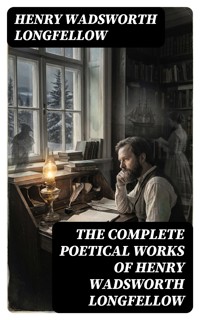
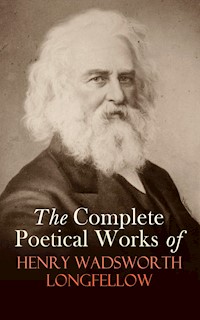
Henry Wadsworth Longfellow's 'The Complete Poems' is a literary masterpiece that encompasses the entirety of the renowned poet's work. Longfellow's poems are characterized by their flowing and melodic verse, rich imagery, and timeless themes of love, loss, and human experience. His poems often draw inspiration from classical literature, mythology, and historical events, providing readers with a tapestry of emotions and reflections on life. Longfellow's poetic style is both elegant and accessible, making his work a favorite among scholars and casual readers alike. As one of America's most beloved poets, Henry Wadsworth Longfellow drew upon a diverse range of influences, from his travels in Europe to his scholarly pursuits in languages and literature. His deep understanding of the human condition and his commitment to preserving and celebrating the beauty of language shine through in 'The Complete Poems'. This comprehensive collection offers readers a glimpse into the mind of a literary giant whose words continue to resonate across generations. I highly recommend 'The Complete Poems' to anyone interested in exploring the vast literary landscape of American poetry. Longfellow's timeless verses are sure to captivate and inspire readers of all backgrounds, making this collection a must-have for poetry enthusiasts and scholars alike. In this enriched edition, we have carefully created added value for your reading experience: - A comprehensive Introduction outlines these selected works' unifying features, themes, or stylistic evolutions. - The Author Biography highlights personal milestones and literary influences that shape the entire body of writing. - A Historical Context section situates the works in their broader era—social currents, cultural trends, and key events that underpin their creation. - A concise Synopsis (Selection) offers an accessible overview of the included texts, helping readers navigate plotlines and main ideas without revealing critical twists. - A unified Analysis examines recurring motifs and stylistic hallmarks across the collection, tying the stories together while spotlighting the different work's strengths. - Reflection questions inspire deeper contemplation of the author's overarching message, inviting readers to draw connections among different texts and relate them to modern contexts. - Lastly, our hand‐picked Memorable Quotes distill pivotal lines and turning points, serving as touchstones for the collection's central themes.
Das E-Book können Sie in Legimi-Apps oder einer beliebigen App lesen, die das folgende Format unterstützen:
Veröffentlichungsjahr: 2020
Ähnliche



The Complete Poems
Books
Table of Contents
Introduction
This collection presents the complete poetic oeuvre of Henry Wadsworth Longfellow, gathered across the volumes and cycles in which he first issued them and preserved here to show the breadth of his achievement. It brings together lyrics, ballads, narrative poems, verse dramas, sonnet sequences, cycles arranged by theme or season, translations, and fragments. Read as a whole, these works reveal a career devoted to marrying clarity of feeling with musical form, and to making poetry a shared public art. The purpose is both archival and interpretive: to provide a continuous panorama of Longfellow’s craft and concerns, and to invite renewed reading of poems long central to American letters.
The earliest lyrics, from Hymn to the Night and A Psalm of Life to The Reaper and the Flowers and The Light of Stars, establish Longfellow’s signature poise: consolation set to steady measure, moral reflection voiced with a humane calm. The EARLIER POEMS, including An April Day, Autumn, Woods in Winter, and Sunrise on the Hills, extend this mood into a natural philosophy in which landscape embodies feeling and time. Their plainspoken eloquence, recurring celestial imagery, and carefully modulated stanzas announce a poet intent on the accessible music of English verse and on the ethical possibilities of song.
BALLADS AND OTHER POEMS shows his narrative and dramatic gifts in motion. The Skeleton in Armor, The Wreck of the Hesperus, and The Village Blacksmith harness ballad stamina to stories of peril, craft, and perseverance. Elsewhere, Endymion and Maidenhood court meditative stillness, while The Rainy Day and Excelsior compress aspiration and trial into emblematic scenes. These poems demonstrate his command of refrain, vivid incident, and concrete image; they also display his sympathy for work, maritime life, and ordinary courage. The result is a popular idiom of storytelling verse that carries moral feeling without didactic heaviness.
POEMS ON SLAVERY marks Longfellow’s entry into the public debate over bondage, using the lyric and ballad to register conscience and pity. Pieces such as The Slave’s Dream, The Slave in the Dismal Swamp, The Slave Singing at Midnight, The Quadroon Girl, and The Warning frame individual predicaments to illuminate a national crisis. The tone is measured but resolute, favoring narrative clarity and humane appeal over invective. These poems exemplify his belief that poetry could participate in civic life by recalling readers to shared ethical ground and by giving memorable voice to the demand for justice.
His experiments in dramatic form begin with The Spanish Student, a verse play that sets romance and artistic vocation against the codes of honor and surveillance. Its staged scenes, serenades, and interludes show Longfellow adapting dialogue and song to theatrical rhythms. The dramatic impulse recurs across his career—in later masque, mystery, and historical pageants—yet here one sees his early effort to bridge lyric feeling and character, to let voices contend within a narrative arc. The Spanish setting also signals a lifelong cosmopolitan reach, drawing on European locales and traditions as theaters for moral and aesthetic inquiry.
The Belfry of Bruges and Other Poems extends that reach, turning travel, architecture, and craft into meditations on history and peace. The Belfry of Bruges, Nuremberg, The Arsenal at Springfield, and The Old Clock on the Stairs contemplate memory housed in stone and steel, the discipline of labor, and the passage of hours. In songs like The Day is Done and sonnets such as Mezzo Cammin and Dante, Longfellow refines the short lyric to an instrument of intimate disclosure. The Bridge and The Arrow and the Song show his gift for brief, resonant structures whose plain surfaces conceal intricate measures.
Longfellow’s major narratives—Evangeline, The Song of Hiawatha, and The Courtship of Miles Standish—demonstrate his architectonic ambition. Each adopts a distinct metrical design to fit its historical or legendary subject: the exile of Acadian villagers and a steadfast search; an epic of Indigenous figures rendered through nineteenth-century sources; and a tale of early Plymouth with its intertwined loyalties. Without divulging outcomes, these poems can be said to celebrate endurance, community, and the shaping force of story. They also reveal his ability to naturalize classical cadence for American themes, making long poems hospitable to a wide readership.
The Seaside and the Fireside juxtaposes maritime prospect and domestic hearth. The Building of the Ship, Seaweed, The Lighthouse, and Sir Humphrey Gilbert contemplate risk, courage, and communal purpose at sea, while By the Fireside turns inward to friendship, grief, vocation, and the crafts of hand and mind in pieces such as The Fire of Drift-Wood, Resignation, The Builders, and Sand of the Desert in an Hour-Glass. The volume’s design underscores a central Longfellow polarity: outward voyage and inward settlement, public hope and private fortitude, joined by an ethic that treats labor and art as allied forms of making.
Tales of a Wayside Inn frames narration as convivial exchange. In a Massachusetts hostelry, a circle of tellers offers histories, legends, and exempla: the Landlord’s Tale recounts Paul Revere’s Ride; the Musician’s Tale unfolds The Saga of King Olaf across many cantos; the Student, the Sicilian, the Spanish Jew, and the Theologian contribute stories that range across centuries and continents. Interludes bind the company and mark the evening’s passage. The design revives the social life of poetry—spoken, remembered, answered—while modeling how diverse traditions can converse, with each tale illuminating character and belief without exhausting its mystery.
His later decades bring diversification and inwardness. Flower-de-Luce gathers lyrics of tribute and meditation, including sonnets engaging Dante. The Masque of Pandora reimagines classical myth as a moral pageant; The Hanging of the Crane traces the growth of a household; Keramos turns pottery into emblem; and the Birds of Passage flights continue to braid travel, reminiscence, and civic feeling. A Book of Sonnets, Morituri Salutamus, Ultima Thule, and In the Harbor move toward autumnal candor. Pieces such as The Cross of Snow and The Tide Rises, the Tide Falls show a chastened music, attentive to memory, grief, and the tides of time.
Longfellow’s dramatic poems culminate in Christus: A Mystery, a triptych comprising The Divine Tragedy, The Golden Legend, and The New England Tragedies. These linked parts set sacred history, medieval legend, and colonial conflicts in counterpoint, exploring how faith, conscience, and community are tested across eras. Judas Maccabaeus and Michael Angelo extend his historical theater, giving voice to resistance, reform, and artistic struggle. Without rehearsing plots, one may note the governing aspiration: to make verse a vessel for large narratives and collective experience, while preserving the lyric’s capacity for prayer, debate, and solitary resolve.
The Translations section registers the cosmopolitan foundation of his art. Renderings from Spanish, German, French, Italian, Scandinavian, Anglo-Saxon, and Latin sources—among them passages from Frithiof’s Saga, selections from Dante, ancient ballads, medieval chansons, and elegies—work alongside versions like The Children of the Lord’s Supper and excerpts from Beowulf. These translations are acts of hospitality, bringing distant voices into American English with fidelity and cadence. They also disclose his workshop: by mediating other traditions, Longfellow refined his meters, enriched his diction, and helped shape the republic’s first broad encounter with European and earlier literatures in verse form.」「Longfellow’s work coheres through recurrent themes—memory and mortality, faith and doubt, labor and craft, travel and home—and through stylistic hallmarks: lucid diction, steady rhythm, narrative clarity, and musical refrain. As a central figure among the nineteenth-century “Fireside” poets, he wrote for shared reading, the schoolroom, and public occasion without surrendering complexity. The poems here—lyric, narrative, dramatic, and translational—show how he forged a common language for feeling and history. Collected in full, they invite readers to follow the evolution of an art that aspired to be both intimate and civic, and that remains durable in sound, story, and sympathy.
Author Biography
Henry Wadsworth Longfellow (1807–1882) was the most widely read American poet of the nineteenth century, a writer whose musical lines and humane ideals made poetry a fixture of the parlor and the schoolroom. Combining European learning with New World subjects, he crafted accessible verse of moral reflection, consolation, and civic memory. Works like A Psalm of Life, Hymn to the Night, The Village Blacksmith, and The Wreck of the Hesperus became cultural touchstones on both sides of the Atlantic. Equally at ease with ballads, sonnets, dramatic poems, and long narratives, Longfellow stood at the center of the “Fireside Poets,” shaping American taste for generations.
Born in Portland, Maine, Longfellow graduated from Bowdoin College, where he formed a lifelong friendship with Nathaniel Hawthorne. Early success as a student of languages led to extended study in Europe, immersing him in the literature of Spain, France, Italy, Germany, and Scandinavia. He returned to teach modern languages first at Bowdoin and then at Harvard, where he helped establish comparative and modern literary study in the United States. This training informed his later work as both poet and translator, and it grounded his distinctive role as a mediator between European Romanticism and an emerging American literary tradition.
In the 1830s and early 1840s Longfellow published the lyrics that made him famous. The meditative and aspirational A Psalm of Life and Hymn to the Night, alongside The Light of Stars, Footsteps of Angels, and The Rainy Day, offered solace and resolve to a broad readership. Ballads and Other Poems added memorable narratives—The Wreck of the Hesperus, The Village Blacksmith, Excelsior—demonstrating his gift for story and song. He experimented with the stage in The Spanish Student, and with public conscience in Poems on Slavery, aligning his verse with questions of justice and sympathy that preoccupied the antebellum United States.
The late 1840s and 1850s brought Longfellow’s mastery of the long narrative poem. Evangeline, written in rolling hexameters, transformed the Acadian diaspora into a tale of love, exile, and endurance. The Seaside and the Fireside set his maritime New England against inward, domestic reflection. The Song of Hiawatha, composed in a trochaic measure associated with the Kalevala, wove together Native American legends within a unifying mythic arc. The Courtship of Miles Standish returned to colonial New England, blending humor and tenderness with local history. These works broadened the scope of American poetry, pairing epic design with a readerly, popular voice.
In the 1860s and 1870s he diversified form and subject while sustaining extraordinary reach. Tales of a Wayside Inn framed stories in lively voices, including Paul Revere’s Ride and the saga sequence of King Olaf. The Belfry of Bruges and Other Poems gathered civic pieces such as The Arsenal at Springfield, while volumes like Birds of Passage and Flower-de-Luce offered reflective lyrics (The Day is Done) and historical sonnets (Dante). He pursued ambitious projects—Christus: A Mystery, Judas Maccabaeus, The Masque of Pandora—and cultivated the sonnet with “Mezzo Cammin” and The Cross of Snow. His labors as a translator culminated in a landmark English Dante.
Longfellow’s public standing coexisted with private griefs that deepened his art. The early loss of his first wife and the later death of his second left lasting marks on both life and work, echoing through elegiac poems such as Resignation, Christmas Bells, and The Cross of Snow. A humane moralist more than a polemicist, he addressed slavery in Poems on Slavery and commemorated reformers in pieces like Charles Sumner. Retiring from Harvard to write full‑time, he continued his lifelong engagement with other literatures, translating and adapting from Spanish, French, Italian, German, Anglo‑Saxon, and Scandinavian sources presented in his Translations.
In his final years he issued further collections—Keramos, Ultima Thule, and In the Harbor—alongside memorable late lyrics such as The Tide Rises, The Tide Falls and sequences like The Poet’s Calendar. He died in Cambridge, Massachusetts, in 1882, leaving a body of work that shaped American memory and speech. Longfellow’s reputation has moved through cycles of fashion, yet his narratives, civic poems, and songs of comfort remain widely read and quoted. From Paul Revere’s Ride to Hiawatha and Evangeline, he fused learning with feeling, giving the United States durable myths, humane ideals, and a supple, singable American English.
Historical Context
Henry Wadsworth Longfellow’s Complete Poems spans the American nineteenth century, from the Jacksonian era through the Gilded Age. Educated in, and ambassador for, European letters, he taught modern languages at Bowdoin and Harvard while shaping a broad middle-class readership as one of the Fireside Poets. His career unfolded alongside industrialization, reform movements, mass literacy, and the rise of magazines such as the Atlantic Monthly. The poems register these changes: they translate Old World traditions for a New World audience, cultivate domestic consolation amid public crisis, and fashion national myths out of colonial and Revolutionary history, all while participating in the technologies and markets that expanded print culture across the United States.
The earliest lyrics in this collection—Hymn to the Night, A Psalm of Life, The Light of Stars, Footsteps of Angels—belong to the 1830s moment when American Romanticism sought moral uplift and spiritual consolation. Circulating in newspapers, gift books, and school readers, they exemplified the era’s didactic optimism and interest in the soul’s progress. Longfellow’s polished quatrains and hymnal cadences were congenial to a Protestant culture steeped in sermons and psalms. Even when meditating on death or melancholy, these poems respond to a society where mortality was a familiar presence and religious language a common currency for thinking about loss and purpose.
Ballads and Other Poems captures a young industrial republic measuring progress against peril. The Wreck of the Hesperus echoed the devastating New England gale of 1839, dramatizing maritime risk in an economy dependent on coastal trade. The Village Blacksmith preserves artisanal virtue as factories and railroads transformed labor and towns. The Arsenal at Springfield’s later companion, The Bridge, and the local vignettes of Rainy Day and God’s-Acre register urban expansion and the persistence of Puritan memory. Endymion and Excelsior fuse classical and upward-striving motifs, articulating antebellum ideals of self-improvement and aspiration within a culture captivated by improvement societies, lyceums, and civic associations.
Published in 1842, the Poems on Slavery entered the abolitionist print network during a decade of intensifying national conflict over bondage. Without adopting the incendiary rhetoric of radical activists, Longfellow’s pieces—The Slave’s Dream, The Slave in the Dismal Swamp, The Witnesses, The Warning—use moral suasion and Christian imagery to humanize enslaved people and indict the trade’s long legacy. Issued as a slim pamphlet for portability and discussion, the sequence appeared as Congress debated slavery in the District of Columbia and sectional tempers rose. It shows how mainstream poets brought antislavery argument into parlors, classrooms, and moderate reform circles before the Fugitive Slave Act heightened the crisis.
The Spanish Student (1843), conceived as a dramatic poem rather than a stage play, reflects the period’s transatlantic Romanticism and Longfellow’s scholarly immersion in Iberian literature. Its troubadour airs, guitar serenades, and references to the cachucha draw on a European vogue for Spanish color in music and theater. Composed in the wake of the author’s travels and his Harvard appointment, it demonstrates how American writers imported continental genres for armchair audiences. At the same time, its Romani figures and theatrical intrigue reveal the era’s appetite for exoticized difference, a taste shaped by travel narratives, opera, and the circulating repertoires of European melodrama.
The Belfry of Bruges and Other Poems (1845) situates New England reading habits within a wider medieval revival. Poems like Nuremberg and Walter von der Vogelweid celebrate guilds, minstrelsy, and cathedral towns that American tourists were beginning to visit in greater numbers. The Arsenal at Springfield, written after seeing the armory’s impressive stacks of muskets, engages the burgeoning peace movement of the 1840s, imagining instruments of war transformed to harmonies of peace. The Day is Done, designed for evening recitation, typifies the parlor culture that made Longfellow’s volumes staples of domestic leisure, as steam-powered presses and railroads broadened national distribution.
Evangeline (1847) narrates the 1755 expulsion of the Acadians from Nova Scotia, translating a regional tragedy into a national meditation on displacement. Composed in dactylic hexameter after classical models, it exemplifies Longfellow’s project of naturalizing European forms in American settings. Written amid annexations and migrations of the 1840s, the poem’s riverine journeys and frontier vistas mirror territorial expansion and the making of continental memory. Its sympathetic attention to diasporic communities resonated with readers in an age of Irish and German immigration, and later helped make the Acadian past part of North American heritage tourism and regional identity.
The Seaside and the Fireside (1850) juxtaposes maritime modernity and domestic stability at midcentury. The Building of the Ship casts the nation as a vessel launched amid rising sectional winds; Seaweed and The Lighthouse register oceanic science and the modernization of coastal navigation. Sir Humphrey Gilbert, Gaspar Becerra, and Tegner’s Drapa trace Atlantic and Northern cultural lineages that nineteenth-century scholars and travelers avidly reconstructed. The Builders and Sand of the Desert in an Hour-Glass convert craft and time into civic allegory, legible to a readership educated by lyceum lectures, mechanics’ institutes, and expanding common schools oriented toward moral improvement and practical knowledge.
The Song of Hiawatha (1855) arrives at the junction of ethnology, Romantic primitivism, and U.S. expansion. Drawing heavily on the published work of Henry Rowe Schoolcraft and other reports on Ojibwe and related peoples, Longfellow adapted stories into trochaic tetrameter associated with the Finnish Kalevala. Its reception reflected contemporary debates over authenticity, cultural borrowing, and the place of Indigenous traditions in a national literature. Issued as treaties, removal, and reservation policies reshaped Native life, the poem popularized names, episodes, and motifs for non-Native audiences, while modern readers scrutinize its portrayals alongside the sources and conditions from which it drew.
The Courtship of Miles Standish (1858) participates in nineteenth-century antiquarian interest in New England’s founding. By revisiting Pilgrim lore, it joined sermons, orations, and historical pageants that fashioned a colonial origin story for a fracturing republic. Its playful approach to courtship and militia leadership, couched in mock-heroic tones, softened sectarian and political edges while celebrating perseverance and communal bonds. Appearing between the Dred Scott decision and the election of 1860, the poem’s Pilgrim narrative helped readers connect local genealogies and family legends to national themes of settlement, governance, and consent—key terms in public arguments about the Union’s fate.
The multi-part sequences Birds of Passage (from 1858) chronicle mobility in an age of steamships, railways, and the electric telegraph. My Lost Youth remembers maritime Portland as commerce and empire widened horizons; The Jewish Cemetery at Newport contemplates early American religious pluralism and the fragility of communal memory. Santa Filomena salutes Florence Nightingale’s Crimean War nursing reforms, illustrating how global events reached American parlors. The Cumberland responds to a Civil War naval disaster, while The Children’s Hour turns inward to domestic solace. Together these poems register a world knit more tightly by technology, journalism, and tourism, and a nation learning to locate itself within it.
Tales of a Wayside Inn (Parts I–III, 1863–1873) uses a Sudbury tavern frame to gather international legends during the Civil War and Reconstruction. Paul Revere’s Ride, first printed in late 1860, reanimated Revolutionary memory to bolster Union sentiment. The Saga of King Olaf explores Norse conversion and kingship, part of a broader Anglophone fascination with medieval Scandinavia fostered by new translations and antiquarian studies. King Robert of Sicily and The Birds of Killingworth revive moral exempla and ecological fable, anticipating later conservationist concerns. The diverse storytellers—student, musician, Spanish Jew—mirror the pluralism Longfellow hoped a healing nation might embrace.
Flower-de-Luce (1864) and related mid-1860s poems trace the intersection of translation, war, and mourning. The sonnet series titled Divina Commedia accompanied Longfellow’s monumental English translation of Dante, completed in 1867 with collegial support from Boston–Cambridge Dante enthusiasts. Christmas Bells, written in 1863 as the conflict raged and as his own household felt its toll, juxtaposes carols with cannon to register wartime despair and hope. Killed at the Ford and The Bells of Lynn reflect national loss and New England’s maritime rhythms. These works show poetry’s role as commentary during a struggle that tested republican ideals and religious consolation.
In the 1870s Longfellow turned to myth, domestic ritual, and craft as America entered the Gilded Age. The Masque of Pandora (1875) revisits classical myth amid scientific debates about progress and responsibility. The Hanging of the Crane (1874), a bestselling gift-book poem about founding a home, aligned with the cult of domesticity and a thriving market for illustrated volumes. Morituri Salutamus (1875), addressed to Bowdoin classmates, considers aging and artistic vocation in a nation transformed since their youth. Keramos (1878) traverses the global history of ceramics, registering transoceanic trade, museums, and a burgeoning American interest in applied arts and world craftsmanship.
Later installments—Birds of Passage, Flight the Third to Fifth; Ultima Thule; and In the Harbor—chart the late-career public intellectual: elegist, traveler, and reflective citizen. Charles Sumner memorializes a close friend and antislavery statesman, binding poetry to reform legacy after the Civil War. The Herons of Elmwood nods to James Russell Lowell; Bayard Taylor and Robert Burns honor literary kin. The Tide Rises, The Tide Falls, from 1879, distills mortality into tidal recurrence. President Garfield, Decoration Day, and The Bells of San Blas engage national mourning, veterans’ remembrance, and hemispheric encounters as the United States looked outward and commemorated inward.
Christus: A Mystery (assembled 1872) braids biblical narrative, medieval legend, and Puritan history into a transhistorical meditation on faith and persecution. The Divine Tragedy imagines episodes from the life of Jesus; The Golden Legend (first published 1851) stages medieval Catholic piety and miracle plays; The New England Tragedies (1868) dramatize Antinomian and witchcraft crises in the seventeenth century. By juxtaposing European and American scenes, Longfellow traced a genealogy of conscience and intolerance relevant to postbellum debates on pluralism. Related dramatic works—Judas Maccabaeus and the unfinished Michael Angelo—extend this historical theater, aligning with nineteenth-century tastes for closet drama and biographical portraiture.
The translations gathered here reveal Longfellow’s vocation as cultural mediator. From Anglo-Saxon extracts like Beowulf’s expedition to Heort, to German ballads, Spanish sonnets, Danish songs, Italian Renaissance verse, and Latin classics, he curated a portable Europe for American readers. His versions favored clarity and musicality over scholarly apparatus, complementing his earlier editorial anthology, The Poets and Poetry of Europe. In the Dante sonnets and many renderings, one sees the collaborative Cambridge milieu that valued philology while courting a general audience. The breadth of sources reflects broader nineteenth-century comparative-literature projects, world fairs, and the institutionalization of modern language study in U.S. universities.
Synopsis (Selection)
Early Lyric Meditations (Hymn to the Night to Midnight Mass for the Dying Year)
A suite of intimate lyrics that contemplate time, mortality, faith, and consolation in nature and memory. The poems balance civic unease and private solace, turning night, stars, flowers, and angelic presences into emblems of renewal and resolve. The tone is reflective and exhortatory, establishing the moral clarity and musical cadence that recur throughout Longfellow’s work.
Earlier Poems
Landscape pieces and occasional verses trace the seasons, American scenery, and Revolutionary remembrance alongside meditations on the poetic calling. Pastoral calm alternates with public devotion, treating banners, burials, and consecrations as moments of communal identity. The style blends accessible description with gentle rhetoric, marking an early consolidation of theme and voice.
Ballads and Other Poems
Narrative ballads and household portraits range from sea disaster and legendary armor to the forge, youth, and aspiration. Moral tests and sudden reversals sit beside quiet consolations, giving adventure and domestic virtue equal weight. The collection’s brisk storytelling, refrain-like music, and emblematic characters exemplify Longfellow’s popular narrative manner.
Poems on Slavery
A sequence of portraits and appeals that humanize enslaved people, indict the institution, and summon readers’ conscience. The poems move from visions and testimonies to warnings, joining compassion to moral urgency. The tone is direct, elegiac, and reformist, using clear narrative frames to press ethical claims.
The Spanish Student
A romantic drama of disguise, music, and honor set amid serenades, theatres, and courtly rooms. Love and identity collide with social expectation as characters test loyalty, ambition, and artistic freedom. The piece blends song and dialogue, maintaining a lyrical, light-spirited momentum even as choices carry consequences.
The Belfry of Bruges and Other Poems
Travel-inspired and civic-themed poems consider clocks, bridges, arsenals, and constellations as symbols of time, labor, and peace. Domestic vignettes and brief songs add intimacy, while sonnets crystallize historical and literary homage. The tone moves from reflective calm to public-minded uplift, expanding Longfellow’s range of forms and subjects.
Evangeline: A Tale of Acadie
An expansive narrative follows lovers sundered by forced migration, tracing a long journey through varied American landscapes. The tale intertwines pastoral beauty with historical sorrow, setting steadfast devotion against exile and change. The mood is elegiac and patient, sustaining a gentle epic breadth without revealing its final turns.
The Seaside and the Fireside
Paired sequences counterpoint oceanic adventure with the warmth of home, featuring shipbuilding, lighthouses, and hearthside meditations. Craft and nationhood meet domestic affection, while occasional and devotional pieces deepen the reflective center. The tone alternates between maritime vigor and intimate stillness, uniting action and repose.
The Song of Hiawatha
An episodic cycle recounts the life, deeds, and partings of a culture-hero, from childhood trials to leadership, courtship, and encounters with change. Rituals, landscapes, and communal bonds frame contests with forces human and supernatural. The cadence is incantatory and mythic, presenting a world of cycles, instruction, and departure without disclosing late events.
The Courtship of Miles Standish
A New England narrative of friendship, duty, and affection unfolds among settlers, centering on a courtship complicated by loyalty and wariness. Humor, tact, and civic need temper the tensions of romance. The tone is affectionate and lightly comic, treating early colonial life as a stage for character and community.
Birds of Passage: Flight the First
A miscellany of meditations, ballads, and tributes weighs memory, progress, and conscience against shipwrecks of history and the promise of invention. Themes of diaspora, national service, and the poet’s vocation recur in emblematic scenes and reflective measures. The range is broad and companionable, encouraging moral ascent while honoring loss.
Birds of Passage: Flight the Second
Domestic tenderness, nature’s miniatures, and martial remembrance share space with compact reflections on work and weariness. The pieces shift from the intimacy of childhood to the surge of battle and the hush of snowfall. The tone is crisp and varied, favoring distilled images and closing turns of thought.
Tales of a Wayside Inn (Parts First–Third)
A frame narrative gathers diverse tellers who trade legends, histories, and romances from New England rides to Norse sagas, saints’ lives, and inquisitorial shadows. The roster ranges from swift ballads to extended sequences, with interludes that keep the inn’s camaraderie alive. Variety of voice and subject is the hallmark, presenting a portable anthology bound by hospitality and story.
Flower-de-Luce
Elegies, meditations on art, and seasonal bells compose a slender garland that memorializes friends and contemplates Dante’s ascent. The poems balance private grief with critical homage, compressing feeling into emblem and image. The mood is hushed and ceremonial, with recurrent reflections on faith and literary legacy.
Birds of Passage: Flight the Third
Late-season lyrics revisit mirage, memory, and the meeting of imagination and fact. The sequence favors brief forms and contrapuntal images—waves and brooks, challenges and changes. The tone is autumnal yet resilient, attentive to transition and the afterlife of experience.
The Masque of Pandora
A classical pageant dramatizes creation, curiosity, and consequence, entwining Promethean defiance with a housebound test of trust and hope. Choruses amplify fate’s perspective, while domestic scenes humanize mythic stakes. The piece is ceremonial and philosophical, staging error and endurance without foreclosing consolation.
The Hanging of the Crane
A domestic ceremonial poem traces the founding and flourishing of a household, from newly kindled fire to widening circles of kin. Scenes of festivity, labor, and quiet passage measure time by hearth and threshold. The tone is warm and ritualistic, presenting home as a living chronicle.
Morituri Salutamus
An occasional address reflects on age, work, and the duties that remain when laurels fade. The poem steadies remembrance with counsel, weighing limitation against the will to persevere. The voice is dignified, candid, and encouraging, offering a valediction that resists finality.
A Book of Sonnets
A concentrated gallery of tributes, landscapes, and meditations honors poets, places, and personal losses. Compression sharpens Longfellow’s themes of literary lineage, civic affection, and private mourning. The sonnets are poised and ceremonial, revealing late-style clarity and restraint.
Birds of Passage: Flight the Fourth
Travel recollections and public elegies alternate, mapping inner journeys onto roads, rivers, and Mediterranean vistas. Friendship and civic honor guide the commemorations, while the traveler’s gaze unifies disparate scenes. The mood is cosmopolitan and reflective, with measured gratitude amid leave-taking.
Keramos
A meditative itinerary follows the art of clay across cultures, kilns, and hands, finding in ceramics a parable of form and fire. Craft becomes a lens on transience, beauty, and shared human endeavor. The tone is descriptive and comparative, turning artisan labor into philosophical travel.
Birds of Passage: Flight the Fifth and Ultima Thule
Late-career ballads and tableaux range from courtly Spain to Central Asia and New England, mixing chivalric feats, street scenes, and royal courts with elegies for friends and fellow artists. Sea rhythms and frontier encounters keep narrative energy alive as the poems take stock of mortality and legacy. The atmosphere is varied—by turns martial, whimsical, and pensive—held together by a seasoned, cosmopolitan voice.
In the Harbor
A closing suite of valedictory pieces contemplates still waters, calendar cycles, national griefs, and the poet’s shelves and bells. Fragments of crusade and cityscapes echo alongside personal and public commemorations. The tone is quiet and summative, framing departure as an ordered convergence of memories.
Fragments
Unfinished passages and ideas reveal subjects in the midst of formation—motifs of voyage, faith, and history caught between sketch and song. Their allure lies in suggestive openings and sudden images rather than completed arcs. The tone is exploratory, offering glimpses of process and intent.
Christus: A Mystery
A triptych interweaves scriptural scenes, medieval legend, and New England history to chart the movement of faith through time. Interludes and personae connect persecution, reform, and devotion, treating belief as both drama and inheritance. The design is liturgical and panoramic, inviting reflection rather than surprise.
Judas Maccabaeus
A historical drama follows the struggle for religious liberty against imperial repression, moving from decrees and debates to field commands and temple hopes. Leadership, sacrifice, and communal resolve anchor the action. The tone is martial and solemn, emphasizing steadfastness under trial.
Michael Angelo
A verse portrait traces the artist’s dialogues, patrons, and inward reckonings as age, friendship, and vocation converge. Studio and chapel become sites of thought as the drama contemplates beauty’s demands and spiritual measure. The mood is meditative and conversational, favoring insight over spectacle.
Translations: From the Spanish
Sonnets, ballads, and devotional lyrics present shepherds, saints, and courtiers in compact, musical forms. Themes of piety, honor, and ardent feeling predominate, often set against emblematic landscapes and trials. The versions aim for clarity and cadence, bridging Iberian tradition and Anglophone ear.
Translations: From the Swedish and Danish
Saga episodes and communal rites mingle with national song to honor bravery, winter journeys, and liturgical feasts. The pieces balance heroic measure with homely instruction, presenting Northern lore as living memory. The tone alternates between hymn-like solemnity and tale-telling vigor.
Translations: From the German
Romantic ballads, sea-visions, aphorisms, and laments survey castles, bells, and silent lands alongside compact moral epigrams. Inner weather and folk legend meet in forms that favor clarity of image and refrain. The register is lyrical and reflective, shading from melancholic tenderness to proverbial wit.
Translations: From the Anglo-Saxon
Grave mounds, heroic voyages, and the soul’s complaint speak in stark diction of courage, decay, and the body’s bounds. The pieces preserve a spare, allusive ethos while clarifying narrative contours. The tone is severe and elemental, foregrounding fate and endurance.
Translations: From the French
Courtly lyrics, epic fragments, village tales, and seasonal carols span centuries and regions, from tourneys to terraces and fireside noëls. Love, loyalty, and rustic ease alternate with high chivalry and devout praise. The mode is varied yet lucid, carrying lightness and grandeur in turn.
Translations: From the Italian
Passages from Dante’s ascent and a cluster of sonnets on art and age explore purification, vision, and the maker’s charge. Pilgrimage, mentorship, and immortal style are recurring concerns. The tone is elevated and contemplative, balancing allegory with personal address.
Translations: From the Portuguese
Brief lyric work conveys concentrated feeling within a simple, song-like frame. Emphasis falls on clarity and the cadence of longing. The rendering favors grace and restraint.
Translations: From Eastern Sources
Steppe songs, sieges, and fables of birds and boys frame courage, exile, and the play of nature and nurture. The scenes are brisk and emblematic, moving through conflict to hard-won insight. The tone is balladic and panoramic, attentive to cultural distinctiveness.
Translations: From the Latin
Pastoral dialogues and exile elegies survey loss of homeland and the search for patronage and peace. Rural calm and imperial edges form a backdrop for measured lament. The versions are stately and clear, preserving classical poise.




