



0,49 €
Niedrigster Preis in 30 Tagen: 1,99 €
Niedrigster Preis in 30 Tagen: 1,99 €
Mehr erfahren.
- Herausgeber: Booksell-Verlag
- Kategorie: Gesellschafts- und Liebesromane
- Sprache: Englisch
In "The Conjure Woman," Charles W. Chesnutt employs a rich narrative style that seamlessly intertwines folklore and realism, reflecting the complexities of African American life in the post-Civil War South. Through a series of captivating stories, Chesnutt features the character of Douglass, a former slave who acts as a storyteller, recounting tales through the lens of conjure, or folk magic. This literary work situates itself within the context of African American literature and regionalism, capturing both the cultural heritage and the social struggles of its characters while deftly challenging stereotypes prevalent in his time. Charles W. Chesnutt, a pioneering African American author, was deeply influenced by his upbringing in both free and enslaved communities. His unique perspective allows him to navigate issues of race, identity, and power dynamics with exceptional nuance. Chesnutt's commitment to portraying the authentic experiences of African Americans was rooted in his personal history, and his works sought to both educate and entertain, often serving as a critique of the racial tensions in America. I highly recommend "The Conjure Woman" to readers interested in exploring the intersection of folklore and African American literature. Chesnutt's deft storytelling offers not only an engaging literary experience but also a profound commentary on the human condition, making it an essential read for anyone seeking to understand the complexities of race and culture in America. In this enriched edition, we have carefully created added value for your reading experience: - A succinct Introduction situates the work's timeless appeal and themes. - The Synopsis outlines the central plot, highlighting key developments without spoiling critical twists. - A detailed Historical Context immerses you in the era's events and influences that shaped the writing. - A thorough Analysis dissects symbols, motifs, and character arcs to unearth underlying meanings. - Reflection questions prompt you to engage personally with the work's messages, connecting them to modern life. - Hand‐picked Memorable Quotes shine a spotlight on moments of literary brilliance. - Interactive footnotes clarify unusual references, historical allusions, and archaic phrases for an effortless, more informed read.
Das E-Book können Sie in Legimi-Apps oder einer beliebigen App lesen, die das folgende Format unterstützen:
Veröffentlichungsjahr: 2019
Ähnliche











The Conjure Woman
Table of Contents
Introduction
Balancing the seductive charge of folk magic against the unforgiving memory of bondage, The Conjure Woman examines how stories themselves become instruments of survival, persuasion, and moral reckoning, shaping power and possibility in a South still haunted by slavery’s afterlives and the uncertain promises of freedom.
The Conjure Woman (1899), by Charles W. Chesnutt, is a collection of interlinked short stories set in the post–Civil War American South. It blends regional realism with African American folklore through a carefully crafted frame narrative. As Chesnutt’s first book-length publication, it consolidated work he had been developing in the late nineteenth century, when debates over Reconstruction, memory, and racial justice were actively shaping national life. Several of the stories had appeared earlier in periodicals, and the collection ties them together into a unified reading experience that reflects the era’s interest in local color while pressing beyond it to probe history’s moral and social complexities.
The premise is elegantly simple and rich in implication: a Northern couple settles in the South to cultivate land on or near a former plantation and encounters Julius, an older Black storyteller who shares accounts of conjure—folk practices and supernatural interventions—rooted in the region’s past. These tales, usually set during slavery, are told within the present-day frame and often bear on practical decisions the couple must make. The result is a reading experience that moves between wry humor and quiet unease, between the intimate textures of everyday life and the lingering weight of historical injury, without relying on sensationalism or overt melodrama.
Chesnutt’s artistry lies in a layered narrative method. The stories come to us through multiple voices: Julius’s richly idiomatic storytelling and the more restrained commentary of the white narrator, whose perspective structures the frame. This dual vantage creates interpretive depth, inviting readers to hear what is said, notice what is left unsaid, and consider why stories are told at particular moments. The prose balances levity and gravity, using folklore’s marvels to illuminate the stubborn realities of labor, land, family, and power. The result is a style that is accessible, quietly ironic, and attentive to the dignity and complexity of its speakers.
While scrupulously avoiding didacticism, the collection wrestles with themes that remain urgent. It considers the uses of belief—how faith in conjure can protect, warn, or persuade—and the uses of skepticism, which may clarify or obscure. It reflects on memory as a contested space, where suffering, cunning, and care coexist. The stories explore strategies of survival under oppression, the costs of exploitation, and the negotiations that shape community life. Conjure itself functions as both cultural inheritance and practical resource, a language through which individuals assert agency, protect loved ones, and navigate unequal structures without reducing those struggles to simple lessons.
For contemporary readers, The Conjure Woman offers an illuminating study in how narrative confers power—who controls it, who resists it, and how competing accounts shape what a community accepts as truth. It foregrounds questions about land and labor, about the ethics of listening across difference, and about how the past is carried into the present through story. Its economy of form makes it inviting to read, yet its implications reward close attention. As a foundational work of African American literature and American regional fiction, it provides a nuanced model for reading folklore as a vessel for historical knowledge and ethical inquiry.
Approaching this book means entering a world where humor and heartbreak meet, where the marvelous changes how we see the real, and where storytelling itself is the decisive act. Without revealing outcomes, it is enough to note that each tale reframes the encounter between teller and listener, past and present. Readers can expect vivid scenes, memorable voices, and moral questions that resist easy closure. Chesnutt’s collection remains compelling not only for its craft but for its insight into the forces—economic, racial, and narrative—that structure everyday life. It is an invitation to listen closely and to consider what listening obliges us to do.
Synopsis (Selection)
The Conjure Woman is a collection of linked short stories set in the Reconstruction-era South, framed by a Northern couple, John and Annie, who buy a worn-down North Carolina plantation. Seeking a healthier climate and new opportunities, they encounter Uncle Julius McAdoo, an elderly Black man who becomes their guide to the land’s past. Julius tells tales of conjure—folk magic that intersects with memory and history—often prompted by John’s plans for cultivation or building. The frame narrative contrasts John’s skepticism with Annie’s openness, as Julius’s stories offer practical cautions, cultural context, and historical testimony about slavery, freedom, and the landscape’s lingering burdens.
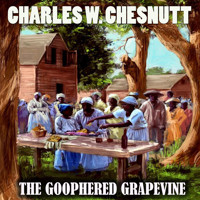
The first tale, The Goophered Grapevine, arises when John eyes an abandoned vineyard as a promising investment. Julius warns that the vines were once “goophered,” or bewitched, and recounts how unusual changes befell those who meddled with the grapes. The narrative links the vineyard’s fortunes to the human costs of enslavement, suggesting that profit detached from memory courts trouble. John weighs the story against his business calculations, while Annie attends to Julius’s perspective. The account introduces the pattern of each chapter: a modern decision refracted through a conjure tale, with the couple’s plans tempered by local knowledge and the complex past attached to the land.
In Po’ Sandy, John considers reusing timber from an old structure for a new project. Julius responds with the story of Sandy, an enslaved man shuttled between owners and tasks, whose plight leads to a conjure-assisted attempt to escape relentless exploitation. The tale emphasizes the fragmentation of families and identities under slavery, and attaches a powerful meaning to particular pieces of wood. Annie is moved by the implications for their building plans, while John must balance sentiment and practicality. Without resolving every detail, the episode highlights how materials and places can carry histories, subtly steering the couple toward choices that acknowledge past suffering.
Mars Jeems’s Nightmare addresses the perspective of an enslaver whose harshness meets an unexpected reversal. Julius tells how a sudden change forces the man to confront the conditions he imposed on others, recasting mastery and dependence. The narrative functions as a moral parable about authority and empathy, offering insight into how power can be disciplined by experience. Within the frame, John contemplates the story’s implications for managing labor and sharing responsibility on the farm. The account marks a turn in the collection toward examining transformation—not only through conjure, but through altered understanding—without detailing the precise mechanics or outcomes of the change.
The Conjurer’s Revenge centers on jealousy, trickery, and the instability of ownership in a world where people could be treated as property. A conjurer’s retaliatory act precipitates a chain of exchanges, complicating identities and exposing the economic logic of slavery in unsettling ways. Julius presents the story when John considers a tempting bargain, hinting that what looks advantageous may carry unseen obligations. The episode blends humor with unease, illustrating how quick profits can mask deeper losses. In the frame, the couple reassesses their planned trade, absorbing the warning embedded in the tale while maintaining focus on efficiency and fairness in their operations.
Sis’ Becky’s Pickaninny recounts a mother’s separation from her child through sale, and the possibility—real or imagined—that conjure might bridge the divide. Julius’s narrative foregrounds maternal strength, communal networks, and the limits of magic against legal power. The story surfaces during discussions about household help and charitable efforts, guiding Annie’s sense of responsibility toward local families. John records the details with his habitual reserve, noting both the emotional impact and the practical considerations. The episode does not rest on a miraculous resolution; instead, it emphasizes endurance and small acts of care, shaping how the couple approaches employment and support within their community.
The Gray Wolf’s Ha’nt follows rumors that a man once tangled with conjure now haunts the woods as a spectral wolf. Julius’s account intertwines fear, guilt, and pursuit, suggesting that violence leaves traces that resist simple closure. The tale emerges when John plans to hunt or clear timber, serving as a caution about dismissing local beliefs and memories attached to specific tracts. Without pinpointing exactly what occurred, the story invites measured action and respect for boundaries. The frame narrative shows John adapting his plans to accommodate risk and custom, while Annie recognizes how folklore preserves warnings that formal histories may overlook.
Hot-Foot Hannibal turns to courtship and rivalry, focusing on a charm meant to secure affection that creates confusion and unintended consequences. Julius shares the tale amid a social occasion, linking music and dance in the present to the disruptive energies in the past. The episode underscores the volatility of desire and the ethics of influence, whether magical or social. In the frame, the couple navigates hospitality and workplace relations, mindful of emotional currents among neighbors and workers. The collection’s sequence closes on an image of community shaped by choices and their costs, rather than on definitive enchantments or neat solutions.
Across the collection, Chesnutt’s frame-and-tale structure balances folklore with realism, using Julius’s conjure stories to channel lived histories of enslavement and its aftermath. John’s rationalism and Annie’s empathy create a listening space where cautionary parable, practical advice, and cultural testimony intersect. Each narrative aligns a present-day decision with a past event, emphasizing that land, labor, and relationships carry residual meanings. The overall message is not that magic solves problems, but that memory, narrative, and respect can guide action. The Conjure Woman thus presents a layered portrait of the postbellum South, conveying endurance, adaptation, and the moral weight of history.
Historical Context
Set largely in the postbellum rural South, The Conjure Woman unfolds around a former plantation near the fictional Patesville, a stand-in for Fayetteville, North Carolina. The temporal canvas ranges from the antebellum decades through the Civil War and into Reconstruction and its unraveling, roughly the 1850s–1880s. The landscape—pine forests, scuppernong vineyards, and aging plantation houses—anchors stories told by Julius, a formerly enslaved man, to a white Northern couple who have purchased Southern land. This setting captures a society moving from slave labor to tenuous freedom, from wartime devastation to speculative redevelopment, as racial hierarchies reconfigure under new laws, labor systems, and violence that anticipates Jim Crow.
The antebellum plantation order in North Carolina forms the book’s historical bedrock. In 1860, about 331,000 people—roughly one-third of the state’s population—were enslaved, laboring in tobacco, cotton, rice, and especially naval stores (tar, pitch, turpentine) that made “Tar Heel” a byword. State measures such as the 1835 constitutional amendment disenfranchised free Black people, while slave codes criminalized literacy and mobility. The domestic slave trade fractured families and commodified skill and kinship. Julius’s conjure tales often begin in this world: masters control sexuality, labor, and movement; enslaved people deploy folk knowledge for protection. The narratives render the plantation not as nostalgia but as a regime of law-backed expropriation and psychic terror.
The Civil War (1861–1865) and Union incursions into North Carolina reshaped the region’s economy and social order. Key events included the capture of Roanoke Island (February 1862), New Bern (March 1862), Fort Fisher (January 1865), and Wilmington (February 1865). General William T. Sherman’s Carolinas Campaign reached Fayetteville in March 1865, destroying the arsenal and hastening Confederate collapse. The Emancipation Proclamation (January 1, 1863) declared freedom in rebellious areas, and the Thirteenth Amendment (ratified December 6, 1865) ended legal slavery nationwide. In Julius’s recollections, wartime chaos, sales, and flight to Union lines reorder property and labor. Ruined vineyards, abandoned estates, and uncertain ownership in the stories mirror the war’s dislocations and openings for Black mobility.
Reconstruction (1865–1877) attempted, unevenly, to build a multiracial democracy. The Freedmen’s Bureau (established March 3, 1865) created schools, brokered labor contracts, and adjudicated disputes; the Reconstruction Acts (1867) mandated new state constitutions and Black male suffrage; the Fourteenth (1868) and Fifteenth (1870) Amendments promised equal citizenship and voting rights. In North Carolina, the Howard School (1867), later the State Colored Normal School at Fayetteville, trained Black teachers; Chesnutt served there as an educator and administrator in the late 1870s–early 1880s. Julius’s negotiations with the Northern landowner echo Bureau-era contracts and community strategies for survival. His stories register the promise and limits of Reconstruction institutions when set against local custom, debt, and racial patronage.
The rise of sharecropping and the crop-lien system after 1865 entrenched economic dependency. Lacking land and credit, freedpeople contracted to farm white-owned property for a share of the crop, while merchants advanced supplies against future harvests at interest rates often exceeding 25–50%. By 1880, a large share of Southern farms—approaching 40 percent—were cultivated by tenants, and by 1900 roughly two-thirds of Black farm families in the region labored as sharecroppers. North Carolina followed this pattern. In The Conjure Woman, vineyards, cane-fields, and orchards symbolize capital sunk in land and labor. Julius’s parables about ownership, access to natural resources, and the costs of “improvements” map directly onto sharecropping’s traps and the crop-lien’s perpetual indebtedness.
White supremacist backlash dismantled Reconstruction. The Ku Klux Klan emerged in 1865; North Carolina’s 1870–71 “Kirk-Holden War” saw Governor William W. Holden use militia under Colonel George W. Kirk to suppress Klan terror, leading to Holden’s 1871 impeachment. Nationally, the Civil Rights Cases (1883) curtailed federal protection, and Plessy v. Ferguson (1896) sanctioned segregation. In Wilmington, November 10, 1898, a coup led by Alfred M. Waddell overthrew a biracial government, killed at least 60 African Americans, and expelled Black leaders; by 1900, a suffrage amendment imposed literacy tests. Published in 1899, Chesnutt’s book encodes this climate: Julius’s coded resistance and the white narrator’s paternalism anticipate the legal and extralegal consolidation of Jim Crow.
Postwar redevelopment brought Northern capital, rail expansion, and agricultural experimentation. The Hatch Act (1887) funded agricultural experiment stations; North Carolina’s station promoted new crops and techniques. Scuppernong grapes, long cultivated in the coastal plain, became a site for commercial viticulture, while railroads reconnected inland markets to ports like Wilmington. Investors purchased distressed plantations for timber, turpentine, and vineyards. The white Northern narrator who buys a Southern estate mirrors this pattern of speculative acquisition and “scientific” improvement. Julius’s authority—rooted in local knowledge of soils, seasons, and communities—qualifies the outsider’s schemes, dramatizing how postwar modernization often depended upon, yet marginalized, Black expertise and customary rights to land and resources.
The Conjure Woman functions as a social and political critique by exposing the continuities between slavery’s expropriation and postbellum exploitation. Through Julius’s strategic storytelling, the book indicts coerced labor regimes, contract inequities, racial violence, and the commodification of Black bodies and knowledge. It satirizes Northern capitalist paternalism that seeks profits while ignoring community claims and memory, and it documents the law’s complicity—from Black Codes to segregation—in reasserting white supremacy. By translating historical crises into parables of land, labor, and healing, the work contests official narratives, foregrounds Black agency, and underscores how so-called modernization perpetuated class divides and racialized dispossession in the late nineteenth-century South.




