


5,49 €
Mehr erfahren.
- Herausgeber: CIESSE Edizioni
- Kategorie: Abenteuer, Thriller, Horror
- Sprache: Englisch
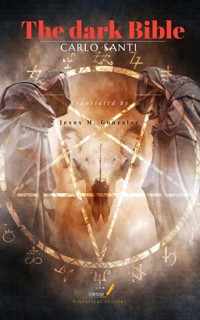
Tommaso Santini, together with the Sanctum Consilium Solutionum, is called again to solve a mysterious case that undermines the roots of the Church. Thirty-three years earlier, the semen of a boy, possessed by the Devil, was taken to fertilize a young woman. Nine months later, Belial Bompiani was born. A satanic sect made Belial the new Antichrist, thanks to a profane text called: The Dark Bible. A nefarious prophecy will make Belial, at the beginning of his thirty-third year of life, a destructive instrument that will want to mortally strike the Church by making use of that execrable text.
Once again, the Solver will find himself facing an unspeakable enemy. He and his team are given the task of finding who may be the man who embodies the son of Satan and to kill him before he can make it to his thirty-third year of life.
Das E-Book können Sie in Legimi-Apps oder einer beliebigen App lesen, die das folgende Format unterstützen:
Veröffentlichungsjahr: 2023
Ähnliche


















By the same Author of:
“The fifth Gospel” and “The Ark of the Covenant”
Carlo Santi
THE DARK
BIBLE
Translated by
Jesus M. Gonzalez
historical thriller
© Carlo Santi &CIESSE Edizioni
www.ciesseedizioni.it
[email protected] - [email protected]
Cover image: ©2017 creativehearts
(Right of use with the authorization of 123rf.com)
RESERVED LITERARY PROPERTY
All rights reserved. Any reproduction of the work, even partial, is prohibited, therefore no excerpt of this publication may be reproduced, distributed or transmitted in any form or by any means without the Publisher having previously given consent.
This is a work of fiction. Names, characters, places, and events narrated, unless otherwise indicated in the notes, are the fruit of the author's imagination or are used in a fictitious way. Any resemblance to real people, living or dead, existing events or places is to be considered purely coincidental.
To Elena,
source of joy in my new life
1
Montagnana, December 1977
The boy was sick. He hardly ate anymore and vomited everything he ingested within a few minutes. The mother, a widow for a couple of years, was beginning to despair because of his health conditions. They lived in one of the most beautiful walled cities in the Veneto: Montagnana, in the Padua area. The walls were one of the most distinguished and best-preserved examples of medieval military architecture in Europe. They dated back to the mid-fourteenth century when the Carraresi, lords of Padua, wanted to expand and strengthen what was an essential frontier of the Paduan state against Verona, under Scaligeri ruling at that time. The fortified city, built with overlapping layers of bricks and stones, was crowned by Guelph-type battlements. They were six to eight meters high with perimeter towers that rose over twenty meters.
He's fine, ma'am. He is a bit exhausted, but don't worry!
It was the only phrase, repeated several times, by many illustrious doctors who, after having subjected the boy to dozens of tests, declared his perfect state of health. Yet, he was ill, in fact, very ill. The mother was now more than sure after noticing that the situation was getting worse every day. The boy now presented conspicuous bruises all over his body as well as impressive purulent pustules and his voice was different, cavernous. He couldn't get out of bed, the light made him nervous and aggressive, so he hadn't left the house for days and stayed in the dark without wanting to see anyone, not even his mother. But the woman's greatest concern was her son's gibbering: incomprehensible, meaningless sentences. Perhaps, the desperate attempt to save him, disconsolate by the useless science expressed by medicine, led his mother to turn to the priest of the Parish of Montagnana. Don Renato knew the woman as a humble widow dedicated only to the family who, in order to support herself and her child after her husband's premature death, carried out some occasional cleaning work in the neighbors' homes. What the woman said made the elderly parish priest's skin crawl. He immediately realized the seriousness of the problem.
«I have to see the boy now! » was Don Renato's only request.
Arriving at the small house, the mother let the priest enter the boy's room who, as soon as he saw the priest, began to address him with unusual aggression.
Without any fear Don Renato asked him: «How do you feel, boy? »
The young man's eyes bulged. His pupils were dilated and were surrounded by a red halo.
«Afharmak hunted insites makbel ther! » He replied with a voice that seemed to come from beyond the grave.
«My God, Father, what did he say? » the mother asked terrified.
«I don't understand», replied the priest, , «but I don't like it at all. This is not normal. »
As soon as those words were spoken, the temperature of the room dropped suddenly, making the woman shiver even more. The parish priest prayed and blessed the boy with holy water which, upon contact with the body, added pustules to those already existing. The priest understood.
They left the room and the mother, offering a cup of tea to the elderly parish priest, asked him: «What do you think, father? »
«It's more serious than I thought», said Don Renato, «I think the boy is possessed by the Devil. »
Two days later
The Praglia Abbey dated back to the twelfth century.
The monks had always established a close bond of solidarity with the local people, offering the community all their products and services. On the one hand, this allowed them to earn a living and to provide for the ordinary maintenance of the monastery; on the other, it guaranteed to be able to bring help to various situations of need and poverty that gripped the people who came to them, confident and full of hope. In addition to the daily fraternal service and the stable commitment in the various areas of life of the monastery, the monks in Praglia took care of some specific work activities: the restoration of ancient books, herbal medicine, beekeeping, the publication of works of monastic and spiritual character. Not only that, but the monks also had a real perfume distillery. They successfully sold them in their shop inside the Monastery. What very few knew, however, referred to some particular monks. Particular because they were true and authentic exorcists, regularly recognized and authorized to exercise by the Vatican. Don Renato had no doubts when he turned to them to heal the boy from Montagnana. Having made the appropriate arrangements, requested the necessary authorizations from the Curia, he obtained the blessing of the Bishop of Padua. Three monks from the Abbey of Praglia left for Montagnana. They showed up in the house that same evening, gave the order to the mother not to enter the boy's room for any reason in the world, even Don Renato was held out of the room and invited to pray with the woman. The three monks entered the room and the boy remained calm. In fact, he was strangely calm, like he was expecting them to liberate him from all his ills. The monks immediately realized that they were in the presence of who-they-thought. They spoke to him in the unknown language and the boy answered without problems.
«It’s him! » the one who appeared to be the oldest said to the other two.
«No doubt». One nodded.
One of the three opened the bag and took a large cylindrical steel tube where the letter N was engraved, another prepared a medium-sized syringe and a test tube, the third took a small syringe sucking a bluish liquid into it.
«Ready? » asked the eldest.
The two nodded. The boy was made to fall asleep with a powerful narcotic. Then, with a syringe in the genitals they took the semen, immediately transferred it to the test tube which they sealed and deposited in the cylinder that contained liquid nitrogen. They also closed the container and injected the bluish liquid into the boy. They left the room and advised their mother not to enter the room for the next few hours because he would need to rest. At the same time, they reassured her by telling her that everything had gone according to plan. They wanted nothing and left in silence. The mother had finally calmed down: that son, her only son, would recover, she was convinced of it. She let a couple of hours go by in which it seemed that the boy was better because he had slept without getting agitated. When she decided it was time to wake him up to eat, she opened the door and saw him naked: every bruise or pustule, now, had disappeared from his body. The woman approached her son, his eyes were open and fixed, he was not breathing. She screamed with as much voice as she had in her throat: his only and beloved son was dead. When the Carabinieri arrived, accompanied by the legal pathologist, at first glance they could not explain that sudden death. They would have looked for the causes with an autopsy, but they would never have found them. Meanwhile, they began the search for the three monks: a search that was short. They found them not far from the house, behind a row of garbage bins: dead. Their death was also classified as mysterious, but the time of death matched that of the boy. The woman and Don Renato were accompanied to the place where the bodies of the three religious were found so that they could confirm their identity.
But they did not recognize them. They were not the same ones they had seen just before.
2.
Fourth Crusade ‘Reconquest of Zara’, year 1202
In the year 1202, the largest and most beautiful fleet set sail to begin navigation. The year before, Boniface I of Monferrato had been appointed commander of the Fourth Crusade in the Holy Land. Although, after the complete failure of the Third Crusade, in Europe, they were little interested in repeating the adventure. Jerusalem was in the hands of the Kurdish-Muslim dynasty that ruled Syria and Egypt.
The fourth crusade was commissioned by the very young Pope Innocent III, elected at the age of 36 in 1198. A few months after his nomination to the papal throne, he encouraged Catholics to reconquer Jerusalem by issuing his first encyclical. Nobody was excited by the idea. The reaction of the European states created numerous controversies with the Pope, but anyone who pulled back would have incurred in excommunication. To avoid it, Venice asked the Pope for a dispensation from participation, having established high-level commercial relations with Egypt; a new crusade against that people would have meant incurring financial disasters for the lagoon city. But the Pope was adamant, and it was thus that he began the fourth crusade, just over three years after his encyclical. Arriving in Zara, now under the aegis of the Kingdom of Hungary, the crusaders were not well received, in fact, the population proved hostile. After five days of siege, however, the inhabitants had to surrender and witness a bloody looting, despite their being a Christian city and therefore protected by the Pope. The consequence was the excommunication of the crusaders and their commander, who, realizing that their life was in danger, and they could not even go home, they decided to establish headquarters in Zara, especially as winter was upon them.
Boniface established his lodging and command in a dilapidated building which he also used as a church. During the cold season, he did what he could, also using his influences, to put the blame for the taking of Zara and the looting on the Venetians. The Pope, once the necessary testimonies had been taken, annulled the excommunication of the Zara crusade and gave it to the Venetians. In the meantime, however, Boniface had organized to attack Constantinople as well in an attempt to confer to the Pope the success of a battle that would have been epic for the Church. However, while organizing the assault, a young Muslim named Iblis Abdul Hassad showed up at his camp. The boy made his way among the crusaders and introduced himself to Boniface I's assistant.
«I have to speak to the supreme commander, Messer Boniface I of Montferrat. I have news that will lead him to certain victory over Constantinople». Iblis began.
The commander's assistant was intent on chasing him away and, if he insisted, he would even put him to death, but he realized that the boy could not have been aware of their plans on Constantinople, so he thought there had been some information leaking. He tried to investigate the subject, but the boy was adamant, he would only speak with the commander. It would have been a bad idea to bring a boy in the presence of his superior without having first warned him, but the eyes of that strange visitor gave him an unsettling feeling. He decided, therefore, to help him. He would think of the consequences of that decision later. As he imagined, Boniface I was angry with him, although curious to hear what the boy had to say. He made him sit down struck by the mysterious air that surrounded him: he appeared young, but with the physique of an adult already formed and sculpted, the black pupils contrasted with the bright red outline, the sinuous, almost feline movements.
«Your young life is at stake», Boniface began, «if what you have to tell me doesn't pique my interest. Choose your words well. »
The boy went too close to the commander and said: «Send your servant away, crusader, from this moment his services are no longer needed. »
Boniface was almost annoyed, but he could not think otherwise, he ordered the assistant to go out and leave him alone.
«But my lord ... » the assistant tried to blather.
«Get out of here! » Boniface thundered in reply.
The boy smiled faintly, took a heavy book from the bag and handed it to Boniface who inspected it thoroughly before opening it. The features of that book were impressive: embossed leather cover, bearing the effigy of a pentacle with incomprehensible writings and, inside, pages that appeared to be ancient containing texts, formulas, and drawings. Those images and formulas meant nothing to Boniface. He carefully browsed through a few pages. As he tried unsuccessfully to read the text, he realized that he was beginning to understand some words. He read in one breath, always understanding a new word, another word, whole sentences, or the whole page. He had forgotten the boy, too busy with frenzy, more and more convinced that there he would find every answer to his problems, in fact, to every problem. He immediately realized that, with the use of those teachings and formulas, he could dominate men, to the point of making them his slaves. He felt invincible, but he was never satisfied with that text, for hours he let himself go to that reading and only woke up after reading and understanding the last page. By now he knew everything about that book. He had absorbed its strength and knowledge. He looked up at the boy, he was still there, patiently waiting and never having said a word. But he was no longer the boy he was before, now he was a mature man. Twelve years had passed: Boniface I of Montferrat, without noticing the time, without feeling tired or hungry or thirsty, had read the book in twelve long years.
By now, he knew everything about that book. It was the Dark Bible.
3.
December 1977
The three false monks, having left the home of the boy from Montagnana, headed for the center of Padua to the private clinic of Professor Gianni Callegaro, university professor specializing in gynecology and precursor of artificial fertilization. Callegaro was a brilliant and influential scientist, a fifty-year-old dedicated to work. He was also one of the first pioneers of artificial fertilization where experimentation, by now, had given way to certainties. The chosen one was the right age for that experiment. Twenty-one years old, the body toned and formed, well-educated and cultured, intelligent and brilliant, healthy: excellent. Professor Callegaro's selection had been irreproachable. The event was of so vital importance that he could not afford to make mistakes. And the Sect of the Dark Ones did not tolerate even the smallest mistake. The professor was convinced, in fact, he knew that failure would lead to his death. But he wouldn't do anything wrong, not him. The woman was the ideal specimen, and the seed was the best she could hope for. After years of patient waiting, the much-invoked moment had arrived: they had at their disposal the seed of a subject possessed by the Devil, the intoxicated seed of absolute evil. Finally, they would have given life to the man who would have allowed the change of destiny for the whole of humanity: the Antichrist. The professor had prepared his team, all expert collaborators aware of what they were preparing to do, all members of the organization, faithful and, above all, blindly devoted to the cause. The woman was examined with professional accuracy, she too aware of the honor she had been invested with. Callegaro had finished the visit, he was satisfied. Turning to the woman, he confirmed her state of health.
«I would say that you are in a splendid shape. I am very proud of you, Paola. You followed the program flawlessly, well done. »
The woman's name was Paola Bompiani, daughter of a well-known entrepreneur. He was also a faithful follower of the Sect as well as his entire family. The parents had sacrificed their only daughter, proud of that choice that would honor their name and give birth to an extraordinary event: they would become the grandparents of the Chosen One. They too had done everything to ensure their grandson the best. Their task was even more important than that of their daughter: the maintenance of the child within exceptional standards as well as his education so that, at the appropriate time, he could be ready to absorb knowledge. And they also knew that their daughter was in danger of not surviving that experience: a huge sacrifice but necessary for the just cause. Paola was not at all upset. She knew every aspect of the event that was being generated with the help of her body and her own life. She, too, had been prepared in all those years so that she could guarantee the best result. She knew she would have to wait for the right moment: now it was here.
«Do you guarantee that I will not suffer? » Paola asked lying on the operating bed.
The professor reassured her: «Of course dear! I've always told you everything and you know what you're getting into. I will make sure that nothing and no one can harm you. Now relax, we'll start the operation shortly. It will be a matter of minutes, you'll see. »
Paola tried to relax, but she couldn't. She was certainly not worried about the insemination, even if that was by no means a normal operation, but she was afraid of giving birth, in fact, she was terrified of it. The reassurance the professor had always given her didn't take her mind off that thought. The gestation would have taken place inside a ward of the private clinic, in perfect isolation from the outside world so that no germs, viruses or diseases could affect the fetus which, therefore, would have been protected above all personal needs. But Paola would not have survived the birth. They had given her very little hope. She had accepted with faith for the cause, but she could not overcome the terror of the thought that her young life would end in such a peculiar way. She could not back down now, the anesthetist and the whole team were already there, ready for the operation. In the next room, other doctors had carried out a preventive treatment on the donor's spermatozoa by washing with the swim up{1} technique. They had the young woman placed in a gynecological position, then, through a probe inserted into the vagina, the professor injected the treated seminal fluid into the uterine cavity. The whole process was meticulously checked on special monitors connected to the instrumentation. After a few minutes, the operation was classified as a success, now it was enough just to wait for the sperms to follow their natural path by fertilizing the oocyte.
January 1978
Professor Callegaro eagerly awaited the outcome of the exams, together with him, seated around the meeting table in his office, were Paola's parents: Vittorio and Sara Bompiani. The girl, on the other hand, was monitored in the clean room they had prepared for her in the clinic, with all the confidentiality of the case. Paola had every comfort at her disposal. The room was spacious and contained what she had requested: many books, a gym to stay in shape, she wanted to eat only her favorite foods, albeit under careful supervision by nutrition experts. Apart from the freedom to go out and lead a normal life, Paola lacked nothing, and that condition of recluse was quite bearable. An assistant to the professor came into the office and broke the news: Paola was five weeks pregnant.
They were the long-awaited extraordinary news.
4.
Zara, year 1214
Boniface was shocked, incredulous that he had spent all that time reading the strange book without having noticed it or having suffered from hunger or thirst and without growing old.
Everything around him had remained unchanged: furniture, carpets, furnishings, yet who knows how long had passed. He realized this when, after leaving the building, he found it dilapidated, in pitiful conditions as if it had been abandoned for years. He wondered what could have happened to him. He had seen the boy just before starting to read the book and, immediately after finishing it, he was still there, only he was older. But then the young man disappeared and, with him, the book as well. Boniface remembered every word, formula, or message: they were inside him. He felt them present in his mind and, above all, in his soul. It lives inside of me! It was his first thought. Chaos reigned in Zara. There were still some mismatched groups of crusaders who had probably remained in garrison to ensure the established order. Wandering around the city, Boniface met several of them without recognizing even one. Either they died in battle or of old age. He said to himself.
When he met a man, he ordered him: «I am Boniface I of Monferrat, inform me of the situation. »
The man, named Luca, recognized him instantly and told him that he had been reported missing in the great battle of 1202, when Zara was sacked. He confirmed that the Pope had given the excommunication to the Venetians and that the crusade would have to go to Constantinople. And so, it had been, but they had been repelled with immense losses. It had also been said that the great Boniface I had perished precisely in the final battle.
«But you are still alive, sir», said Luca excitedly, «come with me, my lord. The men will be happy to see you again.»
Bonifacio thus learned that twelve long years had passed. So, there were seven days to go until he turned thirty-three. He followed Luca like an automaton for a few kilometers outside the city to where the camp of the surviving crusaders was located. There were few tents and even fewer men, most of them wounded, battered, and malnourished: a true ghost army. Luca ran to announce that the lord of Monferrat was alive, survived the battle of Constantinople and that he would protect and save them from that loneliness. The men, less than a hundred, gathered in the center of the village, hoping to be able to return home, finally safe and sound. Boniface immediately realized that these men no longer had anything to do with a true crusader: dirty, emaciated, with very black teeth. He felt disappointed, perhaps he was expecting a real army as he had left it before he started reading, but it had been twelve years ago, following the logical temporal reality. He did not lose heart, on the contrary, he felt proud, strong and victorious. He began to speak and realized that he was making a speech to incite the war against Constantinople, those were not the words he wanted to say, that was not the speech that was going through his mind at that moment, but he did not stop for a moment. He had no inflection other than the emphasis of the spur. The speech was convincing, the men's eyes shone with renewed courage. Gathered in an incessant chorus. They chanted his name with an ever more frenetic rhythm, shouting in chorus: Boniface, Boniface, Boniface! And his name was repeated endlessly, for hours, while the conviction grew in him that he would be able to wage any battle. He would create his army of men, subjects, slaves. He felt power rising within him: the power of domination over men. In the following two days, the rumor of the return of the great Boniface I of Monferrat spread throughout the population and in the neighboring villages. Everyone went to great lengths to convince every available man to pick up a weapon and follow the new leader to victory over Constantinople. Seven days later Boniface turned thirty-three and felt even more powerful. Outside the tent, they shouted his name, a roar that managed to shake the earth around them.
Boniface, Boniface, Boniface ...
He went out of his tent and saw an army of two thousand men, but others were reaching the already overcrowded camp. He began to speak until he pronounced sentences in a language other than his own. He realized that it was the language acquired by reading the book: the Dark Bible. The men were bewildered for a moment, then they seemed to understand him and resumed shouting his name while he still spoke. And the more he talked, the more people came, perhaps three thousand or four thousand men, a multitude of which he could not see the end.
Days, months, and years passed, Boniface first conquered Constantinople, then other cities and more.
He was never satisfied with the conquest.
Boniface I of Monferrat was a great leader, cruel and implacable, men died for him without delay: they were fascinated and adored him as a God was adored. He recorded memorable victories, enemies were exterminated, he never took prisoners.
Thirty-three years later, year 1247
At the height of his splendor, rich, powerful and respected, at the end of his sixty-six years, he declared himself King and designed his kingdom. He made arrangements for every man within the kingdom, whether he was a subject or not, to adore him not only as a King, but above all as a God. On the same day, intent on celebrating his birthday and coronation, a boy presented himself to him. Boniface recognized him. Iblis! He said to himself in amazement. From the last time he had seen him, thirty-three years ago, when she had read the book, Iblis had looked aged by that time. Now, however, he had before him the same young man from his first meeting.
«Do you recognize me, Crusader? » Iblis asked.
«Yes, I know you, but how ... »
Bonifacio stopped, putting his hand to his chest, an excruciating pain took his breath away, but he felt that someone was also taking something else from him, even though he could not define that sensation. In fact, he was dying, he felt it. He was incredulous because he now considered himself invincible.
«I gave you the knowledge of power», Iblis began, «but you are not satisfied. You could have named yourself King and ruler. You could have enriched yourself beyond all measure. You could have conquered the world. »
Iblis waved a hand and Boniface I of Monferrat died. From the lifeless body rose an evanescent beam of light that Iblis took with his hand, almost assimilating it to himself.
«But you can't proclaim yourself God! »
He added and left undisturbed.
5.
Vatican City, September 27, 1978
Pope John Paul I, elected to the papal throne only thirty-two days earlier, was in a meeting with the Vatican Secretary of State, Cardinal Jean Marie Villot. The same person had also been the Camerlengo of the Holy Roman Church, just over a month earlier, following the death of the previous Holy Father. The Cardinal had already reported to the Pope the secrets that the Church had kept for centuries. The protocol also required that the Secretary of State be placed in a position to know such confidential information in particular situations, such as serious illnesses or even only in case of life-threatening signs for the Pope. At that moment, Villot and the Pope were talking about the Sanctum Consilium Solutionum, better known as SCS, as well as the role played by the head of the Council: The Solver. In fact, it was necessary to appoint a new one because the previous one had died on a mission.
«It's incredible», said the Pope, «I had no idea that there were so many secrets within the Church, but this seems to me the most absurd of all: a private organization that kills, in fact, priests who kill in the name of the Pope and of the Church! It's hard to digest, Eminence. »
«I understand, Your Holiness», Villot replied, «but we are talking about one of the oldest institutions of the Church. The first Solver was elected in the 5th century and the Council has never been dissolved or changed over the centuries, a symptom that it has always been considered indispensable for any Pontiff. Only the Templars overcame the power of the SCS for two centuries. But, with their departure, they remained the only organization of the Church still considered armed. It has always done its job very well, which is why I ask you to authorize me to let the chosen candidate in. »
«This explanation does not convince me, Eminence», the Pontiff replied annoyed, «but it is not up to me to change the secular rules of the Church, at least not after just a month after the election. Tell me who this man is and why he is the right candidate. »
Villot took the folder and placed a series of documents on the table explaining his position to the Pope: «The candidate is called Tommaso Santini. He has been a member of the Council for about a couple of years. He is a young man who distinguished himself in training in weapons and combat, and he was also the chosen one of the previous Solver who was training him. He is smart, shrewd, intelligent and endowed with a high-level of culture. He perfectly knows seven languages including Arabic. But, above all, he is a man of Faith, Your Holiness.»
«How old is this young man? » the Pope asked.
«Twenty-five, Holy Father». Villot replied.
The Pontiff stood up. «My God, Eminence, he's a little boy! And should he be the person who defends the foundations of the Church, state secrets, and the Pope? »
«Your Holiness, let me let him in», the Secretary of State said confidently, «you will see this with your own eyes. »
They called the boy and he showed up in the study, not at all disturbed to be in the presence of the Pope and such a powerful Cardinal. Santini walked with the grandeur of his meter and ninety, his proud bearing, his ice-colored eyes aroused awe. Above all, they noticed the confidence carved in the features of his face: he was already a mature man, albeit young in age. He approached the Pope with a sure-footed step. He was much taller than him. The Pope reached only to his chest. The young man got down on his knees and kissed the papal ring, staring into the eyes of the Holy Father who, surprisingly, managed to sustain that glacial gaze. He remained on his knees until the Pope gave him permission and they made themselves comfortable in the living room of the study.
«Why did you stare at me like that? » the Pope asked Santini.
«Because I have to know at the service of whom I will put my life! » the young man answered, almost irreverent.
The Pope, however, liked that boy, he asked again: «And what did you deduce? »
«That you, Your Holiness», he replied, «are the right person. For this, I offer you my services and my life. I swear to you obedience and fidelity, my Holy Father. »
Santini got back on his knees, lowering his gaze as a sign of obedience and, above all, in the fullness of the humility of the strong.
«Get up Tommasso» said the Pope, «it did me good to look into your eyes: I saw your Faith before your strength. You have my blessing, Solver. »
It was the official investiture. There were no documents, no writings, and no papal bulls; that of the Solver was the millennial secret that gave no glory, known only to a select few. It was the fate of the Solver to serve without expecting anything in return, sacrificing everything for that task. Santini, in his task, would be joined by a group of men chosen by himself and kept secret from most. He had sworn fidelity and obedience to the Pope. His men would have done the same, but only to him. The Solver could meet the Pope and the Vatican Secretary of State while no one on the Council could have come close to those important figures. He was guaranteed plenary indulgence. And despite being a priest, he was dispensed from the ministry, which is why he could not practice the priesthood. But he was still a priest, a man of the Church. Santini knew that, with his appointment, he would start a new life, the only one that he would be allowed. From that moment on, the alternative could only be excommunication or death. The Secretary of State, being the one who knew the secret of the Council best, took the initiative, previously agreed and authorized by the Pope.
He turned to Santini. «Tommasso, from this moment on you are honored with the appointment and the title of Solver, but you are not yet ready, your master did not have time to complete your preparation. So, your training will be completed by Master Giovanni Santini, your grandfather's brother. »
«Fra Pasquale? » Santini asked in amazement. «Maybe there is a mistake; I care about Fra Pasquale, but he is ... old! »
«Yes, he is old, as you irreverently say, but he will be able to complete your preparation. » Villot answered him. «What you don't know, Tommaso, is that Giovanni or Fra Pasquale was also a Solver, one of the best, the only one who was able to retire in life. He knows his stuff, in fact, he will tell you himself. »
The Secretary of State asked the Pope for permission to admit Giovanni Santini, who had been summoned on purpose. The sprightly friar was excited. He hadn't entered the Vatican for many years, but he was even more excited by the appointment as Solver of that promising young great-grandson. He knelt before the Pope and kissed his ring. The Pontiff would not have wanted, but he did it without any effort. With the same agility he stood up, bursting with vigor. He also greeted the Secretary of State and took a seat in his turn, next to Santini.
«They tell me you were the Solver yourself, Excellency. » The Pope asked Fra Pasquale.
The Solver could claim the title of Excellence like Bishops or Monsignors, for merits of the services rendered in favor of the Pope, the so-called military or armed merits. But the young Santini was not yet aware of it, so he remained silent and metabolized every word.
«Yes, Your Holiness», replied the friar, «from thirty-seven to sixty-nine. »
«Well! I've heard great things about you. » The Pontiff said, then asked him: «Do you feel like taking on the task of completing Tommasso's training? »
The friar nodded with shining eyes. That task honored him beyond measure. Being the one chosen for the delicate task brought him back twenty years.
It was the Secretary of State who concluded: «Solver, may God help you in the task that awaits you. You are entrusted to Master Giovanni Santini for the needed time and until he himself decides that you are ready. In the meantime, you will also be assisted by him at the command of the Council, and it will always be he who will indicate the punishment you will have to bear in cases of indulgence. Know that indulgence will remit all your sins, but not your conscience. You will need to find a spiritual master and a confessor. Do you have someone in mind? »
Santini had no doubts. «If he wants, I will be happy, proud and honored to entrust myself to Fra Pasquale, as confessor and spiritual father. »
Santini bowed to the elderly friar: the Solver of yesteryear.
6.
Padua, September 28, 1978
Exactly nine months had passed from the day of insemination. Professor Callegaro's team had been ready for the birth for days. The girl had been locked up in a sterile room all that time, never going out. The parents had told everyone that Paola had left for Canada to study and carry out research. The gestation had presented itself terrible. The excruciating pains and nausea had been so violent that the girl could not wait for everything to end. Even the danger of a possible death in childbirth, never denied by the professor, would have been welcomed with serenity by the young woman, who could no longer bear that torment. When the first contractions began, for Paola it was liberating. It was certainly not the most intense pain of the previous nine long months. That suffering was nothing in comparison, in fact, it was the end of a torment that had lasted too long. She cursed the day she had decided to undergo that experiment Now, she could even die, she no longer cared about anything, and, above all, she didn't want the baby she was about to give birth. She did not want him for what he was and, above all, for what he would become. She had undergone the experiment enthusiastically, with confidence and conviction, but that restless fetus, the strange feeling of having an inhuman being in her womb or, perhaps, just the idea of the kind of father that had been imposed on her, had made her change her mind almost immediately. She also knew that; however, she could no longer hold back, and if death had not come with childbirth she would have sought it alone: she could not afford to stay alive with the thought of the mistake and horror she had committed. The pangs continued and the pains were about to reach the epilogue while the contractions were getting closer and closer. She screamed in pain; a stab seemed the externalization of the will of the being she carried in her womb. She did not want to wait for the times dictated by nature. The birth canal was open a few centimeters, normally the labor pains should have continued for another six or seven hours, but the excruciating pain and the violence of the contractions that sent all instruments out of phase indicated that there was no more time to waste. Professor Callegaro decided on a caesarean section; otherwise, the young woman would have died from severe lacerations and blood loss. The professor's team rushed to take Paola to the operating room when the irreparable, the feared one happened: the baby was born regardless of all predictions. Paola fainted, the blood came out copiously and, submerged in the reddish liquid, the baby appeared.
Belial Bompiani was born at that time.
Paola Bompiani, his mother, died soon after.
In the same instant, John Paul I died inexplicably: The Smiling Pope.
7.
Florence, year 1476
Leonardo Da Vinci, painter, architect, scientist, and writer, was one of the most illustrious minds of mankind, the natural son of the notary Ser Piero and a young peasant woman, was born in 1452 in Vinci, a small rural village. He spent a fairly peaceful childhood, divided between his mother in the early years and then with his father until he was twenty. Given his undoubted qualities and skills in drawing, he was welcomed as an apprentice in Andrea del Verrocchio's art workshop. Leonardo drew, painted and studied with an interest in all fields of human knowledge. Having not studied Latin, at the time, he could be classified as an illiterate, but his genius came to his aid: as a self-taught man, he set himself the goal and tried to learn it, while he also explored anatomy, engineering, architecture, and any other science. After drawing, writing was his great passion. He wrote continuously, took notes and made sketches after sketches, but he was so obsessed with the idea that someone could plagiarize him that, to keep his notes secret, Leonardo used the stratagem to write from right to left. Not only that, but he also provided to anagram every word of which he wanted to keep the utmost confidentiality. Another obsession of Leonardo was the practice of sodomy. Homosexuality, at the time, was considered a very serious crime, punishable by death. For this, it was practiced in secret. But in 1476 an anonymous complaint was filed against several people, including Leonardo da Vinci, for sodomy committed against a seventeen-year-old, a certain Jacopo Saltarelli.
In the criminal trial that followed, there was a young Englishman who testified in favor of Leonardo, clearing him of the charges. English on his father's side, the young man was transplanted to Florence because of his Italian mother: his name was Moloch Arawn. Each charge against him was dismissed and, for the brilliant Leonardo, the case was archived. The two formed a strong friendship and shared days of carefree joy among young people. Moloch, intrigued by the method adopted by Leonardo in writing, proposed him a text.
«You won't be able to decipher it», he said jokingly, but also defiantly, «it's written in an unknown language, very difficult to translate. If you can decipher it, you will be invaded by the highest knowledge. There will be no other man within your reach. You will be considered the absolute genius for eternity. »
Leonardo was also very curious and self-confident and never satiated with learning. He decided to accept the challenge.
«I'm in, Moloch», he replied, «in a few days, I'm sure you'll have to change your mind and you'll regret challenging me. If I manage to translate it, however, you will be my slave. You will fulfill my every wish, even if it were the most absurd. »
«So it will be, my good friend». Moloch answered.
The young man took his bag and presented a book to his friend: the volume was finely bound in leather with the effigy of a pentacle in relief. Leonardo had seen many books in his young existence. He studied it in every detail, it seemed ancient and yet so well preserved. He was fascinated by it and in opening it he had a reverential fear that it could be ruined. He didn't resist for long. He opened it reading the first lines and smiled. He smiled because the words, phrases, drawings, maps, and formulas contained therein seemed more and more understandable after reading them just twice. They were certainly difficult to interpret but Leonardo realized that, as he went on with the reading, that text opened to his mind or, better still, his mind opened to that text. He read without stopping, absorbed as if that reading were the only thing that kept him alive. His genius made the difference, a short time later Leonardo had already finished reading the entire manuscript, assimilating all that knowledge. He was ready to tackle any field of science, engineering, design and more. His mind now had no boundaries. He felt within him that he could try his hand at any test, know anything existing on earth and in the Universe: his mind now almost reached the divine, thanks to that book. He looked up and didn’t see Moloch. He jumped up and went to look for him in the other rooms, without success. He went back to his room and was amazed: with Moloch, the book was gone too. Leonardo, thinking back to the knowledge assimilated by reading the book, did not care about that strange boy or even the reasons that had led him to him. He concentrated on the contents of the text and was surprised to have them well impressed in his memory.
The Dark Bible! He thought without even realizing why that statement had occurred to him. He had the sensation of feeling older, more mature, as if years had passed instead of hours. A terrible doubt arose, he went out into the street and realized that, even if only slightly, the environment was not what he remembered. Until a few hours earlier, the town had some connotation different from what he remembered. He asked passers-by a few questions, wanted confirmation, asked the same question again and again and to several people. Everyone agreed, there was certainly no mistake, by now he had proof of it: it was the year 1485. He had spent seven years reading that whole book: the Dark Bible.
And that day Leonardo da Vinci celebrated his thirty-third year of life.
San Fiorentino in Amboise, year 1519
Leonardo da Vinci caused a sensation in the known world. He was an absolute genius who gave rise to works and ideas of enormous proportions, still very topical today. He described himself as a man of science, engineer, and creator of war machines, but he was also one of the most appreciated painters who gave life to authentic masterpieces of inestimable value. His creativity as a magnificent artist saw him protagonist, alongside none other than Michelangelo Buonarroti, with whom he painted the great Council Hall in the Palazzo della Signoria, in Florence. In 1519, he felt the end of his enlightened life approaching. At his bedside many presented themselves, everyone wanted to honor his art and knowledge. One of these visitors, Leonardo Da Vinci recognized him immediately, was Moloch Arawn.
«I am pleased with you, my good friend», Moloch told him, «You have led a life conforming to the teachings of the Dark Bible. You have created wonderful things, too enlightened for these poor mortals who have accused you of witchcraft. You deserve life beyond life. »
In that instant, death came before the artist: the scientist, the inventor and the painter Leonardo Da Vinci died in May. His body was buried in San Fiorentino in Amboise from where he mysteriously disappeared, leaving no trace. The causes hypothesized by most were the desecration of tombs during the religious wars of the sixteenth century.
Instead, Moloch had kept him a place reserved for the few and honorable chosen ones: at his side, thus guaranteeing him life beyond life.
8.
Padua, September 28, 1978
Callegaro's team made every attempt to save Paola. They continued relentlessly to risk resuscitation. It was half an hour now that the instrumentation marked the end of all activity, both cardiac and cerebral. The professor checked the machinery and the test data several times, in fact, the recorded bleeding made no sense: there was no medical explanation for Paola's death.
«That's enough, gentlemen», he ordered without harboring any other hopes, «she's dead now. Let's focus on the child»
The little Belial Bompiani, on the other hand, was showing signs of splendid health: fit and hungry. A nurse was already guaranteeing him his nice ration of milk which he drank in one gulp, almost without breathing. Soon after, a group of people entered the recovery room who, without saying a word, took both the child and the body of the young and unfortunate Paola.
Professor Callegaro wanted to clarify: «It is not yet time, the child must stay here. He needs to be under observation for at least forty-eight hours. »
The leader of the group was not of the same opinion. «Your work is done, Professor. So it was decided. »
And those men disappeared taking with them the anxiety of that day.
Vatican City, September 28, 1978
The news of the death of the Holy Father, Pope John Paul I, shook the whole world. After just thirty-three days, Pope Luciani had set a sad record: the shortest pontificate in the history of the Church. The causes of death were shrouded in mystery. No one ever dared to pronounce that word, but the few connoisseurs of the prophecy were now convinced: somewhere in the world, at the same moment in which the Pope had died so incomprehensibly, the Antichrist had seen the light. This eventuality was kept hidden from the world that would have considered that sudden and premature death a true mystery. This fact, indubitable for the Universal Committee of the Holy Roman Church, which has always been delegated to study the advent of the Antichrist on earth, justified the interpretations based, in part, on Nostradamus who, in his prophecies, had indicated precise periods and characters that would identify Antichrist himself. The interpretation of the texts of the famous and controversial French writer had also predicted that a new Antichrist would ascend at the end of the second millennium, but only at the beginning of the third. According to the specifications of Nostradamus{2}, he would destroy the Holy See causing the abomination of the desolation and devastation of the earth with catastrophic events. Nostradamus also predicted that the birth of that new Antichrist would lead to the death of the Pope of the moment: precisely, Pope John Paul I. Cardinal Jean Marie Villot was again invested with the office of Camerlengo of the Holy Roman Church to organize the Conclave and, at the same time, to govern the fate of the Church until the new Pope was officially invested with full powers. Some distinguished members of the Universal Committee wanted to inform him about the prophecy so that the Church could defend itself from such an evil presence. Villot, however, did not want to believe in such an approach, on the contrary, he interpreted it as a fanatic conviction of a small group of ecclesiastics, albeit animated by Christian principles. In any case, he intended to talk about it with the new successor of Peter, immediately after his election. Unfortunately, he would never have had time to investigate and be able to understand his error. Cardinal Jean Marie Villot would also die the day following the election of the new Pope: John Paul II, aka Karol Jòzef Wojtyla. Also, for that reason, no one spoke of Nostradamus' ominous prophecy for over thirty years.
9.
Alexandria of Egypt, year 1799
Born in 1769, Napoleon Bonaparte was a leader, statesman, emperor of the French and King of Italy. Belonging to the small provincial nobility of Corsica, he was directed by his father to a military career: at sixteen he obtained the rank of second lieutenant in artillery. France, at that time, was facing the insurrections of the French Revolution and Bonaparte's merits were such that in 1791 he was appointed battalion commander, then Brigadier General only two years later. Deeply linked by fraternal friendship to Robespierre. He was also arrested after an attempted coup that failed miserably and then disbarred from the army. Gifted with an emotional and restless temperament, Bonaparte was a man desirous of power, endowed with a marked sense of self-centeredness. Nevertheless, thanks to the prestige gained on the field, in the following years he managed to emerge again, placing himself at the attention of glory and staining himself with heinous crimes aimed at eliminating some members of government assemblies thus carrying out an actual coup{3}. Later, in the year 1798 at the age of only twenty-nine, he was entrusted with the expedition to Egypt, intended to cut off England's connections with India and its other overseas possessions. It was a victorious campaign: he conquered the island of Malta, Alexandria of Egypt, and began to advance towards Syria, but these victories were thwarted by the English admiral Nelson in the bay of Abukir. Not only that, but there was also another episode that made his dreams of glory and victory collapse: the French army was struck and exterminated by the plague in 1799. Uriel De Fontaine was a young French soldier who distinguished himself in the numerous and victorious African battles following Bonaparte on every occasion. Napoleon took him with him, as his inseparable assistant in war. In that black period for the great leader, De Fontaine was a comfort to him, and this facilitated a relationship of confidence. During a frugal dinner, the two were intent on enjoying a good cognac.
«My commander», De Fontaine began, «I think I have a reading to submit to you to refresh your spirit and make you stronger, more determined and victorious. »
Bonaparte was an attentive reader and devoured dozens of books of all kinds, even if the main reading was the maps where he drew up his war strategies.
He declared himself curious. «Why not! My good friend, a good read is never refused, I'll read it before I go to rest.»
Uriel De Fontaine handed him the book, noting Bonaparte's surprised expression. The volume was of considerable feature and value; the pentacle, placed in relief on the finely worked leather cover, made it disturbing and, at the same time, captivating. Bonaparte opened it and began to read incomprehensible sentences. He snapped the book shut, animated by a feeling he couldn't explain.
«What is this book, Uriel? »
«You don't need to worry, my friend», replied De Fontaine convincingly, «read and you will understand every word, but you must not be afraid, open your mind to that knowledge and you will be given the answers you seek.»
Charmed by the boy's calm voice, Bonaparte chased away the strange feeling of danger and reopened the book. As he progressed with his reading, he felt invaded by that knowledge, realizing every extraordinary opportunity that presented itself on the horizon. He read it in one breath, returning to reality only when he closed it, after having assimilated the last of its pages. He found himself in his quarters in Paris. He was no longer in Alexandria in Egypt. He was no longer in the company of Uriel De Fontaine. He could no longer find the book he had just placed on the bed. It was 1802 by which three years had passed since he had started reading. He remembered, however, its content, every passage or detail.
The Dark Bible. He said to himself.
Year 1802-1815.




