


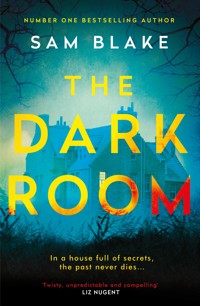
Hare's Landing, West Cork. A house full of mystery... Rachel Lambert leaves London afraid for her personal safety and determined to uncover the truth behind the sudden death of a homeless man with links to a country house hotel called Hare's Landing. New York-based crime reporter Caroline Kelly's career is threatened by a lawsuit and she needs some thinking space away from her job. But almost as soon as she arrives, Hare's Landing begins to reveal its own stories - a 30-year-old missing person's case and the mysterious death of the hotel's former owner. As Rachel and Caroline join forces, it becomes clear that their investigations are intertwined - and that there is nothing more dangerous than the truth...
Sie lesen das E-Book in den Legimi-Apps auf:
Seitenzahl: 539
Veröffentlichungsjahr: 2021
Das E-Book (TTS) können Sie hören im Abo „Legimi Premium” in Legimi-Apps auf:
Ähnliche














Sam Blake is a pseudonym for Vanessa Fox O’Loughlin, the founder of The Inkwell Group publishing consultancy and the award-winning national writing resources website Writing.ie. She is Ireland’s leading literary scout and has assisted many award-winning and bestselling authors to publication. Vanessa has been writing fiction since her husband set sail across the Atlantic for eight weeks and she had an idea for a book.
Also by Sam Blake
Little Bones
In Deep Water
No Turning Back
Keep Your Eyes on Me
First published in Great Britain in 2021 by Corvus,an imprint of Atlantic Books Ltd.
Copyright © Sam Blake, 2021
The moral right of Sam Blake to be identified as the author of this work has been asserted by her in accordance with the Copyright, Designs and Patents Act of 1988.
All rights reserved. No part of this publication may be reproduced, stored in a retrieval system, or transmitted in any form or by any means, electronic, mechanical, photocopying, recording, or otherwise, without the prior permission of both the copyright owner and the above publisher of this book.
This novel is entirely a work of fiction. The names, characters and incidents portrayed in it are the work of the author’s imagination. Any resemblance to actual persons, living or dead, events or localities, is entirely coincidental.
10 9 8 7 6 5 4 3 2 1
A CIP catalogue record for this book is available from the British Library.
Trade paperback ISBN: 978 1 78649 860 1E-book ISBN: 978 1 78649 862 5
CorvusAn imprint of Atlantic Books LtdOrmond House26–27 Boswell StreetLondonWC1N 3JZ
www.corvus-books.co.uk
For Niamh and Andrea, for their wonderful advice and friendship, and because no writer creates alone.
The dead may be invisible but they are not absent.
– St Augustine
Prologue
ALFIE’S HAND SHOOK as he slipped the letter into the mouth of the postbox, his bitten nails black against the cream of the envelope. He hesitated, holding it on the cold cast-iron lip, glancing behind him, checking the road again. The traffic was almost stationary, lights dazzling. He looked in the opposite direction, to the column of blazing red tail-lights.
Safe.
For now.
Above him, the ornate clock on the station tower clicked on another minute.
The letter was thick, his spidery handwriting spread over many more sheets than he’d expected. Once he’d made up his mind and he’d begun, the whole story had come out with detail he’d thought he’d forgotten. The smell of the car, the heat of the sun as they’d driven down from Dublin. The laughter. The roads had been so bad, winding and narrow, the tarmac potholed and loose. And no signposts; he didn’t know how tourists found their way around the country at all.
It was important to get the story right. Exactly right. This could be his only chance. Things would spiral as soon as it was received. And everything would change.
He’d ended up writing the last page in cramped letters, the ink beginning to fade as he squeezed his initials into the corner.
A. B.
Alfie Bows.
It wasn’t his name, but that’s what they called him on the streets, and it had become part of him. Like the violin he was named after, held firmly now under his arm.
Still holding the letter poised to drop, he lifted his other hand, the carrier bag handle looped securely around his wrist, and shook back the tattered sleeve of his tweed overcoat. He looked at the illuminated dial of his watch, at the minutes flicking past. He didn’t know when the letter would arrive – Frank in the hostel had only had a second-class stamp and he’d missed the post today – but it would get there eventually.
And when it did, they’d know the whole story.
They’d know what had happened.
Would they believe him? He wasn't sure. He was invisible now, his voice silent, like a whisper in the night. Not like before, when he was younger. He’d been someone then, had been loud and popular and laughing with the others; he’d partied hard but aced his degree, had had a glittering career ahead of him. That’s what they’d been celebrating. A weekend away after the results, their last summer of freedom before the real work started and life began.
And then …
In that one moment, everything had changed.
It was trying to get it all out of his head that had always been the problem, to switch off his imagination. Getting away, becoming someone else, had been the only way he could cope. But it was still there, every day. Like the dull incessant ticking of a clock in the background of his life. He didn’t think he’d ever be free.
It had all come roaring back that night, all the alarms ringing together, like white water, filling his ears, choking, drowning him in the memories, suffocating him.
It had only been a week ago, but it felt like a lifetime. Longer than a lifetime. Before, he’d looked forward to what life offered; afterwards he’d lived day by day. Now it was hour by hour.
He’d had always thought of it as ‘his’ car park; he was the oldest one who camped there, had been there the longest. He didn’t know why he kept going back. There were better places, but Alfie knew he liked the isolation, liked the fact that there were no security cameras, that he was usually alone. He was like a rat, he had familiar runs. Even if they weren’t ideal, he knew them – what did they say, ‘better the devil you know’?
He wasn’t sure about that one.
Alfie had been shocked when he’d seen him swinging out of the cab of the lorry, his face illuminated by the interior lights. The devil himself. He’d had a heavy torch in his hand, and perhaps sensing movement in the darkness beside the bins, had swung the beam around on Alfie just as he’d started to pull his head back into his tent.
His muttered ‘What the fuck …?’ had told Alfie he’d been recognised too.
Perhaps he hadn’t changed that much.
His hand still on the edge of the postbox, Alfie smiled sadly to himself; normally the long hair and the dirt, the odd assortment of clothes, was a disguise. But not now. Maybe the recent graduate with his rugby jersey, the stiff white collar turned up, hadn’t really changed that much, despite what life had thrown at him.
The torch had clicked off as another truck pulled into the yard, Nemo Freight emblazoned on its side. Alfie had a good idea what was going on, why they were here, but he didn’t want to know any details. Crawling back inside his tent, he’d pulled his violin to him, buried himself into the furthest corner so he could feel the wall against his back. Shrinking down into all his layers – the sleeping bags with the broken zips, the torn tweed coat he wore now – he had rocked silently, sick with fear.
He’d been seen.
He’d got so used to not being seen – even when he was playing outside a Tube station people heard him, but they didn’t see him. Now he’d been seen – and worse, recognised. And not by just anybody. By the one person who had every reason to want him to stay quiet, to silence him. He’d been quiet; he’d slipped into obscurity, getting by, not talking to anyone, keeping his story to himself. Until he’d met Hunter, and then it had started to change. He hadn’t planned to tell anyone anything – ever – but Hunter was interested. He wanted to know what life was like on the streets, whether Alfie had people out there somewhere. He’d looked out for him, bought him the watch.
But why. Always why.
That was the question he wouldn’t answer. Why.
And then Hunter’s TV crew had arrived with their cameras and mics and questions in the car park. Alfie cringed again at the timing of it all. Why had it had to happen like that? As they were unloading their equipment, another Nemo Freight truck had pulled into the car park, this time turning and pulling out again just as quickly.
And Alfie had known he was in danger.
The driver had cleared out so fast he knew a message would go back. It wasn’t how it looked, but would he have time to explain?
Maybe he’d got paranoid living on the streets but this time he didn’t think he was being alarmist.
He’d been found, and he’d been seen speaking to the documentary crew. Something was going to happen. He could see it in the shadows, feel it in the air. And whatever happened next, Hunter had been good to him, he owed him the truth.
The rain was getting heavier now, falling like a gossamer curtain illuminated by the street lights. Alfie took another look at the envelope and caught his breath as he dropped it into the box.
His violin under his arm, he pulled the carrier bag to himself protectively. He shivered. He’d got a new woolly hat when he’d called in to see if they had a stamp at the hostel, and a pair of fingerless gloves. They helped a bit, but Alfie knew he wouldn’t feel warm again until it all came out. He’d been cold with fear from the moment that torch beam had fallen on him, like a spotlight centre stage.
But he wanted his voice heard – whatever happened, he wanted them to know the truth. It wasn’t pretty. It was dark and dirty and had changed the entire course of his life – Christ, the number of times he’d wished he’d gone home that weekend instead of chasing a high. But there had been the promise of booze, of lines, of a country house by the sea and a long hot weekend. They’d had everything.
And then they’d had nothing.
In the road beside him, the traffic began to roll forward again. Alfie looked over his shoulder. He was sure he’d been followed before, but he’d been careful this time.
It had taken him all day to write the letter. But it was done now. All of it. And whatever happened they’d know; they’d have to hear him now.
Chapter 1
Thursday 9 January
THE TWO POLICE officers shifted uncomfortably in the steel and glass reception area of Red Fox Films as Rachel approached them. She’d only just got back to her office, had been collecting her backpack when she’d heard her desk phone ring and seen Stacy in reception’s light flashing. At least they’d been quick.
She looked at the officers anxiously; the second one had his back to her, looking at the stills plastered over the walls. They seemed to have brought the January chill in with them; cold air hung in the normally warm atrium like a cloud.
‘Rachel Lambert? I’m PC Miller from Kennington Police Station. This is PC Anand.’
‘Thanks for coming so fast, the lady I spoke to said you might not be down till later.’
‘I’m sorry?’
PC Miller frowned, confused. He looked about twenty-five, acne still peppering his jawline. He was probably only a few years younger than her, but he made her feel old.
‘The break-in, I reported it about an hour ago?’
‘Oh.’ He seemed to falter for a moment. ‘We’re not here about that, I’m afraid.’
Not …? What on earth could they be here for?
Rachel’s mind raced over the wrap on their last location. It had been a big one; as well as the core cast, they’d had fifty extras in a wedding scene. Catering trailers, costume and make-up. A farmer getting in a sweat about his cows being disturbed. It was her job to ensure that when the cast and crew left, everything was exactly as it had been when they’d arrived. Sometimes it wasn’t and then the shit could hit the fan – but it didn’t normally involve the police.
Rachel frowned, slotting her hands in the back pockets of her jeans.
‘So what’s the problem?’
Why had he said ‘afraid’?
‘Can we go somewhere more private?’
This had to be really bad.
As if getting the barge broken into wasn’t enough trouble for one day. And Hunter still hadn’t called her, despite her endless messages. He’d said he was going to a meeting but it seemed to be going on all day.
Christ, what could it be?
PC Miller was still frowning, as if whatever it was, was very serious. Had something happened after they left the location? Had someone had an accident falling over a prop she’d missed, or tripped in a hole? Her job was all about building relationships: first finding the right location, often one that a director had in their head and was little more than a squiggle on a piece of paper, a vague description; then making sure everyone was happy – the locals, the cast, the crew, the director. But they all knew that anyone in this business was only as good as the last job.
Looking at the police officer, Rachel could feel her mouth going dry.
‘My office is this way.’
Nervously tucking her unruly strawberry blonde hair behind her ear, she indicated with her head and turned back down the corridor. The police officers followed her, and she could feel the occupants of the offices they passed swinging around to look at them.
Pushing open her own door, Rachel indicated they should go inside. Jasper stirred in his bed, making a grumbling German shepherd noise at the interruption to his snooze. The officers looked surprised to see a dog in the corner. Or perhaps it was just that Jasper was a very large dog.
‘Come in, it’s okay, he was a police dog, he’s very safe. How can I help?’
Jasper lifted his head and cocked his huge ears forward as the officer cleared his throat.
‘We’re afraid there’s been an accident, Ms Lambert.’
‘It’s Rachel.’ She kept her voice level.
Here it came. She braced herself. People saw ‘film company’ and automatically assumed that meant millions of dollars in payouts – and her job was all about that not happening.
‘Rachel. We believe you are listed as the next of kin for a Hunter MacKenzie?’
Rachel felt her knees go weak. ‘Hunter’s my partner – what’s happened?’
She could feel the panic rising inside her, reached out to grab the back of one of the chairs pushed away under the table. Immediately picking up on her mood, Jasper stood up, sleep forgotten, eyes bright. She glanced at him as the police officer continued.
‘There was an accident earlier today near Lambeth Bridge – on Millbank Roundabout.’
‘Jesus. He goes that way to work. What happened, is he okay?’
‘He was involved in a traffic accident. He was knocked off his bike. We’re looking at the CCTV in the area to find out exactly what happened. It’s a very busy roundabout.’
‘My God.’ Rachel’s hand shot to her mouth, the diamanté eyes in the heavy silver skull ring on her middle finger catching the light. ‘But … Is he …?’
‘He’s in the Royal Hope – A & E. We can take you to the hospital.’ PC Miller paused. ‘He’s in good hands.’
‘Holy Christ. That’s why he didn’t call.’
Rachel crossed her arms and stared at the blue carpet tiles for a moment, seeing Hunter’s smiling brown eyes and broad grin as she’d headed in to work this morning. The way he pushed his glasses up his nose and rubbed his hand over his shaved head when he was thinking. She’d forgotten to get milk; they’d both had their coffee black, Jasper stretched on the sofa looking at them critically, whining occasionally. He’d wanted to be let out, to run the length of the marina snapping at the heels of the ginger cat that lived on the Marie Claire, a houseboat two down from them. PC Miller’s voice interrupted her thoughts.
‘Does he have any family we can contact – anyone we can call for you?’
Rachel shook her head, her bobbed curls falling into her face. She realised Jasper had moved to her side, pushing his head into her thigh. Uncrossing her arms, she tucked her hair behind her ear again and gave him a rub. He sat down, looking at the officers steadily. Feeling his weight against her leg, she took a moment to answer PC Miller’s question.
‘His mum and dad are at home in Jamaica. He’s a sister in America, in Los Angeles. There’s only me here.’
‘You think he was going to work?’
‘Yes, he’s a documentary director. He had a meeting. Can I see him?’
‘Of course. But we need to ask you some questions—’
‘Later? I can answer all your questions. I need to talk to the doctors, find out what’s happening.’ Rachel’s voice was brisk, the one she used to organise the guys on a shoot. She needed to get things moving.
Rachel glanced at her watch, Hunter’s watch, a chunky silver Aviator. It was already after four. When had this happened?
‘I need to get someone to look after Jasper. We’ve a houseboat down at Limehouse – there was a break-in this morning so I can’t take him back. That’s what I thought you were here about.’ She put her hand to her head; there really was too much happening today. ‘They said the scenes of crime man would be down about five.’ Rachel looked around the office, not even sure what she was looking for – her skiing jacket? Her backpack? She picked them both up. ‘I’ll ask Nathan. He’s one of the animators. Jasper loves him.’ Why was she telling them that? Was it even relevant? ‘Can we go now?’
Chapter 2
CAROLINE KELLY WASN’T sure that she could ever remember seeing a day that had changed so suddenly into night as it had this afternoon. It was only 4.30, but the darkness surrounded the taxi like a physical thing, as if they were underwater and it was seeping into every crevice, absorbing light as if it was feeding on it.
When she’d come to West Cork as a child it had always been during the three-month Irish schools’ summer vacation, or at Easter when the evenings were lengthening and the promise of spring was fresh in the air. Log fires and laughter, beachcombing despite the weather, and in the summer, days on the beach, long walks in sun-kissed meadows alive with insects and scurrying animals.
Steadying herself as the car hit another pothole, she took a ragged breath. Had coming here in January really been such a good idea? Had she even had time for thinking an idea through? West Cork had been her automatic default and realistically there was nowhere else on earth she wanted to go to lick her wounds, to reconcile the events of the past two days – which, let’s be honest, she really couldn’t have made up if she’d tried.
Greta’s voice still rang in her ears: ‘We’ll have to suspend you while the case is pending …’ For once in her life Caroline had been utterly speechless, had turned and headed back to her desk, picked up her bag, pulled on her coat and left the building.
So much for your editor backing you up.
The snow had started falling again then, hitting her face like needles. She’d pulled her fur-lined hood up and looked for a cab, navigating the grey New York slush to the kerb, so stunned she’d hardly registered when they’d drawn up outside her apartment block, only realising where she was as she’d stepped out of the elevator on her floor.
None of this had been on her agenda as she’d headed into the week. She’d had a meeting planned with a key source in the prison service, had research to do on the Texas State Penitentiary. It had taken her months to get the meeting, and days to come up with a covert plan to make it look accidental.
And then, after all the work, it all had to be shelved.
Greta’s request for an audience had been on her voicemail the moment she’d arrived at her desk at eight o’clock that morning, and whatever was happening in her diary, denying her impossibly elegant, narcissistic, absolute weapon of a boss a meeting wasn’t an option. Greta wielded her authority like an avenging goddess.
Which was, as Caroline had to remind herself every day, why she was so successful.
She’d presided over the New York Messenger for every year of the past three that Caroline had been its lead crime reporter. Anyone who thought The Devil Wears Prada didn’t have its equivalent in news only had to stick their head out of the elevator on the fifth floor to see how close to the truth it really was.
Teeth gritted but holding her head high, Caroline had felt like she’d been hit by a forty-tonne container truck as she’d left the office. Her hopes and dreams, everything she’d built, decimated in one glancing blow. How could Greta question her integrity for one second?
What the hell was happening to this world? Caroline didn’t deal in fake news; she never had. The real problem here was that she’d exposed too much of Rich Slater’s actual life in her articles, the areas he thought he’d kept neatly tucked away and compartmentalised. She had exposed all his sleaze and exactly how he’d manipulated his female employees as he’d built his cyber-empire. People talked to her; they always had. And she had a knack for understanding what they didn’t say, for reading between the lines and ferreting after the truth.
And now he was accusing her of tapping his phone and defaming him by implying his treatment of his female employees was questionable. As if he hadn’t done a good enough job of making a spectacle of himself all on his own.
Caroline glanced out of the window of the cab into the encroaching night and pulled her dark hair out of her face, adjusting her glasses as she mulled over the last few days. You’d think you couldn’t be hit by a truck twice in a lifetime – it was a bit like being hit by lightning – but as she’d headed across the news floor, her mouth dry and her stomach about to reject the skinny latte she’d grabbed on the way in, it had happened again. From her desk beside the window, Nancy – young, blonde, all-American Barbie doll – had sprung up, her brows furrowed, her worried expression hiding what Caroline was a million per cent sure was a satisfied smirk.
She knew what was going on and she was going to do everything she could to step into Caroline’s shoes while they were still warm.
And from the wide-eyed way Nancy looked at her as she caught her eye, Caroline was also sure she had something to do with what was happening here.
What had actually made the whole thing worse was Tim jumping up the minute he’d heard Greta’s door close – Caroline was sure he’d been sitting on Nancy’s desk. She had taken one glance at the pair of them, and stalked straight through to the landing and hit the call button on the elevator. Behind her, she could hear him calling her, his voice heavy with concern and bewilderment. She’d pushed her new tortoiseshell glasses firmly up her nose and hadn’t turned around; she couldn’t trust herself to look at him. Maybe he could ask Nancy what was going on.
He’d only got back from his skiing trip late the previous night, was looking deliciously tanned. Had he known, even had a hint? Maybe he’d had the voicemail summons too and had been heading into Greta’s office to get a full briefing. The lawsuit against the paper, naming her, must have been filed while he’d been away. Well, he was due some serious catch-up.
But what had he been doing chatting so cosily to her socalled colleague? Caroline didn’t even want to think about that. She had been out to dinner with him a few times but they weren’t dating – she had no input into whom he did, or didn’t, speak to.
Sitting in the back of the car, even this far away across the Atlantic, Caroline could feel her temper rising again. She’d been utterly blindsided by Greta, had literally walked out of the building, not even stopping to clear her desk or collect Harvey, her cactus plant, from beside her monitor.
Hurt and anger and confusion had bubbled into rage – rage that, as soon as she got through the front door of her apartment, had rapidly turned itself into a need to escape and the search for somewhere to stay and a plane flight home.
There was no way she was going to sit around feeling miserable, waiting for the axe to fall.
She was going to take two weeks’ vacation and send out the message that she wasn’t in the slightest bit worried about the impending case. About the fact she could be about to lose her job and how nearly fecking impossible it would be to get another staff job with healthcare in the current market. Optics were everything in this business.
The taxi hit another rough bit of road and Caroline was jerked back from her tiny apartment in snowy New York to icy West Cork. Looking out of the window, the darkness was complete, only the narrow beams of the headlights dancing on the road ahead, on the high-sided hedges, gave her any clue as to where they were. Perhaps she’d got too used to New York, to a city where it was never truly dark.
The driver hit his indicator and turned off the winding lane they seemed to have been following for miles. Caroline closed her eyes for a moment, taking a deep breath, trying to steady her nerves.
So much had happened in the last forty-eight hours that her head was exploding. She wasn’t sure if she was running away or running to, but one thing was for sure – she hadn’t had a vacation in four years and she needed some headspace.
She’d worked so hard to get into news, had pulled off coup after coup making her column one of the most read ever, spawning a host of talk show items. Everyone was interested in crime, it seemed – death in particular, the more gruesome the better.
Only a few weeks ago, on the afternoon of the office pre-Christmas party – the one she hadn’t been able to go to because she was sitting in a freezing town car at a stake-out, following a so-called lead – Greta’s husband – who was the real boss, the owner of WordCorp – had taken her to one side and told her how pleased he was with her progress, what a difference she made to the office and the positive energy she brought. The whole situation was insane.
The cab driver interrupted her thoughts.
‘Almost there, lass, I’d say you’d be glad of a cup of tea when you get in. They’re only lovely at Hare’s Landing.’
She could feel him looking at her in the rear-view mirror as he spoke. He’d been chatting since he’d picked her up at the airport, asking question after question. He knew exactly who she was; it was almost as if he’d googled her. She’d hardly had the energy to answer.
Yes, she’d written the piece about the Iced Tea Killer. No, she was on vacation; yes, it was snowing in New York. She covered all sorts of crime, and yes, there was plenty in New York. She was originally from Dublin; no, she wasn’t moving back.
Unless she got the sack, of course.
Would she mention she was currently jobless because she was being sued by a serial molester for defamation?
Even as she thought about it, it all sounded ridiculous. But she had two weeks’ enforced leave while, as Greta put it, ‘they got their shit together’ and worked out her defence. Defence? Why did she even need to explain? It was just all farcical. She’d met a lot of crazy people over the years but Rich Slater and his gaming empire really took the crown.
‘Thanks for coming to get me, I wasn’t expecting that.’
‘Least we can do for our transatlantic guests. You should have got an email but the internet at the house is only woeful.’
It had taken her a moment to understand his sing-song Cork accent when he’d met her at the gate in the airport, and as she’d been lulled by the movement of the car, she felt as if it had become thicker.
She’d evidently been in New York too long if she couldn’t understand her own countrymen.
Trying to think of something banal but friendly to reply, Caroline realised she was still gripping her phone in her hand. She looked at the time; she was starting to feel delirious from lack of sleep. She closed her eyes for a second, realising that the upward intonation at the end of his sentence didn’t actually make it a question. He was just trying to be conversational.
‘How much further is it?’
‘About another ten minutes. The hotel’s right on the edge of the estate, has some mighty views of the estuary, right out to sea. Lovely and quiet. Some say it’s haunted, but that’s only talk.’
Chapter 3
RACHEL HAD BEEN in the back of a police car on more than one occasion, but it had always been on a shoot and the guy driving was usually an actor. Not always – they used all sorts of professionals to get scenes right, dog handlers and forensics – but today was different. Normally there was banter, a laugh about the weather or complaints about the catering.
This time the journey was silent.
Tweedledum and Tweedledee were very short on conversation – not that Rachel wanted to talk to them – but something to break the tension on the thirty-minute journey to the Royal Hope would have kept her mind still. Images of Hunter lying in the road merged with stills from a horror shoot she’d done last year, the make-up so realistic it had turned her stomach.
How badly injured was he? Had he seen her message on his phone about the break-in and lost his concentration? Anxiety gripped Rachel’s stomach, making her feel physically sick. She twisted her ring, but the normally comforting smoothness of the heavy silver didn’t make her feel any better.
She pulled the polo neck of her black sweater up over her face as she tried to think of the positive, trying not to be sucked into a nightmare place that burned her eyes like hell. There were ghost bikes all over London, bikes painted white and left as memorials to cyclists who had been killed – there were just so many accidents. Hunter couldn’t be one of them. She chewed the edge of her nail as the squad car negotiated the traffic.
She was always nagging Hunter to take his ancient beaten-up Land Rover to work instead of cycling. He was right about the impact of diesel on the environment, and the fact that it could take him longer to get the five miles there than it did on his bike – plus he loved the freedom, and he reckoned it kept him fit – but the traffic in London was vicious on a good day. He kept saying his camera equipment weighed a ton and apparently going to the gym three times a week and walking miles with Jasper wasn’t enough as he headed for thirty-three; he needed cycling too. She’d opened her mouth to protest at that when he’d said it last time, and now she felt his finger on her lips as he’d hushed her. Tears pricked at her eyes. She couldn’t lose him; it wasn’t even an option, he was her soulmate. He might be from a different island on the other side of the world, but when she was with him, she felt whole.
She closed her eyes tightly. She’d bet he hadn’t been wearing a helmet either, would have had his felt Boston Jack hat on. He’d traded in his fedora for it in New York, and hadn’t taken it off since. It was chocolate brown, only a shade darker than his skin, the same colour as his eyes, and Rachel had loved him in it from the moment he’d tried it on.
He’d been wearing it this morning when she’d left for the ten-minute walk to work. A mug of coffee in his hand, he’d been waiting on a conference call with the production team to discuss the broadcast schedule for the documentary series he was working on before he went in for his meeting.
He had to be okay.
Rachel didn’t know if she could cope if anything happened to him. In the three years she’d known him, two living on the boat with him, he’d never been sick. He claimed it was all the fresh fruit his mother had fed him as a child, the sea and sunshine and clean Caribbean air. He was probably right – she caught every cold that was passing, but that’s what rain did for you. Her own home in County Wicklow, the garden of Ireland, had been half an hour from Dublin city. She loved how you could see the weather gathering on the mountains, but there wasn’t a whole lot of sunshine.
Rachel shifted in the back seat. The heating was on in the car, but despite pulling on her padded skiing jacket as she’d left the office, she still felt cold.
Would Nathan be okay with Jasper?
She closed her eyes. This was too much in one day. She felt sick, really ill, anxiety spiralling in her stomach like a black hole. Her mind rolled back to the morning – it had all been so normal. Absolutely no precognition of anything dreadful to come. An ordinary day.
They’d been chatting about Hunter’s documentary, about the rushes and editing slots … If she could only capture that moment, like scent in a bottle, put a cork in it and keep it for ever. He’d been frowning, wondering why the homeless guy he’d befriended when he’d started on this documentary project hadn’t turned up to meet him the day before.
‘I hope he’s okay, it’s so unlike him. He’s never let me down before. I always get him something to eat when we meet but he never showed up.’
Hunter had picked up the glass coffee pot and leaned over to top up her mug. As he sat back down again, the houseboat had rocked gently, buffeted by a gust of wind that had found its way into the marina from the Thames.
It was snug inside, the heating efficient and the insulation all new, one of the first things to be replaced when Hunter had first bought the Victorian barge, but Rachel had put her hands around the earthenware mug, looking for something to warm her. Poor Alfie; she’d only met him once, and had been a bit daunted by the intensity of his stare, but she’d been mesmerised as he’d started to play his violin – Mozart’s ‘Concerto No. 5’, his favourite piece. Neither of them really had any idea how old he was – he looked almost seventy, his skin lined and weather-beaten, his grey hair long. Hunter had been worried about him since he’d first met him, busking outside Tottenham Court Road Tube station. Alfie was always saying that there were factions on the street they couldn’t understand, that people could take against you for little or no real reason. Although neither of them had been able to see how a man with a violin could be in any way threatening.
‘But you left a message for him with Frank at the hostel, and with the other lads you were talking to? I’m sure he’ll get in touch when he’s ready.’ Rachel had rinsed her mug, getting ready to go.
Hunter hadn’t looked convinced as he stared thoughtfully out of the window across the boats moored between them and the marina office.
‘I hope so. There’s so much I don’t understand about him. I mean, he’s educated, you’d know from his accent and vocabulary that he’s really intelligent, but he’s been on the streets for years, like forever from what I can gather.’
‘Has he told you what happened yet, how he ended up homeless? That’s the whole point of the series, isn’t it?’
Hunter shrugged. ‘Some. The others have been quite open, but he gets upset whenever I bring it up. Nothing he’s said so far has made a whole lot of sense. He said you couldn’t trust anyone in life.’ Hunter had paused. ‘But you know how stuff happens – one of the dudes I was talking to got thrown out by his wife, another one lost his job and couldn’t pay his mortgage, ended up sleeping in his car. From what he’s been saying the past few months, I think Alfie had a nervous breakdown, something happened and he just fell apart. I wondered if he has schizophrenia? He’s seriously paranoid about people coming after him, coming to find him.’
‘Perhaps he’s a victim of care in the community and he just ended up dropping out and nobody noticed. The health system is so overstretched.’
The whole point of the documentary was to show how easy it is for everything to go wrong for normal people. Whatever ‘normal’ was. Hunter wanted to show that people on the streets were just as human as the viewers, that they had lives and families, and how maybe just one or two things went wrong and their lives spiralled out of control. Alfie Bows, as the street people called him, was the perfect example. Hunter had met him the first or second day he’d been out talking to people, looking for stories. One of the shelter workers had suggested they have a chat and Hunter had gone off to find him. Alfie had had his violin with him even then, tucked in under his tattered coat to protect it from the biblical rain. Later Hunter had told her that he loved it like a child. It was how he’d got his nickname. Hunter wasn’t even sure his real name was Alfie, but that’s what he went by, and Bows suited him.
She’d had to leave then, had kissed him quickly and gone out into the frosty January chill to walk briskly to work, Jasper at her heels, her mind moving quickly from Alfie to whether the hotel in Matlock she’d found would be big enough to take all the crew. Rachel looked out of the window of the squad car and wiped away a tear.
How could your life turn so completely upside down in a split second?
Chapter 4
HARE’S LANDING WAS haunted?
That was all she needed. Perhaps that was why it was so cheap, and it was nothing to do with it being out of season or recently opened? Caroline sighed as the taxi hit another pothole and her glasses almost jumped off her nose. She pushed them back on. She didn’t really believe in ghosts; ever since school when they’d set up a paranormal club and had spent their lunchtimes discussing stories like the disappearance of the girls at Ayers Rock, she’d felt sightings were all about pockets of energy, that time ran somehow in parallel lines and sometimes when the energy was right, you caught a glimpse into another time frame. One day she needed to talk to a physicist about her theories, but today wasn’t it, that was for sure.
She was really too tired for conversation. Any conversation.
Perhaps if she asked the questions, the driver would just chat and she could zone out.
After the flight and all the delays, zoning out was about all she wanted to do. Zone out, have a shower and a very tall, very chilled glass of white wine.
And she was going to arrive in darkness, so she wasn’t about to indulge in whatever gossip the driver wanted to share about things that went bump in the night. She needed to keep the conversation practical. One where she didn’t have to actually answer.
‘It said something about the hotel having new management when I booked. Has it been open long?’
‘I don’t reckon it’s quite open yet. Local girl she is running it, went off to see the world, married a chef and ran a hotel in Italy. But now she’s back. Hasn’t forgotten her roots, like. The restaurant is open all right, that was very popular coming up to Christmas, bit pricey, mind, but not too foreign. They must be getting the rooms ready now though, if they’ve booked you in.’
‘I’m not in the main hotel – I’ve taken a place called the Boathouse for a couple of weeks.’
‘The Boathouse, is it? That’ll be lovely, I’d say. On your own, are you?’
He sounded surprised. Caroline didn’t have the energy to explain, and it wasn’t any of his business anyway.
‘I need some space.’
‘Well, one thing we’ve got lots of in West Cork is space. You don’t get much of that in New York.’
That was for sure.
Adjusting her seat belt and sitting back, Caroline closed her eyes again. Taking a break from New York and coming home was the right thing to do, even if this wasn’t really home. When her mum had died, just before she’d got her American visa, they’d sold the family house. To really go home, she’d have had to stay with one of her inquisitive sisters or friends in Dublin. And she needed time to be on her own, to recalibrate. And to work out what she was going to do next. West Cork was a much better idea. She’d always loved it here. Perhaps she could capture some of that childhood magic again.
When she’d calmed down enough to answer his texts, Tim had been all professional corporate lawyer, firing questions at her as if she was on the witness stand. She could almost see him shaking his head at the reason for her suspension, which, she had to be honest, sounded like a fairy story.
Tim had said she needed to stay and fight, to show she thought it was all nonsense, but she’d just had to get away from New York, to find the space to work out a plan B if she needed it. And let’s face it, she was exhausted. Americans didn’t take holidays – vacations, as she’d come to call them – and to keep at the top she worked eighteen-hour days.
It was time to stop.
When the Boathouse had popped up on the hotel booking site, with its granite walls and Gothic windows, she’d felt Hare’s Landing was calling to her. Even more so when she saw that they had a special rate for January – supposedly because they weren’t fully open. Overlooking the Atlantic Ocean, everything about the cottage was perfect – totally private, separated from the hotel by a wood and gardens but serviced, the fridge filled so she didn’t have to worry about making small talk with other irritating, nosey guests in the dining room over breakfast.
The peace and isolation were exactly what she was craving, and the note on the booking form that the internet and phone signals were currently intermittent made it absolutely ideal. It meant she didn’t have to answer the phone or her email, could blame the lack of connectivity for her silence. She’d take the ghosts if it meant some peace and quiet.
It was time she took stock of her life and worked out where she was going. She was almost thirty, and had been suspended from one of the most influential reporting jobs in New York. And it would be virtually impossible to keep the news private in a business where gossip was currency. Even if she did manage to keep it quiet and, instead of waiting for Rich Slater’s nonsense defamation case to get to court, resigned to protest at the paper’s lack of support, that was as good as admitting it was all true.
But Caroline wasn’t made like that – ever since she’d been able to walk and talk, she’d been stubborn to the core. Perhaps it came from having three sisters and having to fight for everything, but she was damned if some creepy misogynist bastard, millionaire or not, was going to get the better of her. She’d take her two weeks’ vacation, refuel, recalibrate and come back fighting.
How could she have damaged Slater’s professional reputation, really? He’d posted photographs of his secretary’s cleavage on social media. How could Greta doubt her?
Speculation would be rife across the whole industry as soon as anyone spotted the case listed.
And would Nancy keep quiet about Greta’s stance? Really?
If this wasn’t handled right, she could find herself unemployable.
And that didn’t even bear thinking about.
She adored her job, adored news, loved the adrenaline rush of covering the courts but also of getting to an active scene fast. She had so many contacts within the NYPD at this stage – half the force was of Irish descent – that she often knew about incidents even before the ambulance crews. But if they thought she’d hacked phones to get information, like Rich Slater was suggesting, she could lose that trust, which would be catastrophic if she wanted to have any sort of future on the crime beat.
Her thoughts were interrupted as the taxi rattled over a cattle grid between two high granite pillars, the entrance presumably, although she couldn’t see any actual gates in the dark. To her right, in the distance through the woods, she caught sight of a flickering light, yellow like a cat’s eyes – a gate lodge perhaps? Ahead the road was narrow, the headlights picking out trees crowding on either side, their arthritic fingers reaching out to scratch the sides of the car. The drive seemed to go on for ages, twisting downwards.
Anxiously leaning forward in her seat, Caroline kept her eyes on the road, the full beam headlights of the car again catching the flash of eyes watching them steadily through the darkness – foxes maybe? Caroline hoped so. There were no wolves in Ireland any more, hunted to extinction, like there were no bears. And there had never been snakes. She shivered.
They swung around a final bend and the house rose in front of them, set into thick foliage on either side. She almost heaved a sigh of relief. It rose over three floors, mullioned windows lit from inside. And the gabled porch looked warm and welcoming, light spilling onto the sweep of gravelled drive. Waist-high statues of two seated hares flanked the entrance. As they pulled up, a woman came to the door, her arms folded. Silhouetted by the porch lights, Caroline couldn’t see her properly, only that she was tiny, almost bird-like, her hair steel grey, her cheekbones sharp.
‘Here we are, lass. This is Hare’s Landing.’
Chapter 5
RACHEL HURRIED ALONG the hospital corridor, glancing up for the signs to St Patrick’s Ward. Her police minders had got a call they’d had to take and, in all honesty, she was glad they’d gone; she wanted to do the next bit alone.
She still couldn’t believe this was happening after everything this morning. Was Mercury in retrograde or something? Hunter always laughed at her, but perhaps if she’d read her horoscope there would have been some hint that would have prepared her for this.
She’d thought she’d reached peak shock today when she’d arrived at the barge. Standing there, frozen, Jasper poised at her side, his low growl like something from the underworld, she’d felt physically sick. But if she’d felt sick then, it was nothing to how she was feeling now.
Turning another corner, her mind flashed back to their gorgeous cosy living area. Through the windows she’d been able to see the cushions and brightly striped throws tossed all over the polished boards, every drawer turned out, every cupboard door open.
Rachel stood back to let two orderlies pushing a bed pass her, the elderly man in it hooked up to a drip. She anxiously tucked a wave of hair behind her ear. She’d only gone back to the boat this morning because she’d forgotten the memory stick with the shots of Matlock and the Peak District on it. She’d clipped on Jasper’s lead and nipped back to the marina, running all the way, Jasper’s claws clattering on the pavement as he lolloped along beside her, happy to be out of the office. She almost always brought him to work; the boat was too small to leave him locked up all day.
She’d known something was wrong before she’d even reached the stout cobalt-blue barge, and Jasper’s reaction as they’d slowed and walked down the pontoon had reinforced that feeling. Then she’d spotted the splintered wood on the companionway door and she’d taken her phone out to call Hunter, giving up when he didn’t answer and calling the police instead.
And now this. She glanced around her and saw another sign for St Patrick’s Ward. That would make Hunter smile – he found her accent constantly amusing, was always teasing her about home.
Around the next corner Rachel saw a reception area and nurses’ station.
‘I think my partner’s been brought in. He was in a cycling accident – Hunter MacKenzie. Downstairs they said he was on this ward.’
The nurse behind the desk held up her finger for a moment as if trying to remember and then, moving back to her chair, sat down, her flingers flying over the keys of her computer.
‘Brought in by ambulance this morning. West Indian male, thirty-three years of age?’
Rachel nodded, ‘Sounds like him. He was probably wearing a hat.’
The nurse grinned as if the description matched something she had on her screen.
‘You Irish as well, pet?’ She had a midlands accent, Tipperary perhaps. A tiny part of Rachel felt relieved. It connected them.
‘Yes, Dublin. Rachel Lambert, I’m his partner.’
The nurse smiled and nodded as she read her screen.
Why was she taking so long? Rachel’s mouth went dry. Did she have bad news?
‘Can I see him? I really need to see him.’
‘Of course, pet, he’s on the left, by the window. He’s had a bad time. He’s got a nasty femoral fracture and a traumatic pneumothorax – a punctured lung. More than a few ribs have gone the same way as the leg, but he’s a lucky one.’
‘I … Can I talk to him? Is he asleep?’
‘I’m not sure. Just keep your voice right down, visiting hours are over, but you’re grand to go in for a few minutes. He might have difficulty talking, so not long now.’
At the heavy swing door, Rachel hesitated for a second. She could see that it was a male ward; some of the beds had blue curtains pulled around them. One man was sitting up in bed reading the newspaper.
Hunter was in the end bed. He was wired up to all sorts of machines, and even before she reached him properly she could see he was ashen against the bright white pillow, his dark skin several shades paler than normal. As Rachel reached him, a nurse slipped out of the curtains around the bed opposite. Her eyes lit up as she pushed a pen into the pocket of her tunic.
‘He’ll be delighted to see you love, he’s just conscious now. Only be a few minutes, though, he needs to conserve his energy.’
Rachel mouthed her thanks as the nurse indicated she should sit in a chair beside the bed, and pulled the curtain closed around her. At the sound of the curtain hooks on the rails, Hunter moved his head marginally. Trying to hold back tears, Rachel picked up his hand. He turned towards her and opened his eyes.
‘Rach? What …?’
She stood up from the chair and perched on the side of the bed, rubbing the back of his hand and kissing it.
‘What am I doing here? Where else would I be?’ She rubbed his arm. ‘You’re here. Do you think I’d be able to keep away?’
He smiled weakly. ‘I’m fine, got knocked off my bike. Some bastard in a BMW 4 × 4.’ He paused, catching his breath. ‘Did they find my hat?’
Rachel hid her grin, shaking her head. ‘Your hat?’
Hunter rolled his eyes and then closed them as if the expression had worn him out.
‘I love that hat.’
‘I’ll find out. I think you need to rest, my love.’
His voice was barely a whisper. ‘I’ll be fine, babes. I’m not going anywhere – for a couple of weeks anyway.’ He took a couple of jagged breaths. ‘Bastard almost flattened me, came out of nowhere. I had that hi-vis vest on too. I’m not exactly invisible.’
‘That roundabout’s lethal.’
He nodded, his eyes closed. ‘I was early for once too.’ He opened his eyes. ‘They’ve confirmed the slots. Spring schedule.’
‘That’s great news.’
She rubbed the back of his hand, about to tell him he needed to focus his energy on getting better when he interrupted her thoughts.
‘Babes, can you see if you can find out what’s happened to Alfie? There’s more we need to ask him. No one’s seen him for a few days and his story is the missing piece. If I can’t find out why he’s on the streets we can’t use any of his footage and it’ll balls up the production timeline.’
‘Alfie?’ She shook her head, trying to hide her impatience: what was he like? ‘You need to stop thinking about work and focus on getting better—’
Hunter interrupted her. ‘But he’s disappeared. Zack’s been to all his usual hangouts and can’t find him. There’s no one in his car park, even the bins have been tidied up … And nobody’s seen him at the soup kitchen. It’s January, it’s freezing …’
‘But that’s not unusual, is it? He’s a free agent, perhaps he’s found somewhere better to sleep and he went to a different place for his dinner?’
Hunter shook his head weakly. ‘I don’t know. I told you I was supposed to meet him and he never showed. He’s never done that before, he’s as reliable as my watch. As his watch. I gave him one so he’d know when to meet me. He has my number – he would have called—’
‘I’ll do my best. You need to rest.’
‘Please, babes, I’m really worried about him.’
He looked so fragile there against the bright white of the pillow; she ran her hand around his face and kissed him.
‘Don’t you worry, I’ll find him. I want you to focus on getting better.’
The news about the boat would have to wait.
Chapter 6
AS THE DRIVER opened the rear door of the taxi, Caroline was immediately hit by a blast of icy air and the distant sound of waves pounding the coast. She knew that this close to the sea the temperature couldn’t be as low as New York with its drifting snow, but here it was a different type of cold, a damp creeping chill, the wind keen. The driver had the boot open and was carrying her case into reception before she fully realised she needed to get out herself.
‘Careful there, it’s fierce cold. Mrs Travers will look after you, she knows all there is to know about Hare’s Landing.’
‘Thank you.’
Pushing the car door closed behind her, Caroline glanced at the diminutive figure of Mrs Travers waiting in the doorway, and for a moment felt an even deeper chill. Pushing her bag up onto her shoulder again thankful for her padded, fur-lined parka and thick-soled leather boots, as she reached the door, Mrs Travers pushed it open wider to allow her in.
‘Good evening. You’re later than we were expecting.’ Mrs Travers held out her hand, the bones prominent against paper-thin skin.
Good start.
Caroline returned her handshake. The old woman’s hands were icy. Caroline retracted her own hand as quickly as she decently could. In the light from the hall she could see Mrs Travers was wearing a black cardigan over a white blouse and straight black skirt. Her tights, like her shoes, were thick and sensible. She reminded Caroline for a moment of the nuns in school, except that her grey hair was neatly cut in a short straight bob, every strand in place as if she’d just stepped out of the hairdresser’s.
‘I’m sorry to keep you waiting. My plane was delayed. Can I check in and get settled? I’m exhausted.’
‘Of course, come inside and I’ll get someone to take your case to the Boathouse. We’ve had the fire lit since four so it should be lovely and warm.’
She held the glazed door open for Caroline. The porch, and the main hall beyond it, were floored with huge grey flagstones. The tick of a clock echoed in the lofty space; a grand staircase carpeted in a rich blue ran up to what appeared to be a mezzanine level. The hall was panelled in oak, polished, like the newel post and banisters, to a deep shine. As she looked around she caught the gentle tones of classical music playing softly in the background: violins, beautiful, haunting.
The unmanned reception desk was tucked in to the right of the door, a pen laid across the visitors’ book waiting for her on the dark wood counter. Her booking information was on a separate sheet beside it, a pile of stamped, hand-addressed letters neatly stacked beside an old-fashioned brass bell. Picking up the pen, Caroline quickly signed the paperwork and glanced around her. A fire was burning merrily in a huge fireplace, the mantelpiece alight with stout cream candles. The hall smelled wonderful, of a delicate floral fragrance with a hint of spice.
To her left there was a glass door leading from the hall into what looked like a huge sitting room, firelight flickering on cream walls. A wide corridor opened off the hall to what had to be the back of the hotel. Caroline had looked at the photographs on the booking site thoroughly; she was sure the passage led to the restaurant and bar, and on to a ballroom. Curious, but too tired for a guided tour – not that Mrs Travers looked like she was going to offer one – Caroline turned and feigned a smile. The whole building was wonderfully cosy but felt surprisingly empty for a Wednesday evening.
‘It’s very quiet.’
Mrs Travers’s expression hardened. ‘The restaurant’s open, but it’s early in the year, people don’t have the money to be wasting on eating out.’ She looked disdainfully at Caroline’s Samsonite hard-shell suitcase and distinctive Louis Vuitton shopper. ‘You’re the first proper guest. That was on the website when you booked, we’re not running at full capacity – that’s why the price is good. It was very clear.’
‘I saw that.’




