


4,99 €
Mehr erfahren.
- Herausgeber: Olympia Press
- Kategorie: Für Kinder und Jugendliche
- Sprache: Englisch
The Tang Dynasty (618-907) was a golden age of poetry and short stories. In the brief span of two hundred and ninety years many outstanding poets and story writers appeared, including men like Li Bai, Du Fu, Bai Juyi, Li Gongzuo and Bai Xingjian, who have left works which will live for ever. Over fifty thousand poems and over four hundred stories of the Tang Dynasty are extant today, reflecting glory on China's ancient civilization and making no mean contribution to world literature. This volume offers a small sammpling.
Das E-Book können Sie in Legimi-Apps oder einer beliebigen App lesen, die das folgende Format unterstützen:
Veröffentlichungsjahr: 2016
Ähnliche





![Tintenherz [Tintenwelt-Reihe, Band 1 (Ungekürzt)] - Cornelia Funke - Hörbuch](https://legimifiles.blob.core.windows.net/images/2830629ec0fd3fd8c1f122134ba4a884/w200_u90.jpg)



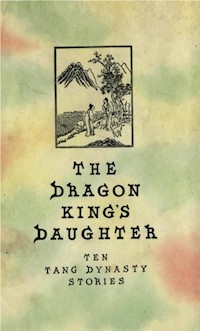
The Dragon King's Daughter: Ten Tang Dynasty Stories
Translated By Yang Xianyi And Gladys Yang
This page copyright © 2006 Silk Pagoda.
FOREWORD
I
The Tang Dynasty (618-907) was a golden age of poetry and short stories. In the brief span of two hundred and ninety years many outstanding poets and story writers appeared, including men like Li Bai, Du Fu, Bai Juyi, Li Gongzuo and Bai Xingjian, who have left works which will live for ever. Over fifty thousand poems and over four hundred stories of the Tang Dynasty are extant today, reflecting glory on China's ancient civilization and making no mean contribution to world literature.
The short story can be found in embryo form in China during the Six Dynasties (222-589), when a number of interesting anecdotes and tales appeared. But whether describing spirits or famous men, most of these stories were merely rough sketches or simple anecdotes. Hu Yingling (1551-1602), a Ming Dynasty critic, has written:
During the Six Dynasties we find many weird tales, most of them not deliberately invented but based on hearsay and misconceptions. Only in the Tang Dynasty did men start writing such tales for themselves.
The Tang Dynasty, then, was the time when Chinese scholars began to write highly imaginative stories in polished language and with a wealth of detail, giving a truthful and moving picture of the people and society of the time. Poetry and the short story were the two most highly developed forms of literature of the period. As Hong Mai (1123-1202) of the Song Dynasty wrote:
We must study the Tang stories. Even small incidents are exquisitely moving, and often — without realizing it themselves — the authors are inspired. These stories and the Tang poetry are the wonder of their age.
To understand why the short story developed so rapidly during the Tang Dynasty, we must look at the background of the time.
The Tang Dynasty was established as a result of the victory of the agrarian revolt at the end of the Sui Dynasty (581-618). Li Yuan the first Tang emperor and his son Li Shimin took advantage of the agrarian revolt to occupy Chang'an and seize the fruits of the peasants' victory. At the beginning of the seventh century they completed the unification of the country and set up the Tang empire, putting an end to the four hundred years of partition, foreign invasion and chaos which had followed the fall of the Han Dynasty in 220 A.D. Li Shimin was one of the most outstanding emperors of medieval China. He ended the threat of foreign invasion, developed China's border regions and opened up the road to the west, thereby giving fresh impetus to economic and cultural exchanges between east and west. He also carried out a series of political and economic reforms in China, restricting the building up of great estates by landlords at the expense of the peasants, lightening taxes, encouraging handicrafts, iron-smelting, silk-weaving, shipbuilding and commerce, and recruiting officials from successful candidates in the “civil service” examinations. These measures greatly strengthened the Tang political system, and the development of productive forces brought about a great cultural renaissance. Literature, art, music, dancing and sculpture flourished as never before. The Tang empire was not only stronger than any preceding dynasty — it was at that time the strongest, richest and most civilized country in the world.
As commerce prospered, great cities sprang up. The Tang capital Chang'an (now Xi'an), which is the setting of five of the stories in this collection, was a thriving centre of foreign trade as were Liangzhou, Yangzhou, Guangzhou and other cities. Arab merchants and foreign priests and teachers came to China in large numbers — there were four to five thousand foreigners in Chang'an alone. The demand of the new urban class for literature and entertainment acted as an incentive to the development of poetry and all kinds of vernacular literature and minstrelsy. And this was the popular basis from which the short story developed.
Another factor to be considered in the development of Tang stories is the conflict that inevitably arose between the vigorous new urban class and all that was rotten in the old feudal order. This social conflict provided endless fresh material for short stories. Indeed, the high place accorded to the Tang stories in the history of Chinese literature is due to the fact that their authors give us a romantic yet relatively realistic and moving portrayal of the life of the times. The rivalries within the ruling class, the weaknesses of the feudal rulers, and the opposition of the people to feudal morality during the Tang Dynasty find truthful reflection in their works.
If we analyse the background of the Tang short story writers, we can understand another important factor in the development of the story. The great majority of these writers, we find, were scholars who sat for the civil service examinations. During the Six Dynasties officials had always been chosen from a few great houses, family status being the most important criterion of selection; hence the powerful clans who represented the interests of the great feudal landowners had a virtual monopoly of official appointments. In the Tang Dynasty, however, competitive examinations supervised by the central government were introduced. This meant that the sons of small landlords and merchants now had a chance to enter the ranks of the ruling class, with the result that all scholars were eager to pass the examinations.
In order to make a favourable impression on the examiner before the examination, it was customary for candidates to present him with essays or stories they had written. Zhao Yanwei in his Sketchbook Written Below the Hill writes;
The Tang scholars first prevailed on some important personage to send in their names to the authorities, then presented essays to the examiner. After a few days, they would present more. These essays combined a number of literary forms, and could display the poetic gifts of the writer as well as his knowledge of history and power of logical exposition.
This explains why most of the Tang writers of short stories were scholars who had sat for the civil service examinations. These men represented a new social force and were at variance with the great feudal landowners who had hitherto held all ruling positions. And the popularity of their stories was due to the fact that they reflected the spirit and manners of their times and the thoughts and desires of the common people.
II
The ten stories in this collection can be divided into three main categories: stories of the supernatural, stories with a political theme or adventure stories, and love stories.
Supernatural events form the theme of most of the earliest stories. China had always been rich in mythology, and, after the introduction of Buddhism into the country, tales of ghosts and spirits became even more popular, so that during the Six Dynasties we find a great number of such tales. The earliest Tang story, An Ancient Mirror, is made up of a number of supernatural tales about an old bronze mirror. Ren the Fox Fairy, The Dragon King's Daughter and The Spendthrift and the Alchemist all belong to this category. They differ, however, from earlier stories of the same type in having more closely knit plots and more colourful detail, being, in fact, consummate works of art imbued with all the vitality of their age.
Ren the Fox Fairy is a moving story of the love between a fox fairy and a young man named Zheng. Although Ren is a fairy, she has human characteristics. She loves Zheng dearly, and nothing can force her to be unfaithful to him. In the end she is killed by hounds, but Zheng never forgets her. It has been suggested that the hounds in this story stand for certain despots of the time.
In The Dragon King's Daughter we read of the love between a young scholar named Liu and the daughter of the dragon king of Dongting Lake. The dragon princess, married against her will and cruelly treated by her husband's parents, asks Liu to carry a letter to her father. When her uncle hears of her wrongs, he charges off angrily to kill her husband. Later Liu marries the dragon princess, and they both become immortal. This beautiful story served as the theme for a number of dramas written in later dynasties.
The Spendthrift and the Alchemist is an unusual story packed with suspense. The chief character is an unsuccessful young gambler who, submitted to all sorts of trials by a Taoist priest, does not falter. In the end, however, because he cannot overcome the love of a parent for his child, he loses his chance of becoming an immortal. Stories such as this show the influence of Indian Buddhist literature. They reflect both the “escapist” thought which was the outcome of a long period of war and confusion, and the conflicts of real life.
Political satires and tales of adventure are another striking type of Tang story. The Governor of the Southern Tributary State, The White Monkey, The Man with the Curly Beard and The Kunlun Slave all belong to this category.
The Governor of the Southern Tributary State describes the life led by the highest Tang officials. Writing to show the vanity of human pomp and riches, the author exposes the outlook of the Tang officials and their preoccupation with wealth and power.
The White Monkey is the story of a monkey with supernatural powers, written as a satire on a famous scholar who looked like a monkey. By the Tang Dynasty, literature was already being used as a political weapon.
Adventure stories belong to the end of the Tang Dynasty, when the imperial power was declining. After the revolt of An Lushan in 755, the central government grew weaker and weaker, while local warlords (generals on the frontiers) became increasingly powerful and struggled among themselves for ascendency.
To strengthen their power and extend their territory, these warlords exploited and enslaved the common people very cruelly. And to guard against the danger of assassination, they surrounded themselves with swordsmen and trained bodyguards. The common folk, for their part, longed for heroes to appear, who would end their sufferings and overthrow the tyrants who oppressed them. Hence stories about swordsmen and popular champions were widespread. Gu Sheng in Wu-shuang the Peerless is the type of hero the people admired. Brave Melek, too, in The Kunlun Slave, who helps his friend Cui to meet the girl he loves, is another admirable example of this type.
Some of the best Tang stories, however, are love stories. Prince Huo's Daughter, the Story of a Singsong Girl and Wu-shuang the Peerless are beautiful tales which are deservedly popular. Prince Huo's Daughter describes the love of the poet Li Yi for Prince Huo's daughter who has become a singsong girl. The story is a tragic one, for Li deserts his love to marry a woman from a rich family. The deserted girl falls ill with sorrow as she waits for his return; and when finally she sees Li for the last time, she reproaches him bitterly and then dies. The author evokes great sympathy for this forsaken girl.
The Story of a Singsong Girl is another moving tale. A young scholar Zheng squanders all he has for love of a famous singsong girl in Chang'an. Reduced to beggary, he suffers all manner of hardships; but later the singsong girl takes him in and persuades him to devote all his time to study, until eventually he passes the examination and becomes an official. This romantic tale was very popular in its day.
Wushuang the Peerless describes the trials and final marriage of Wang Xianke and his cousin Wushuang. Wang and Wushuang are separated during a revolt; and when order is restored Wushuang's parents are put to death for having collaborated with the mutineers, while she is forced to become a palace maid. Though Wang mourns bitterly, he never gives up hope of seeing her again. And later, Gu Sheng, a champion of the oppressed, miraculously brings her back to Wang so that the two lovers can marry.
Love stories reflect most clearly the sharp conflict over marriage between the old and new classes of the Tang Dynasty. The powerful feudal clans set great store by official rank and pedigree. As rigid observers of class distinctions, they arranged their marriage alliances according to status and official rank, and their children were not allowed to marry into plebeian families. Singsong girls, it goes without saying, could not become the recognized wives of scholars; and even girls from respectable families were not free to marry as they pleased. But it is precisely the true love of characters like Prince Huo's daughter and the young scholar Zheng, untrammeled by false respect for social status or conventions, that the Tang writers praise. Faithless Li is attacked for his mercenary marriage and for deserting the girl who loves him truly. Thus we find evidence in these stories of the violent clash over marriage between the old feudal families and the new class which had grown up in the cities. The complete lack of freedom in feudal marriage is criticized, and lovers are praised who attack outworn conventions and fight for a free, happy marriage based on true love. This is why the Tang love stories, so filled with popular aspirations, were seen as ideal themes by Yuan and Ming Dynasty dramatists.
III
We have seen, then, that the Tang stories arose following the political, economic and cultural upsurge of the period. They continued the Six Dynasties tradition of supernatural tales and, influenced by contemporary art and minstrelsy and by the vernacular Buddhist literature, developed vigorously. Rich in ideological content, they reveal the various conflicts of feudal society under the centralized rule of the Tang emperors, and reflect the rich, brilliant life of the age. Of course, these stories have their limitations too. Their language is so ornate that only readers of the upper class could appreciate them. This is why, as the Tang social system broke down, such stories were superseded by the more popular vernacular literature of the Song and Yuan dynasties which was better adapted to the requirements of the urban class.
The stories in this collection are arranged in chronological order, together with a brief account of the author. These ten tales are a fair sample of the chief types of Tang stories, and from them we can glimpse something of China's rich and varied literary heritage.
THE WHITE MONKEY
Anonymous
This is a satire on the famous calligrapher Ouyang Xun who was reputed to look like a monkey.
In the year 545, during the Liang Dynasty, the emperor sent General Lin Qin on an expedition to the south. He went as far as Guilin, and wiped out the rebel forces of Li Shigu and Chen Che. At the same time his lieutenant Ouyang Ho fought his way as far as Changlo, conquering all the cave-dwellers there and leading his army deep into difficult terrain.
Now Ouyang's wife had a white skin and was very beautiful and delicate.
“You should not have brought such a beautiful wife here,” his men told him. “There is a god in these parts who carries off young women, especially good-looking ones. You had better guard her carefully.”
Ouyang took fright. That night he set guards around the house, and hid his wife in a closely guarded inner chamber with a dozen maidservants on watch. During the night a high wind sprang up and the sky turned dark, but nothing untoward happened and shortly before dawn the exhausted guards dozed off. Suddenly, however, they were startled from their sleep to find that Ouyang's wife had disappeared. The door was still locked, and no one knew how she had left. They started looking outside on the steep hillside, but a thick fog blotted out everything at one yard's distance, making it impossible to continue the search. Then dawn came, but still they could find no trace of her.
In great anger and grief Ouyang swore that he would not return alone. On pretext of sickness he stationed his troops there, and sent them out daily in all directions to search the valleys and heights for his wife. A month later, on a bush some thirty miles away, they found one of her * embroidered shoes, soaked by rain but still recognizable. Overcome with grief, Ouyang intensified the search, taking thirty picked armed men with rations to scour the hills. After another ten days, they reached a place about seventy miles from their camp from where they could see a green, tree-clad mountain to the south which towered above the other hills. When they came to the foot of this mountain, they found it surrounded by a deep stream, which they had to build a little bridge to cross. Between the precipices and emerald bamboos they caught glimpses of coloured dresses and heard the sound of women talking and laughing. When they pulled themselves up the cliffs by vines and ropes, they found green trees planted in avenues with rare flowers between them, and a verdant meadow fresh and soft as a carpet. It was a quiet, secluded, unearthly retreat. There was a gate to the east, hew [...]




