


0,00 €
Mehr erfahren.
- Herausgeber: The Ebook Emporium
- Kategorie: Gesellschafts- und Liebesromane
- Sprache: Englisch
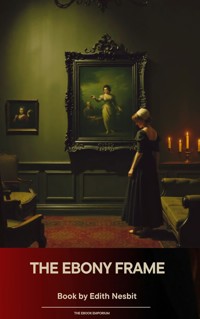
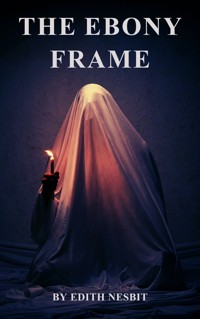
"I have waited for you for three hundred years." When a young man inherits a grand, ancient house from a distant relative, he discovers a striking portrait of a beautiful woman, encased in a magnificent, intricately carved ebony frame. Drawn to her haunting gaze, he soon realizes that the woman in the painting is more than mere oil and pigment. She is a soul from the past, bound by a dark pact and a love that refuses to stay buried. As the boundary between the present and the Elizabethan era begins to dissolve, he must decide if he is willing to sacrifice his reality for a phantom bride. A Masterpiece of Atmospheric Horror: Before she became a pioneer of children's fantasy, Edith Nesbit was a master of the "shilling shocker." The Ebony Frame is a quintessential example of the Fin de Siècle ghost story, blending the elegance of Victorian prose with a visceral sense of dread. It explores the dangerous allure of nostalgia and the terrifying possibility that our ancestors' lives are never truly finished. The Curse of the Unliving: Nesbit expertly weaves elements of the occult and the "femme fatale" archetype into this taut narrative. The ebony frame itself acts as a portal, a physical manifestation of the barrier between life and death. As the protagonist is pulled deeper into the lady's spell, the reader is left to wonder: is this a romantic reunion of soulmates, or a predatory haunting designed to steal a living soul? True love never dies—it waits. Purchase "The Ebony Frame" today and step into a world of spectral romance.
Das E-Book können Sie in Legimi-Apps oder einer beliebigen App lesen, die das folgende Format unterstützen:
Veröffentlichungsjahr: 2026
Ähnliche









The Ebony Frame
Edith Nesbit
About E. Nesbit
Edith Nesbit (1858–1924), known professionally as E. Nesbit, was a British author and poet, best remembered for her imaginative and influential contributions to children's literature. She is considered one of the first modern writers of children's fantasy.
Nesbit's most famous works include The Railway Children, Five Children and It, The Phoenix and the Carpet, and The Story of the Amulet. Her stories are known for blending magical adventures with realistic settings and relatable characters.
A pioneer in her genre, Nesbit introduced a naturalistic style and a sense of humor that greatly influenced later authors, including C.S. Lewis and J.K. Rowling. Her approach to fantasy—placing magical events in everyday life—was groundbreaking for its time.
In addition to her literary work, E. Nesbit was an active socialist and co-founder of the Fabian Society, advocating for social reform and equality. Her legacy endures as one of the most beloved voices in English children's literature.
To be rich is a luxurious sensation, the more so when you have plumbed the depths of hard-up-ness as a Fleet Street hack, a picker-up of unconsidered pars, a reporter, an unappreciated journalist; all callings utterly inconsistent with one's family feeling and one's direct descent from the Dukes of Picardy.
When my Aunt Dorcas died and left me seven hundred a year and a furnished house in Chelsea, I felt that life had nothing left to offer except immediate possession of the legacy. Even Mildred Mayhew, whom I had hitherto regarded as my life's light, became less luminous. I was not engaged to Mildred, but I lodged with her mother, and I sang duets with Mildred and gave her gloves when it would run to it, which was seldom. She was a dear, good girl, and I meant to marry her some day. It is very nice to feel that a good little woman is thinking of you? it helps you in your work? and it is pleasant to know she will say "Yes," when you say, "Will you?"
But my legacy almost put Mildred out of my head, especially as she was staying with friends in the country.
Before the gloss was off my new mourning, I was seated in my aunt's armchair in front of the fire in the drawing-room of my own house. My own house! It was grand, but rather lonely. I did think of Mildred just then.
The room was comfortably furnished with rosewood and damask. On the walls hung a few fairly good oil paintings, but the space above the mantelpiece was disfigured by an exceedingly bad print, "The Trial of Lord William Russell," framed in a dark frame. I got up to look at it. I had visited my aunt with dutiful regularity, but I never remembered seeing this frame before. It was not intended for a print, but for an oil-painting. It was of fine ebony, beautifully and curiously carved. I looked at it with growing interest, and when my aunt's housemaid? I had retained her modest staff of servants? came in with the lamp, I asked her how long the print had been there.
"Mistress only bought it two days before she was took ill," she said; "but the frame? she didn't want to buy a new one? so she got this out of the attic. There's lots of curious old things there, sir."
"Had my aunt had this frame long?"
"Oh, yes, sir. It must have come long before I did, and I've been here seven years come Christmas. There was a picture in it. That's upstairs too? but it's that black and ugly it might as well be a chimney-back."
I felt a desire to see this picture. What if it were some priceless old master, in which my aunt's eyes had only seen rubbish?
Directly after breakfast next morning, I paid a visit to the attic.




