


8,49 €
Mehr erfahren.
- Herausgeber: Titan Books
- Kategorie: Krimi
- Sprache: Englisch
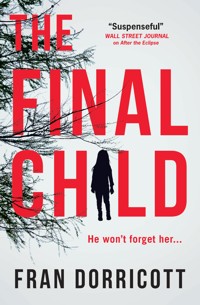
A stunning psychological thriller from the author of After the Eclipse, for readers of Ruth Ware and S.K. Tremeyne. He won't forget her... Erin and her brother Alex were the last children abducted by 'the Father', a serial killer who only ever took pairs of siblings. She escaped, but her brother was never seen again. Traumatised, Erin couldn't remember anything about her ordeal, and the Father was never caught. Eighteen years later, Erin has done her best to put the past behind her. But then she meets Harriet. Harriet's young cousins were the Father's first victims and, haunted by their deaths, she is writing a book about the disappearances and is desperate for an interview with the only survivor. At first, Erin wants nothing to do with her. But then she starts receiving sinister gifts, her house is broken into, and she can't shake the feeling that she's being watched. After all these years, Erin believed that the Father was gone, but now she begins to wonder if he was only waiting... A tense and emotive thriller, The Final Child is a powerful tale of a survivor being forced to confront her painful past.
Das E-Book können Sie in Legimi-Apps oder einer beliebigen App lesen, die das folgende Format unterstützen:
Veröffentlichungsjahr: 2021
Ähnliche


















CONTENTS
Cover
Praise for The Final Child
Also by Fran Dorricott and available from Titan Books
Title Page
Leave us a Review
Copyright
Dedication
Jillian
One
Two
Three
Four
Five
Six
Seven
Eight
Nine
Ten
Eleven
Twelve
Thirteen
Fourteen
Fifteen
Sixteen
Seventeen
Eighteen
Nineteen
Twenty
Twenty One
Twenty Two
Twenty Three
Twenty Four
Twenty Five
Twenty Six
Twenty Seven
Twenty Eight
Twenty Nine
Thirty
Thirty One
Thirty Two
Thirty Three
Thirty Four
Thirty Five
Thirty Six
Thirty Seven
Thirty Eight
Thirty Nine
Forty
Forty One
Forty Two
Forty Three
Acknowledgements
About the Author
Praise for The Final Child
“The Final Child is such an elegant, well thought-through thriller. It takes the idea of victim and turns it on its head and breaks your heart in the process. I was sucked in for the first half and then whipped through the second half with my heart in my mouth. A fantastic follow-up to After the Eclipse.”
SOPHIE DRAPER, author of Magpie
“This beautifully-written novel is haunting and heartbreaking, disturbing and bittersweet. You won’t be able to put it down!”
ROZ WATKINS, author of The Devil’s Dice
“Yet another stunning thriller from Fran Dorricott. I couldn’t turn the pages quick enough.”
JO JAKEMAN, author of Sticks and Stones
“Fran’s writing just gets better and this novel is expertly plotted to keep you turning those pages all night. Parts of this are inevitably heartbreaking, others are full of hope. If you love your crime fiction pacey, well written and full of suspense this is perfect for you.”
ALEX CAAN, author of The Unbroken
Also by Fran Dorricott and available from Titan Books
After the Eclipse
LEAVE US A REVIEW
We hope you enjoy this book – if you did we would really appreciate it if you can write a short review. Your ratings really make a difference for the authors, helping the books you love reach more people.
You can rate this book, or leave a short review here:
Amazon.com,
Amazon.co.uk,
Goodreads,
Barnes & Noble,
Waterstones,
or your preferred retailer.
The Final Child
Print edition ISBN: 9781785657900
E-book edition ISBN: 9781785657917
Published by Titan Books
A division of Titan Publishing Group Ltd.
144 Southwark Street, London SE1 0UP
www.titanbooks.com
First edition: September 2021
10 9 8 7 6 5 4 3 2 1
This is a work of fiction. All of the characters, organizations, and events portrayed in this novel are either products of the author’s imagination or are used fictitiously. Any resemblance to actual persons, living or dead (except for satirical purposes), is entirely coincidental.
© Fran Dorricott 2021. All rights reserved.
Fran Dorricott asserts the moral right to be identified as the author of this work.
No part of this publication may be reproduced, stored in a retrieval system, or transmitted, in any form or by any means without the prior written permission of the publisher, nor be otherwise circulated in any form of binding or cover other than that in which it is published and without a similar condition being imposed on the subsequent purchaser.
A CIP catalogue record for this title is available from the British Library.
This book is dedicated to my family.
Thank you for everything.
I love you all.
“Each unhappy family is unhappy in its own way.”
Leo Tolstoy, Anna Karenina
1994
3 July
Michael (6) and Jeremy (4) Taylor are abducted from their bedroom in Lincoln in the middle of the night.
18 July
Michael’s body is recovered near Saint Mary’s Christian Centre, Edmonton Lane, Lincoln.
6 October
Jeremy’s body is recovered on the grounds of Foremark Reservoir, Derbyshire.
1995
21 June
George (7) and Jacob (7) Evans are abducted from Sheffield.
17 July
George’s body is recovered on the banks of the River Derwent, Derbyshire.
1996
5 July
Morgan (9) and Paul (5) Bailey are abducted from Chesterfield.
1997
24 June
Morgan Bailey’s body is recovered in Abbey Park, Leicester. She has only recently died.
2 August
Charlotte (8) and Hazel (6) Davies are abducted from Leicester.
1998
3 June
Randeep (9) and Jaswinder (7) Singh are abducted from Burton-on-Trent.
13 October
Alex (9) and Jillian (7) Chambers are abducted from Little Merton, Derbyshire.
31 October
Jillian stumbles out of the Moorway woodland. She is alone.
Jillian
EVERYTHING WAS SCREAMING. HER legs, her ears. Her blood. The air was so cold even her skin was screaming, her muscles so tense she could hardly move. But she had to run. She’d lost so much time already.
The woods were thick, the path invisible through the tangles and the thorny bushes. The way she had come looked identical to this. She stumbled, driving her lungs to breathe, her legs to hold her just a while longer. Her head was throbbing, bleeding and scabbing over from where she’d fallen. She could feel the blood getting cold, welding a patch of hurt onto her skull.
She pushed harder still, her legs trembling with the effort as she reached a narrow gap in the trees. She was panting, could taste rusty bile in her throat. Her lungs ached. The sun had barely risen and the sky was tinged with amber through the tops of the trees, but the rain that fell was cold and hard.
Big, fat droplets of water landed on her frozen skin, soaking her to the bone. She couldn’t feel them anymore. It had been raining all night. She’d woken in an icy puddle of leaves, forced herself to move even though it hurt. Her whole body was caked in freezing mud. She couldn’t remember exactly what had happened. She recalled terror and wading through water so cold it stole her breath, an ocean of black muck waiting on the other side to pull her down. All she knew now was the belly-cramping fear of the dark place behind her. But at least she was standing, moving, going, going…
She stopped at the bottom of a small slope. Just for a second. Just to catch her breath. There was no way around it; she would have to go up and over, or risk doubling back. She couldn’t do that. She didn’t know if she’d been followed. Glancing around, she felt like a rabbit caught in a snare. She’d seen one of those once. With Alex.
Alex.
She choked back the sob that threatened to break free. She had to be silent, or as quiet as she could be as she ran through the ragged trees. What if somebody heard her? She wouldn’t be taken back. Not ever. It was too late now. She’d come so far…
Tears were on her cheeks and they were warm. Almost welcome. She let them fall as she blinked in the grey-gold light. A sudden snapping of twigs made her start, her heart thudding louder and louder, and she knew she couldn’t stay, not even to think of Alex. It didn’t matter if she couldn’t go on. She had to. Now.
She bit her lip, steeling herself for the short climb, and then threw herself against the rain-sodden branches, the twigs that sliced and bruised her aching legs, that drew thin arcs of blood across her palms. Her short hair plastered to her forehead, she could hardly see, but she hauled herself up, up, up. Alice back up the rabbit hole.
Then she was upright. Running. There was a path. A burst of laughter bubbled in her throat. The woods weren’t endless. The trees thinned, became grass and rocks and dusty white gravel. There was a Pay and Display machine. It was a car park.
She froze as she saw the woman. Fought back the scream and the wild laughter that followed. But the woman was just a stranger, a jogger in trainers and a soaked t-shirt, dappled with sun and sweat and—
The world began to sway. She fought to stay upright, but her legs were numb, locked and jelly at the same time. The jogger cried out, some words that she didn’t understand, couldn’t process.
The ground rose up.
“Alex,” she mumbled. “Alex.”
ONE
SEPTEMBER 2016
Harriet
I SAT WITH MY back to the window, listening to the rain lashing against the dark glass. Uncharacteristically, I’d left the curtains open earlier, too focused on my computer screen to close them, and now there was a draught. I’d been gazing at my notes and transcripts all evening, the cursor blinking at me stupidly. It was time to call it a night, but I couldn’t. It was like being able to see something out of the corner of my eye, but every time I shifted my head it disappeared.
I contemplated my empty glass of red wine, the silt collecting just above the stem. My mouth tasted ashy. I scrolled back through my notes again, right back to the top. To where everything had started. With Michael and Jeremy Taylor. Six and four years old, stolen from their beds in 1994. The first known victims of the serial abductor known as the Father.
My cousins.
I’d written most of these pages years ago, diary-like bits of interviews with parents of the other children, names I remembered from my childhood like a death bell toll, rambling nonsense that had helped me to process what had happened to them. It had been a pet project, this book, a catharsis. The early chapters showed that – they weren’t for anybody else’s eyes. But recently a new challenge had arisen. And now I didn’t know what to do, didn’t know what I believed any more.
How did other people separate themselves from their own history enough to write about it?
My aunt and uncle are worn out, I’d written. Tired from years of being asked the same questions.
The lines on their faces are an echo of the suffering they carry deep in their hearts. To go on after the deaths of both of their sons, knowing they might never learn what exactly happened to them, has turned them into shades.
My family talk about my cousins a lot. About prankster Michael and sensitive Jeremy. I’ve never asked questions before. But now I realise how much there is I still want to know.
“You were only little when they were taken,” my aunt says when I tell her I want to write a book about Jem and Mikey. “Only four. The same age as my lovely Jem, but you seemed so much older. I wish you could remember him. I wish you could remember them both.”
The thing is, I won’t ever forget them, even though I don’t remember. That’s how I know I need to write this book. Not just for me. Jeremy and Michael, and all of the other children, deserve to be remembered.
Eventually I ask the question that’s been simmering inside me for a long while now: “Michael and Jeremy were the first pair of siblings to be taken by the Father. Did you ever think that was important?” My family talk about significance all the time – perhaps there might be some significance in this.
“They were the first.” My aunt repeats my own phrase to me, as though this answers my question. “But it didn’t feel like a trial run. Or it if was, he was lucky. Everything was too – careful. Like it was all planned. Otherwise there would have been more evidence, wouldn’t there? But I’m sure it’s just easier for me to rationalise it that way, rather than think that it might have been my fault.”
I’d first written these notes years ago, when I was at university and struggling to process my childhood. Now I thought about the way my aunt had spoken: it didn’t feel like a trial run. Sombre, resigned. I hadn’t thought much of it at the time, but now I knew better.
I’d let life get in the way. University, graduation, getting a job in the real world; I’d been ready to let this book go. But it was easier to see with hindsight that I might have missed something.
I scrolled through the old interview chapters I’d typed. Nobody else had ever mentioned it before my aunt. Nobody had mentioned that the abductions felt practised, or that the longer the Father’s identity remained hidden the less likely it was that he was personally connected to any of the children he stole. That it might have always been, right from the very start, random.
But what if we were wrong about Michael and Jeremy being first?
I moved to stare at the piece of paper on my desk. The one that had drawn me back to the book, to the interviews, to the ghosts of children. Just a hunch. Was I imagining things? The similarities? Was I just seeing what I wanted to see?
The rain continued to pound the glass. Even now I didn’t like curtains left undrawn at night. A hangover from my childhood. I hated the way darkness haunted the glass, turning it into a black mirror. I didn’t like unguarded open windows, either. They invited trouble.
My mind buzzed. I got up and shut the curtains, poured myself another glass of wine. I opened up my web browser and, tongue between my teeth, began to type into the search bar.
I’d made a decision. It didn’t matter if it was my imagination; it didn’t matter if it was a hunch. I would take my meagre information to somebody official. The police still involved with Jem and Michael’s case, perhaps. But tonight it was still just me and my thoughts.
At some point I’d have to interview her, too, if I wanted to make another go at this book. She was the final child, after all. I couldn’t explain why the thought made me so nervous. Perhaps it was the idea of coming face to face with somebody who had survived what neither of my cousins had.
Perhaps I was worried she might tell me more than I was ready to hear.
TWO
31 OCTOBER 2016
Erin
HALLOWEEN WAS JUST ANY other day. I got through it most years by spending the evening too drunk to think, but it was getting hard to find drinking buddies these days who didn’t have to get back to relieve a babysitter. It didn’t help that I’d let the anniversary creep up on me, or that I’d started a new job in the last year. I loved the office, loved the people, but they were mostly older, and I wasn’t sure what was worse: spending the evening alone in a club full of eighteen-year-olds or having dinner with Karen, who lived in the most suburban neighbourhood in Burton.
I couldn’t face either, but especially not the hordes of kids who would no doubt be knocking on Karen’s door for fistfuls of chocolate. It would make me think of Alex, and that defeated the point of going there for dinner in the first place.
Last year had been different. I’d had a girlfriend, and colleagues I could call on for a last-minute night out. But I hadn’t spoken to any of those colleagues since I left the job – abruptly, and without saying goodbye. I couldn’t figure out how to explain what had gone on there, why I’d needed to leave, without telling them who I was, so in the end I simply didn’t tell them. It was a clean, painful break.
This morning I’d told myself I wasn’t going to let it get to me, but it had been a lie. I’d been jumpy and emotional all day, ignoring my desk phone in case I burst into tears on the call. My office buddies avoided me; I could tell most of them were itching to ask me what was wrong but I’m sure my expression warned them off. At midday I opened a stock photo zip folder, and the first image showed a young brother and sister holding hands in the woods. I made it to the bathroom before I felt the tears start, and I stayed there until I felt like myself again.
When I got back to my desk I buried myself in my latest design project, headphones in and blinkers on. I worked that way until long after everybody else went home, waiting until I was ushered out by the cleaners before I decided what to do next.
Mum had offered to pay for a takeaway, but I didn’t think I could face that either. She would want to talk about Alex, about the anniversary; she’d want to tell me again how lucky it was that I came home. It’s what we’d done over two weeks earlier when we marked the abduction date, something my mum and dad had always done together as a way to honour Alex, before Dad died. We’d watched the appeal on TV, the detective chief superintendent on the news, marking the anniversary of the date my brother and I were taken, asking again for any information. Anything at all. Normally I did my best to help her make sense of things, but this year everything had snuck up on me and I just wanted to forget.
As I left the office I was struck by how dark it was. The streets were so empty. My house would be cold, and lonely. I wasn’t ready to go home and sit alone. Instead I drove to the gym, which I just about remembered how to get to. It was the sort of membership that might as well have come with a stress ball and a bottle of wine – I hadn’t been in six months. But I stayed for two hours, working my way through every machine, twice, until my whole body ached and I couldn’t do any more. I showered slowly, brushed out my long hair and applied a comforting layer of makeup in the spotty mirror.
And it was still too early to go home. I left the gym, ignoring the instinct to check behind me as I got into my car. It was silly. There wouldn’t be anybody there. Then I drove to town. It was my last resort.
There was a gig on at The Rock, the cheapest – and only – live music venue in Arkney, and only passable if you didn’t value your eardrums. It was a small pub off the beaten track, a squat building that didn’t fit with the old-fashioned village vibe of the rest of Arkney. Instead it had only one big window at the front, and a dark, sweaty, smoky room in the back. Even despite the smoking ban, it still seemed to reek of stale cigarettes. It was the kind of place where the spilled-beer smell stuck to you, even after a shower. Where you came home with random bruises from strangers’ elbows and chewing gum stuck to your shoes.
I loved it.
It was so far removed from the safety of my little terrace house that I often came here after a bad day, at least until recently. The noise was amplified by a hundred when they had live bands on; the room was too small, the speakers too big. The sound blocked everything else out until all that was left was darkness and white noise.
The band tonight was one I hadn’t seen before, and normally I wouldn’t stay to watch. But tonight I wasn’t there for the music. I just needed oblivion, to get away from the niggling voice at the back of my mind. The one I’d been ignoring all week. Maybe longer.
I ordered a drink from the barmaid who always seemed to serve me. She didn’t say anything as she slid over a double rum and Coke, just gestured to her watch, which I knew meant Monica was meant to show later. They were friends. I felt my stomach tumble.
I hadn’t spoken to her in over a month. We’d called it off. Or, rather, she had. As far as I’d been concerned it was only casual anyway, and I’d always made that clear. Somehow things had got all tangled up, though. She said I was too distant, too hard to read. I’d never been in it for the long haul. I never talked about my family, didn’t have enough friends outside of work. I was stuck in my ways… And she, obviously, was perfect.
I knew it was a bad idea to wait for her tonight. Either we’d end up getting into a steaming row in front of everybody – or I’d end up going home with her. And both of those were bad. But I didn’t want to be alone, so I took my drink to the back room and waited.
The band were already setting up and a small crowd had formed.
I sat at the back of the room on a table, my feet propped on a chair that was tucked underneath. I sipped my drink and patiently waited for the room to fill, occupying myself with the general din of people having a good time.
I settled back, relaxing against the cool wall and letting the alcohol buzz settle over me. It was just a Monday. Could be any other Monday.
I was on my second drink and the band had started by the time she showed up. She was beautiful in an effortless sort of way. I took in her golden-brown skin, eyes lined with day-old kohl, her dark hair that was braided and cut differently than when I’d last seen her, and felt a familiar thrill. I tried to look away, but I knew she’d seen me.
I hadn’t dressed up, just wore my usual work wear of leggings and a t-shirt, but she looked stunning. She wore a skin-tight little green dress, her arms adorned with orange bangles. This wasn’t a thing any more, I repeated to myself, even as she headed straight for me, a beer in one hand and a rum in the other.
“Hey. El said you were here.”
She met my gaze for a second, as if daring me. I felt the pulse of the music in my ribcage, and thought again of my empty house. Tomorrow I would be brave again, but tonight I needed help. She was as willing to make this mistake as I was.
I took the drink.
We watched the band until the end of the first set, both pretending that we were just friends, that there was innocence in tonight’s meeting. I knew that Monica thought it was a bad idea too – saw it in the way she checked her phone repeatedly, flicking the home screen on and off. But in the end we both knew it was going to happen. And we both wanted it to.
We left just as the band started up again, their heads swaying to a mistimed guitar riff. Monica’s car was older than mine, a beat-up green Ford, but I liked it. She cranked the heating up full as we peeled out of the car park and drove to her house, a small semi-detached she shared with a flatmate – absent tonight – and a cat. I didn’t like cats, but I’d always made an exception for Monica’s fluffy tabby, Savage.
We tumbled into Monica’s bedroom, throwing aside shirts and socks and pants and bras with abandon. The rum was good, the night was cool, the silky sheets cooler still. Monica’s tongue was like electricity, sparking life back into my skin. Her breath was hot, her fingers cold, the rhythmic movement of our bodies an exorcism of the ghosts of the night.
Afterwards, she offered me a cigarette. Her brown skin seemed to glow in the light that filtered in from the street lamps. We lit up and the air above us quickly became wispy and sort of grey.
“This doesn’t mean I forgive you,” she said.
“I know.”
“And it doesn’t mean we’re getting back together.”
“I know that too.”
She rolled over and propped herself up. “Are you kidding me? You’re not even gonna ask if I wanted to?”
“You were very clear last time I saw you. I’m not girlfriend material.”
“This doesn’t bother you at all?” she prompted.
I shrugged. Already the memories were creeping in, the distant buzz of the rum fading. I realised that I felt just as hollow and irritable as before. And I still had to go home to my empty house.
“This was a bad idea,” I said. I stubbed the cigarette out angrily in her ashtray. I wasn’t angry at her, just myself for thinking it would work.
“You’re too damn right.” She shook her head. “What’s got into you tonight?”
“I’m sorry.” I sighed. “Look, I’m going to go. I’m sorry about all of this – and before. I’ll call you later, if you want. I have some stuff I have to do tonight.”
Monica said nothing, just watched me underneath heavy eyelids as I got dressed quickly, shoving my feet into my shoes with more force than necessary.
“I’ll call you,” I said again.
“Please, don’t.”
* * *
Monica’s house wasn’t far from The Rock, which I was grateful for. A fifteen-minute walk was enough to drag me the rest of the way to sober without feeling like I needed another drink to reward the effort. Why had I let myself lash out like that? It wasn’t me. I was usually so good at being normal. Sure, I got sad this time of year, but that was understandable. Some people knew I’d lost my brother – they just didn’t know how, and I was good at encouraging them not to ask. But most people never knew, and that was fine by me. It meant I could pretend nothing had ever happened.
The trick-or-treaters were long gone now, all tucked up in bed. I lit a cigarette and stood beside my car for a moment, smoking in the darkness. The street lamps made everything look like melted gold, but my mind focused on the shadows. How big they were, how deep. They seemed to hold multitudes. I pulled my jacket tighter.
I’d been feeling antsy for days. The anniversary had crept up on me, insidious. It felt like something was behind me, like eyes on the back of my neck. It was absolutely ridiculous, given that I was as safe and well-adjusted as I’d ever been. I had a good thing going, a job I enjoyed, coworkers I could definitely manage to tolerate. There was nobody out there taunting me from the shadows. The Father was dead and nobody even really knew who I was. I had no reason to be antsy.
And taking all of that out on Monica had, as I’d thought, been a stupid bloody idea.
I shivered and climbed into my car. Tomorrow would be a long day after a sleepless night. As I pulled out of the car park I made sure to double check the shadows either side of the road, locking my car doors just in case.
EXCERPT
Jeremy & Michael Taylor
Abducted: Lincoln, 3 July 1994
Two days before Michael (6) and Jeremy (4) were abducted from their home in Lincoln their mother took them to the zoo. Jem loved the zoo – the monkeys especially. He said they were like his older brother Mikey, who liked swinging from ropes and bars at the playground.
“They had such a good day,” their mother, my aunt, remembers. “It was the first time we’d been that year, but usually we went to Twycross a few times through the summer, and the boys absolutely loved it. I think there was a new activity trail, and we didn’t stop all morning.”
Her face clouds as she recalls what came next.
“I like to remember what they enjoyed,” Auntie Sue says. “Like how Jem used to make those silly bracelets out of beads and thread for his toys. He made them for us, too, but the toys got the best beads, the best thread. I like to think about the good stuff. It helps me to stop thinking about – the other parts. Afterwards. Like I love to remember how Jem always, always smelled like chocolate. Didn’t matter whether he’d just had a bath, or been playing football with your Uncle Greg. He could have been swimming in the ocean and he’d still smell like chocolate.
“The boys used to watch TV together on the weekends. They played tag on the street most nights. They were running around playing tag at the zoo that day, while we ate our lunch. Jem fell and Mikey, bless him, picked his brother up and carried him back over to me going shh, shhh the whole time. It was adorable.”
I try to only think of Michael and Jeremy smiling, happy, playing tag and laughing at monkeys.
Sometimes it’s hard.
THREE
1 NOVEMBER 2016
Harriet
I TOOK MY MEAGRE information to the detective my aunt and uncle had mentioned. Her name was Godfrey. She agreed to meet me for a quick coffee on my lunch break so I could explain what I’d found. I hadn’t really asked permission from Sharon for the long lunch, but she did it more often than she should as well, and I knew she was in a manager’s meeting which would probably run over into the early afternoon.
I fought an unfamiliar, nervous energy as we both sat down, the detective giving me a polite handshake.
“Two children,” I said when Godfrey gave me the go-ahead. “Siblings, like all the others. They’re in the right age range, seven and nine. The right sort of location, not far from the others. And it happened around the right time, just a year before my cousins.”
Detective Godfrey steepled her fingers. She was in her fifties, with curly brown hair that she’d scraped back into a bun. It was hard to tell from her face what she thought of my hunch, but the first thing she’d said when she met me was, “Ah yes, you were the journalist.”
“I had a look before I came out to meet you,” Godfrey said now. “But these boys were reported missing in the spring. All of the other abductions happened during the summer or autumn.”
“Yes, but this might have been the first time, right? Perhaps not everything was the same. Jillian and Alex were as late as October, so an early abduction isn’t outside the realm of possibility.”
“They had both also run away before.” Godfrey dumped some more sugar into her coffee and stirred it.
“Well, yes,” I said calmly. “I saw in the paper that they were runaways, but other things fit, don’t they? They were last seen at night, their bodies weren’t found. No clues or other evidence.”
“They weren’t biological siblings, either,” Godfrey added. It felt like she was one step away from counting my failings on her fingers, a list of all the reasons my theory didn’t fit. “One boy was from Birmingham, one from Manchester. They’d both run from group homes and fosters before.”
Her tone confirmed her lack of conviction. She had the same information I did, but clearly we had different interpretations. Where she saw holes, I saw possibilities. The detective glanced at her watch, casually.
“I know. I know they weren’t blood relations – they had different surnames and that’s why I didn’t connect them right away, because I’m sure I’ve probably seen information about them before – but they were still living in the same house, sharing a bedroom. And I know they’d run away before, but they weren’t found this time,” I explained. “The other times the boys turned up, not very long after they’d run away, but this time they just disappeared. As if somebody had taken them.”
“I’m not denying there might have been some foul play, but the Father took his victims right from their beds.” Godfrey shook her head. “Both together, at night. There’s no proof here that these boys did anything but leave the house of their own free will and then get into some trouble later.”
“Can you at least look into it? Just… confirm I’m not right? They were last seen somewhere in Staffordshire, I think, on the border. The article mentioned a bus station or something?”
“Yes.” Godfrey softened a little. “Of course, we’ll have a look at the old footage from the bus station, double check everything. I know the fact that it was only a year before your cousins were taken makes the timing seem right here, but often with these things there are any number of ways of looking at the facts. These boys were out on their own, in the middle of the night, with no money or transport. It doesn’t mean there’s a connection. But I’ll look into it. Obviously I can’t make any promises, but I do appreciate the time you’ve taken to talk to me.”
And that was it. It was out of my hands. I’d achieved all I could – at least as far as official tracks were concerned. But there was still something niggling at me about the whole thing.
Handing it over to the police had made me feel worse, not better. Like now it was out of my control.
But maybe there was something I could do about that.
I had new interviews lined up with a few of the parents over the next few weeks, to catch up and go over their original chapters. I wanted to start pulling the interviews into something real and book-shaped, and I wondered if any of them might have anything they wanted to add.
Now maybe it was time to talk to Amanda Chambers and her daughter. In the beginning, when I first started working on the book, I hadn’t had much luck with either of them. Mrs Chambers had said she wasn’t in a very good place, and didn’t feel comfortable talking to anybody she didn’t know. I hadn’t pushed it. And, I realised, I’d been reluctant to talk to her daughter anyway, so it had felt like fate had somehow intervened.
It had been years, so perhaps I’d have better luck this time. I found Mrs Chambers after a good bit of digging. She answered my call on the third ring and, much to my surprise, didn’t immediately put the phone down. I arranged to see her after I finished work – at her suggestion. It wasn’t lost on me that yesterday had marked the anniversary of her daughter’s escape, but if anything that seemed to make Mrs Chambers more willing to talk.
I headed straight there from the office, found the house and sat in my car staring out into the dim evening. It was getting late. Almost seven. I was surprisingly nervous.
Eventually I managed to drum up enough courage. I stepped into the cold night, smoothing down my wild hair, patting at my shirt, tucking it into my dark jeans. Mrs Chambers met me at the door; she had bottle-blonde hair, pronounced crow’s feet at her eyes, and a warm if apprehensive smile.
“Miss Murphy, right?” she said.
She let me in, then led me into a small lounge with a tiny inglenook fireplace.
“Do you want a drink?”
She made me warm tea, a little milky for my taste, and we stood for a moment sipping at our drinks. The friendliness she’d displayed on the phone was still there, but now it was hidden by a bundle of nerves.
“So you…” She gave me a once-over, assessing. I imagined that she must have dealt with a lot of press over the years. “You’re a journalist?”
“A writer,” I corrected. “Former journalist.” She arched an eyebrow but waited for me to explain. “I wrote for a few publications, small online ones mostly, after I graduated, but I didn’t stick with it formally. I appreciate it’s not a glowing record but – as I mentioned on the phone earlier – I’m working on a book, more of a personal project. It’s abou—”
“The children.” Mrs Chambers nodded, popped her mug on a floating shelf next to the fireplace. Framed above were pictures of her children: a young Jillian, short white-blonde hair that stood up in tufts and wide blue eyes; her brother, Alex, not looking at the camera but off into the distance, his own hair a sandy blond and his cheeks just losing their childish plumpness.
“Yes,” I said. “It’s about the children. My cousins – they were Jeremy and Michael. Taylor, I mean. The first…” No matter how many times I told this story, it was still hard. “Anyway, I wanted to write the book about them, and the others, because – well, I was tired of the same old rubbish. Stuff about him. Not them. You know?”
Mrs Chambers nodded. She had made no move to sit down, and so we both stood awkwardly.
“I was hoping I could talk to you about Jillian, and Alex. Especially Alex. To get an idea of what he was like, the sorts of things you might want the world to know about him, if there is anything in particular. I’d like to talk to Jillian, too—”
Mrs Chambers shook her head, suddenly full of emotion. She coughed, a wet hacking sound. Then, “No, sorry. She won’t want to talk to you. I know she won’t—”
“I don’t want to make her,” I said quickly. “I don’t. Ultimately it’s up to Jillian. But—”
I was interrupted by the sound of the front door as it opened and shut. There was a brief pause as Mrs Chambers looked at me, and then at the door.
“Mum?”
A woman came into the room. She was small, thin, with long blonde hair that had been dyed darker at the tips and pale skin, black smudges of makeup under both eyes like warpaint. It was the first time I had ever seen her and I was shocked by how solid she was, how strong, her movements fluid and surprisingly confident.
“Oh – hello,” she said when she saw me. Her gaze flicked between her mother and me. “Sorry. I didn’t realise you had company tonight.” She gave me a smile and a small wave. “I’m Erin.”
“My daughter,” Mrs Chambers explained. Erin, Jillian. She’d changed her name. No wonder she’d been harder to find.
Jillian waited expectantly, and when her mother didn’t introduce me I had to force myself to speak.
“I’m Harriet. I’m here to talk to your mum about a book I’m writing,” I said. It came out colder than I’d intended it to, as though the effort of explaining myself had bled all of the emotion from my words. “I’m a writer.”
Instantly Jillian’s expression closed up. She shook her head, shooting her mother a look I recognised as panic.
“I was just about to tell your mum about the project,” I forged on. “I used to be a journalist. I’ve interviewed the other families, but my cousins—”
“We’re not interested,” Jillian said.
“Your mother wanted to hear me out. I wanted to tell her that I’d found something recently – that I think they might take another look at—”
“Please, don’t. I’m not interested. Look, Mum, you do whatever you like, and I’ll see you later.”
Jillian turned to leave, but just then Mrs Chambers began to cough again. She bent double, her face going very pale. Then she grasped at the shelf on the wall, knuckles going white, and leaned against it. But the shelf didn’t hold, and I watched in what felt like slow motion as it came away from the wall, her mug of tea tumbling to the floor.
Mrs Chambers sagged, one hand going to her chest as she let out another strangled cough. Jillian froze. I rushed forward, grabbing Mrs Chambers’ elbow as gently as I could and guiding her to the sofa.
“Mrs Chambers, I’m sorry – are you alright?”
She looked like she was having trouble breathing. I glanced around the room, noticing a pack of tissues nearby along with a blue inhaler. I reached for it, and she nodded.
She took the inhaler quickly, giving herself a few puffs before allowing herself to sink back into the cushions of the sofa. Jillian still hadn’t moved. Her eyes were glassy, her jaw tense as she’d watched it all unfold.
Once Mrs Chambers had given herself a couple more puffs her cheeks began to flush pink again.
“Can I get you a drink?”
She nodded.
I left them in the lounge and headed towards the kitchen, where I fumbled through finding a glass and filling it with water. I searched the surfaces for something to mop up the spilled tea, the rhythms of helpfulness soothing the hammering of my heart.
“Uh…”
I turned around at the sound of a voice. Jillian stood in the doorway to the kitchen, her arms crossed defensively but her expression warmer now.
“Thanks,” she said. “For – you know. Helping.”
“It’s okay.”
“She’s had a chest infection. She gets pretty wound up but I’ve never… I’ve never seen that happen before. I just froze.”
“It’s okay,” I said again. I was calmer now. “No harm done. Is she alright?”
Jillian nodded. “I think so.” She blew out a breath. “I’m sorry for overreacting before. I just… You’ve not been hanging around here recently, have you?”
A look flickered in her eyes, like fear. I shook my head.
“No. Tonight’s the first time I’ve met your mum. I’m sorry if I caused any of this. I just wanted to talk to her. She asked me to come round.”
Jillian nodded but she seemed distracted.
“I’ll take the water through and then I’ll go,” I said.
Jillian followed me back into the lounge, where she took the tea towel I’d found to mop up the tea and laid it aside, finding instead some kitchen roll and a bottle of carpet cleaner. I gave Mrs Chambers her glass of water and she sipped at it.
“I should get going,” I said. “But I would still like to talk to you when you’re feeling a bit better. Is that okay?”
“Yes.” Mrs Chambers nodded. “Please. I want to tell you more about Alex. I’m going away soon though, on holiday. Maybe when I get back?”
Jillian didn’t look at me as I left.
Out on the street the air was cold, refreshing after the warm house. That had not gone according to plan. I was still looking for my car keys when I heard the front door open again behind me.
It was Jillian. She stepped onto the path, arms folded again. She didn’t look much like the photos I’d seen of her as a child, when she’d been boyish, with her shorn hair and fine-boned, angular face, but I’d spent a long time studying all of the children and I could just about make out the resemblance: the same sharp jaw, the same eyes, clear and blue like the ocean.
“Thanks again,” she said.
She glanced over my shoulder, as though she was looking for something – or someone. But the street was dark and empty behind me, limned with gold light from the street lamps. The shadows pooled. Jillian pulled her hoodie tighter around herself.
“It’s okay. Like I said.”
She turned to go again.
“Jillian,” I said quickly. “If you change your mind, and you want to talk to me – for the book, or just because – then here’s my card. My number’s on the back.”
It was an old business card; it still said journalist on it, even though it had been a while since I’d even tried to get something published. Insurance underwriter didn’t have the same ring to it. I held the card out to her, creased from my handbag, and she stared at it for a second before taking it.
“My name is Erin,” she said. And then she went inside, closing the door swiftly behind her.
* * *
At home I flicked the kettle on. The flat was cold and sterile. I’d moved in six months ago but hadn’t bothered to decorate properly.
The only thing I’d managed in the lounge was getting my photographs reframed to match the wooden shelves. My favourite picture of me and my brother Thomas sat on the mantel next to one of my cousins and my aunt and uncle taken a few months before Jem and Michael were abducted.
The thought occurred to me as I poured a small glass of wine that I could put up some fairy lights easily enough. I could make the flat feel more me. I could knit something new, a nice throw or a blanket, as it had been months since I’d picked up my needles. Or I could go back to karate if I wanted to get out of the house more. But lately I’d been so focused on the book that I hadn’t wanted to do either.
I didn’t want to write tonight, though. I knew that without talking properly to Jillian and her mother the rest of the pages would sit on my laptop gathering dust, just like they’d done five years ago, when I’d given up on it last time. Jillian had answers to questions I had been desperate to ask for a long time.
I glanced up at the photo of Thomas and me. In it we both grinned, gap-toothed and wild. He’d moved to Australia two months ago and, what with one thing and another, I’d not spoken to him properly in three weeks, just mistimed Skype calls and short, messy emails. I missed him more than I thought possible.
I sighed. I’d messaged him to tell him I was writing the book again – I knew he’d be supportive – but I hadn’t told him about what I’d found, or that I’d spoken to the police. I didn’t want to put too much weight behind my theory until I had more proof.
It was for the same reason I was glad I hadn’t had a chance to explain myself to Jillian and her mother tonight, to tell them about my hunch. I wasn’t even sure how seriously the police were taking me. I’d done my research, but in the end all I had was what little I’d found on the internet, an old newspaper article, and a vague suspicion about a decades-old crime.
My phone rang. I picked it up and set it on speaker.
“Hi, Mum.”
“Hello, sweetheart. You sound tired. Are you alright?”
I smiled. “I’m fine. It’s just been a long day.” I’d gone straight from the office to Mrs Chambers’ house, and it was only now that I realised I’d forgotten to eat dinner.
I grabbed a microwave meal from the fridge and stabbed it mercilessly while my mother talked. It was probably time I started cooking again too. I’d become lazy recently.
“You really ought to come walking with me one weekend,” Mum said. “We hiked up Thorpe Cloud this time. The views are stunning. I think you’d like it. We could go to Dovedale. See the river. It would do you good. All that fresh air out there and you’re always stuck indoors—”
“I like being indoors,” I muttered. “Besides, I’m too busy.”
“You’ve been saying that for ages.” Mum sighed dramatically. “I know you work, but you’ve got your weekends. What are you filling them with anyway? Not that book again? You know how I feel about you bothering your aunt.”
I felt myself ruffle but I refused to let her hear it. She had dealt with Michael and Jeremy’s deaths in the same way she had dealt with my father’s death and Thomas moving across the other side of the world: by throwing herself into her own life. Hiking, yoga, volunteering, the five adopted dogs she now doted on, holidays with friends and an army of boyfriends. My mother had a better social life than I did.
But writing this book had stopped being about catharsis the moment I started to suspect everybody had been wrong about Jem and Mikey. Now it was about facts.
“Yes,” I said carefully. “But Auntie Sue is fine with me asking her questions. It’s not like I’m the only one, and I think I’ve actually got something here—”
“Are you hoping to sell it?” Mum asked.
“Well, maybe? I don’t know. Eventually, I hope. I’m not really doing it for the money or anything like that. It’s just—”
“Because you know, sweetheart, those things are normally done on proposal, right? I’m worried that you’re wasting your life on this. Why don’t you set it aside like you did before? Get back into the journalism game if you want to write something. There’s no deadline on this, so no hurry. You could do with spending more time with your friends too, getting yourself a job you love, maybe meeting somebody…”
The microwave pinged just in time to prevent me from saying something I’d regret. It didn’t matter that there wasn’t a deadline, that I wasn’t under commission in some news office any more; there was something burning inside of me that drove me onwards, and I knew I wouldn’t settle until it was done, even if that meant proving myself wrong. I’d taken a break once before and regretted it.
“I just want to finish it,” I said, wishing now I’d just told her I was freelancing again. “Thomas would agree with me if I could get him to bloody well call me back. It’s his fault anyway. He’s always banging on about the boys. Both of you are. Is it any wonder I want to write about them?”
“Of course he’d agree with you. He always does, and he always likes the things you write – even those daft unicorn stories you used to tell.”
I snorted despite myself. Contrary to Mum’s memory, those stories had been Thomas’s creations. I’d always been more interested in the grisly side of life. Once, when I was nine or so, Thomas bought me a book about the Whitehall murders. We hid it from my mother. I had nightmares for weeks but it didn’t stop me poring through the whole thing with morbid excitement.
“Anyway,” I said, “I made contact with Jillian Chambers and her mother today. I don’t know how receptive they will be, especially Jillian, but I’m proud of myself for reaching out. I’ve been putting it off for ages.”
“Don’t you think you ought to leave her alone?” She said this gently, as though she thought I was pestering.
“I can’t, Mum. It’s important. And honestly, she seemed a bit spooked tonight. I actually just want to make sure that she’s okay.”
This was the truth. I was worried about her. Because Jillian Chambers had been afraid of something.




