


5,49 €
Mehr erfahren.
- Herausgeber: mediaropa
- Kategorie: Für Kinder und Jugendliche
- Serie: The Verduran Pentology
- Sprache: Englisch
From North and South America, Europe, Asia, Africa, and the Middle East; from the 14th and 3rd centuries B.C., from the 10th, 16th, 18th and 19th centuries A.D.; spouses, enemies, friends, strangers – twelve of them are rescued from certain death on earth to become the first families of Verdura.
Joshua and Marie Duncan are sent ahead to find each couple as they enter Verdura; to lead them to where they will begin their new lives together.
But people have their own ideas, their own desires. Sometimes they work for the common good. Sometimes they work against one another
And they mess up.
You see, sometimes commands are for a reason. Sometimes there are enemies. Sometimes people need to listen. And if they don’t, they often can’t undo the consequences. They lack the power, the knowledge, the means, to undo the evil they’ve caused.
Someone else must undo it. But can it be undone? By whom? At what cost?
Will Verdura end before it begins?
Sie lesen das E-Book in den Legimi-Apps auf:
Seitenzahl: 366
Veröffentlichungsjahr: 2021
Ähnliche













![Tintenherz [Tintenwelt-Reihe, Band 1 (Ungekürzt)] - Cornelia Funke - Hörbuch](https://legimifiles.blob.core.windows.net/images/2830629ec0fd3fd8c1f122134ba4a884/w200_u90.jpg)


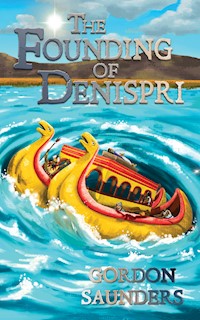
The Founding of Denispri
Gordon Saunders
Published by mediaropa press
The Founding of Denispri
Copyright © 2021 by Gordon Saunders
Ebook ISBN: 978-1-956228-03-8
Paperback ISBN: 978-1-956228-04-5
Hardback ISBN: 978-1-956228-05-2
All rights reserved. Except for use in any review, the reproduction or utilization of this work in whole or in part in any form by any electronic or mechanical or other means, now known or hereafter invented, including xerography, photocopying and recording, or in information storage and retrieval systems, is forbidden without written permission of the publisher, mediaropa press. Reach us at: [email protected].
This is a work of fiction. Names, characters, places, and incidents are either the product of the author’s imagination or are used fictitiously and any resemblance to actual persons, living or dead, business establishments, events or locales is entirely coincidental.
Cover art by Anna Coleman
Cover design by Gordon Saunders
gordon-saunders-writer.com
To all people everywhere who make poor decisions,
do bad things, and make mistakes.
(You know who you are!)
There is hope.
1
LEAVING NEW ORLEANS
The New Orleans waterfront spread out in an expansive panorama before Joshua and Marie from their perch on the levee. This was Joshua’s favorite spot to watch river traffic. Which had something to do with the traffic, but mostly to do with its convenient location in front of the Place d’Arm, the church with the unpronounceable name, the Hotel de Ville, and, more importantly, the Halle des Boucheries–the largest market in the city that, coincidentally, sold the best chocolate croissants in the city. Joshua was eating one now, but Marie had chosen the more fragile chocolate crepe and was striving to keep the contents from escaping onto her clothing.
“There!” said Joshua, pointing to his right. The word didn’t come out clearly because of the flakey, buttery, intensely chocolatey bit of croissant in his mouth that he couldn’t bring himself to swallow hastily before speaking.
Marie finished her demure mouthful and responded. “Little brother,” she said, “are you trying to indicate that something is coming our way from the north?”
“Ye-es-s!” he said in a sing-songy way, having finally finessed his pastry. “And I’m not so little anymore, either, big sis. I’m taller than you and I have been for at least three years, since I was sixteen, I think.” He pointed back up the river. “Anyway, I’m sure that’s the Waltham up there.”
“The one that says ‘Creole Belle’ in large letters over the paddle wheel?”
“Ha, ha. You couldn’t see the words from here, anyway. It’s the stacks that give it away. Look more closely.”
The wharves before the levy where the river flowed from the northwest were filled with steamboats as far as they could see–most of whose stacks were billowing smoke through elaborate decorations at the top. Their viewpoint was in the center of the biggest curve on the river, and on the other side of the curve, where the downstream river headed southwest, most of the wharves were taken up with large sailing vessels.
Marie looked to the left.
“Not that way,” he said. “Honestly. Sometimes you are so…”
She looked back with a smirk. “I know,” she said, turning her gaze upstream. “The Waltham has the tallest stacks of all the boats now on the river, and a higher jack staff with a bigger flag.”
“How do you know all that?” Joshua asked.
“Boys aren’t the only ones who can read,” she said. She leaned forward, shading her eyes with her hand. “And the Waltham is just coming into view alongside the ‘Creole Bell,’ or whatever it’s called, in such a way as to make me believe they’re racing.”
“All right,” said Joshua a little crankily. “So you see it, too.”
“Yes,” said Marie, “and enough to note that they have not slowed down to ‘no wake’ as they are supposed to do when they pass Place de Marche.”
“Oh, who cares,” said Joshua. “Aren’t rules made to be broken?”
“They are broken,” said Marie. “But I don’t think that’s the intent.”
Other craft scurried out of the way of the two large steamboats that were making their way into the most crowded part of the river. A few boats pushing barges stopped dead on the periphery of the river, their crews emerging and cheering the two racers on.
“Where is it supposed to dock?” asked Marie.
“Ha,” said Joshua, “I thought you could read.”
“What I want to read,” she said.
Joshua looked back at the two boats. “Actually, it’s supposed to dock by Calle de Gravier. But he’s going to have to slow down pretty quickly and get on this side of the other boat if he’s going to do that.”
“Does it look to you like he’s trying to outrun the other boat and cut in front of him?”
“Yeah,” said Joshua, “and he’s listing to larboard, too.”
“The left side?”
Joshua just shook his head and rolled his eyes.
By now they could see the dozens of passengers leaning on the railings on each deck, presumably to watch the race unfold.
“That can’t be good,” said Marie. She glanced over at Joshua. “And he’s going to have to back pedal, because he won’t make it in front of the other boat soon enough to get over.”
Joshua opened his mouth to respond. But Marie did not hear if he did. Because just then there was a terrific explosion that caused her to jerk her head back to the river in time to see ‘the largest stacks on the river’ flying through the air, along with flaming debris, railings, barrels, lumber, and people.
“Father!” she screamed.
Next morning, Marie picked up a newspaper at the kiosk around the corner from their house. Though she tried, she couldn’t avoid the headlines literally shouting, “Steamboat Catastrophe!” and the lurid, after-the-fact drawings showing steamboat pieces and people hurtling through fire and smoke. She pulled her eyes away from them and scanned the article.
“… worst disaster ever seen on the river…”
“… dozens of fatalities and hundreds of injuries…”
“… both boats a total loss…”
“… dozens missing and presumed–”
She stopped reading there. She wouldn’t accept their presumption. Maybe they would find Father. After all, some passengers had already been found down river where they had floated on parts of the boat.
No. He couldn’t be dead. Mother was hysterical and Joshua, against Mother’s specific prohibition, was out on the west side of the river in his punt, downstream by the swamps, looking for any sign of him. They needed Father back! They had to have Father back in order to have anything resembling normalcy in their lives. Why did his company have to build that stupid steamboat, anyway? It was just a pride thing. They wanted to show off.
But she wouldn’t cry. She couldn’t. She was the one holding the family together now. She would be strong.
October 12, 1842
Dear Amanda,
How I have wished to sit down and write to you! As you will see, the lapse since you last wrote was not without good cause. Congratulations as you celebrate Jimmy Jr.’s second birthday! It hardly seems possible that so much time has passed. I hope he’ll have a happy day, and I trust you won’t be too uncomfortable as little Mandy (we hope!) is on the way. I’m glad the steamboats have not taken away all your tavern business. They certainly have been the bane of our existence.
Perhaps you heard our sad news that about six months ago father was killed in a boiler explosion on the steamboat, Waltham, that his company bought. Almost every month there is news of another explosion or fire on one of the floating monsters. Still, they’re all the rage, and I daresay commerce in New Orleans could not get on without them.
I hate to think about father’s death, but I must tell you a little. We all took it quite badly, especially Joshua. They never found the body, and for weeks afterwards Joshua paddled in his little punt or walked up and down the riverbank, sloughing through the pestilential swamps, looking for some sign of father; hoping to find him alive. Finally, mother put a stop to it. But he’s been quiet and moody ever since, not his usual fun-loving self.
Mother, herself, was devastated. But she has surprised us and held up well. She decided quickly to move back to Boston and began packing up our things. I think the activity and the hope of being with her family again was a real help. Anyway, it became quickly apparent that we had too many things to move. We’d bought a lot of things in New Orleans—father went out of his way to please mother and got her almost anything she took the slightest fancy to—but we would not be able to bring them back to Boston. One day I saw mother sitting in the parlor looking at the davenport and the piano and the elaborate fancy mantle she had wanted, while the men she had hired to auction it off walked around writing down the value of things. Suddenly, she jumped to her feet. “Sell it all!” she cried, and went running to her room. I knew what she meant. Without father there, it didn’t mean much anymore.
So, a few months later, about the middle of October, we stood on the porch of our house watching the wagon pull out with the trunks containing our clothes and the very few things we did save. Mother handed the keys to the new owner, who graciously provided the use of his carriage to get to the train station. We looked from the carriage as he walked through the front door and closed it, ending an exciting, short, sad chapter of our lives.
Even though none of us really wanted to take a steamboat any of the way back to Boston, we had decided to do it because it was the most reasonable thing to do. I’d gotten over my seasickness enough to take a river steamer, but not enough to take a sailboat around Florida and up the coast. And besides, it would have taken a long time and had us out on the water before hurricane season was over. So we couldn’t do that.
And…those pot-holed, alternately dusty and muddy, fly-infested roads, in that unbearably hot and jolting carriage… well, we couldn’t repeat that again. Even though roads have gotten generally better, they say that the roads going north and east from New Orleans have gotten worse since the steamboats have taken much of their traffic, and now the railroads are taking the rest. They did start a railroad from New Orleans to Nashville—which would have solved all our problems—but right now it ends in a swamp only a few miles north of New Orleans. So, we took the steamboat.
I think they must dredge the asylums for riverboat captains and crews. Our crusty little captain had epaulets on his shoulders almost as big as his head, a hat twice as big as his head, a black cigar stuck into the side of his face, and a diamond ring on every finger. (And he had fifty-seven fingers! We heard an alligator got the other three.) He was a cocky popinjay if ever there was one; so proud of his “Eclipse”, fastest boat on the river (he said). Well, of course he had to prove it. So when we were overtaken by a packet two days upriver, it was a race to Natchez. Oh, the black smoke and sparks that flew from the funnels! The water we churned up in our wake!
But then it got serious. You know how, during a race, everyone gets on the side closest to the boat being raced? Well, everyone did that, and of course that meant the boat was listing badly to that side like the Waltham had before it exploded. I was afraid it was going to capsize! But, apparently, that’s not the worst danger. After we’d been there awhile, the captain came running out, told us we must balance the boat. The boiler was dry on the high side because all the water ran down to the low side, and that was how boilers overheated and blew up. It was dangerously overheated. That was enough for mother. She told us we would be getting off at Natchez and walking to Boston if we had to. Then she went into the cabin where I think she stood at the door in case she had to run out and jump overboard, and she never came out again until we docked.
That was not the worst of it, though! We were racing along, neck and neck with this other boat, the St. Louis, when yet another boat came into sight around the bend, heading toward us. Not unusual, we thought. But then we saw it! We were in the middle of the river, the St. Louis by the eastern shore, and this oncoming boat by the western shore. Where we would meet, about a quarter mile ahead, a great sand bar stood. There was only enough room for two boats to pass! The oncoming boat was moving to the eastern shore and would be right where we would be beside the sand bar, right when we got there! Captain Cragg decided, this time, to survive to race again. He slowed us down and put the paddle wheel into reverse. We heard gales of laughter from the St. Louis as we pulled in behind her only just in time to avoid a collision. I agreed with mother. Anything was better than this! So, taking a few clothes from our trunks, and all of our money from the sale of the house and furniture, we got out at Natchez to take the land route to Nashville. At least, I thought, maybe I’ll get to see Amanda and Steven and Jimmy again! And Jimmy Jr.!
The boat docked at Natchez-under-the-hill–a seedy, corrupted tumor that sprawls under the bluff Natchez is built on. It’s almost as bad as “the district” in New Orleans, with the bawdy houses and thieves and the ‘Kaintucks’ leering and lurching about. But we got up to Natchez proper and could buy three emaciated horses to ride up the trace. You know that most of it’s not wide enough for wagons, and even at this time of year it’s too wet in places to get a wagon through.
We’ll be staying at a plantation called Elgin for almost two weeks, fattening the horses and waiting for a group to assemble with which to travel up the trace. The days of its most notorious bandits are past, so they tell us, but it certainly isn’t safe to travel unless you’re in a large group, and women and children almost never go at all. We’re a little uneasy with all the money (that we’re splitting up among us in case one is robbed), but we agree that this is the least evil way of going and so are undeterred by hints of danger along the way. Not many people travel the trace this time of year, since it’s getting on toward winter and becoming cool, but it looks like we may assemble ten or twelve. Some will be going up to Tuscumbia, Alabama, and others, like us, all the way to Nashville and beyond.
It will be strange traveling up this road. I can’t help thinking about Andrew Jackson and his poor wife, Rachel, who must have gone the same way. Maybe that’s why he built the other road to New Orleans that we took to get down there. At least that was always wide enough for a wagon.
Hopefully this will reach you before I do. And I’ll keep a diary of the trip, too, so I can fill you in on what happened as we came to you.
Lovingly, Marie
2
A LETTER FROM ALABAMA
December 14, 1842
Dear Amanda,
Oh dear, it’s been a long time again, hasn’t it! Well, once more there is a reason for it-and a reason why you’re getting a letter rather than seeing me in person. I told you I’d keep a diary for you, and I did. I think that I’ll let it speak for me for the first part of this correspondence (lest I give away the ending prematurely) and then I’ll write some more.
Saturday morning, October 29, before dawn. The weather is cool and sunny. A Mr. Stanton from Tuscumbia, Alabama, seems to be the unofficial leader of our party. He is mounted, as are a Mr. and Mrs. Dillon, who are going to Kosciosko, Mississippi, and a Mr. Herrod who’s going only to Raymond. That makes us seven mounted. And there are five walking, who will slow us down some–but better slow in company than quick and dead alone. There are two Kentucky farm boys named Barnes, and another boy named Johnny (who’s kind of cute and very friendly). Plus, there are and two businessmen (?) going to Jackson. They look like rough characters, but Mr. Stanton privately assured mother they were all right.
Same night. Made fifteen miles today - very good. I wish I could say I’ll never ride a horse again. I ache! But the walkers have sore feet. Which is better? We’re stopped at a stand called Mt. Locust, which is really a lovely little place. Fortunately, it is not crowded. The “Kaintucks” and other walkers are sleeping outdoors, so we only have Mrs. Dillon in the room with us. Joshua wants to be in the tavern with the men and to sleep in their room, but mother won’t hear of it. She’s a little (!) overprotective. After all, he’s nineteen and even tall for his age. But he does what she wants even so.
We crossed a few brooks in deeply carved beds, and a cliff that looked like nothing but sand. Tomorrow’s the Sabbath, but we’re not likely to hear a preacher out here.
Monday, October 31. The weather’s holding well, and we’ve done another twenty-five miles in two days. Spirits are good and we’re not too tired yet. Would be great if we could keep up this pace. I said that to Mr. Stanton, but he only looked at me and smiled. Trees have been very close together and sickly looking today, covered with some viney stuff. I hate horses! Maybe I’ll walk after all.
Tuesday, All Hallows. Got to Big Bayou Pierre before noon today. It wasn’t as wide as some streams we’d crossed, but it was worse. It flows over a very “sloughy” sand, which the horses’ feet sink into, sometimes up to the fetlocks. Mr. Dillon’s horse threw him, so he was wet and shivering for the rest of the day. Mr. Herrod said it was unusually cold. We even saw some frost before the sun melted it. Still, it’s sunny, and the foliage is glorious.
Before we left, Mother and I had gotten straight saddles, and not the little English side saddles we’re used to. Which also means we have to wear clothing more appropriate for men. But they had such things in Natchez. I guess style and propriety aren’t so big out here as in the big cities! Anyway, Joshua has all he can do every morning to get saddles on three horses. But Mr. Stanton’s been helping him. At least it’s better than falling off.
Tonight we’re at Burnett’s stand. Amazing how wonderful a bed feels after two nights of sleeping on the ground. And it will be mostly ground from here on, too, we’re told. Very few stands between here and Nashville. I wonder why? On the National Pike you could hardly turn around without seeing one. ‘Course, there was a lot more traffic there.
Wednesday, November 2, before dawn. It’s drizzling, though warmer. Won’t be a good day for travel.
Same day, evening. Wasn’t. Can’t write. Raining.
Friday, November 4, morning. I was too wet and tired to write last night. Rain is awful. I think I know how they felt in Noah’s day. And to top it off, Mr. Stanton had harsh words with the two “businessmen” from Jackson. Seems he found one of them fishing around in his saddlebag, and the Dillons had something missing. And, of course, mother had words with us as well, as if we were children, about keeping close together and such because…I had to shush her so she wouldn’t inadvertently reveal what we were carrying.
We decided to stay here at Dean’s stand, which is really just their house and is awfully small for all of us–even with the men staying in the shed outside. Anyway, Mr. Stanton and Mr. Herrod told the two fellows from Jackson to be on their way. But he told Joshua we’d have to watch for them. At least they aren’t armed, and most of the other men are. (But whether anyone’s powder is dry enough to use, who knows!)
What a blessing to have a hot meal in dry clothes! No fire during the last rainy days, barely any food either, and definitely not a square inch of dry skin anywhere. We were thoroughly chilled, and I worry about mother. Glad we’re on horseback. Mud almost up to the ankles of walkers in some places.
Saturday, November 5, before dawn. Cool and clear. Everything sparkles! Three days to next stand, and Mr. Herrod leaves us tomorrow for Raymond. Johnny and the Barnes boys will go out ahead to watch for the Jackson rowdies, just in case they didn’t get the message.
Monday, November 7, dusk. We reached Brashear’s stand, finally, after pushing hard. Started to rain again. Mr. Stanton says we’ve gone over a hundred miles. Ten days and only one-fifth of the way to Nashville! (And then the trip to Boston! Saints preserve us!) I’ve never been so stiff. I think we’re deciding to spend the day here tomorrow if it’s raining. I hope it rains! But it is getting cooler, and we’re going north, so we can’t stop too often.
Wednesday, November 9, dusk. We made good progress on a brisk, clear day, after half-a-day of rain that kept us at the stand. Tomorrow we skirt Cypress Swamp. Hope it’s not too wet, but Mr. Stanton says to expect the worst with all the rain we’ve had. Mr. Dillon’s not well since Bayou Pierre. Huddles into his jacket and shivers. His wife wears a haunted look. We fear pneumonia. Also, Mr. Stanton wonders if the Jackson rowdies are trailing us to sneak into the camp at night. We don’t think (Mother and Joshua and I) that they know about our money, but they were mighty nosey, and they must know that we couldn’t make this trip (on horseback!) if we were penniless. Mr. Stanton says we must post a guard at night. Johnny will go before us and the Barnes boys behind us when we go on tomorrow.
Friday, November 11, dusk. Oh, how can there be so much water just sitting on the ground? Trace blocked by miry patches all over. We go round and round trying to find a way through. Hope to be out of it tomorrow, but who knows? We’ve done less than a day’s journey in two days. Mr. Dillon too ill to travel, but we cannot stop. Mr. Stanton rides beside him, holding him on his horse. Fortunately, we are past the parts of the way that are sunken into the sand. Back before Bayou Pierre there were banks on both sides, sometimes twenty feet high. No escape if surrounded by bandits. No escape here, either, but they would have to come the same way we came, thankfully, so couldn’t surround us.
Saturday, November 12, dusk. Crossed a couple of roads today, passed some locals going to and from the market towns. Seems a little safer here. Two more days to Kosciosko. Hope Mr. Dillon makes it. He’s no better, though no worse. No sign of the rowdies. We’re feeling good about that, but still being cautious. Too dark to write. We’re not ready to take a chance on a fire.
Sunday, November 13, late evening. Clear, warm day. We pushed very hard for Mr. Dillon. Even made a torch so we could travel after dark. Probably did almost two days’ worth. But we did get to Kosciosko. There is a doctor here, though I doubt he can do much. But the Dillon’s were moving here and have a house ready (he’s a blacksmith). We hope he’ll be okay. Mr. Stanton didn’t say anything, but I think he’s worried. We’re down to seven now, with possibly two trailing us to break in on us. Johnny says not to worry. I like him. He walks beside my horse and we talk whenever we can. We may stay here tomorrow to rest. We’re not even one third of the way to Nashville and starting our third week.
Saturday, November 19, afternoon. Finally, a place to wash and get dry and get a bed. I am so sore. It got cold and stayed cold. My hands were too numb to write. Of course, we’re gaining altitude, too, so that makes it cooler still. Mile after interminable mile uphill on crunchy fallen leaves at the bottom of winding ravines that scarcely ever let the sun through. In Boston, now, there’d be no leaves on the trees. But Fall doesn’t get around to coming south quite so soon. Praise be! So we still get a little warmth now and then. Perhaps walking would be better–at least the walkers seemed warm. What did the Indians see in this land? Staying at a place called Pigeon’s Roost.
Sunday, November 20, dawn. Why does it have to rain every time it gets warmer? We’re going on anyway. Warm or clear, we travel. Wet and cold, we sit (if possible).
Tuesday, November 22, dusk. It got cool, though the rain stopped. But camp was broken into last night. One of the Barnes boys was on watch, too close to the fire, I suspect, so he couldn’t see what was in the dark outside the firelight. Of course, he claims he saw no one come in from outside our camp and he didn’t hear anything either. But Johnny woke up, said he caught a glimpse of one of the men in the moonlight, thought it was one of the Jackson rowdies. And the money was taken from Mr. Stanton’s saddlebags—which they had tried to take before—so it seems like it was them. (And to think he was sleeping on his saddlebags!) The Barnes boy swore up and down no one had come into the camp from outside. But Mr. Stanton and Johnny had words with him, saying he was responsible, and he and his brother “like to took off on ‘ere own, if ya ‘please,” but were finally persuaded to stay with us. It was a mighty glum trip today, despite the welcome warmth (once we got out of the woods) and glorious foliage. Tomorrow we’ll be halfway to Nashville! Halleluiah!
Tuesday, November 29, morning. Nothing much to report. Johnny and the Barnes not speaking. They accuse him of the robbery. Of all the nerve! Today we get to the Tennessee River and Colbert’s Ferry. Unfortunately, Mr. Stanton must leave us here because his home is almost two days’ journey upstream. We’re in Alabama, now.
Mr. Stanton had a long talk with Joshua last night, telling him how to watch out for mother and me. He’s such a nice man. His only fault is that he seems almost to believe the story the Barnes boy made up to cover his own careless watching, the story about Johnny being the robber. How anyone could think that of Johnny!
Well, that’s the end of my journal, and it just goes to show what a poor judge of character I am. Johnny wasn’t what I thought. The next morning, he was gone. This wasn’t unusual—sometimes he went off to shoot game for dinner—so no one thought anything about it. We waited for him for a little while and then decided to go on. After all, he knew where we were going. In fact, he knew a lot more than that.
When we got to the river, the ferry was on the other side. Loud calling didn’t produce anyone to pull it across, but it did produce Johnny on our side. He sauntered over to us, grinning. We started to welcome him when he raised his hand.
“I’m afraid I’ve got bad news for you,” he said. “Not only is the ferryman tied up on the other side of the river,” he laughed, “I mean really tied up—by my friends from Jackson, which you might have guessed—but you’re going to have to give up everything you have on this side.”
“What?” said Mr. Stanton, taking hold of the stock of his rifle.
“I wouldn’t.” said Johnny quietly. Five or six men with rifles pointed at us stepped out of the trees. Then Johnny produced a large sack.
“Put all your valuables in here,” he said. “And I mean all! Don’t forget that I’ve been traveling with you and watching you, and I know where they are.”
He did, too. He even asked me to give him the little purse I kept in my bodice. That’s when Joshua pulled me behind himself.
“You acted like you were a nice guy,” he said. “We trusted you. Will you now take even the last little bit we have?”
Johnny seemed to think about that for a moment. Then he nodded.
“Yeah,” he said. “I will.” He reached out his hand to me and Joshua slapped it away.
He pulled it back and rubbed it with his other hand. “Ooh,” he said. “Feisty, aren’t we. But ask yourself, would your sister rather have you dead and me take her money, or just have me take her money?”
Joshua didn’t back away, and I knew the answer to Johnny’s question. I dragged the purse from my bodice and threw it at him.
“A wise decision,” he said, leaning over to pick it up. “At least one of you has some sense.”
I was holding back the tears and clenching my fists, glaring at him. But he didn’t seem to mind. Then something caught his eye and he turned. One of the Barnes boys had slowly raised his rifle and now made to fire at Johnny, only to lower it slowly to the ground and raise his hands. I’m quite sure it was the pistol muzzle of one of the ‘boys’ against his neck that made him do that. Johnny turned away from me and laughed.
“Well,” he said, “does it please you that you were right? Boys take their guns.”
“Let’s kill them,” said one of the men. “I don’t want these hotheads coming after us!”
“No!” said Johnny. “No killing! And besides, how would they come after us?” Then he said to us, “We will trouble you for one more thing. Your horses, please!”
“You can’t leave us days from anywhere with no arms or money and no horses!” said Mr. Stanton fiercely.
“Oh?” said Johnny, grinning. “Watch me!”
He mounted Mr. Stanton’s horse. “Oh, and by the way,” he said. “If you look out at the river, you’ll see the ferry is about half-way across. The Jackson boys are sending it over to you. If you pull yourselves back over, you might arrive before the ferryman chokes on those ropes the boys tied—probably too tight, even though I told them to be careful—and save his life. If not…well, it’s your choice.”
“Heeyah!” he yelled, twisting the horse’s head away from us with the reins. Then he kicked its sides and was off; three men on our horses right beside him, with the rest trotting behind on foot.
Maybe he saved our lives, but that was all. All our money, our horses, everything but the clothes on our backs and a few things on their way to Boston by ship, was gone. The Barnes boys threw their hats on the ground and bellowed.
“What’d we tell ‘ee? What’d we tell ‘ee?”
Mother sat on the ground and cried. Joshua looked after the departed thieves grimly, then went and stooped in front of her, trying to comfort her. I didn’t try to hide my few tears, but I didn’t know if it was the loss of the things or of Johnny I cried about most. I was furious with him.
“Well,” said Mr. Stanton finally, “it’s a long walk to Tuscumbia. Let’s get started.”
We got to Tuscumbia, not feeling very well, I can tell you, but found some solace in Mr. Stanton’s home. Only then did he tell us that his wife had died a couple of years ago, and his daughter—a few years older than me, I think—was running his household. Her name is Julia, and she’s lovely. She gave Mother a few of her mother’s dresses. She was shorter (and a bit stouter than me–sorry, but it’s true) so her dresses didn’t fit me. Mother was able to do wonders not only with Julia’s dresses, but with several others as well. So at least we had clean, pleasant clothes to wear.
The long and short of the rest of it is that the Barnes boys went on their way a few days later. Mr. Stanton replaced their guns and give them a few provisions. But we were stuck there. Two women and a boy, however strong or brave the boy—well, I guess I should say he’s a man—couldn’t go on through the wilderness penniless and alone.
What Mother did with the dresses (“nothing short of miraculous,” Mr. Stanton said) gave her the idea to take in piecework and make us a living. Mr. Stanton found us temporary rooms with a cousin of his. Mother plans to stay in those rooms at the corner of Cave and Eighth Street (856 Cave St.) for only a few months, but I fear it may be much longer.
Joshua does day jobs in town, and Mr. Stanton thinks he can find a position for me with a family that lives across the river a few miles west of Florence, the husband being a first cousin to Andrew Jackson. I hope your holidays are joyous. It will certainly be a different sort of Christmas for us. Perhaps this will reach you by then; they say the post riders make good progress on the trace. If not, happy new year! Let me hear from you soon, and I hope all goes well with your little Belle-to-be.
Lovingly,
Marie
3
MOVING ON
A few chunks of ice floated by the ferry with the current as Joshua crossed the Tennessee at Tuscumbia Landing on his way to Florence. He was taking a week off to see Marie in her new position with the Jacksons, near Coles Creek, west of town. Late February rains and the heavy melting from unusual amounts of snow that year had made it impossible for him to go earlier because the roads out of Florence were flooded. He wondered how the post-riders had gotten through.
Across the river he looked back to the high limestone bluffs on the other side. The road to the landing curved back and forth to the top of the bluff, reminding him of the road to Denispri. Had he really been in a city on another world? All that had happened on earth since he was last there made it… vague in his mind. He had grown, gotten tougher, learned a few things. But more important, Father was gone. Any immediate hope of an education would have to be put off. Everything had worked out terribly. Where was Ispri when you needed him? But, of course, Ispri isn’t for earth. Ispri is in Verdura. He seems to have some relationship with people on earth, but he really doesn’t help here.
Joshua shook his head as he walked. So much had happened in Verdura... had it all been just a vivid dream? He had wanted to go back again, and again and again and again, before all this. He wanted to talk to Marie about it. Was it best just forgotten?
Perhaps other things were best forgotten, too. He had thought of Johnny many times in the last few months, always with the desire to throttle him, thrash him, kill him... He couldn’t think about him without his fists clenching and face reddening. But he knew what death was. He thought of his walks along the Mississippi looking for his father. Once someone killed them, you couldn’t get them back. He had seen a Negro hanged in New Orleans for helping a slave try to escape. They could take life, all right, but they couldn’t give it back. So easy to take someone else’s life. Then they walked away, unconcerned. Best to forget Johnny. Johnny stole, but at least he didn’t let the gang murder us. Joshua didn’t know what he would do if he saw Johnny again, but he thought it was probably better to hope he didn’t, and let the matter drop.
It was nearly a day’s hike to Pleasant Hill, the Jackson’s household; up, down, and along the bottom of ravines much steeper than those along the trace. Even now, in late March, the creeks leading to the Tennessee were swollen. Some fords provided very poor footing through waist-deep water, and slippery banks on either side to boot. Despite the relatively mild weather, Joshua began to wonder if it was really worth the trip.
But when he got to the house, he knew it had been. From a distance, its bright lights shone through first and second-story windows past broad columns. But the clincher was when Marie rushed out to hug him, soggy as he was. She took him into the house at once. He was introduced, and then he was taken to an upper bedroom and given a dressing gown to wear while his clothes were drying.
“I’ll be right up with coffee,” said Marie, backing out the door. “So good to see you!”
She had no sooner shut the door than it was rapped on and a serving man came in without waiting for an answer or shutting the door. He walked silently on the thick carpet and laid some expensive looking clothes on the bed.
“Massah’s clothes be a mite big fo’ yo’,” he said, “but they sho’ be better n’ ‘em wet duds you be wearin’.” He chuckled heartily and turned to leave. “Yo’ be wantin’ me to he’p yo’ on with those?”
“Ah, no thank you,” said Joshua.
The man nodded and breezed out through the doorway. He had an uncanny resemblance to Emlind, the Steward of Byota, whom Steven had seen as a young man and then as an old man, on his two visits to Verdura. This man looked like the older Emlind. Steven pushed the thought from his mind. Ignoring the clothes, he walked to the window and looked out.
The house sat atop a hill that was higher than any of the hills in the immediate vicinity, so it had a commanding view of the countryside. In the fading light, he was able to make out nothing but forest and cultivated fields. There was a glow on the left side of the pillars by his window on the east side of the house. He assumed that meant the cooking fire for the slave shacks somewhere behind the house.
“I’ll never get used to that,” he whispered.
Marie touched his arm, startling him. He turned to her and then back, both looking at the glow on the pillar. “The slaves?” she said.
He nodded.
“Neither will I.” Then she turned him toward herself in her sisterly-motherly way. “Let me look at you,” she said.
Joshua turned and grinned. Holding his arms out from his side, he did a complete turn-about. “Everything okay?”
She pulled him toward her and hugged him again. “Even if you are my brother,” she said, “I think you look great!” She winked. “Even in a dressing gown.” She released him and walked to where she had set the coffee. “Come on and have some. Dinner’s at seven and I have to mind the girls till then. After that I’ll be free and we’ll have done all the amenities. Tomorrow they’ve given me the whole day off. If it’s nice, we’ll walk over to the creek and I’ll show you what might be a sinkhole.”
“Are you trying to get back into Verdura?” Joshua asked.
Marie looked down, coloring a little. Joshua thought about how grown up she looked, how like their mother, how pretty.
“Well...” she started.
“You know,” Joshua said, “You look great yourself!”
“You think so?” she asked, raising her eyes, brightening.
Joshua smiled and nodded, then turned to look out the window. He looked back, serious again.
“I’ve been thinking about Verdura myself,” he said, “wondering if we shouldn’t just forget about it.” He grinned at her. “But it must be tough with Emlind running around all the time.”
Marie laughed lightly. “It is amazing how much Mr. Jackson’s man, Peter, looks like him, isn’t it? Well, have to go. See you at dinner.” She bounced out and Joshua sat by the fire drinking his coffee and wondering what it must be like to be a rich man and own slaves and whether he could even tolerate it.
It did turn out to be nice the next day, so after breakfast, swinging a basket between them that the serving lady had packed, Joshua and Marie set off down the hill to the creek west of the house.
“Now I don’t exactly know if this is a sinkhole,” said Marie as they walked along. “And it’s certainly not like the big ones we saw in Kentucky, but I think it’s a sinkhole.” She looked up at him shyly. “It’s my wishing place. I come here to think about how we can get Mother back to Boston, about how you’ll get an education, about... oh, lots of things.”
“No wishes for you?” Joshua asked.
“A few,” she replied dreamily.
They walked on silently for a few moments and she pointed.
“There it is,” she said. “Not much, is it.”
Joshua stared at a slight black depression among the trees before them, matted leaves covering all but a space the size of a saucer. He almost said, “That’s it?” But he stifled it before it could come out. He didn’t want to hurt her feelings or make light of it, so he continued to walk toward it.
“Boy,” he said after examining it for a moment. “You must really want to get back to Verdura.”
“No,” she said quietly. “I’ve thought about it a lot. Of course I miss Ispri, but I don’t really need to get back. I used to think, sometimes, that it would be a nice way to get away from everything; a way not to have to face our problems here. But think about it. Did going there ever change anything here?”
“No,” Joshua replied, “but it did–”
“I know,” said Marie. “It made us different, so we could sometimes change how we did things back here. But we are different now. We’ve been through a lot together, Joshua, and we’ve grown.” Joshua looked at her and she made a moue. “And did we ever have any fewer problems there?”
Joshua grinned. “No, we didn’t. That’s for sure.”
“It’s nice to see you grinning again, brother,” Marie said. “There was a while there when I wondered if you’d ever grin again.”
“Yeah, I know,” he said, shaking his head slightly.
Marie looked back toward the sinkhole. “Course,” she said, “I wouldn’t refuse a visit either.” She turned back to Joshua, smiling. The two sat down on some dry leaves, partly facing the sinkhole.




