


5,99 €
Niedrigster Preis in 30 Tagen: 4,49 €
Niedrigster Preis in 30 Tagen: 4,49 €
Mehr erfahren.
- Herausgeber: BQB Publishing
- Kategorie: Für Kinder und Jugendliche
- Sprache: Englisch
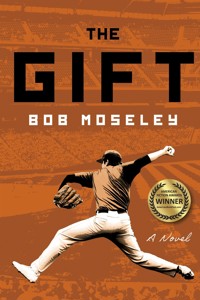
Tommy Browning is hopelessly trapped in his baseball dream.
Wallowing in Single A with Macon Peaches, he doesn't know if he'll ever make The Show---the major leagues---or if his dream of a professional career is even worth pursuing.
But fate steps in and the 21-year-old pitcher is launched on a roller-coaster ride that he can't control, much less understand.
e has "The Gift," but can he keep it?
Das E-Book können Sie in Legimi-Apps oder einer beliebigen App lesen, die das folgende Format unterstützen:
Veröffentlichungsjahr: 2023
Ähnliche














![Tintenherz [Tintenwelt-Reihe, Band 1 (Ungekürzt)] - Cornelia Funke - Hörbuch](https://legimifiles.blob.core.windows.net/images/2830629ec0fd3fd8c1f122134ba4a884/w200_u90.jpg)





The Gift
© 2023 Bob Moseley. All rights reserved.
No part of this book may be reproduced in any form or by any means, electronic, mechanical, digital, photocopying, or recording, except for the inclusion in a review, without permission in writing from the publisher.
This is a work of fiction. All of the characters, names, incidents, organizations, and dialogue in this novel are either the products of the author’s imagination or are used fictitiously.
Published in the United States by BQB Publishing(an imprint of Boutique of Quality Books Publishing, Inc.)www.bqbpublishing.com
979-8-88633-000-7 (p)979-8-88633-001-4 (e)
Library of Congress Control Number: 2022949531
Book design by Robin Krauss, www.bookformatters.comCover design by Rebecca Lown, www.rebeccalowndesigns.comFirst editor: Caleb GuardSecond editor: Andrea Vande Vorde
CONTENTS
CHAPTER 1
CHAPTER 2
CHAPTER 3
CHAPTER 4
CHAPTER 5
CHAPTER 6
CHAPTER 7
CHAPTER 8
CHAPTER 9
CHAPTER 10
CHAPTER 11
CHAPTER 12
CHAPTER 13
CHAPTER 14
CHAPTER 15
CHAPTER 16
CHAPTER 17
CHAPTER 18
CHAPTER 19
CHAPTER 20
CHAPTER 21
CHAPTER 22
CHAPTER 23
CHAPTER 24
CHAPTER 25
CHAPTER 26
CHAPTER 27
CHAPTER 28
CHAPTER 29
CHAPTER 30
CHAPTER 31
CHAPTER 32
CHAPTER 33
CHAPTER 34
CHAPTER 35
CHAPTER 36
CHAPTER 37
CHAPTER 38
CHAPTER 39
CHAPTER 40
CHAPTER 41
ABOUT THE AUTHOR
PRAISE FOR THE GIFTANDAUTHOR BOB MOSELEY
“The Gift, like so many playing careers, is an exciting, emotional roller coaster. It’s full of ups, downs, twists and turns, and over before you want it to be.”
- Matt Merullo, former major league catcher with the Minnesota Twins and Chicago White Sox, and minor league manager
“Bob Moseley has crafted another memorable sports story that can be enjoyed by young and old alike. The story is more than another baseball hero story, it offers a tale about fleeting fame, redemption, forgiveness, and the enduring value of an act of kindness.”
- T.M. Brown, author of the Shiloh Mystery series and president of Hometown Novel Writers Association
“A colorful journey through professional baseball that fans of the sport are sure to enjoy.”
- Frank Wren, former general manager of the Baltimore Orioles and Atlanta Braves
Tommy Browning slid onto a stool and lowered his head, staring at the vintage baseball cards laminated into the bar at Champs. His thick mop of hair tried to camouflage a dejected face.
“Hey, Tommy. How’d you guys make out tonight?” asked Pete, the bartender.
“We lost. I gave up six runs in the first inning,” Tommy said.
Pete turned and poured a draft beer, plopping it down in front of the lanky pitcher for the Macon Peaches. He’d seen that pitiful face before, and he knew alcohol and a sympathetic ear was the prescription for that particular pain. Sometimes it worked, sometimes it didn’t.
“Ouch, six runs? Sorry to hear that, but it will get better.”
Tommy took a long swig and cast his eyes up at the barkeep. “I bet you Bob Gibson never did that in his lifetime.” He glanced back down at the baseball card from 1967, encased for life in the Georgia sports bar.
“Probably not. That’s why Gibson’s in the Hall of Fame,” Pete said, leaning forward. “One of the most dominant pitchers ever. Led the National League with a 1.12 ERA one season. I bet the Cardinals would love to have him again.”
“Not as a corpse,” Tommy fired back, revealing a slight smile.
“Well, I’ll tell you one thing. If Gibson ever had a rough outing he always came back strong. You will too, Tommy.”
Tommy’s beer glass created an unsettling sound as he lowered it onto the bar. “Pete, I’m playing my third season in Single-A. I gotta start pitching better or I’ll get released. I should be in Double-A by now.”
Pete recognized the sheer desperation in his voice. He’d heard it from many ballplayers before Tommy.
“Maybe I should make the call before they do,” Tommy said. “Maybe I should get on with my life. I love baseball more than anything, but making $12,000 a year while chasing a childhood dream is kind of crazy. I can’t live on that.”
Tommy scratched the back of his neck, his fingers combing through an unruly head of hair. “With what I’m making, I have to substitute teach just to make ends meet. Funny how people think professional athletes all make good money. Not baseball players. Not unless you make The Show.”
“Believe me,” Pete said. “I’ve seen plenty of ballplayers pass through Macon. It’s just a weigh station, Tommy.”
“I mean, how long am I going to do this? I know it’s only been a few years, but I’m trapped in Single-A, and major-league organizations don’t have a lot of patience with twenty-second-round draft picks.”
Pete slowly turned around. “See that guy up there.” He pointed to an autographed Braves jersey hanging on the wall. “He was drafted in the twenty-second round. Turned out to be a pretty fair pitcher, a first-ballot Hall of Famer.”
“John Smoltz,” acknowledged Tommy. “Yeah, he was great, especially in the post-season.” He took another swig of beer. “I probably should have played college ball and signed later. My parents wanted me to go to college, but I wanted to go pro. I got too swept up in the excitement when I was eighteen, a kid coming out of Newnan High. I always wanted to play for the Braves.”
“How old are you now?”
“I’ll be twenty-two in November.”
“You’re still young. You could develop like Smoltz . . . or Glavine . . . or Maddux.”
Tommy offered Pete a crooked smile. “Right now I’m 0–5 with an ERA over six. I’m not fooling anybody at the plate.”
“You really think they might release you?”
“Hell yes. And the minor leagues are shrinking all the time. It would be hard to hook up with another club. I might have to play in some independent league, and then you’re as good as off the map.”
“Hang in there, Tommy. Pitchers go through slumps just like hitters. It will get better.”
“Maybe I just don’t have the talent,” he muttered, looking away. “I guess I should have known that from the start.”
Pete turned and started up the popcorn machine behind the bar. He poured seed into a cup inside the popcorn chamber and, within minutes, popcorn began to fall. Tommy watched intently as the radical change from hard, ugly kernels to a fluffy white treat took place before his eyes. It was like the popcorn seed was able to reinvent itself through a wondrous transformation.
“Here,” Pete said, sliding a wooden bowl full of popcorn in front of the dejected pitcher.
After listening to Tommy go on about his failed baseball career and watching him suck down three more beers, Pete felt that Tommy had cried on his shoulder enough. He was willing to dish out sympathy, but continuous whining crossed the line. Plus, Tommy was beginning to slur his words.
“Tommy, can I get an Uber for you? You should go home and get some sleep.”
“Nah, I walked here and I can walk home,” Tommy said.
He paid his tab and staggered out the door, wobbling down a dark street in the direction of his third-floor walk-up studio apartment. Humidity hung like a blanket in Macon—the kind of humidity that could make summer nights in Georgia a pitcher’s toughest opponent. Shops were closed by now, but Tommy spotted an IHOP, so he went inside and plopped down in a booth.
“What can I get you tonight?” the waitress asked.
“Pancakes,” he replied.
“What kind of pancakes would you like?”
“Flat ones,” he blurted out, laughing at his own joke.
The waitress rolled her eyes. She was used to dealing with inebriated customers on the night shift.
She started to rattle off the variety of pancakes, but Tommy interrupted her with “buckwheat.” Then he looked into his wallet. “Short stack,” he added.
Tommy’s red eyes focused on her nametag. Wanda. “Springsteen wrote a song about you,” he said, “but I can’t remember how it goes.”
Wanda continued looking down at her order pad.
“I know, I’m originally from New Jersey,” she finally said, lifting her head and humoring him with a forced smile.
“How long you been working here?” Tommy pried.
“About two months, darling,” she said. “I’m trying to save up to buy a car.”
“Me too,” Tommy said. “I’m a player with the Peaches.”
“Oh, we get a lot of you ballplayers in here,” Wanda said. “You want anything to wash down those pancakes, maybe black coffee?”
“Just a big glass of water, please.”
Within ten minutes, she returned with Tommy’s order. “Thanks, Wanda,” he said. “Hey, what time do you get off?”
Wanda had heard that question before. A somewhat attractive blonde in her early thirties, she was used to handling the advances of young men desperate for late-night company.
“My shift ends at 6 a.m.,” she said. “I don’t think you want to stay up that long.” She went to get Tommy his check. When she returned, Tommy was asleep, his head back and resting on the top of the booth with his mouth half-open.
“Wake up, darling. I brought you some coffee. It’s on the house.” She poured Tommy a cup, and he paid his bill, leaving a few dollars for a tip.
Stepping outside the IHOP, Tommy felt more awake thanks to the coffee. He looked at his cell phone. It read 11:25 p.m. Street lights were few and far between, but a full moon provided some visual relief. Tommy made a right on Magnolia Street. The city was dead quiet.
Suddenly, he heard a commotion down the block. The sound of punches, followed by screams and groans, emanated from a street corner, where a gang of teenagers was gathered.
Tommy ran over and caught a glimpse of the beatdown. “Stop!” he yelled, and the teens scattered into the night. A man was lying in the street, T-shirt ripped, blood oozing down his face.
“You okay?” Tommy stammered out as the man writhed in pain. He helped the man sit up on the curb, sensing that he was unable to stand. “What happened?”
“Just a second,” the man responded, between heavy breaths. “Oh man, I think I broke some ribs.”
“Just stay down for a minute. Rest up and tell me what happened.”
“A bunch of punks jumped me. They beat and kicked me.”
Tommy tried to get a better look at the man as he guided him toward a streetlight. He looked like he was in his late twenties or early thirties, although it was hard to tell with his coarse black hair and full beard.
“Can I take you home?”
“This is my home,” the man shot back.
Tommy noticed a tattoo on the back of the stranger’s neck. He zeroed in on the inscription: Grace. They sure didn’t show him any of that, he thought.
Tommy waited another minute before announcing, “I’m going to lift you now. Try to get your feet underneath you.” He placed his hands underneath the man’s armpits and helped him struggle to his feet, despite the unnerving groans.
“I think I’d better get you to the hospital. Regency isn’t far from here.”
“No, no hospital. I don’t have insurance.”
“C’mon, you need to be checked out. Don’t worry, they’ll treat you even if you aren’t insured.”
The man reluctantly agreed. “You got a car?”
“No, we’ll have to walk. I’ll help you. It isn’t far.”
The man stumbled along with Tommy propping him up. “You’ve had an even worse night than me,” he remarked.
“Why? What happened to you?” the man said, stopping for a few seconds to catch his breath.
“Oh, never mind. It doesn’t matter.” Tommy immediately regretted his flippant remark.
He checked in the battered man at the hospital’s emergency desk and waited until the nurse brought him in to see a doctor twenty minutes later. “Hey, what’s your name anyway?” asked Tommy.
“Eduardo,” the man replied, not offering his last name.
“Okay, Eduardo, I’ll wait here to see how you are.”
Eduardo’s eyes were filled with gratitude. But he said very little. He was too sore for conversation.
He was about to leave, but then he turned back and looked Tommy in the eyes. “Matthew 7,” he said, managing an appreciative smile. “God bless you.”
A bit bewildered, Tommy just nodded back.
About twenty minutes later the nurse returned to the waiting room. “I think he’ll be okay, but we’re going to keep him here tonight,” she said. “He might have some cracked ribs. He’s lucky you got there when you did. Did you file a police report?”
“No, they all got away before I could get a good look,” Tommy said. “I guess they were taking it out on him because he’s homeless. He was an easy target.”
The nurse nodded. “Well, thanks for coming to his rescue. You may have just saved that man’s life.”
That night Tommy lay awake in bed, thinking about his crumbling baseball career. He considered it amazing that he was playing professionally at all.
Back in high school, he never pitched regularly until his senior year. He was erratic on the mound, often losing the strike zone.
But midway through his senior year, the convergence of growth and fortune helped map out an unlikely future. A growth spurt pushed him up to an imposing height of six-foot-three, and his arm grew stronger. He started to throw strikes and found more bite on his curveball. All of a sudden he had considerable upside as a baseball player.
One day, an old man attended one of his Newnan High games. That man was known as a “bird dog,” a part-time scout who works for an area scout. Bird dogs hope to spot a hidden gem, or someone with potential, and alert the area scout. They often beat the bushes at high-school games and summer leagues, mainly because they love watching baseball.
The bird dog invited Tommy to an open tryout in Rome, Georgia, telling him there would be scouts from the Braves in attendance. Hundreds of hopefuls sometimes showed up at open tryouts, but only a few were considered serious prospects. Tommy was allowed to pitch to three batters and struck out the side. He wasn’t considered a prospect yet, but he was on their radar.
Then he pitched well in the state playoffs as a senior, grabbing a little more attention. In one game he struck out fourteen in a two-hit shutout. Tommy couldn’t throw ninety miles per hour, but there was potential.
When the Braves drafted him, they sent him directly to Single-A instructional league. Even though he was starting at rock bottom, he couldn’t wait for his first professional uniform.
After finally falling asleep in the wee hours, Tommy woke up late the following morning, staring at the ceiling from his old mattress lying on the floor. He called his nine-by-ten-foot room “the broom closet.” Yet as cramped as it was, he preferred having his own place, rather than living with five other guys, like many of his teammates did. It was a place of his own, and he could take a girl back there if he ever got the opportunity. The room rented for only $300 a month.
He fumbled through his clothes that were scattered to the left of the mattress, and found his cell phone under his pants. No new calls or messages. He called Regency Hospital, but Eduardo had already been released.
Eduardo must have been okay, so he went back to worrying about his sagging baseball career. Time to take care of Number One again.
He tried to shake off the cobwebs from his evening at Champs and rode his bicycle to the ballpark early, even though he wasn’t scheduled to pitch that night. He had to see Skeeter Jones, the Peaches’ pitching coach. Skeeter was sitting in the dugout three hours before the game, going over some pitching charts. Tommy sat down next to him.
“Skeeter, did you notice anything wrong with my delivery last night? See any mechanical errors I can correct?”
Jones glanced up at Tommy and pulled off his black-framed reading glasses. He hesitated for a minute. Tommy squirmed during the silence.
“Tommy, Tom Seaver once said there are three components to pitching: velocity, location, and movement. Right now, you don’t have any of the three.”
He slapped Tommy on the back and erupted into a hearty laugh, but Tommy failed to see the humor in the situation.
“Now, Seaver used to say velocity might be the least important of the three, but we clocked you at eighty-four miles per hour on the radar gun last night. That ain’t gonna get the job done, even in the minors.”
Tommy lowered his head and looked away.
“I don’t want to discourage you, son, but maybe you just don’t have a major-league arm.”
The pitcher was silent. He was watching his dream get stomped on right before his eyes.
“This is a tough business,” Skeeter added. “Only about one out of every ten ballplayers drafted ever makes it to the big leagues.”
“I knew that when I signed. But I know I can pitch better than last night.”
“You know what? Billy the batboy might be able to pitch better than you did last night,” Skeeter said, lowering his laugh to a chuckle this time. Tommy felt like getting up and leaving, but the coach quickly made an effort to comfort him, patting him softly on the knee.
“Y’all need to keep working at it. I can’t help you today; I’ve got to go meet with Harrison, our starter tonight. But I can see you tomorrow and we’ll go over some things in practice.”
Tommy nodded. He just hoped he’d still be on the Macon Peaches roster when Thursday arrived. Skeeter wasn’t exactly reassuring. At a time when he desperately needed a confidence boost, he was being treated like a joke.
“Make sure you get your throwing in today,” Skeeter called out as they parted ways. “Just light tossing.”
Tommy waved back from shallow left field. He took that as a morsel of encouragement.
In practice the next day, Skeeter grabbed Tommy in the bullpen and ushered him to the mound, sidestepping the puddles from an early morning rain.
“Throw a few pitches for me,” he suggested. “Bucky, come on over here and catch Tommy.”
George “Bucky” Beavers hustled his stocky body over and squatted behind home plate. Skeeter watched silently with arms crossed as Tommy threw three fastballs and a pair of curveballs to the plate. “Curveball’s not bad, but lawd we gotta do something about that heater,” Skeeter commented.
For the next half hour, Skeeter adjusted Tommy’s arm angle, release point, and the length of his stride, digging into his bag of pitching tricks designed to add up to ten miles per hour to a lazy fastball. They got mixed results. While the pitch may have gained a little speed, it was also harder for Tommy to control. Bucky blocked balls in the dirt and let several fly past him, nowhere near home plate.




