


Erhalten Sie Zugang zu diesem und mehr als 300000 Büchern ab EUR 5,99 monatlich.
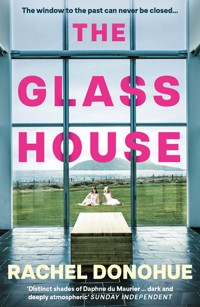
'Distinct shades of Daphne du Maurier' Sunday Independent 'Lyrical prose with ominous secrets saturating its deepest core' ALEX MARWOOD THE WINDOW TO THE PAST CAN NEVER BE CLOSED... 1963: At the stark and isolated modernist mansion of controversial political philosopher Richard Acklehurst, the glittering annual New Year's Eve party has not gone quite as planned. Considered a genius by some, and something far darker by others, by the end of the evening Acklehurst will be dead in mysterious circumstances, casting a long shadow over the lives of his teenage daughters, Aisling and Stella. 1999: Richard Acklehurst's remains are defiled in the country graveyard where they have lain undisturbed for over thirty years, forcing his daughters to return to their childhood home where they must finally confront the complex and dark dynamic at the heart of their family. Moving from the West of Ireland to Dublin, London, Florence and back, The Glass House is a captivating and compelling tale of two sisters and their secrets, of love, regret and vengeance. 'Gorgeously atmospheric and darkly brooding' CAROLE HAILEY
Sie lesen das E-Book in den Legimi-Apps auf:
Seitenzahl: 339
Veröffentlichungsjahr: 2025
Das E-Book (TTS) können Sie hören im Abo „Legimi Premium” in Legimi-Apps auf:
Ähnliche
















ALSO BY RACHEL DONOHUE
The Temple House Vanishing
The Beauty of Impossible Things
First published in trade paperback in Great Britain in 2025 by Corvus, an imprint of Atlantic Books Ltd
This paperback edition published in 2025 by Corvus, an imprint of Atlantic Books Ltd
Copyright © Rachel Donohue, 2025
The moral right of Rachel Donohue to be identified as the author of this work has been asserted by her in accordance with the Copyright, Designs and Patents Act of 1988.
All rights reserved. No part of this publication may be reproduced, stored in a retrieval system, or transmitted in any form or by any means, electronic, mechanical, photocopying, recording, or otherwise, without the prior permission of both the copyright owner and the above publisher of this book.
No part of this book may be used in any manner in the learning, training or development of generative artificial intelligence technologies (including but not limited to machine learning models and large language models (LLMs)), whether by data scraping, data mining or use in any way to create or form a part of data sets or in any other way.
Line from Absalom, Absalom! by William Faulkner reproduced with permission of Curtis Brown Ltd, London, on behalf of The Estate of William Faulkner. Copyright © William Faulkner.
This novel is entirely a work of fiction. The names, characters and incidents portrayed in it are the work of the author’s imagination. Any resemblance to actual persons, living or dead, events or localities, is entirely coincidental.
A CIP catalogue record for this book is available from the British Library.
E-book ISBN: 978 1 83895 692 9
Corvus
An imprint of Atlantic Books Ltd
Ormond House
26–27 Boswell Street
London
WC1N 3JZ
www.atlantic-books.co.uk
To A & C
We pause to remember our colleague and friend, philosopher Mr Richard Acklehurst, who diedin such tragic circumstances last December in Galway. His loss is keenly felt and we extend our sympathies to his daughters.
From the Minutes –The Literary & Philosophical SocietyMarch 1964. London
Maybe nothing ever happens once and is finished.
William Faulkner
PART 1
Galway 1950–1963
Chapter One
We watched the guests arrive from our perch on the balcony. The cars came, always slowly, as if attending a funeral, hesitantly navigating the potholed and uneven surface of the lane, past the lake ringed by the willows. The women would emerge first, hunched and tired, irritation across their fur-clad shoulders; an impatient gaze flicked to a grey sky. I’d squeeze my eyes shut at the sight of them and press my head to the steel railing in a sort of blind prayer; while Stella, my younger sister, would reach out a hand as if to touch them.
Our house must have seemed a nowhere place. The guests came to us from empires which had collapsed or burned away; all their borders re-imagined and the space for them limited now, constrained. Worlds disappear and people are forever searching for the past, for someone who remembers. I learned that early. It’s why my father was important to them, and our house, the Glass House, became their refuge, a lost ocean liner, moored up in the marsh.
Once inside, admiration would burst forth, the mood ever changeable. Different languages floating upwards, words we understood and some we did not. They were seeking something from him. We did know that, almost before we knew anything else about who or what our father was, and we came to understand the visits were a kind of pilgrimage. The people had come to learn something from the master, and he would anoint them for a while.
We played our part too, never quite as innocent as they may have imagined. Dressed one in yellow and the other in midnight blue satin, thin legs dangling from the couch, we’d recite poems in faltering Irish, a language they did not know – nor did we – and be greeted by a sea of frowns on pale, tight foreheads. Our father would describe us then as day and night, and everyone would clap. Our lives with him a sort of public performance, a coded merit system at play; and we’d hold hands, she and I, trapped in their gaze, distorted reflections of each other, and of him too.
When it got late he would retreat to the fireplace and the portrait of my mother which hung above; she with head tilted and eyes shaded under a mulberry-coloured hat. He’d touch the bottom frame very gently as if checking for dust, and a new chapter of the evening would begin then. The man from Lisbon would play the baby grand piano by the long windows and Stella would sing. Her fair curls, just like our mother’s, bouncing and glimmering by the open fire, and Father, tears in his eyes, would bend low and reward her with an oyster.
The next morning, out for a walk in the gardens with Siobhan who looked after us, we’d find little clues to the unravelling of the night before – a broken crystal goblet on the steps, a silk scarf draped along the terrace wall. Siobhan would make a sign of the cross then. Our oddly shaped glass house was stricken with bad luck apparently – had we not seen the lone hawthorn in the fairy field?
But we were from somewhere else so the signs and symbols of this ancient place had no real meaning. And besides, we had just escaped from a war, the world had burned down and our mother was dead. How much more bad luck could there be? So on those mornings, after the night before, we didn’t feel cursed and would stand instead on the wet, dewy grass and look upwards. Dazzled by the brightness of this ode to modernism of a house, which shimmered and swayed in the winter light – a strange entity of moving curves and steel.
Our guests meanwhile would sleep off their excesses, rising after noon and demanding English newspapers. I never thought them glamorous. The women looked like painted dolls, dead-eyed and cracked in the daylight. They were thin because there was still little food in the places they travelled from; hunger in their startled brows and a craving for their lives before the war hung in the pearls around their neck. The men were preposterous, red-faced, their bodies like extravagant exclamations that burst out of dinner jackets, and when they reached for you their hot, slippery words tickled your neck. They were not hungry, but instead overflowing with something.
Stella always thought of them differently to me, however. She collected their lost and forgotten belongings from the garden and stored them in a hat box under her bed. Perhaps it was the fatal curiosity and romance of her nature, the morning part of her that perceived grandeur. I, meanwhile, saw only their secrets.
Chapter Two
We were very little when we arrived in Galway so our early life really does not exist at all. There is a painting of us, completed just before we left London, two rosy-cheeked tots in white muslin on a rocking chair. I am turned away from the painter, a snubbed, stubborn profile looking to the window. Stella is front on, a small black spaniel on her lap, her blue eyes shining wide and a bow in her golden hair. Our heiress of an Irish mother was dead already so did not feature. The time in London hence both mattering greatly, and also not at all.
My father, using my mother’s money, bought a house built by an Italian architect in the east of Galway. A round and glass world unto itself, with a flat roof, thin steel railings and a large sweeping balcony that hung over the empty, wet fields. It should not have been there really, there was nothing like it anywhere around; some kind of strange modernist utopia; and on windy nights it wailed. A flaw embedded deep in the expanse of concrete, a gap that whistled. Stella and I dreaded storms for then it sounded like it was screaming from the inside. We would cling together in bed, all Siobhan’s stories of banshees returning, and we’d have to cover our heads under the starched sheets.
When not entertaining, my father wrote most days in the library that overlooked the lake. He was not as famous then as he would become. There were pamphlets on freedom and the agency of man, the evils of Soviet Russia and occasionally, from the early 1930s, before we were born, some odd short stories, one of which told the tale of a hidden Roman city buried under Hadrian’s Wall, where people still lived, unaware of the modern world above. I didn’t read any of his work for many years. I think I was afraid of what I would find.
He’d known Mosley, had met him through my mother who was something of a glittering debutante in London and knew the Mitfords. He believed in the moral force of empire, the control of it appealed to him, but when it came to Ireland, he thought the Black and Tans were a stain on the reputation of the British army and happily decried them when we met people in town and the issue of politics or strife arose. I’ve often wondered how much my mother influenced his thinking on Ireland – the fact we moved here suggests she did – but I’m never sure. They had adored Italy and lived in Rome before war broke out. Ireland was a sort of second, or perhaps third best home, and he would reinvent himself here.
He liked to dominate, perhaps that was his most clearly defined trait and the one thing that tied everything together. He had served in the First World War and it had created in him a desire, not for peace, but order. He despised chaos, but also the State. He had seen it fall apart and it created in him a burning belief in the individual above all else. In his desired world the strength and greatness of the individual – a man – was all that mattered, and the State, if it existed at all, was to bend to the will of he who was the most ambitious.
Anyway, for most of my childhood I knew nothing of his philosophy or of him really, except the feelings he created in me which were mostly of unease. I could tell his mood at twenty paces. There would be a hunted look to his face that meant lows, even the pallor of his skin told a story. Stella, meanwhile, never seemed to read the signs, she always blundered in with the wrong demand and so ended up in trouble more often than me, though he always preferred her.
While he wrote, she and I would escape through the glass doors and onto the terrace, then through the overgrown box hedges and onto what was once a clipped lawn, until we reached the low stone wall covered in moss that looked like it might fall down but never did, past the lake and on to the fairy field then, where the lonely hawthorn stood. It was two worlds really, the wild and the modern, and we danced between them.
We never got further than this place. It was the boundary with the boarding school next door. They had sheep and cows in their meadow, and further away again the tall posts of a playing field. Sometimes the wind carried the sound of boys cheering. In one memory Stella is standing on the old wall in her little red coat, she reaches her hands out as if to try and grasp the sound of the boys, but she falls, and there is a thin line of blood on her temple. She doesn’t cry though, just stares at the low sky above our heads. I don’t like the sight of blood so cover my eyes, and scream. Siobhan comes running. She was our saviour, always there for us, and we loved her.
The town was about two miles away and I believe the people who lived there thought my father was a new type of benign squire and eyed us generally with polite suspicion. It was a tidy, elegant street of modest Georgian houses which faced onto a market square where two churches peered across at each other. We attended neither, our only pilgrimage on a Sunday was to buy sweets and papers in a shop on the outskirts of town. The lady who ran it, Dymphna, was a friend of Siobhan’s and always gave us extra gobstoppers. Our neighbours tipped their caps to our father but were silent and guarded when he entered the post office to send his manuscripts to his publisher, Mr Falk, in Sweden. He carried an ornamental walking stick sometimes, and leaned on it when engaged in conversation on the street. I was always embarrassed when he did that, though I was never quite sure why, except that we were out of place, and I felt it.
As we got older Stella had a habit of cutting out pictures of debutantes from the old Tatler magazines that one of the guests would invariably leave behind; she’d stick them in a scrapbook, year after year of vacant faces in white dresses.
‘What do you think happened to them?’ I’d ask, leaning over her shoulder.
I thought they look bored, but she was perplexed by this question.
‘Aisling. They met the Queen, and went to a big party.’
‘Ireland has no society…’ droned a German guest lying on the chaise longue one night.
My father barked his disagreement back and I thought again what does Ireland mean to you, please tell me, so I might understand. But we were citizens of nowhere, we belonged only in the house. He would say we came for exactly these reasons. We were not like other people and we had to find a place of our own. I’d feel the war in his words then, like a dark, rumbling cloud, and my mother dying in a white bedroom in London.
Her family didn’t want anything to do with us. They thought my father odious and everything about us disgraceful. He hadn’t been good enough for them, the son of a printer who got to Oxford on a scholarship, and then wrote things before the war which they disagreed with. In their eyes my mother had made careless friends and lovers, with no money and strange ideas.
We never heard from them. There was a house in Wicklow, we knew of that, and another in Dún Laoghaire, but we were never invited to visit. My father described them as rich and thick. They had kept an inheritance for us though, which Stella and I were to come into when we were both twenty-one, so I never hated them. In fact quite the opposite: I wondered about them; through them I might be Irish, properly so, and this was a good thing. I learned about this inheritance, and much else, while hiding behind the couch.
He was in no way an apologist.
He left London because Ireland fed his soul.
It had nothing to do with the war.
He was a genius.
It just hasn’t been fully recognized yet.
And once my father lay sprawled on the leather couch and asked a woman to touch him, so I put my hands to my ears.
The boys from the boarding school across the field visited sometimes. My father referred to them as the sons of ‘stout, protestant farmers’ and apparently they had conservative mindsets. Stella wanted to know what a conservative mindset was, but he would not elaborate. They came to tidy the box hedges and we gave money to their charity. We must have been thirteen and fourteen when they first started to visit. When we returned from a sunny, but icy swim in the lake, the boys stopped their digging to watch us pass, their eyes bored into our pale, algae-streaked backs; scratchy towels pulled tight. Stella flushed and ran up the steps to the terrace, then turned and stopped for a second, watching them, before tossing her swimming hat in their direction.
She sat in front of the mirror in her room for ages after, staring at her face. She had a lovely face that was becoming lovelier by the day. It was shifting and moving into a structure of classic proportions, all ideal ratios. Her only flaw was a weakness in her left eye, and when she was tired it slipped and looked vaguely inwards to her nose. Siobhan said she needed glasses but my father would not hear of it. We were to have no blemishes, we were his daughters, experiments in the pursuit of female perfection. So Stella was instead sent to bed before her beauty fell, every evening then a countdown to failure and dismissal.
We didn’t attend a formal school as he thought education provided by the State was futile, weak, and did not suit the exceptional, so he tutored us. He wanted to shape our curriculum, without interference, when he had the time. Stella’s head lay across the desk most of those days, the sun playing in her fanned-out hair, a pen in a listless hand. I wanted to learn Greek, Irish too, but mostly we did German and Italian. He was quite a good teacher, I do give him that. There was excitement in his words, a sense of endless and deep curiosity about things, though always laced with fear. Lessons were more than lessons, they were trials.
But often the air in the room would be alight with his particular, piercing energy and you became part of it, briefly. It might slice you in two, or open you up. I could see in those hot, burning moments how he drew their interest, why the odd and unusual guests made their long journeys to stay in our cold, white house. There was an intention to him, and his words. They would beat, reverberate deep inside you, if you let them. I asked him about the guests only once that I can remember. He said they were our friends from the continent, and they had lost things, and were trying to find a way to understand why. He spoke as if he was a benign therapist, some Freudian figure helping them uncover their past, and for a time I believed him and thought perhaps they were just misfits, like us.
He gave us free rein of the library in his study and I would go there when he was elsewhere. I liked to dust the books before reading them. It was a ritual. I’d slide my fingers along the shelves first, then gently touch the spines, feeling the embossed words, before finally choosing. I was picky, not all books were worthy of your time; he had told me this. It was like selecting a partner. I’d choose the Brontës mostly and sometimes Dickens. I liked to read the same book over and over again. It felt reassuring. The books my father had written were not there. He kept them hidden in a locked trunk but assured me I could read them when I was older. Stella liked romances, and read them under the covers in bed at night.
One afternoon, after my swim in the lake, I was lying on the couch by the window in the library when a boy from the boarding school entered. A few of them had come for a philosophy class my father had reluctantly agreed to deliver. In silent shock I peeped over the back of the couch. The boy was decked out in his navy and grey uniform, though messily so – his white shirt askew and poking from under his jumper, tie loosened. He must have lost his way for the class was to take place in the dining room, but he appeared in no hurry.
He stood in front of the bookcase for a few seconds and began to touch the shelves, then the spines of the books just as I did. His mouth was open as he moved his hand along the tomes, as if in some kind of a rapture. I felt both an irritation at his mirroring of my actions, the special thing that I did, but also a sick, deep beat of interest. As I watched he dug his hand into his pocket for something, then removed one of the books and opening it inserted what looked like a note. He put it back on the shelf then, though left it sticking out further than the other books so you would notice it, and left.
I clambered over the couch, scanned the shelves and briefly, very briefly, imagined it was a love note. I was not then, nor am I now, a romantic person so it is odd that I should have thought so, a premonition perhaps. Finding the book – Candide by Voltaire – I held my breath briefly before opening it.
The boy’s handwriting was strong, spare:
Uneasy lies the head that wears a crown.
I slammed the book shut, the words like a slap.
The classes with the boys from the boarding school were halted abruptly one afternoon not long after this. We were about sixteen and seventeen then. There was shouting in the front hall and doors were slammed. Stella had kissed one of them in the fairy field and was exiled to her room for several days.
The guests due that weekend were sent telegrams asking them to turn back:
THERE HAS BEEN AN UNFORTUNATE INCIDENT OF A PERSONAL NATURE. STOP.
That evening the long curved sitting room that stretched the width of the house was empty, the lamps were burning and I looked at my reflection in the windows. I didn’t know what to feel – perhaps envy, or maybe fear? And pity too for Stella who was locked away now, while my father was overtaken with a strange grief. I heard him crying in his study, wailing and knocking things from his desk and on to the floor.
A wind was rising and the house would soon scream so I put on the old gramophone that we brought from London and played Stravinsky loudly. I thought of the boy from the library and danced and danced as if there was a wildness in me, something that needed to escape; for if it did not, I might suffer the same fate as Stella.
Chapter Three
Stella was kept in her room for seven days and nights. Siobhan delivered a tray to her door in the evenings. I knocked on the bedroom wall, a series of taps, frantic at first, then slow. There was no meaning to the sounds, we had developed no code. She responded only once, a dull thud, and I worried she had died. Siobhan, exhausted-looking, assured me this was not the case. I leaned my head against the wall and imagined Stella did the same. I missed her desperately, it was an ache in my chest and the house without her was made of polished hollowness and silence. I did not however mention my sister to my father; we both pretended a locked-away child was the most normal of things. But as the week wore on I became more and more afraid, as if a darkness that had only ever been at the edge of the frame was creeping closer to the centre, and would soon cover us entirely.
By day he was light and sunny and it was a relief, though one tinged with unease. He was faking something, overcompensating for his anger and perfecting his compliments, polishing them, rolling them along the shiny floors and willing me to roll them back. He gave me an A on my essay about Pompeii and the possibility of studying in Trinity was mentioned. These were precious words, a bargaining chip. It was a risk, this notion of freedom, both for him, and for me. He watched me, dark eyes alert to their effect, wondering whether it would be worth it.
By night he talked incessantly without pause or gaps for a response. He had just finished his latest book and was elated. He knocked into things as he entered the room; a crystal bowl shattered, the remains lay strewn under a side table all evening, glinting and sharp. Wine was spilled and stained the white of the tablecloth. His movements, like his thoughts, seemed wild and unleashed, his eyes on fire with something.
He was the centre of the universe.
‘People will understand when they read it.’
He gorged on the food, piled it high, and some of it collapsed off his plate. There was too much to eat as Stella was not with us, nor the guests that had been expected. The silver serving plates at the centre of the table were heaving with leftover meat and congealed vegetables.
He talked and ate into the endless night.
The clock struck eleven.
The fire just embers now, my father slumping slightly. There were rules to the engagement. You must not attract attention, you must remain invisible, but also visible for he needed an audience. You did not have ideas of your own. You had what he was telling you and nothing else. You were barely there, merely a gap in his thoughts, or sometimes an affirmation. All originality lay with him, and everyone else, even his own children, were something of a challenge to his total supremacy.
We were his legacy, and his enemy.
I thought of Stella upstairs and imagined she was not in her room but instead had been locked in the trunk with the books we were not yet allowed to read. Then I stared at my mother on the wall and wondered if she had lived, what might we have become?
The manuscript he had finished that night, during the week when Stella was held prisoner, was the one that would make him truly famous. It was his only major work of fiction, though it was not really fiction, just ideas about who had a right to be and thrive in the world, and who had not. Ideas that never go away; ideas like that never do.
But of course that night I did not know any of this. I only knew he had completed another book and in time the Swedish man Falk with the watery blue eyes would arrive with copies of it in his briefcase and they would drink brandy into the night. Then there would be parties, and guests, all of us suspended once more in elation. The promise of riches, and fame, respectability, flickering like candlelight.
It is an unusual thing to have a notorious parent, your life is never completely your own. You exist only by extension, a shadow person, never quite finished.
Chapter Four
I saw the boy from the library again a few months later. Christmas 1962. He came to a party in our house along with his headmaster. He was wearing the school blazer and his tie was straight this time, hair combed to the side and vaguely greasy-looking as if it had been oiled severely. The headmaster squeezed and steered him through the packed room, stopping to introduce him to some of the guests who looked uninterested, and turned away.
Falk grabbed my arm as I tried to pass, nearly overturning a crystal candleholder in the process.
‘You’re going to the university.’ His blue eyes twinkling with surprise.
But he melted into the chattering admiring throng; all the women dressed in gold and silver, their glimmering, shining reflections dancing in the mirrors and the room alight.
My father was drinking and holding court by the piano. A fair-haired woman from Switzerland with a pointy face, her hair in a tight bun, whispered in his ear and he smiled in return. Her name was Birgitta and Stella did a good impression of her, lips tight and twitching. One of the guests was locked out and banged against the French doors to the garden but no one let him in, so he eventually wandered away. Copies of my father’s book were stacked high on a table and a man with a beard and round glasses sat guarding them.
RICHARD ACKLEHURST – THE LAST DAYS OF MAN
The illustration on the front cover was of a person carrying a giant boulder on his shoulders, a city in the distance.
Conversation floated like bubbles in the low light, reaching ever higher and higher before bursting down upon my head. Glasses clinking, red wine spilling and looking like blood on the white floor. We will be forever cleaning it up, I thought, and rubbed the stain with my foot.
‘Selfishness is a virtue!’ someone laughed and laughed.
My father beckoned furiously towards the door. Stella was hovering in the entrance, wearing a rose pink dress. It had arrived from Paris earlier that week and it didn’t suit her.
‘Are we very rich now?’ she had said as she opened the fancy box.
She looked washed out and pale in the fabric. She made her way uncertainly to the piano and the man from Lisbon, at the direction of my father, whispered something in her ear; she began to sing then. She didn’t sound as she used to, her voice was vacant, and had lost its sweetness. The crowd stirred and whispered. Everyone bored now. It was barely eight o’clock but Stella’s eye had started to slip and soon she would be banished.
I wondered briefly, looking at her, if we should just run away. I could forget Trinity, pack our things in two small bags and just run. We might take the train to Dún Laoghaire, then the boat to Holyhead. But I wanted to go to Trinity.
Stella bowed her head at the end of the song, and people clapped in a less than enthusiastic manner.
‘I’m sending her for an operation,’ my father declared to the room.
He was ever conscious of the mood of a crowd.
‘To fix her eye.’ He pointed at her.
Stella shrank and receded into the crowd, while my mother watched proceedings patiently from the wall. I was about to go comfort my sister when I spotted the boy from the school again, leaning now against the wall in the corner of the room, watching me, and I couldn’t move or breathe for a second until he withdrew his gaze, pushed himself off the wall and disappeared out through the now unlocked French doors, and up the winding stairs that led to the balcony on the first floor. Stella forgotten, I made chase.
The boy was leaning over the narrow railings staring into the empty, dark night. The air was chilled and his breath floated out from him in wisps.
He turned when he heard me, but the light was faint and he was just a shadowy outline against the dark of the landscape beyond.
‘Naoise,’ he said, and his voice sounded like a smile.
I walked closer, thinking how it was strange to be near a real boy. I wanted to memorize his features, see how they moved and shifted, notice the light from the moon on the left side of his face, the shadow it created. Then think about it all afterwards.
‘You’re one of the sisters.’ He watched me intently.
Words were caught inside me, even hello seemed too much of a commitment.
‘But not the one that kisses.’ He shook his head slowly.
His face was white now, the contours of the night in retreat as the moon shone in full, and for a second I imagined his skin with a red mark from my hand. I started to shiver then and couldn’t stop. He didn’t offer to put his coat around me or take me to warmth as the men in the films Stella made me watch were wont to do. He just pulled away from the railing and walked slowly back to the door that led to the stairs.
‘I left a note in your library.’ He turned.
We stared at each other for a moment, then he rubbed his black hair. I noticed the elbow of his blazer had a patch stitched on. He looked like he might walk closer to me, return, something in the angle of his head and shoulders, but he didn’t move, his hands shoved into his pockets.
‘Do you like your father?’ He blushed, the words spoken in a rush, my silence finally unnerving him.
Before I could recover enough breath to answer he disappeared down the stairs to the tune of ‘Anything Goes’ on the piano below.
He was the orphan who lived in the school across the fields, his doctor parents having died in the war. The boy who was top of his class and doted on by the elderly teachers; heading to Trinity to study law and eventually become a judge, with a patched-up jacket and less than shiny shoes.
Chapter Five
Stella cried when she heard I was actually leaving for university, a room arranged with a woman in Fitzwilliam Square in Dublin and a suitcase of new clothes bought. She lay across my bed, wailing, her face mottled. Siobhan tried to comfort her while also helping me pack. It had been discussed for months, all the arrangements made, but Stella seemed not to have thought it was real. It was early September before she finally understood. I didn’t know what to tell her. I was leaving her behind, and there was no grace or comfort in that.
‘I’ll make a plan… come up with something,’ I whispered to her.
And I meant this. If I could get away from the house, I would know what to do better. I would have an education, learn things, proper, real things, that our father didn’t tell me about. I could find a job, a flat maybe after a few months, and Stella could join me then.
‘She never listens.’ I leaned against the kitchen table and looked at my legs as Siobhan did the laundry.
It had been a wet summer and I was pale; a summer where Stella and I had been together but also not. We passed each other, a parallel mode to our living. She looked blankly at the reading list I had stuck over my desk, diligently ticking off the books once finished.
‘You turn everything into a chore.’ She had ripped the list off the wall.
‘She isn’t herself,’ Siobhan responded gloomily.
Neither of us mentioned the kiss or the week locked in her room that had followed it the previous autumn. Stella had emerged thin, distracted and unsettled. The ever-caring Siobhan had slept in her room for a few days after and had been woken by her night terrors, though I had not heard Stella cry out. These nightmares had mostly gone now, but she was different. She would start conversations with me, then drift away and speak of something else entirely. She complained of headaches but Siobhan was not sympathetic to physical ailments generally so ignored this. She was a tough woman, Siobhan, never complained and believed in getting on with things. There was a ‘make do’ attitude to her which I think I imbibed. You had to keep going, look for no pity and do your best. Stella, meanwhile, had little energy and would sleep sometimes the entire afternoon.
My father was more impatient with her than previously, she had fallen from favour. He was distracted too with the interest in his new book and had travelled to Europe in the spring for a few weeks giving lectures. He would be leaving for the United States soon after my departure for Trinity. Things had come together for him finally. The only time he did speak at length with her was to complain about her falling eye, and to tell her how it would need to be fixed by a specialist. She was nothing without her face, he had decided.
‘She’s always mooning over magazines and film stars, it’s not real. She needs to think more seriously about things.’ I took an apple from the bowl on the table.
Siobhan raised her eyebrow while folding sheets.
‘Write to her, and something cheerful.’ She held out one end of the sheet for me to take.
I put the apple down on the table.
I dropped the sheet then and Siobhan cursed in Irish which made me wish I knew the language. I had asked her to give me lessons but she always said no and I had the sense that perhaps it wasn’t proper that I should learn it, as if it didn’t belong to me. There were just the few, scant lines of the poems my father had made us learn. In truth I knew nothing about anything, I just read things and imagined them. I knew not at all what kind of a life might await in the city. It was my insecurity and guilt that prevented me from sharing my excitement with Stella. I might last barely a month away from them, my dreams of independence and freedom just that, an illusion.
‘Be careful up there, around men.’ Siobhan leaned down to pick up the corner I had dropped before I could retrieve it.
I rolled my eyes and left her with the sheets. I wandered down the hall and heard my father in the library with a man who had called to interview him, a journalist from a fancy magazine. My father had had his picture taken out in the field earlier in the week; he had worn a black bowler hat and leaned jauntily on his cane. There were sheep visible in the background so I imagined it would be an odd sort of photograph. As I passed the door their voices seemed loud, tetchy. I heard his fake laugh, and then silence. I hung over the banister, just as the door to the library swung open and the man came rushing out, papers under his arm.
‘Are you all right?’ I shouted after him.
He stopped for a second, under the ticking clock which had no numbers on its face.
The man’s eyes were wide, searching. But then he was gone, a car engine retreating into silence. I waited a minute, expecting my father to emerge, but he did not. Then music, suddenly – Bach – on the gramophone and a waft of cigar smoke in the hall.
That night we all heard Stella’s terror, a piercing cry at midnight. Siobhan got to her first, I could hear her murmuring soft words of comfort over her bed. My father emerged from his room, hands on his hips, puffed up and irritated. I had not seen him since the incident with the man in the library. He stared at me standing at Stella’s door in the low light and I sensed he wanted me to challenge him, to rebuke him, blame him even.
And if I had been a braver person I would have. But I had learned to say nothing. It was all a game and I understood the rules. So I instead went back to my bedroom, silent and complicit. As I tried to sleep I imagined the boys in the school, all lined up in their narrow beds listening to the screams from the Glass House.
The sister who kissed had turned into a banshee.
Chapter Six
The journey to Dublin did not seem long, that September of 1963. It’s funny in a way – despite the improvements in transport I find it much further now, as if the city has receded as I have aged. Today a request or requirement to be in Dublin is most usually met with a polite no. I gave up on that city at some point, it had broken its promise to me. I left it behind anyway, and travelled, settling in Florence, but that was later.




