


0,49 €
Niedrigster Preis in 30 Tagen: 1,99 €
Niedrigster Preis in 30 Tagen: 1,99 €
Mehr erfahren.
- Herausgeber: Booksell-Verlag
- Kategorie: Gesellschafts- und Liebesromane
- Sprache: Englisch
In 'The Golden Asse,' Apuleius intricately weaves a narrative that blends elements of comedy, adventure, and philosophical reflection within a framework of magical realism. This unique novel, recognized as the only complete Roman novel to survive from antiquity, follows the misadventures of Lucius, a man transformed into a donkey due to his obsessive curiosity about magic. Apuleius employs a playful yet erudite prose style that invites readers into a rich tapestry of human experience, exploring themes of transformation, the quest for knowledge, and the search for identity through his allegorical journey towards enlightenment, culminating in a mystical initiation into the cult of Isis. The text not only entertains but also serves as a social commentary on the mores of Roman society, revealing deep insights into the complexities of human desires and spiritual pursuits. Apuleius, a North African philosopher and rhetorician, was influenced by both Platonic philosophy and the vibrant cultural exchanges of the Roman Empire. His profound interest in mystery religions, especially those of the Egyptian pantheon, informed the spiritual elements woven throughout 'The Golden Asse.' This background not only shapes the narrative but also provides a lens through which readers can understand Apuleius's critiques of societal norms and human folly, positioning him as a forerunner of the literary tradition that values personal exploration and transformation. 'The Golden Asse' is a compelling read for anyone interested in the intersections of mythology, philosophy, and literature. Its rich narrative and philosophical underpinnings offer both entertainment and profound insights, making it a timeless masterpiece that continues to resonate with contemporary audiences. Readers seeking a work that challenges them to consider the nature of human experience and the quest for meaning will find Apuleius's opus an enriching addition to their literary repertoire. In this enriched edition, we have carefully created added value for your reading experience: - A succinct Introduction situates the work's timeless appeal and themes. - The Synopsis outlines the central plot, highlighting key developments without spoiling critical twists. - A detailed Historical Context immerses you in the era's events and influences that shaped the writing. - An Author Biography reveals milestones in the author's life, illuminating the personal insights behind the text. - A thorough Analysis dissects symbols, motifs, and character arcs to unearth underlying meanings. - Reflection questions prompt you to engage personally with the work's messages, connecting them to modern life. - Hand‐picked Memorable Quotes shine a spotlight on moments of literary brilliance. - Interactive footnotes clarify unusual references, historical allusions, and archaic phrases for an effortless, more informed read.
Das E-Book können Sie in Legimi-Apps oder einer beliebigen App lesen, die das folgende Format unterstützen:
Veröffentlichungsjahr: 2019
Ähnliche






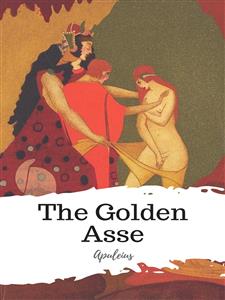

The Golden Asse
Table of Contents
Introduction
A man’s hunger to peer beyond the ordinary remakes him into the very animal that forces him to learn what being human means. In The Golden Asse, metamorphosis becomes both spectacle and education, a comic yet unsettling lesson about curiosity, desire, and the limits of control. Across its pages, bodies shift, fortunes tilt, and masks drop, revealing how fragile dignity can be when appetite or accident rules. The tale moves with a carnival’s energy, yet it keeps asking a grave question: what do we truly see when we chase enchantment? Apuleius turns wonder into a mirror, and the gaze looks back.
This book is a classic because it is, quite simply, foundational. The Golden Asse is the only Latin novel to survive in full from antiquity, a rare window onto the birth of extended prose fiction in the Roman world. It marries learned rhetoric to folktale verve, creating a hybrid that later European literature would repeatedly rediscover. Its artistry has influenced how writers handle voice, adventure, satire, and the interweaving of embedded stories. The work’s endurance also springs from its daring tonal range: ribald comedy nestles beside moral probing, and farce shades into pathos. Few ancient texts feel as kinetically modern.
Apuleius, a Roman author from Madauros in North Africa, wrote The Golden Asse in the second century CE. Known in Latin as Metamorphoses, the work belongs to the world of the Second Sophistic, when display of eloquence, philosophical curiosity, and fascination with marvels animated literary culture. It is arranged in eleven books and blends elements of Greek narrative traditions with distinctly Roman settings and sensibilities. Apuleius was also a philosopher steeped in Platonism, and his prose showcases both polish and exuberance. The title The Golden Asse became attached to the work through later tradition, signaling the book’s rare excellence.
At its center stands Lucius, a curious traveler who longs to witness and manipulate the secrets of magic. In Thessaly, a land famous for sorcery, his experiments go disastrously wrong, and he is transformed into a donkey while retaining his human mind. From this precarious vantage, he is thrust into a chain of adventures that carry him through countryside and city, across villas, workshops, and outlaw hideouts. As beast of burden, captive, and onlooker, he encounters the brutal, the tender, and the absurd. The premise is simple, the consequences inexhaustibly varied, and every turn reveals another facet of the human scene.
Formally, the novel is a virtuoso performance in storytelling. Apuleius gives Lucius a confessional first-person voice that shifts from jaunty bravado to bruised humility, allowing irony to bloom in every gap between what is seen and what is understood. The narrative is episodic, yet threaded by an intense unity of perspective. Inset tales erupt within the main plot, echoing or counterpointing it, and the range of speech stretches from street talk to stately eloquence. This orchestration makes the book feel like a small library of genres—adventure, satire, romance, ghost story—contained within one unfurling metamorphosis.
The themes that drive The Golden Asse are elemental: curiosity, desire, power, and transformation. Lucius’s mistake is not merely dabbling in magic; it is a compulsion to see and to test, to probe boundaries without attending to their costs. Apuleius links that impulse to broader social energies—spectacle, rumor, punishment, and pleasure. The donkey’s body makes vulnerability literal; muscles ache, hunger bites, and speech is taken away. Yet observing from the margins also fosters sympathy, teaching how quickly status can flip. The book’s laughter is often edged with pain, and its cruelty is often exposed as the theater of the insecure.
Behind the bustle lies a mind steeped in philosophy and the religious atmosphere of the High Empire. Apuleius was a Platonist who knew how myth can disclose moral insight, and he stages encounters with magic, superstition, and reflective piety without forcing a single dogma. Characters wrestle with chance and choice, with the hunger for control and the suspicion that fate has the final word. The novel’s spiritual currents are part of its texture, not merely its plot: it probes what a person owes to reason, to custom, and to the unseen. The result is an exploration of conscience under pressure.
Stylistically, Apuleius is lavish, playful, and precise. He can turn a bawdy anecdote toward sudden gravity, or lift a solemn passage with nimble wit. That flexibility has captivated readers in many languages. In English, the work achieved early prominence through a sixteenth-century translation by William Adlington, which helped establish its Renaissance reputation and circulated the now-familiar title and spelling, The Golden Asse. Across the centuries, translators have emphasized different facets—its colloquial crackle, its rhetorical sheen, its earthy humor—but the core brilliance remains: a prose that delights in its own metamorphoses while holding fast to narrative momentum.
The book’s influence has been vast, with one episode in particular—the tale of Cupid and Psyche—radiating into literature and the arts as a touchstone for narratives of love, trial, and recognition. Painters, poets, and storytellers have returned to its patterns, while modern authors have reimagined it, including a notable twentieth-century retelling by C. S. Lewis. More broadly, the novel’s blend of roaming adventure, self-aware narration, and inset storytelling helped shape how later prose could be at once episodic and cohesive. The Golden Asse thus stands as both a survivor and a progenitor in the lineage of Western fiction.
Apuleius also offers a vivid social panorama. Through the donkey’s journeys, we glimpse provinces and ports, villas and taverns, millhouses and marketplaces. Slaves, soldiers, merchants, witches, lovers, bandits, and priests crowd the stage, each sketched with a satirist’s eye and a dramatist’s timing. The novel’s energy comes from its movement across ranks and roles, exposing pretension and cruelty while lingering over moments of unexpected kindness. It is rarely solemn for long; yet its comedy is grounded in keen observation of labor, law, and livelihood. In this sense, it is an extraordinary ethnography of feeling in the Roman world.
For contemporary readers, the book’s relevance is striking. It interrogates the compulsion to watch and to be watched, the allure of spectacle, and the costs of turning bodies—human or animal—into instruments. It recognizes how power uses shame, rumor, and violence to secure itself, yet it also cherishes the stubborn resilience of hope and wit. Its transformations are not mere tricks; they are thought experiments about identity under duress. In an era fascinated by reinvention and haunted by exploitation, The Golden Asse speaks with freshness, inviting both laughter and moral scrutiny without settling into cynicism.
To enter The Golden Asse is to step into a world where wonder and danger are never far apart, and where storytelling itself becomes a form of understanding. Apuleius unites entertainment with inquiry, offering a narrative crammed with incident that nonetheless keeps its gaze fixed on perennial questions: What do we desire? What do we fear? What do we owe each other? Its enduring appeal lies in this union of sweep and intimacy, satire and sympathy. The novel remains classic because it still feels alive—restless, many-voiced, and luminously alert to the transformations that test and reveal us.
Synopsis
Lucius, a young man traveling through Thessaly, recounts his experiences with eager curiosity and a special fascination for magic. Arriving at the town of Hypata, he takes lodging with Milo, a miserly host, and hears rumors of witches haunting the region. Intrigued rather than frightened, he befriends Photis, a maid in the household, who hints at hidden practices in her mistress’s chambers. Lucius’s appetite for marvels grows as he witnesses strange happenings, minor tricks, and local scandals. The narrative, framed in his first-person voice, establishes a lively world of gossip, risk, and enchantment, where learning too much may carry unforeseen consequences.
Encouraged by desire and impatience, Lucius presses Photis to let him observe real magic. A nighttime experiment goes wrong when he meddles with ointments meant to transform a body. Instead of becoming a bird as intended, he is turned into a donkey, though his thoughts and memories remain human. Photis tells him a simple cure—eat roses—and promises to help at dawn. Before that hope can be realized, robbers break into the house, plundering valuables and sweeping Lucius away with their loot. Powerless in his animal form, he must conceal his human understanding while he is driven into uncertain captivity.
The robbers bring Lucius to their mountain hideout, where a kidnapped bride is held and guarded by an elderly woman. Lucius, watching and listening, learns the bandits’ ways, their quarrels, and their plans for future raids. To comfort the captive, the old woman begins telling stories, weaving fables and examples that mirror the dangers of curiosity, betrayal, and fortune’s reversals. The fiction within the fiction deepens the main plot, filling the long nights with cautionary tales. These episodes broaden the world of the narrative, showing how desire and deception ensnare people of all ranks and circumstances.
The longest inset tale recounts the fortunes of a young woman whose beauty arouses divine jealousy and mysterious courtship. Led to a secret palace and visited by an unseen husband, she enjoys comfort yet longs for knowledge about her partner’s identity. Urged by suspicious counsel, she breaks a taboo and is tasked with arduous labors to repair her fault. Aid arrives in unexpected forms, yet the outcome hinges on patience, trust, and obedience to higher powers. The story mirrors Lucius’s predicament, suggesting that curiosity, however alluring, invites trials that can be endured only through discipline and favor.
Lucius’s situation changes repeatedly as fortune casts him from master to master. He toils at a mill, suffers beatings, and witnesses the misery of laborers and animals alike. Sold to traveling priests, he observes religious pageantry mixed with fraud, indulgence, and opportunism. Passed along to cooks, gardeners, and others, he is drawn into comic scandals: amorous schemes, adulterous tricks, and tables laden with stolen delicacies. Through his mute vantage point, the novel surveys households, trades, and towns, exposing impulses that drive people—greed, lust, fear, and hunger. Lucius’s constant goal remains simple and elusive: to reach roses and regain himself.
Public spectacle intensifies his trials. In one city, a planned entertainment threatens to make him the center of a gruesome show. Escapes and recaptures follow, each episode emphasizing how quickly appearances mislead and how narrow the passage between joke and disaster can be. Along the way, brief tales and anecdotes punctuate the journey: a jealous husband’s stratagem, a crafty servant’s plot, a reckless traveler’s fate. These vignettes reflect the main action without halting it, giving pattern to the succession of hazards. Lucius survives by endurance and quick instinct, though each narrow avoidance leaves him no closer to lasting relief.
At his lowest point, exhausted and exposed, Lucius turns from frantic improvisation to deliberate supplication. Near the sea, amid a great procession and the solemn movement of the moon and stars, he receives a vision that promises release. The path to restoration is laid out with precise instructions, ceremonies, and vows, requiring him to trust a benevolent power rather than his own schemes. In a public moment that contrasts with his earlier secrecy, he seizes the chance for renewal and finds his human shape restored. This turning point reorients the narrative from flight and concealment to ordered commitment.
With his identity reclaimed, Lucius pursues stability through formal initiation and service. The narrative describes disciplined observances, moral cautions, and the practical demands of belonging to a religious community. He travels to a larger city, consolidates his livelihood, and seeks completion through further rites, each step linking private gratitude with public responsibility. The tone grows sober and instructional, contrasting sharply with the earlier satirical episodes. Rather than ending in a simple escape, the story closes on a sustained commitment that shapes his daily conduct, his dress, and his associations, presenting a settled pattern of life after wandering.
The Golden Ass traces a movement from playful curiosity to tested endurance and, finally, to ordered devotion. Its episodes present a wide sampling of social life—houses, markets, bandits’ caves, courts, and festivals—filtered through the perceptions of a man trapped in an animal body. The inset tales, especially the account of a girl and her divine lover, echo the central dilemmas of trust and transgression. Without issuing direct judgments, the narrative lets action reveal consequences. Its overall message emphasizes the risks of reckless inquiry, the instability of fortune, and the possibility that steadfast piety can give chaos a meaningful frame.
Historical Context
Apuleius sets The Golden Ass in the eastern provinces of the Roman Empire during the high imperial period, broadly the second century CE. The narrative unfolds across Greek locales—most notably Thessaly (with Hypata), Boeotia, and the Isthmus region near Corinth’s eastern port, Cenchreae—before concluding in Rome. These regions belonged to the provinces of Achaea and Macedonia, incorporated into Roman control after 146 BCE and reorganized under Augustus in 27 BCE. The setting reflects Roman governance overlaying enduring Greek civic life, with Latin administrative power coexisting alongside Greek language and practices. Urban centers, rural villages, ports, and roads form the backdrop for mobility, commerce, religious festivals, and social encounters.
The geography of Thessaly and central Greece supplies landscapes known in Roman imagination for magic, banditry, and pastoral travel. Towns such as Hypata, market centers and ports like Cenchreae, and crossroads linking mainland Greece to the Peloponnese enabled itinerant traders, soldiers, pilgrims, and entertainers to move with relative ease. Inns, taverns, and waystations punctuated these routes, while estates and workshops relied on enslaved labor. The concluding Roman scenes—temples, lawcourts, and collegia—reveal metropolitan structures integrating provincial experiences. In this composite setting, Apuleius positions a tale of misadventure, legal peril, and religious redemption that mirrors the empire’s administrative reach and the shared Greco-Roman social world of his time.
The Pax Romana, spanning roughly 27 BCE to 180 CE, created conditions of relative stability under the Principate, especially during the Antonine dynasty (Antoninus Pius, 138–161; Marcus Aurelius, 161–180). Extensive road networks, sea routes, standardized coinage, and imperial policing facilitated long-distance movement and commerce across the Mediterranean. Peace was maintained by legions stationed along frontiers and by provincial governors overseeing justice and taxation. The Golden Ass presupposes this stable connectivity: Lucius’s travels between Greek towns, access to urban markets, and the ease of sea passage to Cenchreae are credible only within the integrated communications and infrastructure that characterized the Antonine era.
Roman conquest of Greece culminated in 146 BCE with the destruction of Corinth and the dissolution of the Achaean League. Under Augustus, Achaea became a senatorial province (27 BCE), and Corinth was refounded as Colonia Laus Iulia Corinthiensis in 44 BCE by Julius Caesar. Greek poleis retained councils and magistracies under Roman oversight, with proconsuls and legates supervising provincial administration. Local elites managed liturgies and civic benefactions, while imperial cult and Roman law anchored political order. The Golden Ass mirrors this framework through town assemblies, magistrates, and civic festivals in Greek cities, as well as the jurisdictional pathways through which Lucius’s trials and petitions unfold under Roman provincial authority.
The diffusion of Egyptian cults—especially Isis and Osiris—into the Greco-Roman world accelerated from the late Hellenistic period and achieved broad acceptance under the Empire. An Iseum existed in Rome by the late Republic; despite periodic suppressions (notably under Tiberius in 19 CE), imperial favor returned under Caligula and flourished under the Flavians and Antonines. Monumental complexes such as the Iseum Campense in Rome, richly developed in the later first century CE, and numerous sanctuaries across Greece (including Corinth and Boeotia) attest to robust Isiac communities. Festivals like the Navigium Isidis, celebrated in early March, marked the opening of the sailing season with ritual processions, sacred images, and the launching of a model ship. Inscriptions from the first and second centuries CE name priests and pastophoroi, while dedications record initiates’ vows and grateful offerings after perilous journeys or cures. Hadrian’s Egyptophilia—exemplified by the Canopus at Tivoli—further normalized Egyptianizing rites within elite culture. Archaeological finds (sistra, statuettes, Nilotic imagery) across provincial sites confirm the cult’s penetration into local religious landscapes. Book 11 of The Golden Ass, set at Cenchreae, presents a detailed, technically accurate account of the Navigium Isidis procession: the order of clergy, accoutrements, ritual chants, and purification rites align with known Isiac liturgy. Lucius’s restitution to human form through roses borne by a priest of Isis and his subsequent initiations—first to Isis at Corinth and later to Osiris, ultimately in Rome—reflect the administrative and financial realities of mystery rites under the Empire: multiple degrees, costly offerings, and formal petitions to priests. Apuleius’s evident familiarity with Isiac terminology, initiation logistics, and the social composition of congregations suggests direct engagement with the cultic milieu he describes, situating the novel within the broader second-century religious pluralism that linked Egypt, Greece, and Rome.
Roman law regulated magic and divination through statutes and edicts. The lex Cornelia de sicariis et veneficiis (81 BCE) criminalized poisoning and harmful sorcery; senatorial decrees and imperial edicts periodically expelled astrologers and magicians (notably in 16 CE under Tiberius). Governors tried cases under cognitio, balancing local custom with imperial policy. Under the Antonines, jurists like Gaius and rescripts of Hadrian and Antoninus Pius clarified categories of superstitio versus permitted cult. The Golden Ass’s witches, love charms, necromancy, and fear of maleficium echo these legal anxieties, while parody trials and whispered accusations capture the social risks that allegations of magia posed in provincial communities.
Apuleius’s own life intersected directly with legal and social debates about magic. Born in Madaurus (Numidia) c. 125 CE, he studied in Carthage and Athens and later married the wealthy widow Aemilia Pudentilla at Oea (Tripolitania) around the mid-150s. Relatives charged him with using magic to secure the marriage, leading to the celebrated Apologia delivered before the proconsul of Africa at Sabratha, likely in 158/159 CE. Apuleius defended himself by distinguishing philosophical theurgy from illicit veneficium and by appealing to legal definitions and civic propriety. The Golden Ass transforms such legal and social tensions into narrative episodes, illustrating how rumors of magic could endanger reputations and livelihoods.
Banditry was a persistent imperial concern, especially in rural zones and mountain passes where state surveillance was weaker. Latin sources refer to latrones; Greek inscriptions mention kakourgoi. Governors, aided by local militias and occasional detachments, policed roads and suppressed brigands, while laws against armed violence (e.g., the lex Iulia de vi) were enforced through provincial courts. In Greece, brigandage is attested in Thessaly and Aetolia during the Roman period, often tied to economic dislocation. The Golden Ass’s kidnappings, mountain hideouts, and robber bands mirror this landscape of rural insecurity, dramatizing the vulnerability of travelers, merchants, and isolated estates within the otherwise integrated imperial economy.
Slavery underpinned labor across the Roman Mediterranean. Enslaved persons worked in households, agriculture, workshops, and transport; manumission occurred via vindicta, census, or testament, with Augustan-era limits on mass manumission. Freedpersons often retained obligations to patrons but could accumulate wealth and status. Epigraphic records from Greece and North Africa attest to slave sales, contracts, and funerary dedications. The Golden Ass repeatedly stages scenes of forced labor, cruel masters, and the precarious lives of enslaved workers and entertainers. Lucius’s asinine servitude allegorizes the legal fact of a slave’s status as res (property) and highlights the social distance between the powerful and those whose bodies sustained household and rural economies.
Criminal justice in the second century CE operated through a mix of municipal procedures and gubernatorial cognitio extra ordinem. In Greek cities, magistrates (archontes) and councils heard civil disputes, while serious crimes went to the provincial governor. Evidence rules permitted torture (quaestio) of enslaved witnesses; public trials could be theatrical and subject to local influence. Penalties ranged from fines and exile to capital punishment. The Golden Ass mocks procedural formalities in episodes like the wineskin “murder” trial, exposing how public hearings could become spectacles of credulity and performance. Yet it also portrays the severity of provincial justice, especially when lower-status defendants lacked patrons.
Public spectacles, including executions, were integral to Roman power. The Flavian Amphitheatre opened in 80 CE, but provincial amphitheaters and adapted stadia hosted gladiatorial games, venationes, and damnatio ad bestias. Corinth possessed an amphitheater used in the imperial period; similar venues existed across Achaea and Macedonia. Judicial killings served as both penal policy and civic entertainment, often funded by magistrates as acts of euergetism. In The Golden Ass, the staging of an adulterous woman’s punishment by beasts reflects documented practices, including costumed dramatizations and lethal exhibitions. The narrative thus intersects with the imperial ideology of spectacle, where justice, propaganda, and crowd pleasure converged.
Imperial connectivity rested on roads, sea lanes, and service infrastructure. Couriers used the cursus publicus; travelers relied on waystations (mansiones), posting houses (mutationes), and inns. Standardized milestones and mapped routes linked cities to ports like Cenchreae and Lechaeum at Corinth, facilitating Aegean and Adriatic passages. Coinage reforms under Augustus and stability under the Antonines supported long-distance trade in grain, oil, and textiles. The Golden Ass’s itinerant merchants, muleteers, and seaborne pilgrims realistically inhabit this logistical network. The rapid spread of news, rumors, and cult observances in the narrative presumes an empire where goods, deities, and stories moved with unprecedented speed and reliability.
Provincial elites sustained cities through euergetism and service. Decurions financed baths, temples, and festivals; inscriptions from Achaea record civic offices and benefactions in the second century CE. Liturgies demanded private expenditure for public benefit, reinforcing hierarchy while building urban amenities. The imperial cult provided a stage for loyalty and status, with priests and agonothetes presiding over games. The Golden Ass’s wealthy households, banquets, and public festivities reflect this civic culture, where conspicuous generosity and ritual leadership shaped reputation. Patron-client ties, gifts, and dining scenes in the narrative illustrate the mechanisms by which elites mediated access to protection, justice, and communal celebration.
Roman and provincial family law regulated marriage, dowry (dos), guardianship (tutela), and sexual conduct. Augustus’s moral legislation—lex Iulia de maritandis ordinibus and lex Iulia de adulteriis (18 BCE), and lex Papia Poppaea (9 CE)—encouraged marriage and punished adultery, influencing later jurisprudence. Dowry disputes and inheritance claims commonly appeared in municipal courts; women’s property rights varied by status and local custom, though guardianship persisted for many. The Golden Ass features adulterous affairs, step-parent conflicts, and dowry-related tensions, dramatizing the legal and social stakes around chastity, reputation, and wealth transfer that shaped familial strategies in Roman Greece and beyond.
Thessaly had a longstanding reputation in Greco-Roman lore for witchcraft and necromancy. Authors such as Horace (Epodes 5, 17) and Lucan (Pharsalia 6, with the witch Erichtho) associated the region with night rites, corpse magic, and manipulations of the moon. Pliny the Elder (Natural History 30) cataloged practices labeled veneficia across the Mediterranean. This cultural geography made Thessaly a compelling setting for stories of lamiae, shape-shifting, and love potions. The Golden Ass draws on these associations in locating key episodes at Hypata, aligning Lucius’s transformation and the novel’s parade of magical anxieties with a region popularly imagined as a frontier of illicit ritual power.
Religious pluralism marked the second century CE, with temples to Olympian gods coexisting alongside imperial cult and imported mysteries. Hadrian’s Panhellenion (founded 131/132 CE) reorganized Greek civic identities around Athenian leadership, promoting shared festivals while honoring the emperor. Altars to Roma and Augustus, and local priesthoods for the Sebastoi, integrated loyalty into worship. Syncretism flourished: Sarapis with Zeus, Isis with Demeter, and local healing shrines with Asclepian medicine. The Golden Ass’s processions, votive offerings, and initiations reflect this environment, where individual salvation cults interwove with civic calendars, and where allegiance to Rome’s rulers could sit alongside private devotion to foreign gods.
The Golden Ass functions as social and political critique by exposing vulnerabilities within imperial order: the readiness to accuse outsiders of magic, the precariousness of slaves and the poor, the theatricality and partiality of local justice, and the brutality of penal spectacles masking civic virtue. It indicts elite excess through predatory sexuality and capricious cruelty, while revealing how patronage, not principle, often governs protection. By juxtaposing bandit violence with urban hypocrisy, Apuleius illuminates the thin veneer of Pax Romana for those without status. The culminating turn to Isis dramatizes a search for ethical community and moral reform amid structural inequities the novel persistently lays bare.
Author Biography
Apuleius was a Roman North African writer and Middle Platonist philosopher active in the second century CE. He is best known for the Metamorphoses, also called The Golden Ass, the only Latin novel to survive complete. His works straddle literature, rhetoric, and philosophy, and they reflect the cosmopolitan culture of the Second Sophistic. Writing in an ornate Latin shaped by Greek learning, he fashioned an authorial persona that blended performer, teacher, and intellectual. Active especially in North Africa, he produced speeches, philosophical treatises, and fiction that collectively illuminate provincial elite culture and the transmission of Greek thought into Latin prose.
Born in Madauros in Roman North Africa, Apuleius received a thorough education in grammar, rhetoric, and philosophy. He undertook advanced studies at Carthage and later at Athens, a center of philosophical instruction, where immersion in Greek language and paideia left a lasting imprint. This bilingual formation fostered his distinctive style: richly allusive, archaising, and rhetorically elaborate. He drew on Platonic philosophy—especially Middle Platonist interpretation—and on the performative traditions of sophistic oratory. His prose reveals familiarity with both Greek philosophical discourse and Latin rhetorical models, positioning him as a mediator who rendered complex Greek doctrines for cultivated Latin audiences.
Apuleius established his reputation as a public speaker and cultural figure in North Africa, with Carthage serving as a prominent stage. The collection known as the Florida preserves excerpts from his display orations, offering glimpses of his wit, erudition, and civic engagement. These pieces praise cities and patrons, recount learned curiosities, and showcase a virtuoso command of language designed to delight and instruct provincial audiences. The Florida demonstrates how he fused entertainment with intellectual ambition, cultivating a persona of polymathic authority. It also provides valuable evidence for the social settings of Latin declamation and the prestige accorded eloquence in the high empire.
The Metamorphoses is a long prose narrative that interweaves humor, adventure, and reflection with philosophical and religious motifs. It experiments with voice and register, juxtaposing colloquial storytelling with learned allusion, and it incorporates inset tales, the most celebrated being the story of Cupid and Psyche. The novel’s interest in curiosity, transformation, and the search for meaning resonates with contemporary Platonist concerns without collapsing fiction into doctrine. As the only complete Latin novel, it has long stood as a touchstone for the ancient prose tradition, admired for its narrative ingenuity and its exploration of identity, experience, and the allure of the marvelous.
A defining episode in Apuleius’s public life was a legal prosecution on charges of practicing magic, connected to his marriage to a wealthy widow from Oea. His surviving defense speech, the Apologia (also known as Pro se de magia), refutes the accusations while displaying learning in natural philosophy, medicine, and philology. The speech turns the courtroom into a stage for self-fashioning, portraying the defendant as a philosopher whose curiosity is lawful and humane. It is a key source for provincial legal culture and for Apuleius’s self-presentation, revealing how he leveraged rhetorical technique and philosophical authority to negotiate reputation and social standing.
Apuleius’s philosophical prose includes De Platone et eius dogmate, a Latin handbook that summarizes Platonic doctrine in accessible form, and De Deo Socratis, which expounds a Middle Platonist theory of daemons as intermediaries between gods and humans. These works articulate ethical and metaphysical themes while adapting Greek technical discourse to a Latin readership. Their style is didactic yet ornate, reflecting the union of sophistic performance and philosophical instruction. In late antiquity, Christian writers—most notably Augustine—engaged critically with Apuleius’s demonology. The treatises thus occupy a central place in the Latin reception of Platonism, illuminating ancient debates about divinity, mediation, and moral formation.
In his later years Apuleius appears to have continued as a prominent orator and intellectual in North Africa, though the details of his final decades and death remain unclear. His reputation persisted into late antiquity, sometimes colored by debates over magic, but also sustained by admiration for his eloquence and learning. Over the medieval and Renaissance periods, his novel was transmitted and mined for exemplary stories, with Cupid and Psyche achieving a distinct afterlife in European literature and art. Today Apuleius is read for his synthesis of Platonist thought and narrative experiment, and his works remain central to the study of Latin prose and the ancient novel.




