


Erhalten Sie Zugang zu diesem und mehr als 300000 Büchern ab EUR 5,99 monatlich.
- Herausgeber: Musaicum Books
- Kategorie: Gesellschafts- und Liebesromane
- Sprache: Englisch
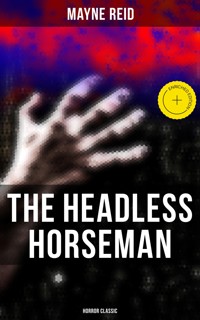
In 'The Headless Horseman', Mayne Reid masterfully intertwines elements of horror and suspense with a captivating literary style that keeps readers spellbound. The haunting tale follows the protagonist's chilling encounters with the mysterious headless specter, set against the backdrop of the eerie landscapes of Sleepy Hollow. The book's eerie atmosphere and vivid descriptions bring the legend of the Headless Horseman to life, making it a classic in the horror genre. Reid's skillful use of language and attention to detail create a truly immersive reading experience for all who delve into the pages of this Gothic masterpiece. The Headless Horseman stands as a testament to Reid's ability to intertwine folklore and fear to create a timeless and captivating story. Mayne Reid's background as an adventure novelist and his fascination with the supernatural may have inspired him to pen this spine-chilling tale. Readers who enjoy atmospheric horror and immersive storytelling will find 'The Headless Horseman' a must-read classic that will leave them on the edge of their seats. In this enriched edition, we have carefully created added value for your reading experience: - A succinct Introduction situates the work's timeless appeal and themes. - The Synopsis outlines the central plot, highlighting key developments without spoiling critical twists. - A detailed Historical Context immerses you in the era's events and influences that shaped the writing. - A thorough Analysis dissects symbols, motifs, and character arcs to unearth underlying meanings. - Reflection questions prompt you to engage personally with the work's messages, connecting them to modern life. - Hand‐picked Memorable Quotes shine a spotlight on moments of literary brilliance. - Interactive footnotes clarify unusual references, historical allusions, and archaic phrases for an effortless, more informed read.
Sie lesen das E-Book in den Legimi-Apps auf:
Seitenzahl: 1094
Veröffentlichungsjahr: 2018
Das E-Book (TTS) können Sie hören im Abo „Legimi Premium” in Legimi-Apps auf:
Ähnliche
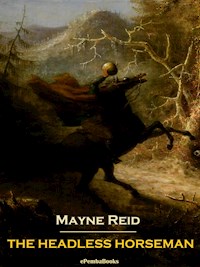


The Headless Horseman
(Horror Classic)
Published by
Books
Table of Contents
Introduction
On a frontier where rumor outrides the wind and the unknown patrols the prairie at night, The Headless Horseman turns a community’s mounting dread into a test of what people believe, how quickly fear eclipses fact, and whether love, honor, and reason can withstand the gallop of a legend that refuses to show its face, as hoofbeats echo across grasslands, fireside tales swell into accusations, and the figure without a head rides the boundary between wilderness and law, superstition and scrutiny, private desire and public judgment, dragging with it the bonds of a young settlement and the fates of those who dare to question what, if anything, haunts the trail.
Mayne Reid’s novel belongs to the nineteenth-century current that mingles frontier adventure with Gothic unease, and it locates its eerie spectacle on the Texas plains during the era when settlement was pushing westward. First published in the mid-1860s, it reflects the tastes of readers captivated by sensation, romance, and landscapes still being folded into national myth. The book is often presented as a horror classic, yet its shivers ride alongside duels of pride, schemes of rivalry, and the everyday labor of survival, giving the story a breadth that exceeds a simple ghost tale while retaining the atmospheric pleasures of one.
At the novel’s outset, sightings of a rider who seems to lack a head unsettle ranches and encampments, and gossip threads these apparitions to a tangle of personal tensions already smoldering on the range. A skilled horseman from outside the local hierarchy, a proud family wrestling with new surroundings, and a volatile rival hungry for status converge around a courtship that sparks jealousy on one side and wary admiration on the other. When violence strikes near their circle, the apparition’s menace becomes a lens through which neighbors parse guilt and innocence, and through which fear finds a face—or, pointedly, its absence.
Reid writes with panoramic relish for terrain and weather, and his chapters move from sunlit expanses to nocturnal claustrophobia with cinematic agility. The narration balances brisk incident—pursuits, confrontations, narrow escapes—with patient exposition that maps social codes, unspoken resentments, and the ritual of communal judgment. Dialogue tends toward the emphatic, as befits passions on the boil, while descriptive passages linger over tracks in dust, the pitch of a campfire, and the choreography of horsemanship. The result is an immersive, episodic progression that satisfies readers seeking momentum but also rewards attention to how atmosphere, rumor, and spectacle conspire to steer decisions.
Beneath the galloping plot runs a set of themes that keep the story resonant. Appearance wrestles with reality as testimony, tracks, and tokens are weighed against whispers and omens. The precariousness of justice in a sparsely institutionalized society reveals itself, especially when communal pride and personal grudges skew the scales. The book probes how outsiders are scrutinized and how class, lineage, and reputation contour the benefit of the doubt. It also reflects on the allure of the uncanny—the way terror simplifies complex events into a single, gripping emblem—and asks what is lost when communities prefer a legend to patient inquiry.
Contemporary readers will recognize in this frontier tale a pattern as modern as today’s headlines: sensational rumor becoming social fact, and spectacle crowding out measured analysis. The novel’s depiction of public meetings, hurried judgments, and performative bravado anticipates dynamics visible in digital networks and polarized debate, even as its setting remains distinctly nineteenth-century. The portrait of a community weighing identity against fairness invites reflection on scapegoating, vigilantism, and the seductions of certainty. By framing these pressures within an uncanny mystery, the book models how genre fiction can surface civic anxieties without sacrificing suspense, and how fear reshapes memory in real time.
Approached today, The Headless Horseman offers both a gripping initiation into nineteenth-century popular storytelling and a case study in how the Western and the Gothic can cross-pollinate to enduring effect. Readers drawn by atmosphere will find sweeping prairies, nocturnal chases, and charged encounters; those interested in culture will find a portrait of settlement, status, and power tested by crisis. Its craft rewards slow observation even as the plot urges haste, and its questions—about proof, prejudice, and the stories communities choose to live by—remain unsettled. Enter for the shiver of a legend; stay for the scrutiny it demands of legend-making.
Synopsis
Set on the mid‑nineteenth‑century Texas frontier, Mayne Reid’s The Headless Horseman follows the migration of planter Woodley Poindexter, his spirited daughter Louise, and her brother into a contested landscape of ranches, chaparral, and half‑ruined haciendas. Their path crosses that of Maurice Gerald, an Irish mustanger whose skill and reserve unsettle local hierarchies. Calhoun, a proud kinsman and former officer attached to the Poindexters, views the outsider as a social and romantic rival. Early encounters on the trail reveal Gerald’s competence and stir Louise’s interest, while Calhoun’s resentment begins to ferment, establishing a volatile mix of attraction, ambition, and class prejudice.
The family settles at the Casa del Corvo on the Leona River, where daily life on the range alternates between rodeos, roundups, and the wary etiquette of a border society. Gerald’s trade brings him repeatedly into the Poindexters’ orbit and into whispered conversation with Louise, their exchanges half‑hidden by propriety and surveillance. Calhoun’s hostility sharpens into intrigue, encouraged by gossip among vaqueros and neighboring settlers. An act of daring further binds Gerald to the family, but it also magnifies suspicions about his intentions. Reid layers these social frictions with vivid environmental hazards, emphasizing how reputation can be remade—or ruined—by incidents witnessed at distance.
Into this charged atmosphere rides a legend: reports of a nocturnal figure mounted on a galloping horse, apparently without a head. The apparition, glimpsed across the prairie and along river margins, fuses frontier superstition with palpable dread. Stories multiply, each sighting more detailed than the last, and the community vacillates between mocking disbelief and uneasy fascination. Reid uses the spectral rumor to thicken uncertainty around motives and movements, blurring the line between misperception and malice. As the figure’s appearances begin to coincide with private rendezvous and simmering feuds, the headless horseman becomes a catalyst, turning every hoof‑print into possible evidence and every shadow into accusation.
A disappearance within the Poindexters’ circle shocks the district, followed by the discovery of a headless corpse on the open range. In the scramble to interpret tracks, trampled grass, and personal effects, suspicion converges on Maurice Gerald, whose recent conflicts and secretive meetings supply a persuasive, if circumstantial, narrative. Calhoun amplifies these inferences, and many settlers favor swift justice over measured inquiry. Louise is caught between filial duty and her conviction that the signs are not as they seem, while Woodley Poindexter faces pressure to endorse the prevailing judgment. The community’s talk of ghosts darkens into talk of guilt, and fear hardens into resolve.
A rough tribunal forms, its proceedings as much performance as process. Frontier hunters and vaqueros read the ground like a ledger, with Zeb Stump—an experienced backwoodsman—offering patient, practical analyses that challenge hasty conclusions. Testimonies hinge on ambiguous tokens, contested letters, and the interpretation of trails that cross and vanish in the chaparral. Each new fragment of proof appears to close the circle around Gerald, even as the mysterious rider is seen again, unsettling the case’s logic. Reid contrasts vigilantism with methodical tracking, showing how communal anxiety can masquerade as certainty and how pride, fear, and rumor conspire to direct the noose.
Parallel threads complicate the inquiry. A woman from the borderlands, bound to Gerald by obligations not immediately clear to outsiders, becomes the focus of speculation and jealousy. Cultural misunderstandings between Anglo settlers and Mexican rancheros, compounded by memories of recent wars and the threat of raiding parties, provide fertile ground for misread signals. Secret exchanges, misplaced tokens, and forged appearances suggest deliberate manipulation as much as accident. Pursuits through prairie storms and thorny thickets mirror the narrative’s moral bramble, where each path seems to promise clarity yet divides again. The headless horseman remains an unsettling constant, a spectacle resisting simple explanation.
As the forces arrayed around Gerald and the Poindexters collide, the novel drives toward revelations that reframe both the crimes alleged and the apparitions reported. Without disclosing decisive turns, Reid ultimately steers the tale from superstition toward human agency, showing how careful observation can pierce theatrical terror. The Headless Horseman endures for its hybrid power: a Western romance threaded with Gothic spectacle and a procedural curiosity about tracks, tokens, and testimony. Its resonance lies in a keen portrait of border society, where honor and desire are perilously public, and in its caution that communities, when frightened, can mistake spectacle for truth.
Historical Context
Captain Thomas Mayne Reid (1818–1883), an Irish-born veteran of the Mexican–American War, wrote The Headless Horseman in the mid-1860s, drawing on first-hand experience of the North American borderlands. The novel circulated in Britain and the United States amid a Victorian appetite for frontier adventure and Gothic sensation. Its Texas setting reflects post-annexation America’s westward expansion and the cultural entanglements of the U.S.–Mexico border region. Reid belonged to a cohort of popular writers who combined travel realism with melodrama, offering European audiences vivid depictions of American landscapes while contributing to American readers’ evolving mythologies of the Southwest and the open range.
Set on the mid-nineteenth-century Texas frontier, the narrative follows a world shaped by the 1845 annexation and the 1846–1848 U.S.–Mexican War, which fixed the Rio Grande as the international boundary in the Treaty of Guadalupe Hidalgo. The previously disputed “Nueces Strip” had been subsumed into U.S. jurisdiction yet remained sparsely governed. A line of federal forts—including Fort Inge (established 1849), Fort Clark (1852), and Fort Brown (1846)—projected military authority, while mounted troops patrolled trails and river crossings. Civil institutions existed but were thin on the ground, leaving local elites, soldiers, and stockmen to influence order, reputation, and security.
Texas in the 1850s saw rapid Anglo-American migration alongside longstanding Tejano ranching communities. Cotton cultivation expanded westward from the Gulf Plain, sustained by chattel slavery until 1865, while open-range livestock raising dominated the interior. Spanish-Mexican equestrian traditions shaped daily life: vaquero expertise, the reata (lasso), and methods for working remudas influenced both ranching and commerce. “Mustangers” captured wild horses ranging across prairies and chaparral for sale to settlers and the military, a trade that flourished before barbed wire and large-scale fencing curtailed open-range practices. Reid situates characters within this mixed plantation–ranching economy, where mobility and land claims defined status.
Although set south of the core Comancheria, the region experienced continuing Indigenous–settler conflict through the 1850s, involving Comanche and Lipan Apache raiding corridors extending into the Nueces and Rio Grande country. Texas Rangers and U.S. Army units conducted patrols and campaigns, while short-lived reservation experiments on the Brazos (1854–1859) reflected shifting policy. The frontier environment—mesquite flats, oak mottes, thorny chaparral, and seasonally flooded rivers—shaped travel, scouting, and danger. Reid’s descriptive passages echo accounts of South and Central Texas ecologies, using the landscape’s vastness and concealment to frame themes of pursuit, misrecognition, and the volatility characteristic of borderland life.
Social order rested on a blend of formal law and informal codes. County courts operated under U.S. jurisprudence, yet distance and scarcity of officers often yielded “frontier justice,” including vigilantism and duels shaped by Southern honor culture. Slavery structured power relations in antebellum Texas, and racial hierarchies influenced interactions with Tejano communities and Indigenous peoples. Military rank and planter status carried significant weight in disputes. Reid stages conflicts within these frameworks, showing how reputation, testimony, and extra-legal coercion could outweigh procedure in a sparsely institutionalized society. The resulting climate of pride, prejudice, and force informs the novel’s tensions.
The novel adapts a headless rider motif with deep roots in transatlantic folklore—parallels include the Irish dullahan and Washington Irving’s 1820 Sleepy Hollow tale—transposing it to a Texas stage. Frontier communities circulated stories of spectral riders, vanished travelers, and uncanny lights, shaped by hazardous trails and limited policing. Reid leverages Gothic conventions—apparitions, nocturnal chases, deceptive appearances—yet anchors them in equestrian skill, regional customs, and the psychology of fear. The fusion of folklore with the specifics of mustang country allowed a familiar legend to assume new force amid the borderlands’ mingled languages, loyalties, and contested geographies.
Composed during the boom in Victorian sensation fiction and the American surge of Western and “dime” narratives, Reid’s tale blends serialized suspense with descriptive ethnography. He popularized frontier lexicon and natural-history observation—naming plants, animals, and riding techniques—to authenticate adventure. The book stands alongside transatlantic works that mapped peril and detection onto contemporary landscapes, while drawing on an older tradition of border romances from James Fenimore Cooper. Its mustanger figure, skilled yet socially marginal, channels nineteenth-century ideals of self-reliance and mobility, even as encounters with officers and planters expose frictions between gentility and the harsh pragmatics of open-range life.
Published in the mid-1860s, the book reached readers in the shadow of the American Civil War, when debates over authority, loyalty, and violence dominated public life. Though set earlier, its Texas frontier dramatizes issues that Reconstruction would magnify: uneven law enforcement, contested legitimacy, and the sway of rumor. Reid, an émigré soldier turned novelist, admires frontier prowess while revealing how class pretension, ethnic antagonism, and institutional weakness distort justice. By staging a terrifying rider within a recognizable historical milieu, the work mirrors and interrogates its era’s anxieties, suggesting that spectacle and fear can govern communities as decisively as formal power.
The Headless Horseman (Horror Classic)
Prologue
The stag of Texas, reclining in midnight lair, is startled from his slumbers by the hoofstroke of a horse.
He does not forsake his covert, nor yet rise to his feet. His domain is shared by the wild steeds of the savannah, given to nocturnal straying. He only uprears his head; and, with antlers o’ertopping the tall grass, listens for a repetition of the sound.
Again is the hoofstroke heard, but with altered intonation. There is a ring of metal—the clinking of steel against stone.
The sound, significant to the ear of the stag, causes a quick change in his air and attitude. Springing clear of his couch, and bounding a score of yards across the prairie, he pauses to look back upon the disturber of his dreams.
In the clear moonlight of a southern sky, he recognises the most ruthless of his enemies—man. One is approaching upon horseback.
Yielding to instinctive dread, he is about to resume his flight: when something in the appearance of the horseman—some unnatural seeming—holds him transfixed to the spot.
With haunches in quivering contact with the sward, and frontlet faced to the rear, he continues to gaze—his large brown eyes straining upon the intruder in a mingled expression of fear and bewilderment.
What has challenged the stag to such protracted scrutiny?
The horse is perfect in all its parts—a splendid steed, saddled, bridled, and otherwise completely caparisoned. In it there appears nothing amiss—nothing to produce either wonder or alarm. But the man—the rider? Ah! About him there is something to cause both—something weird—something wanting!
By heavens! it is the head!
Even the unreasoning animal can perceive this; and, after gazing a moment with wildered eyes—wondering what abnormal monster thus mocks its cervine intelligence—terror-stricken it continues its retreat; nor again pauses, till it has plunged through the waters of the Leona, and placed the current of the stream between itself and the ghastly intruder.
Heedless of the affrighted deer—either of its presence, or precipitate flight—the Headless Horseman rides on.
He, too, is going in the direction of the river. Unlike the stag, he does not seem pressed for time; but advances in a slow, tranquil pace: so silent as to seem ceremonious.
Apparently absorbed in solemn thought, he gives free rein to his steed: permitting the animal, at intervals, to snatch a mouthful of the herbage growing by the way. Nor does he, by voice or gesture, urge it impatiently onward, when the howl-bark of the prairie-wolf causes it to fling its head on high, and stand snorting in its tracks.
He appears to be under the influence of some all-absorbing emotion, from which no common incident can awake him. There is no speech—not a whisper—to betray its nature. The startled stag, his own horse, the wolf, and the midnight moon, are the sole witnesses of his silent abstraction.
His shoulders shrouded under a serapé, one edge of which, flirted up by the wind, displays a portion of his figure: his limbs encased in “water-guards” of jaguar-skin: thus sufficiently sheltered against the dews of the night, or the showers of a tropical sky, he rides on—silent as the stars shining above, unconcerned as the cicada that chirrups in the grass beneath, or the prairie breeze playing with the drapery of his dress.
Something at length appears to rouse from his reverie, and stimulate him to greater speed—his steed, at the same time. The latter, tossing up its head, gives utterance to a joyous neigh; and, with outstretched neck, and spread nostrils, advances in a gait gradually increasing to a canter. The proximity of the river explains the altered pace.
The horse halts not again, till the crystal current is surging against his flanks, and the legs of his rider are submerged knee-deep under the surface.
The animal eagerly assuages its thirst; crosses to the opposite side; and, with vigorous stride, ascends the sloping bank.
Upon the crest occurs a pause: as if the rider tarried till his steed should shake the water from its flanks. There is a rattling of saddle-flaps, and stirrup-leathers, resembling thunder, amidst a cloud of vapour, white as the spray of a cataract.
Out of this self-constituted nimbus, the Headless Horseman emerges; and moves onward, as before.
Apparently pricked by the spur, and guided by the rein, of his rider, the horse no longer strays from the track; but steps briskly forward, as if upon a path already trodden.
A treeless savannah stretches before—selvedged by the sky. Outlined against the azure is seen the imperfect centaurean shape gradually dissolving in the distance, till it becomes lost to view, under the mystic gloaming of the moonlight!
Chapter One. The Burnt Prairie.
On the great plain of Texas, about a hundred miles southward from the old Spanish town of San Antonio de Bejar, the noonday sun is shedding his beams from a sky of cerulean brightness. Under the golden light appears a group of objects, but little in unison with the landscape around them: since they betoken the presence of human beings, in a spot where there is no sign of human habitation.
The objects in question are easily identified—even at a great distance. They are waggons; each covered with its ribbed and rounded tilt of snow-white “Osnaburgh[1].”
There are ten of them—scarce enough to constitute a “caravan” of traders, nor yet a “government train.” They are more likely the individual property of an emigrant; who has landed upon the coast, and is wending his way to one of the late-formed settlements on the Leona.
Slowly crawling across the savannah, it could scarce be told that they are in motion; but for their relative-position, in long serried line, indicating the order of march.
The dark bodies between each two declare that the teams are attached; and that they are making progress is proved, by the retreating antelope, scared from its noonday siesta, and the long-shanked curlew, rising with a screech from the sward—both bird and beast wondering at the string of strange behemoths, thus invading their wilderness domain.
Elsewhere upon the prairie, no movement may be detected—either of bird or quadruped. It is the time of day when all tropical life becomes torpid, or seeks repose in the shade; man alone, stimulated by the love of gain, or the promptings of ambition, disregarding the laws of nature, and defying the fervour of the sun.
So seems it with the owner of the tilted train; who, despite the relaxing influence of the fierce mid-day heat, keeps moving on.
That he is an emigrant—and not one of the ordinary class—is evidenced in a variety of ways. The ten large waggons of Pittsburgh build, each hauled by eight able-bodied mules; their miscellaneous contents: plenteous provisions, articles of costly furniture, even of luxe, live stock in the shape of coloured women and children; the groups of black and yellow bondsmen, walking alongside, or straggling foot-sore in the rear; the light travelling carriage in the lead, drawn by a span of sleek-coated Kentucky mules, and driven by a black Jehu, sweltering in a suit of livery; all bespeak, not a poor Northern-States settler in search of a new home, but a rich Southerner who has already purchased one, and is on his way to take possession of it.
And this is the exact story of the train. It is the property of a planter who has landed at Indianola, on the Gulf of Matagorda; and is now travelling overland—en route for his destination.
In the cortège that accompanies it, riding habitually at its head, is the planter himself—Woodley Poindexter—a tall thin man of fifty, with a slightly sallowish complexion, and aspect proudly severe. He is simply though not inexpensively clad: in a loosely fitting frock of alpaca cloth, a waistcoat of black satin, and trousers of nankin. A shirt of finest linen shows its plaits through the opening of his vest—its collar embraced by a piece of black ribbon; while the shoe, resting in his stirrup, is of finest tanned leather. His features are shaded by a broad-brimmed Leghorn hat.
Two horsemen are riding alongside—one on his right, the other on the left—a stripling scarce twenty, and a young man six or seven years older. The former is his son—a youth, whose open cheerful countenance contrasts, not only with the severe aspect of his father, but with the somewhat sinister features on the other side, and which belong to his cousin.
The youth is dressed in a French blouse of sky-coloured “cottonade,” with trousers of the same material; a most appropriate costume for a southern climate, and which, with the Panama hat upon his head, is equally becoming.
The cousin, an ex-officer of volunteers, affects a military undress of dark blue cloth, with a forage cap to correspond.
There is another horseman riding near, who, only on account of having a white skin—not white for all that—is entitled to description. His coarser features, and cheaper habiliments; the keel-coloured “cowhide” clutched in his right hand, and flirted with such evident skill, proclaim him the overseer—and whipper up—of the swarthy pedestrians composing the entourage of the train.
The travelling carriage, which is a “carriole”—a sort of cross between a Jersey waggon and a barouche—has two occupants. One is a young lady of the whitest skin; the other a girl of the blackest. The former is the daughter of Woodley Poindexter—his only daughter. She of the sable complexion is the young lady’s handmaid.
The emigrating party is from the “coast” of the Mississippi—from Louisiana. The planter is not himself a native of this State—in other words a Creole; but the type is exhibited in the countenance of his son—still more in that fair face, seen occasionally through the curtains of the carriole, and whose delicate features declare descent from one of those endorsed damsels—filles à la casette—who, more than a hundred years ago, came across the Atlantic provided with proofs of their virtue—in the casket!
A grand sugar planter of the South is Woodley Poindexter; one of the highest and haughtiest of his class; one of the most profuse in aristocratic hospitalities: hence the necessity of forsaking his Mississippian home, and transferring himself and his “penates,”—with only a remnant of his “niggers,”—to the wilds of south-western Texas.
The sun is upon the meridian line, and almost in the zenith. The travellers tread upon their own shadows. Enervated by the excessive heat, the white horsemen sit silently in their saddles. Even the dusky pedestrians, less sensible to its influence, have ceased their garrulous “gumbo;” and, in straggling groups, shamble listlessly along in the rear of the waggons.
The silence—solemn as that of a funereal procession—is interrupted only at intervals by the pistol-like crack of a whip, or the loud “wo-ha,” delivered in deep baritone from the thick lips of some sable teamster.
Slowly the train moves on, as if groping its way. There is no regular road. The route is indicated by the wheel-marks of some vehicles that have passed before—barely conspicuous, by having crushed the culms of the shot grass.
Notwithstanding the slow progress, the teams are doing their best. The planter believes himself within less than twenty miles of the end of his journey. He hopes to reach it before night: hence the march continued through the mid-day heat.
Unexpectedly the drivers are directed to pull up, by a sign from the overseer; who has been riding a hundred yards in the advance, and who is seen to make a sudden stop—as if some obstruction had presented itself.
He comes trotting back towards the train. His gestures tell of something amiss. What is it?
There has been much talk about Indians—of a probability of their being encountered in this quarter.
Can it be the red-skinned marauders? Scarcely: the gestures of the overseer do not betray actual alarm.
“What is it, Mr Sansom?” asked the planter, as the man rode up.
“The grass air burnt. The prairy’s been afire.”
“Been on fire! Is it on fire now?” hurriedly inquired the owner of the waggons, with an apprehensive glance towards the travelling carriage. “Where? I see no smoke!”
“No, sir—no,” stammered the overseer, becoming conscious that he had caused unnecessary alarm; “I didn’t say it air afire now: only thet it hez been, an the hul ground air as black as the ten o’ spades.”
“Ta—tat! what of that? I suppose we can travel over a black prairie, as safely as a green one?
“What nonsense of you, Josh Sansom, to raise such a row about nothing—frightening people out of their senses! Ho! there, you niggers! Lay the leather to your teams, and let the train proceed. Whip up!—whip up!”
“But, Captain Calhoun,” protested the overseer, in response to the gentleman who had reproached him in such chaste terms; “how air we to find the way?”
“Find the way! What are you raving about? We haven’t lost it—have we?”
“I’m afeerd we hev, though. The wheel-tracks ain’t no longer to be seen. They’re burnt out, along wi’ the grass.”
“What matters that? I reckon we can cross a piece of scorched prairie, without wheel-marks to guide us? We’ll find them again on the other side.”
“Ye-es,” naïvely responded the overseer, who, although a “down-easter,” had been far enough west to have learnt something of frontier life; “if theer air any other side. I kedn’t see it out o’ the seddle—ne’er a sign o’ it.”
“Whip up, niggers! whip up!” shouted Calhoun, without heeding the remark; and spurring onwards, as a sign that the order was to be obeyed.
The teams are again set in motion; and, after advancing to the edge of the burnt tract, without instructions from any one, are once more brought to a stand.
The white men on horseback draw together for a consultation. There is need: as all are satisfied by a single glance directed to the ground before them.
Far as the eye can reach the country is of one uniform colour—black as Erebus. There is nothing green—not a blade of grass—not a reed nor weed!
It is after the summer solstice. The ripened culms of the gramineae, and the stalks of the prairie flowers, have alike crumbled into dust under the devastating breath of fire.
In front—on the right and left—to the utmost verge of vision extends the scene of desolation. Over it the cerulean sky is changed to a darker blue; the sun, though clear of clouds, seems to scowl rather than shine—as if reciprocating the frown of the earth.
The overseer has made a correct report—there is no trail visible. The action of the fire, as it raged among the ripe grass, has eliminated the impression of the wheels hitherto indicating the route. “What are we to do?”
The planter himself put this inquiry, in a tone that told of a vacillating spirit.
“Do, uncle Woodley! What else but keep straight on? The river must be on the other side? If we don’t hit the crossing, to a half mile or so, we can go up, or down the bank—as the case may require.”
“But, Cassius: if we should lose our way?”
“We can’t. There’s but a patch of this, I suppose? If we do go a little astray, we must come out somewhere—on one side, or the other.”
“Well, nephew, you know best: I shall be guided by you.”
“No fear, uncle. I’ve made my way out of a worse fix than this. Drive on, niggers! Keep straight after me.”
The ex-officer of volunteers, casting a conceited glance towards the travelling carriage—through the curtains of which appears a fair face, slightly shadowed with anxiety—gives the spur to his horse; and with confident air trots onward.
A chorus of whipcracks is succeeded by the trampling of fourscore mules, mingled with the clanking of wheels against their hubs. The waggon-train is once more in motion.
The mules step out with greater rapidity. The sable surface, strange to their eyes, excites them to brisker action—causing them to raise the hoof, as soon as it touches the turf. The younger animals show fear—snorting, as they advance.
In time their apprehensions become allayed; and, taking the cue from their older associates, they move on steadily as before.
A mile or more is made, apparently in a direct line from the point of starting. Then there is a halt. The self-appointed guide has ordered it. He has reined up his horse; and is sitting in the saddle with less show of confidence. He appears to be puzzled about the direction.
The landscape—if such it may be called—has assumed a change; though not for the better. It is still sable as ever, to the verge of the horizon. But the surface is no longer a plain: it rolls. There are ridges—gentle undulations—with valleys between. They are not entirely treeless—though nothing that may be termed a tree is in sight. There have been such, before the fire—algarobias, mezquites, and others of the acacia family—standing solitary, or in copses. Their light pinnate foliage has disappeared like flax before the flame. Their existence is only evidenced by charred trunks, and blackened boughs.
“You’ve lost the way, nephew?” said the planter, riding rapidly up.
“No uncle—not yet. I’ve only stopped to have a look. It must lie in this direction—down that valley. Let them drive on. We’re going all right—I’ll answer for it.”
Once more in motion—adown the slope—then along the valley—then up the acclivity of another ridge—and then there is a second stoppage upon its crest.
“You’ve lost the way, Cash?” said the planter, coming up and repeating his former observation.
“Damned if I don’t believe I have, uncle!” responded the nephew, in a tone of not very respectful mistrust. “Anyhow; who the devil could find his way out of an ashpit like this? No, no!” he continued, reluctant to betray his embarrassment as the carriole came up. “I see now. We’re all right yet. The river must be in this direction. Come on!”
On goes the guide, evidently irresolute. On follow the sable teamsters, who, despite their stolidity, do not fail to note some signs of vacillation. They can tell that they are no longer advancing in a direct line; but circuitously among the copses, and across the glades that stretch between.
All are gratified by a shout from the conductor, announcing recovered confidence. In response there is a universal explosion of whipcord, with joyous exclamations.
Once more they are stretching their teams along a travelled road—where a half-score of wheeled vehicles must have passed before them. And not long before: the wheel-tracks are of recent impress—the hoof-prints of the animals fresh as if made within the hour. A train of waggons, not unlike their own, must have passed over the burnt prairie!
Like themselves, it could only be going towards the Leona: perhaps some government convoy on its way to Fort Inge? In that case they have only to keep in the same track. The Fort is on the line of their march—but a short distance beyond the point where their journey is to terminate.
Nothing could be more opportune. The guide, hitherto perplexed—though without acknowledging it—is at once relieved of all anxiety; and with a fresh exhibition of conceit, orders the route to be resumed.
For a mile or more the waggon-tracks are followed—not in a direct line, but bending about among the skeleton copses. The countenance of Cassius Calhoun, for a while wearing a confident look, gradually becomes clouded. It assumes the profoundest expression of despondency, on discovering that the four-and-forty wheel-tracks he is following, have been made by ten Pittsburgh waggons, and a carriole—the same that are now following him, and in whose company he has been travelling all the way from the Gulf of Matagorda!
Chapter Two. The Trail of the Lazo.
Beyond doubt, the waggons of Woodley Poindexter were going over ground already traced by the tiring of their wheels.
“Our own tracks[1q]!” muttered Calhoun on making the discovery, adding a fierce oath as he reined up.
“Our own tracks! What mean you, Cassius? You don’t say we’ve been travelling—”
“On our own tracks. I do, uncle; that very thing. We must have made a complete circumbendibus of it. See! here’s the hind hoof of my own horse, with half a shoe off; and there’s the foot of the niggers. Besides, I can tell the ground. That’s the very hill we went down as we left our last stopping place. Hang the crooked luck! We’ve made a couple of miles for nothing.”
Embarrassment is no longer the only expression upon the face of the speaker. It has deepened to chagrin, with an admixture of shame. It is through him that the train is without a regular guide. One, engaged at Indianola, had piloted them to their last camping place. There, in consequence of some dispute, due to the surly temper of the ex-captain of volunteers, the man had demanded his dismissal, and gone back.
For this—as also for an ill-timed display of confidence in his power to conduct the march—is the planter’s nephew now suffering under a sense of shame. He feels it keenly as the carriole[2] comes up, and bright eyes become witnesses of his discomfiture.
Poindexter does not repeat his inquiry. That the road is lost is a fact evident to all. Even the barefooted or “broganned” pedestrians have recognised their long-heeled footprints, and become aware that they are for the second time treading upon the same ground.
There is a general halt, succeeded by an animated conversation among the white men. The situation is serious: the planter himself believes it to be so. He cannot that day reach the end of his journey—a thing upon which he had set his mind.
That is the very least misfortune that can befall them. There are others possible, and probable. There are perils upon the burnt plain. They may be compelled to spend the night upon it, with no water for their animals. Perhaps a second day and night—or longer—who can tell how long?
How are they to find their way? The sun is beginning to descend; though still too high in heaven to indicate his line of declination. By waiting a while they may discover the quarters of the compass.
But to what purpose? The knowledge of east, west, north, and south can avail nothing now: they have lost their line of march.
Calhoun has become cautious. He no longer volunteers to point out the path. He hesitates to repeat his pioneering experiments—after such manifest and shameful failure.
A ten minutes’ discussion terminates in nothing. No one can suggest a feasible plan of proceeding. No one knows how to escape from the embrace of that dark desert, which appears to cloud not only the sun and sky, but the countenances of all who enter within its limits.
A flock of black vultures is seen flying afar off. They come nearer, and nearer. Some alight upon the ground—others hover above the heads of the strayed travellers. Is there a boding in the behaviour of the birds?
Another ten minutes is spent in the midst of moral and physical gloom. Then, as if by a benignant mandate from heaven, does cheerfulness re-assume its sway. The cause? A horseman riding in the direction of the train!
An unexpected sight: who could have looked for human being in such a place? All eyes simultaneously sparkle with joy; as if, in the approach of the horseman, they beheld the advent of a saviour!
“He’s coming this way, is he not?” inquired the planter, scarce confident in his failing sight.
“Yes, father; straight as he can ride,” replied Henry, lifting the hat from his head, and waving it on high: the action accompanied by a shout intended to attract the horseman.
The signal was superfluous. The stranger had already sighted the halted waggons; and, riding towards them at a gallop, was soon within speaking distance.
He did not draw bridle, until he had passed the train; and arrived upon the spot occupied by the planter and his party.
“A Mexican!” whispered Henry, drawing his deduction from the habiliments of the horseman.
“So much the better,” replied Poindexter, in the same tone of voice; “he’ll be all the more likely to know the road.”
“Not a bit of Mexican about him,” muttered Calhoun, “excepting the rig. I’ll soon see. Buenos dias, cavallero! Esta V. Mexicano?” (Good day, sir! are you a Mexican?)
“No, indeed,” replied the stranger, with a protesting smile. “Anything but that. I can speak to you in Spanish, if you prefer it; but I dare say you will understand me better in English: which, I presume, is your native tongue?”
Calhoun, suspecting that he had spoken indifferent Spanish, or indifferently pronounced it, refrains from making rejoinder.
“American, sir,” replied Poindexter, his national pride feeling slightly piqued. Then, as if fearing to offend the man from whom he intended asking a favour, he added: “Yes, sir; we are all Americans—from the Southern States.”
“That I can perceive by your following.” An expression of contempt—scarce perceptible—showed itself upon the countenance of the speaker, as his eye rested upon the groups of black bondsmen. “I can perceive, too,” he added, “that you are strangers to prairie travelling. You have lost your way?”
“We have, sir; and have very little prospect of recovering it, unless we may count upon your kindness to direct us.”
“Not much kindness in that. By the merest chance I came upon your trail, as I was crossing the prairie. I saw you were going astray; and have ridden this way to set you right.”
“It is very good of you. We shall be most thankful, sir. My name is Poindexter—Woodley Poindexter, of Louisiana. I have purchased a property on the Leona river, near Fort Inge. We were in hopes of reaching it before nightfall. Can we do so?”
“There is nothing to hinder you: if you follow the instructions I shall give.”
On saying this, the stranger rode a few paces apart; and appeared to scrutinise the country—as if to determine the direction which the travellers should take.
Poised conspicuously upon the crest of the ridge, horse and man presented a picture worthy of skilful delineation.
A steed, such as might have been ridden by an Arab sheik—blood-bay in colour—broad in counter—with limbs clean as culms of cane, and hips of elliptical outline, continued into a magnificent tail sweeping rearward like a rainbow: on his back a rider—a young man of not more than five-and-twenty—of noble form and features; habited in the picturesque costume of a Mexican ranchero—spencer jacket of velveteen—calzoneros laced along the seams—calzoncillos of snow-white lawn—botas of buff leather, heavily spurred at the heels—around the waist a scarf of scarlet crape; and on his head a hat of black glaze, banded with gold bullion. Picture to yourself a horseman thus habited; seated in a deep tree-saddle, of Moorish shape and Mexican manufacture, with housings of leather stamped in antique patterns, such as were worn by the caparisoned steeds of the Conquistadores; picture to yourself such a cavallero, and you will have before your mind’s eye a counterpart of him, upon whom the planter and his people were gazing.
Through the curtains of the travelling carriage he was regarded with glances that spoke of a singular sentiment. For the first time in her life, Louise Poindexter looked upon that—hitherto known only to her imagination—a man of heroic mould. Proud might he have been, could he have guessed the interest which his presence was exciting in the breast of the young Creole.
He could not, and did not. He was not even aware of her existence. He had only glanced at the dust-bedaubed vehicle in passing—as one might look upon the rude incrustation of an oyster, without suspecting that a precious pearl may lie gleaming inside.
“By my faith!” he declared, facing round to the owner of the waggons, “I can discover no landmarks for you to steer by. For all that, I can find the way myself. You will have to cross the Leona five miles below the Fort; and, as I have to go by the crossing myself, you can follow the tracks of my horse. Good day, gentlemen!”
Thus abruptly bidding adieu, he pressed the spur against the side of his steed; and started off at a gallop.
An unexpected—almost uncourteous departure! So thought the planter and his people.
They had no time to make observations upon it, before the stranger was seen returning towards them!
In ten seconds he was again in their presence—all listening to learn what had brought him back.
“I fear the tracks of my horse may prove of little service to you. The mustangs have been this way, since the fire. They have made hoof-marks by the thousand. Mine are shod; but, as you are not accustomed to trailing, you may not be able to distinguish them—the more so, that in these dry ashes all horse-tracks are so nearly alike.”
“What are we to do?” despairingly asked the planter.
“I am sorry, Mr Poindexter, I cannot stay to conduct you, I am riding express, with a despatch for the Fort. If you should lose my trail, keep the sun on your right shoulders: so that your shadows may fall to the left, at an angle of about fifteen degrees to your line of march. Go straight forward for about five miles. You will then come in sight of the top of a tall tree—a cypress. You will know it by its leaves being in the red. Head direct for this tree. It stands on the bank of the river; and close by is the crossing.”
The young horseman, once more drawing up his reins, was about to ride off; when something caused him to linger. It was a pair of dark lustrous eyes—observed by him for the first time—glancing through the curtains of the travelling carriage.
Their owner was in shadow; but there was light enough to show that they were set in a countenance of surpassing loveliness. He perceived, moreover, that they were turned upon himself—fixed, as he fancied, in an expression that betokened interest—almost tenderness!
He returned it with an involuntary glance of admiration, which he made but an awkward attempt to conceal. Lest it might be mistaken for rudeness, he suddenly faced round; and once more addressed himself to the planter—who had just finished thanking him for his civility.
“I am but ill deserving thanks,” was his rejoinder, “thus to leave you with a chance of losing your way. But, as I’ve told you, my time is measured.”
The despatch-bearer consulted his watch—as though not a little reluctant to travel alone.
“You are very kind, sir,” said Poindexter; “but with the directions you have given us, I think we shall be able to manage. The sun will surely show us—”
“No: now I look at the sky, it will not. There are clouds looming up on the north. In an hour, the sun may be obscured—at all events, before you can get within sight of the cypress. It will not do. Stay!” he continued, after a reflective pause, “I have a better plan still: follow the trail of my lazo[3]!”
While speaking, he had lifted the coiled rope from his saddlebow, and flung the loose end to the earth—the other being secured to a ring in the pommel. Then raising his hat in graceful salutation—more than half directed towards the travelling carriage—he gave the spur to his steed; and once more bounded off over the prairie.
The lazo, lengthening out, tightened over the hips of his horse; and, dragging a dozen yards behind, left a line upon the cinereous surface—as if some slender serpent had been making its passage across the plain.
“An exceedingly curious fellow!” remarked the planter, as they stood gazing after the horseman, fast becoming hidden behind a cloud of sable dust. “I ought to have asked him his name?”
“An exceedingly conceited fellow, I should say,” muttered Calhoun; who had not failed to notice the glance sent by the stranger in the direction of the carriole, nor that which had challenged it. “As to his name, I don’t think it matters much. It mightn’t be his own he would give you. Texas is full of such swells, who take new names when they get here—by way of improvement, if for no better reason.”
“Come, cousin Cash,” protested young Poindexter; “you are unjust to the stranger. He appears to be educated—in fact, a gentleman—worthy of bearing the best of names, I should say.”
“A gentleman! Deuced unlikely: rigged out in that fanfaron fashion. I never saw a man yet, that took to a Mexican dress, who wasn’t a Jack. He’s one, I’ll be bound.”
During this brief conversation, the fair occupant of the carriole was seen to bend forward; and direct a look of evident interest, after the form of the horseman fast receding from her view.
To this, perhaps, might have been traced the acrimony observable in the speech of Calhoun.
“What is it, Loo?” he inquired, riding close up to the carriage, and speaking in a voice not loud enough to be heard by the others. “You appear impatient to go forward? Perhaps you’d like to ride off along with that swaggering fellow? It isn’t too late: I’ll lend you my horse.”
The young girl threw herself back upon the seat—evidently displeased, both by the speech and the tone in which it was delivered. But her displeasure, instead of expressing itself in a frown, or in the shape of an indignant rejoinder, was concealed under a guise far more galling to him who had caused it. A clear ringing laugh was the only reply vouchsafed to him.
“So, so! I thought there must be something—by the way you behaved yourself in his presence. You looked as if you would have relished a tête-à-tête with this showy despatch-bearer. Taken with his stylish dress, I suppose? Fine feathers make fine birds. His are borrowed. I may strip them off some day, along with a little of the skin that’s under them.”
“For shame, Cassius! your words are a scandal!”
“’Tis you should think of scandal, Loo! To let your thoughts turn on a common scamp—a masquerading fellow like that! No doubt the letter carrier, employed by the officers at the Fort!”
“A letter carrier, you think? Oh, how I should like to get love letters by such a postman!”
“You had better hasten on, and tell him so. My horse is at your service.”
“Ha! ha! ha! What a simpleton you show yourself! Suppose, for jesting’s sake, I did have a fancy to overtake this prairie postman! It couldn’t be done upon that dull steed of yours: not a bit of it! At the rate he is going, he and his blood-bay will be out of sight before you could change saddles for me. Oh, no! he’s not to be overtaken by me, however much I might like it; and perhaps I might like it!”
“Don’t let your father hear you talk in that way.”
“Don’t let him hear you talk in that way,” retorted the young lady, for the first time speaking in a serious strain. “Though you are my cousin, and papa may think you the pink of perfection, I don’t—not I! I never told you I did—did I?” A frown, evidently called forth by some unsatisfactory reflection, was the only reply to this tantalising interrogative.
“You are my cousin,” she continued, in a tone that contrasted strangely with the levity she had already exhibited, “but you are nothing more—nothing more—Captain Cassius Calhoun! You have no claim to be my counsellor. There is but one from whom I am in duty bound to take advice, or bear reproach. I therefore beg of you, Master Cash, that you will not again presume to repeat such sentiments—as those you have just favoured me with. I shall remain mistress of my own thoughts—and actions, too—till I have found a master who can control them. It is not you!”
Having delivered this speech, with eyes flashing—half angrily, half contemptuously—upon her cousin, the young Creole once more threw herself back upon the cushions of the carriole.
The closing curtains admonished the ex-officer, that further conversation was not desired.
Quailing under the lash of indignant innocence, he was only too happy to hear the loud “gee-on” of the teamsters, as the waggons commenced moving over the sombre surface—not more sombre than his own thoughts.
Chapter Three. The Prairie Finger-Post.
The travellers felt no further uneasiness about the route. The snake-like trail was continuous; and so plain that a child might have followed it.
It did not run in a right line, but meandering among the thickets; at times turning out of the way, in places where the ground was clear of timber. This had evidently been done with an intent to avoid obstruction to the waggons: since at each of these windings the travellers could perceive that there were breaks, or other inequalities, in the surface.
“How very thoughtful of the young fellow!” remarked Poindexter. “I really feel regret at not having asked for his name. If he belong to the Fort, we shall see him again.”
“No doubt of it,” assented his son. “I hope we shall.”
His daughter, reclining in shadow, overheard the conjectural speech, as well as the rejoinder. She said nothing; but her glance towards Henry seemed to declare that her heart fondly echoed the hope.
Cheered by the prospect of soon terminating a toilsome journey—as also by the pleasant anticipation of beholding, before sunset, his new purchase—the planter was in one of his happiest moods. His aristocratic bosom was moved by an unusual amount of condescension, to all around him. He chatted familiarly with his overseer; stopped to crack a joke with “Uncle” Scipio, hobbling along on blistered heels; and encouraged “Aunt” Chloe in the transport of her piccaninny[4].
“Marvellous!” might the observer exclaim—misled by such exceptional interludes, so pathetically described by the scribblers in Lucifer’s pay—“what a fine patriarchal institution is slavery, after all! After all we have said and done to abolish it! A waste of sympathy—sheer philanthropic folly to attempt the destruction of this ancient edifice—worthy corner-stone to a ‘chivalric’ nation! Oh, ye abolition fanatics! why do ye clamour against it? Know ye not that some must suffer—must work and starve—that others may enjoy the luxury of idleness? That some must be slaves, that others may be free?”
Such arguments—at which a world might weep—have been of late but too often urged. Woe to the man who speaks, and the nation that gives ear to them!
The planter’s high spirits were shared by his party, Calhoun alone excepted. They were reflected in the faces of his black bondsmen, who regarded him as the source, and dispenser, of their happiness, or misery—omnipotent—next to God. They loved him less than God, and feared him more; though he was by no means a bad master—that is, by comparison. He did not absolutely take delight in torturing them. He liked to see them well fed and clad—their epidermis shining with the exudation of its own oil. These signs bespoke the importance of their proprietor—himself. He was satisfied to let them off with an occasional “cow-hiding”—salutary, he would assure you; and in all his “stock” there was not one black skin marked with the mutilations of vengeance—a proud boast for a Mississippian slave-owner, and more than most could truthfully lay claim to.
In the presence of such an exemplary owner, no wonder that the cheerfulness was universal—or that the slaves should partake of their master’s joy, and give way to their garrulity.
It was not destined that this joyfulness should continue to the end of their journey. It was after a time interrupted—not suddenly, nor by any fault on the part of those indulging in it, but by causes and circumstances over which they had not the slightest control.
As the stranger had predicted: the sun ceased to be visible, before the cypress came in sight.
There was nothing in this to cause apprehension. The line of the lazo was conspicuous as ever; and they needed no guidance from the sun: only that his cloud-eclipse produced a corresponding effect upon their spirits.
“One might suppose it close upon nightfall,” observed the planter, drawing out his gold repeater, and glancing at its dial; “and yet it’s only three o’clock! Lucky the young fellow has left us such a sure guide. But for him, we might have floundered among these ashes till sundown; perhaps have been compelled to sleep upon them.”
“A black bed it would be,” jokingly rejoined Henry, with the design of rendering the conversation more cheerful. “Ugh! I should have such ugly dreams, were I to sleep upon it.”
“And I, too,” added his sister, protruding her pretty face through the curtains, and taking a survey of the surrounding scene: “I’m sure I should dream of Tartarus, and Pluto, and Proserpine, and—”
“Hya! hya! hya!” grinned the black Jehu, on the box—enrolled in the plantation books as Pluto Poindexter—“De young missa dream ’bout me in de mids’ ob dis brack praira! Golly! dat am a good joke—berry! Hya! hya! hya!”
“Don’t be too sure, all of ye,” said the surly nephew, at this moment coming up, and taking part in the conversation—“don’t be too sure that you won’t have to make your beds upon it yet. I hope it may be no worse.”
“What mean you, Cash?” inquired the uncle.
“I mean, uncle, that that fellow’s been misleading us. I won’t say it for certain; but it looks ugly. We’ve come more than five miles—six, I should say—and where’s the tree? I’ve examined the horizon, with a pair of as good eyes as most have got, I reckon; and there isn’t such a thing in sight.”
“But why should the stranger have deceived us?”
“Ah—why? That’s just it. There may be more reasons than one.”
“Give us one, then!” challenged a silvery voice from the carriole. “We’re all ears to hear it!”
“You’re all ears to take in everything that’s told you by a stranger,” sneeringly replied Calhoun. “I suppose if I gave my reason, you’d be so charitable as to call it a false alarm!”
“That depends on its character, Master Cassius. I think you might venture to try us. We scarcely expect a false alarm from a soldier, as well as traveller, of your experience.”
Calhoun felt the taunt; and would probably have withheld the communication he had intended to make, but for Poindexter himself.
“Come, Cassius, explain yourself!” demanded the planter, in a tone of respectful authority. “You have said enough to excite something more than curiosity. For what reason should the young fellow be leading us astray?”




