


1,99 €
Niedrigster Preis in 30 Tagen: 0,00 €
Niedrigster Preis in 30 Tagen: 0,00 €
Mehr erfahren.
- Herausgeber: Musaicum Books
- Kategorie: Gesellschafts- und Liebesromane
- Sprache: Englisch
In 'The Highlanders' by James Grant, readers are transported to the rugged landscape of Scotland where historical events and romantic intrigue collide. Grant's vivid descriptions and attention to detail immerse readers in the world of the Highlanders, capturing both the beauty and brutality of the time period. Written in a lyrical and captivating style, the book seamlessly weaves together love, loss, and the struggle for power, making it a compelling read for fans of historical fiction. Grant incorporates elements of Scottish folklore and tradition, adding depth and authenticity to the narrative. His portrayal of the Highlanders is both realistic and romantic, drawing readers into a world of clan loyalties and ancient rivalries. James Grant's deep understanding of Scottish history and culture shines through in 'The Highlanders', making it a must-read for anyone interested in this rich and storied period. Whether you are a fan of historical fiction or simply enjoy a well-crafted tale, 'The Highlanders' is sure to captivate and entertain. In this enriched edition, we have carefully created added value for your reading experience: - A succinct Introduction situates the work's timeless appeal and themes. - The Synopsis outlines the central plot, highlighting key developments without spoiling critical twists. - A detailed Historical Context immerses you in the era's events and influences that shaped the writing. - A thorough Analysis dissects symbols, motifs, and character arcs to unearth underlying meanings. - Reflection questions prompt you to engage personally with the work's messages, connecting them to modern life. - Hand‐picked Memorable Quotes shine a spotlight on moments of literary brilliance. - Interactive footnotes clarify unusual references, historical allusions, and archaic phrases for an effortless, more informed read.
Das E-Book können Sie in Legimi-Apps oder einer beliebigen App lesen, die das folgende Format unterstützen:
Veröffentlichungsjahr: 2022
Ähnliche
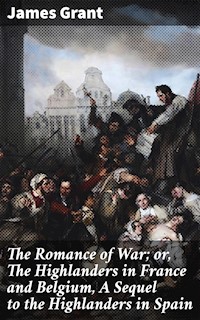


The Highlanders
Published by
Books
Table of Contents
Introduction
In The Highlanders, James Grant explores how the fierce pride of a distinct people, shaped by clan memory and harsh landscapes, is tested when ancestral codes of honor must keep step with the marching cadence of modern armies and the personal longings that tug at hearts far from home, so that loyalty becomes both a guiding light and a crucible, and identity must be carried not only in tartan and tune but in difficult choices on roads that run from quiet glens into the arenas where courage, duty, love, and survival make their claims, while the past whispers at every turn and the future demands compromises no tradition easily absorbs.
First published in Victorian Britain in the mid-nineteenth century, The Highlanders belongs to James Grant’s strand of historical and military romance, a popular mode that brought Scottish life and soldiering to a wide audience. The novel moves between the Highland homeland and the wider world reached by service and travel, using the regimented spaces of drill-yards and encampments and the open sweep of campaign routes to frame its action. Without fastening on one dated controversy for its appeal, it draws on recognizable social textures of its time: parish ties, recruiting parties, and the bustling circuits that turned local loyalties into national service.
Readers meet young men shaped by Highland upbringing and elders who measure worth by steadiness and courage, then watch as those lives are folded into the disciplined fabric of a Highland unit and the unpredictable tests that accompany service. The opening movement traces departure and initiation, balancing lively scenes of musters and marches with intimate glimpses of family bonds and tentative courtships. Grant’s omniscient narration keeps a steady, panoramic pace, alternating crisp action with reflective passages that weigh motive and consequence. The result is a story that feels both bustling and humane, attentive to character while never far from the perils of duty.
At its thematic core lie the pressures exerted on tradition when modernization gathers momentum. The book considers how Highland identity adapts to uniforms and drill without losing the stubborn flame that made it distinct, and how clan memory can coexist with bureaucratic rank and file. Questions of class mobility arise as talent must be recognized alongside birth and connection; questions of conscience surface when orders brush against sympathy. The martial myth is neither uncritically celebrated nor cynically dismissed; rather, courage appears alongside fatigue, camaraderie alongside discipline, and public honor alongside private doubt, yielding a layered portrait of people negotiating their place in a larger state.
Grant’s style is unfailingly accessible, fluent, and observant, favoring clear scene-setting, vivid incident, and an earnest moral temperature characteristic of much Victorian adventure writing. He writes with an eye for landscape and the visual emblem—plaids, steel, and the geometry of ranks—yet he also pauses for social detail that grounds spectacle in lived experience. The tone is broadly sympathetic and often stirring, but it makes room for humor, sentiment, and the awkwardness of first responsibilities. Dialogue and narration work together to keep momentum brisk, while descriptive interludes ensure the world feels inhabited, not merely staged. The effect is immersive without sacrificing narrative clarity.
For contemporary readers, The Highlanders matters because it traces enduring debates about identity, belonging, and service. It invites reflection on how regional cultures are absorbed into national projects, how communities remember their past while engaging a global present, and how individuals balance vocation with care for home. Its attention to the social economy of enlistment—ambition, necessity, pride—resonates wherever military life intersects with civic life. It also illuminates how storytelling itself shapes the image of warriors in public memory, helping us question the distance between romantic symbol and daily reality, and encouraging a more empathetic understanding of those who stand in uniform.
Approach this novel as both an engrossing tale and a historical conversation, listening for the interplay between scene and setting, valor and vulnerability, individual resolve and communal expectation. Watch how departures and reunions echo across chapters, how material details anchor feelings, and how small gestures—promises kept, tempers restrained, kindness extended—become as decisive as bugle calls. The plot offers reversals and revelations best discovered in reading, so this introduction has preserved only its opening pressures. What lingers is the dignity Grant affords his Highlanders: a sense that character is tested in many arenas, and that steadfastness, honestly examined, is its own hard-won triumph.
Synopsis
James Grant’s The Highlanders, a Victorian-era work by a prolific Scottish novelist of military romances, follows the fortunes of a Highland regiment as it moves from the quiet rhythms of the north to the formal rigor of barracks and the uncertainty of active service. The narrative establishes a world shaped by clan memory, religious habit, and the etiquette of the parade ground, then hints at the pressures that arise when local loyalties meet imperial duty. From the outset, Grant balances home scenes and martial preparation, setting questions of honor, identity, and perseverance against the allure of advancement and the personal attachments that complicate a soldier’s path.
Early chapters gather a cross-section of the regiment’s life: raw recruits alongside veterans, junior officers tempered by exacting sergeants, and civilians whose hopes and anxieties shadow the colors. Drills, inspections, and the close quarters of garrison routine reveal friendships forming under discipline and rivalries quickened by pride. Grant situates these episodes within Highland customs and speech without losing sight of the army’s rules. Stakes are quietly set, as promises made before departure and the memory of home confront the hard arithmetic of service, and the question emerges of who will bear responsibility when ambition and duty collide.
Orders shift the regiment from expectation to movement. Sea passages and long marches introduce the realities of campaign life: unpredictable weather, shortages, and the constant negotiation between courage and caution. Grant lingers on material details—uniforms, arms, and the daily rituals that sustain morale—while maintaining a steady alternation between the front and the home circle. First encounters with the enemy are sketched with an eye to formation and instinct, emphasizing cohesion over individual glory. In the confusion of early action, a mischance exposes frailties within the chain of trust, and the protagonists learn that reputation can change as swiftly as the wind on the heather.
Midway, the narrative’s tensions crystallize around a challenge to honor that threatens to unmake a career. An untimely accusation, born of haste and colored by class expectation, forces formal scrutiny and tests the regiment’s commitment to fairness. Grant examines how rank both protects and isolates, how silence can be as eloquent as protest, and how mentorship attempts to bridge experience and youth. The knot of private inclination and public obligation tightens as letters go unanswered, confidences are misread, and a choice must be made between the expedient and the principled, with consequences that reach beyond any single mess table or parade square.
Interludes away from the front enlarge the canvas, showing how rumor moves faster than official dispatches and how absence strains the bonds that sustain those who serve. In village rooms and city streets, pride in the regiment contends with practical worries; social standing rises and falls with each scrap of news. Grant treats reputation as a fragile currency, renewed by conduct and jeopardized by appearances. Promises to set matters right, once made in the warmth of parting, take on a cooler edge, and the personal thread that has run quietly through the story gains weight without displacing the larger drama of the colors.
As the regiment approaches a decisive operation, the prose tightens to match the measured tread of men moving into unknown ground. Weather and terrain do as much to shape events as orders, and the narrative underscores the difference between spectacle and endurance. Long-standing rivalries bend toward cooperation when circumstances admit no vanity. Grant keeps the focus on unit integrity, showing acts of steadiness that matter more than flourishes, and hinting at a reckoning where private motives and public responsibilities intersect. The outcome of the engagement, and its effect on the contested question of honor, remains held in reserve.
In closing movements, reflection and reckoning share the stage with the routines of recovery, musters, and farewells. The book’s broader significance lies in how it codified for Victorian readers the figure of the Highland soldier: disciplined yet distinctive, bound by tradition yet molded by service. Without divulging final turns, the narrative leaves a measured sense that identity is earned as much as inherited, and that loyalty carries costs not visible on ceremonial days. The Highlanders endures for its interplay of martial pageantry and moral inquiry, raising questions about belonging, reputation, and the ideals that individuals carry into institutions larger than themselves.
Historical Context
James Grant (1822–1887) was a prolific Scottish novelist best known for military and historical romances. The Highlanders, a mid-Victorian work, belongs to his sequence of novels celebrating Scottish soldiers in British service. Appearing to an audience steeped in the memory of the Napoleonic Wars, it situates its scenes among regimental depots, Highland townships, and continental campaigns that had entered popular memory through veterans’ memoirs and press reports. Grant, drawing on regimental histories and oral recollections, foregrounds drill, uniforms, and mess-room life as much as battlefield incident. The book’s setting thus joins domestic Scottish landscapes to the broader theaters of Britain’s early nineteenth-century wars.
After the failed Jacobite rising of 1745–46, the British state tightened control over the Highlands while simultaneously recruiting Highlanders into imperial service. The Dress Act of 1746 proscribed traditional Highland attire, a ban repealed in 1782, even as the government fostered new regiments from clan districts. The 42nd (Royal Highland) Regiment, known as the Black Watch, had been regimented in 1739; later units such as the 79th (Cameron), 92nd (Gordon), and 93rd (Sutherland) followed in the later eighteenth century. These corps institutionalized clan loyalties within the British Army’s regimental system, supplying the ethos and institutions that inform Grant’s depictions.
Highland regiments became emblematic in Britain’s struggle against Revolutionary and Napoleonic France. In the Peninsular War (1808–1814), they fought under Sir Arthur Wellesley (later the Duke of Wellington) in Portugal and Spain, at actions including Bussaco, Fuentes de Oñoro, Salamanca, and Vitoria; they later figured in the 1815 campaign culminating at Quatre Bras and Waterloo. Such campaigns furnished a ready backdrop for nineteenth‑century martial fiction. Grant repeatedly invoked this tradition, treating skirmish lines, stormed breaches, baggage trains, and winter quarters with documentary zeal. The Highlanders gravitates toward that inherited repertoire, emphasizing regimental cohesion, field discipline, and the logistics that sustained expeditionary warfare.
Grant’s military settings rest on the period’s institutions. The British Army’s purchase system still governed most officer commissions until its abolition in 1871, shaping class dynamics within messes and on parade. Regiments maintained strong local identities through recruiting parties, pipe bands, and depot communities linking barracks to home districts. The daily round—drill, inspections, pay, rations, and transport—structured soldiers’ lives far from home. Color companies, light infantry tactics, and the role of sergeants and adjutants receive attention alongside the symbolism of colors and tartan. This framework allows Grant to contrast social origins while grounding heroism in the routine mechanisms of an early nineteenth-century army.
The novel also emerges from the transformation of Highland society between c. 1760 and 1850. Estate consolidation and the Highland Clearances displaced many tenants from inland glens to coastal crofts or overseas destinations in British North America. Seasonal labor, kelp industries, and assisted emigration altered village life, while the Gaelic language and Presbyterian religious culture continued to anchor communities. Military enlistment offered pay, rations, and status during periods of rural hardship, and officers often leveraged landlord influence to raise companies. Grant’s scenes of recruiting, leave-taking, and return thereby reflect observable pathways by which Highlanders navigated economic change and fashioned identities within the British state.
Literary currents shaped the book’s tone. Walter Scott’s Waverley (1814) popularized the historical novel, reframing Jacobite memory and Highland culture for a United Kingdom readership. Scott’s orchestration of George IV’s visit to Edinburgh in 1822 helped canonize tartan pageantry, feeding a wider nineteenth‑century vogue for Highland imagery. Grant wrote within this tradition yet specialized in military detail, achieving early success with The Romance of War (1845). His family connections to the 92nd (Gordon Highlanders) and his access to veterans’ reminiscences encouraged fidelity to drill, dress, and camp routine, giving The Highlanders the texture of popular history as much as romance.
Internationally, the Iberian theater defined Britain’s land war with Napoleon and shaped how Victorians remembered soldiering. The British–Portuguese alliance, reorganized by William Carr Beresford, and cooperation with Spanish forces and guerrillas underpinned Wellington’s campaigns. Defensive works like the Lines of Torres Vedras, secure bases at Lisbon, and sea-borne supply chains illustrated Britain’s strategic advantages and constraints. Highland regiments served within this combined force, their distinct dress and pipers symbolizing regional pride within imperial structures. Such contexts, familiar to Grant’s readers from memoirs and histories, ground episodes of marching, siege work, and outpost duty that structure the narrative’s understanding of courage and endurance.
As a product of its era, The Highlanders amplifies Victorian reconciliation between Scottish particularity and British patriotism. It translates older clan loyalties into disciplined regimental esprit, celebrating courage while marking the costs of campaign life—wounds, separation, and precarious advancement. By dwelling on recruiting, depots, and the social hierarchies of the mess, it implicitly comments on class, patronage, and the channels open to ambitious provincials. At the same time, its affectionate rendering of Gaelic customs and dress participates in the century’s romantic refashioning of Highland culture. The result is both a tribute to martial service and a record of modernization’s dislocations.
The Highlanders
The Highlanders in Spain
THE ROMANCE OF WAR: OR, THE HIGHLANDERS IN SPAIN
VOLUME I.
"In the garb of old Gaul, with the fire of old Rome, From the heath-covered mountains of Scotia we come; Our loud-sounding pipe breathes the true martial strain, And our hearts still the old Scottish valour retain."Lt.-Gen. Erskine.
PREFACE.
Notwithstanding the numerous volumes which have been given to the public relative to the glorious operations of the British Army, for rescuing Portugal and Spain from the grasp of the invader, the Author of this work flatters himself that it will not be found deficient in novelty or interest. He acknowledges that, according to precedent, scenes and incidents have been introduced into it which are purely imaginary, and whether he ought to apologize for these, or to make a merit of them, he must leave his readers to decide, according to their individual tastes and predilections.
It will need no great sagacity to discriminate between this portion and the veritable historical and military details, the result of the experience of one, who had the honour of serving in that gallant corps to which these volumes more especially relate, during the whole of its brilliant course of service in the Peninsula, and who participated in all the proud feelings which arose when contemplating the triumphant career of an army, whose deeds and victories are unsurpassed in the annals of war.
Most of the military operations, and many of the characters, will be familiar to the survivors of the second division, and brother-officers will recognise many old associates in the convivialities of the mess-table, and in the perils of the battle-field. The names of others belong to history, and with them the political or military reader will be already acquainted.
It is impossible for a writer to speak of his own productions, without exposing himself to imputations of either egotism or affected modesty; the Author therefore will merely add, that he trusts that most readers may discover something to attract in these volumes, which depict from the life the stirring events and all the romance of warfare, with the various lights and shades of military service, the principal characters being members of one of those brave regiments, which, from their striking garb, national feelings, romantic sentiments, andesprit de corps, are essentially different from the generality of our troops of the line.
EDINBURGH,Nov.1846.
CHAPTER I. INTRODUCTORY.
"Still linger in our northern climeSome remnants of the good old time;And still within our valleys hereWe hold the kindred title dear;Even though perchance its far-fetched claim,To Southron ear, sounds empty name;For course of blood, our proverbs deem,Is warmer than the mountain stream."
Marmion, canto vi.
In the Highlands of Perthshire a deadly feud had existed, from time immemorial, between the Lisles of Inchavon and the Stuarts of Lochisla. In the days when the arm of the law was weak, the proprietors had often headed their kinsmen and followers in encounters with the sword, and for the last time during the memorable civil war of 1745-6. But between the heads of the families, towards the latter end of the last century, (the period when our tale commences,) although the era of feudal ideas and outrages had passed away, the spirit of transmitted hatred, proud rivalry and revenge, lurked behind, and a feeling of most cordial enmity existed between Stuart and Lisle, who were ever engaged in vexatious law-suits on the most frivolous pretences, and constantly endeavouring to cross each other's interests and intentions,—quarrelling at public meetings,—voting on opposite sides,—prosecuting for trespasses, and opposing each other every where, "as if the world was not wide enough for them both;" and on one occasion a duel would have ensued but for the timely interference of the sheriff.
Sir Allan Lisle of Inchavon, a man of a quiet and most benevolent disposition, was heartily tired of the trouble given him by the petty jealousy of his neighbour Stuart, a proud and irritable Highlander, who would never stoop to reconciliation with a family whom his father (a grimduinhe-wassal[1]of the old school) had ever declared to him were the hereditary foes of his race. The reader may consider it singular that such antiquated prejudices should exist so lately as the end of the last century; but it must be remembered that the march of intellect has not made such strides in the north country as it has done in the Lowlands, and many of the inhabitants of Perthshire will recognise a character well known to them, under the name of Mr. Stuart.
It must also be remembered, that he was the son of a man who had beheld the standard of the Stuarts unfurled in Glenfinan, and had exercised despotic power over his own vassals when the feudal system existed in its full force, before the act of the British parliament abolished the feudal jurisdictions throughout Scotland, and absolved the unwilling Highlanders from allegiance to their chiefs.
Sir Allan Lisle (who was M.P. for a neighbouring county) was in every respect a man of superior attainments to Stuart,—being a scholar, the master of many modern accomplishments, and having made the grand tour. To save himself further annoyance, he would gladly have extended the right hand of fellowship to his stubborn neighbour, but pride forbade him to make the first advances.
The residence of this intractable Gael was a square tower, overgrown with masses of ivy, and bearing outwardly, and almost inwardly, the same appearance as when James the Fifth visited it once when on a hunting excursion. The walls were enormously thick; the grated windows were small and irregular; a corbelled battlement surmounted the top, from the stone bartizan of which the standard of the owner was, on great days, hoisted with much formality by Donald Iverach, the old piper, or Evan his son, two important personages in the household of the little tower.
This primitive fortalice was perched upon a projecting craig, which overhung the loch of Isla, a small but beautiful sheet of water, having in its centre an islet with the ruins of a chapel. The light-green birch and black sepulchral pine, flourishing wild and thickly, grew close to the edge of the loch, and cast their dark shadows upon its generally unruffled surface. Around, the hills rose lofty, precipitous, and abrupt from the margin of the lake; some were covered with foliage to the summit, and others, bare and bleak, covered only with the whin bush or purple heather, where the red roe and the black cock roved wild and free; while, dimly seen in the distance, rose the misty crest of Benmore, (nearly four thousand feet above the level of the sea,) the highest mountain, save one, in Perthshire.
A littleclachan, or hamlet, consisting of about twenty green thatched cottages clustered together, with kail-yards behind, occupied the foot of the ascent leading to the tower; these were inhabited by the tenants, farm-servants, and herdsmen of Stuart. The graceful garb of the Gael was almost uniformly worn by the men; and the old wives, who in fine weather sat spinning on the turf-seats at the doors, wore the simplemutchand the varied tartan of their name. The wife of this Highland castellan had long been dead, as were their children excepting one son, who was almost the only near kinsman that Stuart had left.
Ronald was a handsome youth, with a proud dark eye, a haughty lip, and a bold and fearless heart,—possessing all those feelings which render the Scottish Highlander a being of a more elevated and romantic cast than his Lowland neighbours. He was well aware of the groundless animosity which his father nourished against Sir Allan Lisle; but as in the course of his lonely rambles, fishing, shooting, or hunting, he often when a boy encountered the younger members of the Inchavon family, and as he found them agreeable companions and playmates, he was far from sharing in the feelings of his prejudiced father. He found Sir Allan's son, Lewis Lisle, an obliging and active youth, a perfect sportsman, who could wing a bird with a single ball, and who knew every corrie and chasm through which the wandering Isla flowed, and the deep pools where the best trout were always to be found.
In Alice Lisle Ronald found a pretty and agreeable playmate in youth, but a still more agreeable companion for a solitary ramble as they advanced in years; and he discovered in her splendid dark eyes and glossy black hair charms which he beheld not at home in his father's mountain tower.
During childhood, when the days passed swiftly and happily, the brother and sister, of a milder mood than Ronald Stuart, admired the activity with which he was wont to climb the highest craigs and trees, swinging himself, with the dexterity of a squirrel, from branch to branch, or rock to rock, seeking the nests of the eagle or raven, or flowers that grew in the clefts of Craigonan, to deck the dark curls of Alice. Still more were they charmed with the peculiarity of his disposition, which was deeply tinged with the gloomy and romantic,—a sentiment which exists in the bosom of every Highlander, imparted by the scenery amidst which he dwells, the lonely hills and silent shores of his lochs, pathless and solitary heaths, where cairns and moss-covered stones mark the tombs of departed warriors, pine-covered hills, frowning rocks, and solitary defiles,—all fraught with traditions of the past, or tales of mysterious beings who abide in them. These cause the Gaelic mountaineer to be a sadder and more thoughtful man than the dwellers in the low country, who inhabit scenes less grand and majestic.
In the merry laugh and the gentle voice of Alice, Ronald found a charm to wean him from the tower of Lochisla, and the hours which he spent in her society, or in watching the windows of her father's house, were supposed to be spent in search of the black cock and the fleet roes of Benmore; and many a satirical observation he endured, in consequence of bringing home an empty game-bag, after a whole day's absence with his gun.
Ronald enjoyed but little society at the tower. His father, in consequence of the death of his wife and younger children, and owing to many severe losses which he had sustained in the course of his long series of litigations, had become a moody and silent man, spending his days either in reading, or in solitary rides and rambles. His voice, which, when he did speak, was authoritative enough and loud, was seldom heard in the old tower, where the predominant sounds were the grunting tones of Janet, the aged housekeeper, who quarrelled continually with Donald Iverach, the piper, whenever the latter could find time, from his almost constant occupations of piping and drinking, to enjoy a skirmish with her.
As years crept on, the friendship between the young people strengthened, and in the breasts of Alice and Ronald Stuart became a deeper and a more absorbing feeling, binding them "heart to heart and mind to mind," and each became all the world unto the other. To them there was something pleasing and even romantic in the strange secrecy they were necessitated to use; believing that, should their intercourse ever come to the ears of their parents, effectual means would be taken to put a stop to it.
CHAPTER II. INTERVIEWS.
"And must I leave my native isle—Fair friendship's eye—affection's smile—The mountain sport—the angler's wile—The birch and weeping willow, O!The Highland glen—the healthy gale—The gloaming glee—the evening tale—And must I leave my native vale,And brave the boisterous billow, O!"
Hogg's Forest Minstrel.
"Alice! my own fair Alice! my hard destiny ordains that I must leave you," was the sorrowful exclamation of Ronald one evening, as he joined Alice at their usual place of meeting, a solitary spot on the banks of the Isla, where the willow and alder bush, overhanging the steep rocks, swept the dark surface of the stream.
"Leave me! O Ronald, what can you mean?" was the trembling reply of the fair girl, as she put her arm through his, and gazed anxiously on the troubled countenance of her lover.
"That I must go—far from you and the bonnie banks of the Isla. Yes, Alice; but it is only for a short time, I trust. Of the embarrassed state of my father's affairs, by his long law-suits and other matters, I have acquainted you already, and it has now become necessary for me to choose some profession. My choice has been the army: what other could one, possessing the true spirit of a Highland gentleman, follow?"
"O Ronald! I ever feared our happiness was too great to last long. Ah! you must not leave me."
"Alice," replied the young Highlander, his cheek flushing while he spoke, "our best and bravest men are going forth in thousands to meet the enemies of our country, drenching in their blood the fatal Peninsula; and can I remain behind, when so many of my name and kindred have fallen in the service of the king? Never has the honour of Scotland been tarnished by the few who have returned, nor lost by those who have fallen, in every clime, where the British standard has been unfurled against an enemy. An ensigncy[2] has been promised me—and in a Highland regiment, wearing the garb, inheriting the spirit of the Gael, and commanded by a grandson of the great Lochiel; and I cannot shrink when my father bids me go, although my heart should almost burst at leaving you behind, my own—own Alice!" and he pressed to his bosom the agitated girl, who seemed startled at the vehemence with which he had spoken.
"But hold, Alice," he added, on perceiving tears trembling on her dark eyelashes; "you must not give way thus. I will return, and all will yet be well. Only imagine what happiness will then be ours, should the families be on good terms, and I, perhaps, Sir Ronald Stewart, and knight of I know not how many orders?"
"Ah, Ronald! but think of how many have left their happy homes with hearts beating high with hope and pride, and left them never to return. Did not the three sons of your cousin of Strathonan leave their bones on the red sands of Egypt? and many more can I name. Ah! how I tremble to think of the scenes that poor soldiers must behold,—scenes of which I cannot form even the slightest conception."
"These are sad forebodings," replied the young man, smiling tenderly, "and from the lips of one less young and less beautiful than yourself, might have been considered as omens of mischance. I trust, however, that I, who have so often shot the swiftest red roes in Strathisla, slept whole nights on the frozen heather, and know so well the use of the target and claymore, (thanks to old Iverach,) shall make no bad soldier or campaigner, and endure the hardships incident to a military life infinitely better than the fine gentlemen of the Lowland cities. The proud Cameron who is to command me will, I am sure, be my friend; he will not forget that his grandsire's life was saved by mine at Culloden, and he will regard me with the love of the olden time, for the sake of those that are dead and gone. Oh, Alice! I could view the bright prospect which is before me with tumultuous joy, but for the sorrow of leaving you, my white-haired father, and the bonnie braes and deep corries of Isla. But if with Heaven's aid I escape, promise, Alice, that when I return you will be mine,—mine by a dearer title than ever I could call you heretofore."
"Ronald—dearest Ronald! I will love you as I have ever done," she said in a soft yet energetic tone; "and I feel a secret voice within me which tells that the happy anticipations of the past will—will yet be accomplished." The girl laid her blushing cheek on the shoulder of the young man, and her dark thick curls, becoming free from the little cap or bonnet which had confined them, fell over his breast in disorder.
At that exciting moment of passion and mental tumult, Ronald's eye met a human countenance observing them sternly from among the leaves of the trees that flourished near them. The foliage was suddenly pushed aside, and Sir Allan Lisle appeared, scanning the young offenders with a stern glance of displeasure and surprise. He was a tall thin man, in the prime of life, with a fine countenance expressive of mildness and benevolence. He wore his hair thickly powdered, and tied in a queue behind. He carried a heavy hunting-whip in his hand, which he grasped ominously as he turned his keen eye alternately from the young man to his trembling daughter, who, leaning against a tree, covered her face with her handkerchief and sobbed hysterically. Ronald Stuart stood erect, and returned Sir Allan's glance as firmly and as proudly as he could, but he felt some trouble in maintaining his self-possession. His smart blue bonnet had fallen off, fully revealing his strongly-marked and handsome features, where Sir Allan read at once that he was a bold youth, with whom proud looks and hard words would little avail.
"How now, sir!" said he at length. "What am I to understand by all this? Speak, young gentleman," he added, perceiving that Ronald was puzzled, "answer me truly: as the father of this imprudent girl, I am entitled to a reply."
Ronald was about to stammer forth something.
"You are, I believe, the son of Stuart of Lochisla?" interrupted Sir Allan sternly, "who is far from being a friend to me or mine. How long is it since you have known my daughter? and what am I to understand from the scene you have acted here?"
"That I love Miss Lisle with the utmost tenderness that one being is capable of entertaining for another," replied Ronald, his face suffusing with a crimson glow at the earnest confession. "Sir Allan, if you have seen what passed just now, you will perceive that I treat her with that respect and delicacy which the beauties of her mind and person deserve."
"This is indeed all very fine, sir! and very romantic too; but rather unexpected—upon my honour rather so," replied the baronet sarcastically, as he drew the arm of the weeping Alice through his. "But pray, Master Stuart, how long has this clandestine matter been carried on? how long have you been acquainted?"
"From our earliest childhood, sir,—indeed I tell you truly,—from the days in which we used to gather wild flowers and berries together as little children. We have been ever together; a day has scarcely elapsed without our seeing each other, and there is not a dingle of the woods, a dark corrie of the Isla, or a spot on the braes of Strathonan, where we have not wandered hand in hand, since the days when Alice was a laughing little girl with flaxen curls until now, when she is become tall, beautiful, and almost a woman, with ringlets as black as the wing of the muircock. But your son Lewis will tell all these things better than I can, as I am rather confused just now, Sir Allan."
"'Tis very odd this matter has been concealed from me so long," said the other, softened by the earnest tone of the young man, who felt how much depended upon the issue of the present unlooked-for interview; "and if my ears have not deceived me, I think I heard you offer marriage to my foolish daughter on your return from somewhere?"
"It is very true, sir," replied the young man modestly.
"And pray, young sir! what are your pretensions to the hand of Miss Lisle?"
"Sir!" ejaculated Ronald, his cheek flushing and his eye sparkling at the angry inquiry of the other.
"I ask you, Mr Stuart, what are they? Your father I know to be an almost ruined man, whose estates are deeply dipped and overwhelmed by bonds, mortgages, and what not. He has moreover been a deadly enemy to me, and has most unwarrantably——"
"Oh, pray, papa! dear papa!" urged the young lady imploringly.
"Sir Allan Lisle," cried Ronald with a stern tone, while his heart beat tumultuously, "Lowland lawyers and unlooked-for misfortunes are, I know, completing our ruin, and the pen and parchment have made more inroads upon us than ever your ancestors could have done with all Perthshire at their back; but, truly, it ill becomes a gentleman of birth and breeding to speak thus slightingly of an old and honourable Highland family. If my father, inheriting as he does ancient prejudices, has been hostile to your interests, I, Sir Allan, never have been so; and the time was once, when a Lisle dared not have spoken thus tauntingly to a Stuart of the house of Lochisla."
Sir Allan admired the proud and indignant air with which the youth spoke; but he wished to humble him if possible, and deemed that irony was a better weapon than anger to meet the fiery young Highlander with. He gave a sort of tragi-comic start, and was about to make some sarcastic reply, when his foot caught the root of a tree; he reeled backward, and fell over the rocky bank into the Isla, which formed a deep, dark, and noiseless pool below.
A loud and startling cry burst from Alice, as her father suddenly disappeared from her side.
"Save him, save him, Ronald! Oh, Ronald! if you love me, save my father!" she cried in accents at once soul-stirring and imploring, while she threw herself upon her knees, and, not daring to look upon the stream, covered her eyes with her hands, calling alternately upon Heaven and her lover, in tones which defy the power of language to describe, to save her father.
"Dearest Alice, calm yourself; be pacified,—he shall not perish," cried Ronald, whose presence of mind had never once forsaken him, as he cast aside his bonnet and short sporting coat, and gazed over the bank upon the rapid river running between two abrupt walls of rock, against the dark sides of which the spray and foam raised by Sir Allan's struggles was dashed. The latter was beating the water fruitlessly in the centre of the pool, where it was deep and the current strong; yet he made no outcry, as if unwilling to add to the distress which he knew his daughter already experienced.
He bestowed one look of terror and agony on Ronald, who instantly sprang off the precipitous rock, and swimming round him, strongly and vigorously in wide circles, caught him warily by the hair, and holding his head above the surface of the stream, swam down the current to a spot where the bank was less steep, and with some exertion landed him safely on the green turf, where he lay long speechless; while Alice wrung her hands, and wept in an ecstasy of terror, embracing her father and his preserver by turns. The latter, who was nothing the worse for his ducking, put on his bonnet and upper garment with perfectsang froid; but it was some time before Sir Allan recovered himself so far as to be able to thank his preserver, who poured down his throat as he lay prostrate the contents of a metal hunting-flask, which he generally carried about with him filled with the best brandy, procured, by means unknown, duty free at Lochisla.
Shortly and emphatically did Sir Allan thank Ronald for the aid he had rendered, as he must inevitably have perished, being unable to swim, and having to contend with a strong current, which would soon have carried him over the high cascade of Corrie-avon. Ronald inwardly blessed the accident which had rendered Sir Allan so much his debtor, and wrought such a happy change of sentiment in his favour. He accompanied Alice and her father to one of the gate-lodges of Inchavon, and there resisting an earnest invitation to the house, he returned with all speed home, not ill pleased with the issue of the day's adventures.
CHAPTER III. A TRUE HIGHLANDER.
"Not much his new ally he loved,Yet when he saw what hap had proved,He greeted him right heartilie;He would not waken old debate,For he was void of rancorous hate,Though rude, and scant of courtesy."
The Last Minstrel, canto v.
One fine forenoon, a few days after the occurrences related in the last chapter, a horseman appeared riding along the narrow uneven road leading by the banks of Lochisla towards the tower. It was Sir Allan Lisle, who came along at a slow trot, managing his nag with the ease and grace of a perfect rider, never making use of either whip or spur, but often drawing in his rein to indulge the pleasure and curiosity with which he beheld (though accustomed to the splendid scenery of Perthshire) this secluded spot, which he had never seen before,—the black and solitary tower, the dark blue waveless loch, and the wild scenery by which it was surrounded.
As he advanced up the ascent towards the tower, his horse began to snort, shake its mane, and grow restive, as its ears were saluted by a noise to which they were unaccustomed.
Donald Iverach, the old piper of the family, (which office his ancestors had held since the days of Robert the Second, according to his own account,) was pacing with a stately air to and fro before the door of the fortalice, with the expanded bag of the piob mhor[3] under his arm, blowing from its long chaunter and three huge drones "a tempest of dissonance;" while he measured with regular strides the length of the barbican or court, at one end of which stood a large stoup of whisky, (placed on the end of a cask,) to which he applied himself at every turn of his promenade to wet his whistle.
The piper, though of low stature, was of a powerful, athletic, and sinewy form, and although nearly sixty, was as fresh as when only sixteen; his face was rough and purple, from drinking and exposure to the weather; his huge red whiskers curled round beneath his chin and grew up to his eyes, which twinkled and glittered beneath their shaggy brows; a smart blue bonnet set jauntily, very much over the right eye, gave him a knowing look, and his knees, "which had never known covering from the day of his birth," where exposed by the kilt were hairy and rough as the hide of the roe-buck; his plaid waved behind, and a richly mounted dirk, eighteen inches long, hanging on his right side, completed his attire.
Great was the surprise of the Celt when, on turning in his march, he suddenly beheld Sir Allan Lisle, whom he had not seen since the last year, when by the laird's orders he had endeavoured, by the overwhelming noise of his pipe, to drown a speech which the baronet was addressing to the electors of the county. But what earthly errand, thought Donald, could bring a Lisle up Strathisla, where one of the race had not been seen since the father of the present Sir Allan had beleagured the tower in 1746 with a party of the Scottish Fusileers. The chaunter fell from the hand of the astonished piper, and the wind in the bag of his instrument escaped with an appalling groan.
"My good friend, I am glad you have ceased at last," said Sir Allan; "I expected every moment that my horse would have thrown me. This fortress of yours will be secure against cavalry while you are in it, I dare swear."
"I dinna ken, sir," replied the piper, touching his bonnet haughtily; "but when pare-leggit gillies and red coats tried it in the troublesome times, they aye gat the tead man's share o' the deep loch below."
"Is your master—is Lochisla at home?"
"His honour the laird is within," replied Iverach, as Sir Allan dismounted and desired him to hold his horse.
"Lochisla's piper will hold nae man's bridle-rein, his honour's excepted," said the indignant Highlander; "put a common gillie may do tat. Holloa! Alpin Oig Stuart! Dugald! Evan! come an' hold ta shentleman's praw sheltie," shouted he, making the old barbican ring.
"One will do, I dare say," said Sir Allan, smiling as he resigned his nag to Evan, Iverach's son, a powerful young mountaineer, who appeared at his father's shout.
Preceded by Donald, Sir Allan ascended the winding staircase of the tower, and was ushered into the hall, or principal apartment it contained, the roof of which was a stone arch. At one side yawned a large fire-place, on the mouldered lintel of which appeared the crest and badge-flower of the Stuarts,—a thistle, and underneath was the family motto, "Omne solum forti patria." At each end of the chamber was a window of moderate size, with a stone mullion in the form of a cross; one commanded a view of the loch and neighbouring forests of birch and pine, and the other the distant outline of the high Benmore. The walls were adorned with apparatus for hunting, fishing, shooting, and sylvan trophies, intermixed with targets, claymores, Lochaber axes, old muskets, matchlocks, &c.
The furniture was of oak, or old and black mahogany, massive and much dilapidated, presenting a very different appearance to that in the splendid modern drawing-room at Inchavon. A few old portraits hung on the blackened walls, and one in particular, that of a stern old Highlander, whose white beard flowed over his belted plaid, seemed to scowl on Sir Allan, who felt considerably embarrassed when he unexpectedly found himself in the habitation of one, whom he could not consider otherwise than as his foe.
While awaiting the appearance of the proprietor, whom the piper was gone to inform of the visit, Sir Allan's eye often wandered to the portrait above the fire-place, and he remembered that it was the likeness of the father of the present Stuart, who at the battle of Falkirk had unhorsed, by a stroke of his broadsword, his (Sir Allan's) father, then an officer in the army of General Hawley. While Sir Allan mused over the tales he had heard of the grim Ian Mhor of Lochisla, the door opened, and Mr. Stuart entered.
Erect in person, stately in step, and graceful in deportment, strong and athletic of form, he appeared in every respect the genuine Highland gentleman. He was upwards of sixty, but his eye was clear, keen, and bright, and his weather-beaten cheek and expansive forehead were naturally tinged with a ruddy tint, which was increased to a flush by the excitement caused at this unlooked-for visit.
Unlike his servants, who wore the red tartan of their race, he was attired in the usual dress of a country gentleman, and wore his silver locks thickly and unnecessarily powdered, and clubbed in a thick queue behind.
The natural politeness and hospitable feeling of a Highlander had banished every trace of displeasure from his bold and unwrinkled brow, and he grasped Sir Allan's hand with a frankness at which the latter was surprised, as was old Janet the housekeeper, who saw through the keyhole what passed, though she was unable, in consequence of her deafness, to hear what was said.
"Be seated, Sir Allan," said Mr. Stuart, bowing politely, though he felt his stiffness and hauteur rising within him, and endeavoured to smother it. "To what am I indebted for the honour of this visit? which, I must have the candour to acknowledge, is most unexpected."
"Lochisla," replied the other, addressing him in the Scottish manner by the name of his property, "to the gallantry of your brave boy, Ronald, but for whose exertions I should at this moment have been sleeping at the bottom of the Linn at Corrie-avon. I have deemed it incumbent upon me to visit Lochisla, to return my earnest thanks personally for the signal service he has rendered to me, and I regret that the terms on which you—on which we have lived, render, in your estimation, my visit rather an honour than a pleasure."
A shade crossed the brow of the Highlander, but on hearing the particulars he congratulated Sir Allan on his escape in a distant and polite manner, while the twinkle of his bright eyes showed how much satisfaction he enjoyed at the brave conduct of his son. While Sir Allan was relating the story, Mr. Stuart placed near him a large silver liqueur frame, containing six cut-glass bottles, the variously coloured contents of which sparkled behind their silver labels.
"Come, Sir Allan, fill your glass, and drink to my boy's health: one does not experience so narrow an escape often, now-a-days at least. Come, sir, fill your glass,—there is sherry, brandy, port, and the purer dew of the hills; choose which you please."
"You Stuarts of Lochisla have long borne a name for hospitality, but it is rather early to taste strong waters,—'tis not meridian yet."
"Our hospitality was greater in the olden time than it is now; but it is not often that this old hall has within it one of the Lisles of the Inch, and you must positively drink with me," answered his host, compelling him to fill his glass from the decanter of purple port.
"Our visits have been fewer, and less friendly, than I trust they will be for the future. Your health Lochisla," he added, sipping his wine. "'Tis sixty years and more, I think, since my father came up the Strath with his followers, when—"
"We will not talk of these matters, Sir Allan," exclaimed Stuart, on whose features was gathering a stern expression which Sir Allan saw not, as he sat with his face to a window and looked through his glass with one eye closed, watching a crumb of the bee's wing floating on the bright liquor. "They are the last I would wish to think of when you are my guest."
"Pardon me, I had no wish to offend; we have ever been as strangers to each other, although our acres march. I have had every desire to live on amicable terms with you, Mr. Stuart; but you have ever been prejudiced against me, and truly without a cause."
"I am one of the few who inherit the feelings of a bygone age. But, Sir Allan Lisle, let us not, I intreat you, refer to the past," coldly replied the old Highlander, to whom two parts of his guest's last speech were displeasing. The recurrence to the past terms on which they had lived, brought to his mind more than one case of litigation in which Sir Allan had come off victorious; the other was being addressed asMr. Stuart, a title by which he was never known among his own people. The polite and affable manner of his visitor had tended to diminish his prejudices during the last five minutes, but Sir Allan's blundering observations recalled to the mind of the oldduinhe-wassalthe bitter feelings which he inherited from his father, and his high forehead became flushed and contracted.
"It appears very unaccountable," said he, after the uncomfortable pause which had ensued, "that my son has never, during the past days, mentioned the circumstance of the happy manner in which he drew you from the Corrie-avon."
"To that," replied the other laughing, "a story is appended, a very romantic one indeed, part of which I suppressed in my relation; nothing less, in fact, than a love-affair, to which, as I have conceived a friendship for the brave boy to whom I owe a life, I drink every success," (draining his glass); "but this must be treated of more gravely at a future interview."
"Sir Allan, I understand you not; but if Ronald has formed any attachment in this neighbourhood, he must learn to forget it, as he will soon leave Lochisla. Some cottage girl, I suppose: these attachments are common enough among the mountains."
"You mistake me: the young lady is one every way his equal, and they have known each other from their childhood. But I will leave the hero to tell his own tale, which will sound better from the lips of a handsome Highland youth, than those of a plain grey-haired old fellow, like myself."
"I like your frankness," said Stuart, softened by the praise bestowed on his son by his old adversary, whose hand he shook, "and will requite it, Sir Allan. When Ronald comes down the glen, I will talk with him over this matter, which I confess troubles me a little at heart, as I never supposed he would have kept an attachment of his secret from me, his only parent now, and one that has loved him so dearly as I have done. But I must be gentle with him, as he is about to leave me soon, poor boy."
"Ah! for the army,—so I have heard: our boys will follow nothing else now-a-days. I fear my own springald, Lewis, is casting wistful thoughts that way. But should you wish it, I may do much in Ronald's favour: I have some little interest with those in power in London, and——"
"I thank you, but it needs not to be so. Huntly has promised me that Ronald shall not be forgotten when a vacancy occurs in the "Gordon Highlanders," a regiment raised among his own people and kindred; and the Marquis, whose interest is great with the Duke of York, will not forget his word—his pledged word to a Highland gentleman."
On Sir Allan's departure, Stuart, from one of the hall windows, watched his retiring figure as he rode rapidly down the glen, and disappeared among the birchen foliage which overhung and shrouded the winding pathway. A sour smile curled his lip; he felt old prejudices rising strongly in his breast, and he turned his eye on the faded portrait of his father, and thought of the time when he had sat as a little child upon his knee, and heard the family of Lisle mentioned with all the bitterness of Highland rancour, and been told a thousand times of the days when Colonel Lisle had carried fire and sword through all Lochisla, besieging the little tower for days, until its inmates were perishing for want. In the tide of feeling which these reflections called forth, the late amiable interview was forgotten; and he only remembered Sir Allan as the foe of his race, and the victor in many a keenly contested case in the Parliament house, the place where the Court of Session sit at Edinburgh.
A bustle in the narrow staircase recalled him to himself: the door was thrown open, and Ronald entered, gun in hand, from the hill, flushed and excited with the nature of the sport. Two tall Highlanders strode behind, bearing on their shoulders a stout pole, from which was suspended by the heels a gigantic deer, whose branching antlers trailed on the floor, which was sprinkled with spots of blood falling from its dilated nostrils and a death-wound in its neck, which had been gashed across by the skene-dhu[4] of a Highlander. A number of red-eyed dogs accompanied them, displaying in their forms the long and muscular limbs, voluminous chest, and rough wiry coat of the old Scottish hound,—a noble animal, once common in the Lowlands, but now to be found only in the north, where the deer wander free over immense stretches of waste moorland or forest, as they did of old.
"A brave beast he is," said Ronald exultingly, as he cast aside his bonnet and gun. "At the head of the loch I fired, and wounded him here in the neck: we traced him by the blood for two miles down the Isla, where he flew through thicket and brake with the speed of an arrow; but the gallant dogs Odin and Carril fastened upon him, and drew him down when about to take the water, near the march-stone of the Lisles. 'Twas luckily done: had he once gained the grounds of Inchavon, our prize would have been lost."
"Ronald," replied his father coldly, "we will hear all this matter afterwards." Then turning to the gillies, "Dugald Stuart, and you Alpin Oig," said he, "carry away this quarry to the housekeeper, and desire her to fill your queghs for you. I have had a visit from Sir Allan Lisle," resumed Stuart, when the Highlanders had obeyed his order and retired. "Hah! you change countenance already: this has been a mysterious matter. He has been here to return thanks for your pulling him out of Isla, where he was nearly drowned, poor man, a day or two since,—a circumstance which you seem to have thought too worthless to mention to me. But there is another matter, on which I might at least have been consulted," he added, watching steadily the changes in the countenance of the young man, whose heart fluttered with excitement. "You have formed an attachment to some girl in the neighbourhood, which has reached the ears of this Allan Lisle although it never came to mine, and the intercourse has continued for years although I have been ignorant of it. Ronald, my boy, who is the girl? As your father, I have at least a right to inquire her name and family."
"Do pray excuse me," faltered the other, playing nervously with his bonnet; "I am too much embarrassed at present to reply,—some other time. Ah! your anger would but increase, I fear, were you to know."
"It does increase! Surely she is not a daughter of that grim churl Corrieoich up the glen yonder? I have seen his tawdry kimmers at the county ball. I can scarcely think this flame of yours is a child of his. You remember the squabble I had with him about firing on his people, who were dragging the loch with nets under the very tower windows. By Heaven! is she a daughter of his?" cried his father in the loud and imperative tone so natural to a Highlander. "Answer me, I command you, Ronald Stuart!"
"She is not, I pledge you my word," replied the young man gently.
"Ronald!" exclaimed the old gentleman, a dark flush gathering on his cheek, "she must be some mean and contemptible object, otherwise you would not shrink from the mention of her name, was it gentle and noble, in this coward way."
"Coward I never was," replied Ronald bitterly. "I may shrink before my own father, when I would scorn to quail before the angry eye of any other man who lives and breathes. Nor do I blush to own the name of—of this lady. She is Alice, the daughter of Sir Allan Lisle, of Inchavon. Ah, sir! I fear I have applied a match to a mine; but I must await the explosion."
Ronald had indeed lighted a mine. A terrible expression flashed in the eyes of the old Highlander, and gathered upon his formidable brow.
"Ronald! Ronald! for this duplicity I was unprepared," he exclaimed in emphatic Gaelic, with a tone of the bitterest reproach. "Have you dared to address yourself to a daughter of that man? Look up, degenerate boy!" he added, grasping Ronald's arm with fierce energy, while he spoke with stern distinctness. "Look upon the portrait of old Ian Mhor, your brave grand sire, and imagine what he would have thought of this. The Lisles of Inchavon!Dhia gledh sinn! I have not forgotten their last hostile attempt sixty-five years since, in 1746, when Colonel Lisle, the father of this Sir Allan, besieged our tower with his whole battalion. I was a mere infant then; but I well remember how the muskets of the fusileers flashed daily and nightly from rock and copse-wood, and from the dark loopholes of the tower, where the brave retainers of Lochisla defended my father's stronghold with the desperate courage of outlawed and ruined men,—ruined and outlawed in a noble cause! These days of death and siege I have not forgotten, nor the pale cheek of the mother at whose breast I hung seeking nourishment, while she was perishing for want of food. Nor have I forgotten the gallows-tree—God be gracious unto me!—raised by the insolent soldiery on the brae-head to hang our people when they surrendered; and, had they ever yielded, they would have swung every man of them, and have been food for the raven and hoodiecraw. And this paternal tower would have been now ruined and roofless, forming a lair for the fox and the owl, but for the friendship of our kinsman Seafield, who wrung a respite and reprieve from the unwilling hand of the merciless German duke.




