


7,99 €
Niedrigster Preis in 30 Tagen: 4,49 €
Niedrigster Preis in 30 Tagen: 4,49 €
Mehr erfahren.
- Herausgeber: WriteLife Publishing
- Kategorie: Abenteuer, Thriller, Horror
- Sprache: Englisch
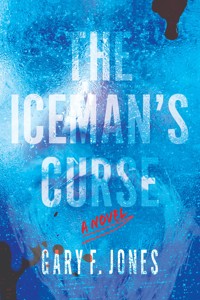
Nature, climate, and stupidity produce a pandemic.
Grant Farnsworth, a post-doc student, veterinarian, and virologist at the University of Minnesota is upset when his professor tells him to prepare to work on tissue samples from the Iceman, a 1,200-year-old corpse discovered in the Swiss Alps. Grant is already working seven days a week and his wife is eight months pregnant with their second child.
The situation becomes dangerous when a Swiss professor, to avoid regulations, smuggles the samples into the United States, putting Grant and his professor in legal jeopardy. A blizzard diverts the professor's flight to Chicago, Customs is hectic, and the professor mistakenly swaps his suitcase with Frank, a drug mule. Frank discovers the error and follows the professor noth on I-94 to recover the missing drugs. Snow forces the professor to stop at a motel in the hamlet of Kirby, Wisconsin; he has no idea that he's carrying drugs and that his life is in jeopardy.
The Swiss government confidentially informs the CDC that those who handled Iceman samples are ill, and one has died. Grant is sent to Kirby to find the Swiss professor and isolate the samples. The CDC learns of the samples in Kirby and dispatches Dr. Sybil Erypet to Fort McCoy, a nearby Army base, to get the samples under control. Between dangerous drug mules, eccentric locals, and infected tissue samples, many lives in the snow-bound village and surrounding area are in jeopardy.
“. . . This cinematic-style caper is perfect for readers who have also loved movies such as Fargo and Weekend at Bernies. Gary Jones’s novel is a triumph. If you haven’t read his work yet, put The Iceman’s Curse on your list. Highly recommended.” – Christine DeSmet, mystery novelist, writing coach, member of Mystery Writers of America and Sisters in Crime
Das E-Book können Sie in Legimi-Apps oder einer beliebigen App lesen, die das folgende Format unterstützen:
Veröffentlichungsjahr: 2022
Ähnliche


















The Iceman’s Curse
© 2022 Gary F. Jones. All rights reserved.
No part of this book may be reproduced in any form or by any means, electronic, mechanical, digital, photocopying or recording, except for the inclusion in a review, without permission in writing from the publisher.
This is a work of fiction. All of the characters, names, incidents, organizations, and dialogue in this novel are either the products of the author’s imagination or are used fictitiously.
Published in the United States by BQB Publishing
(an imprint of Boutique of Quality Books Publishing, Inc.)
www.bqbpublishing.com
Printed in the United States
ISBN 978-1-952782-78-7 (p)
ISBN 978-1-952782-79-4 (e)
Library of Congress Control Number: 2022942158
Book design by Robin Krauss, www.bookformatters.com
Cover design by Rebecca Lown, www.rebeccalowndesign.com
First editor: Caleb Guard
Second editor: Andrea Vande Vorde
CONTENTS
PRAISE FOR THE ICEMAN’S CURSE AND AUTHOR GARY F. JONES
CHAPTER 1 THE PROJECT
CHAPTER 2 THE COURIER
CHAPTER 3 THE BLIZZARD
CHAPTER 4 COMPLICATIONS
CHAPTER 5 DEPUTY KRUEGER
CHAPTER 6 THE GATHERING STORM
CHAPTER 7 FROZEN
CHAPTER 8 THE GATHERING
CHAPTER 9 US ARMY WINTER TRAINING GROUNDS
CHAPTER 10 TYVEK GHOSTS
CHAPTER 11 THE PROFESSOR’S RETURN
CHAPTER 12 THE SIEGE
CHAPTER 13 SURPRISE, BOYS!
CHAPTER 14 THE CAVALRY ARRIVES
CHAPTER 15 MEETING THE PATIENTS
CHAPTER 16 MEET DR. FARNSWORTH
CHAPTER 17 LOVE AMONG THE ICICLES
CHAPTER 18 IT’S IN McCOY
CHAPTER 19 FRANK IS OUT
CHAPTER 20 MRS. ANDERSON’S SAMPLES
CHAPTER 21 THE GETAWAY
CHAPTER 22 ON THE LAM
CHAPTER 23 DISAPPOINTMENT
CHAPTER 24 A NEW CAR
CHAPTER 25 ABBY
CHAPTER 26 FALSE LEAD
CHAPTER 27 IN ISOLATION
CHAPTER 28 THE NET CLOSES
CHAPTER 29 GREAT BALLS ’O FIRE
CHAPTER 30 THE SHOOTING GALLERY
CHAPTER 31 BACK TO McCOY
ABOUT THE AUTHOR
OTHER BOOKS BY GARY F. JONES
PRAISE FOR THE ICEMAN’S CURSE AND AUTHOR GARY F. JONES
”Author Gary Jones delivers a fast-paced, well-written, and entertaining satirical suspense story in The Iceman’s Curse. Jones’s writing is in the same league as Carl Hiaasen’s humorous crime novels that take on current events, politics, and local customs. In The Iceman’s Curse the mismanagement of a vial containing a deadly virus creates havoc for officials at all governmental levels including the military during a winter blizzard in Wisconsin. Dealing with impossible snow-covered roads adds to the hilarity caused by the desperate criminals and officials alike. A truth-seeking scientist with a pregnant wife due any day provides a warm thread throughout this story. This cinematic-style caper is perfect for readers who have also loved movies such as Fargo and Weekend at Bernies. Gary Jones’s novel is a triumph. If you haven’t read his work yet, put The Iceman’s Curse on your list. Highly recommended.
— Christine DeSmet, mystery novelist, writing coach,
member of Mystery Writers of America
and Sisters in Crime
CHAPTER 1
THE PROJECT
Monday, January 8, 2018
St. Paul, Minnesota
9:00 a.m. CST
Grant Farnsworth entered the old PathoBiology building of Minnesota’s College of Veterinary Medicine and took the stairs two at a time to the second floor. He headed down the main hallway, removing his winter gloves and unzipping his heavy parka. He power walked past the first door on the right, avoiding an open area where a secretary’s desk once guarded the entrance to three offices. Years ago, computers had made secretaries unnecessary for mere professors, so the room became an open area with no practical use.
A quick glance across the empty space was a mistake. Grant made eye contact with sixty-three-year-old Ron Schmidt, his faculty adviser, who was standing in the doorway of his office.
A hiker and winter camper, Ron was in good shape for his age. He could look impressive dressed in a suit and tie to meet visiting dignitaries, but today he wore the working uniform worn by professors of basic sciences in the Veterinary College: khaki pants and a rumpled dress shirt open at the collar. He smiled and waved the sheaf of papers in his hand, gesturing to his office.
Grant recognized the smile. Fuck, another idea for a project, he thought. He tried to get by with a wave and move on, but there was a fat chance that would work. “Grant,” Ron called to him. “Come here. I have something we need to discuss.”
Ron took a seat behind his desk, leaned back in his chair, and interlaced his fingers behind his head. His grin was even broader. “How would you like to take a crack at sequencing ancient DNA?”
Grant swore under his breath and pasted a phony smile on his face. An overworked and underpaid postdoctoral student, he was already working seven days a week. His wife Sarah was eight months pregnant and complained that she felt like a single parent. Last night, two-year-old Jimmy had treated him like a stranger. There might be a way out of this, though.
“Sounds interesting, but wouldn’t it be faster to send it to a commercial lab?”
“Nah. Ancient DNA is fussy to work with and requires special procedures. A commercial lab would charge too much.”
Sure. That would make sense for Ron. Why should he pay an outside company when Grant was working for peanuts and table scraps?
“Besides,” Ron continued, “it’ll give you a chance to work on something new, expand your résumé. This project will produce a covey of important papers. Science, Nature, or Cell are bound to accept a few of them. It’ll jump-start your career.”
Grant’s shoulders slumped. Ron was right. Papers published in any of those journals would be a terrific boost to his career—if that’s what happened. He’d been through this before, though. Ron would get excited about an oddball project, dive into it without adequate background information, and Grant was stuck with extra work and little to show for it.
Grant steeled himself. “What’s the DNA from?”
“Another Iceman. It’s a twelve-hundred-year-old corpse a skier found in the Alps. Professor Louis Antoine at the Federal Technical Institute in Zürich owes me a favor and promised to provide tissue samples from the corpse.”
Grant bit his tongue to avoid saying what he thought. What Ron described didn’t mesh with any of their other research projects. Grant would have to develop lab techniques from scratch. Worse, what they learned about the human DNA from the Middle Ages was unlikely to help them in their other work.
Ron sat up and spread his hands in an expansive gesture. “Do this, and we’ll get invitations to speak at international conferences.” When Grant didn’t respond, he added, “It’ll give you a chance to travel and network.”
Grant remembered the last “international conference” Ron had sent him to. It was international, all right. Speakers from Europe, Asia, and South America presented papers—in Ames, Iowa. That was unlikely to happen this time, though, since they’d found the Iceman in the Alps. Even the less prestigious meetings—where Ron would let Grant present their papers—would be in Switzerland, Italy, or Austria.
He might wangle another postdoc or assistant professorship in Europe if the research went well. He hadn’t used his German in years, but it could come back quickly, maybe. And anyway, English was the language of science. Sarah might think of it as an extended vacation. Maybe his luck had changed. “I’ll get started on a literature search. When will the samples arrive?”
“Louis is one of the speakers at next week’s conference on RNA viruses. He’s promised to bring us samples from the corpse.”
“We have to get approval from the Department of Transportation for that, don’t we? Will there be time to get it?”
“I’ve already applied for the approval.”
“Does Professor Antoine have the special shipping containers required by the CDC and the DOT?”
“I hope so, but these samples are small.” Ron glanced at his doorway. Grant looked too. No one was there, but Ron lowered his voice anyway. “If he doesn’t have the right shipping container, I wouldn’t be surprised if he stuffs the samples in his luggage to bring them in. Two samples will be the size of a travel tube of toothpaste. They’ll be easy to hide, and European airport boarding exams aren’t as fussy as ours. Besides, there can’t be anything infectious in the samples after all this time. Most bacteria and any viruses would have died hundreds of years ago.”
Grant froze. If the professor was caught smuggling potentially infectious contraband on an airliner, the Department of Transportation, the Center for Disease Control, and the FBI would take turns hanging everyone involved by their balls. “Doesn’t he have to ship by FedEx or UPS?”
“Yeah, that’s what the regs say, but don’t worry. How Professor Antoine ships them is his responsibility, not ours. If he gets caught bringing them in illegally, that’s his problem.”
Grant had little faith that any of those assumptions were correct, but Ron was the boss. “Let me know when the samples arrive, and I’ll store them in liquid nitrogen.” He shuddered. Ron had never worked with a tough virus like canine parvovirus, and the Iceman samples weren’t just frozen. If this corpse was like the last Iceman, he’d been mummified while frozen. That was basically freeze-dried. Pathogens survived much longer that way.
Ron leaned forward, put his elbows on his desk, and merrily continued. “Professor Antoine is filling out the import applications. He’s calling the tissues ‘diagnostic samples.’ That gets them past the most onerous regulations, and everything will be completely legal, if he can get the required shipping containers in time.”
Grant put a hand to his forehead. His mind raced. Ron was a hardcore biochemist with little experience in pathogenic microbiology. The Iceman corpse was freeze-dried. Anything living in the samples would only have been reduced by four or five logarithms. That would drop the viral count by tens of thousands to several hundreds of thousands. If they were supremely unlucky, the tissue could have up to four logs—ten thousand viable infectious pathogens per gram remaining. That was three hundred thousand per ounce.
“Look on the bright side,” Ron said expansively. “We won’t have to get permission from Iceman’s next of kin. We can run any study we want.”
Grant’s stomach churned as his hope for a European academic position dissolved. He thought he was going to be sick. There still might be a way out of this mess. “Do we have grant money for this? Some of the reagents will cost a couple hundred bucks per microliter.”
“This is a chance to collaborate with a famous Swiss lab and a well-known German lab. The Germans are using stable isotope analysis on the corpse’s teeth to determine where the Iceman grew up. I’ll get a grant if I have to type it standing on my head. I’m sure we can get funding for sequencing the bacteria in the guy’s gut. There’s a lot of interest in how the modern diet has altered our intestinal flora. Seed money is available through the department. We’ll use that to produce preliminary data to spruce up the grant application, but we’ve got to get on it before others beat us to it.”
Grant couldn’t think of anything else to dissuade Ron. He excused himself and headed down the hallway to his tiny office.
As he dug his office key out of his pocket, he considered what Ron meant by “we.” They both knew darn well it would be Grant who’d be stuck with the work. Identifying the bacteria in the gut by sequencing their DNA and comparing them to bacteria in modern intestines was interesting, though. It was a new field, with implications for the normal development of the gut in humans and even for susceptibility to disease. The whole idea of probiotics was built on it.
Grant tossed his book bag on his desk and hung his coat behind the door. Damn Ron! He’d come up with a great idea for a project, but Grant could end up divorced and in jail. He was caught in the slow, dark waltz of possibilities and consequences, of hope and fear.
Grant wondered if he’d been insane to leave his Wisconsin veterinary practice after five years of working with dairy cattle. He’d had a blast learning everything he could while earning his PhD in virology, and his postdoc in molecular biology in Ron’s lab was intellectually stimulating. Although academia had been a prolonged intellectual banquet for him, it paid little.
With another baby due in a month, he and Sarah were in a precarious financial position. Next year, if he managed to convince a selection committee he was doing world-class research, he might get a job as an assistant professor.
Big whoop. Sixteen years of college, and he’d make less money than a bus driver. He hadn’t gone into science for the money, but his family had to eat. His salary would be exponentially larger had he gone into marketing, accounting, or law. That was hard to forget. And talking heads on television wondered why Americans didn’t go into the sciences.
As the reality of work in science pressed in, his goals had become more modest. Right now, he’d settle for being able to take Sarah out for a decent dinner and spend a Saturday morning playing with their son.
Grant’s apartment
6:15 p.m. CST
Grant had barely pulled off his boots and hung up his coat at home that night when Jimmy yelled, “Daddy,” rushed to him, and threw his arms around Grant’s legs. He gently broke Jimmy’s death grip on his knees, picked him up, and tossed him into the air.
“How’s my boy?” Grant caught Jimmy and carried him to the sink where Sarah was chopping onions and celery. “Toddler” wasn’t accurate anymore, the way Jimmy raced around. “Have you helped Mommy today like I asked you to?”
Jimmy nodded somberly and wrapped his arms around Grant’s neck. To get loose, Grant pursed his lips, pressed them against Jimmy’s neck, and blew. Jimmy squealed happily. Grant set Jimmy down, gently put his arms around Sarah’s swollen waist, and kissed her on the cheek. “And what does Mommy say?”
Sarah turned, set the knife on the cutting board, put her arms around Grant’s neck, and kissed him. “Jimmy has been good today. He wanted to help me chop the onions for the tomato beef tonight, but I told him I preferred little boys who have all of their fingers.”
“Good call.” Grant tightened his arms around her waist and brought her close against him.
She kissed him again. “And Daddy washed up thoroughly before he left the lab this afternoon?”
He kissed her harder and longer. “Of course. Daddy always comes home clean.” He relaxed his hold on her waist. “I’ve got some bad news, though.”
Sarah turned back to the cutting board and sliced a tomato, but it was more squashing than slicing. “Ron has more work for you, and you accepted it?”
“There wasn’t much I could do. I’ll have to wait—”
She slammed the knife into another tomato with the same results, swore, and threw both the tomato and the knife in the sink. Red-faced, she put her hands on the edge of the sink and leaned away from Grant. “Tell me, when do Jimmy and I get to ask for some of your time? Huh? When do we get to count?” Hands on her hips, she turned to face Grant.
Grant wrapped his arms around her. He discarded all thoughts of sharing his concerns about the work Ron had lined up for him. This wasn’t the time; maybe there’d never be a right time for that. “It’s been hard on me, too. I’ll tell Ron I can’t continue working like this. From now on, Saturday evenings and Sunday afternoons must be for you and Jimmy. No exceptions.”
He felt her body stiffen. “You’ve said that before.”
“And I meant it, but something crucial always came up. I’ll tell him I can’t work on this project unless he agrees to those limits.” He hugged her more tightly but gently, careful of her swollen belly.
She pushed him away. “That’d better be a promise.”
“It is.”
“Okay, then,” she said and hugged him tightly.
CHAPTER 2
THE COURIER
Friday, January 12, 2018
Zürich, Switzerland
5:00 p.m., local time
Professor Louis Antoine brushed a piece of lint from his silk tie as he dressed in his bedroom. He paid too much attention to his clothing, but it was better than being like some of the US academics he’d met. Why brilliant and well-educated men, especially from agricultural states, would deliberately project the appearance of “good old boys” mystified him. He’d once sat in on a lecture for microbiology graduate students at a major US medical school. The lecturer wore a T-shirt, gym shorts, and flip-flops.
It was, he’d been told, because American universities couldn’t afford to hire lab techs to work in their research labs. The grad students and professors did the work themselves, and nobody wanted to wear good clothes in a lab. “Scientists aren’t judged by their clothes, anyway,” an American professor said.
The phone on his nightstand rang. It was the shipping office at the Technical Institute.
“Professor Antoine, I’ve searched our stock room, and we don’t have the US Department of Transportation’s approved packaging for shipping biological samples. I can order them tonight, but they may take ten days to get here. We have similar packages, but they won’t have the required information printed on the outside.”
Rats. His plane tickets and speaking engagement at the University of Minnesota were for early next week. Louis wanted to be there when the samples arrived in Minnesota. There were points he wanted to clarify with Ron about this collaboration, points best handled in a face-to-face discussion. Time for Plan B.
“Don’t bother,” Louis told the clerk. “Thanks for checking for me.”
The samples destined for Ron Schmidt’s lab were small: three sealed five-milliliter test tubes. Together they contained almost half an ounce of the Iceman’s remains. Louis had gotten away with carrying one-milliliter samples of rabbit serum to the US in a coat pocket two years ago. It hadn’t been a problem to sneak them past the relaxed boarding exam at the Zürich airport, although the search going through customs in the US had given him a scare.
These samples were only marginally larger than those. If he rolled them up in his underwear and socks when he packed, they’d be difficult to detect by x-ray or casual exam.
Three days later, in a taxi on his way to the airport, Louis received a phone call from Paul Wolfe, a member of the team who had collected “Freddy,” so nicknamed by the team that had extracted the corpse from the glacier. At the end of a technical conversation, Paul mentioned that José Bonderas, a team member and grad student from Spain, was hospitalized. He’d gone to the emergency room that morning with a cough, fever, and headache.
Louis briefly considered an infection connected with Freddy, but that wasn’t realistic. The team had used reasonable biosafety procedures when working with Freddy. True, they weren’t as exacting as the protocols of the Médecins Sans Frontières for Ebola, but diseases that required those were extraordinarily rare, and none involved twelve-hundred-year-old corpses.
“Sorry to hear that, Paul. Give José my regards. Is he coming down with the flu?”
“Probably. Darn fool forgot to get vaccinated this year.”
Monday, January 15, 2018
Airliner, over Lake Michigan
9:30 p.m. CST
The pilot announced a blizzard was raging through the Midwest. The Minneapolis airport was closed, and all flights were diverted to the Chicago O’Hare airport. The attendants would assist passengers in arranging connecting flights if they wished, or they could make other arrangements when they arrived at O’Hare.
Louis rubbed the sleep from his eyes. Damn it. Nothing about this trip is going right. He hadn’t slept well on the flight, and he was dog-tired, but he wasn’t the sort to dwell on the inconvenience. The Minnesota conference was already underway. Most attendees would already have arrived, so it was unlikely they’d postpone the scheduled talks. He had to get to Minneapolis by noon tomorrow.
A map in an airline magazine indicated there were flights from O’Hare to the La Crosse, Eau Claire, and Wausau airports in Wisconsin, but the storm would soon engulf all of them. Flying to Madison, Wisconsin would save two hours of driving, but it would take him longer than that to get tickets and wait for the flight. Passenger train service in the US wasn’t worth considering. It sucked. He’d have to rent a car.
It was snowing in Chicago when his plane landed. Louis counted himself fortunate that O’Hare wasn’t closed—yet. He picked up his suitcase at the baggage claim in Terminal 5, the international terminal, and stood in line to go through customs. Lord, he hated lines. Every international airport on the planet bragged about its terminals. All were airy structures of steel and glass, all were crowded when he got there, and all were a pain in the ass when you had to stand in long lines. Flights from Europe to several states had been diverted to O’Hare. The customs people were swamped, lines were backed up almost out of the building, and luggage exams were cursory. That, at least, would help him.
Louis kept his eyes on his suitcase. After two hours of standing in line, the suitcase and samples it carried skated through with a minimal search. He was glad that was over. Between exhaustion and the crowds, he’d had a hard time keeping track of his bag.
The wind off Lake Michigan howled and buffeted the glass walls of the terminal. It was the only indication there was a blizzard out there, as everything was peaceful and warm on the ATS train connecting Terminal 5 to the domestic terminals. Louis congratulated himself on bringing his topcoat, but his gloves were for dress rather than keeping his hands dry and warm in a blizzard. That wouldn’t be a hardship once he got to the conference hotel. He could stay all week there and never have to step outside.
He pulled out his cell phone and called Ron Schmidt. It took five rings before Ron answered. His speech was slow and halting at first.
“Ron? This is Louis. I’m at O’Hare.”
Ron’s response sounded like a loud yawn. Louis grabbed his bag and climbed the stairs from the train to the terminal. Damn, the bag seemed even heavier than when he’d checked it. He blamed it on his exhaustion.
It took a moment to get used to the bright lighting inside the terminal. A clock on the wall indicated it was midnight, local time.
“Plane diverted?” Ron yawned again.
“Yes. How far is Minneapolis from Chicago?”
“About four hundred miles.”
Louis heard “miles,” but he was tired and accustomed to thinking in kilometers. Four hundred kilometers, 240 miles. “That’s doable. If I can’t get there tonight, I’ll stop at a motel and be there by noon. It can’t be worse than driving in the Alps during a snowstorm. I’ll let you know if I get lost or stuck.”
Ron asked for his cell phone number. “Your route is simple. Get on I-94 and stay on it. Don’t leave your car if you get stuck. Snowplows may not be out until the storm has passed. Call and leave a message for me if you stop for the night.”
Louis ended the call and looked over the lines at the rental car agencies. All were long and slow moving. “Shit! Another bloody line. Can anything else go wrong on this trip?” he mumbled to himself.
CHAPTER 3
THE BLIZZARD
Monday, January 15, 2018
Chicago O’Hare Airport
10:00 p.m. CST
Frank got off the flight from Zürich and picked up his bag. It was nearly midnight when he got to the front of the line for the customs exam. Sweat beaded on his forehead while his suitcase was searched. His sweat smelled rank. He associated the smell with fear. It always smelled like that going through customs on these trips. He stuffed his hands in his pockets, faked a yawn, hummed an off-key tune, and looked around the terminal like a tourist. It took a Herculean effort for him to keep his cool.
He closed his eyes and breathed a sigh of relief when the harried and overworked customs agent made a few cursory passes through the bag with his hand, closed the bag, and handed it back to Frank. Putting the heroin between the outer wall of the bag and the interior lining had worked again. The agent hadn’t even searched his dirty underwear, or they’d have found the half kilo bags of fentanyl he’d stuffed there. Thank God for the blizzard.
When he’d packed his dirty laundry in a plastic bag for the trip home, he’d made sure the bag smelled like a plugged sewer. Nothing like skivvies with racing stripes to discourage customs. He could have saved himself the trouble. Now he’d have to listen to his wife complain when she washed them.
This was his fourth trip as a mule. The packets in his suitcase contained pure fentanyl and heroin worth millions. They’d be worth twenty times that when cut and distributed by Big Freddy in Minneapolis. On the walk to the car rentals, he noticed that the guy who went through customs just before him had a bag identical to his. The guy was tall, thin, and well dressed, with dark hair. He’d sat near him on the train to the domestic terminal. Ended up standing behind him again at the car rental counter. Neither spoke. The guy looked tired. Frank was beat, too. He didn’t think about it again until he got into his rental car and opened his suitcase to find clean clothing, carefully folded, and looked expensive. The sides of the suitcase felt smooth from the inside. There was no evidence of the hidden drugs he’d carefully placed there. What the fuck? Stunned, it took him a moment to realize it wasn’t his suitcase. A tag on the handle had the name “Prof. Louis Antoine” and a Zürich address.
Nerves tied his stomach in a knot. He was a dead man if he didn’t recover those drugs. Fear-induced sweat rolled down his back and forehead. As he closed his bag, he saw that Louis guy in a car two stalls from him. There’s the son of a bitch who has my bag. Frank remembered setting his bag on the floor and pushing it ahead with his foot when he’d stood in line at the rental counter. Shit. He could have grabbed Frank’s when they got off the train or standing in line at the car rental.
Frank drove out behind Louis and followed him onto the freeway. He fished his cell phone from a pocket, and when Louis headed north on I-90, he called an old associate, an enforcer whom he’d worked with a couple of times.
“Tony, this is Frank. Blizzard got me rerouted to Chicago. Some asswipe grabbed my bag. I’ve got his. I’m following him. We’re at the junction of I-90 and I-94, headed north toward Wisconsin.”
Tony yawned. “Jesus, Frank. What am I supposed to do about it? I’m in bed.”
“Well, get the hell out of bed. My balls are on the line here. Take I-94 north. I’ll call you when the guy stops or turns off the road. We’ll get together and, ah, swap bags when he stops for food or gas. Bring your Glock and one for me.”
Tuesday, January 16, 2018
Atlanta, Georgia
2:00 a.m. EST
Sybil Erypet fumbled for her phone, opened one eye, and checked the time. She yawned and swore. “This is Dr. Erypet. Whoever you are, you’d better have a damned good reason for calling at this godforsaken hour.”
“And a good day to you too, doctor.”
Sybil recognized her boss’s voice. If someone had rousted him, it was unlikely she could talk her way out of whatever work he’d lined up. She’d never figured out how the hell he always sounded so blasted chipper. On nights like tonight, she suspected he did it just to irritate her.
“Two o’clock. What could be this important, Sam?” She swung her legs out of bed, flipped on a light, and caught sight of herself in a mirror by the door. Her mousey brown hair looked like a rat’s nest.
“Remember that Iceman they pulled out of the glacier in Switzerland last week?”
“Yeah.” She yawned. “I read about it. So?”
“When they examined the corpse in the lab, they found he’d bled from his nose, mouth, eyes, and ears before he died. On necropsy, there was evidence of massive internal bleeding. Sound familiar?”
Sybil’s slouch left her abruptly. “A viral hemorrhagic disease?”
“You got it. Several American labs were clamoring for tissue samples from the corpse before anyone suspected the guy was infected. It’s the kind of academic free-for-all likely to encourage shortcuts. Some idiot might ignore regulations and try to sneak samples out of Switzerland and into the States.”
“Yeah, but this corpse is, what, twelve hundred years old? There can’t be anything infectious left in the tissue.”
“I wouldn’t put money on it. The Swiss sent out a confidential warning to the CDC minutes ago. A member of the team that recovered the corpse died with symptoms consistent with hemorrhagic fever, and three more look like they may be in the early stages. They’ve quarantined everyone who had contact with the deceased or the Iceman. The administrator wants you to fly to Zürich this evening. You’re to learn what you can about the virus and make certain everyone on the Iceman project remembers our regulations for transport of infectious material.”
“Oh, for Christ’s sake. Sam, I’m beat. I only got back from the Congo this morning. I’m not the only person working at the CDC. Can’t somebody else go?”
“You love chocolate. Bring some back for me. Grab your passport and be ready to go by the end of business today.”
“Can you at least arrange a business class ticket for me? I can’t sleep in those cramped coach seats with bawling kids around me.”
Sam said he’d try. Sybil hung up and dove back under the covers, swearing. But she was already digging through her memory for information on hemorrhagic fevers. She loved the thrill of knotty problems, problems that, if not solved, could mean the deaths of hundreds or thousands of people. Analyzing and solving those problems was what she’d spent a lifetime training for. The challenge gave her life excitement and meaning.
But concentrating on the rational and scientific had left her life unbalanced. Underneath her irritation with Sam was an emptiness she didn’t want to face. She’d been Sam’s personal fireman for two years, sent to Syria, Yemen, the Congo, and now Switzerland. It was the most exciting time of her life, but it’d had a terrific price.
A year ago, her fiancé, Mike, had purchased tickets for a romantic getaway in the Bahamas. It was to be a week they could spend with food, drink, and each other without phone calls from Sam, emergencies in developing countries, or politicians to educate.
An emergency in Yemen blew up three days before their flight to the Bahamas. She’d gone to the Middle East, and Mike had ended the engagement. Being dumped by text had stung, but as he’d said, she was rarely around to talk to, and she didn’t have time to chat on the phone.
She tried not to blame the bastard. In the year they’d been engaged, he said he’d had more sex with porn sites than he’d had with her, and twice his computer had gotten a virus. Why would any guy stick with a woman whose profession was more important to her than he was? he’d asked.
Were the viruses his computer caught from the porn sites technically STDs? God, she’d gotten to the point where even her jokes were about disease.
This CDC appointment had been her dream job, but it was getting old. She had no one to talk to unless the topic was infectious medicine or budgets. There wasn’t a hand to hold, a shoulder to rest her head on, or arms to enfold her. She didn’t have the energy or guts to think about her life tonight, but at least the food would be better in Switzerland than it had been in the Congo.
Tuesday, January 16, 2018
I-94, central Wisconsin
4:00 a.m. CST
Louis could go no farther. He hadn’t slept well on the plane, and he’d driven for four hours through the blizzard. The snowfall and wind had increased when he was an hour north of the last exit for Madison. The wind blew snow horizontally across the freeway. His headlights reflected off it, creating a wall of bright white that obscured the road ahead. It was worse than driving in thick fog with his high beams on. Signs announced that I-90 and I-94 would split up ahead. He didn’t want to chance taking the wrong road in this blizzard. It was long past time to look for a motel.
A green sign read, TOMAH, NEXT EXIT. He watched for the turnoff. Accustomed to the left lane, driving in the United States confused him. Signs and oncoming traffic weren’t where he expected them to be. In the blowing snow, he feared he’d miss or fail to recognize the signs he needed. Five minutes later, he admitted to himself that he’d missed the exit. Twelve miles past the Tomah sign, he slowed to read another green sign partially obscured by snow.
Louis checked his rearview mirror. The only headlights behind him were distant. He pulled onto the shoulder, got out of the car, and wiped the snow off the sign. There wasn’t mention of a town, but food and lodging were available at the next exit—if he could find it through the whiteout.
As he got back in his car, he noticed the headlights behind him were no closer than when he’d parked. Odd. Perhaps they’d pulled over to change drivers or relieve themselves. He drove forward at thirty miles per hour. That was as fast as he dared to go, or risk missing the exit to the motel. Three minutes later, he saw fresh tracks in the snow leading off the freeway. It must be the exit ramp. He turned and followed the tracks, signaling his turn by force of habit—no one was close enough behind him to need the warning. The distance to the headlights in his rearview mirror hadn’t changed. They must have been looking for a safe place to stop too.
Visibility was so bad he feared he might have followed a drunk’s tracks off the road and into a ditch. At the end of a long descending ramp, he came to a sign, again obscured by snow. He repeated the drill he’d used to read the previous sign. Lodging was to the left. The lights from the car behind him swung across his path. That car had also turned off at the exit.
He drove under I-94 and passed a sign that read, KIRBY, UNINCORPORATED. Snow blew across the road, but trees along the right of way, like a snow fence, had piled the snow on the road in deep drifts. Nothing indicated the snowplows were out yet. He got past the worst drifts by putting his rented Blazer into four-wheel drive and staying in the tracks of the cars or trucks that had managed to get through. It was a relief when he arrived at the motel on his right. The well-lit sign and lights at the motel entrance were barely visible through the blowing snow, but he couldn’t see the driveway entrance. Everything looked like a flat carpet of white.
A post with a reflector nailed to it looked like it marked the driveway. Louis gunned the Chevy Blazer to get through the snow and turned in toward the motel. The nose of the Blazer fell, and he came to a sudden halt. He’d driven into a ditch. The driveway was on the other side of the post.
Snow came up to the door handles of his car. Damn it. Once again, four-wheel drive had just gotten him into deeper crap. Louis looked around. It could have been worse. The motel entrance was two hundred feet in front of him. He swiveled in his seat and shoved his door open with both feet. It took several pushes before the door opened enough for him to squeeze out of his car. He kicked and pawed snow away from the SUV’s back door, and fought the snow to open it. Grabbing his suitcase, he climbed out of the ditch. He skirted four-foot mounds of snow and floundered through two- and three-foot drifts toward the motel’s entrance.
His feet and fingers were soaked and freezing before he was halfway to the motel. He pushed forward, stumbled against snow-covered parked cars, and fell on his face twice. The shock of it only darkened his mood. He brushed ice from his eyelashes.
When he reached the door, he found it locked. He pressed a doorbell to the left. The response was slow in coming, and by then he’d pushed the button several times.
The door was finally opened by a heavyset, bearded man in pajamas. He looked to be in his mid-thirties. An ample beer gut rolled out below his T-shirt and over the cord holding the pajama bottoms up. “We ain’t got no vacancies,” the guy said, yawned, and turned to go back to bed.
“I’ll take anything,” Louis said. “Do you have a room that isn’t supposed to be rented—one with a broken television, a stained carpet, a leaky faucet? I’ll take it if you have one.” That approach had worked well for him before when motel rooms were scarce, and he was desperate.
The guy motioned him in and walked to the front desk where he flipped through pages in a notebook. “Yeah,” he said. He gave Louis a calculating look. “We got one. You can have it for the night, half price.” He ran Louis’s credit card and handed it back with a key card. “Room 221.” He raised a cautionary finger. “Hold on a sec,” he said and disappeared through a doorway behind the counter.
The chubby motel operator reappeared a moment later, holding a toilet plunger. “Here. You’ll need this,” he said with a grin.
Oh, for God’s sake. What have I gotten myself into? Louis accepted the plunger and looked for an elevator. “Where is the—”
“We don’t have an elevator,” Chubby said, and pointed toward the stairway.
Louis climbed the stairs to the second floor, toilet plunger in one hand, suitcase in the other. He glanced at the plunger. This would make a great picture for Infection and Immunity. “The distinguished Professor Antoine walks to the podium with his latest molecular tools.” Thank God no one here knew him. He really was in the hinterlands.
The room fit what he’d expected after being handed the plunger. Its carpet was worn, seams between panels of wallpaper were opening, and the bedspread looked like it would benefit from a trip to the laundry. He stripped off his wet clothes and took a hot shower. The towels were threadbare.
He felt better after the shower, but the room was chilly. With a towel around his waist and one over his shoulders, he turned up the heat and opened his suitcase. Front and center in the suitcase was a plastic bag with dirty clothes. Everything that wasn’t in the bag was wrinkled and cheap. Mon Dieu! This wasn’t his bag. He’d picked up the wrong bag. How could that have happened? He looked through the suitcase. It smelled awful—the bag holding dirty underwear hadn’t been closed properly, perhaps by the customs agent. As he tried to cinch the cord to close the bag, he noticed two packages of a cream-colored powder among the filthy underwear. He removed them and set them in the suitcase, so they wouldn’t interfere with closing the plastic bag.
He checked his ticket stub for a telephone number. After six rings, he was connected to Baggage Claims in Minneapolis and was put on hold for fifteen minutes. He waited, frustrated and shivering. An operator explained that he had the wrong airport and gave him the number for baggage claims at O’Hare. Calling O’Hare every five minutes got him nothing but busy signals and a headache.
He remembered what Ron Schmidt had said and gave him a call. It rolled over to voicemail. Louis left a message, his voice shaky. “I’m in a motel in Kirby, Wisconsin, a town on I-94. I’m safe, but I must have grabbed the wrong suitcase at O’Hare. Somebody else has my bag and your samples. I’m trying to reach the baggage claims office at O’Hare.” That done, he returned to calling O’Hare until there was a knock on the door. Still wearing only two towels, he opened the door.
“You Louie Anthony?” a short, beefy-looking man asked. A taller, thinner man in the shadows stood behind him.
“Antoine,” Louis corrected the pronunciation.
“Louie, I think we got each other’s bags at O’Hare. Is this yours?” He held Louis’s bag out.
He could have hugged the man. “Oh, thank you. I just discovered I had the wrong bag. Please come in, come in.” Louis stepped aside. Cold air flooded in from the hallway with the men. Louis coughed and shivered.
“You was lucky to get this room. Dipshit at the desk called other motels for us. Seems this room was the last vacancy within twenty miles. Name’s Frank, by the way.” He turned and gestured toward the tall man. “This is my associate, Tony.”
Frank and Tony walked into the room. Still coughing, Louis closed the door and showed them the open suitcase on the bed. He felt hot, which seemed weird in the chilly room. Now that the initial relief at finding his bag had faded, there was something about these men that made Louis apprehensive. Why were there two of them?
He pointed to the open bag. “I assume this is yours, yes?”
“Looks like it,” Frank said. “Mind if I make sure?”
The man held up the packages of powder Louis had found, opened the laundry bag, and pulled a third package from the foul-smelling sack. Louis retreated from the disgusting smell. “Yup, this is it. I see you found these packages?”
“Yes. Your laundry bag had opened. What on earth are they?”
An instant later, he could have kicked himself for asking. He’d been so worried about his samples that he hadn’t considered the obvious.
Frank looked at the bag of fentanyl in his hand, the one that Louis had found. Jesus. Nobody was so dumb they wouldn’t recognize this as illicit drugs. All it would take to send him up for ten years would be a couple of words to the cops. The drugs would be confiscated, his boss would put a hit on him, and he wouldn’t survive a month in prison.
That was it, then. If he was going to live, Louis wasn’t. He nodded to Tony. “Go ahead, Tony.”
Louis watched Tony pull out his Glock and screw on a sound suppressor. The bozo just stood there with a stunned expression until Tony gave him a double tap, one in the chest and one in the head.
Frank felt sick. He’d never killed anyone or ordered anyone’s death before. It was him or me, he told himself. The guy probably didn’t feel the second shot. That made him feel a little better.
Louis fell back against the wall and slowly slid to a sitting position, dead before his butt hit the floor. Frank looked out the motel window. He couldn’t see anything but snow coming down.
Tony looked over his shoulder. “It was bad enough driving here, and it’s getting worse. We won’t get far through that shit, and the guy who let us in said there weren’t no rooms within twenty miles. We got two beds here. Which one is mine?” he asked as he unscrewed the silencer.
Keeping his stomach and expression under control, Frank pointed to the bed farthest from the bathroom. He nodded at a streak of blood on the wall and a pool of blood on the carpet. “Better clean that up. Use the towels he’s wearing.”
While Tony cleaned up the bloody mess, Frank got out his phone and called his wife in Minneapolis to tell her about his plane being diverted to Chicago. “I tried to drive home and got snowed in. Don’t know when they’ll dig us out,” he said. She wasn’t happy about it, but she was used to inexplicable changes in his itineraries. She objected less after he told her how much he missed her and promised to get home as soon as he could.
He’d been tempted to use the room phone and let the call be billed to Louis, but that would connect him to the corpse. Not a good idea.




