


0,49 €
Niedrigster Preis in 30 Tagen: 1,99 €
Niedrigster Preis in 30 Tagen: 1,99 €
Mehr erfahren.
- Herausgeber: Booksell-Verlag
- Kategorie: Poesie und Drama
- Sprache: Englisch
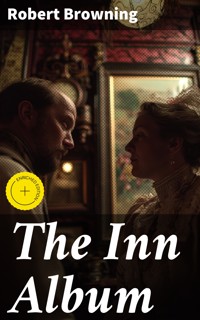
In "The Inn Album," Robert Browning crafts a masterful collection of poems that intricately weave the themes of love, societal observation, and the poetic journey itself. Written in Browning's characteristic dramatic monologue style, each piece serves as a dialogue, revealing the complexities of human emotion and moral dilemmas. The work reflects the transitional period of the Victorian era, filled with a nuanced understanding of both personal introspection and societal pressures, making it relevant in the context of Browning's overall oeuvre and the broader literary movements of his time. Robert Browning, an emblematic figure of Victorian poetry, was deeply influenced by the cultural and philosophical currents of his era. His experiences in Florence and interactions with fellow poets and intellectuals, such as Elizabeth Barrett Browning, shaped much of his thematic approach. "The Inn Album" reflects the depth of his emotional landscape and his ability to draw on personal and shared narratives, creating a bridge between the poet's own life and the universal experience of humanity. For readers seeking an enriching exploration of the human condition through vivid characterizations and contemplative themes, "The Inn Album" is a compelling choice. Browning's profound insights and exceptional craftsmanship invite readers to reflect deeply, making this collection a valuable addition to any literary exploration. In this enriched edition, we have carefully created added value for your reading experience: - A succinct Introduction situates the work's timeless appeal and themes. - The Synopsis outlines the central plot, highlighting key developments without spoiling critical twists. - A detailed Historical Context immerses you in the era's events and influences that shaped the writing. - An Author Biography reveals milestones in the author's life, illuminating the personal insights behind the text. - A thorough Analysis dissects symbols, motifs, and character arcs to unearth underlying meanings. - Reflection questions prompt you to engage personally with the work's messages, connecting them to modern life. - Hand‐picked Memorable Quotes shine a spotlight on moments of literary brilliance. - Interactive footnotes clarify unusual references, historical allusions, and archaic phrases for an effortless, more informed read.
Das E-Book können Sie in Legimi-Apps oder einer beliebigen App lesen, die das folgende Format unterstützen:
Veröffentlichungsjahr: 2021
Ähnliche


The Inn Album
Table of Contents
Introduction
At a quiet country inn, past sins refuse to stay checked at the door. Robert Browning builds his verse narrative from a confined space and a charged occasion, letting voices collide until memory, desire, and conscience spark into flame. The album of the title, a repository of signatures and impressions, becomes an emblem of how traces linger and incriminate. In this setting, the ordinary rituals of hospitality frame extraordinary moral inquiry. Conversation is the engine, but what matters is the unspoken pressure beneath each line: the gulf between public self and private reckoning, and the price of trying to bridge it.
The Inn Album stands as a classic because it fuses Browning’s mature dramatic craft with an unflinching psychological lens, compressing a social world into a handful of rooms and voices. It exemplifies the Victorian drive to test ideals against hard circumstance while anticipating modern explorations of interiority and unreliable narration. Scholars and writers have long looked to Browning’s techniques—his layered speakers, his forensic attention to motive—as foundations for later developments in narrative poetry and psychological fiction. The poem’s durable vitality lies in its method: it does not preach; it stages, inviting readers to weigh testimony, sift evidence, and render judgment.
Written by Robert Browning and first published in 1875, The Inn Album belongs to his late Victorian period, after the vast achievement of The Ring and the Book. It is a long dramatic poem, unfolding largely through dialogue and monologue in a country inn. Two gentlemen arrive; chance and recognition draw past and present into uneasy proximity. What follows is an intricate series of conversations, confrontations, and recollections that probe the ethical contours of power, affection, and responsibility. Browning’s intention is not to recount events for their own sake but to examine how people narrate themselves—what they admit, what they conceal, and how language performs both.
Browning’s purpose here is diagnostic rather than decorative: he uses speech as a stethoscope pressed to the heart of motive. The inn confines the action, but the poem ranges widely across legal, social, and spiritual terrains, testing how codes of honor, class assumptions, and personal vows bear under strain. The album, as a concrete book of traces, mirrors the poem itself—an archive of utterance where signatures masquerade as selves. By setting present talk against earlier inscriptions, Browning interrogates the durability of reputation and the fragility of memory. Without disclosing outcomes, one can say the poem tracks moral choices to their inward consequences.
Formally, The Inn Album is a play without a stage, the dramatic unbound from proscenium yet retaining entrances, exits, turns, and revelations. Browning orchestrates shifts in tempo and tone with a director’s tact, moving from banter to accusation, from courtesy to candor, as swiftly as a door opens or a glance hardens. Scenes hinge on small physical acts—a page turned, a step paused, an object noticed—that trigger floods of recollection. The result is a choreography of talk where present time continually negotiates with what refuses to be past. The inn’s threshold becomes a moral threshold, and crossing it cannot be undone.
The poem’s language is vigorous, flexible, and exacting. Browning’s unrhymed dramatic verse accommodates interruption, ellipsis, and sudden reversal; it mimics thought as it accelerates, stalls, or doubles back. His diction ranges from colloquial to juridical, from the idioms of business to the cadences of prayer, reflecting a society in which money, law, and faith jostle for authority. Imagery coheres around objects and spaces—the album, the parlors, the grounds—so that place itself argues. Metaphors arrive as tools, not ornament, sharpening debate and exposing shifts in power. The reader hears argument as action: persuasion, evasion, confession, and the uneasy silence that follows.
Characters disclose themselves less by what they declare than by how they frame their claims. Browning is master of the self-justifying voice that inadvertently reveals its fault lines. The poem gathers types—worldly success and wounded idealism, calculation and candor—yet refuses neat oppositions. Social deference speaks one way; raw need another. The result is moral chiaroscuro: the bright surfaces of good breeding set against darker recesses of fear, shame, and longing. Because names and titles matter less than stances and habits of speech, the poem asks readers to listen for the decisions embedded in diction, and to judge character not by pedigree but by pattern.
As a late work, The Inn Album consolidates Browning’s innovations and extends his influence. It participates in the English tradition of the verse narrative while pressing that form toward the psychological densities later prized by novelists and modern poets. Its economy of setting and expansiveness of mind made it a touchstone for critics tracing how Victorian poetry absorbed theatrical technique without becoming mere closet drama. Though less frequently cited than some of Browning’s shorter monologues, it has sustained attention for its compositional daring and ethical reach. In literary history, it exemplifies the poet’s shift from picturesque subject matter to analytic, forensic inquiry.
Reading The Inn Album is less like following a plotted arc than like attending a trial in which testimony accumulates along competing lines. The pleasure lies in discerning subtext, noting when a courtesy veils a threat, or when a remembered detail destabilizes a practiced defense. Browning rewards alertness to echoes: a phrase returned with a new inflection, an image reversed under pressure. The album itself encourages this practice of rereading, as inscriptions invite comparison with current claims. The poem thus becomes a laboratory for critical listening, training readers not only to track events but to register the ethical temperature of speech.
The book’s themes remain bracing. It considers how power bends the field of choice, how affection can be mixed with ambition, and how social scripts constrain what people can admit in public while intensifying what they demand in private. It probes the economies of reputation—who controls the narrative, who pays, and how—and tests the limits of restitution when harm has been done. Questions of consent, complicity, and coercion surface not as abstractions but as pressures felt in rooms where doors may close or open unexpectedly. Browning’s concern is not verdict alone, but the formation of conscience under the weight of consequence.
For contemporary readers, The Inn Album speaks with unsettling clarity to a culture fixated on image, testimony, and the archives we leave behind. In an age of digital traces, the motif of an album filled with signatures and moments resonates as an early meditation on how records outlast intentions. The poem’s attention to public figures and private damage feels current, as does its skepticism about tidy resolutions. Its blend of legalism and lyric, of scene craft and introspection, anticipates hybrid forms that dominate today’s storytelling. Most of all, its insistence that words are deeds maintains urgent relevance.
To enter The Inn Album is to encounter a concentrated field of moral weather: bright talk, gathering clouds, and the clear air that follows recognition. Browning distills a society’s anxieties into a handful of voices and an emblematic book where memory writes and overwrites itself. The result is a classic that endures for its taut architecture, its psychological acuity, and its fierce respect for the reader’s intelligence. By marrying the resources of drama to the rigor of verse, Browning makes persuasion itself the plot. That is why this work continues to engage new audiences—searching, challenging, and, finally, unforgettable.
Synopsis
The Inn Album is a long dramatic poem set at a country inn during a hunting season. Guests drift through its public rooms and leave verses and sketches in the inn album that gives the work its title and a concrete device for recollection. Two young gentlemen arrive: a passionate lover and his more measured friend, who often frames what the reader hears. They turn pages, read signatures and epigrams, and talk about fame, feeling, and fortune while waiting for the day’s sporting party. The mood balances light social bustle with hints of gravity, as conversation touches on matters beyond amusement.
As the two men settle in, their exchanges sketch the younger man’s entanglement with a married lady connected to the district. He believes chance and custom will bring her to the inn and nourish hopes he scarcely conceals. His friend urges caution, invoking propriety and the hazards of public talk that the album symbolizes. Threaded through their dialogue are remarks about a seasoned public figure, recently disgraced yet socially resilient, expected among the hunters. The poem uses these anticipations to establish a field of forces: desire, duty, and self-interest, all observed within a communal space where written traces outlive spoken vows.
The older statesman soon appears, polished in manner and frank in cynicism. He converses with the young men and outlines the arc of a career damaged by scandal and debt, tempered by a practiced ability to turn situations to advantage. A story emerges of a past attachment to a woman whose trust he exploited and then relinquished, leaving delicate documents and damaged confidence in his wake. He hints at plans to repair position through a strategic marriage and the careful retrieval or neutralization of compromising papers. The inn album’s pages mirror his art of self-presentation, half confession and half plausible narrative.
Later the lady herself arrives, poised between composure and inward strain. Her marriage to a powerful lord has given her standing, yet it rests on arrangements that require vigilance. In cautious dialogue with the statesman, she revisits the earlier episode that shaped both their futures, insisting on her version of facts and the rights due to her dignity. Briefly and discreetly, channels of communication open: notes are exchanged, messages implied in verses, glances observed by others. Browning stages these scenes through alternating voices, allowing overlapping testimonies to present the same incidents from different angles without deciding which account commands unquestioned authority.
The younger man’s devotion intensifies as proximity reveals both possibility and constraint. His friend remains a tempering presence, noting how impulses look once inscribed and reread by those not party to them. Practical matters surface alongside passion: debts, securities, and instruments that bind individuals as tightly as oaths. The statesman maneuvers with practiced tact, indicating how a misplaced letter or unsecured bond may govern outcomes more surely than avowals of love. Meanwhile, the hunt frames the day with fanfares and departures, its structured chase echoing the indoor pursuit of advantage, where the scent is a rumor and the quarry is a reputation.
As plans take shape, every gesture acquires weight. The lover contemplates decisive steps that would redefine his life; the lady weighs a course that must reconcile memory, honor, and the risks of exposure; the statesman seeks to convert uncertainty into leverage. A sudden arrival tightens scrutiny, bringing the lady’s husband into view and pressing private understandings into public light. Misread signs, ambiguous couplets in the album, and the circulation of sealed papers unsettle alliances. Doors open and close on brief meetings that alter intentions. The tempo quickens toward open confrontation, not yet disclosing its result, but making clear that compromise will not suffice.
The narrative passes through a sequence of interviews in which letters are demanded, explanations contested, and the authority of written proof set against spoken character. Accusations touch on fraud and concealment, while appeals to chivalry and justice answer in turn. The album’s trivial wit now resembles a register of witness, yet even witnesses disagree. The lover, the lady, and the statesman each claim a coherent story, and each story threatens another’s safety. The pressure resolves in a sudden crisis whose immediate details the poem withholds from easy summary, signaling only that words have become actions and that consequences can no longer be postponed.
After the shock, voices return to assess what can be told and what must remain inference. The friend resumes his mediating role, marking the distance between what he saw, what he heard reported, and what the written remnants suggest. Positions alter: prospects shift for public men, marriages face recalibration, and documents change hands in ways that affect more than sentiment. The inn, a place of passage, becomes a site where character is calculated and recorded. The album, once a harmless entertainment for guests, now seems to hold fragile claims to truth, as if marginal jests and hurried stanzas could determine how a day is remembered.
The poem closes by returning to its central tensions: appearance and reality, private feeling and public form, the commerce of honor, and the uses of artful speech. It does not issue verdicts but presents how reputations are built and undone by the interplay of memory, testimony, and the material evidence of writing. The country inn serves as a temporary stage on which social actors try their parts; the album remains as a surviving prop, suggestive yet unreliable. Within this frame, The Inn Album conveys a world where stories people make about themselves are instruments that guide, and sometimes misguide, their fate.
Historical Context
Robert Browning situates The Inn Album in contemporary Victorian England, most plausibly in the first half of the 1870s, when the poet composed and published it (1875). The dramatic situation unfolds in and around a provincial English inn, a space where gentry, military men, and upwardly mobile professionals crossed paths during hunting seasons and country-house visits. The setting presupposes an England tied together by dense rail links and a print culture eager for scandal. Political power alternated between William Ewart Gladstone and Benjamin Disraeli, and debates over marriage, property, electoral integrity, and the press framed elite and middle-class life.
The inn functions as a liminal site connecting city and countryside, the law courts and the drawing room, commerce and landed tradition. It reflects a society regulated by modern legal codes yet governed by inherited codes of honor. The period was marked by the consolidation of national markets, the expanding authority of London finance, and the professionalization of law and policing. Socially, late-Victorian anxieties about female respectability, male reputation, and the exposure of private conduct to public scrutiny hung over every liaison. This environment supplies the poem with its moral tensions, from compromised marriages to strategic calculations about status.
The single most consequential historical development shaping Browning’s subject is the transformation of British divorce and marriage law. The Matrimonial Causes Act of 1857 transferred jurisdiction over divorce from ecclesiastical to civil courts, creating a new Court for Divorce and Matrimonial Causes in London. Before 1857, full divorce typically required a costly private Act of Parliament. After 1857, men could petition on the ground of a wife’s adultery, while women faced a higher bar, requiring adultery plus aggravating offenses such as cruelty, bigamy, or desertion. The Act also instituted judicial separation and made questions of custody and maintenance justiciable. The legal reforms stood on earlier agitation, notably Caroline Norton’s campaigns in the 1830s and 1840s that yielded the Custody of Infants Act (1839) and influenced debates culminating in 1857. Public fascination with scandal deepened with the Yelverton Marriage Case (1861–1864), in which Major William Charles Yelverton’s purported irregular marriages to Maria Theresa Longworth in Scotland and Ireland were litigated across jurisdictions, ultimately being invalidated by the House of Lords in 1864. Even more sensational was the Mordaunt case (1869–1870), a divorce suit brought by Sir Charles Mordaunt against Lady Mordaunt that drew the Prince of Wales into the witness box in February 1870. Newspapers covered these proceedings in exhaustive detail, intertwining law, celebrity, and morality. The Inn Album mirrors this legal-moral landscape: its focus on compromised relationships, calculations about reputation, and the dread of exposure presuppose a public sphere where marital misconduct could be tried both in court and in print. The poem’s strategic conversations enact the new reality that private liaisons had measurable legal and financial consequences, with outcomes hinging on evidence, testimony, and the balance of credibility.
Closely related were changes in women’s property rights. Under common-law coverture, a married woman’s personal property and earnings were absorbed into her husband’s control. The Married Women’s Property Act of 1870 allowed wives to keep earnings and certain investments, and to sue for unpaid wages; the more sweeping Act of 1882 subsequently enabled married women to own, buy, and sell property in their own name. In the 1870s, however, many women remained economically vulnerable. The Inn Album’s depiction of bargaining within relationships reflects the period’s legal asymmetries, where reputational damage could be catastrophic and financial dependence shaped choices.
The Second Reform Act (1867) expanded the male electorate in boroughs by enfranchising many urban householders, roughly doubling voters from about 1.36 million to around 2.5 million. It reconfigured political courting of the middle and skilled working classes and heightened concern over electoral corruption, addressed further by the Ballot Act (1872) introducing secret voting. Political culture in county towns and market centers turned on influence, patronage, and display. The poem’s worldly calculations and talk of advantage resonate with this milieu of negotiated power, where private leverage and public standing had to be balanced in an era committed, at least nominally, to broader participation.




