


1,99 €
Niedrigster Preis in 30 Tagen: 1,99 €
Niedrigster Preis in 30 Tagen: 1,99 €
Mehr erfahren.
- Herausgeber: DigiCat
- Kategorie: Poesie und Drama
- Sprache: Englisch
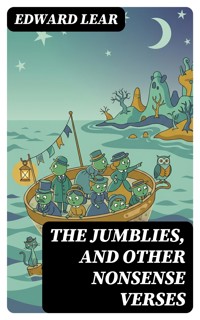
In "The Jumblies, and Other Nonsense Verses," Edward Lear crafts a whimsical tapestry of nonsense poetry that invites readers into a fantastical realm where absurdity reigns. The collection, characterized by its playful rhythms and surreal imagery, exemplifies the Victorian fascination with nonsense literature, echoing themes of adventure and the eccentricity of human experience. Through his distinctive limericks and lyrical verse, Lear elevates nonsense to an art form, blending humor with a subtle critique of societal norms and conventions, as seen in the endearing tale of the Jumblies — a peculiar group who embark on a curious journey aboard a sieve. Edward Lear, a multifaceted artist known for his contributions to literature and illustration, emerged from a background that embraced creativity and eccentricity. Often considered a pioneer of the nonsense genre, Lear's works reflect both his personal experiences and the cultural milieu of 19th-century Britain. His unique perspective was shaped by a childhood of artistic exploration and a deep appreciation for the absurd, which manifests vividly in this collection. Lear's life, marked by travel and encounters with diverse cultures, is mirrored in the imaginative landscapes of his poetry. For readers seeking a delightful escape into the imaginative and the absurd, "The Jumblies, and Other Nonsense Verses" is an essential addition to both children's and adult literature. Lear's ability to blend nonsense with deeper truths encourages joyful engagement with language and invites meaningful reflection on life's peculiarities. This book stands as a testament to Lear's genius and remains a cherished classic that continues to enchant and inspire. In this enriched edition, we have carefully created added value for your reading experience: - A comprehensive Introduction outlines these selected works' unifying features, themes, or stylistic evolutions. - The Author Biography highlights personal milestones and literary influences that shape the entire body of writing. - A Historical Context section situates the works in their broader era—social currents, cultural trends, and key events that underpin their creation. - A concise Synopsis (Selection) offers an accessible overview of the included texts, helping readers navigate plotlines and main ideas without revealing critical twists. - A unified Analysis examines recurring motifs and stylistic hallmarks across the collection, tying the stories together while spotlighting the different work's strengths. - Reflection questions inspire deeper contemplation of the author's overarching message, inviting readers to draw connections among different texts and relate them to modern contexts. - Lastly, our hand‐picked Memorable Quotes distill pivotal lines and turning points, serving as touchstones for the collection's central themes.
Das E-Book können Sie in Legimi-Apps oder einer beliebigen App lesen, die das folgende Format unterstützen:
Veröffentlichungsjahr: 2022
Ähnliche







The Jumblies, and Other Nonsense Verses
Table of Contents
Introduction
This volume, The Jumblies, and Other Nonsense Verses, assembles a focused selection of Edward Lear’s most enduring comic poems, bringing together voyages, courtships, household parables, and whimsical chronicles in a single reading experience. The scope is deliberately representative rather than exhaustive: it gathers signature pieces that shaped Lear’s reputation in the nineteenth century and secured his place in the canon of English nonsense. By placing The Jumblies alongside The Owl and the Pussy-Cat, The Dong with a Luminous Nose, and related works, the collection highlights both variety and coherence—how discrete songs and tales converse through recurring images of travel, companionship, improbable objects, and steadfast cheerfulness in the face of the absurd.
Edward Lear first established himself as a master of nonsense with A Book of Nonsense in 1846, and he continued to publish nonsense songs and tales across later decades. Many poems gathered here originally appeared in his nineteenth-century collections for family reading. The Owl and the Pussy-Cat was published in 1871 in the volume Nonsense Songs, Stories, Botany, and Alphabets, a landmark in his mature style. Without retracing detailed publication histories for every piece, this book situates the poems within that Victorian context of illustrated, recitable verse, where music, rhythm, and memorable characters carried across parlors, nurseries, and public readings.
The texts represented are poems in varied subgenres: narrative songs, ballad-like romances, cataloguing rhymes, and episodic character sketches. There are no plays or essays here; the collection concentrates on verse intended to be spoken or sung. The Introductory piece functions as a proem, tuning the reader’s ear to Lear’s characteristic measures. Incidents in the Life of My Uncle Arly closes the selection with a sequence of droll episodes in verse. Between them unfold voyages, dialogues, and domestic comedies in meter. The diversity of stanza forms demonstrates Lear’s command of sound and pacing, from steady, dancing lines to brisk refrains that invite participation.
Lear’s stylistic hallmarks are unmistakable: buoyant rhythms, nimble rhymes, and a playful traffic in invented names and nonce-words that feel oddly precise even as they resist definition. His prosody often favors quick, tripping measures that mimic steps, oar-strokes, or wheels turning, and he builds momentum through refrain and parallel phrasing. The verse’s logic is exacting at the level of grammar and sequence, even when the scene is impossible, creating an atmosphere where nonsense is not chaos but a different order. That precision encourages recital; the poems reward breath control, clear enunciation, and the joyful attention to how sound shapes sense.
A number of unifying themes run through the present selection. Travel is central: beings cross seas in unlikely craft, circumnavigate made-up capes, or hitch rides on fellow creatures. Hospitality and civility guide many encounters; the poems relish polite greetings, careful agreements, and small rituals of food, dress, and song. Ordinary objects come to life and assume social roles, as in The Broom, The Shovel, The Poker and The Tongs, where household tools suggest a bustling community. The Jumblies sets the tone for adventurous folly pursued with persistence, its premise delighting in the decision to set out despite obvious impracticalities and the world’s doubts.
Companionship and courtship supply another thread. The Owl and the Pussy-Cat presents two travelers who set to sea in affectionate partnership, a premise that has become emblematic of gentle nonsense romance. The Courtship of the Yonghy-Bonghy-Bò stages a fanciful proposal along an invented coast, its dignity and whimsy preserved by formal, songlike stanzas. The Duck and the Kangaroo turns on negotiation and considerate planning between mismatched friends. Across these pieces, what might begin as a joke about difference resolves into scenes of tact, curiosity, and mutual accommodation, suggesting that the improbable can be made hospitable through kindness and shared rhythm.
Lear’s comedy often carries a delicate undertone of wistfulness. The Dong with a Luminous Nose, while unmistakably playful, frames a solitary figure distinguished by a glowing guide, combining visual charm with the suggestion of perseverance amid uncertainty. Incidents in the Life of My Uncle Arly gathers the eccentricities of a beloved relative into episodes that are amusing yet faintly pensive, as if cataloguing the oddities that make a life. Such tonal layering helps explain the poems’ longevity: they entertain immediately while leaving space for reflection about longing, individuality, and the comforts of routine and ritual.
Sound-play is inseparable from Lear’s technique. He delights in catalogues, lists, and food- or clothing-terms that kindle an inventory’s music, as in The New Vestments, where a figure outfits himself in edible attire for comic effect. Calico Pie uses a cumulative design to build expectation and release. The Cummerbund, centering on a garment by name, turns vocabulary itself into a toy. These structures are not merely decorative; they create patterns that help readers remember, recite, and share the poems. In a culture of oral performance, such mnemonic design was—and remains—central to their appeal.
The collection also reflects Victorian curiosity about faraway places and names, sometimes employing terms and settings shaped by that era’s global horizons. Contemporary readers may notice period vocabulary that signals its time. Acknowledging this context need not diminish the poems’ inventive energy; rather, it invites historically aware reading while attending to Lear’s craft. The focus here remains literary: how he transforms borrowed words, fanciful geographies, and ordinary objects into vehicles for rhythm and play, and how the pleasure of sound and pattern can coexist with a modern sensitivity to language and representation.
Lear was an accomplished artist and illustrator, and many of his nonsense poems were originally published with his own drawings. Even without images, the verses conjure scenes with painterly economy: coastlines appear, tools arrange themselves like a family portrait, travelers balance on the line between map and dream. That visual imagination contributes to the poems’ lasting influence on children’s literature, picture-book storytelling, and performance. Their clarity of scene-making has encouraged generations of readers and illustrators to elaborate the worlds suggested by the words, proving that the architecture of a stanza can be as vivid as a sketch.
The arrangement here emphasizes resonance across individual pieces. An Introductory overture invites the reader to catch the beat before embarking with The Jumblies and other voyagers. Midway, tales of affection and polite conversation gather around The Owl and the Pussy-Cat and The Duck and the Kangaroo. Later poems turn toward reflective eccentricity in The Dong with a Luminous Nose and the episodic Uncle Arly. Read consecutively, the sequence traces an arc from outward expedition to inward musing, showing how Lear’s nonsense accommodates both communal singing and solitary wonder without sacrificing clarity, musicality, or comic poise.
As a whole, The Jumblies, and Other Nonsense Verses proposes that impossibility can be approached with courtesy, craft, and courage. These poems are designed to be read aloud, shared across ages, and returned to for the pleasure of their measures and images. They require no special key beyond a willingness to follow their rhythms and grant their premises. In gathering them together, this edition offers a compact map of Lear’s art: generous in spirit, exact in form, and enduring in its invitation to explore. May the journeys, songs, and small ceremonies within refresh the ear and set the imagination cheerfully in motion.
Author Biography
Edward Lear (1812–1888) was an English artist, illustrator, and writer whose playful nonsense verse became a defining feature of Victorian culture. Working across art and letters, he produced delicate landscape paintings alongside poems that revel in neologism, rhythm, and absurdity. He is widely remembered for The Owl and the Pussy-Cat, The Jumblies, and The Dong with a Luminous Nose, works that established a modern tradition of literary nonsense. Yet Lear’s career began in scientific illustration and matured through decades of travel, making him an unusually versatile figure. His enduring appeal lies in the union of precise draftsmanship with a distinctive comic voice.
Raised in London with limited formal schooling, Lear developed as a largely self-taught draughtsman. By his teens he was working professionally, and in the early 1830s he published meticulous studies of birds, including plates of parrots and contributions to John Gould’s ornithological projects. This training in close observation, line, and tone shaped his lifelong habits of sketching from nature. Chronic ill health encouraged independent study and steady, solitary work, but it did not curtail ambition. The discipline of scientific illustration—accuracy, economy, and clarity—fed directly into his later visual style, even when the subject shifted from an eagle or parrot to a moonlit, imaginary sea.
Public recognition arrived early. In the 1840s Lear was invited to Buckingham Palace to give drawing lessons, and he soon turned from zoological plates to landscape art. From the late 1830s onward he traveled widely: Italy, the Balkans and Greece, the Eastern Mediterranean, Egypt, and later India and Ceylon. Sketchbooks, watercolors, and lithographs recorded these journeys, and he published illustrated travel volumes under the general rubric of “Journals of a Landscape Painter.” The same habit of field observation that guided his birds informed these vistas, giving his scenes of ruins, coasts, and mountains a clarity that balanced atmosphere with topographical truth.
Parallel to this serious painting ran an increasingly public comic voice. In the mid-nineteenth century he gathered playful verses and drawings into A Book of Nonsense, popularizing the limerick in English with deadpan pictures and gleefully illogical situations. The tone of the later collection represented here—signaled by the Introductory piece—is genial, musical, and persistently surprising. Calico Pie and Incidents in the Life of My Uncle Arly show his gift for miniature narratives and mock biography, while his accompanying line drawings amplify character and movement. Lear’s nonsensical names and places extend a private lexicon that readers enter with immediate recognition and delight.
In the 1870s Lear’s “nonsense songs” reached their fullest form. The Owl and the Pussy-Cat sets courtship and travel to an irresistibly singable rhythm, while The Jumblies celebrates intrepid folly at sea. The Duck and the Kangaroo turns partnership into comic negotiation; The Courtship of the Yonghy-Bonghy-Bò and The Cummerbund play with exoticized settings and ceremonial speech; The Broom, The Shovel, The Poker and the Tongs animates domestic tools; The New Vestments revels in sartorial excess; and The Dong with a Luminous Nose converts yearning into fable. Across these pieces, meter, refrain, and image work together to stage adventures both absurd and tender.
Lear’s technique fused verbal invention with visual timing. He coined mellifluous names, built refrains that invite recitation, and paced jokes through page turns and small, telling drawings. His line—spare, elastic, and strategic—guides the reader’s eye to expressive hands, improbable vehicles, and serenely smiling faces. A capable musician, he often performed his verses as songs, and that ear for cadence shapes the poems’ lilt. Travel furnished vocabulary and scenery, but the works transform such materials into universal play. Incidents of mock autobiography, as in Uncle Arly, mirror the artist’s own fascination with eccentricity, turning private quirks into broadly comic, humane portraits.
In later years Lear settled in Italy, continued to paint landscapes, and prepared further nonsense collections. He died in 1888 in Sanremo, leaving a legacy that bridges children’s literature, comic verse, and visual art. The poems in this collection remain widely read and frequently recited, their melodies inviting new musical settings and their images inspiring illustrators. Modern nonsense—from playful picture books to surreal comedy—draws on Lear’s blend of exact drawing and extravagantly silly language. His best-known pieces, including The Owl and the Pussy-Cat and The Dong with a Luminous Nose, still travel well: compact voyages where tenderness, rhythm, and wit endure.




