


6,99 €
Mehr erfahren.
- Herausgeber: Open Book Publishers
- Sprache: Englisch
No one has given the polymath Thomas Young (1773–1829) the all-round examination he so richly deserves—until now. Celebrated biographer Andrew Robinson portrays a man who solved mystery after mystery in the face of ridicule and rejection, and never sought fame.
As a physicist, Young challenged the theories of Isaac Newton and proved that light is a wave. As a physician, he showed how the eye focuses and proposed the three-colour theory of vision, only confirmed a century and a half later. As an Egyptologist, he made crucial contributions to deciphering the Rosetta Stone. It is hard to grasp how much Young knew.
This biography is the fascinating story of a driven yet modest hero who cared less about what others thought of him than for the joys of an unbridled pursuit of knowledge—with a new foreword by Martin Rees and a new postscript discussing polymathy in the two centuries since the time of Young. It returns this neglected genius to his proper position in the pantheon of great scientific thinkers.
Das E-Book können Sie in Legimi-Apps oder einer beliebigen App lesen, die das folgende Format unterstützen:
Veröffentlichungsjahr: 2023
Ähnliche











THE LAST MAN WHO KNEW EVERYTHING
The Last Man Who Knew Everything
Thomas Young, the Anonymous Polymath Who Proved Newton Wrong, Explained How We See, Cured the Sick, and Deciphered the Rosetta Stone, Among Other Feats of Genius
Andrew Robinson
https://www.openbookpublishers.com
The first edition of The Last Man Who Knew Everything was published in 2006 by Pi Press in the United States and Oneworld Publications in the United Kingdom.
©2023 Andrew Robinson ©2023 Foreword Martin Rees
This work is licensed under a Creative Commons Attribution-NonCommercial-NoDerivatives 4.0 International license (CC BY-NC 4.0). This license allows you to share, copy, distribute and transmit the work for non-commercial purposes, providing attribution is made to the author (but not in any way that suggests that he endorses you or your use of the work). Attribution should include the following information:
Andrew Robinson, The Last Man Who Knew Everything: Thomas Young. Cambridge, UK: Open Book Publishers, 2023, https://doi.org/10.11647/OBP.0344
Further details about CC BY-NC licenses are available at https://creativecommons.org/licenses/by-nc/4.0/.
All external links were active at the time of publication unless otherwise stated and have been archived via the Internet Archive Wayback Machine at https://archive.org/web. Copyright and permissions for the reuse of many of the images included in this publication differ from the above. This information is provided in the captions and in the list of illustrations. Every effort has been made to identify and contact copyright holders and any omission or error will be corrected if notification is made to the publisher.
Digital material and resources associated with this volume are available at https://doi.org/10.11647/OBP.0344#resources.
ISBN Paperback: 978-1-80511-018-7
ISBN Hardback: 978-1-80511-019-4
ISBN Digital (PDF): 978-1-80511-020-0
ISBN Digital ebook (EPUB): 978-1-80511-021-7
ISBN Digital ebook (AZW3): 978-1-80511-022-4
ISBN XML: 978-1-80511-023-1
ISBN HTML: 978-1-80511-024-8
DOI: 10.11647/OBP.0344
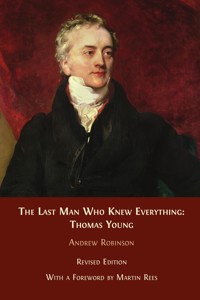
Cover: portrait of Thomas Young by Sir Thomas Lawrence, 1820s (copy by Henry Perronet Briggs in the Royal Society, London), courtesy of The Bridgeman Art Library, https://www.bridgemanimages.com/en/briggs/sir-thomas-young-md-frs/nomedium/asset/5571
Cover design: Jeevanjot Kaur Nagpal.
For Dipli,
‘con amore’
‘An Explanation of the Hieroglyphics of the Stone of Rosetta’ by Thomas Young, which forms part of his Egyptological manuscripts kept at the British Library in London, dating from 1814–1829. ©British Library
Contents
Foreword ix
Martin Rees
Preface xv
Introduction xvii
1. Child Prodigy 1
2. Fellow of the Royal Society 19
3. Itinerant Medical Student 29
4. ‘Phenomenon’ Young 45
5. Physician of Vision 57
6. Royal Institution Lecturer 75
7. Let There Be Light Waves 85
8. ‘Natural Philosophy and the Mechanical Arts’ 105
9. Dr Thomas Young, M.D., F.R.C.P. 123
10. Reading the Rosetta Stone 135
11. Waves of Enlightenment 157
12. Walking Encyclopaedia 171
13. In the Public Interest 181
14. Grand Tour 193
15. Duelling with Champollion 201
16. A Universal Man 215
Postscript: Polymathy Then—and Now? 233
Bibliography 243
List of Illustrations 251
Index 253
Foreword
Martin Rees
© 2023 Martin Rees, CC BY-NC 4.0 https://doi.org/10.11647/OBP.0344.18
I welcome this second edition of The Last Man Who Knew Everything. It will allow a new readership to appreciate the achievements of Thomas Young, which are indeed astonishing in their range.
All students of physics are familiar with his classic optical experiments (Young’s slits) that revealed the wave nature of light, and with his definition of elasticity (Young’s modulus). But fewer of them are aware of his diverse discoveries in other sciences—concerning, for example, fluids and vision, stimulated by his training as a physician. Moreover, Young also deserves acclaim as a linguist: he understood many languages, ancient and modern; he analysed the vocabulary and grammar of some four hundred languages, and is especially celebrated for his role in deciphering the scripts on the Rosetta Stone. ‘”Physicist, physician and Egyptologist” is how encyclopaedias struggle to summarise Young’, as the biography notes. ‘Physics and physiology were his forte, physic his profession, Egyptology his penchant. But his expertise extended well beyond these vast (even in his day) fields of knowledge.’ His writings were literally encyclopaedic—he ranks as one of the supreme polymaths.
Young was remarkable from his early childhood in rural England in the 1770s. The book’s first chapter recounts how he was preternaturally precocious in languages and in mathematics. Some ‘child geniuses’ burn out in adulthood, but Young emphatically did not. His youthful accomplishments were a precursor of the brilliance and breadth he displayed throughout his life—which ended in 1829 when he was only fifty-five.
An important advantage for him was that London, at the turn of the eighteenth century, offered a culturally vibrant atmosphere. As described in Richard Holmes’s fascinating book about science in this Romantic period, The Age of Wonder, there was an intermingling between the sciences—especially the fruits of exploration by Captain James Cook, Joseph Banks, and others—and the creativity of poets like Samuel Taylor Coleridge and Percy Bysshe Shelley. There was no split between ‘two cultures’, but instead boisterous interactions between scientists, literati and explorers.
This spirit of enquiry dated back at least to the beginnings of the Royal Society in 1660. The Society’s founder members—Christopher Wren, Robert Hooke, Samuel Pepys and other ‘ingenious and curious gentlemen’ (as they described themselves)—met regularly. Their motto was to accept nothing on authority. They did experiments, and they peered through newly invented telescopes and microscopes; they dissected weird animals. One experiment involved the transfusion of blood from a sheep to a man (who survived). However, as well as indulging their curiosity, they immersed themselves in the practical agenda of their era: improving navigation, exploring the New World, and rebuilding London after the Great Fire. Some of them were deeply religious, but their scientific inspiration was Francis Bacon, who envisioned two goals to which scientists should aspire: to be ‘merchants of light’, and to promote ‘the relief of man’s estate’. A century or so later, the American Philosophical Society was founded in Philadelphia for the ‘promotion of useful knowledge’, with the polymathic Benjamin Franklin as its first president.
The eighteenth-century Royal Society encouraged young talent. Young was elected a fellow in 1794 after presenting a paper on the structure of the human eye. He was only twenty-one, but such early admission to fellowship—and on the basis of just one paper!—was less exceptional then than it would be today.
He remained active in the society for the rest of his life, but it is unlikely to have offered him great stimulus. Indeed, many of the fellows were well-heeled amateurs with zero pretensions to scientific achievement. In the late eighteenth century, the Royal Society—like the Universities of Oxford and Cambridge—was far from vibrant. Thus, the lively interest in science depicted by Holmes led, in the early nineteenth century, to the foundation of other ‘learned societies’. Some were specialised—like the Linnean Society and the Royal Astronomical Society—but one of them, the Royal Institution founded in 1799, genuinely rivalled the breadth of the Royal Society.
The Royal Institution was bankrolled by a hyper-talented but roguish adventurer, Count Rumford: who donated sufficient funds to provide a fine building in Albemarle Street in central London. Rumford’s most famous scientific contribution was his theory of heat. Rather than heat being a substance, ‘caloric’, he realised—by studying the process of boring a metal cannon—that heat was generated by the agitation of atoms and molecules.
Rumford envisaged the institution’s mission as not only research—it had a fine laboratory—but also as dissemination of scientific understanding among the wider population. It was fortunate in the calibre of its first two directors, Humphry Davy and Michael Faraday; both were outstanding scientists but also promoted ‘outreach’, mainly via weekly ‘discourses’ involving lectures which attracted a London elite and continue today, albeit with less allure. Young was one of the first to hold a professorship there, from 1801. Though not a charismatic lecturer like Faraday, his lectures were comprehensive, and their published versions remain an important source for understanding the state of knowledge in that era.
By this time, Young had begun to establish himself as a professional ‘medic’. Though cushioned by a modest inheritance, he was not wealthy enough to be a lifelong ‘gentleman scientist’. He had studied medicine in London and Edinburgh, and pursued further studies in Göttingen and Cambridge during the 1790s. His training helped him to support himself as a physician, but medicine’s time-consuming professional commitments render his scientific achievements all the more remarkable. Throughout, he retained contact with the Royal Society and became its treasurer, and then its foreign secretary in 1804; in his later years he was sounded out about taking the presidency, but declined because he did not relish committee work and official activity.
Nevertheless, he undertook important administrative roles. Pre-eminent among them was secretary of the Board of Longitude and superintendent of its Nautical Almanac, from 1819. This body had, famously, been established in 1714 to offer a prize of £20,000 to the person who could devise methods of determining (within a specified precision) the longitude of a vessel at sea. Following the success of John Harrison, a carpenter and clockmaker from Yorkshire, the board remained in existence for more than a century—funding expeditions and novel scientific instruments; it was, in essence, the first ‘research council’. Meanwhile, its annual Nautical Almanac tabulated the positions of heavenly bodies. High-precision data were of course crucial for astronomers; but navigators at sea wanted something simpler and more robust. Their inevitable divergence of view proved deeply contentious, and led to the dissolution of the Board of Longitude in 1828—a stressful diversion in Young’s later years.
This ‘split’ between experts was an early instance of the balkanisation of the map of learning: a trend that has continued to the present day. Scientific understanding has vastly increased, and most research involves elaborate equipment and team efforts; the frontiers of our understanding are more extended and harder to reach. That is why we can never expect modern scientific polymaths who can range as widely across frontiers as Young. As the book notes, quoting the words of the great nineteenth-century physicist and physiologist Hermann Helmholtz (with whom Young shares posthumous credit for the three-colour theory of colour vision), Young was:
one of the most acute men who ever lived, but had the misfortune to be too far in advance of his contemporaries. They looked on him with astonishment, but could not follow his bold speculations, and thus a mass of his important thoughts remained buried and forgotten in the
Transactions
of the Royal Society until a later generation by slow degrees arrived at the rediscovery of his discoveries, and came to appreciate the force of his arguments and the accuracy of his conclusions.
Of course, in the early 1800s, some technologies and crafts were already professionalised and had incrementally advanced over several centuries: cathedrals, ships and bridges were built with a sophistication still amazing us today. Steam engines were improved without formal input from the subject of ‘thermodynamics’. But far less intellectual effort was deployed in what we would now call ‘science’—understanding the physical world and its governing principles—than in the ‘useful arts’. Indeed the word ‘scientist’ did not exist in the time of Young; it was introduced in 1833, by William Whewell: a polymath and a scholarly grandee at Cambridge, who nevertheless opposed the formal teaching of science, averring that the young should focus on the eternal verities of mathematics and theology. Only later did science become an established profession—and a proper part of the Cambridge curriculum; leading to the symbiosis between ‘pure’ and ‘applied’ science whose consequences have shaped the modern world.
For all his formidable talent and erudition, and his prescience, Young was a modest and genial human being. One can imagine him being genuinely supportive and comforting to his medical patients, even though he would have known better than anyone how little could be achieved by the medicine of his time—based, as it was, on the anatomical knowledge and dexterity of surgeons, and on the potions of apothecaries—in an era before the invention of anaesthetics or the emergence of the ‘germ theory’ of disease.
But being a polymath, Young has tended to be underappreciated by posterity, both for his achievements and for his personality. As a contemporary Oxford historian with an interest in polymathy, Alexander Murray—also quoted in the book—explains:
History is unkind to polymaths. No biographer will readily tackle a subject whose range of skills far exceeds his own, while the rest of us, with or without biographies to read, have no mental ‘slot’ in which to keep a polymath’s memory fresh. So the polymath gets forgotten, or, at best, squashed into a category we
can
recognise, in the way Goethe is remembered as a poet, despite his claim to have been a scientist, or Hume as a philosopher, for all the six dumpy volumes of his
History of England
.
We should be grateful that Andrew Robinson has surmounted these challenges. By portraying Thomas Young from a broad and engaging perspective, he brings a great polymath to life in his biography.
Preface
© 2023 Andrew Robinson, CC BY-NC 4.0 https://doi.org/10.11647/OBP.0344.19
Versatile people have always fascinated me as a biographer. Most recently, there was Albert Einstein, who, as everyone knows, fathered diverse new fields of science, but who also influenced some crucial areas of international politics. Before Einstein, Michael Ventris, a professional architect who in his spare time deciphered Linear B, the earliest readable European writing system, and became revered by archaeologists. And before Ventris, two prodigious Indians, the Nobel-prize-winning writer Rabindranath Tagore and the Oscar-winning film-maker Satyajit Ray, both of whom were intensely creative in areas outside literature and cinema.
But I must admit that Thomas Young (1773–1829), for sheer range of expertise, beats them all. Not only did he make pioneering contributions to physics (the wave theory of light) and engineering (the modulus of elasticity), to physiology (the mechanism of vision) and to Egyptology (the decipherment of the hieroglyphs), but he was also a distinguished physician, a major scholar of ancient Greek, a phenomenal linguist, and an authoritative writer on all manner of other subjects, from carpentry and music to life insurance and ocean tides. In an exhibition on Young arranged by London’s Science Museum for his bicentenary in 1973, the organisers went so far as to state: ‘Young probably had a wider range of creative learning than any other Englishman in history. He made discoveries in nearly every field he studied’.[1]
This makes Young a tough subject for a biographer, and perhaps that is why there appeared no new biography of him for half a century. I contemplated writing one for over a decade, after first encountering Young while researching a book, The Story of Writing, and I became further committed to the idea while writing another book, Lost Languages, on archaeological decipherment, a few years later. But having thought about the challenge, I decided it would be better to write an introduction to Young for a new audience, rather than attempting a full biography. To cover his work and life in detail and with authority is probably impossible for a single writer. This book therefore dwells only on the highlights of his polymathic career, though it aims to touch on every interesting and enduring aspect of Young.
I should like to thank the following for their help. Nicholas Wade, emeritus professor of visual psychology at Dundee, procured for me a four-volume set of the recent facsimile edition of Young’s most famous work, A Course of Lectures on Natural Philosophy and the Mechanical Arts, for which he wrote an introduction. Christina Riggs, former curator of Egyptology at the Manchester Museum, advised me on Horapollo’s hieroglyphs. David Sprigings, former consultant cardiologist at Northampton General Hospital, encouraged me to trace the post-mortem examination of Young to the library of St George’s Hospital, London (where Young was a physician), and provided an expert opinion on the cause of his early death. Simon Young, son of the physiologist J. Z. Young, and great-great-great-grandnephew of Thomas Young, kindly gave me permission to reproduce his copy of the portrait of his ancestor painted by Sir Thomas Lawrence. Finally, I am grateful to my original publisher, Stephen Morrow at Pi Press, for getting excited by Young’s versatility, too; and to Rupert Gatti and Alessandra Tosi at Open Book Publishers.
The book was first published in 2006. This revised edition contains a foreword by Sir Martin Rees, a generous spirit, plus a postscript, in which I consider at some length the phenomenon of polymathy in the two-and-a-half centuries since the birth of Young.
London, March 2023
[1] Unsigned note for a Science Museum loan circulation exhibition, 1973 (copy in the J. Z. Young papers at University College London).
Introduction
© 2023 Andrew Robinson, CC BY-NC 4.0 https://doi.org/10.11647/OBP.0344.20
Fortunate
Newton, happy childhood of science! […] Nature to him was an open book, whose letters he could read without effort. […]
Reflection,
refraction, the formation of images by lenses, the mode of operation of the eye, the spectral decomposition and the recomposition of the different kinds of light, the invention of the reflecting telescope, the first foundations of
colour theory, the elementary theory of the rainbow pass by us in procession, and finally come his observations of the colours of thin films as the origin of the next great theoretical advance, which had to await, over a hundred years, the coming of Thomas Young.
Albert Einstein, ‘Foreword’ to Isaac Newton’s Opticks, 4th edn. 1931 [2]
Open any book on the science of light and vision, and you cannot miss the name of Thomas Young. At the very beginning of the nineteenth century, Young first demonstrated the interference of light by shining a beam of light through two narrow slits and observing the pattern the split beam created on a screen. ‘Young’s fringes’, as they became known, showed that light added to light could produce more light—or, most surprisingly, darkness. This pattern could be satisfactorily explained only on the basis that light was an ‘undulation’—that is, a wave—not a stream of ‘corpuscles’—that is, particles—as maintained by Isaac Newton in his deeply influential Opticks, published a century before Young. Over the next few decades, the undulatory theory of light totally supplanted Newton’s corpuscular theory; and in the second half of the century, light was reconceived purely as an electromagnetic wave. Then, in 1905, Albert Einstein applied the quantum theory to radiation and discovered that light must be a stream of particles after all; shortly after, he became the first to make the revolutionary suggestion that both a wave theory and a particle theory of light could be correct. Today, a century after Einstein’s discovery, this has become the scientific orthodoxy, however puzzling: light, somehow, behaves as both a wave and a particle, depending on how you measure it. And Young’s celebrated double-slits have become much more than a historically important experiment, since they can be used to demonstrate both wave and particle behaviour. Repeated time and again by physicists with unimaginably more sophisticated and sensitive apparatus than Young’s, the double-slit experiment encapsulates, said the physicist Richard Feynman, the ‘heart of quantum mechanics’, its ‘only mystery’.[3]
But it is not only the physicists who claim Young as one of their own. He has an honoured place in engineering, physiology and philology, too. Open any engineering textbook and you cannot fail to encounter ‘Young’s modulus’, a fundamental measure of elasticity derived from Hooke’s law of stress and strain; Young’s modulus is the ratio of the stress acting on a substance to the strain produced. Open any book on the eye, and Young will be there as the physiologist who first explained how the eye accommodates (in other words, focuses on objects at varying distances); who discovered the phenomenon of astigmatism; and, most important of all, who first proposed the three-colour theory of how the retina responds to light, which was finally confirmed experimentally in 1959. Lastly, open any book on the languages and scripts of ancient Egypt, and Young is credited for some seminal detective work in deciphering the Rosetta Stone and the hieroglyphic script, which led to Jean-François Champollion’s triumphant breakthrough in 1822. Even this great variety of achievements does not exhaust all that Young is remembered for, almost two centuries after his death in his mid-fifties in 1829. Far less important, though still noteworthy, are: ‘Young’s rule’ in medicine, a rule of thumb for deciding how to adjust an adult drug dosage for children; ‘Young’s temperament’ in music, a way of tuning keyboard instruments, such as harpsichords; and Young’s principles of life insurance.
‘Physicist, physician and Egyptologist’ is how encyclopaedias struggle to summarise Young. Physics and physiology were his forte, physic his profession, Egyptology his penchant. But his expertise extended well beyond these vast (even in his day) fields of knowledge. While not yet thirty years old, in 1802–1803, as professor of natural philosophy at the newly founded Royal Institution in London, Young gave a course of lectures covering virtually all of known science, which has never been surpassed in scope and boldness of insight, even by Michael Faraday, the brightest luminary of the Royal Institution; as a result, Young’s lectures were reprinted in 2002. No wonder he was elected a fellow of the Royal Society when he was barely twenty-one, at the very outset of his medical training (and became its foreign secretary at thirty and, had he wished it, would most probably have been elected the society’s president in 1827). If Nobel prizes had existed in the nineteenth century, Young would unquestionably have received one—perhaps even two—Nobels: in physics for his work on the wave theory of light, and in physiology for his studies of the human eye and vision.
This was a man who, when pressed to contribute articles to a new edition of the Encyclopaedia Britannicain 1816, offered the following subjects: alphabet, annuities, attraction, capillary action, cohesion, colour, dew, Egypt, eye, focus, friction, halo, hieroglyphic, hydraulics, motion, resistance, ship, sound, strength, tides, waves and ‘anything of a medical nature’.[4] Young was not boasting (he seems never to have boasted): for example, regarding annuities, he was a salaried ‘inspector of calculations’ and physician for the Palladium Life Insurance Company; and regarding ships, he was an adviser to the Admiralty on methods of ship-building, secretary of the Board of Longitude, and superintendent of the vital Nautical Almanac. He did not bother to highlight to the encyclopaedia’s editor his polyglot knowledge of ancient and modern languages and of classical literature, especially ancient Greek (which helped him with the Rosetta Stone). In the event, he wrote authoritatively for the Britannicaon many of the aforementioned subjects, plus articles on ‘Bathing’, ‘Bridge’, ‘Carpentry’, ‘Double refraction’, ‘Fluents’ (integrals), ‘Herculaneum’, ‘Languages’, ‘Life preservers’, ‘Road-making’, ‘Steam engine’ and ‘Weights and measures’, as well as numerous biographies of eminent scientists and mathematicians and others such as his friend, the still-celebrated classical scholar Richard Porson. Young’s three articles on ‘Egypt’, ‘Languages’ and ‘Tides’ were far more than mere surveys of existing knowledge; they broke new ground, such as his coining of the term Indo-European to describe the family of languages first discovered in the 1780s, after he had compared the vocabulary and grammar of some four hundred languages.
A peculiarity of Young was that most of these contributions were anonymous; he feared that if he made public his multifarious scientific interests they would scare patients away from his medical practice. His instinct here was sound, even if he made too much of it: attempting to remain anonymous as a writer for most of his thirties and forties. In the class-conscious, comparatively unscientific, quack-infested medical world of his age—that of late Georgian London in the first two decades of the nineteenth century—Young’s dazzling array of interests outside physic might well have given the impression of a doctor not wholly committed to his patients. Possibly the very breadth of his scientific knowledge may have sapped his confidence as a physician, given the primitive nature of medicine as a science. He certainly felt unable to advocate the vigorous medical treatments—copious blood-letting, sweating, dieting and so on—favoured by his confident medical contemporaries (and often by patients themselves), preferring to adopt more rational approaches to diseases. And while he was generally liked by men and charmed women, his reticence and modesty seem to have prevented him from exercising the ‘bedside manner’ expected of a consultant physician, a profession that demanded in his day a show of over-confidence to conceal chasms of ignorance. Whatever the reasons were, despite Young’s being a respected physician at a famous London hospital, St George’s, with prestigious medical lectures and publications to his credit, he never acquired the private practice that his scientific reputation should have warranted.
One of his letters from this time gives a fine idea of the variety of his interests and activities and some hints of the mind and personality behind them. It was written in his house in central London, just north of Oxford Street (today commemorated with a blue plaque), late in the evening of an unusually gloomy day in December 1820, when Young was 47 years old; and it was addressed to his oldest friend, the antiquary and politician Hudson Gurney: a fabulously wealthy man, who had confessed to Young in a letter that he was suffering from ennui and failure of resolution. (‘Hudson’s ambition was to write one good poem. Instead, he inadvertently became a multi-millionaire’, notes a historian of the Gurney family.[5]) Young replies to Gurney:
About this time last year I was giving myself a holiday of a few weeks, and I fell into a sort of fidgety languor and fancied I was growing old; it went off very soon however, and I am convinced there is no remedy so effectual for this and other intellectual diseases as plenty of employment, without over-fatigue or anxiety. This autumn I have been in fact going on with the work which I was then almost frightened at having undertaken, ‘Elementary illustrations of the celestial mechanics of Laplace’, and am already printing the first part of it—being only a translation with a commentary, it will do better without my name than with it. I am also writing over again my article on languages in the
Quarterly Review
with many additions for the next supplement of the
Encyclopaedia Britannica
—and a biographical memoir on Lagrange will be almost as long, requiring a list of 100 different papers on the most abstruse parts of the mathematics. I have then the business of the Board of Longitude to manage, and some of the Royal Society. The Arctic expedition is now settled; but we are fitting out our astronomer for the Cape of Good Hope with all his books and instruments, then there is a committee of elegant extracts to consider of the tonnage of ships, appointed by the Royal Society, the Admiralty, the Board of Trade, and the Treasury—which will not take long, but I shall have the onus—then there is my hospital—to speak modestly of my private patients—who are very discreet at this time of the year. By the way, such a day as this would make one glad to be anywhere rather than in London. I was forced to read by the fire and write in the dark at 1 o’clock: for I thought if I had candles I should scarcely have resolution to take my ride. Then I must not forget that I must very shortly fulfil my promise to do a little more to the hieroglyphics, and after one number more I shall be able to judge if the thing is worth continuing or not. […] It is well for me that I have not to live over again; I doubt if I should make so good a use of my time as mere accident has compelled me to do. Many things I could certainly mend, and spare myself both time and trouble: but on the whole, if I had done
very differently
from what I have, I dare say I should have repented
more
than I now do of
anything
—and this is a tolerable retrospect of 40 years of one’s life. […] I have learned more or less perfectly a tolerable variety of things in this world: but there are two things that I have never yet learned, and I suppose I never shall—to get up and to go to bed. It is past 12, and literally Monday morning as I have dated my letter, but I must write for an hour longer.[
6
]
Just how truthful a picture of Young’s life this was, is confirmed by a telling vignette of him from the same period written by one of his younger friends, Mary Somerville: the first woman scientist to win an international reputation in her own right (after whom Somerville College at Oxford is named). In her memoirs, she recalls how she and her husband and another couple (also known to Young) had been stargazing with a telescope until about two o’clock in the morning when they happened to notice a light in the window of Young’s house in nearby Welbeck Street; clearly Dr Young was burning the midnight oil again. Mary’s husband William, a former army doctor and a fellow of the Royal Society, rang the doorbell at No. 48; Dr Young appeared personally in his dressing gown, and they were invited inside to see a piece of Egyptian papyrus which he was then in the midst of translating. It appeared, said their brilliant friend, to be a Ptolemaic horoscope.
The only really accurate label for a man such as Young, apart from the overworked ‘genius’, would have to be ‘polymath’. Or perhaps, ‘Phenomenon’ Young: the nickname given to him by Cambridge University students when he was resident at Emmanuel College in the late 1790s—apparently half in respect and half in derision.
Many of Young’s distinguished contemporaries were willing to concede him the status of a unique polymath in his lifetime—though many others (including physicists, physicians and Egyptologists) were not, as we shall see. More significantly for us today, in the generation or two that followed him in the nineteenth century, Young’s reputation climbed higher and higher among leading figures in the fields to which he had particularly contributed.
Lord Rayleigh, a giant of nineteenth-century physics (and the first British physicist to receive a Nobel prize, in 1904), paid regular tribute to Young in his scientific papers, whilst also criticising his writings for being too concise and thereby obscure. In 1899, lecturing at the Royal Institution on its centenary, Rayleigh did Young the signal honour of expounding some lesser-known aspects of his lectures given in 1802–1803, which Young had published in his most famous book in 1807. According to the official record of the lecture, Rayleigh announced that: ‘Young occupied a very high place in the estimation of men of science—higher, indeed, now than at the time when he did his work. His Lectures on Natural Philosophy […] was a very remarkable book, which was not known as widely as it ought to be. Its expositions in some branches were unexcelled even now, and it contained several things which, so far as he knew, were not to be found elsewhere.’ Rayleigh concluded his lecture by noting that ‘possibly he had left the impression that Young knew everything. In fact, it was seldom that he was wrong; but just to show that he was, after all, human, a passage might be quoted from his book in which he declared there was no immediate connection between magnetism and electricity!’[7]
Hermann Helmholtz, physiologist and physicist, another polymathic giant of his age, who stumbled across Young’s forgotten three-colour theory of vision and developed it in the 1850s into what is today known as the Young-Helmholtz theory, wrote famously:
[Young] was one of the most acute men who ever lived, but had the misfortune to be too far in advance of his contemporaries. They looked on him with astonishment, but could not follow his bold speculations, and thus a mass of his important thoughts remained buried and forgotten in the
Transactions
of the Royal Society until a later generation by slow degrees arrived at the rediscovery of his discoveries, and came to appreciate the force of his arguments and the accuracy of his conclusions.[
8
]
A third giant, the physicist James Clerk Maxwell, who extended the Young-Helmholtz theory, commented: ‘Thomas Young was the first who, starting from the well-known fact that there are three primary colours, sought for the explanation of this fact, not in the nature of light but in the constitution of man.’[9]
Young’s status in Egyptian philology was more equivocal—partly as a result of his public controversy with the French scholar Champollion, which divided some people on nationalistic grounds—but not much less so than his prestige in physics and physiology. The Egyptologist François-Joseph Chabas, commenting on decipherment of the Rosetta Stone in the 1860s, wrote tersely of Young’s chief contribution: ‘Cette idée fut, dans la réalité, le Fiat Lux de la science’.[10] In other words, Young’s idea was the spark that created Egyptology as a science. A somewhat later Egyptologist, even more distinguished, Sir Alan Gardiner, called Young ‘a man of deep learning and wide interests, [who] was always ready to tackle any new puzzle’[11]; Gardiner granted that Young would have completed the decipherment of the hieroglyphs he had started in 1814, had he but persisted instead of being side-tracked by his other interests.
In the modern world, it is fair to say that Young’s work is no longer at the forefront of science. Like any great scientific figure, parts of what he did have been incorporated into science’s foundations, and the rest is now the province of those interested in the history of science, whether they be working scientists or professional historians. Among both groups, it is not difficult to find examples of those who have marvelled at Young as the scientists and scholars of the nineteenth century once did.
For instance, an ophthalmologist, Gerald Fonda, lamented in 1973 in the British Journal of Ophthalmology: ‘Unfortunately for ophthalmology and for himself, Young was born 200 years too soon. Today he would probably be a giant in the research of physical, geometric, and physiological optics, enjoying success as a scientific physician, with a more appreciative and knowledgeable audience.’[12]
An acclaimed book by a physicist, Arthur Zajonc, Catching the Light: The Entwined History of Light and Mind, remarked in 1993 that Young was a ‘polymath of amazing reach’ who ‘came to see himself as a modern Cassandra who spoke nothing but truth but whom no one could understand.’[13]
Young’s descendant, John Zachary Young, a zoologist and physiologist celebrated for his work on giant nerve fibres in squids, observed of his ancestor in his scientific autobiography, also in the 1990s, that he was ‘the founder of all modern neurophysiology by his claims that the nerves carry information by their varying types.’[14]
Lastly, a current professor of Egyptology at the University of Cambridge, John Ray, while paying all due respect to Champollion as the founder of his field, concluded a comparison of Young and Champollion with the striking comment: ‘The truth is that, in scientific discovery, the conceptual framework is the all-important first step. In Egyptology, that framework was the achievement of Young. […] Without Young’s work, there might have been no study of ancient Egyptian.’[15]
However, as in his own day, Young also has a number of recent detractors, each of them well-informed workers in their own fields.
For example, a historian of science, Geoffrey Cantor, who studied Young’s notebooks for his 1802–1803 Royal Institution lectures and wrote much on the lengthy disputes surrounding the wave theory of light, commented at the outset of his investigations in 1970: ‘Young studied medicine and dabbled in a wide range of subjects, rarely willing or able to concentrate on a single problem and work out its solution rigorously. It is clear that he was not trained as a natural philosopher. His knowledge of natural philosophy was gained almost exclusively through extensive reading.’[16] In 2004, Cantor concluded his frankly grudging entry on Young in the Dictionary of National Biography: ‘He was certainly highly intelligent but he appears to have lacked the discipline and insight necessary to pursue topics in great depth. He was most comfortable writing on subjects where he could organise the views of others in original ways.’[17]
A physicist, David Park, in his highly praised The Fire in the Eye: A Historical Essay on the Nature and Meaning of Light, while discussing Young’s work in generally laudatory terms, had this to say in 1997 about Young himself: ‘Like other members of the Royal Society, Thomas Young was a wealthy dilettante. Unlike most of them he possessed fabulous intelligence and a capacity for hard work, but he was a dilettante nonetheless.’ Park adds: ‘Though he wrote poetry in Latin and Greek he never learned to express himself clearly in English. […] Everything he wrote, and by report everything he said in his lectures, was vague and offhand.[18]
Finally, a classicist, Maurice Pope, in his well-regarded The Story of Decipherment: From Egyptian Hieroglyphs to Maya Script, had little positive to say, in 1999, for Young as compared with Champollion:
Young was a man with a grievance. After a brilliant youth […] he made original contributions to such diverse subjects as the theory of insurance, natural history, medicine, physics, and above all the history of technology, but never reached the first rank in any of them, except perhaps in optics in his work on the interference of light. Instead he rose to a position of considerable power in public life, becoming what would now be called a scientific and cultural administrator or adviser. Yet the rewards of this world did not satisfy him, and he clearly hankered for something with a promise of immortality in it.[
19
] […] [He did] useful enough work. It is a pity that Young spoilt it by laying claim to a glory that was not his.[
20
] […] Even though everything that Champollion said [about Young’s work] was both moderate and justified, time has inevitably made the details of the dispute seem trivial. It is a pity that there should be this slight tarnish, on one of the most important and original works of modern scholarship.[
21
]
Plainly, there is a division of opinion among the experts. Those who appreciate Young admire his range, his intuition and his far-sightedness. Those who do not, depreciate these very same aspects of his life and work as dilettantism, sloppiness and opportunism. For the latter group, Young, far from being a polymath, stands convicted of some cardinal academic sins: lack of focus, lack of rigour and lack of originality. In a word, lack of discipline. Or should that be lack of a discipline? Two centuries after Young, in an age of narrow, and frequently narrow-minded, specialisation in the academy and the professions unthinkable in his time, polymathy apparently disturbs us more than it disturbed the Victorians. We are made uneasy—despite our cult of ‘genius’—by those who effortlessly bridge several disciplines. It is only too natural to treat them as dilettantes or even to try to dismiss them as charlatans.
Up to a point, one sympathises with the detractors. There can be little doubt that polymathy is exhausting, both for polymaths and for those who study them. Young himself died at the relatively early age of 55, which some at the time attributed to his incessant intellectual labours. The historian Alexander Murray put this point very perceptively in his introduction to an Oxford University symposium on the polymath Sir William Jones, ‘Oriental’ Jones, an Enlightenment figure of the generation before Young’s, who died in 1794 at the early age of forty-seven. Jones is principally known today—if he is known at all beyond some corners of the academy—for being the first person to clearly identify the similarities between Sanskrit, Greek, Latin, Gothic (Germanic), Celtic and Old Persian (the language family which Young then dubbed ‘Indo-European’). Murray wrote on the bicentenary of Jones’s death in 1994:
History is unkind to polymaths. No biographer will readily tackle a subject whose range of skills far exceeds his own, while the rest of us, with or without biographies to read, have no mental ‘slot’ in which to keep a polymath’s memory fresh. So the polymath gets forgotten or, at best, squashed into a category we
can
recognize, in the way Goethe is remembered as a poet, despite his claim to have been a scientist, or Hume as a philosopher, for all the six dumpy volumes of his
History of England
. [Yet,] There are times when a mind of exceptional range, bestriding many conventional disciplines, makes a breakthrough in each because he knows the others, and all of them go on their way, afterwards, without necessarily recognizing what he did or how he did it. If history is not to be chronically misremembered, it follows that a constant effort must be made—as constant as the mechanism that pulls invisibly in the other direction—to recall those polymathic minds that have made these critical turns.[
22
]
The Jones symposium required separate contributions from a Sanskritist and an Arabist, a theologian, a lawyer (Jones was a judge by profession) and an anthropologist, among others. No one of these specialists could really hope to judge the significance of all Jones’s work. And the same is true in a recent move to revive the reputation of another polymath, Newton’s contemporary Robert Hooke. A biography published for the tricentenary of Hooke’s death in 2003, London’s Leonardo: The Life and Work of Robert Hooke, was obliged to have four contributors from many disciplines, covering between them architecture, civil engineering, the history of science, natural history and social history. Again, this was probably inevitable, given Hooke’s range. As Young himself, who was a deep admirer of Hooke, notes in the introduction to his 1807 Lectures: ‘A Boyle and a Hooke, who would otherwise have been deservedly the boast of their century, served but as obscure forerunners of Newton’s glories.’[23] Young continues (without even mentioning Hooke’s speculations on a wave theory of light):
Hooke was as great in mechanical practice and ingenious contrivance, as Huygens was in more philosophical theory; he was the first that applied the balance spring to watches, and he improved the mode of employing pendulums in clocks; the quadrant, the telescope, and the microscope, were materially indebted to him; he had the earliest suspicions of the true nature of the cause that retains the planets in their orbits; and the multitude of his inventions is far too great to be enumerated in a brief history of the progress of science.[
24
]
In some ways, Young is an even tougher biographical proposition than Hooke. First and foremost, his range was unquestionably greater than Hooke’s, given that he worked in the humanities as well as in the sciences. Young surely has a better claim to be compared with Leonardo da Vinci—as he has been—than Hooke has, especially given his deep knowledge of medicine. Secondly, Young’s scientific work is considerably more mathematically sophisticated than Hooke’s, though not by any means as sophisticated as that of contemporaries such as Pierre-Simon Laplace (for which Young would often be criticised by physicists as being imprecise). Thirdly, Young was an altogether more sociable, equable and appealing human being than the isolated and embittered Hooke, whose rancorous disputes with his contemporaries, especially the equally rancorous Newton, are legion. He was a lively, occasionally caustic letter writer, a fair conversationalist, a knowledgeable musician, a respectable dancer, a tolerable versifier, an accomplished horseman and gymnast, and—throughout his life—a participant in the leading society of London and, later, Paris: the intellectual capitals of his day. But while all this offers interesting material for the biographer, it often leaves Young’s psychology in the shade, unlike Hooke’s—because Young habitually cloaked his personal life somewhat as he strove for anonymity in the authorship of his writings. We know, for example, very little about Young’s relationship with his strict Quaker parents, and almost nothing about his wife Eliza except that their marriage was a happy one and she appreciated his work.
There have been two previous substantial biographies of Young: Life of Thomas Youngby George Peacock, published by John Murray in 1855, which runs to almost 500 pages, and Thomas Young: Natural Philosopherby Alex Wood, published by Cambridge University Press in 1954, a somewhat shorter book. Peacock, who also edited Young’s scientific papers, was a distinguished Cambridge University mathematician and professor of astronomy, a fellow of Trinity College (Newton’s college), and also the dean of Ely (where he persuaded the chapter to undertake a complete restoration of the great cathedral). Wood, a lecturer in experimental physics, was also at Cambridge, though not as distinguished as Peacock; he died about two-thirds of the way through the writing of the book, which had to be completed by Frank Oldham, the author of an earlier brief portrait of Young published in 1933.
Both biographies have many merits, though neither could conceivably be described as an easy or lively read. Peacock was repeatedly requested to write the life by Mrs Young and was reluctant to agree, given his heavy professional commitments, illness and the daunting nature of the subject. He had access to Young’s journals and private papers and the many frank letters Young wrote to Hudson Gurney—almost all of which have since disappeared, except for Young’s manuscripts on his Egyptian research, which are in the British Library. Peacock’s book is therefore invaluable for quoting at length from now-vanished original sources. On the other hand, Peacock is a prolix Victorian writer whose attempt to describe Young’s scientific ideas entirely in words, without a single diagram (and, maddeningly, without any index), quickly becomes self-defeating. Wood, who also did much new research, writes more concisely and with greater clarity than Peacock, using excellent illustrations, yet his premature death deprived his book of coherence, and Wood lacks insight into (though not sympathy for) Young’s personality. In both books, one cannot help but feel that the author was overwhelmed by Young’s polymathy and abandoned the attempt to integrate the work and the life. Both Peacock and Wood struggle, and fail, to tell a story.
Which brings me to this book. My aim is simply to introduce Young’s works and life to both scientists and non-scientists who are unfamiliar with them. It would be futile and absurd to attempt comprehensiveness, for reasons which I trust are already obvious; instead, I concentrate on the areas (suggested in the book’s subtitle) where Young is considered by experts to have made definite discoveries and contributions, while trying to bring Young alive as a man. I also stress—unlike Peacock and Wood—Young’s role as a physician, because this apparently influenced almost everything he did, even though he was not a conventionally successful medical practitioner.
I said earlier that Young’s modern academic detractors deserve at least some sympathy, given Young’s spectacular spectrum of interests. The title of this book, The Last Man Who Knew Everything, should hardly be taken literally. However, my prevailing sympathies will be obvious to readers.
Without overlooking its drawbacks, I find Young’s polymathy awe-inspiring. It seems to me that Young was the opposite of the dilettante alleged by his detractors, if by dilettante they mean ‘a person who takes an interest in a subject merely as a pastime and without serious study, a dabbler’ (as defined in a recent edition of the Oxford English Dictionary). But Young might well have allowed the word’s Latin root as a fair description of his deepest motives as a scientist and scholar: delectare, ‘to charm, delight, amuse’. On his deathbed, he was still working with a pencil, unable to manage a pen, on the final proofs of his path-breaking Rudiments of an Egyptian Dictionary in the Ancient Enchorial Character, which he did not quite live to finish. When a friend expostulated that this activity would fatigue him, ‘he replied that it was no fatigue, but a great amusement to him’.[25] If Thomas Young was a dilettante, then so, I submit, was Leonardo da Vinci.
Notes and References
Note that the precise wording of the quotations from Young’s letters, the originals of which were available to George Peacock and Alex Wood but have since disappeared, sometimes differs in their two biographies; in each case, I have chosen what appears to me to be the most reliable version.
[2]Newton: vii–viii.
[3] Feynman: ch. 37: 2.
[4] Letter to Macvey Napier (12 Feb. 1816) in Peacock: 253.
[5]Caption to a photo of Hudson Gurney and his wife in Anderson.
[6]Letter to Gurney (18 Dec. 1820) in Wood: 317–19. A less-accurate version appears in Peacock: 448–49.
[7] Rayleigh, ‘Commemoration lecture’: 205–06. The lecture took place on 6 June 1899. When Rayleigh lectured at the Royal Institution in 1892, he used many of the same pieces of demonstration apparatus used by Young in 1802–1803 (see Strutt: 234).
[8] Helmholtz, Popular Lectures: 249.
[9] Quoted in Park: 305.
[10] Quoted in Wood: 253.
[11] Gardiner: 14.
[12] Fonda: 808.
[13] Zajonc: 109–10.
[14] J. Z. Young, ‘Scientific Autobiography’: 1 (unpublished original with his papers in the archive of University College London, probably drafted in 1995/96).
[15]Ray, ‘The name of the first: Thomas Young and the decipherment of Egyptian writing’ (unpublished lecture).
[16]Cantor, ‘The changing role of Young’s ether’: 61.
[17] Cantor, ‘Thomas Young’: 949.
[18] Park: 245–47.
[19]Pope: 66–67.
[20] Ibid: 68.
[21] Ibid: 77.
[22]Murray: v.
[23] Young, Natural Philosophy, vol. 1: 7.
[24]Ibid: 248.
[25] Peacock: 480.
1. Child Prodigy
© 2023 Andrew Robinson, CC BY-NC 4.0 https://doi.org/10.11647/OBP.0344.01
Although I have readily fallen in with the idea of assisting you in your learning, yet [there] is in reality very little that a person who is seriously and industriously disposed to improve may not obtain from books with more advantage than from a living instructor […] Masters and mistresses are very necessary to compensate for want of inclination and exertion: but whoever would arrive at excellence must be
self-taught.
Young, letter to his brother, 1798 [26]
Two or three years before his death, Thomas Young wrote a substantial autobiographical sketch in the third person, intended to be of use to someone writing an entry on ‘Young, Thomas’ in a future edition of the Encyclopaedia Britannica. Possibly he had yielded to the idea at the request of his favourite sister-in-law, Emily, to whom he gave the manuscript. Immediately after his death, it was consulted by his friend Hudson Gurney in writing his brief memoir of Young, and again in the 1840s and 50s by his biographer George Peacock; then it disappeared. It was rediscovered only in the 1970s in the papers of Sir Francis Galton at University College London inside a black folder marked ‘Biograph: notes whence extracts were made for Hereditary Genius.’[27] Galton, a scientist best known for his work on eugenics, had apparently consulted Young’s sketch in the 1860s while researching his leading work, Hereditary Genius: An Inquiry into its Laws and Consequences, a book stimulated by the publication of his first cousin Charles Darwin’s On the Origin of Speciesin 1859. For some reason, the manuscript was never returned to the Young family.
Young was not a good candidate for a hereditarian like Galton, who made virtually no use of the sketch in his book, for Young had no offspring and no eminent close relatives. While it certainly cannot be said of his immediate forebears that they were ‘wholly without distinction and wholly without learning’[28]—as has been said of Newton’s family by his biographer Richard Westfall—they do resemble Einstein’s merchant ancestors in combining considerable material prosperity with little obvious distinction. Young’s father, Thomas Senior, was a mercer (cloth merchant) and banker from the village of Milverton, near Taunton, in the county of Somerset, in the south-west of England, while his mother Sarah was the daughter of a respectable merchant also from Somerset. The only notable figure in the family was her uncle, Dr Richard Brocklesby, a well-connected London physician, who would later have a decisive effect on his great-nephew Thomas’s life.
Young’s autobiographical sketch is virtually silent on his parents and siblings. He notes that he was born in Milverton on 13 June 1773, the eldest of ten children, and makes no further reference to his brothers and sisters. Nor is there any mention of his mother other than her name. Of Thomas Young Senior, the son notes: ‘His father followed the commercial fashion of the day, and became a manufacturer of money: he was for a time very successful in his speculations: but though a man of strict integrity, he was at last involved in the ruinous consequences of the general depression of the value of landed property so fatal to the country bankers.’[29]
An obvious reason for Young’s lack of warmth is that his parents were Quakers who regarded their nonconformist religion, with its prohibitions on attending places of entertainment and on frivolity, and its particular observances—such as wearing plain black dress and broad hats, and using the same terms of address, thee and thou, to all, regardless of rank—as very serious matters indeed. The parents were, according to Gurney, himself a Quaker who would have known the Youngs personally, ‘of the strictest of a sect, whose fundamental principle it is, that the perception of what is right or wrong, to its minutest ramifications, is to be looked for in the immediate influence of a Supreme intelligence, and that therefore the individual is to act upon this, lead where it may, and compromise nothing.’[30] There is no place at all in Quakerism for the authority of the church and monarch.
Young—like his friend Gurney—ceased to be a Quaker in his mid-twenties while his parents were still alive, married a non-Quaker, and regarded himself as a member of the Church of England in adult life. But according to Gurney’s memoir:
To the bent of these early impressions he was accustomed in afterlife to attribute, in some degree, the power he so eminently possessed of an imperturbable resolution to effect any object on which he was engaged, which he brought to bear on everything he undertook, and by which he was enabled to work out his own education almost from infancy, with little comparative assistance or direction from others.[
31
]
However, Young’s autobiographical sketch, on which Gurney’s memoir was based, does not actually say this. What Young wrote—which was suppressed by Gurney and Young’s biographer Peacock—was in fact distinctly ambivalent about, and even dismissive of, his Quaker roots:
His parents were rather below than above the middle station of life: but they were members of the society of Quakers; among whom education is not only very equally distributed, but the perfect community of rights and pretensions, and the complete contempt of public opinion not only obviate a great part of the depression of the lower orders, but have a natural tendency to produce, in a person who has any consciousness of his own power, a sentiment not very remote from conceit and presumption.[
32
]
Very likely, Young regarded his father and mother as sharing in this general self-righteousness verging on bigotry, and as a direct consequence took care in his own life always to keep a close check on any incipient feelings of conceit about his remarkable achievements. Yet still it does seem plausible to attribute at least part of his attraction to science, his industriousness, and his self-reliance to his Quaker upbringing. There was a disproportionately large number of Quaker physicians and scientists in eighteenth- and early nineteenth-century Britain, such as the physicians John Fothergill, Thomas Dimsdale and John Coakley Lettsom, the chemist John Dalton and the meteorologist Luke Howard. One reason was probably that ‘despite the emphasis on discipline’, each member of the Society of Friends was ‘encouraged to form his or her own views on any subject’, as noted by the historians John Brooke and Geoffrey Cantor in their survey of Quaker (and ex-Quaker) fellows of the Royal Society.[33] Young himself notes in his autobiographical sketch: ‘if it was allowable to dwell more on one part than another of holy writ, he was most disposed to be impressed with the importance of that part which conjoins [enjoins?] the votaries of true and undefiled religion, to teach themselves unassisted from the writ.’[34]
A second reason for Young’s lack of warmth toward his parents must surely have been that he was sent away from Milverton very soon after his birth, and thereafter never lived with his parents for more than periods of a few months. While this could well have been necessary because of lack of space in a small village house with a growing family, as suggested by Alex Wood, it does seem a surprising attitude for parents to take, especially toward their first-born son.
Thomas went to live with his mother’s father Robert Davis, the merchant, who lived in Minehead, some fifteen miles from Milverton. He writes warmly in his autobiographical sketch of this grandfather, who strongly encouraged his grandson’s education. He was fond of classical literature, and one of his favourite sayings, which made a lifelong impression on Thomas, consisted of the famous lines of Alexander Pope:
A little learning is a dang’rous thing;
Drink deep, or taste not the Pierian spring […]
Pieria was the legendary home of the Muses on Mount Olympus.
Very soon, by the age of two, Thomas was reading fluently. Before he was four, at the village school and at home with his aunt Mary, he had read the Bible twice through. He also began memorising poetry in both English and Latin, even though he could not yet understand Latin properly. He taught himself to remember Oliver Goldsmith’s entire poem The Deserted Village, which had been published a few years earlier, and his grandfather noted in a quarto edition: ‘This poem was repeated by Thomas Young to me, with the exception of a word or two, before the age of five.’[35] (Young himself, characteristically accurate, notes that he was then six.) He also read Jonathan Swift’s Gulliver’s Travelsand Daniel Defoe’s Robinson Crusoe, but made no comment on them; they seem to have been among the few English novels Young felt worthy of his careful attention, whether as a child or as an adult.
Like many child prodigies, his memory was formidable. Another such prodigy, from the previous generation, was Richard Porson: the classical scholar whose biography Young wrote for the Encyclopaedia Britannicaafter Porson’s death. There he remarked that ‘though a strong memory by no means constitutes talent, yet its possession is almost a necessary condition for the successful exertion of talent in general, and, indeed, it is very possible that the other faculties of the mind may be strengthened by the early cultivation of this one.’[36] But Young added a significant rider on the subject of memory, thinking of the fact that Porson, for all his great scholarship in the classics, left nothing to the world that was truly original:
It seems to be by a wise and benevolent, though by no means an obvious arrangement of a Creative Providence, that a certain degree of oblivion becomes a most useful instrument in the advancement of human knowledge, enabling us readily to look back on the prominent features only of various objects and occurrences, and to class them and reason upon them, by the help of this involuntary kind of abstraction and generalisation, with incomparably greater facility than we could do, if we retained the whole detail of what had been once but slightly impressed on our minds.[




