


5,49 €
Mehr erfahren.
- Herausgeber: No Exit Press
- Kategorie: Krimi
- Sprache: Englisch
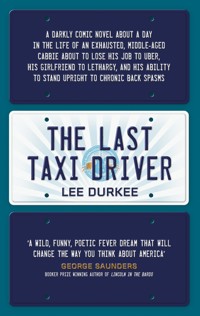
The Last Taxi Driver is a darkly comic novel about a day in the life of an exhausted, middle-aged cabbie about to lose his job to Uber, his girlfriend to lethargy, and his ability to stand upright to chronic back spasms. Lou - a lapsed novelist and UFO enthusiast who has returned to his home state of Mississippi after decades away - drives for a ramshackle taxi company that operates on the outskirts of a college town among the trailer parks and housing projects. With Lou's way of life fast vanishing, an ex-dispatcher resurfaces in town on the lam, triggering a bedlam shift which will test Lou's sanity and perhaps cost him his life. Against this backdrop, Lou has to keep driving, and driving - even if that means aiding and abetting the host of criminal misfits haunting the back seat of his Town Car. Written by a former cabbie, The Last Taxi Driver careens through the highways and backroads of North Mississippi as Lou becomes increasingly somnambulant and his fares increasingly eccentric. Equal parts Bukowski and Portis, Durkee's novel is an homage to a dying American industry.
Das E-Book können Sie in Legimi-Apps oder einer beliebigen App lesen, die das folgende Format unterstützen:
Veröffentlichungsjahr: 2020
Ähnliche



















Praise forThe Last Taxi Driver
‘A wild, funny, poetic fever-dream that will change the way you think about America’ – George Saunders, Booker Prize winning author ofLincoln in the Bardo
‘By turns hilarious, angry and sweet, once again Durkee perfectly captures the mood of our time’ – Washington Post
‘Disarmingly honest and darkly comic’ – The New York Times
‘It’s one of the best novels in recent memory… The Last Taxi Driver is a wild and hilarious ride filled with dirty jokes… a dead-serious reminder that virtue is a lifelong struggle. Which is why it’s such a wonderful book, one of the best to come along’ – Washington Examiner
‘The Last Taxi Driver is unpredictable, emotionally moving, and laugh-out-loud funny’ – Chris Offutt, author ofCountry Dark
‘Much of what makes Lee Durkee’s novel so delightful and surprising is his ability to dig beneath the surface of this funny, well-told odyssey, which channels a Shakespearean tragedy. This twenty-year follow up to his debut novel, Rides of the Midway, was worth the wait’ – Chicago Review of Books
‘This book’s a blast! A super-long shift in the life of a north Mississippi taxi driver makes for hilarious moments as well as lyrical ones. Durkee’s Mississippi is entirely his own as he parades a line of passengers that are as colorful, sad, and strange as any in literature. A terrific novel by a terrific writer!’ – Tom Franklin, author ofCrooked Letter, Crooked Letter
‘For devotees of the offbeat and grit lit writers like Larry Brown and Mary Miller. Follow the air freshener rocking back and forth, taking you under its spell, as Durkee takes you for a ride’ – A.V. Club
‘Raunchy and sweet and, at times, psychedelic’ – Garden and Gun
‘The Last Taxi Driver is a frenetic, voyeuristic delight… Timely and compulsively readable, Durkee’s long-awaited second novel makes me regret how much I’ve missed by being a (reasonably) sober and compliant passenger’ – Mary Miller, author ofBiloxi
To the saints of the service industries.
And in memory of Ron Shapiro.
A man takes a job, ya know? And that job – I mean, like that – that becomes what he is. You know, like – you do a thing and that’s what you are. Like I’ve been a cabbie for seventeen years. Ten years at night. I still don’t own my own cab. You know why? ’Cause I don’t want to. That must be what I want. To be on the night shift driving somebody else’s cab. You understand? I mean, you become – you get a job, you become the job. One guy lives in Brooklyn. One guy lives in Sutton Place. You got a lawyer. Another guy’s a doctor. Another guy dies. Another guy gets well. People are born. I envy you your youth. Go on, get laid, get drunk. Do anything. You got no choice, anyway. I mean, we’re all fucked. More or less, ya know?
– WIZARD, Taxi Driver
It’s just a ride.
– BILL HICKS
Inhalt
OPPOSITE EARL
STINK BOMBS
HOSPITAL RUNS
IDIOT SON
STARGAZING
MOONDOG’S TAXI
SHIT JOBS
CANCER MAX
OSCAR THE AMOROUS OCTOPUS
NEVER BLINK YOUR HEADLIGHTS AT A UFO AND OTHER DRIVING TIPS FOR MISSISSIPPIANS
KILL TEDDY! KILL TEDDY NOW!
FREAKHOLE
MISSISSIPPI!
WINDY REACH
DISCOMBOBULATED GHOSTS
GRACELAND
BLACK MAGIC
ACKNOWLEDGMENTS
About the Author
Copyright
OPPOSITE EARL
They never tell you what they were in for, only that they just got out. This one’s a handsome white dude – mid-thirties, a few missing teeth, a few prison tats – who’s in a fantastic mood. He’s carrying a twelve-pack of Bud Light when he slides into the back of my Town Car and tells me he’s just been released from Parchman and then gives me the name of some street in the Bethune Woods Project, says it’s an old girlfriend’s house.
‘Man, is she gonna be surprised to see me,’ he adds.
We’re at the Mobile station near West Gentry Loop waiting to pull into traffic.
‘Maybe you should call her first?’ I suggest to the rearview.
‘Man, I don’t even know her number been so long. She’s probably married-divorced twice.’
We hit the four-lane and head east toward the largest of the five projects I didn’t know existed before I started driving a cab. These projects are arranged like black moons around a white planet, and it’s my job to ferry kitchen workers into the square or wherever it is they work, a twenty-dollar bookend on a job that pays them maybe nine bucks an hour.
It’s late spring midafternoon but already feels like summer as I drive under the Fordice Bridge past campus. As I do this I’m wondering if Uber will steal all my rides from the projects. I’ve never used an Uber and don’t understand how that works, but my hope is that when they come into town next month – it’s not just a rumor anymore – Uber will shun the projects the same way all the other cab companies in town do.
Bethune Woods is one of our nicer projects. It has a suburban façade filled with the evilest speed bumps in town fronting the grim rows of public housing apartments.
‘Damn,’ my fare says as the Lincoln bottoms out on a speed bump.
‘You get used to it,’ I tell him.
‘Is it yours?’
‘Nah, company car. I get to keep it at my house. I mean, as long as I put in my seventy a week, I do.’
‘Seventy hours? Man, that sounds kinda dangerous.’
I laugh and tell him, ‘I know guys drive ninety.’
Our destination turns out to be a beater house. Somebody has stolen the garage door, and a plastic wave of kid junk is cresting into the driveway. The lawn is that bright green ryegrass with brown jigsaw pieces where somebody sprayed ant poison. The one catalpa tree is either blighted or a late bloomer. No cars. All the lights off.
‘Man, can you wait here a minute? I’m just gonna look-see inside.’
Leaving his beers on the floorboard, he rings the bell and waits, combs his hair back with his fingers, then knocks and waits some more. Finally, after glancing back at me, he wanders into the garage, pokes around in there, and then opens the side door and disappears into the house.
I sit there thinking, well, I didn’t see that coming, and once again I find myself wondering what makes an accomplice an accomplice. At what moment do you stop being a taxi driver and start being a getaway driver? But I don’t leave, not yet. For one thing, I haven’t been paid. Also I happen to like the guy. He looks like a discarded version of my friend Earl, who hustles golf for fun. This guy is like Earl’s prison twin – Rich Earl, Poor Earl – the Earl who owns nothing and has lost a few teeth in Parchman. Same year, same model: opposite fates.
Opposite Earl gets back into the cab lugging a pilfered six-pack of High Life bottles to add to his floorboard collection.
‘Man, she ain’t even here. You mind taking me out to 243? I know this other girl. I can’t remember the street but I can point you there.’
‘Pays the same,’ I say, my way of letting him know I’m not taking him there for free. I should tell him it’s two bucks a mile outside city limits, plus two bucks each additional stop, but instead I start telling him about my friend Earl.
‘He drinks Bud Light, too. Y’all look so much alike it’s crazy. When I first saw you standing there I was sure you were him.’
‘All he does is play golf?’
‘Yeah, I guess. He wins all the local tournaments – they call them scrambles – and he doesn’t even practice. I don’t think he even likes golf.’
‘That how he got rich, hustling golf?’
‘No. He was born that way.’
‘We really look that much alike?’
‘Twins,’ I say, and then think, well, except for that neck tat depicting the great state of Mississippi.
‘So where’s this guy live at?’
I hesitate and then tell him, ‘Out on 40.’
‘What’d you say his name was?’
‘Earl. Earl Jones.’
I am a bad liar. It always sounds like I’m asking a question.
‘Huh. You think I could fool his wife?’
I don’t comment on that. Earl’s wife is my friend Kyla, who does not fool easily. We turn onto 243 near the Soul Food Stop and wind our way into some suburb near the county middle school. It’s a much nicer house this time but has a ramped driveway that causes the Lincoln to bottom out again. Like I said, you get used to it. He knocks on the front door, does his hair again, then removes a key from under the doormat and goes inside. This time, he comes out with a corked bottle of red wine and an orange.
‘Maggie ain’t home, either,’ he tells me, and a moment later I hear the cork pop. ‘Man, I ain’t had wine in fuck forever. Ain’t the only thing I ain’t had.’
‘Please don’t peel that orange back there,’ I say.
‘No sir,’ he replies, in what I assume to be the voice he used in prison to talk to guards.
I’ve started driving us toward the house of this third girl he knows when we are passed on the road by a robin’s-egg-blue ’57 Chevy convertible.
‘Wow,’ I say.
I never cared about cars before driving a cab. Now I like them better than I like most people.
‘That’s her!’ he yells. ‘That’s Maggie’s Chevy – catch her!’
I gun the twenty-year-old broke-dick Lincoln. It takes about ten minutes and five gallons to catch up, and right as we do the Chevy turns into a gas station and it becomes clear the platinum blonde behind the wheel is accompanied by some guy with the largest bald head I’ve ever seen. His meaty arm draped over the passenger door is covered in those Japanese gangster tattoos, like sleeves that end at the wrist.
‘Fuck. Man, let’s get outta here.’
Opposite Earl stays glum for a few miles but then rallies and still wants to go to this other girl’s house. I tell him I won’t take him there unless he promises not to steal anything. In total he has four ex-girlfriends. Either that or he’s just scouting houses to ransack later. None of the women are home. Finally he makes me take him back to the first house, the one in the project, and I charge him twenty bucks – the freedom-is-sweet special – and leave him sitting in a lawn chair in front of the doorless garage drinking wine and looking happy. That’s what she’ll see when she pulls into the driveway that evening with her kids.
As I coast away, he grins and lifts his wine bottle. I start to honk but then remember my horn doesn’t work. Then I start to wave before remembering the tinted glass. Then I wave anyway.
STINK BOMBS
Pardon my French, as my fares like to say, but you’d be freaking amazed by the smells that enter my taxicab. The numerous funks, farts, fumes, burps, breaths, bombs, and auras – odors that defy description – my least favorite among them being the putrid, seaweedy stench of frat-boy spit cups. Under the driver’s seat of my Town Car I keep a fat bottle of Ozium and a thin bottle of Aloha Febreze. I have a pine-scented Bigfoot air freshener dangling amiably from my rearview below a Shakespeare-mint freshener modeled on the NPG’s Chandos portrait. Above Shakespeare hovers a Lazarian-style flying saucer with wintergreen-spiced Zeta Reticulans spying out its portholes. Also scattered around my cab is a pawnshop display of those baubled air fresheners advertised in checkout aisles to last a week in your vehicle, which translates into a day in the life of a Mississippi All Saints Taxi cabdriver.
I’m parked at the town square facing the Oasis Diner and thinking about Opposite Earl, about how maybe we all have a worthless or wealthy doppelgänger, and maybe that’s how the world evens itself out and makes life on earth fair. Is it possible that Rich Earl and Poor Earl are somehow the same being who has been divided into two or two hundred people? I’m always trying to come up with theories that make life fair, though of course it isn’t. If there’s one thing this job driving twelve- to fifteen-hour shifts seven days a week has taught me, it’s that life ain’t fair.
Pretty soon I catch myself talking out loud again – something that’s been happening a lot lately, even with fares in the car – so I shut my mouth and shrug at the car camera. Whoever told you life was fair, kid? That question comes to me via my dead father’s gruff-drunk voice. My father loved asking me that. Every time I complained about anything, I got hit with that question. And now, forty years later, parked in a cab I don’t own waiting for my next dispatch, it seems to me as if men are driven crazy by this notion of fairness. Maybe for women it’s obvious early on that life isn’t fair, but men cling to the idea of fairness. We murder and go to prison and hang ourselves over it. Little boys especially worship fairness.
It’s 5:00 PM now and I’ve only got one hour of unfairness left on my shift. Even this late in the day, the long black hood of the Town Car is simmering like asphalt. Although it might appear I’ve started reading a paperback, in truth I’m zoning out and letting the letters crawl around the page when a text message bings in from Horace, my supervisor, telling me to fetch a fellow driver – this guy Zeke – and take him to the garage we use out on Ross Barnett Road.
Only All Saints uses text messages to dispatch. Every other company in town – and there’s about ten of us, all ragtag – still uses the traditional radio, but Stella, a devout Catholic who started All Saints thirty years ago after receiving a Fátima-like vision from God, became paranoid that other companies were stealing our rides, so now we use messages, which means we’re constantly text-weaving in traffic.
Before fetching Zeke, I swing by my place to use the head. My house is one of those bungalows that were once servant quarters. A bunch of frat boys live in the big house in front of me. They’ve got Confederate flags in their windows, and they’re always parking in my slot or blocking the driveway with the giant SUVs daddy bought them for making straight Cs in some seg-ed prep school.
Much to my nonsurprise I find my girlfriend Miko asleep on the bed – that’s pretty much all she does these days. She suffers from depression, a soul-sucking condition that renders me equally lifeless whenever I’m around her. She’s a poet, or used to be, and a good one, so I suppose she’s entitled to a certain amount of ennui, but it’s getting absurd. Sometimes I suspect it’s her lethargy that allows her to remain so beautiful, seemingly as young as ever, while I by contrast age in time-lapse fashion. I desperately need to get Miko out of my house and out of my life – her suicidal thoughts permeate my dreams at night – but she’s broke and helpless and I’m all she’s got in the world.
I tiptoe past the bed into the bathroom. The toilet, which needs cleaning, is situated next to a window also in need of cleaning. While standing there peeing, I automatically start searching for the three-legged doe that haunts my backyard ravine. Her name is Maya and she’s about six months old and there’s nothing graceful to her gait, but she owns a great dignity and I am her champion. In the mornings she stares at my windows until I come outside and throw my breakfast strawberries at her. I’ve counted as many as fourteen deer in my backyard and almost that many groundhogs. When the grass is tall I get red foxes. My cat Bandit stalks them all or pretends to.
Today I spot Maya and her dangling stump half hidden in kudzu. It’s hard to feel sorry for yourself while staring at a three-legged deer. My guess is she got hit by a car, but it’s possible a dog got after her or some drunk frat boy shot her leg off for fun. Or maybe she was born that way. As I stare at the hobbled doe – her Bambi spots are gone now – I try to perceive her without attraction or aversion, like the Buddha advised, to somehow absorb her dignity without fixating on the ugliness of her stump or the direness of her fate. I’ve started rereading Miko’s books about Buddhism lately in an attempt to stop myself from flipping everybody off. So far it’s not helping. If anything, I’m getting worse.
On the way outside, I stop to study Miko and try to decide if she’s faking sleep, but how can you tell? Her back is to me and she’s naked and her long black hair is spilled across her thin shoulders onto the mattress. Back in my cab I head toward Choctaw Drive to fetch Zeke. I’m still thinking about life being fair. I’m thinking the only way earth could be considered fair is if we agreed to come down here on our own volition, like it’s a video game we stupidly decided to play. Either that or earth’s some kind of reform school and we did something terrible to get sent here.
Zeke, the driver I’m picking up, is about forty years old and sometimes takes his daughter out with him at night. His daughter is ten and must help considerably with tips. And his daughter is about the only reason you’d tip Zeke, who looks like a redheaded version of the Unabomber and wears bright superhero tee shirts that coalesce over his beer belly like poured oil.
I pull into Choctaw Ridge Apartments to take him to the garage. The driveway is lined with overflowing dumpsters that turkey buzzards are orbiting high above. The moment Zeke enters my cab his stench stun-guns me. It’s like being electrocuted by cat piss. Tears start running down my cheeks. After a minute of suffering I manage to clear my throat, swallow painfully, and ask Zeke what got fixed on his van. Getting anything repaired by Stella requires a prolonged lobbying process, one or two near-death experiences, and a few screamed threats to quit.
‘Brakes,’ Zeke grunts.
‘Brakes? No way. I’ve been begging brakes for months, man, and I been driving for Stella a lot longer than you have. Listen to these things.’
I hit the pedal, which goes to the floor and shudders obligingly. ‘Front and back,’ I say proudly.
‘Tough tit, man. Hey, you really from Vermont?’
The area code on my cell is still 802, which inspires a lot of redneck repartee.
‘Nah, I just raised a kid up there. Eighteen years, man. Eighteen fucking winters. It damn near killed me. I’m from south Mississippi originally. Hattiesburg.’
‘You’re from Tough City?’
‘Yeah, but I never knew they called it that till I moved here.’
‘You sure don’t talk like you’re from there. You been crying or something?’
‘No,’ I reply, trying to shelter him from the truth about his body odor. ‘It’s just, you know, allergies.’
Zeke keeps staring at me in a peculiar way. As he does this, his eyes twinkle with what seems at first to be a Kris Kringle merriment. It’s the beard and John Lennon glasses that create this illusion, but it isn’t merriment, I suddenly realize, it’s menace. Or maybe it’s the twinkle of insanity, of secret diatribes and homespun bombs. Why the hell did this freak get brakes instead of me? All the day-shift guys think Stella favors the night shift. I am resisting the urge to phone her up right now and give her a piece of my mind. In my imagination I quit grandiloquently every day – I am the Cicero of quitting – but in real life I don’t quit because I desperately need the job. I have two grand to my name plus a shabby condo in Vermont nobody wants to buy. I’m mid-fifties and worried sick about the future. Retirement? As far as I can tell this Town Car is my retirement.
‘Enjoy your brakes,’ I say petulantly as we shudder-squeal to a stop at Jim Warren Automotive. The last time the Town Car got an oil change here somebody stole the jack out of the trunk, and I still haven’t talked Stella into getting me a new one.
No jack, no horn, no brakes. It’s not fair.
Zeke opens the door and then points to my gaggle of air fresheners and asks, ‘That Bigfoot?’
‘Yeah. It’s pine-scented.’
‘I saw him once,’ he says and gets out and slams the door without even telling me about it.
‘Yeah? – did y’all like murder cats together?’ I shout once he’s out of earshot.
Then I reach under the seat and go Rooster Cogburn on the Lincoln: the Ozium in one hand, Febreze in the other. His poor daughter, I keep thinking. And the world seems to me at that moment to be filled with great herds of three-legged deer staggering through endless woods.
HOSPITAL RUNS
Stella likes to saythat day-shift cabbies are the fabric that holds the town together, that we’re as important as any utility, and sometimes I think she’s right. While the night crew hauls around scrums of Adderall-vomiting co-eds and makes twice the jack we do, the day shift takes citizens to work, mostly black people in the service industry. We cart the halt and lame to Kroger and lug their groceries up flights of stairs for dollar tips. We spring upstanding citizens from bail bondsmen offices and squirrel them across town to the impoundment lot behind the Toyota dealership. We deliver rich people cigarettes and serve as care managers for the elderly – I’ve done everything from helping old people pee to taking out their garbage to chasing after their escaped pets. We are the poor man’s ambulance, and we are also, sad to say, the poor man’s priest, our cab the confessional in which people litmus-test their wildest fears and prejudices.
All Saints, being one of the oldest cab companies in town, has a contract with the local hospital so that when somebody dirt poor – and this is the most dire state in America, Third World in parts – when somebody destitute in north Mississippi is being released from the hospital, All Saints will deliver them to wherever they abide – usually the Delta – and our fee is added to their bill and eventually paid for, I assume, by taxpayers. The only good thing about these deathbed runs is that Stella charges the hospital mileage both ways. A nurse I’ve got a crush on once called me out on that, and I laughed and assured her I earn every penny I make off hospital runs. She thought that over and said, ‘Yeah, I bet you do. We give y’all the dregs, huh?’
The dregs. Not a kind word but not untrue. Taxis traffic in the desperate. People at the end of their ropes eventually stagger into cabs.
On my very first hospital run – almost two years ago, right after I’d gotten fired from the university – I picked up this fifty-something white guy who had told his dentist over the phone that he was going to shoot himself in the head if he didn’t get a stronger pain pill. The dentist reported this to the police, who sent over a cruiser. The two policemen explained to the guy that he could go to the hospital with them or they would call an ambulance, which would be expensive, and they would place him into the ambulance whether he wanted to go or not. Through his toothache the guy told the cops he’d only been kidding about shooting himself and wasn’t going to any damn hospital. The ambulance arrived and the cops made him get inside it, and he spent all that day in the psychiatry wing getting interrogated about suicide.
By the time I picked him up it was dark, a dismal, drizzling evening in early winter.
‘Seems like a man oughta have the right to kill himself anyway,’ he fumed from the back seat.
I agreed. I said, ‘Yeah, that’s kinda the most basic human right there is, huh? – the dying middle finger.’
I didn’t tell him about my father or my grandfather or how suicide runs in my family. Instead I asked if the hospital had given him anything for the pain. Sometimes fares will tip you pills.
‘Hell no. Fucking Motrin was all they give me. Hey, speaking a which, you mind swinging by a liquor store and maybe fronting me some whiskey? I’ll pay you back soon as we get to my house.’
I thought that over.
‘Sorry, man. No can do.’
‘Yeah. I don’t blame you that.’
We stayed quiet until we pulled into his driveway, when he said, ‘I wonder if my TV dinner’s still safe to eat.’
Like a lot of men do, he leaned forward to shake my hand before he got out. And that night, while falling asleep to dream about phantom tips, phantom cheapskates, phantom speed traps, and phantom deer smashing through my windshield, I thought about that guy reheating his TV dinner and smelling the plastic compartments – the gooey Salisbury, the shriveled peas, the wet-cement potatoes – trying to decide if it was indeed safe to eat.
By the time I get Zeke’s smell out of the cab, my shift is all but over. I park at the square and stare at the digital clock in spite of knowing that’s bad luck. Sure enough, one minute before six the Bluetooth rings inside my ear.
‘Good news,’ Stella says. ‘I got you a double.’
‘A double?’ I reply, not bothering to hide my irritation. ‘But –’
‘But nothing, mister. You’re up next so don’t give me a hard time. You’re driving everybody crazy with your complaining. You should thank me. It’s a hospital run. Twice the mileage, half the gas, baby.’
Instead of thanking her I give her a cold dose of silence. There are few things crueler than the end-of-the-shift hospital run, and Stella damn well knows it. All the cabbies hate hospital runs because Stella won’t pay us until the hospital pays her, which can take months, and, unless you’re vigilant, Stella will either forget to pay you or will underpay you and then wait to see if you notice.
I want to tell her it’s not fair, but instead I ask, ‘ER or out front?’
‘Front, dear,’ she replies in the maternal voice she uses once she’s gotten her way.
I almost hang up on her but don’t.
‘Zeke told me he got brakes,’ I hear myself say, which scares me. I’m afraid all my frustrations might pour out in one obscene stream-of-consciousness jag.
‘That’s because the fool got in another wreck.’
‘Oh. Is that what I got to do, Stella, get killed to get brakes?’
‘Let’s talk brakes tomorrow. Right now you need to go to the hospital before I get angry. I’m having a good day so don’t fuck it up.’
With that, she hangs up on me.
I flip her off. Unless I tell you otherwise I am always flipping somebody off.
Five minutes later I pull into the hospital and grab my receipt book and walk inside. Chloe, the nurse I like, only works the ER side, but I can’t help looking around for her – I’ve got it bad for Chloe. I estimate the mileage, fill out the forms, get the supervisor’s signature, and photograph the receipts so I can keep track of how much Stella is ripping me off. That done, I sulk back to the cab and wait for my two fares to arrive.
While waiting, I put on Beethoven – I tend to start and end the day with his piano sonatas – and then sneak a hit on my Snoop Dogg–endorsed G Pen and blow the white smoke directly at the car camera ceaselessly staring at me and imagine that smoke emerging into Stella’s living room, where she sits watching my every move like a soap opera called As the Wheel Turns. I’m still staring down the camera when the two orderlies wheel out my fares side by side. One fare is black, the other white, and it’s hard to decide which one will keel over in my back seat first. Trust me, they don’t release these patients because they’re cured, they release them because nobody is footing the bills. Generally speaking, it’s my job to whisk them to their deaths. In that sense I am like Charon, the shaggy boatman who ferries shades across the River Styx.
There Charon stands, who rules the dreary coast –
A sordid god: down from his hairy chin
A length of beard descends, uncombed, unclean;
His eyes, like hollow furnaces on fire;
A girdle, foul with grease, binds his obscene attire.




