


1,99 €
Mehr erfahren.
- Herausgeber: Quickie Classics
- Kategorie: Gesellschafts- und Liebesromane
- Sprache: Englisch
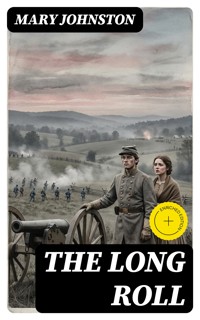
Mary Johnston's The Long Roll is a sweeping Civil War chronicle centered on Confederate operations under Thomas J. 'Stonewall' Jackson, from the Shenandoah Valley outward. Through marches, skirmishes, and set-piece battles, the novel marries panoramic strategy to granular textures of camp routine, terrain, courier work, and nerves under fire. Its disciplined, cadenced prose blends nineteenth‑century romance with early twentieth‑century documentary realism. Published in 1911 amid a culture of commemoration, it stands between Lost Cause memorial writing and modern military fiction, faithful to movements and maps while unmistakably Confederate in vantage. A Virginian by birth, Johnston drew on family recollections, veterans' testimony, official reports, and on‑the‑ground study of battlefields. Already famous for To Have and To Hold, she pivoted here from swashbuckling romance to rigorous campaign narrative, assembling soldiers and civilians to examine discipline, faith, loyalty, and fatigue. Her focus on Jackson's tempo and staff work reflects archival immersion and intimate knowledge of the Valley's geography. Readers of Civil War history and historical fiction will find The Long Roll both exacting and engrossing. It illuminates how strategy, landscape, and morale intertwined, and offers a vital document of Southern remembrance—rewarding scholars, students, and general readers seeking disciplined narrative power. Quickie Classics summarizes timeless works with precision, preserving the author's voice and keeping the prose clear, fast, and readable—distilled, never diluted. Enriched Edition extras: Introduction · Synopsis · Historical Context · Brief Analysis · 4 Reflection Q&As · Editorial Footnotes.
Das E-Book können Sie in Legimi-Apps oder einer beliebigen App lesen, die das folgende Format unterstützen:
Veröffentlichungsjahr: 2026
Ähnliche








The Long Roll (Summarized Edition)
Table of Contents
Introduction
A steady drumbeat gathers distant lives into a single, inexorable march, testing what duty means when history turns men and women into soldiers, witnesses, and survivors. Mary Johnston’s The Long Roll approaches the American Civil War through the rhythms of mobilization and endurance, refusing easy glory while tracing how communities absorb the shock of conflict. Without disclosing later turns, this opening movement frames a world where private loyalties collide with communal vows, where landscapes of field and road acquire the gravity of destiny. The novel’s power lies in the tension between necessity and choice, in the question of who answers the call and how that answer reshapes a life.
First published in 1911, The Long Roll is a historical war novel set primarily in the American South during the Civil War, with an emphasis on Virginia’s armies and towns. Written by a Virginian author whose career spanned popular historical romances and regional fiction, it inaugurates a two-volume project continued in Cease Firing the following year. Drawing on the conventions of early twentieth‑century realism and the panoramic campaign narrative, the book situates readers amid camps, roads, and courthouses as the conflict escalates. Its viewpoint follows Confederate ranks and civilian circles, situating personal experience within the shifting fortunes of a nation at war.
At its core, the novel begins with musters and training grounds, then threads through marches, skirmishes, and the waiting hours that test endurance more than any charge. Johnston balances scenes at the front with glimpses of households, courtyards, and letter‑writing tables, making clear how rumor, distance, and hope structure everyday life in wartime. Characters come into focus through action and restraint rather than grand declarations, and the plot advances by the pressure of events rather than melodramatic contrivance. The result is a narrative that feels both intimate and expansive, attentive to detail yet conscious of the broader currents moving men and nations.
Stylistically, the prose moves with a measured, martial cadence, alternating crisp tactical clarity with long, reflective passages that register weather, terrain, and the temper of a column on the road. Johnston writes in a formal register characteristic of her era, yet she uses that distance to heighten immediacy: a slow approach becomes suspense, a crest of a hill converts description into decision. Dialogue is economical, the narrator observant rather than intrusive, and the violence is depicted plainly without spectacle. The tone is sober, at times elegiac, and the book’s momentum builds through accumulation rather than surprise.
Among its central themes are the ethics of loyalty, the strain between individual conscience and collective command, and the quiet costs that discipline and courage exact over time. The novel maps how comradeship forms and how it hardens into habit, asking what remains of a person when oaths and routines become a second skin. Landscape functions as more than backdrop, turning roads, orchards, and rivers into repositories of memory and foreboding. Across these pages, the long roll becomes an image for preparation and inevitability, the steady summons that joins resolve to vulnerability.
For contemporary readers, The Long Roll matters as both a vivid campaign narrative and a document of how early twentieth‑century Americans remembered the war, particularly from a Confederate vantage. It invites reflection on the stories nations tell about sacrifice, victory, and loss, and on the partialities built into those stories. Read alongside accounts from other perspectives, it becomes a catalyst for thinking about civic fracture, the psychology of enlistment, and the pressures that turn ideals into slogans. Its patient attention to ordinary routines under extraordinary stress offers insight into endurance, responsibility, and the ways communities negotiate grief and resolve.
Approached on these terms, Johnston’s novel rewards readers seeking an immersive, reflective account of war’s long durations rather than a sequence of climactic set pieces. It is the opening half of a larger design continued in Cease Firing, yet it stands on its own as a study of formation, trial, and tempered conviction. Without presuming upon later developments, this introduction invites you to listen for cadence and counterpoint: the summons of duty and the quieter rhythms of thought, friendship, and place. The Long Roll endures because it hears both, and asks how a life keeps time when history sets the beat.
Synopsis
The Long Roll, by Mary Johnston, is a Civil War novel that follows Confederate-side experiences from mobilization through a sequence of early campaigns. It frames the conflict through soldiers in a command based in the eastern theater and the communities that send them forth. The title’s drumbeat motif signals the book’s concern with the rhythm of muster, march, and battle. Johnston balances movement across landscapes with attention to orders, supply, and fatigue, crafting a sober, procedural tone rather than romantic adventure. The narrative establishes motives—duty, regional loyalty, ambition—and the uncertainty of a war whose scale and duration none of the participants yet fully grasp.
The opening movement situates the reader in towns and farms where news of secession and war converts talk into enlistment. Volunteers gather under local officers, drill on courthouse greens, and are folded into a larger command that will carry them far from home. Johnston depicts the awkward first weeks of service—new uniforms, unfamiliar weapons, and the etiquette of camp—alongside the creation of a chain of command that mixes idealists, professionals, and opportunists. Letters, rumors, and newspapers shape expectations. When orders finally come, the unit learns how strategy reduces personal plans to marching columns, and how pride adjusts to rations, rain, and routine.
The narrative’s first combat passages emphasize confusion and adaptation. Smoke, noise, and broken terrain complicate what seemed clear on maps. Artillery must be sited, ammunition hauled, and infantry steadied under fire; couriers race, and mistakes ripple outward. Johnston pauses for the aftermath—field dressing stations, long lists of missing, and the weary accounting of what gains were purchased. Prisoners bring in rival perspectives, while picket lines at dusk expose the thin boundary between enemies. The characters’ initial exhilaration gives way to disciplined endurance, as they begin to understand that courage alone cannot resolve questions of supply, reconnaissance, and coordination.
Extended operations test endurance: forced marches through valleys and across rivers, night halts in soaked fields, and sudden orders that turn columns about. Maneuver becomes a recurring theme, with speed and surprise used to offset inferior numbers and material. Johnston’s battlefield geography is precise—bridges, fords, ridgelines, and junctions—without losing sight of individual strain. Weather intrudes as an antagonist, mud dragging wheels and men alike. The book highlights how intelligence is gathered and lost, how rumors of enemy positions distort decisions, and how commanders must choose between caution and audacity when the window for advantage narrows to a few hours.
Interleaved with marches and engagements are scenes from the home front, where absence reshapes households and shortages become ordinary. Women manage farms and shops, older men and younger boys take up tasks left behind, and communities improvise support for the front with clothing, food, and news. Johnston traces the emotional economy of the war: the stern pride of farewell, the strain of waiting, and the etiquette of consolation when letters stop. The novel also registers the political and moral arguments circulating in parlors and camps, keeping the narrative aware of ideals even as the cost of maintaining them steadily mounts.
As the setting shifts to larger operations in the eastern theater, the novel widens its lens to staff work, reconnaissance, and the negotiation of cooperation among multiple divisions. Seasoned soldiers rise to greater responsibility, while less reliable figures recede under pressure. The tone grows more somber as victories and setbacks alike demand replacements and improvisation. Johnston lodges her characters within decisions whose consequences exceed any one intention, maintaining clarity about tactics while acknowledging the limits of foresight. Without forcing melodrama, the book allows bonds of friendship and command to shape choices, and it closes this phase of the war without final resolution.
The Long Roll endures for its granular attention to how a civil war is actually waged day to day and for its steady, unsentimental register. It neither romanticizes nor sensationalizes, but asks what duty, loyalty, and courage mean when measured against attrition, error, and time. Written from a Southern vantage, it also records how memory and identity form under stress, a perspective readers can examine critically as historical artifact and as storytelling. Its companionable detail and restrained pathos make it a touchstone for later fiction about armies in motion, and its closing cadence points forward without foreclosing the human questions it raises.
Historical Context
Mary Johnston (1870–1936), Virginian novelist, published The Long Roll in 1911. Set during the American Civil War (1861–1865), it follows Confederate soldiers in Virginia, drawing on campaigns associated with Thomas J. “Stonewall” Jackson and the Army of Northern Virginia. The setting encompasses institutions central to the conflict: the Confederate States government based in Richmond, state-raised regiments integrated into national armies, and a professional officer corps shaped by West Point. Emphasizing field operations, discipline, and morale, the narrative adopts a Confederate vantage point. Its focus on Virginia’s armies and leaders situates the book within a well-documented theater and a long-standing Southern remembrance tradition.
Abraham Lincoln’s election in November 1860 precipitated secession by Deep South states; after Fort Sumter was fired upon in April 1861 and Lincoln called for troops, Virginia voted to secede. By May, Richmond became the Confederate capital. Volunteer companies formed rapidly, merging into regiments and brigades under state and Confederate authority. Training camps, musters, and elections of company officers characterized the first months, alongside shortages of arms gradually remedied by imports and captures. The novel places its soldiers within this early-war mobilization, when enthusiasm, uncertainty, and evolving command structures shaped daily life and set the stage for Virginia’s first major campaigns.
Virginia’s terrain shaped operations central to the book’s milieu. The Shenandoah Valley, bounded by the Blue Ridge and Alleghenies, funneled movement between the upper South and the Potomac and served as a granary for Confederate forces. Manassas Junction, where the Orange and Alexandria and Manassas Gap railroads met, became an early strategic hub. In spring 1862, Jackson’s rapid marches in the Valley diverted and tied down larger Union forces, helping relieve pressure on Richmond. The novel’s attention to roads, gaps, rivers, and rail lines reflects how geography governed strategy and how local communities experienced the war’s advance and withdrawal.
Civil War armies were organized into companies, regiments, brigades, divisions, and corps, with volunteer units drilled by manuals such as Hardee’s Tactics. Confederate artillery fought in batteries using smoothbore 12‑pounder “Napoleons” and rifled pieces like 10‑pounder Parrotts, supporting infantry armed largely with Springfield and Enfield rifled muskets. Railroads and telegraph enabled rapid concentration, while supply constraints and inferior industrial capacity hampered the Confederacy. In April 1862, the Confederate Congress enacted conscription, reshaping ranks beyond initial volunteers. The Long Roll’s close attention to marching, skirmishing, and orders reflects these institutions, the demands of maneuver warfare, and the realities of shortages and improvisation.
Early Virginia campaigns shaped Confederate identity. At First Manassas (July 21, 1861), Brig. Gen. Thomas J. Jackson earned the nickname “Stonewall,” becoming a symbol of resolve. After Gen. Joseph E. Johnston was wounded at Seven Pines (May 31–June 1, 1862), Robert E. Lee assumed command, and the Army of Northern Virginia drove George B. McClellan from the outskirts of Richmond in the Seven Days Battles (June 25–July 1, 1862). The Long Roll foregrounds leadership, cohesion, and momentum around such operations, portraying how sudden shifts at the top and hard fighting in the ranks influenced Confederate strategy and soldiers’ expectations.
The Confederacy formed to protect slavery, a fact plainly stated in secession documents and leaders’ words. Mississippi’s declaration cited “our position is thoroughly identified with the institution of slavery,” and Confederate vice president Alexander H. Stephens’s 1861 “Cornerstone” speech asserted slavery as the new government’s cornerstone. Enslaved labor sustained agriculture, fortifications, and logistics. Yet military narratives of the period often center camp, march, and battle rather than plantation life or Black resistance. The Long Roll reflects this soldier’s‑eye framing, depicting Confederate society through its armies while the legal and economic order of slavery remains the essential backdrop to the conflict.
When Johnston published the novel, Civil War memory was shaped by veterans’ and women’s organizations. The United Confederate Veterans (founded 1889) and United Daughters of the Confederacy (founded 1894) organized reunions, erected monuments, and influenced textbooks, promoting a Confederate-centered remembrance often termed the Lost Cause. In Virginia, the 1902 state constitution entrenched disenfranchisement under Jim Crow. Johnston, a prominent Virginia author and active supporter of woman suffrage, wrote into this milieu. The Long Roll’s meticulous attention to Confederate campaigns aligned with readers steeped in commemorative culture, while its authorship underscored women’s growing role in curating and disseminating narratives of the war.
The Long Roll also belongs to the Civil War’s semicentennial moment, when national reconciliation ceremonies multiplied even as segregation persisted. Battlefield parks at Manassas, Antietam, Chickamauga, and Shiloh had been established in the 1890s, and massive veterans’ reunions culminated in the 1913 Gettysburg gathering. Popular histories and novels emphasized generalship, courage, and sacrifice across both sides. Within that climate, Johnston’s novel offered a detailed Confederate campaign narrative rooted in specific places and units. It mirrors its era’s commemorative priorities while presenting readers with the lived texture of marches and battles, a lens that illuminates and limits how the conflict is remembered.
The Long Roll (Summarized Edition)
CHAPTER I
THE BOTETOURT RESOLUTIONS
On a bright, knife-cold December day of 1860 the mountain town throbbed like a climber reaching high air, red-brick houses and leafless giants staring toward endless prospects. On the grassy rise the red brick, white-pillared courthouse flew like a guidon; from portico to fence a multitude pressed close, breath clouding, eyes fixed on the President of the Supreme Court of Virginia. He unfolded the Botetourt Resolutions and began in a voice both solemn and ringing. The people, county-seat and countryside alike, strained forward, determined to see clearly, to act rightly, certain—like every other quarter—that their path was righteous.
First came the duty: citizens must speak amid the nation’s alarming crisis. Then rolled the litany of deeds. Virginia sparked resistance to the Stamp Act, declared independence first, authored the Constitution, and gave Washington, Jefferson, and Madison to the Republic; she poured her sons’ blood from Quebec to Georgia. “That she did—Old Virginia never tire!” the crowd shouted. She conquered the Northwest, ceded an empire for union, summoned Annapolis, shaped the present charter, led the Revolution of 1798, gained Louisiana, fought the second war for independence, never seeking privilege, always guarding each State’s equality.
Yet her hopes were thwarted, the voice proclaimed; North and South stood leagues apart. “Government by the North, for the North, over the South!” someone cried. The Resolutions upheld every State’s sovereign right to judge wrongs and, if need be, dissolve the compact—as in 1776, as when nine left the old Confederation. “The right’s inherent and inalienable—go on!” roared the crowd. Because the Constitution is federal, its powers die the instant a State departs; to enforce them would be war. “Our doctrine—Jefferson, Madison, Marshall, Washington, Henry—back to Magna Charta!” thundered the ranks. While regretting solitary action, the paper demanded immediate, decisive measures.
The speaker echoes the fathers’ pledge: "We seek no change while our privileges remain; but if a sectional majority, behind constitutional forms, persists in injustice and violence, it answers for the consequences." Liberty, he cries, is dearer than life, and duty steels them for trial. The crowd resolves to call a convention; Virginia will consult Southern States on guarantees securing equality and rights "within the Union." Applause shakes the hall—"Yes, yes! within the Union! We'll save it! Go on!"—then vows that if guarantees fail, Virginia, with allies or not, will act for safety. The reader ends; silence swells like wind, and the Botetourt Resolutions pass.
CHAPTER II
THE HILLTOP
On the courthouse portico the county’s planters and lawyers lounged like judges of the storm they described; one after another strode between the pillars, cool or impassioned, holding the hushed crowd, then loosing wild applause. Fingers sliced the sky, naming clouds: “Protection for the manufacturing North at the expense of the agricultural South—an old storm centre! Territorial Rights—once a hand’s speck, now darkening the land! Bondage of the African Race—a heavy cloud; let it not burst! The Triumph of the Republican Party—covenant with death, agreement with hell! The Sovereignty of the State—golden thread, not Frankenstein’s Minotaur! Virginia has not renounced
Cheers still rolling, Allan Gold slipped along the brick pavement until his hand closed on Hairston Breckinridge’s arm. The youth murmured, “I don’t believe I’ll go back to the university—hello, Allan!” “I’m for the preservation of the Union; we made it and love it.” “I’m for it, in reason. Out of reason is out of honour. Whoever says Massachusetts and Virginia are united is fool or liar!—Who’s Colonel Anderson bringing? Ah, the Union now!” “Who is it?” “Albemarle man, Major Fauquier Cary.” From the portico voice proclaimed, “Men of Botetourt, the hero of Chapultepec!” Cary stepped forward, laughing, “No hero—only a Virginian out yonder.
He praised comrades—Johnston, Lee, Stuart, Maury, Thomas, Hardee—and northern friends McClellan, Hancock, Sedgwick, Porter, Sykes, Averell, swapping tales while coyotes howled beyond the campfire. Then his voice flashed: “Men of Botetourt, we’ll fight wolves and Comanches, but not each other! Go slow. Let South Carolina depart; God-speed Lot and Abraham. Yet Virginia, who made the Union, must stand fast, counsel moderation, and save the circle our fathers forged!” Cheers rolled. Asked about Fort Sumter and a compulsory Union, he cried, “Never—coercing a State is madness!” Stepping down, he clasped Breckinridge’s hand. “Yes, I remember. Is this your brother?” “No, sir, Allan Gold of Thunder Run.
Allan greets Major Cary, pleased to meet him; Cary, equally pleased, asks if he is from the university. "No, sir. I teach the school on Thunder Run." Hairston says Allan knows more than many students and lets Cary be swept off by friends. Day wanes, the last speaker ends, the band blares "Home, Sweet Home." County folk depart by foot, horse, and carriage; townspeople gossip on courthouse steps and hotel veranda, then drift home as the sun drops behind the Alleghenies. Allan strides for Thunder Run beside the miller, who mutters, "Keep out of my mill race or you'll be caught in the wheel.
Allan asks, "Mr. Green, how much of this trouble is really about the negro? I wish Virginia had never held a slave." Green answers that few here own slaves—"fifty thousand hold them, a million don't"—then cites Anderson's figures, colonial bans on the trade, Revolutionary hatred of bondage, Nat Turner's uprising, northern agitators "stirring gunpowder," and the steady freeing of thousands by deed, will, and colonization. Lifting his head, he vows they will find a way yet rejects the North's guidance. He wants the negroes free but won't surrender his grist. At the fork he says, "Here's your road to Thunder Run.
Allan climbs alone through the stillness, afterglow flaring above the Blue Ridge and James. On a summit he leans on a fence, recites, "Breathes there the man with soul so dead," hears a farmhouse bell, then descends. Near a ravine he sees a tethered horse and Richard Cleave on an oak, declaring three times, "We are going to have war." Allan calls, "I trust in God that's not true!" Cleave leaps down, brushing bark from his gauntlet. War, he says, is his métier though he never fought; he desires peace, yet blood remembers. Allan guesses conflict; Cleave answers, "Would we? The fiercer the blood.
Cleave freed the bay, mounted, and he and Allan descended the frozen road beneath a slim moon. "Though I teach school," Allan said, "I love the open—maybe I'm a hunter who reads. God knows I don't want war, but if it comes I'll go. We'll all go, I reckon." "Yes, we'll all go," Cleave agreed. After a silence he said, "I shall ride to Lauderdale tonight and see Fauquier Cary." "You and he are cousins?" "Third; his mother was Unity Dandridge." "He doesn't want war." "No." "Hairston Breckinridge pleads for peace, saying war between brothers is horrible." "It is. He wears a uniform; cannot talk.
They moved through starlight. "If war comes," Allan asked, "what will Lee, Johnston, Stuart and the others do?" "Come home," said Cleave. "Resign?" "Yes—and would you?" "If Virginia called, yes." Cleave continued, "The North will try to relieve Sumter; South Carolina will fire; the North will preach war. Virginia will be ordered to coerce the South—think she'll send troops?" "No!" "Then she'll secede, and her soldiers will return." Fields opened; Orion blazed. "Breckinridge says Major Cary's niece is at Lauderdale," Allan said. "Judith Cary." "The beautiful one?" "Yes." Cleave hummed, then brushed tears away. "Gay? I'm not gay; though I've never fought, I know war




