


0,49 €
Niedrigster Preis in 30 Tagen: 2,49 €
Niedrigster Preis in 30 Tagen: 2,49 €
Mehr erfahren.
- Herausgeber: Booksell-Verlag
- Kategorie: Gesellschafts- und Liebesromane
- Sprache: Englisch
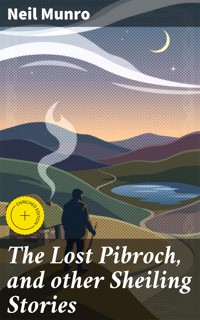
In "The Lost Pibroch, and other Sheiling Stories," Neil Munro explores the rich tapestry of Scottish folklore through a lens that captures the essence of rural life and the lyrical quality of the Gaelic spirit. Employing a narrative style that intertwines humor with poignant reflections, Munro's prose reflects a deep understanding of Scottish culture, history, and the challenges faced by its people. The collection features stories that evoke both nostalgia and reverence for the past, with 'The Lost Pibroch' serving as a centerpiece, illuminating the intersection of tradition and modernity in a rapidly changing world. Neil Munro, a prominent Scottish author and journalist born in the late 19th century, was deeply influenced by his surroundings. His upbringing in Argyll instilled in him a keen appreciation for Gaelic culture and the oral storytelling traditions within rural communities. Munro'Äôs experiences as a writer for leading Scottish newspapers and his engagement with local folklore provided him the insight necessary to weave these stories that celebrate the identity and resilience of the Scottish people. This collection is essential for readers interested in folklore, Scottish culture, and the narratives that shape communal identity. Munro's lyrical storytelling invites readers to reconnect with their roots and appreciate the profound legacy of the sheiling, making it a significant addition to any literary library. In this enriched edition, we have carefully created added value for your reading experience: - A comprehensive Introduction outlines these selected works' unifying features, themes, or stylistic evolutions. - A Historical Context section situates the works in their broader era—social currents, cultural trends, and key events that underpin their creation. - A concise Synopsis (Selection) offers an accessible overview of the included texts, helping readers navigate plotlines and main ideas without revealing critical twists. - A unified Analysis examines recurring motifs and stylistic hallmarks across the collection, tying the stories together while spotlighting the different work's strengths. - Reflection questions inspire deeper contemplation of the author's overarching message, inviting readers to draw connections among different texts and relate them to modern contexts. - Lastly, our hand‐picked Memorable Quotes distill pivotal lines and turning points, serving as touchstones for the collection's central themes.
Das E-Book können Sie in Legimi-Apps oder einer beliebigen App lesen, die das folgende Format unterstützen:
Veröffentlichungsjahr: 2019
Ähnliche





The Lost Pibroch, and other Sheiling Stories
Table of Contents
Introduction
This volume gathers a sequence of Neil Munro’s shorter Highland narratives under the collective title The Lost Pibroch, and other Sheiling Stories. It is not presented as a single continuous novel, but as a single-author collection that brings together distinct pieces—some self-contained tales, some divided into numbered parts—along with a closing Gaelic Glossary intended to support the language and idiom that appear in the stories. Read together, these texts offer a coherent sample of Munro’s recurring settings and concerns, while allowing each narrative to retain its own pace, tone, and dramatic occasion.
The contents range across short stories and episodic narratives, with several items clearly structured in multiple sections, such as “Black Murdo” and “War.” The titles suggest a variety of narrative occasions—music and memory in “The Lost Pibroch,” confrontation and reputation in “Red Hand,” legend-like atmosphere in “The Secret of the Heather-Ale,” and martial or disciplinary pressures in “The Fell Sergeant” and “Shudderman Soldier.” “The Sea-Fairy of French Foreland” points to the sea as another imaginative border, while “Castle Dark” signals a turn toward enclosed, haunted, or historical spaces.
Although the individual works differ in setting and mood, the collection is unified by its investment in Highland life and its borderlands: the sheiling as seasonal dwelling, the sea as threshold, the castle as emblem of inherited power, and the barracks or battlefield as public crucible. Munro’s stories repeatedly test how people speak, remember, and belong under the weight of custom and circumstance. Music, weapons, and place-names recur as carriers of communal meaning, while family and local reputation press on private choices. The Gaelic Glossary underscores how language itself is part of that lived texture, not an ornament.
Munro’s stylistic signatures in these tales include a strong sense of locality, an ear for spoken turns, and a narrative economy that can move swiftly from description to consequence. The prose typically favors concrete detail—weather, terrain, tools, and habit—so that character is shown in action and in response to place. Even when a story leans toward the uncanny or legendary, it is anchored in social reality: neighbors observe, communities judge, and the past is made palpable through inherited narratives. This blend of immediacy and tradition gives the collection both vividness and depth.
A prominent thread through these stories is the friction between individual impulse and communal expectation. The figures implied by the titles—soldier, sergeant, child, stranger, and “Black Murdo”—suggest roles that carry duties, suspicions, and the possibility of misreading. Conflict may arise from authority, from rivalry, or from the slow pressure of circumstance, but it is often shaped by how events are told and retold within a community. The collection’s attention to oral-inflected storytelling highlights how identity can be affirmed or damaged by the narratives that circulate around it.
The sea and the hills function as more than scenery: they are active elements in the moral and emotional weather of the stories. A sheiling setting evokes seasonal movement and precarious shelter; a coastal setting invites risk, wonder, and distance from ordinary rule. Castles and dark enclosures introduce questions of inheritance, secrecy, and the lingering presence of the past. Across these landscapes, Munro’s narratives return to the power of memory—of songs remembered or lost, of histories carried in place-names, and of personal acts that echo beyond their moment.
The lasting significance of Munro’s Sheiling Stories lies in their ability to preserve a richly particular world while addressing durable human questions: how communities cohere, how tradition guides and constrains, and how people navigate loyalty, fear, and desire. The collection also invites attention to linguistic and cultural contact, as the Gaelic Glossary reminds the reader that meaning can be embedded in words, rhythms, and untranslatable shades of usage. Taken together, these pieces form a concentrated introduction to Munro’s craft in short fiction and to the imaginative geography that sustains it.
Historical Context
Neil Munro’s “The Lost Pibroch, and other Sheiling Stories” emerged from late Victorian and Edwardian Scotland, when rapid industrial growth in the Central Belt contrasted sharply with the economic marginality of the Highlands and Islands. Munro, born in Inveraray in 1863 and long based in Glasgow journalism, wrote with first-hand knowledge of Gaelic Argyll while working for an urban readership. The collection’s recurring interest in music, oral memory, violence, and local justice reflects a society negotiating modernity, literacy, and state authority. Contemporary readers often met such tales through magazines and newspapers, where “Celtic” subject matter carried both fascination and stereotype.
The Highland setting is inseparable from the afterlife of the Clearances (most intense from the 1780s to mid-19th century) and the long transition from clan-based landholding to commercial estates. Depopulation, emigration, and the conversion of townships to sheep walks or sporting grounds altered communities that earlier preserved song, piping, and story in shared work and seasonal shielings. These pressures helped make cultural fragments—lost tunes, disputed inheritances, family feuds, and half-remembered crimes—plausible engines for Munro’s plots. They also shaped contemporary reception: many Lowland and English readers treated such narratives as windows into a “vanishing” way of life, while Highland readers recognized lived grievances beneath folklore.
Land agitation and reform during Munro’s lifetime sharpened public attention to Highland hardship. The Napier Commission of 1883 gathered testimony on crofters’ conditions, and the Crofters’ Holdings (Scotland) Act of 1886 created legal security and rent regulation for crofting tenants. These events intensified debates over landlord power, eviction, and moral legitimacy, themes that echo across stories concerned with authority, punishment, and communal standards. Munro wrote in the decades when these reforms were still contested in practice, and when memories of “the land war” in Skye and elsewhere remained close. The stories’ tension between local custom and formal law reflects this wider political transformation.
The Gaelic cultural revival also frames the collection. Organizations such as An Comunn Gàidhealach (founded 1891) promoted Gaelic language and song through the Mòd, while collectors and antiquarians sought to preserve oral literature. Piping, central to Highland identity, was simultaneously romanticized and systematized through competitions and printed collections. This background informs Munro’s use of pibroch, lament, and the aura of endangered artistry: a “lost” musical inheritance becomes a credible symbol of cultural dislocation. Munro’s journalist’s ear for dialect and his attention to oral narration reflect the era’s fascination with authenticity, even as English increasingly dominated print culture and education.
Imperial and military experience supplied another shared context. Highland regiments had been integral to British campaigns from the 18th century onward, and the late-19th century wars of empire culminated, for Munro’s contemporaries, in the South African War (1899–1902). Returning soldiers, recruitment, and martial reputation affected Highland communities economically and psychologically, while popular journalism amplified heroic and traumatic narratives. Stories in the collection that turn on “sergeants,” “soldiers,” and “war” draw from this climate, in which military service could be both a source of pride and a vector of loss. Munro’s periodical audience was accustomed to such themes as timely and politically resonant.
Folklore and antiquarian interest in pre-modern Scotland had been strengthened earlier by figures like Sir Walter Scott and by the broader Celtic Twilight movement that flourished in the 1890s. Munro inherits this appetite but often steers it toward harder social realities: superstition, sea-lore, and fairy belief appear alongside poverty, hard bargaining, and violent reputations. The sea settings and coastal routes evoke a West Coast connected to Ireland and the wider Atlantic, shaped by fishing, kelp booms and busts, and seasonal migration. Such contexts explain why seers, smugglers, and uncanny “sea-fairies” could coexist with steamers, newspapers, and legal proceedings in a single imaginative world.
Religious and linguistic change also influenced Munro’s Highland milieu. The Disruption of 1843 and subsequent Free Church dominance in many districts encouraged strict moral oversight, while the Education (Scotland) Act of 1872 expanded schooling and often marginalized Gaelic in the classroom. These shifts changed how communities policed behavior and how stories were transmitted, turning oral traditions into objects of nostalgia or suspicion. Munro’s narrators frequently negotiate what may be spoken openly and what must be hinted at, reflecting both ecclesiastical discipline and the friction between Gaelic speech and English print. The result is a tone in which confession, concealment, and communal judgment repeatedly structure the action.
Finally, the collection’s form reflects turn-of-the-century publishing conditions and the rise of the “Kailyard” and regional-story marketplace, even as Munro maintained a more sardonic, realist edge than many sentimental Highland depictions. Urban readers in Glasgow, Edinburgh, and London consumed short fiction as part of mass print culture, but sought regional color, dialect, and moral drama. Munro’s position between metropolis and glen allowed him to critique romantic myths while exploiting their narrative power. The appended Gaelic glossary signals both genuine cultural mediation and commercial strategy, acknowledging that the intended audience often stood outside the language and needed guidance into the social world that generated these tales.
Synopsis (Selection)
The Lost Pibroch (title story)
A Highland tale in which a missing or silenced bagpipe lament becomes the thread that draws characters into questions of memory, reputation, and belonging. Munro blends dry humor with elegiac atmosphere, using music as a motif for cultural continuity and personal loss.
The story’s tension comes less from plot mechanics than from the clash between tradition and circumstance, and from how communities curate their own legends. Its style favors vivid local detail, brisk dialogue, and a sympathetic but unsentimental eye for human stubbornness.
Sheiling Stories: Clan, craft, and community (RED HAND; THE SECRET OF THE HEATHER-ALE; BOBOON'S CHILDREN)
These stories revolve around remote Highland life—small settlements, inherited loyalties, and practical ingenuity—where everyday disputes open onto older histories and codes of conduct. Munro’s tone alternates between comic realism and folk-tinged seriousness, emphasizing how pride and resourcefulness shape communal identity.
Recurring motifs include contested symbols (names, marks, recipes, heirlooms) and the way oral tradition turns private acts into public narrative. Across the group, the prose leans on sharp characterization and vernacular-flavored cadence to keep the social world as central as the incidents.
Military and aftermath (THE FELL SERGEANT; SHUDDERMAN SOLDIER; WAR I; WAR II; WAR III)
This cluster shifts from croft and sheiling to the disciplined, precarious world of soldiers, following how authority, fear, and camaraderie operate under stress. The mood is darker and more compressed, with irony used to expose the gap between official purpose and lived experience.
Rather than celebrating combat, these pieces attend to moral fatigue, improvisation, and the lingering consequences of violence and command. Munro’s signature economy—quick scene-setting, decisive dialogue, and pointed observation—sharpens into a starker register here.
Black Murdo (I–II)
A two-part narrative centered on a formidable figure whose reputation and choices ripple through a tightly knit Highland community. The story balances menace and humanity, exploring how identity hardens under scrutiny and how rumor can become a kind of fate.
Its structure lets Munro deepen perspective and consequence without relying on melodrama, foregrounding social pressure and personal pride. Motifs of secrecy and public judgment link it to the wider collection while the pacing feels more novella-like than the shorter sketches.
The Sea-Fairy of French Foreland
A coastal, sea-haunted tale that draws on maritime superstition and the uncanny, setting human desire and fear against an indifferent shoreline. Munro treats the supernatural with a storyteller’s poise, keeping the tone suspended between wonder and skepticism.
Themes of temptation, misreading, and the sea as both livelihood and mystery drive the piece. The language favors atmospheric imagery and the rhythms of oral narrative, offering a tonal counterpoint to the more social-realistic Highland stories.
A Fine Pair of Shoes
A compact comic-realistic story in which an ordinary object becomes the pivot for status, embarrassment, and small-scale scheming. Munro’s humor is brisk and observational, attentive to how people justify themselves in public and in private.
Beneath the levity, the piece studies aspiration and the fragile line between dignity and ridicule. Its tight focus and everyday stakes highlight the collection’s recurring interest in character revealed through minor transactions.
Castle Dark
A brooding, place-driven story that uses a grim or storied stronghold as a stage for secrecy, pride, and the weight of the past. The tone is Gothic-leaning yet grounded, with Munro’s realism tempering sensational elements.
Themes of inheritance, confinement, and the persistence of old wrongs align it with the collection’s concern for history’s grip on the present. Strong setting and controlled suspense mark a stylistic shift toward darker atmosphere.
A Gaelic Glossary
A brief reference section that supports the collection’s Gaelic-inflected vocabulary and cultural texture. It underscores Munro’s commitment to linguistic specificity as part of the stories’ realism and regional character.
By foregrounding terms tied to place, kinship, and custom, it reinforces a recurring motif: language as a vessel of memory and identity. The glossary also highlights the author’s stylistic signature of integrating vernacular color without abandoning narrative clarity.




