


0,00 €
Niedrigster Preis in 30 Tagen: 0,00 €
Niedrigster Preis in 30 Tagen: 0,00 €
Mehr erfahren.
- Herausgeber: DigiCat
- Kategorie: Gesellschafts- und Liebesromane
- Sprache: Englisch
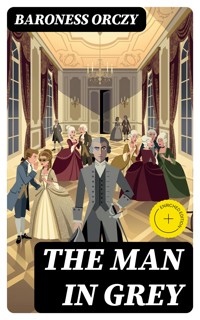
In "The Man in Grey," Baroness Orczy masterfully intertwines elements of suspense, intrigue, and historical drama set against the backdrop of the tumultuous 18th century. The novel examines the complexities of social class and the nature of justice through the tale of a dashing protagonist embroiled in conspiracies and secrets. Orczy's rich prose and vivid characterizations draw the reader into the opulence and danger of aristocratic life, while her acute perceptions of human nature resonate with the period's social hierarchies and shifting loyalties. As a precursor to the modern spy novel, Orczy blends romance and action with her characteristic flair for the theatrical, creating an engaging narrative that captivates the imagination. Baroness Orczy, a Hungarian-born British author, gained recognition not only for her inventive storytelling but also as a pioneering female writer in the realm of mystery and adventure. Her background as an artist and her experiences in France during the Belle Époque fuel her passion for historical narratives and romantic plots. This novel follows the critical acclaim of her iconic work "The Scarlet Pimpernel," showcasing her talent for blending history with thrilling escapades, highlighting her unique perspective on class tensions and heroic sacrifice. I highly recommend "The Man in Grey" to readers who appreciate a blend of historical accuracy, romance, and thrilling plot twists. This engaging story invites readers to explore the elegance and treachery of its era while providing a captivating glimpse into Orczy's imaginative world. Her narrative serves not only as entertainment but also as a thought-provoking reflection on morality and societal values that remain relevant today. In this enriched edition, we have carefully created added value for your reading experience: - A succinct Introduction situates the work's timeless appeal and themes. - The Synopsis outlines the central plot, highlighting key developments without spoiling critical twists. - A detailed Historical Context immerses you in the era's events and influences that shaped the writing. - An Author Biography reveals milestones in the author's life, illuminating the personal insights behind the text. - A thorough Analysis dissects symbols, motifs, and character arcs to unearth underlying meanings. - Reflection questions prompt you to engage personally with the work's messages, connecting them to modern life. - Hand‐picked Memorable Quotes shine a spotlight on moments of literary brilliance. - Interactive footnotes clarify unusual references, historical allusions, and archaic phrases for an effortless, more informed read.
Das E-Book können Sie in Legimi-Apps oder einer beliebigen App lesen, die das folgende Format unterstützen:
Veröffentlichungsjahr: 2022
Ähnliche







The Man in Grey
Table of Contents
Introduction
Austere as a judgment and quiet as a shadow, a somber figure moves through glittering rooms and darker byways where loyalty, love, and law collide, testing the bright veneer of society against the mute authority of conscience.
The Man in Grey is by Baroness Emmuska Orczy, the Hungarian-born British author celebrated for The Scarlet Pimpernel and a long career in popular historical fiction. Composed in the early decades of the twentieth century, it builds on her mastery of romance and intrigue set against the manners and hazards of an earlier age. Its premise is simple yet compelling: an enigmatic official—known by his sober attire and steadier purpose—crosses paths with the privileged and the precarious alike, intervening where honor falters and hidden designs imperil lives, without anticipating the surprises his presence will uncover.
The book’s classic status rests foremost on Orczy’s refinement of the historical adventure into a brisk, atmospheric art. She popularized stories in which high-stakes emotion, nimble plotting, and crisp social detail reinforce one another, and The Man in Grey exemplifies this balance. It offers the pleasures of secret intentions gradually revealed, of strict codes confronted by unruly desire, and of peril resolved by intellect rather than bluster. Even when the setting shimmers with nostalgia, the moral tests feel immediate, rendering the tale more than costume pageantry and anchoring it in questions that outlast its period trappings.
Orczy’s influence radiates beyond her most famous creation. The seamless fusion of suspense, romance, and historical milieu that she honed helped shape a tradition of period thrillers in prose and on screen. In The Man in Grey, one recognizes the durable pattern of a watchful, strategically reserved protagonist moving between salons and side streets, reading a room as carefully as a dossier. That approach—measured, theatrical, and intent on the revelation of character through decisive action—encouraged later storytellers to treat the past not as an inert backdrop, but as a stage where modern anxieties can be dramatized with flair.
At the heart of the book lies the tension between duty and desire. Characters navigate codes of honor that promise stability yet demand sacrifice, while private impulses push toward risk. Orczy consistently explores how reputation shapes behavior, how kindness can be confused with weakness, and how justice must sometimes wear an impassive face to be effective. The Man in Grey stands as an embodiment of principled restraint, not immune to the complexities around him but resolved to act. His presence transforms drawing-room confidences and roadside encounters into crucibles where motives are stripped of their comfortable disguises.
Orczy’s narrative technique contributes much to its enduring appeal. She writes with clarity and pace, guiding the reader through settings drawn with enough specificity to be vivid but never so heavy as to stall momentum. The scenes are staged with an almost theatrical sense of entrances and exits, as if curtains part on a critical confession, a misstep, or a duel of wits. Crucially, the prose invites the reader to participate in inference. Observations accumulate, contradictions tighten, and when the turn comes, it feels both surprising and retrospectively inevitable.
The architecture of the story showcases intersecting intrigues that reveal character under pressure. Without venturing into spoilers, it suffices to say that the Man in Grey’s interventions form the connective tissue among episodes where love, inheritance, loyalty, and law are at stake. Each encounter contributes to a cumulative portrait—of him, of those he observes, and of a society performing certainty while teetering on uncertainty. Readers encounter not merely puzzles to be solved, but lives entangled in choices whose consequences extend beyond a single evening’s mischief.
Historically, the world evoked is one of polished surfaces and underlying fragilities: carriages threading narrow streets, country houses where hospitality can mask a scheme, and urban haunts where whispers travel faster than letters. Orczy’s long fascination with the late eighteenth and early nineteenth centuries provides the atmosphere—a time when manners served as both shield and snare. The pressures of status, the aftershocks of political conflict, and the expectations placed upon women and men alike form the social grammar within which the plot’s actions and hesitations acquire their force.
The Man in Grey bears the stamp of Orczy’s larger career: an insistence that intellect and integrity can prevail without forfeiting romance or momentum. She understood the pleasures of recognition—the patterns by which a reader learns to anticipate a disguise, a feint, a reveal—yet she found fresh permutations within them. That flexibility keeps the book alive, even as it honors conventions of its form. One reads it as one reads fine stagecraft: admiring the deftness of the performance while surrendering to the emotions it orchestrates.
As a classic, the book also endures because it presents ethical clarity without naïveté. Orczy refuses to flatten the world into saints and villains; rather, she shows how good people get cornered by circumstance and pride, and how bad choices can spring from understandable fears. The Man in Grey’s steadiness functions as a mirror to such instability. He is not omniscient; he is attentive. He is not pitiless; he is disciplined. That balance—strong enough to guide, elastic enough to understand—gives the narrative its humane center.
Readers today will find more than period charm. The story speaks to contemporary concerns about power administered at a distance, about the double lives we craft to navigate public expectation and private need, and about the price of safety when appearances rule. In an era that still rewards clever masks, Orczy’s insistence on patient observation and earned judgment feels bracing. The past, in her hands, is not an escape but a lens, clarifying how institutions and individuals negotiate their uneasy truce.
The lasting appeal of The Man in Grey lies in this fusion of elegance and urgency. It offers suspense that respects intelligence, romance that respects consequence, and a protagonist whose equanimity makes possible a kinder world without pretending that such kindness is easy. That is why it remains worth reading: it dramatizes the perpetual struggle to reconcile justice with compassion, and it does so with a craftsman’s economy and a storyteller’s heart—qualities that keep classic narratives alive across fashions, mediums, and generations.
Synopsis
The Man in Grey, by Baroness Orczy, is a sequence of interlinked historical tales first published in the early twentieth century. Best known for creating the Scarlet Pimpernel, Orczy here turns to a different vantage: a reserved, anonymous official known only by his sobriquet. Clad with understatement and guided by an unblinking sense of duty, he moves through drawing rooms, roadside inns, and official chambers during a period of upheaval. The opening establishes his authority and methods—cool observation preceding action—and signals a world where personal passions collide with public necessity. The tone is poised and deliberate, privileging inference over spectacle and restraint over melodrama.
The initial episodes lay out the investigative pattern. The Man in Grey listens more than he speaks, noting small inconsistencies—an eagerness to explain, a misplaced token, a story told too fluently. Rumor circulates faster than fact, and the narrative feeds on that pulse: servants trade whispers, officials hedge, hosts curate appearances. Instead of chases, readers encounter careful maneuvering, where a gesture or omission can alter lives. Each case begins in social ease and shades into moral complexity, and the central figure’s courtesy carries a warning. Charm, lineage, or eloquence may delay judgment, but they cannot divert it once the facts align.
As the sequence progresses, the private and the political converge. Secret meetings, coded messages, and unexplained absences suggest larger webs of allegiance. Inheritance anxieties surface alongside questions of loyalty; a marriage contract can conceal a ruse, and a family quarrel can mask a broader intrigue. The stories keep their scale intimate, yet the presence of distant decision makers and unseen networks is always felt. Orczy uses this interplay to examine how narratives are constructed—how suspects craft versions of themselves, how witnesses edit memories, and how the investigator reconstructs events until a plausible account steadies into something like truth.
Midway, the Man in Grey’s interventions expand beyond exposure to prevention. He disrupts imminent harm by substituting inquiry for impetuous action, and he refuses to be hurried by theatrics. The tone remains unsentimental but not cold: many who err do so from pressure, fear, or distorted ideals. The evidence that matters is often unassuming—a misjudged timetable, a letter folded once too often, a sudden enthusiasm for alibis. Without heavy procedure, the tales show how patience and attentiveness can unpick elaborate pretenses. Outcomes stop short of triumphalism, suggesting that even a just intervention leaves intricate lives to mend.
Running through the collection is the uncertainty of an age unsettled by conflict and change. Couriers, travelers, and intermediaries shuttle information across porous boundaries; households cultivate alliances as much as affections. The Man in Grey navigates these currents with a fixed idea of order, yet he rarely lectures. His very arrival tightens the air—conversation shortens, evasions multiply—allowing the narrative to pivot from social ease to ethical scrutiny. Power is shown less as coercion than as gravity: a presence that draws hidden motives to the surface. This shift turns parlors and corridors into arenas where consequences quietly assemble.
Identity emerges as the book’s recurring question. Disguises, borrowed names, and ambiguous documents test a system that depends on knowing who is who. The Man in Grey treats appearances as hypotheses to be examined rather than truths to be accepted. Orczy plays fairly with misdirection, inviting readers to weigh the significance of routes taken, tokens exchanged, or stories synchronized a shade too neatly. The point is not surprise for its own sake but discipline: learning to notice what contradicts a performance. In this light, the investigator’s reserve becomes a tool, creating space for pretenses to exhaust themselves.
In later tales, emotional stakes rise without breaking the collection’s measured cadence. Innocents risk collateral harm, while culpable figures sometimes reveal compromises born of necessity. The Man in Grey must decide when enforcement alone suffices and when outcomes require a steadier hand—attention to restitution, reputation, and the lives implicated beyond an immediate wrong. The stories acknowledge limits: law can decide, but it cannot repair everything it touches. Orczy distances the narrative from easy catharsis, letting consequences ripple through households and communities. The result is a sense that justice is not merely a verdict but a series of considered adjustments.
Structurally, the arc moves toward a culminating inquiry that gathers the book’s central concerns—loyalty, identity, and the cost of stability—into a more expansive situation. Settings widen, the range of suspects broadens, and the question of whose story will prevail intensifies. Even here, the prose resists sensational turns, preferring incremental disclosures that reframe earlier assumptions. The Man in Grey proceeds as ever, allowing facts to accrete until they compel acknowledgment. This composure underscores the book’s argument about method: that clarity is won not by force, but by concentration sustained against the noise of fear and performance.
Without revealing resolutions, the enduring significance of The Man in Grey lies in its portrait of authority exercised with intelligence amid volatility. Orczy turns from flamboyant heroics to the unshowy labor of discernment, illuminating the gray zones in which duty, affection, and ambition intersect. The collection suggests that order, to endure, must couple firmness with tact, and that truth arrives piecemeal, in details patiently assembled. In this balance of historical atmosphere and procedural calm, the book anticipates later investigative fiction while retaining romantic texture, inviting readers to reflect on how justice is sought—and at what personal cost.
Historical Context
The Man in Grey is a 1941 historical romance by Lady Eleanor Smith, not by Baroness Orczy. It is set chiefly in Regency-era Britain, roughly the 1810s, when King George III’s incapacity led to the Prince Regent acting as monarch. The dominant institutions framing the narrative were the hereditary aristocracy; an Anglican establishment interwoven with the state; the patriarchal household governed by coverture; and a political order centered on Parliament, patronage, and court favor. The story moves between London society and great country estates, milieus that depended on rank, wealth, and reputation and that shaped the choices and constraints faced by men and women in the period.
Politically, the Regency (1811–1820) placed executive prestige in the hands of the Prince Regent, later George IV, while real governance relied on ministers and Parliament. Tory administrations under Spencer Perceval and then Lord Liverpool steered war policy and domestic order. Patronage networks linked court, cabinet, and county elites; holding a title or a seat in the Lords conferred influence over appointments and social precedence. The Man in Grey echoes this world of precedence and access, where formal power and informal favor decide opportunities, marriages, and protection, and where social disgrace could isolate even the wealthy within their own class.
The Napoleonic Wars (1793–1815) were the era’s defining international conflict, with British forces fighting in the Iberian Peninsula and at Waterloo in 1815. War touched society through taxes, casualties, and the elevation of military heroes. Officers’ commissions, often purchased, intertwined military status and social rank. Veterans, uniforms, and martial codes of honor were highly visible; dueling, though illegal, persisted among gentlemen. The novel’s atmosphere of masculine competition and rigid honor reflects a society steeped in war’s hierarchies, where aggression and stoicism were admired and where private violence could still be rationalized as a defense of reputation.
Above all, Regency society rested on land, inheritance, and rank. Primogeniture typically passed estates to the eldest son, and entails protected property from division. Marriage settlements moved wealth through dowries and jointures, consolidating alliances among families of similar status. Ladies of fortune were courted with an eye to lineage and land as much as affection. In The Man in Grey, the logic of settlement and inheritance shapes motives, threats, and security; the possibility of a strategic match—or its failure—could determine a woman’s prospects for comfort, protection, or social exile.
English law of coverture meant that a married woman’s legal identity and property were largely subsumed under her husband’s, with limited private arrangements offering partial safeguards in settlements. Before the Matrimonial Causes Act of 1857, full divorce required a private Act of Parliament and was rare and expensive; women faced especially high barriers. Ecclesiastical courts could grant separations, but custody and financial control typically favored husbands. Such realities underpin the book’s tensions: courtship, marriage, and separation involved legal and social risks that melodrama heightens but did not invent, especially for women confronting cruelty, infidelity, or the threat of scandal.
Urban sociability centered on the London Season and fashionable spa towns such as Bath. Almack’s assemblies, governed by elite patronesses, policed entry to the highest circles; introductions and chaperonage structured encounters between eligible men and women. Theatre-going, routs, public gardens, and charity balls exposed reputations to watchful eyes and a lively press. The Morning Post and other newspapers reported on appearances, alliances, and indiscretions. The Man in Grey draws on this milieu, where a single faux pas could mar a debut, and where social ascent or rescue often depended on the patronage of those already securely placed.
Gentlemen’s clubs like White’s and Brooks’s offered exclusive spaces for wagering, politicking, and camaraderie. High-stakes gambling ruined fortunes and reputations; betting books recorded extravagant wagers. Dueling, though prosecutable as homicide, survived as an elite ritual of honor well into the nineteenth century. Such institutions cultivated a performative masculinity—controlled, insolent, and competitive—that melodramatic fiction often amplifies in domineering protagonists and reckless rakes. The Man in Grey’s emphasis on masculine prerogative and the perils of caprice mirrors an environment where private privilege repeatedly outpaced public accountability.
Policing and criminal justice reflected pre-modern structures. Before the Metropolitan Police were founded in 1829, London relied on parish constables and the Bow Street Runners for investigation and pursuit. The “Bloody Code” still listed many capital offenses, though reforms in the 1820s began to reduce them; public hangings continued until 1868. Transportation to Australia remained a common sentence. Highway robbery, while declining as roads improved, retained imaginative power. The novel’s atmosphere of menace and constraint resonates with a justice system where class shaped outcomes and where the threat of legal or extralegal force shadowed everyday decisions.
Households depended on large staffs—housekeepers, butlers, footmen, grooms, maids—whose work created the aristocracy’s polished surface. Servants could be confidants, witnesses, or enforcers of routine, and they observed everything while remaining socially invisible. Governesses occupied an ambiguous position: educated yet precarious, respectable yet not kin. The Man in Grey leverages these hierarchies, showing how service, dependence, and surveillance organized domestic life. Clashes over authority, privacy, and loyalty inside grand houses reveal how class distinctions operated not only in ballrooms and clubs but in bedrooms, corridors, and kitchens.
Literary and theatrical culture shaped the period’s sensibilities. Gothic romance, made famous by Ann Radcliffe in the 1790s, promoted brooding villains, imperiled heroines, and atmospheric settings. Melodrama dominated stages at Covent Garden and Drury Lane, favoring moral polarization and high emotion. Circulating libraries spread popular fiction among female and middle-class readers. The Man in Grey synthesizes these traditions: heightened feeling, moral conflict, and sensational turns are rooted in an eighteenth- and early nineteenth-century appetite for virtuous suffering, villainy unmasked, and the promise—sometimes deferred—of justice or poetic recompense.
Material display offered another field of power. Men’s fashion shifted toward understated elegance under Beau Brummell’s influence—impeccable tailoring, dark coats, and starched cravats—while women’s high-waisted gowns emphasized classical lines before evolving into fuller skirts by the 1820s. Luxury goods from global trade—silks, tea, sugar—signaled wealth and taste. The expense of equipage, jewels, and livery reinforced status at a glance. The novel’s recurring attention to appearances, color, and cut of clothing captures a world where fabric, silhouette, and polish are instruments of social negotiation and can mask or advertise inner character.
Movement and communication were transformed by improved turnpike roads, mail coach schedules, and coaching inns. The late eighteenth-century reorganization of the mail sped correspondence, though postage was paid by the recipient and could be expensive until reforms in 1840. Coach travel enabled rapid transfers between London and provincial estates, important for elopements, rescues, or flights from scandal, all staples of romance and melodrama. Circulating libraries and subscription reading rooms broadened access to books. The Man in Grey uses these infrastructures—letters intercepted, journeys delayed, meetings staged—to demonstrate how logistics molded opportunity and peril.
The wealth sustaining high society was entangled with empire. Profits from colonial trade and plantations fed country-house expenditures and London consumption. Parliament abolished the British transatlantic slave trade in 1807; enslaved people in most of the British Empire were emancipated, with compensation to owners, in 1833–1838. Abolitionist campaigns led by figures such as William Wilberforce and Thomas Clarkson shaped moral discourse. While The Man in Grey focuses on domestic aristocratic drama, its backdrop includes fortunes whose origins lay partly in imperial systems that contemporaries increasingly scrutinized, debated, and, eventually, reformed.
The built environment of Regency London provided striking stages for display and encounter. John Nash’s urban projects, including Regent Street and Regent’s Park from the 1810s, reoriented the West End’s spaces of promenade and shopping. Vauxhall Gardens offered music, fireworks, and promenades to mixed audiences, while theatres rebuilt and expanded—Drury Lane reopened in 1812—entertained crowds. Gas lighting, introduced on some streets by the 1810s and adopted in major theatres later in the decade, intensified night life and spectacle. The novel’s scenes of public glamour and private peril draw upon these settings, where illumination could both reveal and conceal.
Economic strains complicated the glitter. Wartime taxation bit deep; after 1815, demobilization and shifting markets contributed to distress. The Corn Laws of 1815 protected landowners by restricting grain imports, raising bread prices and provoking unrest. The period witnessed Luddite protests (circa 1811–1817) and, near the Regency’s end, the Peterloo Massacre in 1819, when cavalry charged a reform rally in Manchester. While The Man in Grey concentrates on elites, this turbulence forms part of the era’s moral weather: debates over paternalism, charity, and reform pressed upon a class expected to display benevolence yet intent on preserving privilege.
The book also belongs to the cultural moment of its authorship. Published in 1941 during the Second World War, it reached readers enduring air raids, rationing, and separation. British audiences embraced costume melodramas as polished escape—emotionally intense yet safely distant in time. Gainsborough Pictures adapted The Man in Grey to film in 1943, inaugurating a cycle of Regency and Georgian dramas. Wartime tastes favored stories where passion clashes with duty and where cruelty meets endurance, themes the novel’s historical setting already supplies, allowing readers to contemplate discipline, loyalty, and betrayal without immediate reference to contemporary battlefields.
Lady Eleanor Smith (1902–1945) drew on a wide range of historical and romantic motifs across her novels, several of which were adapted for film. Daughter of the statesman F. E. Smith, she wrote fiction steeped in spectacle, performance, and heightened emotion. Titles such as Red Wagon (1930) and Caravan (1942) display her attraction to theatricality and travel; The Man in Grey adds a meticulously costumed Regency frame to examine power’s seductions and costs. Understanding her profile in 1930s–1940s British popular culture clarifies the novel’s blend of historical texture, moral intensity, and visual richness suited to stage and screen adaptations alike. The Man in Grey’s historical setting—Regency England—provides both glamour and constraint, making it an ideal canvas for melodramatic exploration. Within this frame, the narrative mirrors the period’s strict social hierarchies, limited legal autonomy for women, and the omnipresence of reputation, while also beautifying its world through lavish descriptions of dress, interiors, and rituals. These choices let the story critique aristocratic entitlement and domestic tyranny even as it indulges the era’s surfaces. By juxtaposing privilege with vulnerability, it reflects and interrogates its chosen age, and, for wartime readers, offered emotionally charged reflection at a historical remove.
Author Biography
Baroness Orczy (1865–1947) was a Hungarian-born British novelist, playwright, and short-story writer best known for creating the Scarlet Pimpernel, a template for the romantic, secret-identity hero in popular culture. Writing across the late Victorian, Edwardian, and interwar eras, she blended historical romance with melodrama and detection, achieving wide commercial success on stage and in print. Her work thrived in the expanding markets of magazines and West End theatre, and it traveled readily to film and radio. While critics often debated her sentiment and politics, audiences embraced her swift plotting, theatrical set pieces, and indelible protagonists, securing her place in twentieth-century popular fiction.
Born in Hungary and raised in several European cities before settling in London in the 1880s, Orczy was educated in art rather than literature. She studied at Heatherley School of Fine Art and at the National Art Training School, then a hub for professional instruction. She initially pursued illustration, absorbing the period’s visual culture of posters, tableaux, and stage spectacle. That training shaped her prose: scenes are arranged for maximum pictorial effect, entrances and exits are theatrical, and costume and gesture carry meaning. Immersion in London’s commercial theatres and popular magazines further oriented her toward genres—adventure, romance, and mystery—that rewarded pace and dramatic clarity.
Orczy’s first publications emerged from the magazine world, where short fiction and serials could reach large audiences. In the early 1900s she created the armchair detective known as the Old Man in the Corner, whose purely logical solutions offered an alternative to energetic, street-level sleuths. These tales, later gathered in book form, established her control of puzzle plotting and dialogue-driven revelation. She also produced historical romances, consolidating the blend of suspense and period color that would define her major work. By moving nimbly between illustration, journalism, and fiction, she learned to design stories that could succeed on the page and be adapted for the stage.
The Scarlet Pimpernel first appeared as a stage play she developed with her husband, an illustrator who collaborated on dramatic projects. After early setbacks, the play opened in the early 1900s and became a long-running West End success. Orczy promptly expanded the idea into a novel, published in 1905, which reached a broad readership in Britain and abroad. The character’s mix of gallantry, disguise, and audacity proved immediately memorable. The work established her signature approach: romantic adventure set against turbulent history, propelled by cliffhangers and reversals. It also created a durable franchise with a distinctive emblem and a cast of recurring allies and adversaries.
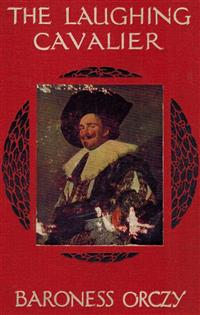
Orczy extended the series across volumes such as I Will Repay, The Elusive Pimpernel, The League of the Scarlet Pimpernel, and Eldorado, and later entries including The Triumph of the Scarlet Pimpernel. She also explored related historical adventures in The Laughing Cavalier and continued detective work with Lady Molly of Scotland Yard and collections of the Old Man in the Corner. Contemporary reviewers sometimes regarded her melodrama as unfashionable, yet many praised her craft in suspense and atmosphere. Commercially, she enjoyed sustained popularity, with reprints and translations maintaining readership. Her fiction demonstrated how iterative characters and episodic structures could thrive across media and markets.
Publicly, Orczy identified with patriotic and conservative positions, and she connected these views to her writing’s recurring themes of loyalty, order, and individual daring. During the First World War she founded and promoted the Women of England’s Active Service League, encouraging women to support enlistment. Her fiction often dramatizes threats posed by revolutionary violence and celebrates rescue, courage, and social duty. These emphases aligned with mainstream theatrical tastes of her era, bolstering her appeal while inviting debate. She addressed readers directly in essays and prefaces, presenting her stories as entertainment with moral texture rather than political tracts, and she maintained a steady public profile.
Orczy continued to publish into the 1930s and 1940s, including an autobiography, Links in the Chain of Life, reflecting on her career and the endurance of her creations. Film and radio versions of The Scarlet Pimpernel introduced new audiences; a celebrated 1934 screen adaptation helped cement the character’s image. She died in London in 1947. Her legacy lies in codifying the charismatic avenger with a double life, a pattern echoed by later swashbucklers and modern superheroes. Persistent revivals on stage and television, along with ongoing readership, attest to the vitality of her dramatic templates and the pleasure of resourceful heroism set against perilous times.
The Man in Grey
Chapter 1 Silver-Leg
I
“FORWARD now! And at foot-pace, mind, to the edge of the wood—or[1q]—”
The ominous click of a pistol completed the peremptory command[2q].
Old Gontran, the driver, shook his wide shoulders beneath his heavy caped coat and gathered the reins once more in his quivering hands; the door of the coach was closed with a bang; the postilion[3] scrambled into the saddle; only the passenger who had so peremptorily been ordered down from the box-seat beside the driver had not yet climbed back into his place. Well! old Gontran was not in a mood to fash about the passengers. His horses, worried by the noise, the shouting, the click of firearms and the rough handling meted out to them by strange hands in the darkness, were very restive. They would have liked to start off at once at a brisk pace so as to leave these disturbers of their peace as far behind them as possible, but Gontran was holding them in with a firm hand and they had to walk—walk!—along this level bit of road, with the noisy enemy still present in their rear.
The rickety old coach gave a lurch and started on its way; the clanking of loose chains, the grinding of the wheels in the muddy roads, the snorting and travail of the horses as they finally settled again into their collars, drowned the coachman’s muttered imprecations.
“A fine state of things, forsooth!” he growled to himself more dejectedly than savagely. “What the Emperor’s police are up to no one knows. That such things can happen is past belief. Not yet six o’clock in the afternoon, and Alençon less than five kilométres in front of us.”
But the passenger who, on the box-seat beside him, had so patiently and silently listened to old Gontran’s florid loquacity during the early part of the journey, was no longer there to hear these well-justified lamentations. No doubt he had taken refuge with his fellow-sufferers down below.
There came no sound from the interior of the coach. In the darkness, the passengers—huddled up against one another, dumb with fright and wearied with excitement—had not yet found vent for their outraged feelings in whispered words or smothered oaths. The coach lumbered on at foot-pace. In the affray the head-light had been broken; the two lanterns that remained lit up fitfully the tall pine trees on either side of the road and gave momentary glimpses of a mysterious, fairy-like world beyond, through the curtain of dead branches and the veil of tiny bare twigs.
Through the fast gathering gloom the circle of light toyed with the haze of damp and steam which rose from the cruppers, of the horses, and issued from their snorting nostrils. From far away came the cry of a screech-owl and the call of some night beasts on the prowl.
Instinctively, as the road widened out towards the edge of the wood, Gontran gave a click with his tongue and the horses broke into a leisurely trot. Immediately from behind, not forty paces to the rear, there came the sharp detonation of a pistol shot. The horses, still quivering from past terrors, were ready to plunge once more, the wheelers stumbled, the leaders reared, and the team would again have been thrown into confusion but for the presence of mind of the driver and the coolness of the postilion.
“Oh! those accursed brigands!” muttered Gontran through his set teeth as soon as order was restored. “That’s just to remind us that they are on the watch. Keep the leaders well in hand, Hector,” he shouted to the postilion: “don’t let them trot till we are well out of the wood.”
Though he had sworn copiously and plentifully at first, when one of those outlaws held a pistol to his head whilst the others ransacked the coach of its contents and terrorised the passengers, he seemed inclined to take the matter philosophically now. After all, he himself had lost nothing; he was too wise a man was old Gontran to carry his wages in his breeches pocket these days, when those accursed Chouans[1] robbed, pillaged and plundered rich and poor alike. No! Gontran flattered himself that the rogues had got nothing out of him: he had lost nothing—not even prestige, for it had been a case of twenty to one at the least, and the brigands had been armed to the teeth. Who could blame him that in such circumstances the sixty-two hundred francs, all in small silver and paper money—which the collector of taxes of the Falaise district was sending up to his chief at Alençon—had passed from the boot of the coach into the hands of that clever band of rascals?
Who could blame him? I say. Surely, not the Imperial Government up in Paris who did not know how to protect its citizens from the depredations of such villains, and had not even succeeded in making the high road between Caen and Alençon safe for peaceable travellers.




