


4,99 €
Mehr erfahren.
- Herausgeber: Olympia Press
- Kategorie: Für Kinder und Jugendliche
- Sprache: Englisch
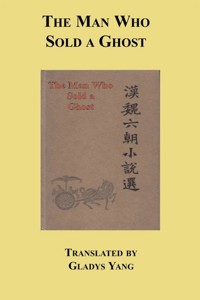
This collection contains some of the best Chinese tales from the third to the sixth century. They fall into two main categories: stories of the supernatural and anecdotes about historical figures. The former, which clearly predominate, evolved from earlier myths and legends.
Das E-Book können Sie in Legimi-Apps oder einer beliebigen App lesen, die das folgende Format unterstützen:
Veröffentlichungsjahr: 2016
Ähnliche











![Tintenherz [Tintenwelt-Reihe, Band 1 (Ungekürzt)] - Cornelia Funke - Hörbuch](https://legimifiles.blob.core.windows.net/images/2830629ec0fd3fd8c1f122134ba4a884/w200_u90.jpg)



FOREWORD
This collection contains some of the best Chinese tales from the third to the sixth century.
They fall into two main categories: stories of the supernatural and anecdotes about historical figures. The former, which clearly predominate, evolved from earlier myths and legends.
Lu Hsun said in his Brief History of Chinese Fiction: “When primitive men were puzzled by the ever-changing phenomena of nature, they made stories to explain them. And so myths started.” As society developed, myths changed into legends. The chief characters in myths are gods, while in legends they are men with semi-divine qualities. The ancient myths and legends of China have not been preserved because the ruling class neglected them; but occasional examples can be found in old works of philosophy or history. Thus the Book of Mountains and Seas has preserved many myths and legends of bygone heroes. Another work of the Warring States Period, the Travels of King Mu, records how this Chou dynasty king journeyed in a carriage drawn by eight divine horses to the Queen Mother of the West. The ghost and fairy stories of the third to the sixth century were inspired by the spirit we find in those early myths and legends.
Since the old myths and legends were closely linked with ancient history, the earliest historical records often include them as authentic facts. Later legends parted company with myths and became more like modern stories. This collection also includes anecdotes about real men — another type of early Chinese fiction.
Though the tales about the supernatural originated in myths and legends, they possess a distinctive social content and a fair degree of realism.
At the end of the Han dynasty the famous Yellow Turban Revolt broke out as a result of the cruel exploitation of the people. After the failure of this revolt the empire was split into three kingdoms. During the fighting among different warlords, hundreds of thousands of people were killed, pestilence and famine were rife, and farms were laid waste. This was a dark age for China. After the establishment of the Western Tsin dynasty, the empire had not been united long when there was trouble with the various princes. Then followed invasions by nomadic tribes from the north. The house of Tsin moved south of the Yangtse River, while north China was split into several kingdoms under different tribes. Yet the southern rulers continued to lead lives of wanton luxury. Thus while progress was made in methods of production thanks to the large number of northerners with superior technique and tools who moved south, the common people were still ground down by the nobles and great landowners. Conscript labour and military service were constantly exacted. Oppression was widespread and massacres a common occurrence. In both north China and south of the Yangtse men had no illusions. Their hatred for the ruling class and longing for better days found expression in incessant revolts, as well as in these stories of the supernatural. It is this that gives these tales their specific social content and realism.
During the Han dynasty shamanism was still commonly practised, and men lent a ready ear to the teaching of magicians and alchemists. Emperor Wu took a keen interest in the search for elixirs and Emperor Kuang-wu in oracles and divination. And the prevalence of such superstitions fostered the growth of these tales of the supernatural. By the end of the Han dynasty Taoism was widespread, and Buddhist ideas had begun to come in from India as communications with the west improved. Buddhism became a new force in Chinese civilization and contributed to the variety of these stories.
Since these stories developed under such historical conditions, although they give indirect expression to the people's feelings and wishes, they inevitably embody certain defects. Thus they are filled with superstition, animism, and ideas of divine retribution and the transmigration of the soul, while the feudal concepts of Confucian morality are strongly endorsed here. Marriages arranged by parents are considered quite normal, and acts of personal revenge are highly praised. While such views were a natural result of the social conditions of the time, we should point them out when introducing these stories so that the readers may distinguish between these feudal dregs and the genuine feelings and aspirations of the people, and understand the realism of these tales.
Many of these stories reveal clearly the people's hatred of oppression. “The Sword-Maker” tells how a sword-maker's son gave his life to avenge his father whom the king had killed. “Han Ping and His Wife” shows love which would not yield to temptations or threats. “The Dog from the Village Tavern” is something of a satire which, by hinting that a high official was a dog, expresses the general contempt for officials. Other tales deal with social problems of that period. In “Iron Mortar” a stepson takes revenge on the stepmother who has hounded him to death. The theme of “The King of Wu's Daughter” is freedom in marriage: the princess dies of a broken heart but her ghost meets her lover again. In fact, all the problems of the feudal family are raised in these ghost stories. Sometimes the message is clearly conveyed, at others it is implied, as in “The Powder Girl” and “The Lovelorn Spirit.”
In certain stories the ghosts and devils represent the ugliness of the ruling class. Elsewhere they symbolize the people's indomitable spirit, or show the author's sympathy with suffering.
Anecdotes about real men form one important category in this ancient fiction. Prince Tan's Revenge is an early example of this, but the most famous collection of such anecdotes is the New Anecdotes of Social Talk.
Social Talk does not deal with the supernatural or with religion but reveals certain other aspects of feudal thought. It affirms the feudal way of life, feudal morality and aesthetics. It affirms deliberate escapism and abandonment, as well as such bad habits of the idle rich as gossip and the affectation of culture. At the same time, however, it gives us a fairly truthful picture of the ruling class at that time with its decadence and corruption, together with sketches of good characters.
These tales are not only rich in content, but have their merits also as literature. Though most of them deal with the supernatural, they appear intensely human. Ghosts and fairies talk and behave in a very natural way, with genuine feeling. Thus the fairy of Chinghsi Temple acts like any girl in love. These tales are remarkably compact, the development of the plot is skillfully handled, and the characterization is excellent. Hence these simple accounts are vivid and evocative. Some anecdotes in Social Talk consist of a few sentences only, yet are full of significance. The language of the time is concise to a high degree; and whether the theme is heroism, as in “The Serpent Sacrifice,” or vengeance, as in “The Merchant's Revenge,” the authors know how to hold the readers' interest.
For more than a thousand years the best of these tales have formed an important part of China's literary heritage and exercised a great influence on later fiction. This literary form persisted till after the eighteenth century. Indeed, the well-known Tales of Liao-chai by Pu Sung-ling is a continuation of this tradition. Many of these stories were also adapted by later writers. To name but a few examples: “The Cedar Pillow” inspired the Tang dynasty story The Governor of the Southern Tributary State; “Tung Yung and the Weaving Maid” is the theme today of local operas; “The Sword-Maker” was rewritten by Lu Hsun. Some folk tales of this period, like “The Haunted House” or “The Lady of the White Stream,” are still widely popular. The modern versions may be more elaborate, but essentially they are the same.
In ancient China many types of writing were known as fiction (hsiao shuo). We have selected only those which have a story to tell, omitting accounts of distant lands, local products and customs, the sayings of famous men, or jokes.
An appendix gives a brief account of the various works from which these stories are chosen; but since in several cases the dates are uncertain, it is impossible to arrange them in strictly chronological order. We have, on the whole, put the ghost and fairy stories before the anecdotes of famous men.
To help foreign readers to visualize the life and society of that period in China, we have chosen as illustrations a number of reproductions of works of art dating from the third to the sixth century. Though these have no direct bearing on the tales, we hope they will supply something of the background and spirit of that age.
Our thanks are due to Mr. Wu Hsiao-ju, lecturer of the Department of Chinese Literature of Peking University, who rendered us great assistance in the selection of these stories.
July 1958
THE MAN WHO SOLD A GHOST
When Tsung Ting-po of Nanyang was young, he met a ghost one night as he was walking.
“Who are you?” he asked.
“A ghost, sir. Who are you?”
“A ghost like yourself,” lied Tsung.
“Where are you going?”
“To the city.”
“So am I.”
They went on together for a mile or so.
“Walking is most exhausting. Why not carry each other in turn?” suggested the ghost.
“A good idea,” agreed Tsung.
First the ghost carried him for some distance.
“How heavy you are!” said the ghost. “Are you really a spectre?”
“I am a new ghost,” answered Tsung. “That is why I am heavier than usual.”
Then he carried the ghost, who was no weight at all. And so they went on, changing several times.
“As I am a new ghost,” said Tsung presently, “I don't know what we spectres are most afraid of.”
“Being spat at by men — that is all.”
They went on in company till they came to a stream. Tsung told the ghost to cross first, which it did without a sound. But Tsung made quite a splash.
“Why do you make such a noise?” inquired the ghost.
“I only died recently. I am not used to fording streams. You must excuse me.”
As they approached the city, Tsung threw the ghost over his shoulder and held it tight. The ghost gave a screech and begged to be put down, but Tsung would not listen and made straight for the market. When he set the ghost down it had turned into a goat. He promptly sold it, having first spat at it to prevent it changing its form again. Then he left, the richer by one thousand five hundred coins. So the saying spread:
Tsung Ting-po did better than most— He made money by selling a ghost.
THE SHRINE TO THE ANGRY BULL
In Wutu County stands the Shrine to the Angry Bull. They say this deity was a giant catalpa tree on the south hill. In the twenty-seventh year of his reign, Duke Wen of Chin sent men to fell this tree, but each time they gashed the trunk it healed again. Even when the duke sent forty men with axes, they could not cut it down. Tired out, they all went home except one man who was unable to leave because he had hurt his foot. He lay down under the tree, and there he heard two spirits talking.
Said one: “Have you not had enough of fighting?”
Said the other: “It is tedious, certainly.”
“What if the duke goes on and on?”
“What harm can he do me?”
“Suppose he sends men in red to sprinkle ashes on you?”
At that the other was silent.
The wounded man reported this to the duke, who told his men to put on red clothes and sprinkle ashes on each cut they made. By this means the tree was felled. It changed into a bull which plunged into the stream. Because of this a shrine was erected here.
THE LOST HORSE
The city tribune, Pao Hsuan, was a native of Shangtang whose other name was Tzu-tu. As a young man he was on his way to the capital for an examination when he met a scholar travelling alone who had a pain in his chest. Pao alighted from his carriage to attend to him. But very soon the other died, not having disclosed his name, leaving a scroll of writing and ten silver pieces. Pao spent one piece of silver on the funeral, placed the rest under the dead man's head and spread the scroll over his body. After mourning he left him, saying:
“If your spirit is conscious after death, let your family know where you are. I have business and cannot stay with you any longer.”
When Pao reached the capital a fine steed attached itself to him but would let no one else approach it. Returning home Pao lost his way, and went up to a nobleman's house, hoping they might put him up for the night. He asked for the master, and gave the slave his card. When the slave saw the horse, he hastened in to report to the nobleman:
“The stranger outside has stolen that steed you lost.”
His master said: “Pao Hsuan is a well-known scholar of Shangtang. There must be some reason for this.” He asked Pao: “How did you come by this horse which I lost the other year?”
Pao told him: “On my way to the capital I met a scholar who died on the road....” He told the whole story from beginning to end. The nobleman was aghast.
“That was my son!” he cried.
He went to fetch the coffin, and upon opening it found the silver and scroll there just as Pao had said. Then the nobleman went to court to recommend Pao, and Pao's fame spread far and wide.
THE HAUNTED HOUSE
Chang Fen was a rich man of the principality of Wei. Suddenly falling into a decline, he sold his house to the Cheng family of Liyang. But after moving in, one after another they fell ill and died. Then they in turn sold the house to Ho Wen of Yeh.
One evening Ho sat with drawn sword on the beam in the main hall facing south. At the second watch, he saw a figure over ten feet high come in, dressed in a tall hat and yellow garment.
“Slender Waist!” called this apparition. “Why do I smell a living man?”
“There is no one here,” was the answer.




