


Erhalten Sie Zugang zu diesem und mehr als 300000 Büchern ab EUR 5,99 monatlich.
- Herausgeber: Tullinois
- Kategorie: Abenteuer, Thriller, Horror
- Sprache: Englisch
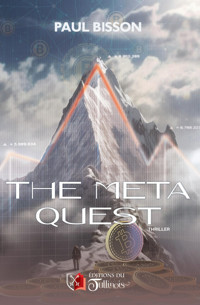
Charles Durant, a young autistic man, is murdered under disturbing circumstances on the eve of his twenty-sixth birthday. He was fatally struck by a poisoned dart while seated on his makeshift “throne” in the loft above his mother Jeannine Durant’s detached garage. Charles was a cryptocurrency broker, a seasoned Bitcoin investor, and an avid traveler of the virtual world.
Charles worked for Clear Sentence, a cryptocurrency exchange platform. The company had recently come under intense scrutiny from the U.S. Securities and Exchange Commission following a surge of complaints from novice investors. It was suspected of violating U.S. laws against fund manipulation and of blindly enabling money laundering operations.
Devastated by her son’s death, Jeannine turns to Major Maximilien Le Gardeur, a former Canadian Air Force fighter pilot, to uncover the truth behind the mysterious murder. Renowned for his international investigative work with organizations such as NATO and INTERPOL, Maximilien now takes on this case in the realm of Web 3.0. As a second murder occurs under similar circumstances the race is on to stop the killing. He teams up with Manoé Duvalier, a brilliant and eccentric whiz kid obsessed with cutting-edge communication technologies. From Quebec to Paris, and on to Ho Chi Minh City in Vietnam, their investigation unravels an unexpected alliance.
ABOUT THE AUTHOR
Paul BISSON is a Canadian author from Quebec. An international communications consultant, Paul Bisson has worked around the world as a television director, federal civil servant, and former director of the Canadian Pavilion at world expos. He has also teaches university courses in communications
Sie lesen das E-Book in den Legimi-Apps auf:
Seitenzahl: 190
Veröffentlichungsjahr: 2025
Das E-Book (TTS) können Sie hören im Abo „Legimi Premium” in Legimi-Apps auf:
Ähnliche



















Couverture
Table of contents
DEDICASE
PROLOGUE
INFORMATIONS
CHAPTER 1
CHAPTER 2
CHAPTER 3
CHAPTER 4
CHAPTER 5
CHAPTER 6
CHAPTER 7
CHAPTER 8
CHAPTER 9
CHAPTER 10
CHAPTER 11
CHAPTER 12
CHAPTER 13
CHAPTER 14
CHAPTER 15
CHAPTER 16
CHAPTER 17
CHAPTER 18
CHAPTER 19
CHAPTER 20
CHAPTER 21
CHAPTER 22
CHAPTER 23
CHAPTER 24
CHAPTER 25
EPILOGUE
Author’s Note
INDEX
Copyright
Bibliothèque et Archives nationales du Québec and Library and Archives Canada Cataloguing in Publication
Title: The meta quest / Paul Bisson.
Other titles: Méta enquête. English
Names: Buisson, Paul (Consultant), author.
Description: Translation of: La méta enquête.
Identifiers: Canadiana 20250042940 | ISBN 9782898094507
Classification: LCC PS8603.I872 M4813 2025 | DDC C843/.6—dc23
Author : Paul BISSON
Title : The Meta-Quest
All rights reserved, it sis prohibited to copy in wholle or in part, LN MANY form or by any means, without the written persmission for the owner to author, in accordance with the law on the copyrights.
©2025 Éditions du Tullinois
www.editionsdutullinois.ca
ISBN papier version : 978-2-89809-450-7
ISBN E-Pub version: 978-2-89809-451-4
Bibliothèque et Archives nationales du Québec
Librairies and Archives Canada
Legal Deposit paper version : 3e trimestre 2025
Legal Deposit E-Pub version : 3e trimestre 2025
Translate by J Paul BISSON
Cover illustration : Mario Arsenault Designgo
Printed Canada
Fist impression : September 2025
We thank the Société de Développement des Entreprises Culturelles du Québec (SODEC) and the Government of Quebec for its tax credit program and for all the support given to our publications.
DEDICASE
“Now, for enlightenment, nothing is required except freedom; and indeed, the most harmless kind of freedom one can imagine that of making public use
of one's reason in all matters.”
- Immanuel Kant (1724–1804)
A father's advice to his son“Don’t try to be better than your father;
try to be the best version of yourself,
and you will be better than your father.”
PROLOGUE
The word “meta” in “metaverse” comes from the Greek (meta), meaning “beyond” or “after.” So when we talk about the metaverse, we’re referring to a kind of virtual reality that goes beyond what we can touch and see in the real world. It’s a digital universe where people can meet and do all sorts of things together like chatting, working, playing, and even buying and selling virtual goods.
In this metaverse (and for the purpose of this Meta Quest), everyone can create their own version of themselves, called an avatar, and explore imaginary worlds built by other people. It’s like playing a video game, but much bigger and more complex, almost like stepping into a comic book or a manga.
What’s convenient about the metaverse is that you can do pretty much anything you want, as long as you can imagine it. You can stroll through virtual amusement parks, attend online classes in imaginary classrooms, work with colleagues who are thousands of miles away, or even buy clothes and objects for your avatar, venture into illicit or illegal activities. In the metaverse, experiences are limited only by the imagination of the creators and users.
In short, the metaverse opens up a world of infinite possibilities, allowing us to rethink how we live and interact with others using technology to create experiences that go far beyond what we can do in real life.
INFORMATIONS
Here are a few translated quotes on the subject:
“The metaverse isn’t something one company builds. It’s the next chapter of the entire Internet.”
— Mark Zuckerberg, Meta (Facebook)
“The metaverse is a term scientists use to describe the idea that beyond the observable universe, other universes could also exist.”
— National Geographic, May 4, 2022
“The metaverse and virtual worlds offer new opportunities for digital immortality.”— Psychology Today
CHAPTER 1
Quebec, Wednesday, June 20, 2018
Charles cast a worried glance at the sky, fearing that the rain might come earlier than expected. In the distance, the sky rumbled on this June evening, marking the beginning of summer. It was a weekday night, and Saint-Jean-Baptiste (Saint-Jean-Baptiste Day is the national holiday of Quebecers and aims to highlight Francophone culture in Canada.) would be celebrated in a few days.
Charles lived in his loft, set up above his mother’s detached garage. He had moved in the previous year. As usual, he was about to end his workday on his outdoor chair, which he had installed precariously on the ledge of his window. He accessed it using a rope and by climbing makeshift wooden steps nailed to the roof. His mother strongly disapproved of this dangerous setup, but as agreed before he moved back in with her, she had to respect their deal, no rules, no restrictions, no limitations were to be imposed on him upon his return home.
Charles Durant, twenty-five years old, was a cryptocurrency broker, a seasoned Bitcoin investor, and an avid traveler of the virtual world. His days unfolded in sync with the latest state of the art communication technology.
He tucked his joint and lighter into his shirt pocket, then climbed up to his makeshift throne. This was his only moment of escape, a complete disconnection from virtual reality to reconnect with the real world. He loved gazing at the sky, the stars, smoking his joint in peace, and being in total communion with real life.
He lit it, inhaling his first puff and then exhaling the smoke slowly, Charles couldn’t help but think about his latest financial transactions on Clear Sentence’s investment platform, Himalaya. Memories of these virtual dealings flooded his mind, intertwining with his personal recollections.
Suddenly, an unusual noise caught his attention. It definitely came from an object slowly approaching him, or so he thought. He tried to identify it by peering through the branches of the massive oak tree, but its already fully grown foliage obstructed his view. Then, he recognized a drone. The device maneuvered around the large oak and struggled to stabilize against the first gusts of wind heralding the storm.
There, right in front of him, the drone finally steadied itself, like a hummingbird hovering twenty feet away. Charles felt observed by its camera, naively believing it to be a prank orchestrated by one of his virtual friends. He smiled at it and raised his arm in a welcoming gesture.
But suddenly, something strange stunghis neck. His eyes widened in shock as he reached for his neck with his hand. His body slumped onto the chair, letting his joint fall carelessly to the ground.
A tiny poisoned dart had just struck him down on his makeshift throne.
CHAPTER 2
Charles was five years old when he was diagnosed with autism. The healthcare professional informed his parents that, according to an autism functioning scale, Charles was classified at the first level (First degree: Requires support. Second degree: Requires significant support. Third degree: Requires very significant support.).
“It is important for you to understand that every autistic person is unique and may exhibit a wide range of symptoms depending on their level of functioning, he explained.”
“What does this mean for our son?” his mother asked.
“Charles has autism without any significant intellectual disability. However, he may face social and communication challenges while still being able to function independently,” he replied.
“You say ‘without significant intellectual disability’… Will he be able to attend school like other children his age?” his father inquired
“Yes, eventually, he will be able to join regular classes, but he will need support from a special education teacher. Initially, I recommend that Charles start in a specialized class with an adapted education teacher and a special needs educator.”
“So, always behind in his schooling,” his mother said with dismay.
“Your son may actually have above-average intellectual abilities, but he will only be able to express them in a specific environment where he feels comfortable,” the healthcare professional concluded.
Despite this difficult diagnosis, Charles’ parents wanted to remain optimistic for their only child. Both worked in public service, his father at the federal level, his mother at the provincial level. After careful consideration, they decided to move closer to a school renowned for its special education services.
From their first meeting with the school's adapted education teacher, they felt reassured by her professional commitment and her approach to teaching autistic students. She advocated for the use of pictograms to help students express their emotions and better understand their environment.
“Pictograms help them communicate their needs and desires,” she explained. “I use specialized software for this type of teaching.”
“But what about learning science and math?” the father asked.
“Pictograms can also be used to teach abstract concepts like mathematics,” she replied.
Charles maintained an above-average learning pace at school, thanks to the use of the pictograms. Interacting with images and symbols reassured him, even though he still struggled with social interactions among his classmates.
His father, unlike his mother, adapted his way of communicating with his son. He enrolled in a training program for parents of autistic children. He used a pictogram app on his Apple tablet to facilitate conversations with him. His mother, however, couldn’t accept that Charles refused any physical contact, she longed to hold him in her arms and comfort him when he was upset.
Unintentionally, she disrupted his world with seemingly trivial gestures, like moving his personal belongings in his room or constantly buying him new clothes. Over time, a subtle distance grew between them.
At the age of nine, he joined a regular class. The special education teacher, whom he saw for eight hours a week, used virtual reality as a communication and teaching tool. Charles embraced it. He increasingly saw this technology as essential for expressing his emotions and exploring the world without being physically present or having direct human contact. His relationship with this technology fascinated him and completely captivated him.
Every time he put on his headset, his eyes widened as the virtual environment materialized around him. It was easy, almost natural, for Charles to get lost in this world and forget about reality.
By fourteen, after taking online courses in 3D modeling and animation, he developed an advanced application to facilitate learning and communication for individuals with severe autism. With the help of his father, who had some programming knowledge, and his special education teacher, he created an immersive virtual reality experience tailored to the autistic mind. The interface was user-friendly, and navigation with a VR (Virtual Reality) headset was highly intuitive. After multiple tests and refinements, the application was launched on a virtual reality distribution platform.
For his fifteenth birthday, his father gifted him the latest VR equipment, including a headset that allowed full immersion in virtual worlds and movement within 3D environments. The simulation software demonstrated aspects such as perspective, rotation, and object interposition.
With his computer, he could access computerized 3D simulation environments and explore places through an avatar visible to others. The system enabled realtime actions and movements, allowing users to interact with one another. Charles created his own avatar to travel the world.
One day, he put on his headset and found himself transported into the grand halls of the Louvre. He walked slowly among the famous works of art, admiring masterpieces such as the Mona Lisa and the Venus de Milo. Suddenly, a young woman appeared beside him. Judging by her avatar’s features, she seemed Asian.
“Hello,” she simply said.
Charles froze, surprised that he didn’t feel the usual social discomfort. Making eye contact with the avatar didn’t terrify him the way it did with real people.
“My name is Mai Lan.”
“Hi, I’m Charles,” he replied, excited.
They headed toward the Hall of States, where they admired the collection of 19th-century paintings. Mai Lan explained the history and significance of each piece while Charles listened attentively, fascinated by her knowledge.
Eventually, they parted ways, but not before agreeing to meet virtually again. He gave her his electronic contact information.
At eighteen, Charles became increasingly fascinated by new technologies and had heard about encrypted electronic currency. While exploring a virtual city, he noticed a poster advertising a conference on cryptocurrencies. Intrigued, he decided to attend and met experts in the field who taught him everything he needed to know about this fascinating world.
As soon as he returned to reality, he accessed an online cryptocurrency exchange platform. The platform required him to create an account to verify his identity before he could buy cryptocurrency. This involved providing identification and proof of residence, which he did.
Once his account was created and verified, he was authorized to purchase tokens using a credit card or by transferring funds into his electronic account. He opted for one Bitcoin. He entered his payment information and clicked "buy". Anxiously, he waited for the transaction to be completed, constantly checking his computer screen to ensure everything was proceeding smoothly. Finally, the transaction was confirmed, and Charles saw that his new currency was in his online wallet.
He became a true cryptocurrency enthusiast, continuing to buy and trade while monitoring his investments daily. His enthusiasm didn’t stop there, he also researched Bitcoin mining. Charles realized he needed his own mining farm. A mining unit, roughly the size of a car battery, cost around five thousand dollars. He discussed it with his father. After many discussions, complicated by Charles’s communication challenges, his father agreed to lend him thirty thousand dollars to launch his project.
Charles purchased five machines, setting aside some funds for a dedicated graphics card. This module was necessary to connect his mining machines to an internet site and integrate them into a system called blockchain. Whenever the system required a calculation, the owner would receive a Bitcoin reward.
By the age of twenty-one, he had not only repaid his father but had also accumulated a substantial sum in his digital wallet. His mining farm had grown to fifty machines, installed in the family garage. In addition to expanding his farm, he also bought cryptocurrency through a broker, which he stored in his account. He used it for online purchases via his crypto wallet. The returns on these crypto investments often exceeded those of conventional investments, such as the stock market and other funds.
One day, he saw an advertisement from the main company he used for cryptocurrency transactions, a centralized exchange platform called Clear Sentence.
"Clear Sentence has experienced exponential growth since its inception in the investment market, and we are looking for innovative personnel to fill positions in digital communication and marketing. We offer competitive benefits and encourage remote work."
The term “remote work” resonated in his mind.
“Could I land my first real job?” he wondered. “I can perform well and communicate when there’s a machine between me and other people.”
The machine was the computer, the software, and virtual reality. He navigated to the job application page.
Charles was hired after a series of online interviews conducted via an artificial intelligence-powered interview platform. He had become a cryptocurrency broker. But his joy was short-lived. A few weeks later, tragedy struck, his father succumbed to colon cancer.
He had known about his father’s battle with the disease over the past year. His father was his rock, his guiding light, the only one with whom he had established effective communication. Charles was devastated.
"I will survive for you. I will show you that I can be independent," he promised, as he leaned over and placed his hands on his father’s during the funeral.
He decided to sell all his Bitcoin mining equipment and moved to Maison Cardinal, a government-subsidized institution in Montreal that housed adults with conditions such as autism but who could live independently. He did so against his mother’s wishes.
Despite the regulations and specialized staff at Maison Cardinal, who did everything possible to accommodate his autism spectrum disorder, Charles was unhappy. He struggled to interact with his housemates. Some of them didn’t always follow the established rules, which he obsessively fixated on. He began having trouble sleeping and became increasingly irritable with the other residents.
The only person he could express his frustrations to was Mai Lan, his Asian friend. They had always kept in touch through virtual reality. Moreover, following Charles’s recommendation, she had applied for a position at Clear Sentence. Both of them now worked in the same department, handling cryptocurrency transactions in virtual reality channels.
-o0o-
"Congratulations, Charles!" his director at Clear Sentence said.
Charles and his international colleagues were in a Zoom meeting with their boss for the weekly report. For the fourth consecutive month, the highest deposits in euros, Canadian dollars, and U.S. dollars had been made to accounts managed by Charles. These deposits were necessary for clients to purchase cryptocurrency later on.
"Well done, handsome Charles," his colleague Mai Lan teased from Ho Chi Minh City.
The rest of the team smiled in agreement, Emmanuelle from Paris, Ethan from Boston, and Kai Saetang from Bangkok.
"Ladies and gentlemen, please, Charles deserves all our congratulations," the director said, regaining control of the meeting. "I have an announcement for you. Next month, Clear Sentence will be launching a highly competitive cryptocurrency investment fund called Himalaya."
The director outlined the key features of the new fund. Charles and his colleagues were surprised by the guaranteed return rate the company was offering.
"Climb a mountain, one crypto at a time, to reach new heights and achieve high returns, this is the motto of our new fund. I will send you some documents with strong sales arguments. Please share the good news with your clients."
The meeting ended, but skepticism about this new investment model lingered within the team.
-o0o-
As Charles approached his twenty-third birthday, his situation at his Maison Cardinal residence was becoming increasingly concerning for the staff. His mother was contacted. The administration informed her that they would not be renewing Charles’s lease. Madame Durant requested some time to think but insisted on being the one to break the news to her son.
Charles’s mother had to find a solution that suited him. She requested and obtained a meeting with the special education teacher who had supported him when he was in a regular classroom. The meeting was beneficial and helped her devise a plan. She ultimately decided to confront her son to deliver the bad news and offer a solution that respected his condition.
"Listen to me, Charles. I am your mother, and despite our differences, you are the most precious person in my life. Know that my love for you is unconditional."
They were sitting side by side on a park bench, not looking at each other. It was mid-morning, a gentle late-spring breeze swept through the park, the sun shone brightly, and a large maple tree provided shade. Charles listened passively, even indifferently.
"Here’s what I propose. I hope you’re listening… I will build a loft above the garage. It will be your space, and we’ll set it up exactly how you want. You’ll be alone there, and no one will enter without your consent," she said, turning slightly toward him to gauge his reaction.
Charles remained impassive, but suddenly, still looking straight ahead, he responded:
"I want to recreate my mining farm in the garage… but bigger… It will require more power, new technology. A dim lighting system… There needs to be an internal staircase from the garage to the loft… Even you won’t be allowed to enter without my consent."
He turned his head slightly to observe his mother’s reaction. She noticed the movement but kept her gaze fixed forward.
"Alright," she simply said.
The agreement was sealed, and together, through email exchanges, they developed the plans. She promised him that the loft would be completed within a year. At twenty-four, Charles moved into his new home.
CHAPTER 3
Quebec, Thursday, June 21, 2018
Madame Durant woke up early that Thursday morning, June 21, just a few days before Saint-Jean-Baptiste Day. The night before, she had been worried about her son, as a hailstorm had hit the region.
Jeannine Durant, forty-nine years old and an actuary by training, was a woman with a rational mind. She approached everything with a Cartesian mindset and had great confidence in the decisions she made. She had been working in the provincial public service since earning her bachelor’s degree from the University of Sherbrooke twenty-six years earlier.
Her husband had passed away a few years ago after a long battle with cancer. His death had caused her immense sorrow but had also provided her with financial security. In addition to life insurance, she benefited from mortgage insurance on their home and a portion of her late husband’s pension. Moreover, she had been pleasantly surprised to discover the existence of an investment bank account in her husband’s name, containing a significant sum of money.
Jeannine opened the patio door leading to the backyard. She glanced toward the garage and the loft, but her view was partially obstructed by the large oak tree. Slipping on her Crocs, she stepped into the yard. Her attention was immediately drawn to the window ledge of the loft.
"Charles… Charles, wake up… My God, what are you doing there?"
Seeing that he did not react, she assumed he was in a deep sleep. Jeannine entered the garage and climbed the stairs to the loft. Unfortunately, the door was locked with a deadbolt. She returned to the yard and shouted her son’s name at the top of her lungs, calling repeatedly.
Drawn by the commotion, her neighbor arrived by her side and saw the slumped body on the chair.
"We need to call 911," he told her.
"What?" she stammered, bewildered.
The neighbor grabbed his phone and dialed the emergency number. He was wearing a blue, white, and red bathrobe with the logo of the Montreal Canadiens (Professional team of the National Hockey League (NHL).), along with a white headband holding back his long gray hair. Jeannine barely knew him. They had exchanged only a few greetings and comments about the weather. After more than twenty years as neighbors, she didn’t even know his name.
Thirty minutes later, after he had described the situation and the circumstances of the discovery, the police and firefighters arrived at the scene. The firefighters quickly set up a ladder and approached the body.
"Please be careful,"Jeannine cried out, worried to see the responders getting close to her son, who remained motionless.
The firefighters did not remove Charles from the chair. While one of them supported the body, another climbed into the loft through the window and then descended into the yard to speak with the police.
Jeannine couldn’t understand what was happening. Over the next few hours, investigators from the Sûreté du Québec were called to the scene. The area was secured, the victim identified, and Charles’s death confirmed. The scene was analyzed and photographed, evidence was collected, and the body was transported to the morgue.
Seeing that the neighbor seemed more interested in snooping than in offering his sympathies, Jeannine politely asked him to leave.
The chief inspector then approached her and asked if he could speak with her inside her home.
Seated in her living room, Jeannine faced Lieutenant Gérard Coutu of the criminal brigade. She seemed overwhelmed by the events. Who wouldn’t be?
Inspector Coutu was a stocky man in his forties, with somewhat disheveled hair, of average height, and bearing a resemblance to the famous Lieutenant Columbo (Lieutenant Columbo, played from 1968 to 2003 by Peter Falk in the police television series of the same name.).
He began the conversation with a voice filled with compassion.
"I am deeply sorry for your son’s death, he began. I understand that this must be an extremely difficult time for you. However, I need to ask you a few questions now. Please rest assured that I will be as quick and efficient as possible so you can focus on your grieving."
Jeannine, sobbing slightly, nodded in acknowledgment.
"My first question is fairly standard: did your son have any enemies, or had he recently had problems with anyone?"
"That question is absurd,"Jeannine promptly responded. "My son led a reclusive life."
"Reclusive?"Coutu repeated, puzzled.
Jeannine outlined the major aspects of Charles’s life, marked by autism. She mentioned his return home after spending a few years at Maison Cardinal and his obsessive involvement with new technologies and cryptocurrency.
"Can you tell me who might be involved in your son’s death?"
"Honestly, I have no idea,"Jeannine replied, confused.
"Have you noticed anything unusual or suspicious in the days or weeks leading up to Charles’s death?"the inspector continued.
"I don’t know, I already told you, he was a child who lived locked away in his own world,"she retorted, frustrated.
"Did your son have any issues with drugs or alcohol, Mrs. Durant?"
"Yes… no. What do you mean by a drug problem?"she shot back, exasperated by all the questioning.




