


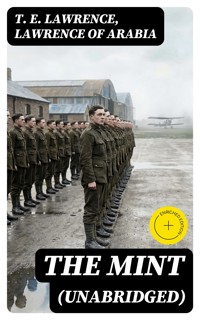
0,49 €
Mehr erfahren.
- Herausgeber: DigiCat
- Kategorie: Geisteswissenschaft
- Sprache: Englisch
In 'The Mint (Unabridged),' the reader is invited to explore the complexities and nuances of life as captured through a myriad of voices, all harmonizing to reveal the human condition. The overarching theme revolves around the transformation of identity and humanity's perpetual quest for meaning within the rigid confines of societal norms. With a range encompassing stark realism, lyrical introspection, and poignant narrative, this collection stands as a testament to the creative diversity of its contributors. Each piece, distinct in its style and execution, illuminates various facets of experience and existence, offering a mosaic that is both enlightening and profoundly moving. The anthology draws together a remarkable array of contributors whose backgrounds are as varied as the works themselves. In aligning with the historical and cultural milieu of early 20th-century literary movements, this collection unites pioneering voices who have collectively shaped the discourse around identity and transformation. Through their unique perspectives, the anthology captures the zeitgeist of the era, offering a rich tapestry of insights that challenge, inspire, and provoke thought among its readers. 'For readers seeking a dynamic and enriching experience, 'The Mint (Unabridged)' provides an unparalleled opportunity to navigate the diverse landscape of modern literature. It is a compelling resource for those who wish to broaden their literary horizons and engage with a series of works that spark dialogue and introspection. As readers journey through the pages, they are sure to encounter not only the voices of renowned authors but also the resonant echoes of shared human experiences, making this collection an invaluable addition to any literary arsenal. In this enriched edition, we have carefully created added value for your reading experience: - A succinct Introduction situates the work's timeless appeal and themes. - The Synopsis outlines the central plot, highlighting key developments without spoiling critical twists. - A detailed Historical Context immerses you in the era's events and influences that shaped the writing. - An Author Biography reveals milestones in the author's life, illuminating the personal insights behind the text. - A thorough Analysis dissects symbols, motifs, and character arcs to unearth underlying meanings. - Reflection questions prompt you to engage personally with the work's messages, connecting them to modern life. - Hand‐picked Memorable Quotes shine a spotlight on moments of literary brilliance. - Interactive footnotes clarify unusual references, historical allusions, and archaic phrases for an effortless, more informed read.
Das E-Book können Sie in Legimi-Apps oder einer beliebigen App lesen, die das folgende Format unterstützen:
Veröffentlichungsjahr: 2023
Ähnliche






The Mint (Unabridged)
Table of Contents
Introduction
A celebrated self enters a machine built to standardize men and discovers the cost of becoming a number.
The Mint (Unabridged) is T. E. Lawrence’s concentrated record of life in the ranks of Britain’s Royal Air Force, written by the man the world knew as Lawrence of Arabia. Composed in the years after the First World War, it captures his descent from public hero to anonymous recruit and his unsparing observation of barrack life. The premise is stark and compelling: an individual of unusual renown submits to routine, discipline, and obscurity, and watches how institutions mold character. Without dramatizing battles or campaigns, Lawrence turns his gaze inward and downward, toward daily processes that stamp people into serviceable form.
Lawrence wrote the book in the 1920s, during and soon after his own enlisted experience, but chose not to publish it in his lifetime. Its candor, especially its frank language and close portrayal of comrades, made him insist on delay. After his death in 1935, the work appeared posthumously in 1955, and the unabridged text preserves the hardness and immediacy he intended. That publication history is inseparable from the book’s meaning: the author who had captured the world’s attention deliberately set aside spectacle to chronicle the ordinary grind that followed, guarding the integrity of the account until the moment felt proper.
The book’s classic status rests first on the audacity of its subject. Few twentieth‑century writers so dramatically inverted their own legend. Where Seven Pillars of Wisdom centers on strategy, politics, and desert warfare, The Mint turns to drill squares, mess halls, and the private economies of enlisted men. Lawrence’s prose is pared to essentials—compressed, rhythmic, and wary of ornament—suited to a world of orders and timings. The result is a literature of attention: each task, fatigue, and exchange is weighed for what it reveals about power, solidarity, and self. That discipline of looking has influenced how later memoirs treat institutional life.
Just as important is the book’s acuity about identity. The title’s metaphor suggests a factory for shaping and standardizing, a place where individuality is pressed into useful currency. Lawrence studies how anonymity protects and erodes, how pride coexists with submission, and how camaraderie grows under pressure. He does not stage grand revelations; he records small, exact moments that accumulate into a portrait of belonging and estrangement. The Mint is, in that sense, a study of modernity: the production of selves fit for systems, the seductive clarity of rules, and the cost exacted when human variety is narrowed for efficiency and control.
The historical setting gives that study a special charge. The RAF, a new service forged in the Great War, embodies a technological and bureaucratic future. In the early 1920s, Britain was reckoning with empire’s contradictions, class boundaries, and the aftershocks of mass mobilization. Lawrence places his body within those pressures and listens. His account tracks the textures of postwar life: shortages and routines, the pride of competence, the boredom and brutality of repetition, the informal codes by which men judge one another. It is a social document as much as a personal memoir, registering change at ground level.
Formally, the book proceeds in brief, vivid chapters—sketches that fix on an incident, a chore, a voice. The compression is deliberate. Scenes break off where another day’s orders would naturally cut them short, and language follows the clipped cadence of parade ground and workshop. This episodic structure anticipates later nonfiction that prefers fragments over sweeping narrative, and it honors the subject’s true shape: enlisted life rarely offers plot; it offers cycles. By shaping a grammar for those cycles, Lawrence extends the possibilities of English prose, making restraint carry the weight of intensity and judgment.
Readers often approach The Mint through the author’s renown, but the book resists celebrity at every turn. Lawrence is present as a sensibility rather than as spectacle. He watches, cleans, obeys, and notes what obedience does to the watcher. The humility is not a pose. It is a mode of inquiry designed to test whether moral independence can survive regimentation and whether dignity can coexist with enforced sameness. The notable achievement is that the observations neither patronize nor romanticize the ranks; they remain exact, wary, and alert to the ways power hides in routine.
The publication of The Mint widened the understanding of Lawrence’s talent and corrected the tendency to read him only through desert myth. It also broadened the canon of military writing by privileging the texture of service over the drama of combat. Subsequent accounts of barracks, factories, and training grounds—across genres—draw on its method: close description, ethical scrutiny, and resistance to sentimentality. The book’s forthright diction, preserved in unabridged form, pushed against mid‑century decorum and helped normalize a plainspoken realism that could absorb profanity, fatigue, and shame without theatricality.
Because it withholds spectacle, the book asks more of its reader and offers more in return. The drama lies in repetition, in the slow abrasion of habit, in the bond formed by shared discomforts and small competencies. The unabridged text lets that drama breathe; nothing is trimmed that would soften the edges of barrack speech or blunt the uncomfortable proximities of communal life. What emerges is a credible map of how institutions work on the body and imagination, and how, under pressure, modest virtues—accuracy, patience, tact—become the only reliable measures of worth.
As a companion to Seven Pillars of Wisdom, The Mint completes a diptych about authority and responsibility. One book examines the making of strategy; the other examines the making of soldiers. Both are animated by an ethical question: what do systems require of those who serve them, and what do individuals owe themselves in return? By placing these questions within the ordinary, Lawrence makes them newly urgent. The humility of the setting frees him to think clearly about loyalty, obedience, and the thin line between discipline and dehumanization, without recourse to heroics or romance.
The initial setup is simple: a man enlists and submits to training. What follows is a sustained act of attention that records how speech, posture, and ritual regulate a community, and how resistance survives in wit, exactness, and mutual care. The book’s language is a tool, not a performance; it cuts to what matters and leaves the rest. That choice, carried through without compromise in the unabridged edition, is the source of its enduring force. It is also why the work can be recommended to readers who value craft as much as subject—precision as a form of truth-telling above all.
Synopsis
The Mint by T. E. Lawrence is an unsentimental, autobiographical account of his experience serving in the Royal Air Force as an enlisted man after the First World War. Composed in the early 1920s and published posthumously, it presents a sequence of close, observational vignettes rather than a continuous narrative. Lawrence deliberately effaces his prior fame to examine the ranks from within, adopting the perspective of a raw recruit and then a junior airman. The book’s focus is the texture of daily military life—its routines, frictions, and fleeting solidarities—rendered with an exactness that privileges the ordinary over the heroic.
The opening movement follows the recruit through induction, where civilian identity is rapidly stripped away through procedures that are both practical and symbolic. Clothing, hair, and personal effects are standardized; numbers and forms replace names and histories. The rhythm of reveille, drill, and inspection imposes a new tempo on the body, while the barrack room enforces proximity with strangers. Lawrence records the sensory density of the environment—smells, clatter, cramped bunks—and the dawning realization that individual habits must yield to the collective’s timetable. The emphasis is on how routine shapes perception before it shapes conviction.
Training intensifies with drill and instruction. The language of command and the presence of instructors define the recruit’s world, creating a choreography of movement that is precise, repetitive, and exhausting. Lawrence’s portrayal highlights the institutional logic behind apparently petty rules: the point is not merely obedience but transformation. He frames the process as a stamping of human material, the title’s metaphor evoking a mint’s die striking uniform impressions. Moments of humiliation and endurance coexist, showing how pride can be forged in the very acts that suppress independence, and how a group identity begins to cohere from synchronized labor.
Alongside the regime of training, the book attends closely to the men themselves. Lawrence observes their diverse backgrounds, speech, and manners, noting how shared inconvenience breeds humor and irritation in equal measure. Barrack-room culture emerges as a world of teasing, petty theft, quiet kindness, and occasional violence, governed by codes that are understood without explicit statement. Food, pay, and small comforts loom large, as do the informal hierarchies that arise among peers. In these scenes, the narrative balances the leveling ambitions of the service with the persistence of difference, capturing camaraderie without idealizing it.
As the recruit becomes a trained airman, the narrative shifts to the routines of station life. The focus moves from initiation to maintenance: inspections, fatigues, and technical tasks that demand competence and speed more than inspiration. Lawrence emphasizes the repetition of duties, the relentless attention to cleanliness and correctness, and the way time is divided into watchful intervals. Pride now attaches to doing a thing properly under pressure, to keeping equipment and quarters in the expected order. The drama lies in small triumphs—a task done efficiently, a parade executed crisply—rather than in dramatic action.
Authority, in Lawrence’s account, is not monolithic. He distinguishes between strictness that serves function and strictness that serves ego. Some non-commissioned officers model craft and fairness; others wield capricious power. Paperwork proliferates as a parallel instrument of discipline, producing a bureaucratic atmosphere in which oversight is constant and minor infractions carry outsized consequences. Within this structure, rituals of speech and gesture enforce distance, while covert acts of mutual aid soften its edges. The narrative resists caricature by revealing how the institution contains both competence and folly, and how individuals navigate that duality to preserve self-respect.
Throughout, Lawrence turns inward to register the psychological effects of this life. Fatigue, hunger, and cold are documented as facts, yet they also become measures of adaptation: thresholds shift as the body learns the schedule. He reflects on the choice to be anonymous, treating it as an experiment in unlearning status and testing resolve. The prose is compressed and concrete, arranged as episodes that privilege immediate sensation over retrospective commentary. Books, letters, and solitary moments appear as brief refuges rather than programmatic escapes, reinforcing the work’s insistence on the present tense pressure of service.
Later chapters widen the view while retaining the same granular method. Transfers within the station, seasonal changes, ceremonial obligations, and the continuous influx of new recruits give the narrative a sense of circular time, with the individual’s story embedded in a larger institutional rhythm. The tone remains frank about coarse language and barrack realities, yet it grants recognition to skill and reliability wherever found. Departures and arrivals punctuate the routine, underlining how easily one person is replaced. The consequence of anonymity becomes clearer: it can be constricting, but it can also make dignity a private, self-chosen standard.
The Mint ultimately offers a concentrated study of how a modern military organization shapes the people within it—through repetition, surveillance, and shared labor—and what forms of integrity can persist under those pressures. As a document by a celebrated former officer who embraced the ranks, it carries unusual authority while refusing romantic embellishment. Its enduring significance lies in the fidelity of its detail and the questions it sustains about identity, class, and the uses of discipline. Without courting revelation or climax, the book leaves a measured, resonant impression of institutional life and the human effort to remain steady inside it.
Historical Context
The Mint is grounded in early- to mid-1920s Britain, when the newly created Royal Air Force sought an identity after the First World War. Its principal locales—RAF Uxbridge in Middlesex and RAF Cranwell in Lincolnshire—were institutions of drill, technical training, and routine. The British state was consolidating peace amid demobilization, budget cuts, and a still-vast empire under George V. The Air Ministry and the Air Council managed a service only recently separated from the Army and Navy. In this setting of austerity and administrative experiment, barrack rooms, parade grounds, and workshops became crucibles in which working-class recruits were shaped into airmen.
T. E. Lawrence entered this world with a history already famous. As a British officer and adviser during the Arab Revolt (1916–1918), he helped coordinate guerrilla operations with Arab forces against the Ottoman Empire, notably contributing to the capture of Aqaba in 1917 and the advance toward Damascus in 1918. Publicity—amplified by lectures and journalism after the war—turned “Lawrence of Arabia” into a legend. He drafted Seven Pillars of Wisdom during the early 1920s, a private text later issued in a subscribers’ edition in 1926 and abridged as Revolt in the Desert in 1927. The Mint responds to, and recoils from, that notoriety.
The RAF itself was a novel institution. Created on 1 April 1918 from the Royal Flying Corps and Royal Naval Air Service, it was the world’s first independent air force. After 1918 it had to prove its strategic value while surviving severe economies, especially the “Geddes Axe” cuts of 1921–1922. Under figures such as Hugh Trenchard, doctrine stressed training, discipline, and the offensive spirit. The service advocated “air control” as a cheaper means of imperial policing. The Mint’s obsessive attention to drill, maintenance, and routine reflects an RAF consolidating standards to justify its autonomy amid political scrutiny and budgetary pressure.
RAF Uxbridge served as a major recruit depot in this period, channelling civilian men into military life with relentless inspections, marching, and kit management. Drill and “bull” polished bodies and spaces until they mirrored institutional order. Cranwell, home to the RAF College and various training units, embodied the service’s aspiration to professionalize both officers and technical trades. The Mint mirrors these environments through vignettes of parades, fatigues, and workrooms, emphasizing how the regimentation of hours and movement manufactured a collective identity. Its very title evokes a coining house: raw metal heated, stamped, and issued as standardized currency—airmen forged to specification.
Postwar Britain faced slump and unemployment in 1920–1921, with many ex-servicemen seeking steady work and training. The RAF offered modest pay, food, clothing, and the promise of a trade in engines, rigging, or wireless. Yet conditions were spartan: barrack huts, shared ablutions, early reveille, and constant inspections. Canteens, pay parades, and weekend passes structured a narrow social world. The Mint documents precisely these rhythms: the abrasion of close quarters, the relief of small pleasures, and the petty tyrannies of minor authorities. Its realism depends on broad interwar circumstances—economic strain, class mobility through skilled labor, and a state seeking to professionalize technical manpower.
Lawrence’s decision to enlist anonymously must be read against an emergent interwar celebrity culture. American lecturer Lowell Thomas’s 1919–1920 shows helped cement his fame, which British newspapers then amplified. In August 1922 he entered the RAF under the name John Hume Ross; press exposure later that year forced his discharge in early 1923. He joined the Royal Tank Corps at Bovington that year and, with influential support, re-entered the RAF in 1925 as an aircraftman, later adopting the legal surname “Shaw” in 1927. The Mint transforms these biographical facts into a meditation on concealment, renunciation, and the pressures exerted by publicity on private life.
Class remains a central axis of the book’s context. Interwar Britain preserved a pronounced hierarchy between officers—often public-school educated—and other ranks, recruited largely from industrial and manual backgrounds. The RAF, though technologically modern, inherited much of this social grammar from older services. The Mint registers that divide in speech, deference, and opportunity: the brusque authority of NCOs, the distance of officers, the dogged pride of skilled tradesmen. Its frank reproduction of barrack-room language—profane, idiomatic, sometimes coarse—was integral to its design. Lawrence withheld publication in his lifetime partly to protect comrades’ privacy and to avoid scandal amid prevailing moral expectations.
Imperial policy threads through the background. After 1918 Britain administered mandates in Iraq and Palestine and supported the creation of Transjordan, reshaping the former Ottoman domains under League of Nations oversight. Lawrence served as adviser to Winston Churchill at the 1921 Cairo Conference, advocating Hashemite solutions—Faisal in Iraq, Abdullah in Transjordan. Disillusioned by realpolitik and broken understandings, he withdrew from government in 1922. The Mint, while focused on home service, echoes this larger story: institutions that promise ideals but operate through routine and control. The barracks become an allegory for the mechanisms—discipline, paperwork, hierarchy—sustaining an unequal imperial order.
Technology was the RAF’s raison d’être and the texture of daily labor. In the early 1920s, British squadrons still flew largely wood-and-fabric biplanes powered by inline or radial engines; ground crews doped fabric, trued rigging, and nursed temperamental powerplants. Wireless, photography, and navigation aids were evolving, demanding better-trained technicians. Cranwell and other stations housed workshops in which maintenance eclipsed glamour. The Mint’s attention to tools, parts, and procedures reflects a service where success depended less on chivalric flying myths than on methodical engineering work—hours of cleanliness, tolerances, and teamwork that made flights possible and safe.
Domestic politics shaped the atmosphere as well. Industrial unrest culminated in the General Strike of May 1926, an event that heightened anxieties about order and the reliability of public services. While the RAF did not play a police role, it prepared for continuity of operations and emergency duties. Lawrence was posted at Cranwell in 1925–1926, overlapping this national crisis. The Mint does not dramatize the strike, but its insistence on procedure, readiness, and the routines that keep an organization functioning helps explain how interwar Britain planned to weather such disruptions through discipline, clear chains of command, and a culture of technical competence.
Training policy under Hugh Trenchard emphasized developing a corps of skilled tradesmen. The apprenticeship scheme at RAF Halton (begun shortly after the war) trained thousands of “Trenchard Brats” in engineering disciplines, embedding a craft ethos across stations. Cranwell, meanwhile, symbolized the professional officer ideal. The Mint’s portraits of pride in workmanship, rivalry between trades, and the contentious interplay of drill and skill reflect these policies. The book’s implicit argument—that morale arises from mastery, not mere parade-ground polish—aligns with interwar RAF priorities, even as it exposes the frictions produced when nineteenth-century discipline met twentieth-century technology.
Censorship and publishing norms help explain the book’s delayed appearance. British obscenity law, rooted in the 1857 Act, fostered a climate in which frank depictions of sex, bodily functions, and barrack language were risky. James Joyce’s Ulysses remained banned in Britain until 1936; D. H. Lawrence’s works repeatedly faced suppression. Against this backdrop, Lawrence specified that The Mint should not appear in his lifetime. It was published posthumously in 1955, with an expurgated trade version and a limited unexpurgated issue. The controversy was less about plot than diction: his attempt to capture exactly how ordinary airmen spoke and lived.
Literarily, The Mint participates in interwar experiments with form. Rather than a linear narrative, it offers compressed scenes, aphorisms, and portraits—a modernist mosaic closer to notebooks than to conventional memoir. It stands apart from Great War classics like Robert Graves’s Goodbye to All That or Siegfried Sassoon’s memoirs because it anatomizes peacetime service. This shift in focus, from battlefields to barracks, reflects a broader cultural turn toward everyday textures, institutional critique, and the human costs of bureaucracy. Lawrence’s prose—spare, exact, often caustic—serves as an instrument for measuring how institutions shape speech, gesture, and self-conception.
Technological enthusiasm beyond the parade ground reinforces this milieu. Britain’s 1920s saw expanding road networks, affordable motor transport, and a popular fascination with speed. Lawrence embraced high-performance motorcycling, notably riding Brough Superior machines during these years. While peripheral to The Mint’s episodes, such pursuits align with the book’s respect for precision engineering and bodily control—qualities prized in the RAF’s technical culture. This affinity between modern machines and disciplined selves helps explain the book’s celebration of craft and its impatience with showy ceremony unmoored from functional excellence.
Discipline and punishment form another context. The British services had long since abolished flogging, but interwar enforcement relied on inspections, extra duties, and “jankers” (confinement to barracks with fatigues) for minor offenses. The guardroom, the orderly room, and the parade square are The Mint’s recurring stages. These institutions embodied a philosophy that equated tidiness with virtue and minor insubordination with moral fault. Lawrence’s vignettes show how such systems molded behavior and speech, sometimes fairly, often punitively. The book’s critique lies in its insistence that the energy lavished on spit-and-polish could as easily be invested in training and repair.
The circumstances of publication illuminate its historical function. Lawrence died in 1935; The Mint appeared in 1955, by which time memories of interwar austerity and barrack life had been reframed by the experience of a second world conflict. Reviewers and readers encountered not a tale of derring-do but a granular social document about rankers in a young service. The limited unexpurgated edition acknowledged that the book’s language belonged to its moment. Its reception underscored a shift toward valuing documentary authenticity and the ordinary serviceman’s perspective, trends that would grow stronger in postwar British letters and social history.
Ultimately, The Mint mirrors and critiques its era. It records how a modern technical institution forged citizens into standardized instruments of state power while claiming meritocratic ideals it only fitfully realized. The book’s barracks and workshops stand for a wider British system—imperial, hierarchical, anxious about economy and order—that sought coherence in drill and paperwork. By honoring craftsmanship and exposing cant, Lawrence shows both the dignity and the diminishment that routine can produce. As history, it fixes the texture of interwar service life; as diagnosis, it warns how institutions mint people to a stamp, sometimes at the cost of what made them singular.
Author Biography
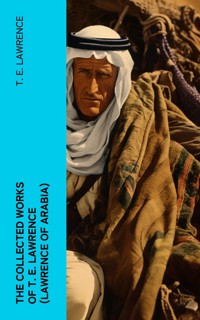
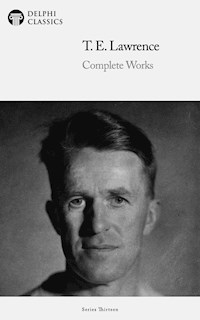
Thomas Edward Lawrence (1888–1935), widely known as Lawrence of Arabia, was a British archaeologist, soldier, and writer whose life intersected with the upheavals of the early twentieth century. Trained as a historian and excavator in the Near East, he became a liaison officer during the First World War, supporting the Arab Revolt against Ottoman rule. His wartime experiences formed the basis of Seven Pillars of Wisdom, a major work of English prose and a touchstone for discussions of irregular warfare, empire, and cultural encounter. Lawrence’s complex public image—scholar, guerrilla, strategist, and literary stylist—has made him an enduring, if contested, figure in modern history.
Lawrence studied history at Oxford, where he wrote a thesis on the military architecture of Crusader castles, informed by extensive fieldwork on foot across Syria and Palestine. Before the war he joined archaeological expeditions sponsored by the Ashmolean Museum, notably at Carchemish on the Euphrates, under D. G. Hogarth and alongside Leonard Woolley. These years deepened his knowledge of Arabic, tribal landscapes, and the material traces of medieval frontiers. His reading ranged from medieval chronicles and classical epic to contemporary travel writing, especially Charles Doughty’s Arabia Deserta, whose austere vision of the desert he admired and later helped champion through introductions and advocacy.
With the outbreak of the First World War, Lawrence served in military intelligence in Cairo before being posted to the Hejaz. From 1916 he acted as liaison to the forces led by Emir Feisal, working to coordinate British support for the Arab Revolt. He helped plan raids on the Hejaz Railway, advised on logistics and diplomacy, and participated in the overland campaign that culminated in the capture of Aqaba and, later, the entry into Damascus. His approach—emphasizing mobility, local initiative, and political negotiation—drew on his regional knowledge and archaeological experience, while aligning with broader Allied strategy to weaken Ottoman communications.
The war’s end confronted Lawrence with the contradictions of imperial policy. He attended the Paris Peace Conference in an advisory capacity and argued publicly for Arab self-determination. Disillusioned by secret agreements and subsequent settlements, he declined high official honors and withdrew from conventional public life. He nevertheless continued to advise on Middle Eastern affairs for a brief period and sought to keep the Arab cause before British readers. The tension between his wartime promises, the realities of postwar diplomacy, and his own sense of responsibility became a persistent theme in his writing and in the debates that shaped his reputation.
Seven Pillars of Wisdom emerged from notes and drafts written during and after the war, famously reconstructed after an early manuscript was lost. Circulated in limited editions to subscribers, it combined memoir, ethnography, moral inquiry, and strategic reflection in a distinctive, baroque prose. An abridgment, Revolt in the Desert, reached a wide audience and secured his international fame. Admired for its narrative power yet scrutinized for selectivity and emphasis, the book sparked ongoing scholarly reassessment. Lawrence also produced literary translations and essays, most notably his English version of Homer’s Odyssey, and he championed neglected travel classics through introductions and publishing advocacy.
Seeking anonymity and discipline after fame, Lawrence enlisted under assumed names, first in the Royal Air Force, then in the Tank Corps, and later rejoined the RAF after adopting the surname Shaw. His service included administrative and technical work, notably with high-speed boats used by the RAF. At the margins of official life he continued to write; The Mint, a frank portrait of barracks culture and training, was withheld in his lifetime and appeared posthumously. He restored a small retreat, Clouds Hill, in Dorset, where he revised manuscripts, received a small circle of friends, and cultivated a private, austere routine.
In 1935 Lawrence was injured in a motorcycle crash near Clouds Hill and died shortly afterward. The circumstances of his death prompted medical research that advanced the case for protective helmets for motorcyclists. His reputation has remained ambivalent: a brilliant stylist and acute observer, but also a symbol shaped by mythmaking, imperial contexts, and later popular culture, including the mid-twentieth-century film that fixed “Lawrence of Arabia” in global memory. His writings continue to inform debates on insurgency, cross-cultural leadership, and the ethics of alliance. More than a single role, his legacy is the uneasy convergence of scholarship, action, and conscience.
The Mint (Unabridged)
Part I. The raw material
1. Recruiting Office
God, this is awful. Hesitating for two hours up and down a filthy street, lips and hands and knees tremulously out of control, my heart pounding in fear of that little door through which I must go to join up. Try sitting a moment in the churchyard? That's caused it. The nearest lavatory, now. Oh yes, of course, under the church. What was Baker's story about the cornice?
A penny; which leaves me fifteen. Buck up, old seat-wiper: I can't tip you and I'm urgent. Won by a short head. My right shoe is burst along the welt and my trousers are growing fringes. One reason that taught me I wasn't a man of action was this routine melting of the bowels before a crisis. However, now we end it. I'm going straight up and in.
All smooth so far. They are gentle-spoken to us, almost sorry. Won't you walk into my parlour? Wait upstairs for medical exam? 'Righto!' This sodden pyramid of clothes upon the floor is sign of a dirtier man than me in front. My go next? Everything off? (Naked we come into the R.A.F.). Ross? 'Yes, that's me.'
Officers, two of them...
'D'you smoke?'
Not much, Sir.
'Well, cut it out. See?'
Six months back, it was, my last cigarette. However, no use giving myself away.
'Nerves like a rabbit.' The scotch-voiced doctor's hard fingers go hammer, hammer, hammer over the loud box of my ribs. I must be pretty hollow.
'Turn over: get up: stand under here: make yourself as tall as you can: he'll just do five foot six, Mac: chest - say 34. Expansion - by Jove, 38. That'll do. Now jump: higher: lift your right leg: hold it there: cough: all right: on your toes: arms straight in front of you: open your fingers wide: hold them so: turn round: bend over. Hullo, what the hell's those marks? Punishment?' 'No Sir, more like persuasion Sir, I think.' Face, neck, chest, getting hot.
'H... m... m..., that would account for the nerves.' His voice sounds softer. 'Don't put them down, Mac. Say Two parallel scars on ribs. What were they, boy?'
Superficial wounds, Sir.
'Answer my question.'
A barbed-wire tear, over a fence.
'H... m... m... and how long have you been short of food?'
(O Lord, I never thought he'd spot that. Since April I've been taking off my friends what meals I dared, all that my shame would let me take. I'd haunt the Duke of York steps at lunch-time, so as to turn back with someone to his club for the food whose necessity nearly choked me. Put a good face on it; better.)
Gone a bit short the last three months, Sir. How my throat burns!
'More like six'... came back in a growl. The worst of telling lies naked is that the red shows all the way down. A long pause, me shivering in disgrace. He stares so gravely, and my eyes are watering. (Oh, it hurts: I wish I hadn't taken this job on.)
At last, 'All right: get back into your clothes. You aren't as good as we want but after a few weeks at the Depot you'll pull up all right.' Thank you very much, Sir. 'Best of luck, boy,' from Mac. Grunt from the kinder-spoken one. Here's the vegetable market again, not changed. I'm still shaking everyway, but anyhow I've done it. Isn't there a Fuller's down that street? I've half a mind to blow my shilling on a coffee. Seven years now before I need think of winning a meal.




