


Erhalten Sie Zugang zu diesem und mehr als 300000 Büchern ab EUR 5,99 monatlich.
- Herausgeber: Artes e Ofícios Editora
- Kategorie: Für Kinder und Jugendliche
- Sprache: Englisch
Ana, Bernardo e Celina são adolescentes. Amigos desde a infância, o trio A-Bê-Cê não se separa jamais. Desde pequenos, andam sempre juntos, e juntos vivem as experiências que a vida vai trazendo. Numa tarde comum, Ana sai de casa para se encontrar com a mãe. De repente, um outro encontro. Aquele que poderia não ter acontecido: Ana Lúcia e a bala. Uma bala (perdida?) encontra Ana Lúcia. A partir de um acontecimento que se tornou banal num país onde a violência faz parte do cotidiano, Caio Riter conta, nessa novela juvenil, a história de três adolescentes que se deparam, de repente, com a necessidade de amadurecer. A vida lhes trazendo dor até então desconhecida. O livro, ilustrado por Joãocaré, faz parte da coleção Papo-cabeça, cujo primeiro título, De carona, com nitro, de Luís Dill, foi vencedor do Prêmio Açorianos 2009 na categoria juvenil e finalista na categoria projeto gráfico. ------- Ana, Bernardo and Celina are teenagers. Friends since childhood, the trio A-Bê-Cê never separates. Since they were little, they always go together, and together they live the experiences that life brings. On an ordinary afternoon, Ana leaves home to meet her mother. Suddenly, another date. The one that might not have happened: Ana Lucia and the bullet. A bullet (lost?) Finds Ana Lucia. From an event that has become banal in a country where violence is part of daily life, Caio Riter tells in this youth novel the story of three teenagers who are suddenly faced with the need to mature. Life bringing them pain hitherto unknown. The book, illustrated by Joãocaré, is part of the Papo-cabeça collection, whose first title, De carona, com nitro, by Luís Dill, was winner of the 2009 Açorianos Prize in the juvenile category and finalist in the graphic design category.
Sie lesen das E-Book in den Legimi-Apps auf:
Seitenzahl: 186
Veröffentlichungsjahr: 2017
Das E-Book (TTS) können Sie hören im Abo „Legimi Premium” in Legimi-Apps auf:
Ähnliche













![Tintenherz [Tintenwelt-Reihe, Band 1 (Ungekürzt)] - Cornelia Funke - Hörbuch](https://legimifiles.blob.core.windows.net/images/2830629ec0fd3fd8c1f122134ba4a884/w200_u90.jpg)






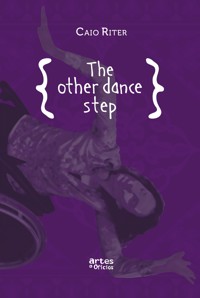
The other dance step
Caio Riter
To Kaian, who has always helped me to see adolescence under a different light.
Preface
Ana, Bernardo and Celina are teenagers. Friends since childhood, the ABC trio is inseparable. Ever since they were little, they keep company together, and together they go through the experiences that life brings.
In an ordinary afternoon, Ana goes out to meet her mother. Suddenly, another meeting happens. One that could not have happened: Ana Lúcia and the bullet. A (stray?) bullet meets Ana Lúcia.
The event changes radically the life of the teenage dancer. Her legs, once capable of steps that defied the law of gravity, are now stuck, stone legs. Ana herself stuck to the ground. Paralyzed. Fear and shame.
Starting from an event that has become commonplace in a country where violence is a part of everyday life, Caio Riter tells the story of three teenagers who suddenly face the need to grow up. Life brings them pain yet unknown.
While living with that pain the ABC trio confronts whatever comes their way. Ana needs to learn how to live with her wheelchair-legs; Bernardo has to fight prejudice for having chosen ballet; Celina wants to understand her mother in order to love her, in spite of everything.
Each one of the small events in the story is change. Not only for A, B and C, but for everyone with whom they relate.
À terre
En avant
En l’air
In the steps of information
1. The end
Ana Lúcia might not have been there right in that moment. Maybe, if the bus driver had stopped, if he hadn’t looked the other way precisely when she waved her hand.
But he had.
And he hadn’t stopped.
If Ana Lúcia were on that bus, and not on the one that came five minutes later, she wouldn’t have been there. Not at that precise moment.
And everything would have been different. Things wouldn’t have ended that way.
However, they had.
2. Flight
Bernardo’s body gets ready to take flight. A pirouette on the tip of his toes. In his ears the chords sound stronger, violent and virile. Light body in a dark leotard, firm steps take him center stage. On his toes. Arms stretched wide and upwards, almost like a savior on a cross.
Clapping erupts. And shouting. And cheering.
Only then he opens his eyes.
The theater is empty.
3. Voicemail
Celina looks at herself in the mirror. A zit on the tip of her nose insists on confirming what her mother always tells her. It insists. Her small breasts, her skin too white, full of small blue veins that tell of how much blood, and anger, she has within.
She puts on a shirt.
She throws herself on the bed. Her eyes stare at the ceiling. And the last conversation she had with her mother fills her once more with intense, aching pain. Oh, and that wish to cry again overcoming her. Always, always. Mother seems to know how to make her feel small, bad. Always.
She sits up. Her body sits on the edge of the bed. She needs to talk to someone; she needs to reveal what’s going on inside her, that which she feels and yet believes she shouldn’t. After all, Denise is her mother. Mother, yes. But not like most of her friends’ mothers. No.
To feel what she feels, she knows, can’t be right. She does feel it, though. And it hurts too much.
She picks up her cell phone. Just Ana Lúcia’s voice in the voicemail. She speaks.
– Hi, it’s me. I really need to talk to you, A. Call me.
4. Asphalt
The cell phone waits inside her purse, while Ana Lúcia watches the unknown faces that turn to her and say words a bit incoherent; Ana grasps here and there a more complete sentence. Not even she can see clearly what’s going on, little she knows of the burning on her back, of her legs that gave away and threw her on the ground. Poor thing, she hears, and the woman who said it leans over her, asks her name, her age. Don’t move her, says a hoarse voice. The face under the police hat looks at her and asks if she’s all right. Help is under way.
Ana Lúcia doesn’t say a thing.
She doesn’t have a thing to say.
She thinks about mother who’s waiting for her after work. She remembers the cell phone in her purse. Did she hear it ring? She reaches for it, but a hand stops her. The hoarse voice insists: Don’t move.
She doesn’t know that voice, not even that face. But she feels she can trust him.
After all, as she lies on the hot asphalt of the avenue, this is all that’s left to her.
5. Angst
Everything is silence inside the empty theater on that hot and stuffy September afternoon. Bernardo stretches his legs, leans his body over them, closes his eyes and lets himself just lay there. His father’s face imposes itself. His voice, his wish:
– No way, Sônia. Sometimes, I think you went nuts.
And his mother’s words as she tries to convince his father:
– Lázaro, you must understand that this is what Bernardo wants. This is what makes him happy. What’s the harm, after all?
The father shakes his head. He doesn’t understand. He can’t understand. He doesn’t want to.
– Nothing you or Bernardo can say will convince me, Sônia. It’s nonsense, all this.
And he turns his back, takes his suitcase and leaves the room.
From his room, Bernardo hears the front door slamming, the car door slamming, the engine running. He knows mother will throw herself on an armchair, her gaze lost, staring through the window, and her chest tightening from angst. Perhaps the same angst he feels. But Bernardo also knows that, if he walks into the living room, she will welcome him with a smile and will disguise her disappointment like no one else can. Disguise the chasm that he, her son, had dug between her and her husband.
Bernardo doesn’t want that.
He leaves through the kitchen door. He doesn’t want to meet his mother and make her pretend. He doesn’t want that. And on stage the chords are like the wind, indicating the possibility of taking flight. He puts on his leotards and enjoys his moment of loneliness.
Thus, alone with the music, he can be free to dance.
He raises his torso, the eyes stare at the empty chairs. Little by little his father’s image turns into smoke. Deep down inside, he knows what his fears are. He knows, but he doesn’t understand.
He stands up and goes to the stereo player. He presses the button and allows the music to invade the room. The singing voice is almost a prayer.
6. Tears
A light knock, knuckles on the bedroom door.
– Come in, dad.
Pietro’s face smiles through the half-opened door.
– Why the long face? – He asks.
– Nothing, really.
Celina tries to smile. Her father comes closer, hugs her, runs his hand through her hair. Insists: – What happened, dear?
She rests her head on his shoulder. It feels good, this warmth.
– It’s Denise, isn’t it? She came to visit you.
Celina says nothing, she just presses her body against his father’s and lets herself cry.
7. Darkness
Celina. Bernardo. Murilo. Marília. The Philosopher. Maria Eduarda.
What she wants is her friend’s faces. Not this bunch of strange faces crowding around her and saying things without any sense: robbery, a shot, a stray bullet, blood. She doesn’t want to hear these words. She’s afraid of them.
She wants her mother, right here, really close. She wants Grandma Luzia telling her scary ghost stories, she wants Nijinski jumping around and trying to climb on her lap. She wants Bê and Cê talking nonsense and eating popcorn while watching an episode of Lost. Bê and his problems with his father, Cê and her worries about her mother.
– Where is my mother? I want her.
She sees the man with the hat opening her purse, she sees him picking up her cell phone. Here, it reads: mom. Must be her mother. She sees him calling and saying, a little embarrassed: Hello, madam, this is Officer Raul. Well, listen, something happened to your daughter. It is quite serious.
Ana Lúcia pictures her mother’s desperation. Then everything turns dark.
Just like that, darkness alone.
Alone.
8. Madredeus
Applause. Two pairs of hands clapping. Bernardo stops moving. He sees Marília and Maria Eduarda standing next to the stage access stairs. They laugh.
– Perfect – says Maria Eduarda.
– Terrific – says the other. – You were so into your dance that you didn’t even notice us coming in.
Bernardo smiles. Marília’s light eyes, set into his like that, are always disturbing. He doesn’t even know why.
The two girls stepped on stage.
They take off their skirts, adjust their leotards and sit on the floor, next to Bernardo. Ballet flats are tied.
– What about Ana Lucia? – asks Maria Eduarda, a body that springs to its feet and warms up ankles, arms, legs and neck.
– She hasn’t shown up yet.
– And you decided to rehearse on your own? – It’s Marília. The averted eyes, looking down on the tips of his shoes, make him less embarrassed.
– I needed to do a little thinking. So I decided to come early.
She stands up as well. Spins around her own body. Almost like a fairy in flight, Bernardo thinks. Almost. And he wants to fly beside her.
But how about Nando?
– What’s that song you were dancing to? – asks Maria Eduarda. – Never heard it.
– It’s Madredeus.
9. Dream
– Ah, dad. Teenage silliness.
Pietro caresses his daughter’s hair. He knows she’s lying, but understands that she doesn’t want to bother him with all the stupid things Denise does. Denise and her subtlety. A real bull in a china shop. What can he do? That’s the way she is.
– Are you sure, darling?
– Hum-hum.
He kisses her forehead. Says he is leaving to see some clients. She shouldn’t wait on him for dinner. She should go out with her friends, catch a movie, When I was a teen, I wouldn’t stay locked up in my room like that. No, madam.
– I called Ana Lúcia. But she hasn’t called back yet. I’ll wait some more. I was supposed to go and see her and Bê’s rehearsal.
– That’s it, kid, that’s it. A teenager must have fun, go to places and laugh a lot.
– All right, dad. All right.
She kisses him and her eyes follow him with until he disappears behind the door. She worries about her dad. She knows he hasn’t gotten over his divorce, she knows Denise is aware of that and entices him with the slight possibility of coming back together, although she’s always involved with new boyfriends. Most of them younger than she is. Some young enough to be her sons. Does dad notice that? No way. And even if he does, he has nothing to say on the matter.
Deep down inside Celina knows that Pietro needs a dream. And it won’t be her and her objections to her mother’s behavior that will end her father’s hopes. She prefers to suffer alone.
What can she do?
She calls her friend again. And, when the hoarse voice of a man greets her from the other end, her heart misses a beat.
– Who is this? – She asks.
10. Choreography
She feels the pain when they immobilize her and put her on the stretcher. If everything before was just strange, now a feeling of helplessness, of fear, even terror, takes over Ana Lucia. And my mother, where is she?
Nobody answers. She hears the loose words and sentences, like ballerinas out of rhythm who seemed to have forgotten their choreography.
She repeats the question.
No answers.
Can they hear her? Ana Lúcia already doubts herself: did she ask the question or just thought of it and her lips weren’t strong enough to articulate it?
The white metal door is closed and shuts down people’s noises. There are only her and a man in white who holds her hand, takes her pulse, and tells the driver to speed up.
Ana Lúcia closes her eyes. And she sees something she’d rather not see: two men running from a store, a police car stopping with a screech. The men turn around, screams are heard. They pull their guns, and so does the police.
The guns spit fire.
Passers-by take cover, throw themselves on the ground.
Between stunned and enchanted, Ana Lúcia watches that strange ballet. She imagines the background music. That could well be the choreography she would present for her finals, who knows?
And yet.
The burning inside her back as if a red hot needle had penetrated her and made her fall to the ground. The pain, the feeling that some liquid was trickling from inside her, and the fear.
She had never feared death before. Now she does.
The siren sounds like a songbird in flight.
11. Nando
Marília, on center stage, does a chainé. A flower that spins around itself, the sovereign queen of the garden, thinks Bernardo, body lying against the wall, legs drawn up to his chest.
He waits.
What else can he do?
He thinks about Nando and feels smaller. The guy is a third year senior. And he has this unique way about him, which attracts the girls so much. The shaven head, the tribal tattoo on his strong arm, his leadership in the students’ union. All he needs to do is taking the microphone and start defending his opinions, and all the girls at school stop talking, their eyes glazed on him, mouths half-open in admiration.
– What’s up with that guy, man? –Murilo asked him once.
– How should I know? Ask Marília.
– Marília and all those morons. Look at their faces when he speaks. Is that possible?
Yes, it was possible. So much that Marília was his girlfriend. Marília, with her sky eyes, with her action-movie heroine looks, was all Nando’s. To the envy of all the other girls. And Bernardo’s as well.
He knew it: a single word by Marília would be enough to make him forget the world, just one word. A word of love which wouldn’t be said, ever. And nor it could.
Murilo’s voice again:
– Look, man, if you really like her, you’ve got to speak up. You’ve got to go to her and tell her like it is: listen, Marília, here’s the thing: I like you, see?
– Are you crazy, Murilo? How about Nando?
– Nando can get stuffed. You go to her and tell her how it is. Tell her you know she’s dating Nando, but that you like her so much better than he does.
– That’s easy to say, Murilo.
– And easy to do. Look, if you want, I can tell Marília that you are really hot for her. How about that?
– Are you crazy, man? Have you lost your mind?
Murilo laughed and went on saying that Maria Eduarda and Marília were best friends. Can you imagine the both of us dating them? It would be cool, wouldn’t it?
– It really would – babbles Bernardo, eyes on the two colleagues that are rehearsing some steps on the stage. He springs to his feet. He needs to rehearse as well, after all that’s why he came early.
The theater door opens. The teacher and a few more dancers come in. Only Ana Lúcia is missing. What happened? She’s rarely late.
– Bernardo!
It’s Marília who’s calling. She wants him to help her with a move.
– Look. That’s it, isn’t it?
12. Trio
Celina still can’t believe her ears. Ana Lúcia in an emergency room? It must be a prank. Hers and some other friend’s. Obviously Bê. They are rehearsing at the theater and decided to make fun of her.
But what if?
Silliness, nonsense. She’d better go to the theater. Better go there.
She puts a sweater over her shirt and runs out of the room. A weird feeling, that the phone call means more than she thinks it does. Much more.
On the street, she decides to invest part of her allowance in a taxi ride. To Renascença theater, please. Eyes fixed on the cell phone. She feels a strong urge to call Mrs. Beatriz and end this whole business.
But what if?
She sees Ana Lúcia and Bernardo laughing at her. What a dummy you are, Cê. And more laughs. Really? People and cars and buses and even a cart pass by the taxi’s windows. On the radio, the driver listens to classical music. Tchaikovsky? Mozart? Celina was never really good at telling the difference. So different form her friends who love to dare each other to see who can tell, by ear only, the authors of different compositions Celina plays.
– And this one, A?
Her friend would stay silent, with eyes closed and it seemed that she was letting herself float with the notes. Then, she would say the composer’s name in a low voice. She rarely missed. And Bernardo was the same, although he liked better to mix rhythms. He would say that ballet needed new intonations. Bê and his ideas, Ana Lúcia would laugh.
– Wait and see my choreography for the finals. I will put my ideas in practice. And you will dance with me, A.
– Me?
– Hum-hum.
And the trio would laugh, A, Bê, Cê. Nicknames that Mrs. Beatriz has given them, which they had gladly accepted.
The taxi stops. That’s it, little miss. We have arrived. Celina’s heart tightens. And what if she comes into the theater and Ana Lúcia is not there? And what if that horrible thing that hoarse voice said was true?
A stray bullet.
Ana Lúcia in the emergency room.
13. Mother
– Mom.
– Ana Lúcia, my dear.
A trembling hand becomes a caress on her hair.
– What happened to me?
– You’ll be all right, dear. You will.
– But what happened? I felt a pain in my back and…
Her mother’s eyes want to conceal the pain they feel, want to stifle the desire to cry, want not to be a glistening tear and not to wish every evil in the world to the creature that shot that bullet, but they can’t.
– Are you crying, mom?
Beatriz is just a mother in despair, a mother immersed in the anger every mother is capable to feel when she sees a piece of herself like this, fragile, over a hospital bed. A bullet lodged in her back.
– It’s nothing, my dear. You’ll be all right.
– Why am I here?
– Ana, you were shot.
– Was it the robbery, mom?
– Yes. A stray bullet.
Ana Lúcia tries to smile. She says:
– Not a stray. It found me.
Mother’s hand on daughter’s hand. Silence.
14. Desperation
The teacher tells them to assume their positions. She tells Maria Eduarda to take Ana Lucia’s place. The music begins with its soft chords and the girls’ movements obey the so long rehearsed harmony. Bodies that move as if they were birds, light bodies, almost like feathers in contempt of the law of gravity.
A stronger chord. The music rises in a crescendo. Bernardo is now a tin soldier seeking to protect the most beautiful of young girls. Marília, Marília, his eyes are searching for her among the others, eyes that see her so different from others, so much more beautiful, so much.
And there is Nando. It would be much easier if they stopped dating. Maybe then he would follow Murilo’s advice. Who knows. His feet get distracted as they never should and lose the needed lightness and firmness. They falter.
Bernardo hears the teacher’s stern voice telling him to focus.
– What’s going on, young man?
– I – but Bernardo doesn’t have time to#A7025D make any excuse. His eyes stop on Celina’s who just entered the theater. She runs to the stage and asks in a voice made shrill by desperation:
– Where’s A?
Everybody turns to the girl. Whispers here and there: What does that girl think she is doing? What’s going on?
– Ana Lúcia didn’t show up for practice today, young lady. – It’s the teacher who replies. – And, by the way, I hope she has a good reason.
Celina’s body collapses on one of the seats. Wobbly legs, and the voice that echoes in her ears repeating over and over again what seems to be a lie. She wants it to be a lie.
But she knows it is not.
Bernardo is in front of her, his eyes on hers, oblivious to the choreography and to the girls waiting on stage.
– What happened, Cê?
– Ana was shot, Bê. She is in the emergency room.
15. Soundtrack
Those words Celina has just uttered were enough for the actual truth to settle within her. In the taxi she had looked for a distraction on the streets outside, but here in the theater, realizing the absence of her friend, she had to focus on the sound of that unknown and hoarse voice telling her that Ana Lúcia suffered an accident. A stray bullet. A robbery.
All very confusing.
As confusing as the voices of the people now surrounding her, asking for details and interjecting loudly, they, too, trying to understand what had happened.
– I know next to nothing – says Celina. – Only this: A. was shot. A stray bullet. She is in the emergency room.
The music, which nobody had remembered to interrupt, filled with softness that moment of surprise and pain. Its notes alone creating the soundtrack for a scene no one here could ever have expected. The mouths that earlier were lost in confused questions became silent with the realization of the unexpected.




